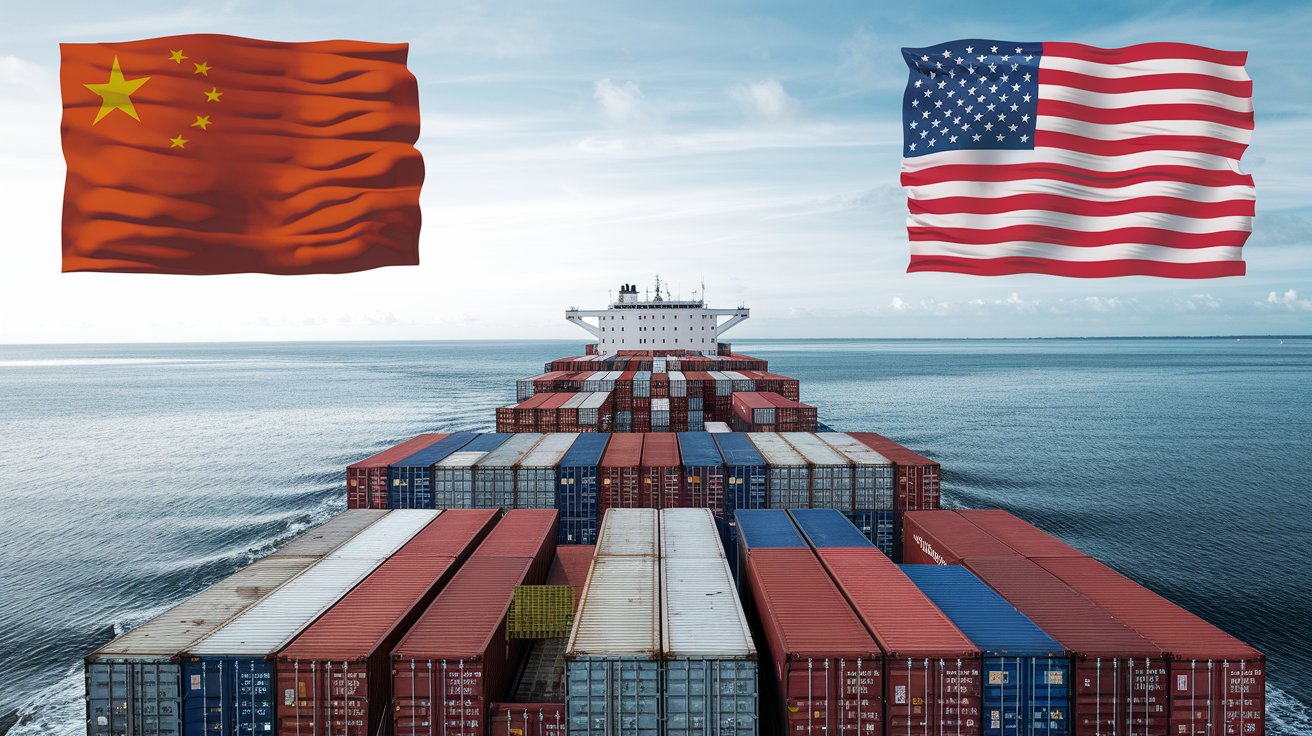
Are you puzzled about the shipping rates from China to Canada? The number most importers are quoted in 2026 is between $2,100 and $8,000 per container — and the difference is almost never the carrier. It is the port pair, the mode, and how much of the Canadian leg (rail, customs, GST/HST) is included in the quote you were given. This guide walks through the current rates by port, the transit times behind them, the CBSA rules that decide what you actually pay at the border, and the levers that move a Canadian landed cost.
China to Canada shipping rates at a glance (2026)
| Mode and route | Rate (USD, 2026) | Transit | What it covers |
|---|---|---|---|
| FCL 40ft → Vancouver | $3,500 – $6,000 | 14 – 18 days | Port-to-port ocean freight |
| FCL 40ft → Montreal | $5,500 – $8,000 | 28 – 34 days | Port-to-port, all-water |
| FCL 20ft → Vancouver | $2,100 – $3,500 | 14 – 18 days | Port-to-port ocean freight |
| LCL → Vancouver | $74 – $100 per CBM | 18 – 30 days | Ocean freight only, CFS to CFS |
| Air freight | $6 – $10 per kg | 3 – 8 days | Airport-to-airport, chargeable weight |
| Duty and tax | MFN duty (0–18% typical) + GST 5% or HST 13–15% | — | Assessed by CBSA, not by the carrier |
Two things surprise first-time importers. First, a “cheap” Vancouver rate can be the most expensive option if your warehouse is in Ontario — the rail leg adds $800–$1,500 per container. Second, Canadian duty and GST are calculated on the value of the goods, not on the freight, so a $3,500 container of high-value electronics can carry more tax than freight.
Understanding Shipping Rates from China to Canada
What Influences Shipping Rates From China To Canada?
In 2026 the Canada lane has been shaped by two forces. The Hormuz disruption in February pushed transpacific spot rates up by more than 330% against their pre-crisis level, and although Canada publishes no equivalent weekly index, Vancouver pricing tracks that transpacific benchmark closely. Those conditions — plus the Canadian dollar, fuel surcharges and the CBSA rules covered later in this guide — decide the cost of shipping 20ft and 40ft containers from China to Canada. The key elements include:
1. Mode of Transport:
The fundamental choice between sea freight from China to Canada and air freight from China to Canada remains the primary cost differentiator. Ocean freight is still the most economical option for large, non-urgent shipments, but 2026 pricing is nothing like a normal year: transpacific spot rates peaked in early October and are still far above their February baseline, and carriers are holding capacity back through blank sailings. Air freight remains the premium choice for time-sensitive or high-value goods, with rates driven by sustained e-commerce demand, electronics and the Q4 peak.
2. Distance and Location:
The geographical distance and the specific origin ports in China (e.g., Shanghai, Shenzhen, Ningbo) to destination ports in Canada (e.g., Vancouver, Toronto, Montreal) significantly impact shipping cost from China to Canada. Major trade routes, particularly those serving the bustling ports of Shanghai (Shanghai Port’s throughput in H1 2025 showed a 3% increase in container volume year-on-year, indicating continued robust activity) or Shenzhen, to the largest Canadian ports like Vancouverand Toronto, benefit from established logistics networks and higher frequency of sailings, potentially offering best shipping rates from China to Canada due to economies of scale. However, inland destinations in Canada might incur additional domestic transportation costs.
3. Cargo Type and Weight:
The nature, weight, and dimensions of your goods are paramount. Hazardous materials, perishable items, or out of gauge cargo will always command higher shipping from China to Canada cost due to specialized handling requirements, regulatory compliance, and potential need for dedicated transport solutions. For instance, the cost of shipping a pallet from China to USA or Canada can vary wildly based on its contents and dimensions. Heavier and bulkier items directly translate to higher freight charges, particularly in air freight where volumetric weight is a critical pricing factor.
4. Fuel Prices:
Global energy markets remain volatile. In 2026 crude prices have been pushed around by the Hormuz disruption and by OPEC+ decisions, and carriers pass that through as fuel surcharges (Bunker Adjustment Factor – BAF for sea freight, Fuel Surcharge for air freight). On a Vancouver service the BAF can move a 40ft quote by several hundred dollars between booking and sailing, so always check whether your quote is “all-in” or “BAF-floating” before you compare it with another forwarder’s.
5. Seasonality:
The shipping industry is inherently seasonal. The pre-Christmas build runs from mid-August to late October and lifts shipping rates from China to Canada as capacity tightens; in 2026 it overlapped with blank sailings, so October quotes were the highest of the year. The opposite window — late November through mid-January, after the retail peak clears customs and before factories close for Chinese New Year — is normally the softest. Planning shipments into those two windows, rather than at their edges, is one of the few levers that costs nothing to pull.
6. Customs Regulations and Duties:
Navigating Canadian customs is a critical, and often costly, part of the shipping process. Customs duties and taxes (GST/HST) are levied on the value for duty of your goods and their HS classification, and since CARM went live in October 2024 the importer of record — not the broker — carries the legal and financial responsibility for them. On top of normal MFN duty, Canada applies a 25% surtax on certain steel and aluminum goods containing Chinese-origin material (in force since 31 July 2025) and maintains a quota system for Chinese-made electric vehicles, which replaced the 100% EV surtax in 2026. Partnering with an experienced freight forwarder like Dantful International Logistics for Customs Clearance keeps classification, origin and value defensible — the three things a CBSA verification examines.
Types of Shipping Services From China Available to Canada
When planning your Shipping From China To Canada strategy in 2026, understanding the various service types is crucial for optimizing both cost and efficiency. Each one prices differently, and the right answer depends on volume, urgency and where in Canada you are delivering.
1. Consolidated Freight Shipping:
This service is a cornerstone for small to medium-sized businesses looking to ship smaller volumes. By combining multiple Less than Container Load (LCL) shipments into a single Full Container Load (FCL), it offers a highly cost-effective solution. Dantful International Logistics excels in providing robust consolidated freight shipping services, allowing clients to benefit from lower shipping rates from China to Canada while maintaining reliability. This is particularly beneficial for businesses that don’t have enough cargo to fill an entire container but still want the economic advantages of sea freight.
2. Full Container Load (FCL):
For larger shipments that can fill an entire shipping container, FCL remains the most efficient and often the most economical option on a per-unit basis. You rent the entire container (20ft or 40ft), which means security and faster transit because there is no consolidation or deconsolidation. Current container shipping rates from China to Canada run roughly $2,100–$3,500 for a 20ft and $3,500–$6,000 for a 40ft to Vancouver, and $5,500–$8,000 for a 40ft all-water to Montreal. Our 2026 cost guide for 20ft and 40ft containers from China to Canada breaks those down by origin port and destination city.
3. Less than Container Load (LCL):
When your cargo volume is insufficient for an FCL shipment, LCL is the go-to sea freight solution. It is cheaper than air freight from China to Canada for most small loads, but it costs more per CBM than FCL and takes longer because of consolidation and deconsolidation at both ends. In 2026 LCL from China to Vancouver runs about $74–$100 per CBM (East Coast CFS points around $95–$128), with charges based on the greater of volume or weight — many consolidators use 1 CBM = 1,000 kg and a 1 CBM minimum.
4. Air Freight:
For shipments where speed is paramount, air freight from China to Canada is unmatched. It is the most expensive option per kilogram, but it cuts transit to days instead of weeks, which makes it right for high-value goods, urgent replenishment and perishables. In 2026 general cargo prices at roughly $6–$10 per kg to major Canadian cities — Toronto and Vancouver sit near the low end, while Ottawa, Quebec City and the Maritimes pay the most — and chargeable weight, not gross weight, is what you are billed on. See our air freight from China to Canada guide for the airport pairs.
5. Door-to-Door Shipping:
This comprehensive service removes the complexity of international logistics for the importer. Door-to-door shipping from China to Canada means Dantful Logistics handles everything from pickup at the supplier’s factory in China, through Customs Clearance and both transport legs, right to your warehouse or doorstep in Canada. This DDP Shipping Services model gives you cost predictability and removes the administrative burden — which matters more in 2026, because under CARM the importer of record now has to hold its own customs account and financial security rather than relying on the broker’s.
Sea Freight vs. Air Freight
Sea Freight Shipping Rates from China to Canada
Sea freight is generally the most cost-effective method for shipping large volumes. Rates vary by route, container type and market conditions, but in late 2026 a 20ft container from Shanghai to Vancouver runs about $2,100–$2,600 port-to-port, with a 40ft at $3,500–$4,200. Spot quotes for the same lane have been seen higher — Maersk quoted $4,635 for a 40ft into Vancouver in early November 2026, and Flexport showed $5,857–$6,165 for a 40′ high-cube from Shantou — so treat the range as a planning band, not a price list. For a full breakdown by container size and city, see our container shipping costs from China to Canada.
| Port of Origin | Port of Destination | 20ft (USD) | 40ft (USD) | Transit Time |
|---|---|---|---|---|
| Shanghai | Vancouver | $2,100 – $2,600 | $3,500 – $4,200 | 14 – 18 days |
| Ningbo | Vancouver | $2,200 – $2,700 | $3,500 – $4,400 | 15 – 19 days |
| Shenzhen (Yantian) | Vancouver | $2,100 – $2,700 | $3,500 – $4,500 | 15 – 20 days |
| Shanghai | Toronto (via rail) | $2,500 – $3,300 | $4,000 – $4,900 | 24 – 30 days |
| Shanghai | Montreal (all-water) | $2,500 – $3,300 | $4,100 – $4,900 | 26 – 35 days |
Air Freight Shipping Rates from China to Canada
In contrast, air freight offers much faster shipping times at a higher cost. In 2026 general cargo runs $6.00–$10.50 per kilogram to major Canadian cities, depending on the destination airport and the carrier, so a 100 kg consignment typically costs $600–$1,050 airport-to-airport. The variation between cities is small compared with the variation between providers, so always compare on the same chargeable weight and the same delivery city.
| Destination City | Indicative air rate (per kg) | Transit Time |
|---|---|---|
| Calgary, AB | $9.35 | 7 – 11 days |
| Toronto, ON | $9.55 | 7 – 11 days |
| Vancouver, BC | $9.80 | 7 – 11 days |
| Montreal, QC | $9.80 | 7 – 11 days |
| Ottawa / Windsor / Quebec City | $10.00 – $10.10 | 7 – 12 days |
These are May-2026 standard-air reference prices for general cargo; other published provider ranges for the same period start as low as $5.50/kg on consolidated services and run to $15/kg on premium or oversize cargo. Transit times above are door-to-door; airport-to-airport is typically 3–6 days.
Comparing Transit Times and Reliability
When considering sea freight versus air freight, it is essential to weigh both transit times and reliability. Air freight typically takes between 3 to 7 days, making it the best choice for urgent deliveries. However, it may be subject to delays due to weather or operational issues.
Conversely, sea freight takes 14–20 days to Vancouver and 24–35 days to Toronto or Montreal, depending on routing, rail connection and port congestion. While slower, sea freight is generally more reliable on scheduled departures and arrivals than air, as long as there are no disruptions such as port strikes, rail embargoes or severe weather on the Pacific.
In summary, both freight methods have their advantages and disadvantages. The final decision will depend on your specific needs regarding urgency, budget, and the nature of the goods you are shipping. For personalized assistance and cost-effective solutions, consider partnering with Dantful International Logistics, a highly professional and reliable freight forwarder that offers a range of services tailored to meet your shipping requirements.
READ MORE:
- Shipping From China to the USA
- Shipping From China TO Canada
- Shipping From China TO Mexico
- Shipping From China to Panama
- Shipping From China to Costa Rica
- Shipping From China to Brazil
- Shipping From China TO Colombia
- Shipping From China to Jamaica
- Shipping From China to Venezuela
- Shipping From China to Argentina
China to Canada Transit Times by Port Pair (2026)
Canada has one deep-water gateway that matters — Vancouver, with Prince Rupert as the faster northern alternative — and everything east of the Rockies moves by rail or through the Panama Canal. That is why “how long does it take to ship from China to Canada” has no single answer: the same container takes 14 days to Vancouver and 30 days to Toronto because the second half of the journey is a train.
| Origin Port (China) | Destination | Transit Time | Routing |
|---|---|---|---|
| Shanghai | Vancouver | 14 – 18 days | Direct trans-Pacific |
| Ningbo | Vancouver | 15 – 19 days | Direct trans-Pacific |
| Shenzhen (Yantian) | Vancouver | 15 – 20 days | Direct trans-Pacific |
| Qingdao | Vancouver | 17 – 22 days | Direct trans-Pacific |
| Shanghai | Prince Rupert | 12 – 16 days | Direct, shortest Pacific crossing |
| Shanghai | Toronto | 24 – 30 days | Vancouver + CN/CP rail |
| Ningbo | Toronto | 25 – 31 days | Vancouver + rail |
| Shenzhen (Yantian) | Toronto | 24 – 30 days | Vancouver + rail |
| Shanghai | Montreal | 26 – 35 days | All-water via Panama |
| Ningbo | Montreal | 27 – 36 days | All-water via Panama |
| Shanghai | Halifax | 29 – 35 days | All-water via Panama |
Three practical points. Prince Rupert is 2–4 days faster than Vancouver and less congested, with a direct rail link to Toronto and Montreal — worth asking about when Vancouver has a backlog. Toronto has no deep-sea container port, so any quote “to Toronto” already includes a rail leg; comparing it against a Vancouver rate without adjusting is the single most common budgeting error on this lane. And Montreal is only cheaper when the canal cooperates: Panama draft restrictions have forced some all-water services to light-load, which can add days without warning.
Current Shipping Rates from China to Canada
Average Costs for Different Freight Methods
When importing goods from China to Canada, understanding the average rates by unit — not just “per kg” — is essential for budgeting. Sea freight is priced per container or per CBM, air freight per chargeable kilogram, and express per kilogram with a minimum. Comparing them without normalising the unit is how importers end up choosing the wrong mode:
| Freight Method | Pricing unit | 2026 rate | Transit Time (Days) | Ideal For |
|---|---|---|---|---|
| Sea Freight (FCL 20ft) | Per container | $2,100 – $3,500 to Vancouver; $2,500 – $3,700 to Toronto / Montreal | 14 – 35 | 15 CBM and above |
| Sea Freight (FCL 40ft) | Per container | $3,500 – $6,000 to Vancouver; $4,000 – $5,300 to Toronto / Montreal | 14 – 35 | Large, bulky shipments |
| Sea Freight (LCL) | Per CBM (or 1,000 kg) | $74 – $100 per CBM to Vancouver; $95 – $128 to East Coast CFS | 18 – 45 | 1 – 15 CBM |
| Air Freight | Per chargeable kg | $6.00 – $10.50 per kg | 3 – 11 | Urgent, high-value items |
| Consolidated Freight | Per CBM, shared container | $70 – $200 per CBM depending on coast and season | 18 – 40 | Smaller shipments, budget-conscious |
| Express Courier | Per kg | $10 – $25 per kg | 2 – 7 | Samples, documents, small parcels |
Note: these are port-to-port or airport-to-airport planning ranges for late 2026, excluding destination terminal handling, customs brokerage, duty and GST/HST. Because the transpacific market has been moving weekly, always request a written quote with a validity date before you commit purchase orders.
Factors Affecting Current Shipping Rates
Several key factors influence the shipping rates from China to Canada:
Fuel Prices: Fluctuations in fuel costs can greatly affect shipping rates, especially for air and sea freight methods. Increases in oil prices typically lead to higher freight charges.
Supply and Demand: The volume of cargo being shipped during peak seasons (like Chinese New Year or holiday seasons) can drive up shipping costs. Conversely, during off-peak periods, rates may decrease due to reduced demand.
Weight and Volume of Cargo: Shipping costs are often calculated based on the dimensional weight or actual weight of your cargo. Heavier and bulkier shipments tend to incur higher costs.
Shipping Route: The distance and complexity of the route from China to Canada will also play a role in determining the shipping costs. Routes with more transshipments or longer distances can incur additional fees.
Customs Regulations: Tariffs and duties imposed by both Chinese and Canadian authorities can affect the total landed cost of goods. This includes any additional fees for customs clearance services.
Freight Forwarding Services: The choice of freight forwarder can significantly impact overall shipping rates. A reputable provider, such as Dantful International Logistics, can offer competitive pricing and additional services that can save costs in the long run.
Additional Fees and Charges to Consider
When calculating the total cost of shipping from China to Canada, it is crucial to consider additional fees and charges that may apply.
Customs Duties and Taxes
Importing goods into Canada incurs customs duties and taxes, including the Goods and Services Tax (GST) and provincial sales taxes. The duty rate depends on the product classification and its country of origin. Importers should consult the Canada Border Services Agency (CBSA) and the Harmonized System (HS) codes to determine applicable rates.
Here’s an illustrative table for common product categories, including their typical HS codes, MFN tariff rates, and applicable GST/HST rates in Canada (GST is 5%, HST varies by province):
| Product Category | HS Code (Example) | MFN Tariff Rate (Approx.) | GST/HST Rate (Federal + Provincial where applicable) | Notes |
|---|---|---|---|---|
| Apparel (Textiles) | 6103.42 | 18% | 5% (GST) to 15% (HST in some provinces) | Rates vary significantly by material and type. |
| Electronics (Consumer) | 8517.12 | 0% – 7% | 5% (GST) to 15% (HST in some provinces) | Many electronics have low or zero tariffs under MFN. |
| Furniture (Wooden) | 9403.60 | 9.5% | 5% (GST) to 15% (HST in some provinces) | Subject to potential anti-dumping duties on specific types. |
| Toys (Plastic) | 9503.00 | 6.5% | 5% (GST) to 15% (HST in some provinces) | |
| Machinery (Industrial) | 8479.89 | 0% – 8% | 5% (GST) to 15% (HST in some provinces) | Often lower tariffs for essential industrial equipment. |
GST/HST by province, and what CARM changed
Duty is only half the border bill. Canadian sales tax is charged on the value for duty plus duty, so it scales with your invoice value rather than your freight. The rate depends on where the goods are released or delivered:
| Province / territory | Tax applied on import | Combined rate |
|---|---|---|
| Ontario | HST | 13% |
| New Brunswick, Newfoundland & Labrador, Nova Scotia, Prince Edward Island | HST | 15% |
| British Columbia | GST 5% + PST 7% | 12% |
| Quebec | GST 5% + QST 9.975% | 14.975% |
| Alberta, Saskatchewan, Manitoba, Yukon, NWT, Nunavut | GST | 5% |
Since 21 October 2024 all of this is assessed through CARM — the CBSA Assessment and Revenue Management system — and the change is not cosmetic. The old Form B3 is gone, replaced by the Commercial Accounting Declaration (CAD). Importers must hold their own business number and import/export (RM) account, delegate access to their broker in the CARM Client Portal, and — since 20 May 2025 — post their own financial security if they want release before payment. A broker’s bond no longer covers you.
Two deadlines worth diarising. CBSA recalculates RPP security every 20 October, and any increase must be posted by 15 January of the following year — the notice for the 2026 cycle landed on 20 October 2026, so the top-up is due 15 January 2027. And accounting timing depends on value: goods of CAD 3,300 or less can be accounted for by the 24th of the following month, while anything above CAD 3,300 must be accounted for within 5 business days of release.
The de minimis rule that catches China shippers: Canada’s low-value relief is CAD 20 for shipments from any country including China. The higher thresholds — CAD 150 for duty and CAD 40 for tax — apply only to courier shipments from the United States or Mexico, and only if the goods actually entered the commerce of one of those countries. Goods manufactured in China and couriered from a US warehouse without entering US commerce do not qualify, so splitting a small Chinese order to “stay under CAD 150” does not work.
Handling Fees and Insurance
Handling fees may be charged for loading, unloading, storage, and other logistical services. Additionally, insurance is often recommended to protect against loss or damage during transit. Insurance costs can vary based on the value of the shipment and the coverage options selected. Using the services of a professional freight forwarder like Dantful International Logistics can help ensure that you have appropriate coverage and minimized handling costs.
By understanding the current shipping rates, the factors affecting them, and the additional fees to consider, importers can make informed decisions and better manage their logistics costs when shipping from China to Canada.
Tips for Reducing Shipping Costs from China to Canada
Consolidated Freight Shipping Options
One of the most effective strategies for reducing shipping costs from China to Canada is utilizing consolidated freight shipping. This method allows multiple shipments to be combined into one larger shipment, significantly lowering the per-unit shipping cost. By sharing the space in a container, businesses can benefit from reduced rates due to economies of scale.
For businesses importing smaller shipments, consolidated freight is particularly advantageous. This method not only decreases shipping fees but also minimizes the risk of excess charges associated with smaller, individual shipments. It’s crucial to work with a freight forwarder who offers consolidation services, ensuring that your goods are grouped efficiently without compromising the delivery timeline.
Furthermore, many freight forwarders, including Dantful International Logistics, offer customized consolidated shipping options to cater to specific needs. With their expertise, you can expect optimal routing and timely delivery, making your logistics process smoother and more cost-effective.
Choosing the forwarder is the other half of the cost equation, and it is worth as much attention as the rate itself. The five criteria that separate a good forwarder from a cheap one — experience, service scope, cost transparency, customer support and tracking technology — are set out in the next section.
Five cost levers that work in 2026
- Cross the FCL threshold deliberately. Below roughly 10–15 CBM, LCL wins; above it, a 20ft container is cheaper per CBM and removes the consolidation delay. If you are at 12 CBM, ask what a 20ft would cost before you book LCL.
- Consolidate purchase orders into one booking. Two half-containers cost more than one full one, and destination CFS charges are billed per shipment — combining two LCL shipments into one often saves the whole second set of local charges.
- Ask about Prince Rupert when Vancouver is backed up. It is 2–4 days faster and has a direct rail link east, but it is often not offered unless you ask.
- Book in the post-peak window. Late November to mid-January is the softest period on the Canada lane; the August–October peak is the most expensive. The same container can cost several hundred dollars less six weeks later.
- Spend an hour on classification. Moving a product from an 18% apparel line to the correct 0% or 6.5% line — or the reverse, if you have been mis-declaring — changes landed cost by more than any freight negotiation. It is also the first thing a CBSA verification checks.
How to Choose a Reliable Freight Forwarder
Key Factors to Evaluate
When searching for a reliable freight forwarder, it’s important to evaluate a few critical factors:
Certifications and Compliance: Ensure that the freight forwarder holds appropriate certifications, such as IATA (International Air Transport Association) and FMC (Federal Maritime Commission) licensing. This indicates a commitment to regulatory compliance and professional standards.
Network and Partnerships: A strong network of carriers and logistics partners can facilitate more efficient shipping routes and better rates. A well-connected freight forwarder can offer more options, allowing you to choose the best fit for your shipping needs.
Reviews and References: Check customer reviews and ask for references. Testimonials can provide insights into the quality of service and reliability of the freight forwarder.
Flexibility and Scalability: Your logistics needs may change over time, so it’s essential to choose a freight forwarder that can adapt to your changing requirements and scale their services accordingly.
Beyond those four, five practical criteria decide whether the relationship works day to day:
Experience and Reputation: Look for a forwarder with a solid track record on the Canada lane specifically — trans-Pacific sailings, CN/CP rail connections and CBSA accounting are three different skill sets, and a forwarder strong on one is not automatically strong on the others. An established company like Dantful International Logistics has been moving cargo out of China since 2008.
Service Offerings: A forwarder that covers ocean freight, air freight, customs clearance and insurance under one contract spares you from coordinating three vendors and three sets of invoices when a container is held.
Cost Transparency: Ask for the quote broken down by ocean freight, origin charges, destination charges, brokerage and delivery. A single “all-in” number with no breakdown cannot be compared with anything, and it hides where the money actually goes.
Customer Support: The moment that matters is when a container is rolled, a rail car is embargoed or CBSA asks a question — not when the quote is issued. Check whether you get a named operations contact and how quickly they answer.
Technology Use: Tracking that stops at “vessel departed” is not tracking. Ask whether you will see rail milestones, terminal availability and the customs release event, because those are where Canadian shipments actually lose days.
Benefits of Using Dantful Logistics
Dantful International Logistics stands out as a top choice for businesses looking to streamline their shipping from China to Canada. Here are some key benefits of partnering with us:
Cost-Effective Solutions: We offer competitive rates for various shipping methods, including ocean freight, air freight, and consolidated freight, ensuring you get the best value for your money.
Comprehensive Services: Our suite of services covers all aspects of international logistics, including customs clearance, insurance, and warehouse solutions, providing a one-stop shop for your shipping needs.
Expertise and Experience: With a team of seasoned professionals, we navigate the complexities of international shipping efficiently, ensuring compliance with regulations and timely delivery.
Excellent Customer Support: Our dedicated customer support team is available to assist you at every stage of the shipping process, providing real-time updates and addressing any concerns promptly.
By choosing Dantful Logistics, you can trust that your shipping needs will be handled with professionalism and care, ultimately helping you reduce costs and improve your supply chain efficiency.
FAQs: Shipping from China to Canada
How much does it cost to ship from China to Canada?
A 20ft container runs about $2,100–$3,500 to Vancouver and $2,500–$3,700 to Toronto or Montreal; a 40ft runs $3,500–$6,000 and $4,000–$5,300 on the same pairs. LCL is $74–$100 per CBM to Vancouver, air freight $6.00–$10.50 per kg. Destination charges, brokerage, duty and GST/HST come on top.
How much is shipping from China to Canada for a small shipment?
For 1–5 CBM, LCL is almost always the right answer: at $74–$100 per CBM the ocean freight is $74–$500, plus origin and destination CFS charges that are billed per shipment rather than per CBM. Below about 100 kg, air freight or express often works out cheaper door-to-door once the fixed LCL handling charges are counted.
How long does shipping from China to Canada take?
12–16 days to Prince Rupert, 14–20 days to Vancouver, 24–31 days to Toronto (via rail) and 26–36 days to Montreal (all-water via Panama) — port-to-port. Add 3–7 days for door delivery, and add time if the vessel is rolled or rail capacity is tight. Air freight is 3–6 days airport-to-airport and 7–11 days door-to-door.
What is the cheapest way to ship from China to Canada?
Sea freight, and specifically LCL below about 10–15 CBM and FCL above it. Shipping to Vancouver and moving inland by rail is usually cheaper per unit than an all-water service to Montreal, but only if your final destination is actually east — a “cheap” West Coast rate plus rail can cost more than the direct option once the rail leg is priced in.
Is it cheaper to ship to Vancouver or to Toronto?
Vancouver is cheaper per container, typically by $500–$1,200 on a 20ft and $800–$1,500 on a 40ft, because Toronto has no deep-sea port and every box travels the last 4,000 km by rail. If your warehouse is in Ontario or Quebec, compare the landed door cost — Vancouver plus rail versus Montreal all-water — rather than the ocean rate alone.
How much duty will I pay on goods from China?
It depends on the HS code: most consumer goods carry 0–18% MFN duty (apparel around 18%, wooden furniture around 9.5%, toys around 6.5%, many electronics 0%). Certain steel and aluminum goods containing Chinese material carry an additional 25% surtax since 31 July 2025. On top of duty, GST/HST of 5–15% applies to the value for duty plus duty.
Do I need my own Canadian customs account to import?
Yes, if you are the importer of record. Under CARM, every commercial importer needs a business number plus an import/export (RM) account in the CARM Client Portal, must delegate access to its broker, and — to obtain release before payment — must post its own financial security. A broker’s bond stopped covering clients on 20 May 2025.
Can I ship door to door to Canada?
Yes. Door-to-door (DDP) covers factory pickup in China, export clearance, ocean or air freight, CBSA clearance, duty and GST/HST, and delivery to your address — one invoice, one party accountable. It is the practical option for importers without a customs account of their own, because the forwarder acts as importer of record.
Can you ship to Amazon FBA warehouses in Canada?
Yes. FBA inbound needs appointment booking, carton and pallet labelling to Amazon’s Canadian requirements, and delivery inside the booked window — a missed window becomes a rejected shipment and a re-delivery charge. Our Amazon FBA service handles the prep in China and the appointment in Canada.
Do your rates include duty and taxes?
Port-to-port and airport-to-airport rates do not — they cover transport only. DDP quotes do include duty and GST/HST, but ask which HS code and rate were assumed, because a reclassification after release becomes an adjustment on your CARM account.

Young Chiu is a seasoned logistics expert with over 15 years of experience in international freight forwarding and supply chain management. As CEO of Dantful International Logistics, Young is dedicated to providing valuable insights and practical advice to businesses navigating the complexities of global shipping.