

Shipping from China to Yemen presents unique challenges and opportunities for importers navigating one of the Middle East‘s most complex logistics corridors. With Yemen’s ongoing reconstruction demands driving consistent import needs — from construction materials and machinery to electronics and consumer goods — reliable freight solutions have never been more critical. Yet the combination of port instability, Red Sea security concerns, and layered import regulations means that shipping to Yemen requires a freight partner who understands both the route and the destination. At Dantful International Logistics, we bring over 15 years of hands-on experience managing China-to-Yemen shipments through every obstacle this lane can present.
This comprehensive guide covers everything you need to know before shipping from China to Yemen: port options and their current operational status, a practical decision framework for choosing the right shipping method, detailed cost and transit time data, a deep dive into Yemen’s import documentation requirements, honest security and risk assessments, and actionable criteria for selecting a freight forwarder you can trust.
Major Port in Yemen
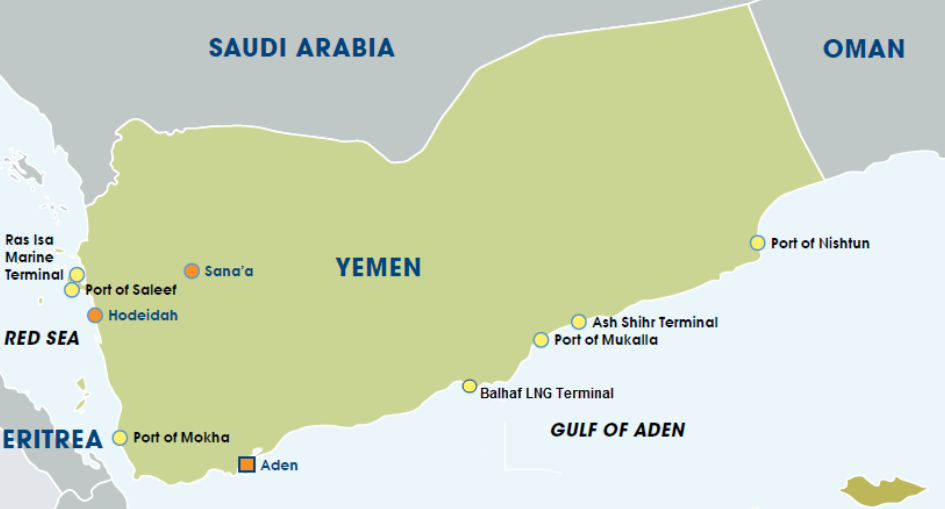
Understanding Yemen’s ports is the foundation of any successful shipping strategy. Each port serves distinct regions and carries different operational realities.
Port of Aden is Yemen’s largest, deepest, and most stable commercial gateway. Located on the Gulf of Aden, it handles the majority of Yemen’s containerized imports and offers regular calls from major shipping lines. Its container terminal can accommodate vessels up to 5,000 TEU, and the port maintains relatively consistent operations compared to other Yemeni ports. For most importers, Aden is the recommended and most reliable entry point.
Port of Hodeidah, situated on the Red Sea coast, historically served as Yemen’s second-largest port and the primary gateway for northern governorates including Sana’a. However, its operational status has been inconsistent since 2015 due to the ongoing conflict. While the port has periodically reopened for commercial and humanitarian cargo, vessel calls remain irregular, and most major carriers have suspended direct service. Shipping to Hodeidah currently carries significantly higher risk and cost.
Port of Mukalla, located on the Arabian Sea in eastern Yemen, is a smaller facility primarily serving the Hadhramaut region. It handles limited container traffic and is best suited for importers with distribution networks in eastern governorates.
| Port | Stability | Liner Frequency | Inland Connectivity | War Risk Surcharge |
|---|---|---|---|---|
| Aden | High — operational year-round | Weekly calls from major carriers | Good road links to south/central Yemen | Standard ($200–$400/container) |
| Hodeidah | Low — intermittent closures | Irregular; no fixed schedules | Sana’a and northern regions (when open) | Elevated ($500–$800/container) |
| Mukalla | Moderate — limited but consistent | Bi-weekly feeder services | Eastern governorates only | Standard |
How to Choose the Right Shipping Method
Selecting the optimal shipping mode depends on your cargo volume, timeline, budget, and tolerance for logistics complexity. Use the decision matrix below to identify the best fit for your situation.
| Your Situation | Recommended Method | Typical Transit | Cost Level |
|---|---|---|---|
| Cargo ≥ 15 CBM or heavy/bulky goods (construction materials, machinery) | FCL Ocean Freight | 25–40 days | Lowest per-unit cost |
| Cargo < 15 CBM, mixed product types, smaller orders | LCL Ocean Freight | 30–45 days | Moderate |
| Sourcing from multiple suppliers across Yiwu, Guangzhou, and Shenzhen | Consolidated Shipping | 30–45 days | Cost-effective for multi-source |
| High-value or time-sensitive goods (electronics, seasonal inventory) | Air Freight / Air DDP | 5–10 days | Premium |
| Want a hands-off, all-inclusive solution — no customs or tax headaches | DDP Door-to-Door | 30–45 days | All-inclusive premium |
| Oversized machinery, vehicles, or project cargo | RoRo / Break Bulk | 30–45 days | Specialized quote |
Ocean Freight from China to Yemen
Ocean freight remains the backbone of China-Yemen trade, offering the best balance of cost and capacity for the vast majority of importers. For a dedicated deep dive into sea logistics on this lane, see our comprehensive guide to Sea Freight From China to Yemen.
FCL (Full Container Load)
FCL shipping gives you exclusive use of an entire container — 20ft, 40ft, or 40ft High Cube. This is the optimal choice when your cargo fills at least 15 CBM. FCL offers faster transit than LCL (no consolidation delays), lower risk of cargo handling damage, and the lowest cost per cubic meter. For Yemen-bound shipments of construction materials, furniture, machinery, or bulk consumer goods, FCL is almost always the right call.
LCL (Less than Container Load)
LCL shipping consolidates your cargo with shipments from other importers inside a shared container. You pay only for the space you use (per CBM), making it cost-effective for smaller volumes. The trade-off: LCL takes 5–10 days longer than FCL due to consolidation at origin and deconsolidation at destination, and your goods are handled more times, slightly increasing damage risk. For Yemen importers testing new product lines or shipping smaller restocking orders, LCL is a practical entry point.
Consolidated Shipping / Groupage
For businesses sourcing from multiple Chinese suppliers — a common scenario for Yemeni importers buying from Yiwu’s wholesale markets, Guangzhou’s electronics districts, and Shenzhen’s manufacturing hubs — consolidated freight shipping is the most efficient approach. Here is how it works: each supplier delivers their goods to a central consolidation warehouse (typically in Shenzhen or Guangzhou), where the freight forwarder inspects, repackages, and combines everything into a single FCL or LCL shipment. This eliminates the cost and complexity of coordinating multiple separate shipments. For importers purchasing mixed goods from Yiwu — the world’s largest small commodities market and a primary sourcing destination for Middle Eastern traders — consolidation is particularly valuable, often reducing total logistics costs by 25–35% compared to shipping each supplier’s cargo separately.
Special Containers, RoRo & Break Bulk
Certain cargo types demand specialized solutions. Refrigerated containers (reefers) protect perishable goods. Roll-on/Roll-off (RoRo) vessels are purpose-built for vehicles and wheeled machinery that can be driven directly onto the ship. Breakbulk Freight Shipping handles oversized or irregularly shaped items — generators, steel beams, heavy construction equipment — that simply cannot fit inside a standard container. For Yemen’s reconstruction sector, break bulk and RoRo services are frequently used to move heavy machinery and construction fleet vehicles.
Air Freight from China to Yemen
When speed matters — seasonal inventory for Ramadan and Eid peaks, high-value electronics, urgent spare parts, or time-sensitive samples — Air Freight delivers. There are no direct flights from China to Yemen; all air cargo transits through Gulf hubs, primarily Dubai (DXB), Doha (DOH), or Jeddah (JED), before connecting to Yemen. Key receiving airports include Sana’a International Airport and Aden International Airport, though flight availability can fluctuate with the security situation.
Air freight services are available in several tiers: Standard Air Freight for routine shipments balancing cost and speed, Express Air Freight for urgent deliveries within 3–5 days door-to-door, Consolidated Air Freight where smaller shipments are combined to reduce per-kilogram costs, and Hazardous Goods Transportation for materials requiring strict regulatory compliance under IATA standards.
A practical note for Yemen importers: air freight costs drop significantly above the 300 kg threshold. A 45 kg sample shipment might cost $8–$11/kg, while a 500 kg commercial air shipment can fall to $3.50–$7.00/kg. If you are shipping enough volume to cross that threshold, the premium over ocean freight narrows considerably.
Shipping Costs from China to Yemen
Shipping costs to Yemen are influenced by more variables than typical trade lanes. The figures below represent all-in ranges as of mid-2026 and reflect current market conditions including Red Sea-related surcharges.
Ocean Freight Rates (Port-to-Port)
| Route (China → Yemen) | 20ft FCL | 40ft FCL / 40HQ | LCL (per CBM) | Notes |
|---|---|---|---|---|
| Shanghai → Aden | $2,150–$2,900 | $3,400–$4,600 | $85–$120 | Most frequent sailings; reliable schedule |
| Ningbo → Aden | $2,200–$3,100 | $3,450–$4,700 | $88–$125 | Often via feeder or transshipment |
| Shenzhen → Aden | $2,250–$3,200 | $3,500–$4,900 | $90–$130 | Strong export volume; competitive rates |
| Guangzhou → Aden | $2,200–$3,150 | $3,420–$4,820 | $89–$128 | Frequent Gulf/Red Sea departures |
| Qingdao → Aden | $2,300–$3,250 | $3,600–$5,000 | $95–$138 | Longer transit; may route via Singapore/Dubai |
| Yiwu → Aden | $2,350–$3,300 | $3,650–$5,100 | $95–$140 | Inland trucking to Ningbo/Shanghai adds 1–2 days |
| Hong Kong → Aden | $2,100–$2,800 | $3,350–$4,550 | $83–$115 | Global hub; stringent Yemen cargo documentation |
| Shanghai → Hodeidah* | $2,800–$4,200 | $4,500–$6,800 | $130–$200 | *Limited service; war risk surcharge applies |
Air Freight Rates (Airport-to-Airport, 100 kg+ General Cargo)
| Route (China → Yemen) | Cost (USD/kg) | Transit |
|---|---|---|
| Shanghai Pudong → Aden (via DXB) | $5.80–$8.20 | 4–7 days |
| Shenzhen Bao’an → Aden (via DXB/DOH) | $6.10–$8.60 | 4–7 days |
| Guangzhou Baiyun → Aden (via DXB) | $5.90–$8.30 | 4–7 days |
| Hong Kong → Aden | $5.70–$8.00 | 3–6 days |
DDP Door-to-Door Pricing Scenarios
For importers who prefer a single all-inclusive price covering the entire journey — factory pickup in China through to final delivery in Yemen, including all duties and taxes — DDP (Delivered Duty Paid) is the most straightforward option.
| DDP Scenario | Shipment Profile | Estimated All-In Cost | Transit Time |
|---|---|---|---|
| LCL DDP to Sana’a | 150 kg / 1 CBM, general cargo | $950–$1,200 | 35–45 days |
| Air DDP to Aden | 45 kg product samples / small consignment | $650–$850 | 7–10 days |
| 20ft FCL DDP to Aden | Full 20ft container, general cargo | $4,200–$5,500 | 30–40 days |
| 40ft FCL DDP to Aden | Full 40ft container, general cargo | $6,500–$8,500 | 30–40 days |
What DDP includes: ocean/air freight, China export customs clearance, Yemen import customs clearance, all import duties and VAT, and last-mile delivery to your door in Yemen. What DDP typically excludes: remote-area delivery surcharges for inland destinations beyond major cities, special permits for regulated product categories, and storage fees if the consignee is unreachable at delivery.
Factors Influencing Shipping Costs
Beyond the standard cost drivers — distance, cargo weight and volume, seasonality, and fuel prices — Yemen-bound shipments face several lane-specific factors:
War Risk Surcharge (WRS) : Carriers impose an additional $200–$800 per container on Red Sea and Gulf of Aden routes to offset elevated insurance and security costs. Hodeidah-bound cargo attracts the higher end of this range.
Red Sea Rerouting: When vessels avoid the Bab el-Mandeb Strait and reroute around the Cape of Good Hope, transit extends by 10–15 days and fuel/operating costs add roughly $800–$1,500 per container.
Port Congestion & Security Checks: Yemeni ports conduct heightened cargo screening, which can add 2–5 days of port stay and associated demurrage risk.
Shipping Time from China to Yemen
Transit times to Yemen require realistic planning — optimistic estimates that ignore current security realities will lead to supply chain disruption.
Transit Time Table
| Route (China → Yemen) | Air Freight | Sea Freight (FCL) | Notes |
|---|---|---|---|
| Shanghai → Aden | 4–7 days | 27–35 days | Direct sea calls available |
| Ningbo → Aden | 4–8 days | 29–37 days | Often via transshipment (Singapore/Dubai) |
| Shenzhen → Aden | 4–7 days | 28–36 days | Consolidated cargo hub; frequent sailings |
| Guangzhou → Aden | 4–7 days | 27–34 days | Customs may add 1–2 days |
| Qingdao → Aden | 5–9 days | 31–40 days | Longest route; multiple transshipment points |
| Hong Kong → Aden | 3–6 days | 25–32 days | Fastest gateway; efficient customs |
All sea freight times are port-to-port. Door-to-door shipments add 3–7 days for last-mile delivery within Yemen (longer for inland destinations like Sana’a, which typically requires 2–5 days of secure trucking from Aden). LCL shipments add an additional 5–10 days for consolidation at origin and deconsolidation at destination.
Factors Influencing Transit Time
The single largest variable affecting Yemen transit times in 2026 is the Red Sea security situation. When carriers assess elevated risk in the Bab el-Mandeb Strait, vessels are diverted around the Cape of Good Hope, adding a minimum of 10–15 days to any Asia-to-Yemen routing. This decision is made at the carrier level and can change with little notice. Working with a freight forwarder who monitors these developments daily is essential for accurate planning.
Additional factors include Yemeni customs processing speed, which varies significantly by port and cargo type (Aden averages 3–5 days for standard cargo with complete documentation; Hodeidah can extend unpredictably), and port congestion during peak import periods such as the weeks preceding Ramadan.
Alternative Routes & Transshipment Hubs
Direct calls to Aden are not always available on your preferred schedule. Understanding alternative routing options provides essential contingency planning:
| Transshipment Hub | Route Description | Added Transit | Reliability |
|---|---|---|---|
| Jebel Ali (Dubai, UAE) | China → Jebel Ali → feeder vessel → Aden | +7–14 days | Most common and reliable transshipment route to Yemen |
| Salalah (Oman) | China → Salalah → feeder vessel → Aden/Mukalla | +5–10 days | Strong alternative; proximity to Yemen reduces feeder time |
| Djibouti | China → Djibouti → short-sea feeder → Aden | +7–14 days | Emergency option when Gulf routes are disrupted |
Jebel Ali is the most established transshipment corridor for Yemen — the port’s massive capacity and high-frequency feeder connections to Aden make it the default fallback when direct calls are unavailable. For importers also shipping to neighboring Gulf markets, we provide dedicated services for Shipping from China to UAE, Shipping from China to Saudi Arabia, and Shipping from China to Oman.
Door-to-Door & DDP Service
Door to door shipping from China to Yemen eliminates the coordination burden of managing multiple logistics providers across different stages of the journey. For Yemen, where local customs brokerage options are limited and inland transportation can be complex, the value of an integrated door-to-door service is amplified.
There are two primary Incoterms governing door-to-door shipments:
DDU (Delivered Duty Unpaid) : The seller arranges transportation all the way to the buyer’s door, but the buyer is responsible for paying import duties and taxes upon arrival. This gives the buyer control over the customs clearance process but requires them to have a Yemeni customs broker or handle clearance personally.
DDP (Delivered Duty Paid) : The seller assumes full responsibility — transportation, both-side customs clearance, and payment of all import duties and VAT. The buyer simply receives the goods at their doorstep. For Yemen, DDP is overwhelmingly the preferred choice for importers without an established in-country logistics team. Yemen’s customs environment is challenging: documentation requirements are stringent, duty assessment can be unpredictable, and local broker availability outside Aden is limited. DDP transfers all of this complexity to your freight forwarder.
DDP services are available across all modes: LCL DDP for smaller shipments, FCL DDP for full container loads, and Air DDP for urgent consignments. A practical consideration for Yemen DDP: last-mile delivery from Aden to inland destinations like Sana’a, Taiz, or Ibb requires secure trucking arrangements. Road conditions and checkpoints can add 2–5 days beyond the port arrival date. An experienced freight forwarder will have vetted local transport partners and factor these variables into the delivery timeline.
Yemen Import Requirements & Documentation
This is where most generic shipping guides fall short — and where importers face the highest risk of delays, fines, or cargo rejection. Yemen’s import regime has specific requirements that differ materially from neighboring Gulf states.
Regulatory Authorities
Yemen Standards Organization (YSO) : Mandates product compliance for regulated categories including food, electrical goods, construction materials, and cosmetics. Importers may need to obtain YSO conformity certificates before shipment.
Yemen Customs Authority: Enforces tariff classification, valuation, and documentary compliance at all ports of entry.
Ministry of Industry and Trade: Issues import licenses for restricted product categories.
Required Shipping Documents
Every Yemen-bound commercial shipment must be accompanied by complete and accurate documentation. Missing or improperly prepared documents are the single most common cause of customs delays.
| Document | Required? | Yemen-Specific Notes |
|---|---|---|
| Commercial Invoice | Always | Must detail HS Codes, unit values, total CIF value, and country of origin for each line item. Arabic translation recommended. |
| Packing List | Always | Must match commercial invoice exactly. Include gross/net weights and package dimensions. |
| Bill of Lading (B/L) or Airway Bill (AWB) | Always | Consignee details must match import license holder. “To Order” B/L may require additional endorsements. |
| Certificate of Origin | Always | Must be certified by the China Council for the Promotion of International Trade (CCPIT). Yemeni authorities may also require consular legalization at the Yemeni Embassy. |
| YSO Certificate of Conformity | For regulated products | Required for food, electronics, building materials, toys, cosmetics, and medical devices. Obtain before shipping. |
| Import License | For restricted categories | Required for pharmaceuticals, chemicals, weapons/ammunition, telecommunications equipment, and certain agricultural products. |
| Insurance Certificate | Recommended | While not always mandatory, shipments without insurance documentation may face additional scrutiny. |
Restricted & Prohibited Items
Yemen enforces strict import controls. Key restrictions to be aware of:
Absolutely Prohibited: Goods of Israeli origin or that have transited through Israel; narcotics and psychotropic substances; pornography; counterfeit currency and goods; materials deemed contrary to Islamic values.
Restricted (License Required) : Pharmaceuticals and medical devices; telecommunications and broadcasting equipment; weapons, ammunition, and dual-use items; certain chemicals and pesticides; used vehicles over 7 years old.
Heightened Scrutiny: Used electronics and electrical equipment; second-hand clothing and textiles; food products without clear expiration dating and Arabic labeling.
Customs Duties & Taxes
Yemen applies a tiered tariff structure based on the Harmonized System (HS Code):
Raw materials and essential foodstuffs: 5% customs duty
Semi-finished goods and industrial inputs: 10–15%
Finished consumer goods: 15–25%
Luxury items and certain vehicles: 25%+
A 5% VAT (Value Added Tax) is applied on top of the CIF value plus customs duty. Here is a worked example:
For a shipment of electronics with a CIF value of $10,000, classified under a 15% duty rate:
Customs Duty = $10,000 × 15% = $1,500
VAT = ($10,000 + $1,500) × 5% = $575
Total import cost (duties + taxes) = $2,075
Document Checklist
Before your shipment departs China, verify you have all of the following:
- Commercial Invoice (with HS Codes, values, origin per line item; Arabic translation recommended)
- Packing List (matching invoice exactly)
- Bill of Lading / Airway Bill (consignee matches import license)
- Certificate of Origin (CCPIT-certified; consular legalization as required)
- YSO Certificate of Conformity (if applicable to your product category)
- Import License (if applicable to your product category)
- Insurance Certificate
- Any supplier test reports, quality certifications, or product safety documentation
Security & Risk Management for Yemen Shipments
An honest assessment of the security environment is essential for any importer shipping to Yemen. Avoiding the topic does not serve anyone — transparency enables informed decisions.
The Red Sea and Gulf of Aden have experienced significant maritime security disruptions since late 2023, with Houthi forces targeting commercial vessels in the Bab el-Mandeb Strait and surrounding waters. While the intensity has fluctuated, the security situation continues to affect shipping operations in 2026. Major carriers have adopted varying approaches: some maintain Red Sea transits with enhanced security protocols, while others continue to reroute via the Cape of Good Hope.
For importers, the practical implications are:
War Risk Surcharge (WRS) of $200–$800 per container is standard on this lane and should be factored into all cost calculations.
Aden remains the safer and more consistently accessible port. Hodeidah carries significantly higher risk due to its location within the active conflict zone and should only be used when absolutely necessary and with a freight forwarder who has current, verified information on port status.
Cape of Good Hope rerouting adds 10–15 days and approximately $800–$1,500 per container in additional fuel and operational costs.
Contingency planning is non-negotiable: if your intended destination port becomes inaccessible mid-transit, your freight forwarder must have the network and authority to reroute to an alternative port (typically Jebel Ali, Salalah, or Djibouti) without stranding your cargo.
At Dantful International Logistics, we maintain continuous monitoring of Red Sea security developments through industry channels including the International Maritime Bureau (IMB) Piracy Reporting Centre and major carrier security desks. Our multi-carrier relationships give us the flexibility to pivot routings when conditions change.
Cargo Insurance for Yemen Shipments
For most trade lanes, cargo insurance is advisable. For Yemen, it is essential. Between the elevated handling risks of transshipment-heavy routings, port security concerns, and the unpredictability of conflict-adjacent logistics, uninsured cargo represents an unacceptable exposure.
All Risks (Institute Cargo Clauses A) provides the broadest coverage, protecting against physical loss or damage from external causes throughout the transit. War Risk coverage is a separate extension — standard marine cargo policies typically exclude war, strikes, and civil commotion, and given Yemen’s situation, this extension should be considered mandatory. Strike, Riot & Civil Commotion (SRCC) coverage addresses loss or damage arising from labor actions and civil unrest.
For Yemen-bound shipments, expect insurance premiums of approximately 1%–3% of the cargo’s declared value, depending on the commodity, routing, and coverage scope. Higher premiums reflect the lane’s elevated risk profile, but the cost is modest compared to the potential loss of an uninsured container. Dantful’s Insurance Services are structured under Institute Cargo Clauses and can be arranged as part of any shipment — ask your account manager to include a tailored insurance quote with your freight proposal.
Step-by-Step Shipping Process with Dantful
Here is how a typical Yemen shipment flows when you partner with Dantful International Logistics, with Yemen-specific considerations at each stage.
Step 1 — Initial Consultation & Port Selection: We assess your cargo type, volume, timeline, and destination within Yemen to recommend the optimal port of entry — Aden in most cases, with Hodeidah or Mukalla evaluated if your distribution needs require them. We also determine whether DDP, CIF, or FOB terms best suit your budget and risk tolerance.
Step 2 — Booking & Cargo Preparation: Yemen lane bookings require extra lead time due to limited carrier options and security-related capacity constraints. We recommend confirming bookings at least 2–3 weeks before your planned shipment date. Our team coordinates supplier pickup across all major Chinese manufacturing regions — Shenzhen, Guangzhou, Yiwu, Ningbo, Shanghai, and beyond — and manages packaging, labeling, and consolidation at our Shenzhen warehouse.
Step 3 — Documentation & Export Clearance: This is the most critical stage for Yemen shipments. Our documentation team prepares and reviews every required document against the Yemen-specific checklist (see Section 9.5), ensuring your Certificate of Origin is properly certified, your commercial invoices include HS Codes and Arabic-ready descriptions, and any YSO or import license requirements are addressed before cargo is loaded. Chinese export Customs Clearance is handled concurrently.
Step 4 — International Transit & Tracking: Once your cargo is on the water or in the air, you receive real-time tracking updates through our online platform, with proactive notifications at key milestones — vessel departure, transshipment arrival, port approach, and customs clearance initiation. For Yemen shipments, we monitor Red Sea security developments throughout transit and can initiate rerouting if conditions warrant.
Step 5 — Yemen Customs Clearance & Final Delivery: Upon arrival at Aden (or your chosen port), our Yemeni clearance partners handle import customs processing, duty and VAT payment, and cargo release. For DDP shipments, this is all included in your quoted price. Final delivery to Sana’a, Taiz, Ibb, or other inland destinations is executed via vetted secure trucking partners with real-time convoy monitoring. You receive delivery confirmation and all completed customs documentation upon handover.
How to Choose a Freight Forwarder for Yemen
Not every freight forwarder is equipped to handle Yemen. The lane demands specific expertise, networks, and risk management capabilities. Here are the criteria to evaluate when selecting your logistics partner:
Yemen Local Agent Network: Does the forwarder have established, vetted partners at your destination port and in your target inland city? Without a reliable agent on the ground in Aden, your customs clearance and last-mile delivery will depend on whoever is available — a significant gamble.
Red Sea & Gulf of Aden Route Experience: The Yemen lane requires active monitoring of security developments, flexible carrier relationships, and the ability to pivot routings at short notice. A forwarder whose primary lanes are stable US-Europe routes will not have the infrastructure to manage Yemen’s volatility.
Arabic Documentation Capability: Yemeni customs authorities may require Arabic-language documentation. A forwarder with multilingual capabilities — specifically Arabic — can handle document preparation and communication with Yemeni authorities without delays.
War Risk Insurance Access: Can the forwarder arrange comprehensive cargo insurance including war risk and SRCC extensions for Yemen? If their insurer excludes Yemen coverage, that is a red flag.
DDP Fulfillment Capability: Many forwarders advertise DDP but lack the local infrastructure to actually clear goods, pay duties, and arrange last-mile delivery in Yemen. Verify that their DDP service includes a named local partner with a track record.
International Certifications: Look for recognized credentials: NVOCC (Non-Vessel Operating Common Carrier) certification demonstrates regulatory compliance and carrier relationships; FMC (Federal Maritime Commission) licensing indicates US-recognized operational standards; Jctrans membership reflects standing within the global freight forwarding community.
Dantful International Logistics holds all four certifications — Class-A Chinese freight forwarder, NVOCC, FMC, and Jctrans — and has been operating China-to-Middle-East routes since our founding in 2008. Our Yemen operations are supported by a network of trusted local agents in Aden, Hodeidah, and Sana’a, managed by dedicated account managers who understand this lane in depth.
Why Dantful for Your Yemen Shipments
When you ship from China to Yemen with Dantful International Logistics, you partner with a freight forwarder built for complex lanes:
15+ Years of Experience: Founded in 2008 and headquartered in Shenzhen, China — the epicenter of global freight forwarding. As a premier freight forwarder in shenzhen china, we have navigated every market cycle, peak season, and geopolitical disruption the Yemen lane has experienced.
Quadruple Certification: Class-A freight forwarder (China Ministry of Commerce), NVOCC (Ministry of Transport), FMC-licensed, and Jctrans member — credentials that no other forwarder in the Yemen lane can claim together.
Scale That Delivers: 50 operations specialists and 50+ customer service professionals ensure your shipment receives dedicated, expert attention at every stage — not a one-person operation stretched across dozens of clients.
Direct Carrier Contracts: Our volume agreements with major shipping lines and airlines secure competitive rates and, critically, space allocation even during peak season capacity crunches.
200-Country Agent Network: Our partners in Aden, Hodeidah, and Sana’a are relationships we have cultivated and vetted — not a random subcontractor arrangement.
True End-to-End Service: From multi-supplier consolidation in China to DDP delivery at your door in Yemen, one team manages the entire chain. Real-time tracking visibility and a dedicated account manager keep you informed 24/7.
FAQs
1. How much does shipping from China to Yemen cost?
Ocean freight for a 20ft container ranges from $2,100 to $3,300 depending on the origin port; a 40ft container ranges from $3,350 to $5,100. LCL shipments cost $83–$140 per CBM. Air freight ranges from $5.70 to $8.60 per kilogram for shipments over 100 kg. DDP door-to-door service for a 20ft container to Aden typically runs $4,200–$5,500 all-inclusive. All prices are 2026 estimates and fluctuate with market conditions and security surcharges. For a more granular breakdown by shipping mode and real-time rate updates, see our dedicated guide on how much is shipping from China to Yemen.
2. How long does sea freight from China to Yemen take?
Port-to-port sea freight from major Chinese ports to Aden takes 25–40 days, depending on the origin port and whether the routing is direct or via transshipment. Hong Kong offers the fastest sea transit (25–32 days); Qingdao the longest (31–40 days). LCL shipments add 5–10 days for consolidation and deconsolidation. Door-to-door delivery to inland destinations like Sana’a adds an additional 2–5 days.
3. What is the cheapest way to ship from China to Yemen?
For shipments over 15 CBM, FCL ocean freight offers the lowest cost per cubic meter. For smaller volumes, LCL consolidation is the most economical option, though the per-unit cost is higher than FCL. Consolidated shipping can further reduce costs if you are sourcing from multiple Chinese suppliers by combining everything into a single shipment, typically saving 25–35% versus shipping from each supplier separately.
4. Can I get DDP door-to-door shipping to Yemen?
Yes. DDP door-to-door service to Yemen is widely available through experienced freight forwarders. The service covers the complete journey: factory pickup in China, export customs clearance, international freight, Yemen import customs clearance, payment of all duties and VAT, and last-mile delivery to your door. For Yemen specifically, DDP is strongly recommended due to the complexity of local customs procedures and the limited availability of independent customs brokers.
5. What documents do I need to import goods into Yemen?
Essential documents include: commercial invoice (with HS Codes and values), packing list, bill of lading or airway bill, certificate of origin (CCPIT-certified; consular legalization may be required), YSO certificate of conformity (for regulated products), and an import license (for restricted categories such as pharmaceuticals and telecommunications equipment). Arabic translations of key documents are recommended to expedite customs processing.
6. Which is better for Yemen — Port of Aden or Port of Hodeidah?
Port of Aden is the recommended choice for the vast majority of shipments. It is more stable operationally, has regular carrier calls, and carries lower war risk surcharges. Port of Hodeidah, while geographically closer to Sana’a and northern governorates, operates intermittently due to conflict conditions and carries significantly higher risk and cost. Unless your cargo is specifically destined for a humanitarian operation with established Hodeidah access, choose Aden.
7. Do I need cargo insurance when shipping to Yemen?
Yes. Cargo insurance is effectively mandatory for Yemen shipments given the lane’s elevated risk profile — transshipment-heavy routings, port security concerns, and conflict-adjacent logistics. Standard marine cargo insurance should be extended with war risk and SRCC (strike, riot, and civil commotion) coverage. Expect premiums of 1–3% of the declared cargo value.
8. Are there any restricted items I cannot ship to Yemen?
Yes. Absolutely prohibited items include Israeli-origin goods, narcotics, pornography, and counterfeit products. Restricted items requiring pre-approval or import licenses include pharmaceuticals, weapons and dual-use items, telecommunications equipment, certain chemicals, and used vehicles over 7 years old. Always verify your product’s classification with your freight forwarder before shipping.
9. How do I find a reliable freight forwarder for Yemen shipments?
Look for a forwarder with: (1) established local agent relationships in Aden and your inland destination in Yemen, (2) demonstrated Red Sea route experience, (3) Arabic-language documentation capability, (4) ability to arrange war risk cargo insurance, (5) proven DDP fulfillment in Yemen, and (6) recognized international certifications (NVOCC, FMC, Jctrans). Verify each of these before committing.