
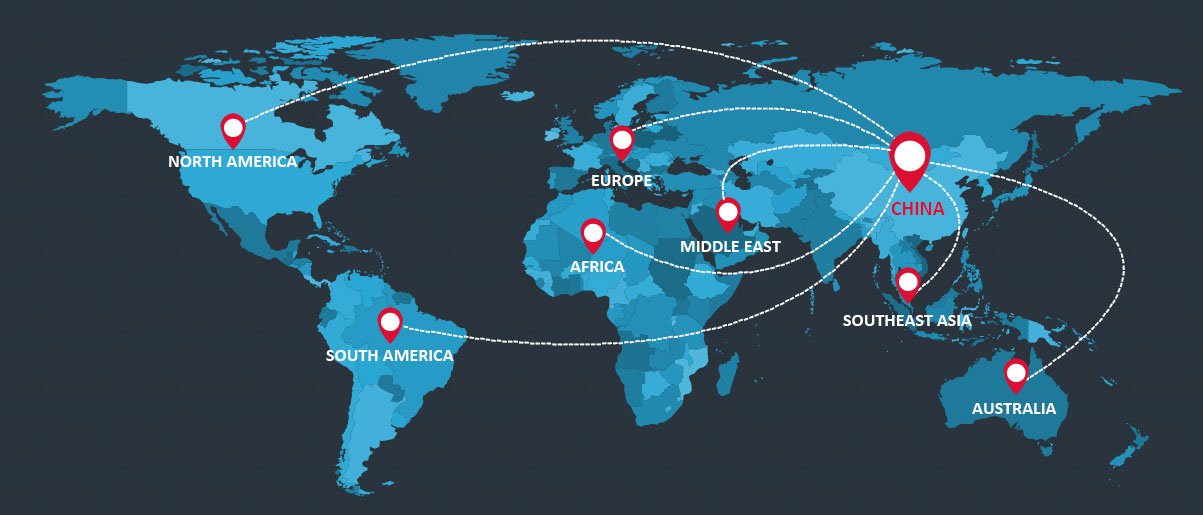
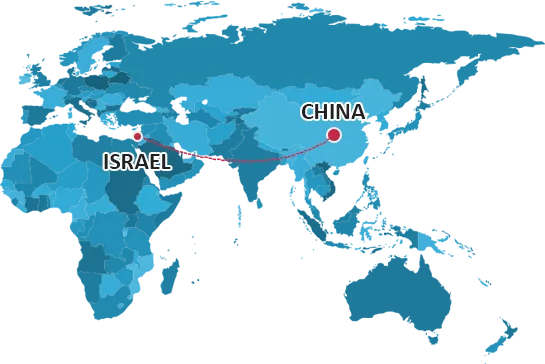
China has consistently ranked among Israel’s largest trading partners, with bilateral trade spanning electronics, machinery, textiles, automotive parts, medical devices, and consumer goods. As a vital node in the Belt and Road Initiative (BRI), Israel benefits from deepening logistical ties with China — exemplified by the Chinese-operated terminal at Haifa Port, which has significantly expanded capacity on this corridor.
For Israeli importers — whether B2B wholesalers, e-commerce sellers, or procurement managers at manufacturing firms — understanding how to efficiently move goods from China’s factory hubs to Israeli warehouses is not just a logistics question; it is a competitive advantage. Delays at Ashdod, unexpected customs holds due to missing SII certification, or hidden destination charges can quickly erode margins on an otherwise profitable shipment.
In this guide, we draw on 15+ years of hands-on freight forwarding experience on the China-Israel route to give you a complete, no-nonsense reference — covering every shipping method, cost breakdown, customs regulation, and practical decision framework you need before you book.
Shipping Methods from China to Israel
Choosing the right shipping method depends on three variables: cargo volume, urgency, and budget. Below we break down every available option so you can match the method to your shipment profile.
Ocean Freight from China to Israel
Ocean freight remains the backbone of China-Israel trade, offering the lowest cost per unit for shipments of any meaningful size. It is the default choice for B2B importers moving palletized or containerized goods. For a dedicated look at carrier options, sailing schedules, and rate negotiation strategies, see our complete sea freight from China to Israel guide.
Container Types Explained: 20ft, 40ft, and 40HQ
Before you can compare FCL and LCL, it helps to understand the container options available:
| Container Type | Internal Dimensions (L×W×H) | Door Opening (W×H) | Max Payload | Typical Capacity |
|---|---|---|---|---|
| 20ft GP | 5.90 × 2.35 × 2.39 m | 2.34 × 2.28 m | ~28,000 kg | 10 standard pallets / ~33 CBM |
| 40ft GP | 12.03 × 2.35 × 2.39 m | 2.34 × 2.28 m | ~26,500 kg | 22 standard pallets / ~67 CBM |
| 40ft HQ | 12.03 × 2.35 × 2.69 m | 2.34 × 2.58 m | ~26,300 kg | 22-24 standard pallets / ~76 CBM |
GP = General Purpose; HQ = High Cube (extra 30 cm height).
FCL vs LCL: Which One to Choose?
| Dimension | FCL (Full Container Load) | LCL (Less than Container Load) |
|---|---|---|
| Best for | Shipments over 15 CBM or heavy cargo | Shipments between 2 and 15 CBM |
| Cost efficiency | Lowest cost per unit at volume | Shared container costs; higher per-CBM rate |
| Transit time | 20–35 days (direct) | 25–40 days (includes consolidation & deconsolidation) |
| Cargo safety | Sealed container, minimal handling | Multiple handling points; reinforce packaging |
| Ideal for | Bulk machinery, furniture, large orders | Small-batch electronics, textiles, sample orders |
| Last-mile | Direct trucking from port | Requires unpacking at CFS and light-truck delivery |
The 15 CBM rule of thumb: If your shipment is under 15 CBM, LCL is usually more economical. Above 15 CBM, the per-unit cost of FCL drops below LCL rates, making a dedicated container the better choice. At exactly the borderline, factor in the transit time advantage of FCL (5–10 days faster) and the reduced handling risk. For a detailed rate table by port pair and container type, see our container shipping costs from China to Israel page.
Special Equipment, Breakbulk & OOG
Not all cargo fits neatly into a standard container. For non-standard shipments, the following options are available on the China-Israel route:
Refrigerated Containers (Reefers): For perishable goods and temperature-sensitive cargo. Available in 20ft and 40ft. Ensure your forwarder confirms reefer plug availability on the selected vessel.
Open-Top Containers: For cargo too tall for standard doors (e.g., large machinery loaded by crane).
Flat-Rack Containers: For heavy or oversized equipment that cannot fit within container walls.
OOG (Out of Gauge) Freight: When cargo exceeds standard container dimensions in any direction. Requires specialized stowage planning and may incur additional surcharges.
Breakbulk Shipping: For oversized cargo that cannot be containerized at all — loaded individually onto the vessel. Common for construction equipment, industrial boilers, and large structural components.
Ro-Ro (Roll-on/Roll-off): For vehicles, trucks, and wheeled construction equipment that can be driven directly onto the vessel.
Israel route note: Not all special equipment types have the same availability to Ashdod and Haifa. Confirm with your forwarder which equipment types are regularly positioned on your departure port’s Israel-bound services.
Port Comparison: Ashdod vs Haifa vs Eilat
Israel has three international seaports. Choosing the right destination port affects both transit time and inland delivery cost.
| Port | Location | Specialization | Congestion Risk | Best For |
|---|---|---|---|---|
| Ashdod | South of Tel Aviv | Israel’s largest container port; handles ~60% of containerized imports | High during Passover (3–5 day backlogs common); also during peak season (Aug–Oct) | Most general cargo; closest to Tel Aviv and central Israel |
| Haifa | Northern Israel | Major container & bulk terminal; Chinese-operated terminal (Bayport) | Moderate — often smoother than Ashdod | Northern Israel destinations; a good fallback when Ashdod is congested |
| Eilat | Southern tip (Red Sea) | Smaller volume; niche for Far East direct calls | Low | Southern Israel; limited liner service frequency |
Operational tip: If your shipment lands during Passover (March/April) or the August–October peak, consider routing via Haifa to avoid Ashdod’s well-known seasonal backlogs. The extra 1–2 hours of inland trucking to central Israel is often cheaper than 3–5 days of port storage fees.
Major China Departure Ports for Israel
| China Port | Terminal(s) | Typical Transit to Ashdod | Notes |
|---|---|---|---|
| Shanghai | Yangshan, Waigaoqiao | 22–28 days | Largest Chinese port; highest service frequency |
| Ningbo-Zhoushan | Beilun, Chuanshan | 24–32 days | Major export hub; strong LCL consolidation |
| Shenzhen | Yantian, Shekou, Dachan Bay | 20–30 days | Closest to South China manufacturing; fastest transit |
| Guangzhou | Nansha | 23–30 days | Strong for Pearl River Delta factories |
| Qingdao | Qianwan | 27–36 days | Northern China; may involve transshipment |
| Hong Kong | Kwai Tsing | 21–27 days | Premium hub; fastest transit, competitive rates |
| Xiamen | Haicang | 25–33 days | Good for Fujian province exporters |
| Tianjin | Xingang | 28–38 days | Northern China; longer transit |
Air Freight from China to Israel
Air freight is the go-to choice for time-sensitive, high-value, or lightweight shipments that cannot afford the 3–5 week ocean transit. It offers unmatched speed and cargo security at a higher cost per kilogram.
Key Airports & Routes
China Departure Airports: Shanghai Pudong (PVG), Guangzhou Baiyun (CAN), Shenzhen Bao’an (SZX), Beijing Capital (PEK), Chengdu Shuangliu (CTU), Xiamen Gaoqi (XMN)
Israel Arrival Airport: Ben Gurion International Airport (TLV), near Tel Aviv — the primary and virtually sole international air cargo gateway to Israel
Secondary Israeli Airports: Haifa Airport (HFA) and Ramon Airport (ETM, near Eilat) handle limited cargo but can be options for specialized charter flights
| Service Level | Transit Time | Rate (USD/kg, 100kg+) | Best For |
|---|---|---|---|
| Express Air Freight | 3–5 days | $5.0–$8.0 | Urgent shipments, emergency inventory |
| Standard Air Freight | 5–7 days | $4.5–$7.0 | Regular high-value goods |
| Consolidated Air Freight | 6–9 days | $3.5–$5.5 | Smaller shipments sharing cargo space |
How Air Freight Costs Are Calculated
Air freight is charged on chargeable weight — the greater of actual weight and volumetric weight.
Volumetric Weight Formula:
Volumetric Weight (kg) = Length (cm) × Width (cm) × Height (cm) ÷ 6000Example: A box measuring 100×80×60 cm with an actual weight of 40 kg:
Volumetric weight = 100 × 80 × 60 ÷ 6000 = 80 kg
Chargeable weight = 80 kg (higher than the 40 kg actual weight)
If your rate is $5.50/kg, you pay 80 × $5.50 = $440, not 40 × $5.50 = $220. This is why lightweight but bulky goods (textiles, packaging materials, furniture components) can be surprisingly expensive by air.
Express Courier Options (DHL / FedEx / UPS / SF Express)
For small parcels, samples, documents, and e-commerce shipments under 100 kg, express couriers offer true door-to-door delivery with built-in customs clearance:
| Courier | Transit Time | Rate (USD/kg) | Best For |
|---|---|---|---|
| DHL Express | 3–5 days | $10–$25 | Documents, small high-value items |
| FedEx | 4–7 days | $10–$22 | E-commerce, sample shipments |
| UPS | 4–7 days | $10–$22 | Small commercial parcels |
| SF Express | 5–8 days | $8–$18 | Budget-conscious small parcels; strong China network |
Important: Express couriers typically require the consignee (you) to handle Israeli customs clearance — unless you book through a freight forwarder offering DDP express service. If you are unfamiliar with the Sha’ar Olami customs process, a forwarder-managed DDP service is the safer choice.
Sea-Air Combined: Fast & Cost-Effective
There is a third option worth considering — particularly in the current Red Sea environment — that sits between pure ocean and pure air on both cost and speed: Sea-Air Combined.
How it works:
Cargo is shipped by ocean from China (typically Shanghai, Ningbo, or Shenzhen) to Dubai (Jebel Ali Port) or another Gulf hub
At Jebel Ali, cargo is transferred to air freight for the final leg to Tel Aviv (TLV)
| Dimension | Pure Sea Freight | Sea-Air Combined | Pure Air Freight |
|---|---|---|---|
| Transit Time | 25–45 days | 15–22 days | 3–7 days |
| Cost (vs Pure Air) | ~20–30% of air cost | ~50–60% of air cost | 100% (baseline) |
| Best For | Large, non-urgent shipments | Medium-urgency shipments during Red Sea disruptions | Urgent, high-value cargo |
When does Sea-Air make sense?
Red Sea rerouting via the Cape of Good Hope would push ocean transit to 40+ days
You need faster delivery than ocean can provide, but your cargo volume makes pure air freight uneconomical
Your shipment is in the 3–10 CBM range where air freight costs would be prohibitive
Cheapest Way to Ship: Cost Comparison by Volume
Every importer wants to know: “What’s the cheapest way to get my goods from China to Israel?” The answer depends almost entirely on your cargo volume.
| Cargo Volume | Cheapest Method | Estimated Cost | Best For |
|---|---|---|---|
| < 100 kg / < 0.5 CBM | Consolidated Express or Air Freight | $8–$25/kg | Samples, small e-commerce orders, spare parts |
| 0.5–2 CBM | LCL Sea Freight | $80–$120/CBM | Small commercial orders, initial stock for testing |
| 2–10 CBM | LCL Sea Freight | $65–$100/CBM | Regular B2B shipments, Amazon FBA restocking |
| 10–15 CBM | LCL Sea Freight (or FCL at upper end) | $60–$90/CBM | Borderline — compare FCL quote vs LCL |
| > 15 CBM | FCL Sea Freight (20ft or 40ft) | 20ft: $1,400–$2,200; 40ft: $2,300–$3,500 | Bulk imports, machinery, furniture, large orders |
A word of caution: The cheapest method is not always the best method. A $200 savings on freight that causes 14 days of stock-out at your Israeli warehouse is not a saving — it’s a loss. Always weigh cost against transit time reliability, cargo safety, and customs clearance predictability when making your decision. For a deeper comparison of budget-friendly shipping companies and rate negotiation tips, check out our guide to the cheapest shipping company from China to Israel.
Shipping Costs from China to Israel
Route-by-Route Cost Table
The table below provides estimated air and sea freight costs for the six most common China–Israel shipping routes. All rates are for reference and fluctuate with market conditions.
| Route | Air Freight (USD/kg, 100kg+) | Sea Freight FCL (USD/Container) | Sea Freight LCL (USD/CBM) | Notes |
|---|---|---|---|---|
| Shanghai to Ashdod | $5.0–$7.4 | 20ft: $1,480–$2,150 / 40ft: $2,350–$3,250 | $50–$85 (min 2–3 CBM) | Multiple direct & transshipment options; highest service frequency |
| Ningbo to Haifa | $5.2–$7.5 | 20ft: $1,500–$2,200 / 40ft: $2,400–$3,350 | $52–$90 | Haifa is northern Israel’s hub; strong LCL consolidation from Ningbo |
| Shenzhen to Tel Aviv (via Ashdod/Haifa) | $5.3–$7.8 | 20ft: $1,530–$2,250 / 40ft: $2,450–$3,400 | $55–$95 | Tel Aviv delivery requires 1–2 days trucking from port after arrival |
| Guangzhou to Ashdod | $5.1–$7.3 | 20ft: $1,490–$2,180 / 40ft: $2,380–$3,300 | $51–$87 | Strong air links; sea congestion possible during Aug–Oct peak |
| Qingdao to Haifa | $5.5–$8.2 | 20ft: $1,570–$2,280 / 40ft: $2,520–$3,500 | $55–$97 | Longer transit (~26–31 days); seasonal volatility higher |
| Hong Kong to Ashdod | $4.8–$7.1 | 20ft: $1,420–$2,050 / 40ft: $2,320–$3,180 | $48–$83 | Premium hub with competitive air rates and reliable LCL/FCL services |
Rates are estimates as of mid-2026. Actual costs vary based on cargo specifics, fuel surcharges (BAF), peak season demand, and carrier availability. Always request a current, binding quote from your forwarder.
2026 Sea Freight Rate Trends & Market Context
Several macro factors are shaping China-Israel ocean freight rates in 2026:
Red Sea Disruptions: Ongoing security concerns in the Red Sea have caused intermittent rerouting around the Cape of Good Hope, adding 10–14 days and significant fuel costs to Asia-Mediterranean sailings. When carriers avoid the Suez Canal, Israel-bound vessels are directly impacted.
Carrier Landscape: Major carriers serving the China-Israel lane include ZIM (Israel’s national carrier — strongest local network), Maersk, MSC, CMA CGM, COSCO, ONE, Hapag-Lloyd, and Evergreen. ZIM often offers the most competitive transit times to Ashdod and Haifa due to its hub-and-spoke model centered on Israel.
Peak Season Patterns: Rates reliably rise from August through October (global peak season) and in the 3–4 weeks before Chinese New Year (January/February). If your shipment is flexible, May–June and November typically offer lower rates.
Fuel Costs: The Bunker Adjustment Factor (BAF) fluctuates with global oil prices and is typically updated quarterly by carriers.
Hidden Costs You Need to Budget For
Freight cost is only part of the picture. The following destination-side charges catch many first-time importers off guard:
| Cost Item | Description | Estimated Range |
|---|---|---|
| Terminal Handling Charges (THC) | Port fees for loading/unloading containers | $100–$350 per container |
| Customs Examination Fees | Charged if Israeli Customs selects your shipment for physical inspection | $100–$500+ depending on scope |
| Port Storage Fees | Daily charge if cargo sits at Ashdod/Haifa beyond the free period (typically 3–5 days) | ₪80–₪200 / day (~$25–$60/day) |
| Demurrage & Detention | Container usage fees beyond the allotted free days at the port and off-dock | $50–$150/day per container |
| Customs Broker Fees | Service fee for filing import declarations (Tozer) in Sha’ar Olami | $100–$300 per entry |
| SII Testing / Certification Fees | Lab testing and standards certification — mandatory for regulated product categories | $300–$3,000+ per product SKU |
| Inland Trucking | Haifa/Ashdod to final destination in Tel Aviv, Jerusalem, or elsewhere | $200–$800 depending on distance and truck type |
How to protect yourself: A professional DDP (Delivered Duty Paid) quote should include all of the above as line items or as a bundled all-in rate. Always ask your forwarder: “Does your quote include Israeli THC, port storage, customs broker fees, and final delivery?” If the answer is “no” or “it depends,” keep digging. For a complete walkthrough of cost factors and how to build an accurate shipping budget, visit our how much is shipping from China to Israel cost guide.
Shipping Time from China to Israel
Route-by-Route Transit Time Table
| Route | Air Freight | Sea Freight (Port-to-Port) | Notes |
|---|---|---|---|
| Shanghai to Ashdod | 3–5 days | 22–28 days | Direct or transshipment via Singapore possible |
| Ningbo to Haifa | 3–5 days | 24–32 days | May involve SE Asia hub transshipment |
| Shenzhen to Tel Aviv | 3–5 days (direct) | 25–34 days (port + 1–2 days trucking) | Tel Aviv delivery via Ashdod or Haifa |
| Guangzhou to Ashdod | 3–4 days | 23–30 days | Frequent flights; sea routes may involve limited intermediate stops |
| Qingdao to Haifa | 4–6 days | 27–36 days | Multiple transshipments possible; longer routings common |
| Hong Kong to Ashdod | 2–3 days | 21–27 days | Hong Kong’s air links among the fastest; priority port for most imports |
Notes:
Air freight times represent airport-to-airport transit plus origin processing; add 1–2 days for door delivery.
Sea freight times are port-to-port; door delivery to Tel Aviv, Jerusalem, or inland cities adds 1–3 days for trucking.
Schedules may extend during peak seasons, Israeli public holidays, or due to vessel bunching at transshipment hubs.
Seasonal Planning Calendar: When to Book
Aligning your shipping schedule around predictable seasonal disruptions can save you both time and money.
| Period | Risk Event | Impact | Recommended Action |
|---|---|---|---|
| January – Early February | Chinese New Year (CNY) | Factories close 2–4 weeks; pre-CNY cargo rush drives up rates and fills vessel space | Book 4–6 weeks ahead; ship by mid-January or wait until late February |
| March – April | Passover (Pesach) | Israeli port operations slow; Ashdod frequently sees 3–5 day backlogs; customs staffing reduced | Route via Haifa if possible; add 5–7 days to your expected delivery date |
| Late May – June | Seasonal Lull | Lowest rates and best vessel availability of the year | Ideal window for large-volume, non-urgent shipments |
| August – October | Global Peak Season | Highest ocean freight rates; vessels full; port congestion worsens | Book 3–4 weeks in advance; consider sea-air combined as overflow option |
| Early October | China Golden Week | Factories and forwarders closed ~1 week | Complete shipments before October 1 or schedule for mid-October onwards |
| December | Year-End + Hanukkah | Israeli holidays reduce working days; year-end volume surge | Ship by early December; avoid last-minute bookings |
Incoterms 2020 for China to Israel Shipping
Incoterms (International Commercial Terms) define exactly who pays for what — and, critically, at which point the risk of loss or damage transfers from seller to buyer. Choosing the wrong Incoterm on a China-Israel shipment can mean unexpected costs, customs headaches, or cargo stranded at Ashdod.
Quick Reference: Four Key Incoterms Compared
| Incoterm | Seller / Exporter Pays For | Buyer / Importer Pays For | Risk Transfers | Israel Import Risk On |
|---|---|---|---|---|
| EXW (Ex Works) | Factory pickup only — goods made available at seller’s premises | Everything: China export clearance, freight, Israel customs clearance, duties, VAT, delivery | At the seller’s factory gate | Buyer — maximum risk; you manage the entire chain |
| FOB (Free On Board) | China export clearance + delivery to the named Chinese port (e.g., Shanghai, Shenzhen) | Ocean/Air freight, insurance, Israel customs clearance, duties, VAT, inland delivery | When goods are loaded on board the vessel at the Chinese port | Buyer — you manage the Israel side |
| CIF (Cost, Insurance & Freight) | China export clearance + freight to the Israeli port of destination + minimum insurance | Israel customs clearance, duties, VAT, inland delivery from Ashdod/Haifa | When goods are loaded on board at the Chinese port (same as FOB — despite seller paying freight) | Buyer — you still handle Israel clearance, but freight is pre-paid |
| DDP (Delivered Duty Paid) | Everything: China export clearance, freight, Israel import clearance, all duties & 17% VAT, final delivery to your address | Nothing — you receive the goods at your door | At the named place of destination in Israel | Seller / Forwarder — maximum convenience for buyer |
Which Incoterm Should You Choose?
| Your Situation | Recommended Incoterm | Why |
|---|---|---|
| First time importing from China | DDP | Eliminates all regulatory complexity; one invoice, one responsible party; no surprise charges at Ashdod |
| You have a trusted customs broker in Israel but need freight arranged | CIF | Seller handles ocean transport; you control the Israel-side clearance and save on forwarder’s destination markup |
| You work with a dedicated freight forwarder and want maximum cost control | FOB | You control carrier choice, negotiate freight rates directly through your forwarder, and manage Israel clearance through your broker |
| You have an established China logistics team and your own export license | EXW | Maximum control and theoretically lowest ex-factory price — but only advisable if you have boots on the ground in China |
Israel-specific note: Because of the additional complexity of SII certification, Sha’ar Olami digital customs, and potential Hebrew-language documentation requirements, DDP is disproportionately popular on the China-Israel lane compared to other trade routes. A forwarder experienced in Israeli customs can absorb compliance burdens that would otherwise fall on the importer under FOB or CIF terms.
Door-to-Door Service Shipping From China to Israel
Door-to-door shipping — particularly under DDP (Delivered Duty Paid) terms — is the most comprehensive logistics solution available for the China-Israel corridor. Your freight forwarder takes full operational responsibility for every link in the chain, from the supplier’s loading dock in Shenzhen, Ningbo, or Yiwu to your warehouse in Tel Aviv, Haifa, or Jerusalem.
DDP vs DAP vs CIF: Total Cost & Risk Comparison
To understand why DDP is widely preferred on this route, compare what you actually manage under three common door-to-door-capable terms using an example shipment — 2 CBM of consumer electronics from Shenzhen to a Tel Aviv address:
| Cost / Task | Under CIF | Under DAP | Under DDP |
|---|---|---|---|
| Factory pickup in Shenzhen | ✅ Seller/Forwarder | ✅ Forwarder | ✅ Forwarder |
| China export customs clearance | ✅ Included | ✅ Forwarder | ✅ Forwarder |
| Ocean freight Shenzhen → Ashdod | ✅ Included | ✅ Forwarder | ✅ Forwarder |
| Cargo insurance | ⚠️ Minimum cover (CIF) | Depends on forwarder | ✅ Full cover available |
| Israel import customs clearance | ❌ You arrange | ❌ You arrange | ✅ Forwarder |
| Israeli port charges (THC, storage) | ❌ You pay at port | ❌ You pay at port | ✅ Included |
| Customs duty & 17% VAT | ❌ You pay | ❌ You pay | ✅ Included |
| Inland trucking Ashdod → Tel Aviv | ❌ You arrange | ✅ Forwarder | ✅ Forwarder |
| Your total touchpoints | 5+ separate parties | 3 separate parties | 1 point of contact |
The “sticker price” of CIF or DAP may look lower up front. But when you add the Israeli customs broker fee, port storage charges, duties, VAT, and last-mile trucking — often sourced separately at higher rates — the total landed cost can equal or exceed a DDP quote, with far more administrative work on your side.
What’s Included in a DDP Quote
A transparent DDP quote from a professional China-Israel forwarder should itemize each of the following components. If a forwarder refuses to break these down, consider it a red flag:
| # | Cost Component | Description |
|---|---|---|
| 1 | Factory Pickup | Trucking from your supplier’s factory to the port of departure |
| 2 | China Export Customs Declaration | Filing export documents with Chinese Customs; obtaining export clearance |
| 3 | Ocean Freight (or Air Freight) | The base freight rate for the international voyage, including BAF (fuel surcharge) and applicable peak season surcharges |
| 4 | Cargo Insurance | All-risk coverage; typically 0.3%–0.7% of declared cargo value |
| 5 | Destination THC (Terminal Handling) | Port charges at Ashdod or Haifa for unloading and container movement |
| 6 | Israel Customs Brokerage | Professional fees for filing the import declaration (Tozer) through Sha’ar Olami |
| 7 | Customs Duty | Assessed by Israeli Customs based on the product’s HS code (0%–12%+) |
| 8 | VAT (17%) | Calculated on CIF value + customs duty; paid by the forwarder and included in your DDP price |
| 9 | Last-Mile Delivery | Trucking from the port to your final address in Israel |
Pro tip: When comparing DDP quotes, always ask: “Is the 17% Israeli VAT included, and is your quote based on the declared CIF value or a different assessment?” Some forwarders quote DDP without VAT to appear cheaper, then pass the VAT bill to you upon arrival — which defeats the entire purpose of DDP.
For additional scenarios — including residential delivery, multi-address distribution, and e-commerce fulfillment — explore our full door-to-door shipping from China to Israel guide.
Step-by-Step Guide to Shipping from China to Israel with Dantful
Shipping from China to Israel can seem overwhelming, but with Dantful International Logistics, the process is streamlined and hassle-free. Below is a step-by-step guide to help you understand how we manage the entire shipping process to ensure a smooth and efficient experience.
1. Initial Consultation and Quotation
The first step involves an initial consultation where we discuss your shipping needs, including the type of goods, shipping volume, preferred shipping method, and delivery timeline. Our experienced team will provide a detailed quotation based on your specific requirements, ensuring transparency in pricing. This consultation can be conducted via phone, email, or an in-person meeting to tailor our services to your unique needs.
2. Booking and Preparing the Shipment
Once you approve the quotation, the next step is to book the shipment. Our team will coordinate with your supplier in China to arrange for the pickup of goods. We provide guidance on packaging and labeling to ensure your shipment complies with international standards and is protected during transit. Whether you choose Air Freight, Ocean Freight, FCL, LCL, or any other service, we ensure that all preparations are done meticulously.
3. Documentation and Customs Clearance
Proper documentation is crucial for the smooth movement of goods across borders. Our experts handle all necessary paperwork, including the bill of lading, commercial invoice, packing list, and certificates of origin. We also manage the customs clearance process both in China and Israel, ensuring that your goods comply with all regulatory requirements. Our deep understanding of customs procedures helps minimize delays and avoid potential issues.
4. Tracking and Monitoring the Shipment
Once your shipment is on its way, we provide real-time tracking and monitoring services. You’ll receive regular updates on the status and location of your goods, allowing you to plan accordingly. Our advanced tracking systems ensure that you are always informed, and any potential issues are identified and addressed promptly. You can also access our online portal for up-to-date information on your shipment.
5. Final Delivery and Confirmation
The final step involves the delivery of your goods to the specified address in Israel. Our team ensures that the last-mile delivery is handled with the same level of care and professionalism as the initial stages. Upon delivery, we confirm receipt with you to ensure that everything is in order and meets your expectations. We also handle any post-delivery questions or concerns you may have, providing full support until you are completely satisfied.
By following this step-by-step guide, Dantful International Logistics ensures a seamless, efficient, and reliable shipping experience from China to Israel. Our comprehensive services, attention to detail, and commitment to customer satisfaction make us the preferred choice for your international logistics needs. Partner with us and enjoy peace of mind knowing that your shipments are in expert hands from start to finish.
Israel Customs Clearance & Import Compliance
This is the section that separates a generic “shipping from China” article from a genuine China-Israel freight guide. Israel’s import regime has unique requirements that do not apply to the EU, the US, or even neighboring Middle Eastern markets. Ignoring them is the single most common cause of shipment delays on this route. For a step-by-step timeline from supplier coordination to customs release and final delivery, see our complete import procedure from China to Israel.
China Export Customs Declaration Process
Before goods reach Israel, they must legally exit China. The Chinese export customs process involves:
Electronic Declaration: The exporter (or forwarder) submits a customs declaration form via the China Customs EDI system, including HS codes, declared value, and country of destination.
Document Review: Chinese Customs reviews the commercial invoice, packing list, contract, and any applicable export licenses.
Inspection (if selected): A percentage of shipments are selected for physical inspection. Exporters with AEO (Authorized Economic Operator) status enjoy reduced inspection rates and faster clearance.
Release & Loading: Upon approval, goods are released for loading onto the vessel or aircraft.
Export customs in China is generally efficient — typically completed within 1–2 working days when documentation is accurate. The complexity is overwhelmingly on the Israeli import side.
Israel’s Sha’ar Olami (Global Gate) Digital Customs System
Israel operates one of the world’s most digitized customs clearance systems — Sha’ar Olami (שער עולמי, “Global Gate”). Understanding how it works helps you avoid the most common clearance pitfalls.
Key features:
Pre-Arrival Filing: Customs declarations can (and should) be submitted before the cargo arrives in Israel. This enables pre-clearance and significantly reduces dwell time at the port.
Risk-Based Channeling: Sha’ar Olami automatically routes each declaration into one of three channels:
Green Channel: No inspection — immediate release (typically 1–2 working days)
Yellow Channel: Document review — broker must submit additional paperwork (adds 1–3 days)
Red Channel: Physical inspection — cargo is held for examination (adds 3–10+ days)
Common Red Channel Triggers:
Discrepancy between declared value and market expectations
First-time importer with no prior customs history
High-risk HS code categories (electronics, textiles, food)
Missing or incomplete SII certification for regulated products
Takeaway: Accurate documentation — especially correct HS codes, accurate declared values, and pre-obtained SII certificates — is the single most effective way to keep your shipment in the Green Channel.
SII Certification: What You Must Know
The Standards Institution of Israel (SII) is the national body responsible for product standards compliance. For many product categories imported from China, SII certification is mandatory — not optional.
Which Products Require SII Certification?
| Product Category | SII Required? | Common Applicable Standards | Recommended Action |
|---|---|---|---|
| Electronics & Electrical Appliances | ✅ Yes | SII 900 (safety), SII 61000 (EMC/electromagnetic compatibility) | Submit samples for testing before shipping |
| Toys & Children’s Products | ✅ Yes | SII 562, EN 71 series (mechanical/physical safety, flammability, chemical migration) | Mandatory pre-approval — do not ship without it |
| Construction Materials | ✅ Yes | Various SII standards (cement, steel, plumbing fixtures, insulation) | Test reports from accredited labs required |
| Automotive Parts & Accessories | ✅ Yes | SII vehicular standards; some UN/ECE regulations recognized | Confirm recognition of Chinese test reports upfront |
| LED Lighting & Luminaires | ✅ Yes | SII 20 (luminaires), IEC 60598 series | Frequent source of customs holds — test before shipping |
| Textiles & Apparel | ⚠️ Partial | Labeling requirements (fiber content, care instructions, country of origin); flammability for children’s sleepwear | Labeling compliance is mandatory even where full SII is not |
| Medical Devices | ✅ Yes | Ministry of Health registration plus SII standards | Lengthy process — start 3–6 months before planned import |
| Furniture | ⚠️ Partial | Stability, structural integrity, flammability for upholstered items | Wooden furniture may also require phytosanitary treatment certification |
Ship-First vs Certify-First
| Approach | Risk Level | Process |
|---|---|---|
| Ship-First (test upon arrival) | 🔴 High | Cargo arrives at Ashdod → SII samples drawn → 2–4 weeks of lab testing → goods held at port the entire time → port storage fees accumulate daily → release only after certification obtained |
| Certify-First (pre-shipment testing) | 🟢 Low | Send product samples to an SII-accredited lab or an Israeli testing partner → obtain certification → ship with certificate in hand → smooth customs clearance on arrival |
Operational recommendation: Budget 4–6 weeks for pre-shipment SII testing. Factor the testing cost ($300–$3,000+ per SKU) into your sourcing budget. A $500 pre-shipment test that prevents a $2,000 port storage bill and 3 weeks of lost sales is one of the highest-ROI decisions you can make on this trade lane.
Israel Import Duties, VAT & Purchase Tax
Understanding how Israeli Customs calculates what you owe is essential — whether you are paying directly (under CIF/DAP) or evaluating whether a DDP quote is priced fairly.
VAT (Value Added Tax)
Rate: 17% (current as of 2026)
Calculation Base: CIF Value + Customs Duty — not simply the goods value!
Who Pays: The importer of record (or the forwarder, under DDP)
Customs Duty
Rate Range: 0% to 12%+, depending on the product’s 8-digit HS Code
Examples:
Consumer electronics (HS 8471, 8517, 8528): typically 0%–5%
Textiles & apparel (HS 61–63): typically 6%–12%
Furniture (HS 94): typically 0%–8%
Toys & games (HS 9503): typically 0%–8%
LED lighting (HS 9405): typically 0%–8%
Israel-China Trade Agreements: Israel and China have been exploring bilateral trade facilitation measures. Always check whether a preferential tariff rate applies to your specific HS code. Your customs broker can verify this in Sha’ar Olami.
Required Documentation Checklist
| Document | Purpose | Issued By |
|---|---|---|
| Commercial Invoice | Declares the transaction value, product description, HS codes, and terms of sale | Exporter / Supplier |
| Packing List | Lists the contents, weights, dimensions, and packaging type of each carton/pallet | Exporter / Supplier |
| Bill of Lading (B/L) — Sea Freight | Contract of carriage and cargo receipt for ocean shipments | Ocean Carrier / Forwarder |
| Air Waybill (AWB) — Air Freight | Contract of carriage and cargo receipt for air shipments | Airline / Forwarder |
| Certificate of Origin | Verifies the country of manufacture; may enable preferential tariff rates under trade agreements | China Chamber of Commerce / CCPIT |
| Import Declaration (Tozer / טוזר) | The official entry filed with Israeli Customs through Sha’ar Olami | Israeli Customs Broker |
| SII Certificate / Test Report | Proof of standards compliance for regulated product categories | SII-Accredited Testing Laboratory |
| MSDS & UN38.3 Test Report | Required for shipments containing lithium batteries or dangerous goods | Manufacturer / Testing Lab |
| Insurance Certificate | Proof of cargo insurance coverage | Insurance Provider / Forwarder |
Pro tip: Scan and digitally archive every document listed above before your shipment departs China. If Israeli Customs requests any supporting document during clearance, you will need to produce it within hours — not days — to avoid demurrage charges.
Restricted, Regulated & Prohibited Items
Prohibited (do not attempt to import):
Weapons, ammunition, and military equipment (without specific government authorization)
Narcotics and controlled substances
Counterfeit goods (strictly enforced — seizure and fines)
Certain endangered species and products derived from them (CITES-listed)
Regulated (require permits or certifications before shipping):
Lithium batteries & battery-containing devices: MSDS + UN38.3 test report mandatory. Shipments without these documents are routinely rejected at TLV and Ashdod.
Electronics (all types): SII safety and EMC certification. Wireless/radio devices additionally require Ministry of Communications approval.
Food & agricultural products: Phytosanitary certificate, health certificate, and potentially Kosher certification depending on market channel.
Pharmaceuticals & medical devices: Ministry of Health registration required — a process that can take months.
Cosmetics & personal care products: Ingredient review and compliance with Israeli cosmetic regulations; Hebrew-labeling requirements.
Telecommunications equipment: Type-approval from the Ministry of Communications required before import.
Chemicals (industrial): Safety Data Sheet (SDS) and compliance with Israeli hazardous substances regulations.
Kosher Certification (for Food & Consumer Goods)
For importers of food products, beverages, food-contact materials, or dietary supplements destined for Israeli retail or food-service channels, Kosher certification may be required — not by Customs, but by your customers. The Chief Rabbinate of Israel is the primary certifying body.
Scope: Food products, ingredients, food additives, food packaging, cleaning agents used in food facilities
Process: Involves factory audit, ingredient verification, and ongoing supervision — typically arranged through a recognized Kashrut certification agency
Non-food imports: Generally not affected by Kosher requirements unless marketing claims are made
Key takeaway: Kosher certification is a market access requirement, not a customs requirement. If you sell to Israeli retailers, restaurants, or institutional buyers, confirm Kosher requirements with your customers before placing your factory order in China.
Amazon FBA Shipping from China to Israel
As Amazon expands its presence in the Middle East, Israeli sellers are increasingly sourcing from China to fulfill FBA (Fulfillment by Amazon) inventory.
Current landscape: Amazon does not yet operate a dedicated Israeli marketplace (amazon.co.il) at full scale, but Israeli sellers actively sell through Amazon’s European and US marketplaces. Many use Amazon FBA Europe (e.g., Amazon.de, Amazon.co.uk) and ship to EU fulfillment centers, with cross-border delivery to Israeli customers. For sellers shipping directly to Israel, third-party fulfillment centers and 3PL warehouses in Tel Aviv, Haifa, and central Israel serve as the local FBA equivalent.
Recommended China-Israel FBA/3PL shipping approaches:
| Shipment Size | Recommended Method | Estimated Transit |
|---|---|---|
| Initial test batch (< 100 units, < 1 CBM) | Air Freight DDP to Israeli 3PL | 5–8 days |
| Regular restocking (1–10 CBM) | LCL Sea Freight DDP to Israeli 3PL | 25–35 days |
| Bulk inventory (> 10 CBM) | FCL Sea Freight DDP (20ft or 40ft) | 22–30 days |
Critical pre-shipment checklist for FBA/3PL-bound goods:
FNSKU labels printed and applied correctly (if using FBA in another region)
Outer carton markings compliant with the destination fulfillment center’s requirements
SII certification secured for any electronics, toys, or regulated categories before the shipment departs China — Israeli 3PLs will refuse to accept uncertified goods
Commercial invoice matches the declared Amazon/3PL inventory value exactly
Dantful’s operational note: Our team routinely manages FBA and third-party fulfillment center shipments from China to Israel. We coordinate supplier pickup, labeling verification, export clearance, ocean or air freight, Israeli customs brokerage (including SII pre-compliance), and final delivery to your designated 3PL or fulfillment warehouse — all under a single DDP invoice.
How to Choose a Freight Forwarder for China-Israel Routes
The China-Israel trade lane has unique regulatory, operational, and geopolitical complexities. Selecting the right logistics partner is the single most consequential decision you will make in your import process — yet most guides skip over it entirely.
Freight Forwarder vs Shipping Agent
| Freight Forwarder | Shipping Agent | |
|---|---|---|
| Role | End-to-end logistics integrator | Intermediary that books cargo space with a carrier on your behalf |
| Services | Pickup, export clearance, freight, import clearance, duties/VAT management, last-mile delivery | Booking cargo space only |
| Israel-specific expertise | SII compliance, Sha’ar Olami navigation, Israeli port knowledge | Usually none — just booking the vessel or flight |
| Best for | Importers who want a single point of responsibility | Large companies with in-house logistics teams managing the rest |
For the vast majority of importers — especially those without a dedicated Israel-based logistics team — a full-service freight forwarder from China to Israel with proven route experience is the right choice. If you are specifically looking for a booking intermediary rather than an end-to-end partner, our shipping agent from China to Israel page explains the key differences and helps you decide which model fits your needs.
Why Dantful International Logistics for China to Israel Shipping
Dantful International Logistics was founded in 2008 and is headquartered in Shenzhen, China — the heart of the country’s export manufacturing ecosystem. We hold a Class-A international freight forwarding license, are an NVOCC-certified operator, and are members of both FMC and Jctrans.
Our China-Israel credentials against the 8 criteria:
| Criterion | How Dantful Delivers |
|---|---|
| Route Experience | 15+ years managing China-Middle East freight, including dedicated Israel route operations |
| SII Compliance | Pre-shipment SII facilitation through Israeli testing partners; we identify compliance requirements before your cargo leaves the factory |
| Carrier Relationships | Direct contracts with ZIM, Maersk, MSC, COSCO, and other carriers serving the Ashdod-Haifa lane |
| DDP Expertise | Fully transparent DDP quotes with line-item cost breakdowns including duties and VAT |
| Price Transparency | Every quote itemizes the components listed in Section 7.2 above |
| Tracking | Real-time shipment tracking with daily milestone updates — know where your cargo is at every stage |
| Insurance | All-risk cargo insurance available at competitive rates |
| Certifications | Class-A, NVOCC, FMC, Jctrans — independently verifiable |
Our team includes 50 dedicated operations specialists and a 50+ member customer support team providing 24/7 multilingual service. Whether you are a first-time Israel importer looking for a DDP door-to-door solution or a seasoned B2B trader seeking competitive FCL rates, we are equipped to be your long-term logistics partner on this route.
FAQs
1. How much does shipping cost from China to Israel?
Estimated costs (2026 Q2 reference):
Sea Freight FCL 20ft: $1,420–$2,280 (varies by departure port)
Sea Freight FCL 40ft: $2,320–$3,500
Sea Freight LCL: $48–$97 per CBM (min 2–3 CBM)
Air Freight (100kg+): $4.8–$8.2 per kg
Express Courier: $10–$25 per kg for small parcels
These are port-to-port or airport-to-airport estimates. Door-to-door DDP costs include all destination charges, duties, and 17% VAT. Always request a current, binding quote — rates fluctuate weekly.
2. How long does shipping from China to Israel take?
Air Freight: 3–7 days (airport to airport); add 1–2 days for door delivery
Sea Freight FCL: 21–36 days (port to port, depending on origin and destination)
Sea Freight LCL: 25–40 days (includes consolidation/deconsolidation time)
Sea-Air Combined (via Dubai): 15–22 days
Express Courier: 3–7 days door to door
3. How long does customs clearance take in Israel?
If documentation is accurate and complete, and the shipment is not selected for physical inspection, Israeli customs clearance typically takes 1–3 business days through the Sha’ar Olami system. If SII certification is missing, the declared value is questioned, or the shipment is routed to Red Channel for physical inspection, clearance can extend to 1–4 weeks or longer, with port storage fees accruing daily.
4. What is the cheapest way to ship from China to Israel?
Sea freight LCL (Less than Container Load) is the most economical option for shipments under ~15 CBM, at roughly $48–$97 per CBM. For shipments over 15 CBM, a full container (FCL 20ft or 40ft) delivers the lowest cost per unit.
5. What customs duties and taxes apply when importing to Israel?
Israel imposes customs duty (0%–12%+, based on the product’s HS code) and VAT at 17% (calculated on CIF value + customs duty). Certain categories (tobacco, alcohol, fuel) also incur a purchase tax.
6. Can I ship electronics or batteries from China to Israel?
Yes, but with strict requirements. All electronics must have SII safety certification. Lithium batteries (including batteries contained in devices) require an MSDS (Material Safety Data Sheet) and a UN38.3 test report certifying that the batteries meet transport safety standards. Shipments without these documents are routinely rejected at TLV and Ashdod. Additionally, wireless/radio devices require Ministry of Communications type-approval.
7. I bought goods on Alibaba and the courier (FedEx/DHL) says I must clear customs myself. What can I do?
This is a common pain point. Express couriers (FedEx, DHL, UPS) typically operate under DAP (Delivered at Place) terms for Alibaba and B2C shipments — meaning they transport the goods but require the consignee (you) to handle Israeli customs clearance, pay duties and VAT, and manage any SII certification requirements. If you are not familiar with the Sha’ar Olami system or do not have a local customs broker, this can be overwhelming. Solution: On future orders, book through a freight forwarder offering DDP service. The forwarder manages the entire customs process and delivers to your door, eliminating unexpected paperwork and fees.
8. What documents do I need to import goods from China to Israel?
The essential documents are: Commercial Invoice, Packing List, Bill of Lading (sea) or Air Waybill (air), Certificate of Origin (recommended), SII Certificate (for regulated products), Import Declaration (Tozer) filed via Sha’ar Olami, and — for battery-containing products — MSDS and UN38.3 test reports. Refer to the full documentation checklist above.