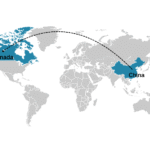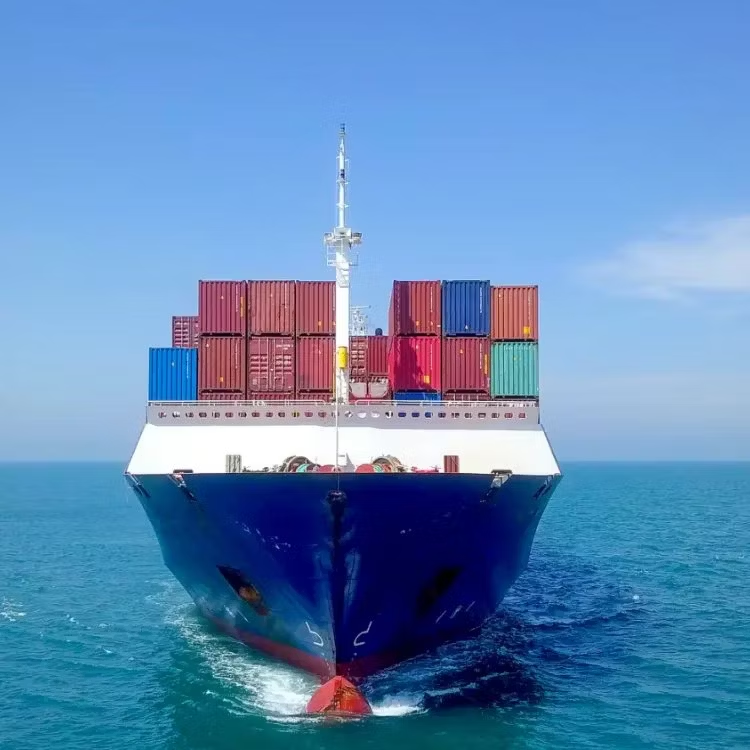
In August 2026, shipping a 20ft container from China to Canada costs roughly $1,800–$2,900 to Vancouver (14–20 days) or $2,400–$3,700 to Toronto and Montreal (22–30 days including rail); a 40ft container runs $2,800–$4,200 and $4,000–$5,300 respectively. Sea freight is by far the cheapest way to move a container on this lane — air freight at $4–9/kg only makes sense for urgent, small consignments.
From our experience handling thousands of shipments, the biggest surprise for new importers isn’t the ocean rate — it’s the destination fees. A low port-to-port quote can quickly become expensive if you don’t account for Canadian customs, terminal handling, and inland delivery. In this guide, we break down the real cost of shipping 20ft and 40ft containers from China to Canada in August 2026 — including LCL pricing, CBSA duties and GST, and the destination charges most quote tables leave out — so you can budget with confidence.
As specialists in Shipping From China TO Canada from our Shenzhen headquarters, the Dantful International Logistics team monitors these lanes daily. Below is our transparent, itemized breakdown, updated for the current market.
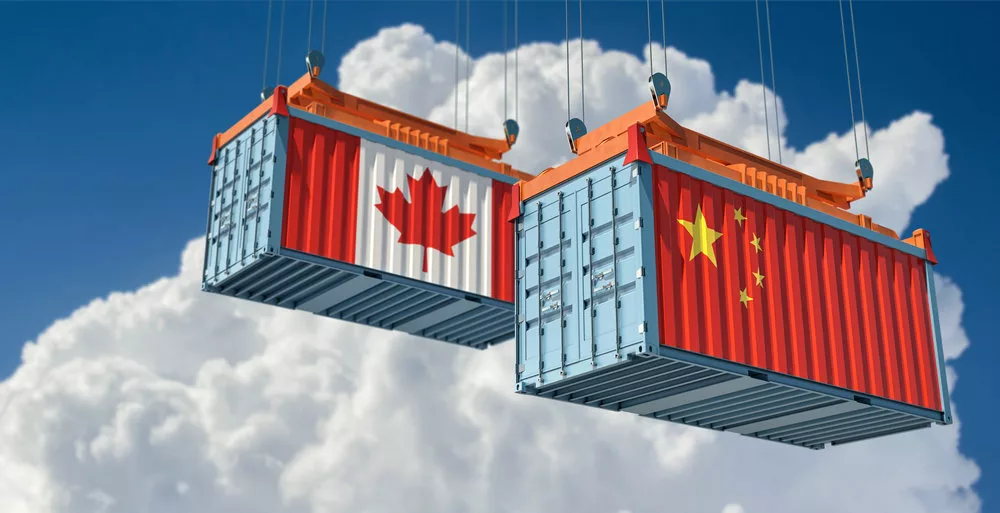
How Much Does It Cost to Ship a Container from China to Canada in 2026?
Based on our August 2026 average bookings across the transpacific trade, here are the current market ranges. All figures are in USD unless noted.
| Service | To Vancouver (West Coast) | To Toronto / Montreal (via rail or all-water) | Typical Transit |
|---|---|---|---|
| 20ft container (FCL) | $1,800 – $2,900 | $2,400 – $3,700 | 14–20 / 22–30 days |
| 40ft container (FCL) | $2,800 – $4,200 | $4,000 – $5,300 | 14–20 / 22–30 days |
| LCL (per CBM) | $70 – $150 | $70 – $150 | 18–30 days |
Rates are port-to-port ocean freight plus typical surcharges, based on August 2026 bookings. They exclude destination terminal handling, customs duties/GST, brokerage, and inland delivery — see the hidden-fee section below. Market prices change weekly; always request an updated quote for your exact cargo, dates, and delivery address.
Important note from our experts: These ranges are a planning tool, not a binding quote. A 40ft container to Toronto looks far more expensive than the same box to Vancouver on paper — but the “to Toronto” number already includes the rail leg from the West Coast. Compare like with like, or you will under-budget by $800–$1,500 per container.
Container Shipping Cost Breakdown: What’s Included in a China to Canada Quote?
When people search “container shipping cost China to Canada”, they usually mean the all-in landed cost. In our experience, the total comes from five buckets:
| Cost Component | What It Covers | Why It Changes |
|---|---|---|
| Origin charges (China) | Pickup (if needed), export docs, terminal handling, loading | Warehouse location, cargo readiness, peak congestion |
| Main ocean freight | The carrier’s rate for the container | Space, sailing schedule, fuel surcharges |
| Destination port/terminal | DTHC (destination terminal handling charge), port fees, demurrage risk | Free time, appointment availability, port congestion |
| Inland Canada (if not port delivery) | Rail/truck from Vancouver or Montreal to Toronto, Calgary, or your warehouse | Distance, chassis availability, winter weather |
| Customs & taxes | Duties, GST/HST, brokerage clearance service | HS code, cargo value, importer status, province |
Terms you will see on a real quote (we bold these because forwarders use them loosely):
- BAF (Bunker Adjustment Factor) — the fuel surcharge, adjusted monthly by carriers. Expect it on every transpacific quote.
- THC / DTHC — terminal handling charges at origin (THC) and destination (DTHC). The Canadian DTHC alone is typically $300–$600 per container.
- PSS (Peak Season Surcharge) — applied from roughly June through November and again before Chinese New Year.
- GRI (General Rate Increase) — carriers’ periodic headline rate hikes, usually announced on the 1st or 15th of the month.
- CAF (Currency Adjustment Factor) — an exchange-rate hedge charge on some contracts.
The ocean line item on your quote is only the middle of the story. For a deeper look at what drives the sea leg itself, see our analysis of how much is ocean freight from china.
Tip: Always ask whether a quote is “ocean only” or “all-in”. At Dantful, we provide a transparent line-by-line breakdown so you know exactly what you are paying for — origin, ocean, destination, inland, and customs options quoted separately.
What Factors Affect Container Shipping Cost from China to Canada?
Here is what our team monitors daily when pricing China–Canada containers:
- Container size and type. A 20ft costs less in total than a 40ft, but more per cubic meter. High-cube (40HQ) usually prices the same as a standard 40ft. Reefers and special equipment carry a significant premium.
- Route and port pair. Vancouver is the most competitive gateway because carriers run the most sailings there. Montreal-bound cargo is pricier per box because it moves all-water via the Panama Canal or transfers in Europe/US East Coast.
- Weight and volume. Heavier shipments (over ~18 tons in a 20ft) often trigger overweight surcharges; bulky cargo may hit volume limits first.
- Season and capacity. Rates rise in Q3–Q4 peak season and before Chinese New Year, and soften in late spring. PSS and GRI stack on top.
- Fuel and surcharges. We re-quote with the monthly BAF; a $100–$300 swing per container is normal across a quarter.
- Service level. Port-to-port is cheaper on paper; door-to-door costs more but removes demurrage and coordination risk — we recommend it for first-time importers.
- Canada-side conditions. Winter weather at Vancouver and Montreal slows rail and trucking; port labor disputes (remember the 2023 BC port strike) can spike rates and delay release. Prince Rupert, which is closer to Asia, often dodges Vancouver congestion.
- Customs and documentation. A wrong HS code or missing ISPM 15 wood-packing certificate can mean inspection holds, storage charges, and fines — errors here are the most expensive line item that never appears on a freight quote.
20ft vs 40ft Container Shipping Cost from China to Canada
Choosing between a 20ft and a 40ft is not just about price — it’s about whether weight or volume fills the box first.
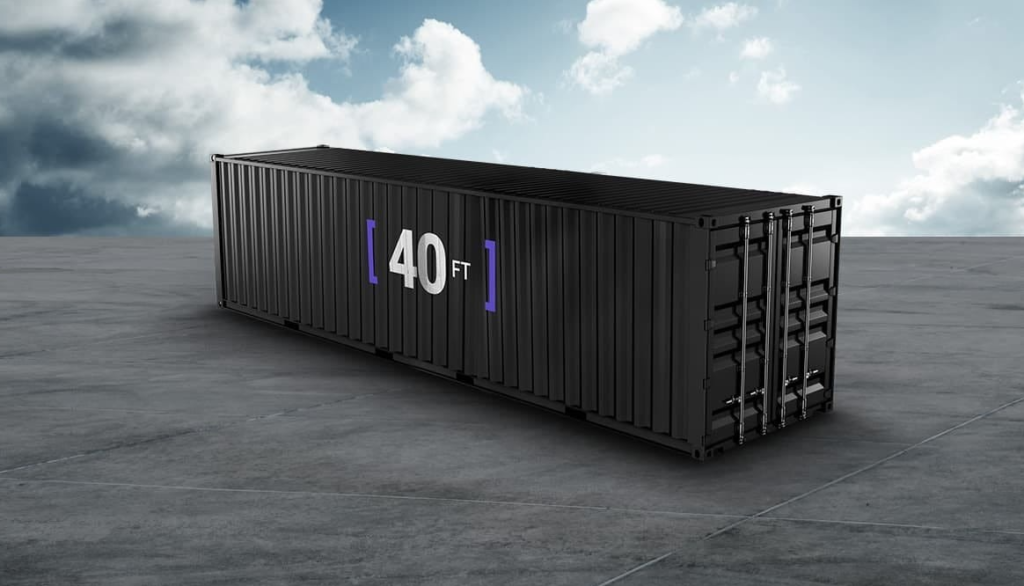
| Container | Internal Volume | Max Payload (approx.) | Best For |
|---|---|---|---|
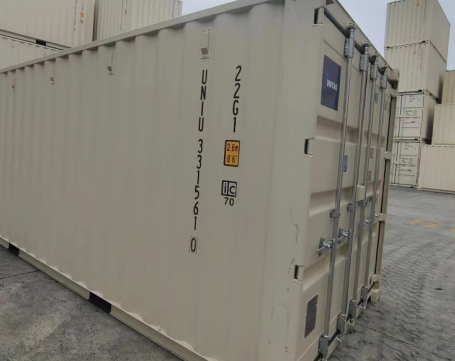
| 20ft (20GP) | ~33 CBM | ~28,200 kg | Dense, heavy cargo: machinery, stone, metals, auto parts, liquids |
| 40ft (40GP) | ~67 CBM | ~26,500–28,800 kg (carrier/road dependent) | Bulky, light cargo: furniture, textiles, household goods, e-commerce |
| 40ft High Cube (40HQ) | ~76.3 CBM | Similar to 40GP | Anything needing extra height: tall machinery, double-stacked pallets |
The economics: a 40ft container costs roughly 50–70% more than a 20ft on the same route but carries about twice the volume. Above roughly 15 CBM of cargo, the 40ft almost always wins on cost per cubic meter — and high-cube boxes give you +13% volume over a standard 40ft at usually the same freight rate.
Our rule of thumb from the Dantful planning desk:
- If your shipment is heavy (stone, metal, liquids) and you’ll hit the weight limit before filling the box, a 20ft is smarter — you don’t pay for volume you can’t use.
- If your shipment is bulky (furniture, textiles, 20+ pallets), a 40ft or 40HQ usually wins on unit cost.
- If you’re between 10 and 25 CBM and unsure, ask for both quotes and compare the per-CBM number — that’s the figure that matters.
LCL Shipping Cost from China to Canada
If you don’t have enough cargo to justify a full container, LCL (Less than Container Load) lets you share a box with other shippers and pay only for the space you use. Current LCL rates from China to Canada run $70–$150 per CBM, with a per-shipment minimum and extra handling at both the origin and destination consolidation terminals.
LCL has three real costs that don’t appear on a simple per-CBM quote:
- Origin CFS charges — loading and documentation at the consolidation warehouse in China (~$100–$200).
- Destination CFS charges — deconsolidation, storage, and release at the Canadian container freight station (~$150–$250).
- Longer, less predictable transit — your box waits for consolidation, then waits for deconsolidation; 18–30 days is realistic before Canadian release.
FCL vs LCL: The Break-Even Math
Here is the real comparison at the volumes where importers typically hesitate, using an LCL rate of $100/CBM plus typical CFS fees versus a 20ft FCL to Vancouver:
| Cargo Volume | LCL Total (rate + CFS fees) | 20ft FCL (Vancouver) | Verdict |
|---|---|---|---|
| 12 CBM | ~$1,400 – $1,600 | $1,800 – $2,900 | LCL cheaper |
| 15 CBM | ~$1,700 – $1,900 | $1,800 – $2,900 | Tie — compare both quotes |
| 18 CBM | ~$2,000 – $2,200 | $1,800 – $2,900 | FCL wins (similar price, faster, less damage risk) |
Assumptions: LCL $100/CBM, $200–$400 total CFS handling, August 2026 rates. To Toronto/Montreal, where inland rail is priced into FCL, the break-even point moves lower — roughly 15 CBM.
Bottom line: below ~12 CBM, book LCL. Between 12 and 15 CBM, get quotes both ways. Above 15–18 CBM, an FCL container is usually cheaper per unit, clears faster, and avoids the handling damage that shared boxes suffer.
Shipping Time from China to Canada: Transit Times by Route
Canada’s geography makes port choice the single biggest driver of both cost and time. Here is our August 2026 route matrix — 5 major Chinese load ports × the 3 Canadian destinations importers actually use:
| Origin Port (China) | Destination | 20ft FCL | 40ft FCL | Transit (port-to-port / incl. rail) |
|---|---|---|---|---|
| Shanghai | Vancouver | $1,800 – $2,400 | $2,800 – $3,600 | 14–18 days |
| Ningbo | Vancouver | $1,900 – $2,500 | $2,900 – $3,700 | 15–19 days |
| Shenzhen (Yantian) | Vancouver | $1,800 – $2,500 | $2,800 – $3,800 | 15–20 days |
| Qingdao | Vancouver | $1,900 – $2,600 | $3,000 – $3,900 | 17–22 days |
| Xiamen | Vancouver | $1,900 – $2,600 | $3,000 – $3,900 | 16–21 days |
| Shanghai | Toronto | $2,500 – $3,300 | $4,000 – $4,900 | 24–30 days (via rail) |
| Ningbo | Toronto | $2,600 – $3,400 | $4,100 – $5,000 | 25–31 days (via rail) |
| Shenzhen (Yantian) | Toronto | $2,400 – $3,300 | $4,000 – $4,900 | 24–30 days (via rail) |
| Qingdao | Toronto | $2,600 – $3,500 | $4,200 – $5,100 | 26–32 days (via rail) |
| Xiamen | Toronto | $2,500 – $3,400 | $4,100 – $5,000 | 25–31 days (via rail) |
| Shanghai | Montreal | $2,500 – $3,300 | $4,100 – $4,900 | 26–35 days (all-water) |
| Ningbo | Montreal | $2,600 – $3,400 | $4,200 – $5,000 | 27–36 days (all-water) |
| Shenzhen (Yantian) | Montreal | $2,400 – $3,300 | $4,000 – $4,900 | 26–35 days (all-water) |
| Qingdao | Montreal | $2,600 – $3,500 | $4,200 – $5,100 | 28–37 days (all-water) |
| Xiamen | Montreal | $2,500 – $3,400 | $4,100 – $5,000 | 27–36 days (all-water) |
What the matrix means in practice
- Vancouver is Canada’s principal Pacific gateway and the most cost-effective entry for Western and Central Canada. Most “to Toronto” shipments still land in Vancouver and move east by CN or CP rail — which is why Toronto numbers are $600–$1,000 higher and 7–12 days slower.
- Prince Rupert offers the shortest transpacific crossing (about 500 nautical miles closer to Asia, ~13–18 days from Shanghai) and feeds straight onto CN rail — a smart option for Ontario and Quebec buyers who want speed over the all-water route.
- Montreal is the all-water alternative for Eastern Canada via the Panama Canal. It can be a cost-saver when rail rates from Vancouver spike, despite the longer ocean leg — we price both routings for every eastern shipment.
- Toronto has no deep-sea container port. Any quote showing “Shenzhen to Toronto port-to-port” is a red flag — your box is coming via Vancouver, Prince Rupert, or Montreal plus rail, and the quote must say so.
For live schedules, sailings, and routing advice on this lane, see our dedicated Sea Freight From China to Canada page.
Step-by-Step: How Container Shipping from China to Canada Works
This is the standard operating procedure most of our successful importers follow:
- Share cargo details — commodity, HS code, weight/volume, pickup city, destination city, and preferred Incoterms.
- Receive a quote — a full breakdown: origin fees + ocean freight + destination handling + inland + customs options (never just “ocean only”).
- Book space — we confirm the container type (20GP/40GP/40HQ) with the carrier and lock the rate.
- Pickup and export handling — stuffing/loading and export documentation in China (including the export customs declaration and VAT refund paperwork).
- Ocean transit and tracking — we monitor the vessel 24/7 and flag schedule changes before they become delays.
- Arrival and clearance — Canadian customs release (CBSA), duties and GST handling, and port release coordination.
- Inland delivery — rail or truck to your final warehouse, timed to avoid demurrage.
What Documents Do I Need to Import from China to Canada?
Missing paperwork is the #1 cause of Canadian customs holds. Our documentation specialists prepare these early:
| Document | Why It Matters |
|---|---|
| Commercial invoice | Declares value, terms, and parties — CBSA assesses duty and GST from this |
| Packing list | Carton counts, dimensions, gross/net weight |
| Bill of lading (B/L) or sea waybill | The transport contract and proof of shipment |
| HS code | Determines the duty rate — the single most important classification on the entry |
| Certificate of origin | Required to claim preferential tariff treatment where applicable |
| CI1 (Canada Customs Invoice) | Required when the shipment value exceeds CAD 2,500 |
| ISPM 15 certificates | Heat-treated wood packaging/pallets — untreated wood gets refused at the border |
| Importer information | Business number (BN), GST/HST account, and CARM (CBSA Assessment and Revenue Management) registration |
Two Canada-specific requirements importers forget:
- CARM registration — commercial importers must be set up in CBSA’s CARM system to account for and pay duties and taxes. If you’re not registered, your cargo doesn’t release.
- eManifest (ACI) — the carrier files advance cargo information with CBSA before arrival; missing or mismatched data triggers holds and penalties.
Canada Customs Duties & Taxes: What Importers Pay at CBSA
Canadian imports clear through the Canada Border Services Agency (CBSA). Duty is charged on the value for duty — usually the price paid for the goods converted to Canadian dollars — at the rate set by the goods’ tariff classification. Goods from China generally fall under the Most-Favoured-Nation (MFN) tariff, and rates vary widely:
| Cargo Type (typical HS chapter) | Typical MFN Duty |
|---|---|
| Electronics, computers, phone parts (HS 84–85) | 0 – 5% |
| Machinery and industrial equipment | 0 – 6% |
| Furniture (HS 9403) | ~9.5% |
| Textiles and clothing | 12 – 18% |
| Footwear | 18 – 20% |
On top of duty, the federal GST of 5% applies to the duty-paid value at importation. In HST provinces (e.g., Ontario at 13%), the provincial portion is collected through the same system. Most GST/HST-registered businesses can claim the 5% back as an input tax credit — account for it as recoverable cash flow, not a sunk cost.
A simple worked example (the kind of calculation that never appears on competitor sites):
You import $10,000 CIF of wooden furniture (HS 9403.60) from China. Duty at 9.5% MFN = $950 → duty-paid value = $10,950 GST at 5% = $547.50 Total duty + GST = $1,497.50
For electronics at a 0% duty rate, the same $10,000 shipment would owe only $500 in GST. This is why confirming your HS code before you ship is worth real money — misclassification means overpaying duty or, worse, an audit and back-duty assessment.
The #1 mistake we see: undervaluing or vaguely describing goods on the commercial invoice. A description that doesn’t match the packing list triggers a CBSA examination, which costs you 3–7 days and storage charges — and can bring penalties. Get the documents right on day one.
Incoterms 2020 for China to Canada: EXW vs FOB vs CIF vs DDP
The Incoterm you agree with your supplier decides who pays for each leg — and therefore what your “shipping cost” actually is.
| Incoterm | Who Pays China Inland + Export | Who Pays Ocean Freight | Who Pays Canadian Clearance + Delivery | Your Total Spend (typical) | Effort Level |
|---|---|---|---|---|---|
| EXW | You (or your forwarder) | You | You | Lowest quote, highest workload | High |
| FOB | Supplier (to ship’s rail) | You | You | Mid — you control the main leg and clearance | Medium |
| CIF | Supplier | Supplier (to destination port) | You | Higher — freight is bundled into the goods price | Medium |
| DDP | Supplier | Supplier | Supplier (duties, GST, delivery) | Highest, but one fixed all-in price | Low |
Our honest advice: most experienced importers ship FOB and control the ocean leg and Canadian clearance through their own forwarder — it’s usually cheaper and far more transparent than leaving the freight to the supplier and paying an undisclosed margin. DDP makes sense for first-time importers who want one fixed price with no border surprises; the premium is essentially the cost of handing your supplier the paperwork. If you’re considering DDP, understand exactly what it covers first — see our explainer on ddp shipping and what delivered duty paid really includes.
How to Reduce Your China to Canada Shipping Costs
The hidden fees that inflate the final bill
These destination-side charges are where budgets go to die. Here’s what to budget on top of your ocean rate (USD, with approximate CAD at current rates around 1.35–1.40 CAD/USD):
| Charge | Typical Range (USD) | Typical Range (CAD) | When It Applies |
|---|---|---|---|
| DTHC (destination terminal handling) | $300 – $600 | ~$400 – $800 | Every container, at the Canadian terminal |
| Drayage (port/rail ramp → your warehouse) | $250 – $500 | ~$340 – $680 | Any delivery beyond the terminal gate (GTA, Vancouver, Montreal) |
| Customs brokerage | $150 – $350 | ~$200 – $475 | Every entry, unless you self-file in CARM |
| Demurrage (container sits at terminal) | $150 – $300/day | ~$200 – $400/day | After the 3–5 free days expire |
| Detention (chassis/container at your facility) | $100 – $250/day | ~$135 – $340/day | When equipment isn’t returned on time |
| Inspection/storage (CBSA exam) | $100 – $500 | ~$135 – $675 | Only if documentation triggers a hold |
Add $800–$1,500 per container in total for the Canadian side — before duties and GST. This is also why a “door-to-door” quote that includes all of the above is the only number you can compare fairly between forwarders.
Seasonal rate calendar: when to book
| Period | What Happens | Booking Advice |
|---|---|---|
| Jan – mid-Feb | Pre-CNY rush; factory closures for 2–4 weeks | Book 3–4 weeks ahead; pay the premium or wait |
| Mar – May | Post-CNY slack; rates dip | Best window for budget shipments |
| Jun – Aug | Early peak; PSS kicks in (back-to-school cargo) | Lock Q3 space early |
| Sep – Nov | Peak season; holiday goods; highest rates | Book 4 weeks ahead; expect GRI |
| Oct 1–7 | China National Day (Golden Week) factory holiday | Plan around the production gap |
| Nov – Dec | Q4 rush + winter weather at Canadian ports | Add buffer for rail/truck delays; consider Prince Rupert routing |
Five cost-cutting moves that actually work
- Cross the LCL→FCL line. Once you pass ~15 CBM, a full container usually beats LCL on price per unit and clears faster — run the break-even math above before booking.
- Book 3–4 weeks out, not 1. Last-minute space costs 15–30% more and risks PSS/GRI surprises.
- Compare port-to-port and door-to-door quotes side by side. The cheapest ocean rate often hides the most expensive destination fees — compare like with like.
- Ship before the October holiday rush if your supply chain allows; Q4 premium is the biggest seasonal hit of the year.
- Consolidate suppliers into one FCL. If you buy from multiple factories, combining them into a single 40ft shipment routinely saves thousands versus separate LCL moves — ask about the cheapest way to ship by container, not by piece. For a quick read on the low-cost side of this lane, our cheapest shipping company from china to Canada guide covers what “cheap” really costs.
How to Choose a Reliable Freight Forwarder from China to Canada?
On this lane, you’re not hiring one service — you’re hiring three jobs in one quote: the ocean leg from China, the Canadian inland leg (rail or truck from Vancouver/Montreal), and CBSA clearance with duty/GST handling. A forwarder that only does the first is quoting you half the job. Before you commit, run these four lane-specific checks:
- Does the quote itemize DTHC, drayage, and brokerage — or is it “ocean only”? If destination charges aren’t broken out, you’ll discover them on the arrival invoice.
- Does the team actually handle CARM accounting and GST input-tax recovery? Clearance in Canada is a regulated process; the forwarder should file through CARM and show you the duty/GST calculation, not just a lump sum.
- Which Canadian routing do they recommend — and can they justify it? Vancouver+rail vs. Montreal all-water vs. Prince Rupert: the right answer depends on your warehouse city, and a competent partner prices both options instead of defaulting to one.
- What’s their demurrage/detention risk plan? Ask what happens if the vessel is late or your customs hold runs past free time — good forwarders pre-clear and book trucking before the ship arrives.
Working with an experienced freight forwarder in shenzhen china like Dantful — a Class-A licensed, NVOCC/FMC-certified forwarder operating since 2008 with 15+ years on the transpacific trade — gives you direct carrier contracts, 24/7 shipment tracking, and a team of 50 operators and 50+ customer-service staff who handle the China leg, the Canadian rail leg, and CBSA clearance as one managed shipment. Our approach to vetting partners is covered in more depth in our guide on how to choose the right freight forwarder, but the short version is: ask for the itemized quote, then check the math.
FAQs
How much does it cost to ship a 20ft container from China to Canada in 2026?
As of August 2026, a 20ft container runs $1,800–$2,900 to Vancouver and $2,400–$3,700 to Toronto or Montreal (including the inland rail leg). Add roughly $800–$1,500 for Canadian destination fees plus duties and 5% GST on the cargo value. Confirm the current week’s rate before booking.
How much does it cost to ship a 40ft container from China to Canada?
A 40ft container runs $2,800–$4,200 to Vancouver and $4,000–$5,300 to Toronto or Montreal. It costs 50–70% more than a 20ft but carries twice the volume — above ~15 CBM it’s almost always cheaper per cubic meter.
Is LCL or FCL cheaper from China to Canada?
Under ~12 CBM, LCL at $70–$150 per CBM is cheaper. Between 12 and 15 CBM, compare both. Above 15–18 CBM, a full container wins on per-unit cost, transit time, and damage risk.
How long does sea freight take from China to Canada?
Shanghai to Vancouver: 14–20 days. Via Prince Rupert: 13–18 days. To Toronto/Montreal: 22–30 days including the rail leg or all-water transit (Montreal can stretch to 35 days). Air freight runs 4–8 days for comparison, at a much higher price per kilogram.
What is the best port in Canada to ship to?
Vancouver for speed and Western Canada; Prince Rupert for the shortest Pacific crossing; Montreal for Eastern Canada via the Panama Canal. Toronto has no deep-sea port — its cargo arrives by rail from Vancouver, Prince Rupert, or Montreal.
What customs duties and taxes apply to imports from China to Canada?
Goods from China are assessed MFN duty by HS code (0–18%+ depending on product) plus 5% GST on the duty-paid value. In HST provinces like Ontario, the provincial portion is collected through the same system. Importers must be registered in CARM to account for and pay these.
Can Dantful handle door-to-door (DDP) shipping to Canada?
Yes. We specialize in door to door shipping from China to Canada, covering pickup in China, ocean freight, CBSA clearance, duties and GST, and final delivery to your warehouse or Amazon FBA Canada facility — one all-in price, no border surprises.
How can I avoid demurrage and detention charges in Canada?
Pre-clear customs before the vessel arrives, book your trucking immediately on release, and confirm the 3–5 free days on your container contract. Missing an appointment slot at the terminal is the most common way importers burn $150–$300 a day.
Get a Quote from Dantful International Logistics
To get an accurate, all-in quote for August 2026 — with every destination fee itemized so there are no surprises — send us the following:
- Pickup location in China (city + zip if available)
- Destination in Canada (port or final address)
- Cargo name and HS code (if known)
- Total cartons/pallets, dimensions, and gross weight
- Preferred Incoterms (EXW/FOB/CIF/DDP)
- Any special attributes (battery, liquids, fragile, oversized)
Our team will recommend the right container (20GP/40GP/40HQ), the right routing (Vancouver+rail, Prince Rupert, or all-water Montreal), and a transparent line-by-line cost breakdown. As your dedicated shipping agent from china to Canada, Dantful International Logistics will keep your supply chain moving from the factory floor in Shenzhen to your warehouse door in Canada — visit Dantful International Logistics to start your shipment today.

Young Chiu is a seasoned logistics expert with over 15 years of experience in international freight forwarding and supply chain management. As CEO of Dantful International Logistics, Young is dedicated to providing valuable insights and practical advice to businesses navigating the complexities of global shipping.