
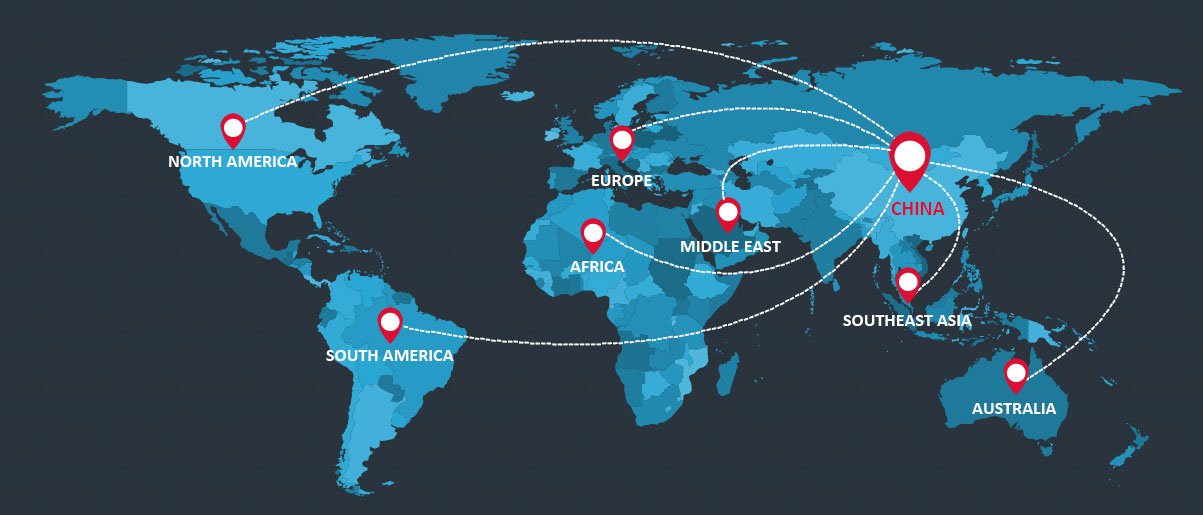
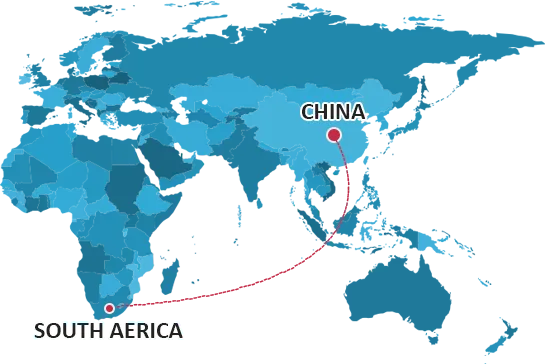
Are you looking for reliable shipping from China to South Africa but struggling to find clear costs, realistic transit times, and a forwarder who actually understands SARS customs clearance? Whether you’re a B2B importer, e-commerce seller, or procurement manager — getting cargo from China to South Africa without surprise fees starts with knowing the lane.
Dantful International Logistics operates regular ocean freight, air freight, and door-to-door DDP services on the China–South Africa trade lane. With over 1,200 TEU cleared through South Africa in the past 24 months, this guide is built on operational experience — real routes, costs, transit times, container options, customs risks, and inland delivery to Johannesburg.
Shipping from China to South Africa usually takes around 22–40 days by sea freight and 2–7 days by air freight. For a standard 20-foot container, shipping cost from China to South Africa typically ranges from $1,500 to $2,450 to major ports like Durban and Cape Town. Air freight rates generally fall between $4.2 and $6.7 per kg for shipments over 100 kg.
Major Shipping Routes From China to South Africa
Most cargo from China to South Africa moves through the Indian Ocean, either on direct strings or via transshipment hubs such as Singapore and Port Klang. The choice of departure port in China and arrival port in South Africa directly affects both transit time and total shipping cost from China to South Africa.
| China Port | South Africa Port | Typical Transit | Carrier Type |
|---|---|---|---|
| Shenzhen (Shekou/Yantian) | Durban | 20–28 days | Direct & transshipment |
| Shanghai | Durban | 22–30 days | Direct & via Singapore |
| Ningbo | Durban | 23–32 days | Transshipment common |
| Guangzhou (Nansha) | Durban | 21–29 days | Direct feeder + mainline |
| Shanghai | Cape Town | 28–38 days | Via Durban or direct |
| Shenzhen | Cape Town | 25–35 days | Southern route via Indian Ocean |
| Qingdao | Durban | 24–33 days | Northern China mainline |
| Hong Kong | Durban / Cape Town | 20–28 days | Consolidated feeder |
Notes:
Shenzhen to Durban is one of the fastest and most competitive routes due to high volume and frequent sailings. For dedicated rates, sailings, and transit times from South China’s busiest port, see shipping from Shenzhen to South Africa.
Shanghai to Cape Town often takes longer because fewer direct services operate to the Western Cape; many carriers transship via Durban or Southeast Asian hubs.
Qingdao and Tianjin are preferred for heavy machinery and industrial goods originating in northern China.
During peak season (October–January), transit times can extend by 5–10 days due to port congestion and equipment shortages.
Container Types & Cargo Matching for South Africa Shipments
Choosing the right container directly affects your per-unit shipping cost and whether your cargo arrives intact after a 22–40 day ocean transit. Below is a practical reference for the container types most commonly used on the China–South Africa lane.
| Container Type | Internal Dimensions (L×W×H) | Max Payload | Typical CBM | Best For |
|---|---|---|---|---|
| 20’GP (General Purpose) | 5.89×2.35×2.39 m | ~28,000 kg | 28–30 CBM | Small to medium FCL shipments; heavy goods like machinery parts, tiles, steel products |
| 40’GP (General Purpose) | 12.03×2.35×2.39 m | ~26,500 kg | 56–58 CBM | Large-volume consumer goods, furniture, textiles, electronics |
| 40’HQ (High Cube) | 12.03×2.35×2.69 m | ~26,300 kg | 65–68 CBM | Bulky but lighter cargo — furniture, insulation materials, packaging, plastic goods |
| 20’OT (Open Top) | 5.89×2.35×2.30 m | ~27,800 kg | 28–30 CBM | Over-height cargo: large machinery, generators, construction equipment |
| 40’OT (Open Top) | 12.03×2.35×2.30 m | ~26,300 kg | 56–60 CBM | Large over-height items; can be top-loaded by crane |
| 20’FR (Flat Rack) | 5.62×2.20×2.23 m | ~30,000 kg | — | Oversized/overweight cargo: boilers, transformers, heavy vehicles, boats |
| 40’FR (Flat Rack) | 11.66×2.20×2.23 m | ~39,000 kg | — | Large OOG (Out of Gauge) cargo for mining, energy, and infrastructure projects |
| 20’RF (Reefer) | 5.44×2.29×2.27 m | ~27,000 kg | 26–28 CBM | Temperature-controlled: food, pharmaceuticals, chemicals requiring 2–8°C or frozen |
| 40’HRF (High Cube Reefer) | 11.59×2.29×2.50 m | ~28,500 kg | 60–64 CBM | Large-volume perishables; South Africa’s cold chain is mature for reefer cargo |
How to Choose Between 20GP, 40GP, and 40HQ
20GP is your default for heavy cargo. If your shipment exceeds 18,000 kg but fits within 28 CBM, a 20GP costs less and avoids wasted space. For dense goods like tiles, steel, and industrial components, a 20GP fully loaded by weight is the most cost-efficient option.
40GP is the workhorse for general imports. Most consumer goods, auto parts, and electronics ship in 40GP because the per-CBM cost is lower than 20GP. If your cargo is over 28 CBM, a 40GP almost always beats two 20GPs on total cost.
40HQ is the sweet spot for volume cargo. If your goods are light and bulky (furniture, insulation, expanded polystyrene, empty containers), the extra 30 cm of height in a 40HQ gives you 10–12 more CBM — often at only $100–$300 more than a standard 40GP.
Standard Pallet Loading Guide
Most Chinese factories load on 1200×1000 mm (Euro/ISO) or 1100×1100 mm (Asian standard) pallets:
| Pallet Type | 20’GP Capacity | 40’GP Capacity | 40’HQ Capacity |
|---|---|---|---|
| 1200×1000 mm (Euro pallet) | 10–11 pallets | 23–24 pallets | 24–26 pallets |
| 1100×1100 mm (Asian pallet) | 10 pallets | 20–21 pallets | 22–23 pallets |
Practical tip: If you’re shipping LCL, your cargo will be palletized at the consolidation warehouse. Standardizing pallet dimensions with your Chinese supplier before pickup improves loadability and reduces damage risk during the Durban deconsolidation process.
For a complete breakdown of container shipping costs from China to South Africa by container type, route, and season, see our dedicated container cost guide.
South Africa Main Import Ports
Understanding the role of each South African port helps importers choose the best entry point and avoid unnecessary inland costs or delays.
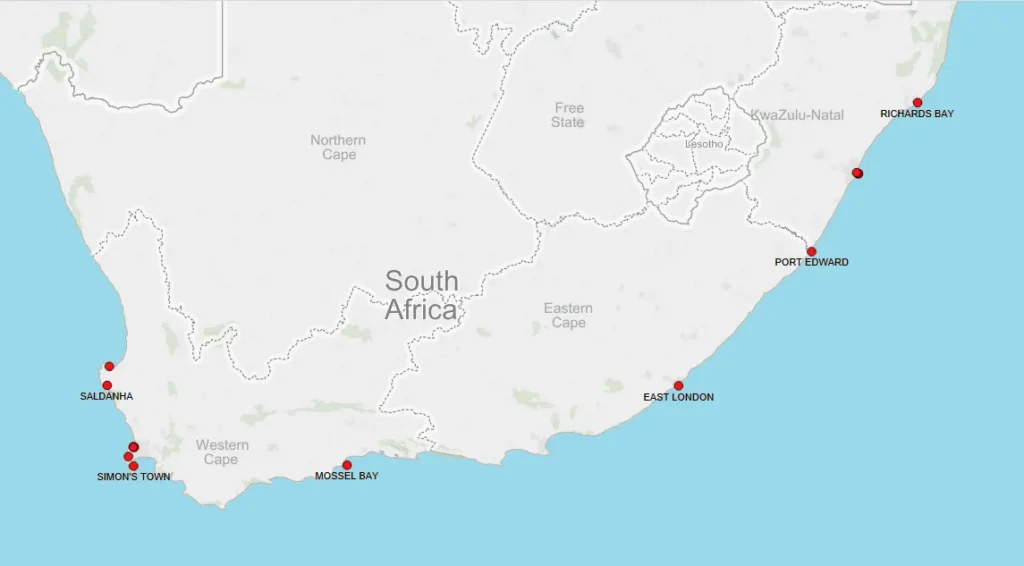
Port of Durban
Role: Busiest container port in Africa; handles roughly 60% of South Africa’s containerized cargo.
Best for: General cargo, consumer goods, and bulk shipments.
Congestion risk: High. Durban regularly experiences vessel bunching and yard congestion, especially before the November–December retail peak.
Inland connection: Rail and road links to Johannesburg and Gauteng industrial areas; trucking is more reliable than rail for time-sensitive cargo.
Port of Cape Town
Role: Strategic gateway for Western Cape and cross-border cargo to Namibia and Botswana.
Best for: Fruit exports (reefers) and Western Cape-bound imports.
Congestion risk: Moderate. Wind and weather can cause operational delays.
Note: Fewer direct sailings from China compared to Durban; many shipments arrive via transshipment.
Port of Ngqura (Coega)
Role: Modern deep-water port near Port Elizabeth; designed to relieve Durban congestion.
Best for: Large container vessels and automotive logistics.
Current volume: Growing, but still lower frequency from China. Often used for project cargo and bulk vessels.
Port of Port Elizabeth (Gqeberha)
Role: Key automotive logistics gateway in the Eastern Cape.
Best for: Vehicle parts, machinery, and components bound for the local automotive industry.
Johannesburg ICD (Inland Container Depot)
Role: Not a seaport, but the primary inland clearance and distribution hub for air cargo and rail-connected sea containers.
Best for: Air freight and DDP door-to-door deliveries to Gauteng.
Customs: SARS operates an active inspection facility here; expect possible delays if documentation is inconsistent.
Johannesburg & Inland Delivery: Where Most Import Cargo Actually Goes
While Durban, Cape Town, and Port Elizabeth are the entry seaports, Johannesburg and the Gauteng province are the ultimate destination for an estimated 60–70% of containerized imports from China. Johannesburg is South Africa’s economic engine — home to the continent’s largest industrial zone, the JSE (Africa’s largest stock exchange), and the primary distribution hub for the entire SADC region.
From Port to Johannesburg: The Inland Leg
Every container arriving in Durban bound for Johannesburg must cover approximately 570 km of inland transport. You have two real options:
| Mode | Transit (Durban → JNB) | Cost per Container | Reliability | Best For |
|---|---|---|---|---|
| Road (truck) | 1–2 days | $400–$750 | High | Time-sensitive cargo, door-to-door deliveries, LCL deconsolidation |
| Rail (Transnet Freight Rail) | 3–5 days | $250–$450 | Moderate / Low | Bulk FCL cargo; lower priority than mineral exports on the Transnet network |
Reality check: Most importers use road freight for the Durban–JNB leg because Transnet Freight Rail prioritizes mineral exports (coal, iron ore, manganese) over container traffic. Rail reliability on this corridor has been inconsistent. For time-sensitive shipments, trucking is the safer choice — the extra $200–$300 buys delivery certainty.
City Deep ICD — Africa’s Largest Dry Port
City Deep, located in southern Johannesburg, is Africa’s largest inland container depot. It functions as:
A customs-bonded facility where containers clear SARS inspection inland rather than at Durban port — avoiding port demurrage
A container storage and deconsolidation yard for LCL shipments arriving from China
The primary interchange point between Transnet rail and road freight in Gauteng
When to use City Deep: If your clearance documents are pre-filed and clean, moving the container under bond to City Deep for customs clearance often saves 3–7 days of demurrage versus clearing at congested Durban port.
OR Tambo International Airport (JNB) — Air Freight Gateway
For air freight, OR Tambo International (JNB) is the primary entry point for cargo from China. Key operational facts:
Direct flights from Shanghai Pudong (PVG), Shenzhen Bao’an (SZX), Guangzhou Baiyun (CAN), and Hong Kong (HKG)
Consolidated services from secondary Chinese airports via Middle Eastern hubs (Dubai, Doha)
SARS air cargo facility at JNB processes standard clearance in 24–48 hours
Last-mile from JNB: Courier or truck delivery within Gauteng takes 4–24 hours; other provinces 24–72 hours
Beyond Johannesburg: Delivery to Other Inland Destinations
| Destination | From Durban | From JNB | Typical Surcharge |
|---|---|---|---|
| Pretoria | 620 km (2 days) | 60 km (same day) | Minimal from JNB |
| Bloemfontein | 630 km (2–3 days) | 400 km (1 day) | $120–$250 |
| Polokwane | 870 km (3 days) | 320 km (1 day) | $180–$350 |
| Nelspruit (Mbombela) | 600 km (2 days) | 330 km (1 day) | $150–$300 |
| Rustenburg | 720 km (2–3 days) | 170 km (1 day) | $100–$250 |
| Kimberley | 820 km (3 days) | 480 km (1–2 days) | $180–$320 |
Deliveries to remote areas, townships, or farm locations may require specialized vehicles and local security escorts. Always confirm the final delivery address type (commercial warehouse, retail store, residential, or remote) with your forwarder before booking — residential and remote deliveries attract surcharges.
Shipping Costs from China to South Africa
Below is a detailed rate reference for 2026, covering major China–South Africa trade lanes. These figures are based on FOB China terms and exclude destination customs duties, VAT, and port handling charges.
| Major Route | Air Freight (USD/KG, 100kg+) | Sea Freight (USD/Container & LCL) | Notes |
|---|---|---|---|
| How much does shipping from Shanghai to Durban cost | $4.2 – $5.9 | FCL: 20’GP: $1,500–$2,150; 40’GP: $2,600–$3,500 LCL: $85–$120/cbm | Durban is South Africa’s busiest container port, with frequent sailings and flights. |
| How much does shipping from Ningbo to Johannesburg cost | $4.5 – $6.2 | FCL (via Durban + truck/rail): 20’GP: $1,650–$2,350; 40’GP: $2,750–$3,650 LCL: $90–$130/cbm + Trucking: $400–$750 | Johannesburg is inland; sea freight arrives via Durban, then moves by rail/truck. Air is direct. |
| How much does shipping from Shenzhen to Cape Town cost | $4.7 – $6.4 | FCL: 20’GP: $1,700–$2,400; 40’GP: $2,900–$3,800 LCL: $93–$135/cbm | Slightly longer sea route than Durban; frequent air connections from South China. |
| How much does shipping from Guangzhou to Port Elizabeth cost | $4.5 – $6.3 | FCL: 20’GP: $1,750–$2,450; 40’GP: $2,950–$3,950 LCL: $95–$140/cbm | Port Elizabeth is a key automotive logistics gateway in the east. |
| How much does shipping from Qingdao to Durban cost | $4.8 – $6.7 | FCL: 20’GP: $1,600–$2,280; 40’GP: $2,750–$3,680 LCL: $92–$138/cbm | Northern China main port; strong for heavy/industrial goods. |
| How much does shipping from Hong Kong to Cape Town cost | $4.3 – $5.9 | FCL: 20’GP: $1,650–$2,350; 40’GP: $2,850–$3,700 LCL: $90–$133/cbm | Hong Kong is an international trade hub, ideal for consolidated shipments. |
Quick Reference: Cost by Mode
| Mode | Cost Range | Best For |
|---|---|---|
| LCL (sea) | $80–150/CBM | Small to medium cargo, regular restocking |
| FCL 20’GP | $1,500–$2,450 | Bulk cargo, 20–28 CBM |
| FCL 40’GP | $2,600–$3,950 | Large-volume shipments, 55–58 CBM |
| Air Freight | $4.2–$6.7/kg | Urgent, high-value, or seasonal goods |
| Express / Courier | $6–$12/kg | Samples, documents, under 50 kg |
For route-specific pricing with real-time rate ranges, see our detailed guide on how much shipping from China to South Africa costs by port, mode, and container size.
Factors That Change Your Quote
Cargo type: Hazardous goods, batteries, and refrigerated cargo attract surcharges.
Volumetric weight (air): Charged by whichever is higher—actual weight or (length × width × height) / 5000.
Peak season: Rates rise 15–40% in Q4 (October–December) and before Chinese New Year.
Fuel surcharges (BAF): Fluctuate monthly with oil prices.
South African VAT and duties: Import VAT is 15%. Duty rates vary by HS code (0–45%).
Inland delivery: Transport from Durban to Johannesburg adds $400–$750 per container.
10 Hidden Costs First-Time Importers Miss
Your freight quote typically covers ocean freight and basic origin charges. Below are the costs that frequently surprise importers on their first China–South Africa shipment:
| Hidden Cost | Typical Range | When It Hits | How to Avoid It |
|---|---|---|---|
| Destination THC (Terminal Handling Charge) | $150–$350 per container | Charged by SA port terminal on arrival | Ask your forwarder to include THC in the quote upfront |
| Demurrage | $50–$150/day after free time | Container sits at port beyond free days (usually 5–7 days) | Pre-clear customs before vessel arrival; use City Deep for inland clearance to avoid port demurrage |
| Detention | $40–$120/day after free time | Container not returned to depot after unloading | Coordinate unloading schedule with your trucker before the container arrives |
| Customs Examination Fee | $200–$600 per inspection | SARS selects shipment for physical inspection | Ensure HS code consistency across all documents; pre-file with accurate cargo descriptions |
| Stop-Order Fee | $80–$250 | SARS issues a hold during clearance due to documentation mismatch | Resolve documentation discrepancies before cargo sails |
| Port Congestion Surcharge | $150–$400 per container | Carrier imposes surcharge during Durban peak congestion | Ship during off-peak months (February–July) when possible |
| Tailgate / Residential Delivery Fee | $100–$350 | Truck requires liftgate or delivery address is residential, not commercial | Specify delivery address type at booking; residential always costs more |
| Fumigation Fee | $100–$300 | Wooden packaging (pallets, crates) lacks ISPM-15 stamp | Use heat-treated/stamped pallets or switch to plastic pallets |
| Currency Adjustment Factor (CAF) | 1–3% of freight | Applied by carriers based on USD/ZAR exchange rate volatility | Lock in all-inclusive DDP quotes in a single currency |
| Storage at CFS (Container Freight Station) | $20–$60/CBM/day after free time | LCL cargo sits at deconsolidation warehouse beyond free storage period (usually 3–5 days) | Arrange trucking immediately after customs release; confirm free storage days in advance |
The bottom line: An FCL 20GP quote of $1,800 can easily become $3,200+ landed in Johannesburg once destination charges, customs brokerage, inland trucking, and 15% VAT are added. Always ask your forwarder for an all-in door-to-door line-item breakdown — not just the ocean freight number.
Popular Goods Shipped from China to South Africa
South Africa’s import profile from China is diverse. Understanding how your specific commodity affects shipping mode, cost, and customs requirements helps you plan more accurately from day one.
| Commodity | Recommended Mode | Typical HS Chapter | SA Import Duty | Special Requirements |
|---|---|---|---|---|
| Solar panels & inverters | Sea FCL (40GP/40HQ) | Ch. 8541 | 0% (renewable energy incentive) | Must meet NRCS safety standards; some categories duty-exempt under SA’s renewable energy program |
| Lithium batteries & power banks | Sea (IMO Class 9) or Air (IATA Section II) | Ch. 8507 | 0–20% | UN38.3 test report + MSDS mandatory; air freight limited to 30% state of charge; package must bear lithium battery handling label |
| Smartphones & consumer electronics | Air freight (insured) | Ch. 8517 | 0–15% | High theft risk in transit; ICASA type approval may be required for wireless devices; use tamper-evident packaging |
| LED lighting fixtures | Sea LCL or FCL | Ch. 9405 | 15–25% | NRCS Letter of Authority (LoA) required for certain categories; LoA application takes 6–8 weeks — plan ahead |
| Automotive parts & accessories | Sea FCL (via Port Elizabeth or Durban) | Ch. 8708 | 0–30% | ITAC import permit sometimes required; OEM vs aftermarket classification affects duty rate significantly |
| Industrial machinery | Sea FCL (20GP/OT/FR for over-gauge units) | Ch. 84 | 0–10% | Many machinery categories qualify for duty rebate under SA manufacturing incentives; check SARS Schedule 3 and 4 |
| Furniture (home & office) | Sea FCL (40HQ preferred — bulky) | Ch. 9403 | 15–20% | Solid wood furniture requires ISPM-15 compliant packaging; upholstered items may need fumigation certificate |
| Textiles & apparel | Sea LCL or FCL | Ch. 61–63 | 40–45% (high protection) | SA textile industry is heavily protected; HS code accuracy critical — knit (Ch.61) vs woven (Ch.62) changes duty rate |
| Construction materials (tiles, sanitaryware) | Sea FCL (20GP — dense/heavy) | Ch. 6907/6910 | 15–25% | Weight makes 20GP more cost-effective than 40GP for dense materials like tiles; breakage insurance recommended |
| Plastic products & packaging | Sea FCL (40HQ — light, bulky) | Ch. 3923/3924 | 10–20% | Maximize CBM utilization; 40HQ lets you max out volume before hitting weight limit |
For a complete guide on importing and shipping solar panels from China to South Africa — covering NRCS compliance, duty exemptions, packaging requirements, and sea vs air trade-offs — see our dedicated solar shipping article.
What South Africa Imports Most from China
Based on SARS trade statistics and operational volume on this lane, the top five commodity groups by import volume from China are:
Electrical machinery & equipment (HS 85) — smartphones, batteries, solar products, transformers, cables
Mechanical machinery & appliances (HS 84) — industrial machines, pumps, valves, construction equipment, computers
Vehicles & automotive parts (HS 87) — components for SA’s automotive manufacturing hub in Eastern Cape and Gauteng
Plastics & articles (HS 39) — packaging materials, household goods, industrial plastic components
Furniture & bedding (HS 94) — flat-pack furniture, mattresses, office and retail fit-outs
If your commodity isn’t listed above, contact us with the HS code and product description. We check SARS tariff schedules, NRCS requirements, and ITAC permit needs specific to your shipment — before you book.
Sea Freight vs Air Freight: How to Choose
Not all cargo justifies the same transport mode. Use this decision matrix to match your shipment to the right service.
| Scenario | Best Method | Typical Transit | Why |
|---|---|---|---|
| Amazon / retail replenishment | Air Freight | 2–7 days | Avoid stockouts; fast restocking |
| Heavy machinery, industrial parts | Sea Freight (FCL) | 22–35 days | Cost-efficient for weight and volume |
| High-value electronics | Air Freight + Insurance | 2–5 days | Lower transit risk; faster cash conversion |
| Low-value bulk cargo (textiles, raw materials) | Sea Freight (FCL/LCL) | 24–40 days | Minimize unit shipping cost |
| Automotive parts to PE / Eastern Cape | Sea Freight (FCL) | 24–33 days | Direct port alignment; volume rates |
| Perishable or temperature-sensitive goods | Air Freight or Reefer | 2–7 days (air) | Preserve shelf life |
| E-commerce trial orders | LCL or Air Consolidation | 3–7 days (air); 28–40 days (sea) | Test market without full-container commitment |
| DDP door-to-door to Johannesburg | Sea DDP or Air DDP | 30–45 days (sea); 5–10 days (air) | Single vendor, full landed cost clarity |
When Sea Freight Wins
Shipment is over 200 kg or 1 CBM.
You can plan inventory 30–45 days ahead.
Cost per unit is more important than speed.
When Air Freight Wins
Shipment is under 500 kg and high value.
You are restocking fast-moving SKU.
You need to meet a contractual or event deadline.
Cost Reality Check: Same Shipment, Different Mode
To ground the decision, here is how shipping 500 kg / 2 CBM of consumer electronics from Shenzhen to Johannesburg plays out across modes:
| Factor | Air Freight | LCL Sea Freight | Express Courier |
|---|---|---|---|
| Door-to-door transit | 5–10 days | 30–38 days | 3–5 days |
| Approximate all-in cost | $2,800–$4,200 | $650–$950 | $5,000–$7,500 |
| Cost per kg | $5.60–$8.40 | $1.30–$1.90 | $10.00–$15.00 |
| You choose this when | Fast restock, high-value items, tight deadlines | Regular inventory, cost matters most | Samples, urgent documents, under 30 kg |
The cost gap between air and sea on this lane is roughly 3–5× for shipments under 3 CBM. For larger LCL shipments (5+ CBM), the sea freight advantage widens to 5–8× because LCL unit rates improve with volume.
South Africa Customs Clearance Challenges
South African customs, administered by the South African Revenue Service (SARS), is among the more stringent in Africa. Understanding common clearance risks helps prevent unexpected delays, fines, or confiscation.
1. SARS Inspection and Random Checks
SARS applies a risk-based inspection matrix. Shipments with inconsistent documentation, new importers, or certain HS codes are flagged for physical inspection.
Impact: 3–10 additional days; demurrage and detention charges if containers sit beyond free time.
2. HS Code Consistency
The HS code on your commercial invoice, packing list, and bill of lading must match exactly. Mismatches trigger automatic holds.
Tip: Always confirm the correct South African tariff heading with your freight forwarder before shipment.
3. Undervaluation Risk
SARS actively scrutinizes declared values, especially for goods sourced from Alibaba, Made-in-China, and similar platforms.
Consequence: Adjusted valuations, penalty duties, and possible blacklisting of the importer.
Best practice: Declare the actual transaction value and keep payment records available.
4. Products Requiring Import Permits
Certain categories require permits from departments such as the Department of Agriculture (DAFF), Department of Health, or NRCS:
Used machinery and second-hand goods
Electronics and telecommunications equipment
Food, cosmetics, and pharmaceuticals
Plants, seeds, and wooden packaging (ISPM-15 compliance required)
5. Battery and Hazardous Goods
Lithium batteries are heavily regulated. IATA rules apply for air freight; IMO regulations apply for sea freight.
South Africa-specific: SARS and port health may require additional MSDS, UN38.3 test summaries, and import approvals.
Result without proper docs: Re-export or destruction at importer’s cost.
6. Used Machinery and Vehicles
South Africa restricts used goods imports to protect local industry. Used machinery often requires an import permit and may face higher scrutiny.
Recommendation: Check with SARS and the International Trade Administration Commission (ITAC) before shipping used equipment.
7. Practical SARS Clearance Tips from On-the-Ground Experience
Based on clearing over 1,200 TEU through South African customs, here is what consistently makes the difference between a 2-day clearance and a 2-week hold:
Pre-file before vessel arrival. SARS allows import declarations (SAD 500) to be submitted up to 5 days before the vessel berths. Pre-filing cuts average clearance time by roughly 40% because your declaration enters the processing queue ahead of the arrival rush. This is especially important during Q4 (October–December) when SARS processing volumes spike and the backlog can stretch to 5+ working days.
The HS codes most frequently flagged by SARS for physical inspection (based on our operational data):
HS 85 (electrical machinery, batteries, solar equipment) — high-value goods, frequent valuation challenges
HS 61/62 (textiles and apparel) — protected domestic industry; SARS actively checks for under-declaration
HS 87 (vehicles and auto parts) — used vs new classification disputes are common
HS 94 (furniture) — frequent valuation queries, especially for flat-pack and ready-to-assemble items
Document consistency is the single biggest preventable delay driver. The HS code, product description, quantity, and declared value on your commercial invoice, packing list, and bill of lading must match character-for-character. Even a difference like “LED light” vs “LED lighting fixture” between documents can trigger an automatic stop-order. Always have your supplier send draft documents for review before finalizing the shipment.
SARS maintains a valuation reference database. If your declared value is more than 20% below the SARS reference price for that HS code, expect a valuation query. This doesn’t necessarily mean your shipment is incorrectly valued — SARS reference prices are often based on retail benchmarks, not wholesale — but be prepared to provide supplier invoices, bank transfer records (SWIFT confirmation), and platform order confirmations (Alibaba, Made-in-China) to substantiate your declared value.
The number-one cause of avoidable demurrage is waiting until the vessel arrives to begin customs clearance. Durban port typically offers 5–7 days of free storage (depending on the shipping line). If your documentation is pre-filed and clean, clearance completes in 2–4 days and the container departs within free time. If you start the process on day 3 post-arrival, you are already at risk of demurrage charges at $50–$150/day.
For first-time importers to South Africa, SARS may require an importer registration and a customs code before the first clearance can proceed. This process takes 3–10 working days. Register with SARS before your first shipment sails — not after it arrives.
Shipping Time From China to South Africa
The table below summarizes typical transit times for the most common shipping routes to South Africa’s primary entry points. For a detailed breakdown of factors that affect actual delivery dates — including port congestion, customs holds, and inland legs — see how long freight from China to South Africa takes.
| Major Route | Air Freight Transit Time | Sea Freight Transit Time | Notes |
|---|---|---|---|
| How long does it take to ship from Shanghai to Durban | 2 – 5 days | 22 – 30 days | Direct air to Durban; sea freight is direct or via Singapore/Port Klang. |
| How long does it take to ship from Ningbo to Johannesburg | 3 – 6 days | 23 – 34 days (via Durban + 1–3 days rail/truck) | Johannesburg is inland; after sea freight to Durban, add inland transit. |
| How long does it take to ship from Shenzhen to Cape Town | 2 – 5 days (direct) | 25 – 35 days | Cape Town is served by both direct flights and ocean traffic from southern China. |
| How long does it take to ship from Guangzhou to Port Elizabeth | 3 – 6 days | 24 – 33 days | Port Elizabeth is Eastern Cape’s main port, with multi-modal options from China. |
| How long does it take to ship from Qingdao to Durban | 3 – 6 days | 22 – 32 days | North China to Durban: regular service; customs efficiency may impact final delivery. |
| How long does it take to ship from Hong Kong to Cape Town | 2 – 4 days | 20 – 27 days | Hong Kong provides fast direct air; most sea routes via Singapore or Malaysian ports. |
What Affects Your Actual Door-to-Door Time?
Origin handling: 1–3 days (pickup, warehouse, export customs).
Ocean transit: 20–35 days port-to-port.
Destination customs: 2–7 days (longer if inspected).
Inland delivery: 1–3 days to Johannesburg; 2–4 days to other provinces.
Total door-to-door by sea: 28–45 days. Total door-to-door by air: 5–10 days.
Door-to-Door Service Shipping From China to South Africa
Door-to-door service covers the entire chain: pickup at your Chinese supplier, export clearance, international transit, import clearance, and final delivery to your South Africa address. For a complete step-by-step walkthrough — including DDP cost breakdowns and required documents — see our guide on how to master door-to-door shipping to South Africa.
DDU vs DDP: What’s the Difference?
| Term | Who Pays Import Duty/VAT | Best For |
|---|---|---|
| DDU (Delivered Duty Unpaid) | Buyer pays on arrival | Importers with local tax registration |
| DDP (Delivered Duty Paid) | Seller (forwarder) prepays | Buyers who want landed-cost certainty |
Service Types
LCL Door-to-Door: Ideal for smaller shipments. Cargo is consolidated in China, deconsolidated in Durban or Johannesburg, and delivered by local truck.
FCL Door-to-Door: The container travels sealed from China to your premises or a nominated depot in South Africa. Best for large, regular shipments.
Air Freight Door-to-Door: Fastest option. Cargo moves from supplier to JNB or DUR, clears customs, and delivers by local courier or truck within 24–72 hours of landing.
What You Need to Provide
Commercial invoice and packing list
HS codes for each product
importer of record details (or use Dantful’s local brokerage partner)
Delivery address and contact
Any permit requirements (if applicable)
South Africa as a Gateway to SADC: Shipping to Neighboring Countries
South Africa’s ports — especially Durban — serve as the primary ocean freight gateway for much of the Southern African Development Community (SADC). If your end customer is in a landlocked neighboring country, routing through South Africa is often the most practical option.
Countries Commonly Served via South African Ports
| Destination Country | Transit Port | Inland Transit from Durban | Key Border Post | Notes |
|---|---|---|---|---|
| Zimbabwe | Durban | 1,200 km / 3–5 days by road | Beitbridge | Africa’s busiest border post; expect 1–3 day delays during peak periods |
| Botswana | Durban | 950 km / 2–4 days by road | Tlokweng / Pioneer Gate | SACU member — no customs duties between SA and Botswana; single customs declaration covers both |
| Zambia | Durban | 1,800 km / 4–7 days by road | Chirundu / Kazungula | DDP shipments require Zambian import clearance arranged in advance; Kazungula Bridge reduced transit by ~1 day |
| Namibia | Cape Town (preferred) | 1,500 km from Cape Town | Vioolsdrift / Noordoewer | SACU member; Cape Town is closer and faster for Windhoek-bound cargo than Durban |
| Lesotho | Durban | 450 km / 1–2 days | Maseru Bridge / Caledonspoort | SACU member; entirely surrounded by SA; straightforward truck access |
| Eswatini (Swaziland) | Durban | 400 km / 1–2 days | Golela / Oshoek | SACU member; direct road corridor from Durban |
| Mozambique | Durban | 700 km / 2–3 days to Maputo | Lebombo / Ressano Garcia | Often faster to ship directly to Maputo port; Durban routing used as backup |
| Malawi | Durban | 2,300 km / 5–8 days | Mwanza / Dedza | Long transit; multi-modal (rail to Blantyre via Nacala corridor) sometimes more efficient |
| DRC (Lubumbashi corridor) | Durban | 3,000+ km / 8–14 days | Kasumbalesa | Extremely long transit; DRC import clearance requires registered local importer; road conditions deteriorate in rainy season (November–March) |
SACU Advantage: Duty-Free Transit
South Africa, Botswana, Namibia, Lesotho, and Eswatini form the Southern African Customs Union (SACU). Goods imported into South Africa that are subsequently moved to another SACU member state:
Generally do not attract additional customs duties within the union
VAT is accounted for in the destination country
A single customs declaration often covers the entire cross-border movement
This makes Durban or Cape Town an efficient single-entry point for SACU-wide distribution.
Practical Considerations for Cross-Border Shipments
Border delays are the biggest variable. Beitbridge (SA–Zimbabwe) and Kasumbalesa (Zambia–DRC) are notorious bottlenecks. Build 2–5 days of buffer into your delivery schedule for border crossings.
Cross-border trucking requires bonded carriers. Your freight forwarder must use SARS-registered bonded truckers and file a transit bond (RIB — Release Instruction to Border) before the truck leaves the port.
In-transit cargo is under customs seal until it reaches the destination border post. Breaking the seal before the authorized point results in severe penalties.
Insurance for cross-border legs often costs slightly more due to higher risk. Confirm coverage limits for the full door-to-door journey, not just the port-to-port segment.
For a broader comparison of container shipping costs from China to Africa across SACU and SADC destinations, see our Africa-wide container rate guide.
Step-by-Step Guide to Shipping From China to South Africa
Step 1: Confirm Product and Shipping Details
Define Incoterms with your supplier (EXW, FOB, or CIF are common from China).
Choose sea or air based on cargo size, value, and urgency.
Confirm South African HS codes and whether import permits are required.
Step 2: Book Freight and Pickup
Provide cargo dimensions, weight, and value for an accurate quote.
Arrange pickup from the supplier’s factory or warehouse.
Ensure proper packaging and labeling for international transit.
Step 3: Export Clearance From China
Your freight forwarder prepares the Bill of Lading (B/L) or Air Waybill (AWB), commercial invoice, packing list, and certificate of origin if needed.
Chinese customs inspects and releases the cargo.
Step 4: International Transit
Sea freight: Cargo sails to Durban, Cape Town, or Port Elizabeth.
Air freight: Cargo flies to Johannesburg (JNB) or Durban (DUR).
Step 5: South Africa Import Clearance
SARS processes the declaration. Duty and VAT are assessed.
If flagged for inspection, the shipment is moved to a customs warehouse for physical check.
Once cleared, cargo is released for inland delivery.
Step 6: Inland Delivery and Receipt
Container or cargo is transported by truck or rail to the final destination.
For DDP shipments, the forwarder manages all last-mile logistics.
Freight forwarder from China to South Africa
A freight forwarder from China to South Africa manages routing, documentation, carrier booking, customs clearance, and delivery coordination. On this lane, local knowledge matters: understanding SARS procedures, Durban port congestion cycles, and inland trucking options directly affects whether your shipment arrives on time and on budget.
Pricing
Our China–South Africa rates typically run 8–15% below market average for equivalent service. The gap comes from structure, not shortcuts:
Fixed allocation contracts: We move multiple containers and air consignments weekly, which locks in carrier rates below spot-market levels.
Direct control: We run our own consolidation warehouse in Shenzhen and deal directly with ground handlers in Durban and Johannesburg. No broker markups in between.
Itemized quotes: Every quote breaks out freight, origin charges, destination THC, customs clearance, duty/VAT estimates, and inland trucking. You see exactly what each line costs.
Upfront storage clarity: We state destination free time (usually 7 days) in the original quote. If Durban congestion looks likely to exceed that, we flag it early and arrange depot storage rather than letting demurrage stack up silently.
What we actually do on this lane
We have cleared over 1,200 TEU and 400+ air consignments through South Africa in the past 24 months. This is not a side route for us:
We know SARS inspection patterns: Our team understands which HS codes trigger physical inspections and how to pre-file documentation to minimize holds.
Inland delivery, not just port clearance: We manage trucking from Durban or Cape Town to Johannesburg, Pretoria, and other inland destinations. Import VAT and duties are settled before delivery, so the quote you receive is the full landed cost.
Proactive exception management: If a container is stuck in Durban yard congestion or flagged for customs inspection, you are notified within 24 hours with a revised ETA and next steps—not two weeks of silence.
What We Provide on the China–South Africa Lane
Ocean freight: FCL, LCL, and special containers from Shanghai, Shenzhen, Ningbo, and Guangzhou to Durban and Cape Town.
Air freight: Standard, express, and consolidated air cargo to Johannesburg and Durban.
Customs clearance: Export clearance in China and import clearance support in South Africa.
Insurance: Cargo coverage for loss, damage, and general average.
Door-to-door / DDP: End-to-end managed service with landed-cost quoting.
Warehouse and distribution: Storage, labeling, and last-mile delivery within South Africa.
FAQs
1. How much does shipping from China to South Africa cost?
Costs vary by mode, route, and season. As a 2026 reference:
Sea freight LCL: $80–150/CBM.
FCL 20’GP: $1,500–$2,450 depending on origin port.
FCL 40’GP: $2,600–$3,950.
Air freight: $4.2–$6.7/kg for 100 kg+. Contact us with your cargo details for an exact quote.
2. How long does shipping take from China to South Africa?
Sea freight: 22–40 days port-to-port, depending on the Chinese departure port and whether the route is direct or transshipped. Door-to-door typically takes 30–45 days including customs and inland transport.
Air freight: 2–7 days port-to-port; 5–10 days door-to-door including clearance.
3. How long does a cargo ship take from China to South Africa?
A cargo ship from Shanghai or Ningbo to Durban usually takes 22–32 days. From Shenzhen to Durban, direct services can arrive in 20–28 days. Cape Town routes add 3–7 days.
4. What products require import permits in South Africa?
Used machinery, electronics, telecommunications equipment, food, cosmetics, pharmaceuticals, and certain chemical products may require permits from SARS, DAFF, the Department of Health, or NRCS. Check before shipping to avoid holds.
5. How long does customs clearance take in Durban?
For standard shipments with correct documentation, clearance takes 2–4 days. If SARS selects the shipment for inspection, expect 5–10 additional days.
6. Can I ship batteries to South Africa?
Yes, but lithium batteries require proper UN38.3 testing documentation, MSDS sheets, and correct IATA/IMO labeling. SARS and port authorities may request additional verification. Without proper paperwork, batteries may be rejected or destroyed.
7. Does Made in China deliver to South Africa?
Platforms like Made-in-China, Alibaba, and Global Sources connect you to suppliers, but they do not handle international delivery themselves. You need a shipping agent from China to South Africa or freight forwarder to manage logistics, customs, and delivery.
8. How can I buy goods from China to South Africa?
Source products on Alibaba, Made-in-China, or at trade fairs.
Negotiate price, Incoterms, and payment terms.
Confirm HS codes and whether permits are needed.
Book shipping via sea or air freight based on your timeline and budget.
Use a freight forwarder to manage customs clearance and delivery.
9. What is the cheapest way to ship from China to South Africa?
For shipments over 1 CBM or 200 kg, sea freight LCL is usually the cheapest way to ship from China to South Africa. For very small parcels under 20 kg, postal or economy courier services may compete, but tracking and reliability are weaker.
10. What is the fastest shipping from China to South Africa?
Express air freight is the fastest, with door-to-door delivery in 3–7 days. Standard air freight takes 5–10 days. Sea freight is significantly slower but far more economical for bulk cargo.
11. How do I ship a container from China to South Africa?
Confirm cargo fits a 20’GP or 40’GP container.
Choose FOB or EXW terms with your supplier.
Book FCL space with a freight forwarder.
Arrange export clearance and container loading in China.
Transit to Durban, Cape Town, or Port Elizabeth.
Clear customs and arrange trucking to your warehouse.
12. How much does it cost to ship a container from China to South Africa?
A 20-foot container typically costs $1,500–$2,450 depending on the origin port and season. A 40-foot container ranges from $2,600–$3,950. Peak season and fuel surcharges can raise these figures.
13. What is the best shipping company from China to South Africa?
The best choice depends on your cargo type, budget, and service needs. Look for a forwarder with direct experience on the China–South Africa lane, SARS clearance knowledge, and transparent DDP pricing.
14. Can I order from Alibaba to South Africa?
Yes. You can order from Alibaba and have goods shipped to South Africa. Most Alibaba suppliers quote FOB or EXW terms. You will need a freight forwarder to handle the international shipping, South African customs clearance, and delivery.
15. What are the main shipping routes from China to South Africa?
The primary routes pass through the Indian Ocean, connecting Shanghai, Shenzhen, Ningbo, and Guangzhou to Durban and Cape Town. Some services transship via Singapore or Port Klang.