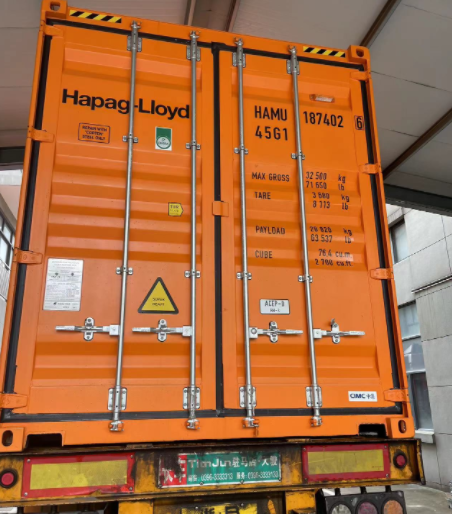
Are you considering shipping electric vehicles from China to the USA but uncertain about the regulations, logistics, and costs involved? In this comprehensive guide, you’ll discover the key challenges, specialized shipping methods, and essential compliance requirements for EV imports. Learn how to navigate tariffs, ensure safe battery handling, and choose the right freight forwarder—all crucial steps for a smooth and cost-effective electric vehicle shipment across borders.
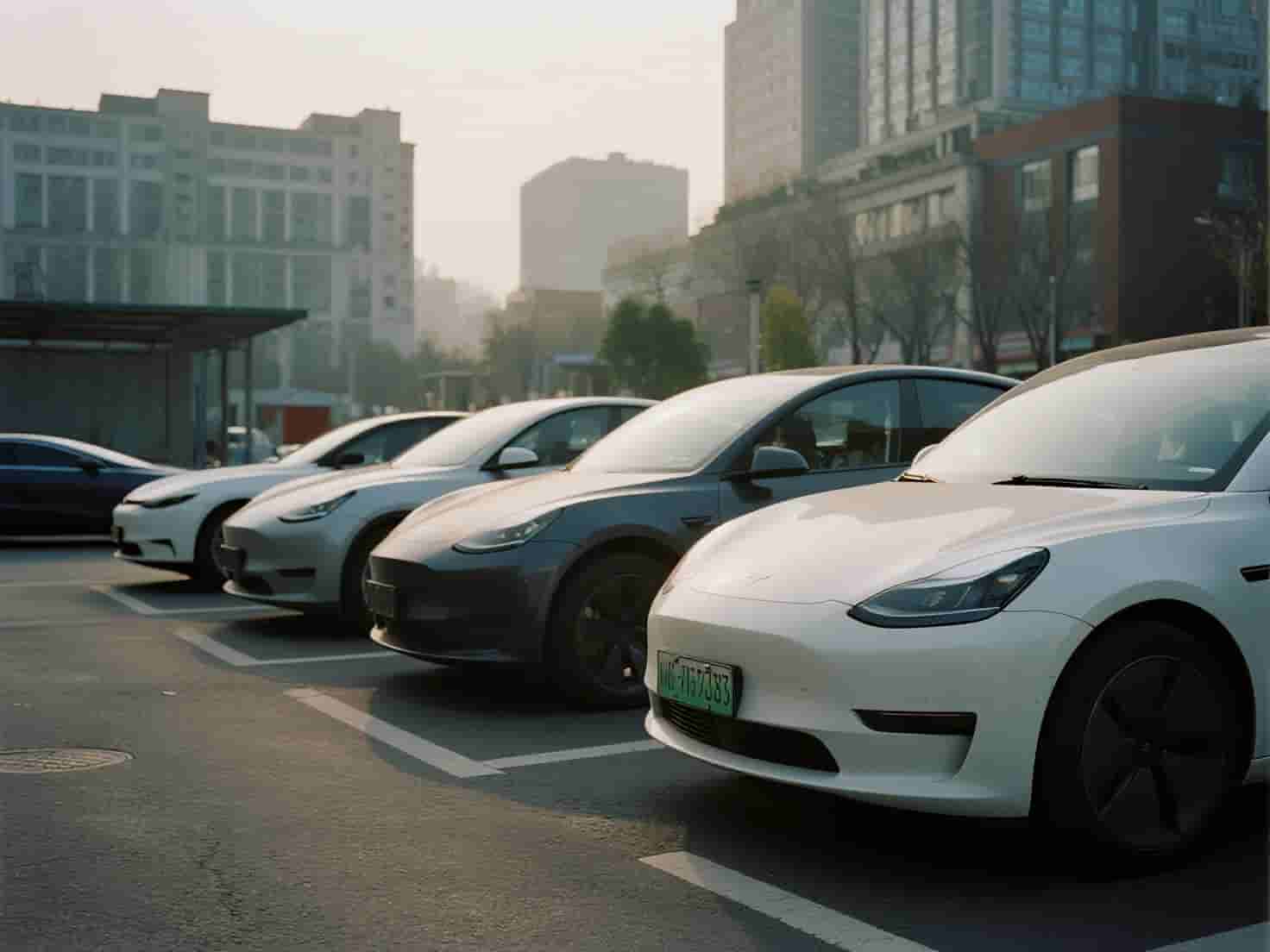
Key Challenges and Considerations for EV Imports to the USA
Shipping Electric Vehicles (EVs) from China to the USA involves navigating a set of unique challenges that go far beyond standard vehicle logistics. Understanding these challenges is essential for importers, manufacturers, and logistics professionals seeking to ensure efficient, compliant, and cost-effective shipments.
1. Regulatory Complexity
The USA sets strict regulations on automotive imports, especially for new energy vehicles like EVs. Importers must comply with frameworks established by the Environmental Protection Agency (EPA), the Department of Transportation (DOT), and the National Highway Traffic Safety Administration (NHTSA). Failure to adhere to these standards can result in delays, penalties, or refusal of entry.
2. Battery Transportation Restrictions
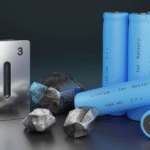
Lithium-ion batteries, which power most EVs, are classified as dangerous goods under international shipping conventions. Specific packaging, labeling, and handling requirements—guided by International Maritime Dangerous Goods (IMDG) and International Air Transport Association (IATA) regulations—add complexity and cost to the shipping process. For further information, refer to our guide on Shipping lithium batteries from China to USA.
3. Tariffs and Trade Barriers
Current trade dynamics between China and the USA have led to significant tariffs on many Chinese-made EVs. These tariffs can fluctuate, affecting total landed costs and overall competitiveness. Staying updated with trade policy changes is crucial for accurate cost planning.
4. Shipping Method Selection
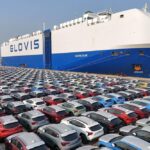
The choice between RoRo (Roll-on/Roll-off) vessels and container shipping impacts safety, cost, and transit time. While RoRo is typically cost-effective for large volumes, container shipping provides superior protection, especially for high-value EVs or those with sensitive battery systems.
| Shipping Method | Advantages | Disadvantages | Suitability for EVs |
|---|---|---|---|
| RoRo | Lower cost for bulk shipments; fast loading/unloading | Less protection from elements and theft | Best for established models in large volumes |
| Container | Enhanced security; suitable for high-end/rare models | Higher costs; longer handling times | Recommended for sensitive/high-value EVs |
5. Documentation and Customs Clearance
EV imports require extensive documentation, including certificates of origin, compliance declarations, and detailed technical specifications. Incomplete or inaccurate paperwork can cause customs delays or additional inspections.
6. Insurance and Liability
Due to the high value and unique risks associated with shipping electric vehicles, comprehensive insurance is essential. Importers should consider policies that specifically cover battery-related incidents and marine transit perils.
7. Cost Structure Transparency
Shipping costs for EVs can be affected by freight rates, customs duties, insurance premiums, and regulatory surcharges. A clear and detailed cost analysis is critical for budgeting and pricing strategies. For more insights regarding cost factors, see our resource on the Cost of Shipping from China to USA.
8. Selecting a Professional Freight Forwarder
Choosing an experienced and reliable freight forwarder, such as Dantful International Logistics, ensures end-to-end coordination. Our expertise covers Sea Freight, Air Freight, Customs Clearance, Insurance, and Door-to-Door solutions—all tailored for the unique requirements of electric vehicles.
Understanding US Regulations and Compliance for Electric Vehicles
Successfully importing Electric Vehicles into the USA requires strict adherence to a range of federal regulations and compliance standards. Here’s what importers must know:
1. EPA and Emissions Compliance
The Environmental Protection Agency (EPA) mandates that all vehicles meet U.S. emissions standards. For EVs, importers must submit EPA Form 3520-1, demonstrating compliance or qualifying under a specific exemption. Failure to provide proof can result in denial of entry.
2. DOT and Safety Standards
The Department of Transportation (DOT) regulates vehicle safety under Federal Motor Vehicle Safety Standards (FMVSS). Importers must ensure every EV model adheres to these requirements, documented via DOT Form HS-7. This covers crash safety, lighting, braking, and labeling.
3. NHTSA Import Approval
The National Highway Traffic Safety Administration (NHTSA) oversees the importation of vehicles for safety compliance. Non-compliant vehicles may only be imported under specific circumstances (e.g., for research, display, or if modified to meet standards). For a detailed breakdown of the process, see this guide to how to import a car to the United States.
4. Battery Certification and Transport
Lithium-ion batteries fall under additional scrutiny. Importers must certify that batteries meet UN38.3 standards for safe transportation and provide Material Safety Data Sheets (MSDS) to carriers and customs.
5. Compliance Checklist for EV Imports
| Regulatory Body | Required Documentation | Key Requirements | Notes |
|---|---|---|---|
| EPA | EPA Form 3520-1 | U.S. emissions compliance or exemption | Applies to all vehicle types |
| DOT/NHTSA | DOT Form HS-7 | FMVSS compliance or eligible import reason | Some exemptions for prototypes |
| Customs & Border Protection (CBP) | Bill of Lading, Commercial Invoice, Packing List, Certificate of Origin | Accurate value declaration, tariff code | Essential for all imports |
| IMDG/IATA (for batteries) | UN38.3 Test Report, MSDS | Battery safety certification | Mandatory for shipping lithium batteries |
6. Importer Responsibilities
Importers are responsible for verifying and retaining all regulatory documentation. Failure to comply can result in:
- Significant fines or penalties
- Vehicle seizure or re-export
- Extended customs delays
7. Expert Support from Dantful International Logistics
Navigating these regulatory hurdles can be daunting. At Dantful International Logistics, our team holds deep expertise in U.S. vehicle import regulations. We guide our clients through the compliance process, ensuring all paperwork, certifications, and safety protocols are meticulously managed for a smooth shipping experience.
Navigating Tariffs and Trade Policies on Chinese EVs
When considering the shipping of electric vehicles (EVs) from China to the USA, understanding current tariffs and trade policies is crucial. Over the past years, the United States has implemented a series of trade measures specifically targeting imports from China, especially in the automotive sector.
Current Tariffs on Chinese Electric Vehicles
As of 2025, the US government has imposed significant import tariffs on Chinese-made EVs. The base tariff rate stands at 27.5% for passenger vehicles, but recent adjustments under Section 301 of the Trade Act have increased this dramatically for EVs—some categories now face tariffs up to 100%. These tariffs are in addition to the standard duty rates and can significantly affect the landed cost of each vehicle.
| EV Type | MFN Duty Rate | Section 301 Additional Tariff | Total Tariff (2025) |
|---|---|---|---|
| Electric Passenger Cars | 2.5% | 100% | 102.5% |
| Electric Trucks/SUVs | 25% | 100% | 125% |
| EV Parts & Batteries | 3.4% | 25–100%* | 28.4–103.4% |
*Exact rate depends on the specific battery classification.
Impact of Trade Policies
Trade policies not only set tariff rates but may also restrict the number or type of EVs imported. The US government periodically reviews these measures, responding to concerns about national security, technology transfer, and domestic industry protection. Any changes in US-China relations can result in sudden policy shifts, so it is vital to monitor official announcements from US Customs and Border Protection (CBP) and the Office of the United States Trade Representative (USTR).
Compliance Tips
- Check HS Codes: Ensure that the correct Harmonized System (HS) codes are used for your EVs, as misclassification can lead to incorrect duty assessments or shipment delays.
- Document Country of Origin: All documentation must clearly state that the vehicles are manufactured in China.
- Understand Exemptions: Some EV parts or sub-components may be eligible for tariff exemptions, especially if they meet certain value-added criteria outside of China.
Strategic Advice
Given the elevated tariffs, many importers are exploring alternative supply chain strategies, such as partial assembly outside China or leveraging Free Trade Zones (FTZs) for value-add processing before final importation.
Working with a professional freight forwarder like Dantful International Logistics is highly recommended. Our compliance team continually tracks policy changes, advises on tariff optimization, and ensures full documentation and transparency throughout the shipping process.
Specialized Shipping Methods for Electric Vehicles: RoRo vs. Container
Choosing the right shipping method is essential for the safe, efficient, and compliant transportation of electric vehicles from China to the USA. The two primary options are Roll-on/Roll-off (RoRo) and container shipping. Each has unique advantages and considerations, especially when dealing with vehicles equipped with large lithium-ion batteries.
RoRo (Roll-on/Roll-off) Shipping
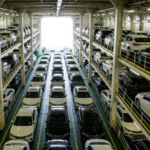
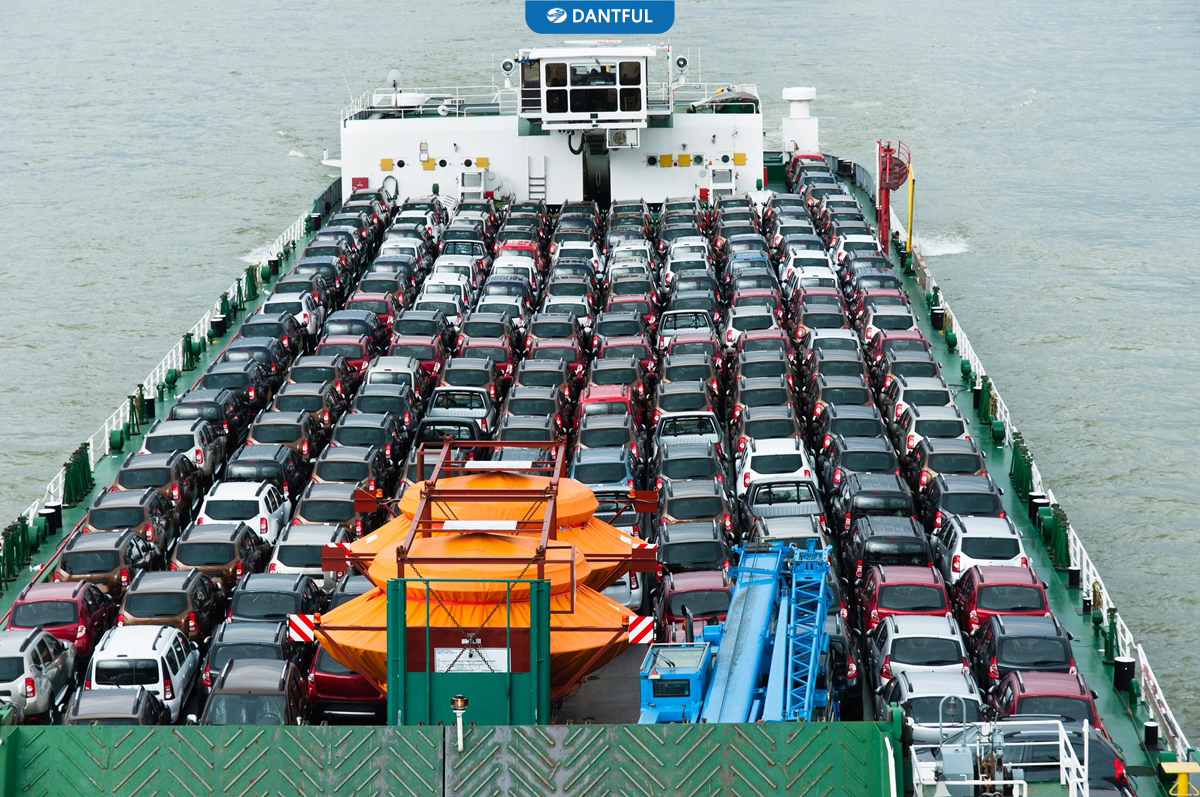
RoRo vessels are designed specifically for transporting vehicles. Vehicles are driven onto the ship at the port of origin and driven off at the destination. This method is commonly used for finished vehicles and is known for its speed and simplicity.
Advantages:
- Cost-effective for large volume shipments.
- Faster loading/unloading compared to container shipping.
- Minimizes handling, reducing the risk of damage.
Limitations:
- Not every US port accepts RoRo vessels from China.
- Limited protection against weather and potential corrosion.
- Restrictions may apply for vehicles containing certain battery types due to hazardous cargo regulations.
For a broader look at US port options for RoRo and container vessels, check our article on the biggest ports in the US.
Container Shipping
Container shipping involves loading EVs into standard ocean containers (typically 20ft, 40ft, or 40HQ). This method offers enhanced protection and flexibility, especially for high-value or prototype vehicles.
Advantages:
- Greater security and protection from environmental elements.
- Ideal for shipping small batches or high-value vehicles.
- Can consolidate multiple EVs or parts in one container, optimizing cost.
Limitations:
- Higher labor costs for loading/unloading and securing vehicles.
- Limited container dimensions and capacity:
- 20FT: 28 CBM, suitable for 1–2 compact EVs.
- 40FT: 56 CBM, suitable for 2–3 midsize EVs.
- 40HQ: 68 CBM, suitable for 3–4 standard EVs.
Comparison Table: RoRo vs. Container Shipping
| Criteria | RoRo Shipping | Container Shipping |
|---|---|---|
| Suitable Cargo | Standard EVs, large batches | High-value, small batch, prototypes |
| Protection Level | Moderate | High |
| Transit Time | Shorter (direct service) | Slightly longer (loading/unloading) |
| Cost Efficiency | More economical for volume shipments | Better for small/valuable shipments |
| Port Availability | Limited (specific ports only) | Broad (most major ports) |
| Regulatory Considerations | Strict for batteries, less paperwork | Detailed battery declaration needed |
Choosing the Right Method
When determining the best shipping solution for your EV importation, consider:
- Vehicle type and value
- Quantity per shipment
- Required transit time
- Port of discharge in the USA
- Battery compliance and safety regulations
At Dantful International Logistics, we offer end-to-end solutions for both RoRo and container shipping. Our team will assess your unique needs, recommend the optimal method, and ensure complete regulatory compliance and safety for your electric vehicle shipments.
Handling EV Batteries: Regulations and Safety Protocols
Shipping electric vehicles (EVs) from China to the USA presents unique challenges, primarily due to the presence of high-capacity lithium-ion batteries. These batteries are classified as dangerous goods under international transport regulations, which requires strict adherence to various safety protocols and legal compliance. It is critical for all stakeholders—manufacturers, exporters, freight forwarders, and importers—to understand and manage these requirements to ensure safe, legal, and efficient transport.
Key Regulations for EV Batteries
The transportation of EV batteries is governed by several regulatory frameworks:
| Regulation/Authority | Key Focus | Applicability |
|---|---|---|
| IATA DGR | Air transport, packaging, labeling, documentation | All air freight shipments |
| IMDG Code | Sea transport, segregation, emergency response | All sea freight shipments |
| 49 CFR (DOT) | US land and maritime safety, hazardous materials | US-bound shipments |
| UN 3480/3481 | Lithium-ion battery classification, testing | All modes, international compliance |
- IATA DGR (International Air Transport Association Dangerous Goods Regulations): Governs air shipment of lithium batteries, including packaging (UN-approved), state of charge limits (≤30% for air shipments), and mandatory documentation.
- IMDG Code (International Maritime Dangerous Goods Code): Applies to sea freight, focusing on proper stowage, segregation, and emergency handling procedures.
- 49 CFR (Code of Federal Regulations, Title 49): US domestic regulations for the transportation of hazardous materials, including EV batteries.
- UN Manual of Tests and Criteria: Requires batteries to pass UN 38.3 safety testing before international transit.
For advice on how to ship and pack EV batteries specifically, see our specialized content regarding Shipping lithium batteries from China to USA.
Packaging and Safety Protocols
- Certified Packaging: Lithium batteries must be packaged in UN-certified containers with insulation and impact protection to prevent short circuits or fire risks.
- Labeling and Marking: Each package must display specific hazard labels (Class 9, lithium battery mark), and shipping papers must detail battery specifications.
- State of Charge (SOC): Most air carriers restrict lithium batteries to a ≤30% SOC during shipment for fire safety.
- Documentation: A Dangerous Goods Declaration (DGD) is mandatory, listing battery type, weight, and test certification.
- Emergency Response: Carriers and forwarders must have emergency procedures in place for incidents involving batteries, including fire suppression and spill containment.
Best Practices for Safe EV Battery Shipping
- Choose the Right Shipping Method: For complete EVs, RoRo (Roll-on/Roll-off) and container shipping are both viable, but not all RoRo carriers accept EVs due to battery risks. Confirm in advance.
- Select Experienced Freight Forwarders: Partnering with a professional freight forwarder like Dantful International Logistics ensures compliance with all regulations and reduces risk.
- Pre-Shipment Inspections: Secure pre-shipment battery inspections and UN 38.3 test certificates.
- Training and Compliance: All personnel handling EVs or batteries must be trained in dangerous goods regulations.
- Continuous Monitoring: Consider using tracking devices that monitor temperature, humidity, and impact throughout the transit process for additional safety.
Summary Table: Key Steps in Handling EV Batteries
| Step | Description |
|---|---|
| Compliance Assessment | Review regulations for mode/country |
| Packaging & Labeling | Use UN-certified containers, apply all required labels/marks |
| Documentation | Prepare DGD, UN 38.3 certificate, shipping instructions |
| Partner Selection | Choose an expert, compliant freight forwarder (e.g., Dantful Logistics) |
| Staff Training | Ensure all handlers are certified in dangerous goods protocols |
| Emergency Preparedness | Confirm carrier and forwarder have adequate incident response plans |
Ensuring strict adherence to these safety protocols is not only a legal requirement but also essential to protect people, cargo, and the environment during the international shipment of EVs.
READ MORE:
- Shipping From China to the USA
- Shipping From China TO Canada
- Shipping From China TO Mexico
- Shipping From China to Panama
- Shipping From China to Costa Rica
- Shipping From China to Brazil
- Shipping From China TO Colombia
- Shipping From China to Jamaica
- Shipping From China to Venezuela
- Shipping From China to Argentina
Customs Clearance and Documentation for Importing EVs
Customs clearance is a critical step when importing electric vehicles from China to the USA. The process is complex due to the high value of EVs, the presence of regulated batteries, and the need to comply with both automotive and hazardous goods regulations. Proper documentation and understanding of the procedures can significantly reduce delays, penalties, and costs.
To gain a comprehensive understanding of the process, you may also find our overview on import procedure from China to United States valuable.
Key Documents Required
| Document | Purpose/Content |
|---|---|
| Bill of Lading (B/L) | Contract of carriage, proof of shipment |
| Commercial Invoice | Value declaration, used for duty/tax calculation |
| Packing List | Detailed list of items/parts included |
| Certificate of Origin (COO) | Proof of country of manufacture (China) |
| EPA Form 3520-1 | US Environmental Protection Agency import declaration |
| DOT HS-7 Declaration | US Department of Transportation safety compliance |
| UN 38.3 Test Report | For lithium batteries, certifies tested compliance |
| Dangerous Goods Declaration | For the battery, confirms compliance with regulations |
| Insurance Certificate | Proof of insurance for transit |
Import Procedures Overview
- Pre-Arrival Filing: The US Customs and Border Protection (CBP) requires an Entry Manifest (CBP Form 7533) or Entry/Immediate Delivery (CBP Form 3461) to be filed before arrival. Advanced cargo information (ACE Manifest) must be submitted electronically.
- Automotive Compliance: All imported EVs must meet US EPA and DOT standards. EPA Form 3520-1 certifies the vehicle meets emission standards, and DOT HS-7 declares compliance with federal safety standards.
- Battery Compliance: UN 38.3 test reports must be provided for all lithium batteries, including those installed in the vehicle.
- Customs Valuation & Duty Payment: The commercial invoice, packing list, and bill of lading are used to calculate import duties, taxes, and possible tariffs. The Harmonized Tariff Schedule (HTS) code for EVs must be accurately declared.
- Additional Inspections: CBP may randomly inspect shipments. Proper labeling, accurate description, and complete paperwork minimize the risk of delays.
- Delivery Release: Once cleared and all duties/taxes are paid, the vehicle can be released to the consignee or forwarded to the final destination.
Key Compliance Considerations
- Section 301 Tariffs: As of 2025, additional tariffs may apply to Chinese-made EVs. Check the latest updates before import.
- State-level Requirements: Some US states may have additional EV-specific rules or taxes.
- Timing: Customs clearance for EVs typically takes 3–7 days, depending on document completeness and inspection requirements.
Best Practices for Smooth Customs Clearance
- Partner with Experienced Freight Forwarders: Dantful International Logistics offers full customs brokerage services, ensuring all documentation is accurate and compliant from origin to destination.
- Early Document Preparation: Gather and review all documents before shipment to avoid costly delays.
- Continuous Communication: Stay in touch with your customs broker and forwarder throughout the process.
- Compliance Review: Regularly update knowledge of changing US import regulations for electric vehicles and batteries.
Estimated Timeline: Customs Clearance for EV Imports (China to USA)
| Step | Typical Duration |
|---|---|
| Document Preparation | 1–3 days |
| Pre-arrival Filing | Same day |
| Customs Review/Inspection | 2–5 days |
| Duty/Tax Payment | 1 day |
| Final Release/Delivery | 1 day |
| Total Estimated Time | 3–7 days |
A smooth customs clearance process is crucial for timely and cost-effective delivery of your electric vehicles. Working with a knowledgeable, reputable partner like Dantful International Logistics minimizes risk and ensures compliance at every step.
Insurance Options for Shipping Electric Vehicles
Shipping Electric Vehicles (EVs) from China to the USA involves significant financial exposure. Due to the high value and sensitive nature of EVs—especially their lithium batteries—comprehensive insurance coverage is not just recommended; it is essential.
Types of Insurance Coverage
| Insurance Type | Key Coverage Areas | Suitability for EVs |
|---|---|---|
| Cargo All Risk | Loss/damage from external causes (theft, fire, accident, rough handling, etc.) | Highly recommended for new/high-value EVs |
| Total Loss Only | Coverage only in case of complete loss (e.g., ship sinking) | Budget shipments, used EVs with low residual value |
| General Average | Covers partial loss sharing in case of emergency sacrifices (e.g., jettison) | All international sea freight shipments |
| Battery-Specific Add-ons | Special coverage for battery damage, leakage, fire, etc. | Strongly recommended for EVs with lithium-ion batteries |
What Should You Consider When Choosing Insurance?
- Declared Value: Always declare the correct value to ensure full compensation in case of loss.
- Exclusions: Standard policies may exclude battery-related incidents or improper packaging; review terms carefully.
- Route Risk: Some sea routes are riskier (e.g., piracy, severe weather), and rates may fluctuate accordingly.
- Carrier Liability Limitations: Liability from shipping lines is usually capped and may not fully cover EV value.
Why Work With a Specialist?
Dantful International Logistics works with leading global insurers to offer tailored insurance solutions for EV shipments. We assist in risk assessment, policy selection, and claims handling, ensuring your shipment is protected at every stage.
Cost Analysis: Factors Influencing EV Shipping Expenses
Shipping electric vehicles from China to the USA involves several cost factors beyond basic freight rates. A clear understanding of these variables is crucial for accurate budgeting and supply chain planning.
For a more detailed comparison of shipping methods and price points, explore our section on container shipping costs from China to USA.
Main Cost Components
| Cost Element | Description | Typical Range / Notes |
|---|---|---|
| Ocean Freight | RoRo or container shipping charges, depending on vessel type | $1,500–$3,500 per vehicle (RoRo); $3,000–$6,000 per 40HQ container |
| Port Charges | Terminal handling, wharfage, documentation fees at both origin and destination | $300–$800 per vehicle |
| Customs Duties & Taxes | US import duty (currently 2.5% for passenger vehicles), Section 301 tariffs (up to 27.5% for Chinese EVs), and other taxes | Varies by vehicle value |
| Insurance | Cost depends on declared value and coverage scope | 0.3%–0.7% of cargo value |
| Inland Transportation | Trucking, rail, or intermodal transport from port to final destination | $500–$2,000 within the USA |
| Battery Handling Fee | Special handling for hazardous batteries | $100–$400 per vehicle |
| Customs Brokerage | Third-party agent service for clearance | $150–$350 per shipment |
Cost Comparison: RoRo vs. Container Shipping
| Shipping Method | 20FT Container | 40HQ Container | RoRo (Per Vehicle) |
|---|---|---|---|
| Capacity | 1 sedan or 2 compact EVs | 3–4 sedans or SUVs | 1 EV |
| Approx. Cost | $2,500–$4,500 | $3,000–$6,000 | $1,500–$3,500 |
| Protection Level | High | High | Medium |
| Battery Handling | More control | More control | Standard |
Note: Rates vary by season, port pair, and vehicle specifications.
Other Influencing Factors
- Peak Season Surcharges: Costs can rise 10–30% during busy shipping periods.
- Destination Port: Fees differ between Los Angeles, Long Beach, Houston, New York/New Jersey, etc.
- Vehicle Size & Weight: Large SUVs or commercial EVs may incur oversize surcharges.
- Regulatory Changes: US/China trade policies can rapidly affect tariffs and procedural costs.
Dantful International Logistics provides transparent pricing and real-time market updates to help customers optimize shipping strategies and minimize unnecessary expenses.
Choosing the Right Freight Forwarder for EV Shipments
Selecting a reliable freight forwarder is crucial for the safe, compliant, and efficient shipping of electric vehicles from China to the USA. Given the complexity of EV logistics—such as hazardous battery handling, regulatory compliance, and customs clearance—partnering with an experienced provider is invaluable.
You may also want to review our comprehensive tips on how to choose the right freight forwarder to ensure you make the best decision for your EV shipments.
Key Criteria for Freight Forwarder Selection
Expertise in EV Logistics:
Ensure the forwarder has proven experience managing EV shipments, including battery safety protocols and familiarity with US import regulations.Comprehensive Service Portfolio:
The ideal partner should provide a full suite of services, including Sea Freight, Air Freight, Customs Clearance, Insurance, Door to Door, OOG Freight, Warehouse, and Consolidated Freight.Compliance & Documentation Support:
Look for a provider with a strong track record in preparing and submitting all regulatory and customs documentation for electric vehicles and batteries.Insurance & Risk Management:
Can the forwarder arrange robust insurance coverage and help with claims if issues arise?Transparent Communication:
Real-time shipment tracking, proactive updates, and responsive customer service are essential.Cost-effectiveness:
Compare pricing structures, but never sacrifice professionalism or safety for the lowest quote.
Why Choose Dantful International Logistics?
Dantful International Logistics is recognized as a highly professional, cost-effective, and high-quality one-stop international logistics service provider for global traders. Our dedicated teams in both China and the USA ensure seamless end-to-end coordination for EV shipments, including:
- Customized transportation planning for both RoRo and containerized EV shipments
- Battery and hazardous goods handling expertise ensured by certified staff
- In-house customs clearance agents for expedited processing at major US ports (e.g., Los Angeles, Houston, New York/New Jersey)
- Flexible insurance solutions tailored to vehicle value and risk profile
- Dedicated customer support before, during, and after shipment
With 15+ years of hands-on experience, we at Dantful International Logistics have helped hundreds of importers and exporters navigate the challenges of international EV shipping. For your next shipment, trust a partner who prioritizes your cargo’s safety, regulatory compliance, and cost efficiency.
Contact Dantful International Logistics for a tailored EV shipping solution today.

Young Chiu is a seasoned logistics expert with over 15 years of experience in international freight forwarding and supply chain management. As CEO of Dantful International Logistics, Young is dedicated to providing valuable insights and practical advice to businesses navigating the complexities of global shipping.