If you’re researching how much to ship a car from China to USA, you’ve probably already discovered that the answer isn’t as simple as a single price tag. Between freight charges that vary by method and route, a multi-layered US tariff system that can add 37–63% to your vehicle’s declared value, and compliance costs that catch first-time importers off guard, the gap between an “ocean freight quote” and your actual all-in cost can be staggering.
For shipping from China to USA, this guide breaks down every cost component — from the moment your vehicle leaves a Chinese port to the day it arrives at your driveway in the United States. Whether you’re a car dealer importing a container of Chinese EVs, a collector eyeing a 25-year-old classic, or an individual buyer shipping a single sedan, you’ll find route-specific pricing, worked duty calculations, and actionable advice to avoid the hidden fees that inflate most car shipping budgets by thousands of dollars.
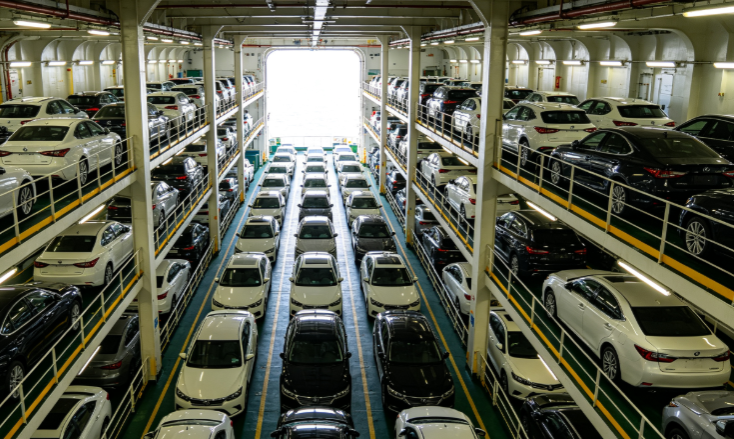
Car Shipping from China to USA: Methods, Costs & Transit Times at a Glance
Before diving into line-item breakdowns, it’s essential to understand the four shipping methods available and how they fundamentally affect your total cost. The right choice depends on your vehicle type, budget, and how much protection you need during transit.
| Shipping Method | Cost Range (Port-to-Port) | Transit Time | Best For |
|---|---|---|---|
| RORO (Roll-on/Roll-off) | $1,500–$2,500 | 18–30 days | Standard operational cars, budget-conscious shippers |
| 20ft Container (FCL) | $2,500–$4,500 | 22–28 days | Single high-value, luxury, or classic cars |
| 40ft Container (FCL) | $3,800–$6,000 | 22–28 days | 2–4 cars shipped together (cost per car drops) |
| Shared Container (LCL) | $1,800–$3,000 | 25–35 days | Single car wanting container protection at lower cost |
| Air Freight | $8,000–$25,000+ | 3–7 days | Ultra-urgent, high-value, or rare vehicles only |
Quick answer: For a standard sedan shipped from Shanghai to Los Angeles via RORO, expect to pay approximately $2,300–$3,500 all-in (port-to-port, excluding import duties). Door-to-door DDP (Delivered Duty Paid) service for the same car typically runs $4,500–$8,000 depending on vehicle value and the current duty rate.
Key Terminology
Before proceeding, here are the essential terms you’ll encounter throughout the shipping process:
- RORO (Roll-on/Roll-off) — A specialized vessel where vehicles are driven on and off via built-in ramps. Learn how long RORO shipping takes and when it’s the right choice.
- FCL (Full Container Load) — An entire shipping container (20ft or 40ft) dedicated exclusively to your vehicle(s). Offers maximum protection but at a higher cost.
- LCL (Less than Container Load) — Your vehicle shares container space with other cargo. More affordable than FCL but with longer transit times due to consolidation. See our guide on LCL vs FCL shipping for a detailed comparison.
- Port-to-Port — Freight service covering only the ocean leg between the origin port and destination port. You handle everything else.
- Door-to-Door — End-to-end service covering pickup, ocean freight, customs clearance, duty payment, and final delivery. For a complete breakdown, see our door to door shipping from China to USA guide.
- Bill of Lading (B/L) — The core legal document for sea freight, serving as a receipt for goods, a contract of carriage, and a document of title.
Major Ports & Transit Times
Your choice of origin and destination ports significantly impacts both cost and transit time. West Coast ports are faster and cheaper; East Coast and Gulf Coast ports require longer transits via the Panama Canal.
| China Departure Port | US Arrival Port | Typical Transit | Best For |
|---|---|---|---|
| Shanghai | Los Angeles / Long Beach | 18–25 days | Fastest West Coast option |
| Shanghai | New York / Newark | 30–38 days | Northeast US delivery |
| Shenzhen (Yantian/Shekou) | Los Angeles / Long Beach | 18–25 days | Southern China manufacturing hub |
| Shenzhen | Houston | 25–32 days | Texas and Gulf Coast delivery |
| Ningbo | Seattle / Tacoma | 16–22 days | Pacific Northwest delivery |
| Qingdao | Savannah | 28–35 days | Southeast US delivery |
RORO vs Container vs Air Freight: Choosing the Best Shipping Method for Your Car
Your choice of shipping method is the single largest cost variable you control. Here’s a detailed comparison to help you decide.
RORO (Roll-on/Roll-off) Shipping
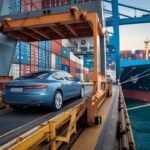
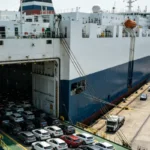
RORO is the industry standard for international vehicle transport. Your car is driven onto a multi-deck vessel at the origin port, secured with wheel straps on an enclosed vehicle deck, and driven off at the destination port. Think of it as a floating parking garage purpose-built for vehicles.
Pros:
- Cheapest option — typically 35–40% less than container shipping for a single vehicle
- Faster port loading and unloading compared to container handling
- Excellent for shipping multiple vehicles at once (bulk shipments of 5+ cars)
- Widely available on major China–US shipping routes
Cons:
- Vehicle is exposed to salt air and the maritime environment (not enclosed in a container)
- No personal belongings allowed inside the vehicle — this is a strict rule
- Only works for operational vehicles that can be driven on and off the vessel
- Fewer available port pairs compared to container shipping
Cost range: $1,200–$2,500 port-to-port, depending on route and vehicle size.
Container Shipping (20ft / 40ft FCL & LCL)
Container shipping places your vehicle inside a steel shipping container, which is then loaded onto a standard container vessel. Your car is secured inside using wheel chocks, tie-down straps, and sometimes wooden bracing.
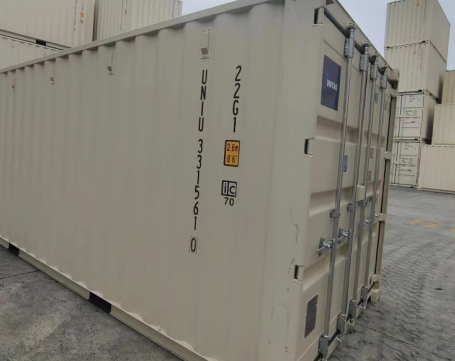
20ft Container (FCL): Holds one standard car comfortably. Cost: $2,500–$4,500 port-to-port.
40ft Container (FCL): Holds 2–4 cars depending on vehicle size. The per-car cost drops significantly when shipping multiple vehicles. Cost: $3,800–$6,000 port-to-port.
Shared Container (LCL): Your vehicle shares a container with other cargo. More affordable than FCL but transit times are longer (25–35 days) due to consolidation and deconsolidation at both ends. Cost: $1,800–$3,000.
Pros:
- Maximum protection from weather, salt spray, theft, and physical damage
- Personal items and spare parts can be packed inside the car and container
- Works for non-running vehicles (can be loaded using a winch or forklift)
- Available at virtually all major ports worldwide
Cons:
- More expensive than RORO, especially FCL for a single car
- Slightly longer handling time at ports due to container loading/unloading
Air Freight
For ultra-urgent or exceptionally high-value vehicles, air freight is an option — but the cost makes it impractical for all but the rarest scenarios. Expect to pay $8,000–$25,000+ for a single vehicle, with transit times of just 3–7 days. This is typically reserved for race cars needed at events, museum pieces, or diplomatic relocations.
Case Study #1: Standard Sedan via RORO (Shanghai to Los Angeles)
A US-based importer purchased a standard Chinese sedan valued at $15,000 and shipped it from Shanghai to Los Angeles via RORO. Here’s the actual cost breakdown:
| Cost Item | Amount |
|---|---|
| RORO Ocean Freight | $1,500 |
| China-side export customs & port fees | $300 |
| US terminal handling & port fees | $400 |
| Marine cargo insurance (1.5% of $15,000) | $225 |
| US customs broker fee | $350 |
| ISF filing | $75 |
| Inland trucking (LA port to San Bernardino, ~80 mi) | $450 |
| Subtotal (port-to-door, excl. duties) | $3,300 |
| Import duties (~40% effective rate × $15,000) | $6,000 |
| Total All-In Cost | $9,300 |
The ocean freight was only $1,500 — just 16% of the total all-in cost. This illustrates why focusing solely on freight quotes is misleading: duties, fees, and inland transport can easily multiply your base shipping cost by 5–6×.
Complete Cost Breakdown: Car Shipping Rates by Route, Method & Vehicle Type
Route-Specific Pricing
The following table shows current (2026) port-to-port ocean freight estimates for the most common China→USA car shipping routes. These are baseline freight costs only — see the next section for additional charges.
| Route | RORO | 20ft Container | 40ft Container | Transit |
|---|---|---|---|---|
| Shanghai → Los Angeles | $1,500–$2,200 | $2,500–$3,500 | $4,000–$5,200 | 18–25 days |
| Shanghai → New York | $2,200–$3,000 | $3,500–$4,800 | $5,000–$6,500 | 30–38 days |
| Shenzhen → Los Angeles | $1,600–$2,300 | $2,600–$3,600 | $4,200–$5,400 | 18–25 days |
| Shenzhen → Houston | $2,000–$2,800 | $3,000–$4,200 | $4,500–$6,000 | 25–32 days |
| Ningbo → Seattle | $1,500–$2,200 | $2,500–$3,500 | $4,000–$5,200 | 16–22 days |
| Qingdao → Savannah | $2,100–$2,900 | $3,300–$4,600 | $4,800–$6,300 | 28–35 days |
East Coast and Gulf Coast routes carry a $700–$1,500 premium over West Coast routes due to longer sailing distances (via the Panama Canal) and higher destination port fees.
Additional Cost Components: Beyond Ocean Freight
The ocean freight charge is just the starting point. Here are the additional costs that collectively can exceed the freight cost itself. For a broader look at pricing trends, see our shipping rates from China to USA overview:
Origin Charges (China Side):
| Charge | Typical Cost | Notes |
|---|---|---|
| Export customs clearance | $150–$300 | Required for all vehicle exports from China |
| Port handling / THC (Terminal Handling Charge) | $100–$250 | Charged by the Chinese port |
| Inland pickup & transport to port | $100–$500 | Depends on distance from seller to port |
| Documentation fees | $50–$150 | Bill of lading, export declaration, certificates |
Destination Charges (US Side):
| Charge | Typical Cost | Notes |
|---|---|---|
| Terminal handling | $200–$450 | Charged by the US port |
| Customs broker fee | $200–$500 | Licensed broker to file CBP entry |
| ISF (Importer Security Filing) | $50–$120 | “10+2” filing — mandatory before vessel departure |
| Port security & infrastructure fees | $50–$150 | Varies by port |
| Storage / demurrage (if delayed) | $50–$150/day | Only if vehicle isn’t picked up promptly |
Inland Transport (US Side):
| Distance | Typical Cost | Example |
|---|---|---|
| Port to nearby city (≤100 miles) | $300–$800 | LA port → Los Angeles metro |
| Medium distance (100–500 miles) | $500–$1,200 | LA port → San Francisco |
| Cross-country (500–3,000 miles) | $1,000–$2,500 | LA port → New York City |
Cargo Insurance: Marine cargo insurance typically costs 1–3% of the vehicle’s declared value. For a $20,000 car, expect to pay $200–$600. Coverage options range from basic (total loss only) to comprehensive all-risk (theft, damage, partial loss). For high-value vehicles, comprehensive coverage is strongly recommended.
Import Bond: A Single-Entry Bond (~$200–$500 per shipment) or Continuous Bond (~$500–$800/year for multiple imports) is required by US CBP as a financial guarantee for duties and fees.
What Drives the Cost Up? Key Factors
Several vehicle-specific and market factors can significantly increase your shipping cost:
| Factor | Cost Impact | Why |
|---|---|---|
| Oversized vehicles (SUVs, trucks, vans) | +25–40% | Occupy more space (RORO) or require special container positioning |
| Non-running / inoperable vehicles | +$200–$500 | Require special handling equipment (winch, forklift) to load/unload |
| EV / Hybrid vehicles | +$400–$800 | Classified as Dangerous Goods (DG) under IMDG Code; requires special declaration and handling |
| Peak season shipping (Sept–Dec) | +15–30% | Holiday demand surge tightens capacity and raises rates |
| Remote / inland US delivery | +$500–$2,000+ | Longer trucking distances from port to final destination |
Door-to-Door vs Port-to-Port: Understanding Service Levels
The shipping service level you choose determines how much you handle yourself versus what your freight forwarder manages.
| Service Level | Related Incoterm | What’s Included | Cost Premium | Best For |
|---|---|---|---|---|
| Port-to-Port | FOB / CIF | Ocean freight only, port-to-port | Baseline | Experienced importers with their own customs broker and trucking arrangements |
| Port-to-Door | — | Ocean freight + US customs clearance + inland delivery | +15–25% | Importers who arrange China-side pickup and export clearance themselves |
| Door-to-Port | — | China pickup + export customs + ocean freight | +10–20% | Sellers delivering to the buyer’s preferred US port |
| Door-to-Door (DDP) | DDP | Everything: pickup → export → shipping → import clearance → duties & taxes → delivery | +25–40% | First-time importers, buyers wanting a single point of contact and predictable all-in cost |
DDP (Delivered Duty Paid) is the most comprehensive option. Under DDP shipping, your freight forwarder handles every step — seller pickup in China, Chinese export customs, ocean freight, US import clearance, all duties and taxes, and final delivery to your address. You receive one quote, pay one invoice, and deal with one point of contact. For first-time car importers unfamiliar with US customs procedures, DDP eliminates the steep learning curve and the risk of costly paperwork errors.
The trade-off is price: DDP typically adds 25–40% to the base port-to-port freight cost. However, when you factor in the time and complexity you avoid, many importers find the premium worthwhile.
US Import Duties, Tariffs & Customs Fees on Chinese Cars
This is where most cost estimates go wrong. As of 2026, importing a passenger car from China triggers multiple overlapping tariff layers that can collectively add 37.5%–62.5% to the vehicle’s declared customs value. Understanding this stacking effect is critical to budgeting accurately.
The 2026 Tariff Stack: Why Duties Are So High
Multiple US trade policies now apply simultaneously to Chinese-origin vehicles:
| Tariff Layer | Rate | Applies To | Effective Date |
|---|---|---|---|
| Base MFN Duty (passenger cars, HTS 8703) | 2.5% | All WTO member countries | Ongoing |
| Base MFN Duty (trucks/light trucks, HTS 8704) | 25% | All countries (“Chicken Tax”) | Ongoing (since 1964) |
| Section 232 (Auto & Auto Parts) | 25% | Passenger vehicles & light trucks, all countries | April 3, 2025 |
| Section 301 (China-specific) | 7.5%–25% | China-origin goods (varies by specific HTS code) | Ongoing, subject to USTR review |
| Reciprocal / IEEPA Tariff | 10% | Universal baseline on all imports | February 2026 (150-day statutory window) |
| Estimated Effective Total | ~37.5%–62.5% | Stacked ad valorem on Chinese passenger cars | 2026 |
Important: These tariffs stack — they are applied cumulatively on the declared customs value of the vehicle, not sequentially. A $30,000 car facing a 45% effective rate pays $13,500 in duties alone.
Worked Example: Importing a $30,000 Chinese EV
Here’s what the duty calculation looks like for a $30,000 Chinese electric vehicle imported under 2026 tariff rules:
| Duty Layer | Calculation | Amount |
|---|---|---|
| Base MFN (2.5%) | $30,000 × 2.5% | $750 |
| Section 232 (25%) | $30,000 × 25% | $7,500 |
| Section 301 (~7.5%) | $30,000 × 7.5% | $2,250 |
| Reciprocal tariff (10%) | $30,000 × 10% | $3,000 |
| Total Estimated Duty | 45% effective | $13,500 |
This duty cost alone exceeds the typical ocean freight charge by 3–5×, underscoring why any “cost to ship” estimate that ignores tariffs is dangerously incomplete.
Additional US Customs Fees
Beyond ad valorem duties, these fixed and percentage-based fees apply to every vehicle import:
| Fee | Rate | Notes |
|---|---|---|
| Merchandise Processing Fee (MPF) | 0.3464% of declared value | Minimum $32.71, maximum $634.62 per entry |
| Harbor Maintenance Fee (HMF) | 0.125% of cargo value | Applies to ocean freight shipments only |
| Gas-Guzzler Tax | Varies by MPG | Applies to vehicles achieving under 22.5 MPG combined (IRS Form 6197) |
Recent Policy Changes That Affect Car Importers
Several 2025–2026 policy changes have fundamentally reshaped the cost of importing vehicles from China:
- Section 232 Expanded to Passenger Vehicles (April 2025) — Previously focused on steel and aluminum, Section 232 was extended to cover passenger vehicles and light trucks from all countries. This added an immediate 25% tariff on top of existing rates.
- De Minimis Elimination for China/Hong Kong (May 2025) — The $800 duty-free threshold for low-value shipments was eliminated for China-origin goods. All commercial vehicle shipments now require formal CBP entry, regardless of value.
- UFLPA Compliance Requirements — Under the Uyghur Forced Labor Prevention Act, all goods from China must now include the manufacturing facility’s full address and ZIP code. Shipments without this documentation face detention at the border.
Critical Disclaimer: Tariff rates and trade policies are subject to change with little or no notice. The rates cited in this guide reflect information available as of July 2026. Always verify current applicable tariff rates with a licensed US customs broker before booking your shipment. This information is for general guidance only and does not constitute legal or customs advice.
Special Vehicles: Shipping EVs, Classic Cars & Non-Conforming Imports from China
Not all cars are treated equally when it comes to shipping and import regulations. Three categories of vehicles require special attention — and have significantly different cost profiles.
Electric Vehicles (EVs) & Hybrids: Dangerous Goods Regulations
Chinese EV exports are booming, with brands like BYD, NIO, Li Auto, XPeng, Zeekr, and Geely attracting global interest. However, their lithium-ion batteries trigger additional regulatory requirements that add cost and complexity.
Under the IMDG (International Maritime Dangerous Goods) Code, EVs and hybrids are classified as dangerous goods:
- UN 3171 — Battery-powered vehicles (cars, scooters, e-bikes)
- UN 3166 — Battery-powered equipment (if battery is shipped separately)
- State of Charge (SoC) Limit: The battery must be discharged to ≤30–50% before loading, per IMDG SP 962
- Dangerous Goods Declaration: A formal DG declaration must accompany the shipping documents
- Surcharge: Expect an additional $400–$800 per vehicle for DG handling
Carrier restrictions: Not all RORO operators accept EVs. Some major RORO carriers now require EVs to be shipped via container only due to fire risk concerns. Always confirm carrier acceptance before booking.
Compliance challenges: Chinese-market EVs are built to meet Chinese (GB/T) standards, not US FMVSS safety standards or EPA emissions requirements. Unless your EV is certified as conforming (unlikely for domestic Chinese models), you’ll need a Registered Importer (RI) to modify and certify it — a process that can cost $5,000–$15,000+ depending on the modifications required. Charging standard differences (GB/T vs CCS vs NACS) add another layer of complexity.
Classic Cars & The 25-Year Rule: The Most Affordable Import Pathway
If you’re importing a vehicle manufactured 25 or more years ago (from the date of import), you benefit from the single most valuable exemption in US vehicle import law.
What the 25-year rule does: Vehicles 25+ years old are completely exempt from:
- DOT FMVSS (Federal Motor Vehicle Safety Standards) compliance — no HS-7 conformity declaration required
- EPA emissions standards — no EPA Form 3520-1 required
- No Registered Importer (RI) needed
- No compliance modifications required
What still applies: Standard CBP entry, import duties at MFN rates, and your state’s DMV registration process.
The cost advantage is substantial: Classic car importers save $1,500–$5,000+ in compliance and modification costs compared to importing a newer non-conforming vehicle. This makes vintage and classic cars the most financially accessible category for China→USA import.
Proving vehicle age: You’ll need documentation that clearly establishes the manufacturing date — original manufacturer records, recognized classic car registry documentation, or, for older vehicles, the original title. A simple bill of sale is generally insufficient.
Non-Conforming Vehicles (Under 25 Years): The Compliance Path
A “non-conforming” vehicle is one not originally manufactured to meet US FMVSS safety and EPA emissions standards — which covers virtually every Chinese-market car sold today.
To legally import a non-conforming vehicle under 25 years old, you must work with a Registered Importer (RI) — a company specifically licensed by the DOT to modify and certify non-conforming vehicles to meet US standards. You’ll also need to post an import bond equal to 1.5× the vehicle’s dutiable value, held until the RI certifies compliance.
Typical modification costs by system:
| Modification | Typical Cost | What’s Involved |
|---|---|---|
| Lighting system | $500–$1,200 | Headlights, taillights, side markers to meet FMVSS 108 |
| Safety glass | $800–$2,000 | Windshield and windows to meet FMVSS 205 (AS-1/AS-2 marking) |
| Bumper & impact reinforcement | $1,000–$3,000 | Modifications to meet FMVSS 215 (5-mph bumper standard) |
| Emissions system | $1,000–$5,000+ | Catalyst, OBD-II, evaporative emissions to meet EPA Tier 3 |
| Door locks, restraints, airbags | $500–$3,000+ | FMVSS 206, 208, 214 compliance — can be extremely costly for modern vehicles |
“Show and Display” exemption: A limited alternative pathway exists for vehicles of “historical or technological significance.” Capped at 500 vehicles per year nationally, this exemption allows non-conforming vehicles to be imported for display purposes — but imposes strict mileage limits (no more than 2,500 miles per year) and generally prohibits daily driving. Eligible vehicles are listed on the NHTSA’s published eligibility list.
How to Import a Car from China to USA: Step-by-Step Process
Understanding the full import process helps you anticipate costs and avoid delays. Here’s the complete workflow, covering both the Chinese export side and the US import side — a perspective most competitor guides miss entirely.
Phase 1: Preparation & China-Side Export
Step 1 — Prepare the Vehicle: Before shipping, the vehicle must be thoroughly cleaned — particularly the undercarriage, which must be free of foreign soil per USDA agricultural quarantine requirements. Steam cleaning is the standard method. Document the vehicle’s condition with dated photos from all angles; this serves as your pre-shipment inspection record if you need to file an insurance claim later.
Step 2 — Complete Chinese Export Documentation: China requires specific export documentation, including a vehicle export license, Chinese customs export declaration, the original vehicle title or registration, and the commercial invoice (purchase receipt). Your freight forwarder in China handles these on your behalf.
Step 3 — Book Shipping: Select your freight forwarder, choose your shipping method (RORO or container), and confirm the sailing schedule. Book 3–4 weeks in advance when possible — this locks in better rates and guarantees space.
Step 4 — File ISF 10+2 & Deliver to Port: The Importer Security Filing (ISF) — also called “10+2” — must be filed with US CBP at least 24 hours before the vessel departs from the Chinese port. This filing includes details about the shipper, consignee, manufacturer, and cargo. Missing the ISF deadline can result in a $5,000+ penalty. Once filed, drive the vehicle to the port (RORO) or deliver it to the container loading facility.
Phase 2: Sea Transit
During the 18–38 day ocean transit, your vehicle is covered by your marine cargo insurance policy. Professional freight forwarders provide regular tracking updates — vessel position, estimated arrival, and any delays. Container shipments may offer GPS-enabled tracking for real-time location data.
Phase 3: US-Side Import Clearance
Step 5 — File US Customs Entry: Upon vessel arrival, your customs broker files CBP Form 3461 (Entry/Immediate Delivery) to begin the clearance process.
Step 6 — DOT & EPA Compliance Review: Your broker submits DOT Form HS-7 (declaring safety compliance or claiming an exemption) and EPA Form 3520-1 (declaring emissions compliance or claiming an exemption). For vehicles under 25 years, non-compliance at this stage means your vehicle cannot be released — it must either be exported back or sent to a Registered Importer for modification.
Step 7 — Pay Duties & Fees: CBP Form 7501 (Entry Summary) calculates the total duties and fees owed. Payment is due within 10 business days of entry. The form includes the HTS classification, declared value, applicable tariff rates, and the MPF and HMF fees.
Step 8 — Vehicle Release & Transport: Once CBP clears the entry and all fees are paid, the vehicle is released from the port. It’s then loaded onto a truck for final delivery (door-to-door service) or picked up by you or your arranged transporter (port-to-port service).
Step 9 — DMV Registration: With the CBP entry documents, foreign title, proof of insurance, and any state-required safety or emissions inspection certificate, register the vehicle at your state’s DMV. Most states also require payment of sales/use tax at this point — budget for this separately, as it’s not included in any freight or customs estimate.
Required Documentation Checklist
| Document | Required For | Issuing Authority | CN Side | US Side |
|---|---|---|---|---|
| Original Vehicle Title | Ownership verification | Seller / Local DMV | ✓ | ✓ |
| Bill of Sale / Commercial Invoice | Customs value declaration | Seller / Dealer | ✓ | ✓ |
| Bill of Lading (B/L) | Proof of shipment | Shipping line / Carrier | ✓ | ✓ |
| ISF (Importer Security Filing) | CBP advance cargo data | Filed by Importer or Agent | ✓ | — |
| Packing List | Cargo contents & specifications | Shipper | ✓ | — |
| Certificate of Origin | Origin verification for tariff | CCPIT or Local Trade Authority | ✓ | ✓ |
| DOT Form HS-7 | Vehicle safety compliance | Importer or Registered Importer | — | ✓ |
| EPA Form 3520-1 | Emissions compliance | Importer or Registered Importer | — | ✓ |
| CBP Form 7501 | Entry summary & duty calculation | Customs Broker | — | ✓ |
| CBP Form 3461 | Entry / Immediate Delivery | Customs Broker | — | ✓ |
| Import Bond | Financial guarantee to CBP | Surety company / Broker | — | ✓ |
| Dangerous Goods Declaration | EV / Hybrid shipments only | Shipper | ✓ | — |
How to Choose a Freight Forwarder for Car Shipping from China
Car shipping involves specialized handling, complex customs documentation, and significant financial exposure. Choosing the wrong freight forwarder can mean damaged vehicles, unexpected fees, customs delays, or worse — a car seized at the port. Here’s how to vet forwarders properly.
8-Point Qualification Checklist
1. NVOCC & FMC Licensing: For any sea freight from China to the USA, your forwarder must hold an NVOCC (Non-Vessel Operating Common Carrier) license from China’s Ministry of Transport and an FMC (Federal Maritime Commission) license for the US side. FMC-licensed forwarders are legally bound by US shipping regulations — this is your primary consumer protection mechanism. Ask for license numbers and verify them.
2. Vehicle Shipping Specialization: General cargo forwarders may lack vehicle-specific expertise. Ask directly: “How many cars do you ship per month to the USA?” Look for forwarders with dedicated vehicle logistics teams who can walk you through RORO schedules, container loading procedures, and vehicle insurance specifics.
3. China Export Credentials: Your forwarder must hold a valid Class-A freight forwarding license from China’s Ministry of Commerce and be authorized to handle vehicle exports. This ensures they can legally process your vehicle through Chinese customs.
4. US Customs Broker Partnership: Vehicle imports involve specialized forms (HS-7, EPA 3520-1) that general customs brokers rarely handle. Confirm your forwarder works with a broker experienced in vehicle entries specifically.
5. Insurance Coverage: Verify that the forwarder offers marine cargo insurance and understand what’s covered. Basic policies (total loss only) vs. comprehensive all-risk policies (damage, theft, partial loss). For a $30,000 vehicle, the premium difference is typically $150–$300 — well worth it for comprehensive coverage.
6. Track Record & Reviews: Request references from previous car shipping clients. Check for industry certifications like Jctrans membership and look for the forwarder’s presence on international logistics platforms. A forwarder with 10+ years in the market has weathered multiple shipping cycles and trade disruptions.
7. Transparent, All-In Pricing: Insist on a detailed, line-item quote — not just “ocean freight.” The quote should break out origin charges, ocean freight, destination charges, broker fees, insurance, and estimated duties. Quotes that are drastically below market averages almost always hide fees that surface later.
8. Communication & Tracking: Your forwarder should offer 24/7 online cargo tracking, a dedicated account manager (not a generic email alias), and responsive support in English. When your car is somewhere in the Pacific and a customs issue arises, you need answers quickly — not a 48-hour email turnaround.
Dantful International Logistics: Your Car Shipping Partner from China
When it comes to shipping vehicles from China to the USA, Dantful International Logistics brings the credentials, experience, and infrastructure that serious importers demand.
Founded in 2008 and headquartered in Shenzhen — the heart of China’s automotive export ecosystem — Dantful holds every critical certification for China→USA vehicle transport: Class-A freight forwarder (China Ministry of Commerce), NVOCC certified (China Ministry of Transport), FMC licensed (US Federal Maritime Commission), and Jctrans member. These aren’t just badges — they ensure your vehicle shipment is compliant at both ends of the journey.
Dantful’s vehicle shipping advantages include direct contracts with major RORO and container carriers, which translate to competitive rates and guaranteed space even during peak season. A team of 50 operations specialists handles documentation, customs filings, and logistics coordination, while 50+ customer service professionals provide 24/7 support and real-time cargo tracking — so you always know where your car is.
For importers seeking the simplest path, Dantful’s door-to-door DDP (Delivered Duty Paid) service covers everything: seller pickup anywhere in China, Chinese export clearance, ocean freight to any major US port, US customs brokerage with full HS-7 and EPA 3520-1 handling, all duties and taxes, and final truck delivery to your address. One quote. One contact. No surprises.
5 Cost-Saving Tips for Car Shipping from China
- Ship off-peak (January–August) — Freight rates are 15–30% lower outside the September–December holiday rush, and space is more readily available.
- Consolidate multiple cars in a 40ft container — Shipping 2–4 cars in one container can reduce per-car costs by 30–50% compared to individual 20ft containers or RORO.
- Choose West Coast ports — Los Angeles/Long Beach and Seattle/Tacoma offer the lowest freight rates and fastest transit from China. If your final destination is inland or East Coast, compare the cost of West Coast port + cross-country trucking vs. all-water service to an East Coast port — sometimes the combination is cheaper.
- Book 3–4 weeks in advance — Last-minute bookings pay premium rates. Early booking gives your forwarder time to secure the best carrier rates and confirmed vessel space.
- Weigh port-to-port + local broker vs. DDP — If you have experience with US customs procedures and a trusted local broker, port-to-port can save 25–40% vs. DDP. If you’re a first-time importer, DDP’s predictability usually justifies the premium.
FAQs
How much does it cost to ship a car from China to the USA?
Ocean freight from China to the USA ranges from $1,500 to $6,500 for port-to-port service, depending on shipping method (RORO vs. container) and route. Total all-in costs — including origin charges, destination port fees, customs brokerage, insurance, inland transport, and import duties — typically range from $3,000 to $12,000+ for most passenger vehicles. The final cost depends heavily on the vehicle’s declared customs value (which determines duties) and whether you choose door-to-door DDP service.
What is the cheapest way to ship a car from China to the USA?
RORO (Roll-on/Roll-off) is the cheapest method at $1,200–$2,500 port-to-port. For maximum savings, ship to a West Coast port (Los Angeles/Long Beach offers the lowest rates), book during the off-peak season (January–August), and arrange your own US customs broker and inland transport rather than opting for full-service DDP.
How long does it take to ship a car from China to the USA?
Sea freight from China to the US West Coast takes 18–25 days port-to-port. East Coast and Gulf Coast routes take 25–38 days due to the longer Panama Canal routing. Door-to-door service adds approximately 5–10 business days for inland transport and customs clearance at both ends. Air freight takes 3–7 days but costs 5–10× more.
What are the import duties and taxes for a car from China to the USA?
As of 2026, total duties on a Chinese-origin passenger car are estimated at 37.5%–62.5% of the vehicle’s declared customs value. This includes: Base MFN duty (2.5% for cars, 25% for trucks) + Section 232 auto tariff (25%) + Section 301 China-specific tariff (7.5%–25%) + Reciprocal/IEEPA tariff (10%). Additional fees include MPF (0.3464%) and HMF (0.125%). Always verify current rates with a licensed customs broker before shipping.
Can I ship personal belongings inside my car from China to the USA?
RORO: No. Personal items are strictly prohibited inside the vehicle on RORO vessels. Container: Yes. You can pack personal items and spare parts inside the car and container — this is one of the key advantages of choosing container shipping over RORO.
Can I import a Chinese electric vehicle (EV) to the USA?
Yes, but with significant additional requirements. EVs are classified as Dangerous Goods (UN 3171) under the IMDG Code, requiring a formal dangerous goods declaration, battery state of charge ≤30–50%, and an additional surcharge of $400–$800. Not all RORO carriers accept EVs — container shipping may be your only option. More importantly, Chinese-market EVs are almost certainly “non-conforming” under US regulations, meaning you’ll need a Registered Importer (RI) to modify the vehicle for FMVSS and EPA compliance — a process costing $5,000–$15,000+.
What documents do I need to import a car from China to the USA?
China side: Original vehicle title, bill of sale/commercial invoice, packing list, certificate of origin, and the ISF (Importer Security Filing) submitted at least 24 hours before vessel departure. US side: DOT Form HS-7, EPA Form 3520-1, CBP Forms 3461 and 7501, and an import bond. For EVs and hybrids, a Dangerous Goods Declaration is also required. All non-English documents must be accompanied by certified translations.

Young Chiu is a seasoned logistics expert with over 15 years of experience in international freight forwarding and supply chain management. As CEO of Dantful International Logistics, Young is dedicated to providing valuable insights and practical advice to businesses navigating the complexities of global shipping.