Are you budgeting for a shipment from China to Australia and finding it hard to get a straight answer on price? You are not alone. Container shipping rates on this lane can swing with the season, the port pair you choose, and a stack of destination charges that only appear on the final invoice. On top of that, Australia applies its own customs duties, a 10% GST, and biosecurity rules that catch many first-time importers off guard.
In this guide, updated for September 2026, we break down what it actually costs to ship a 20ft or 40ft container from China to Australia, explain every fee that can inflate your final bill, and share the planning tactics our Shenzhen operations team has used since 2008 to help importers keep their landed costs predictable. Use the figures below as planning ranges only – ocean rates are valid for roughly two to three weeks and should always be confirmed with a fresh quote before you book.
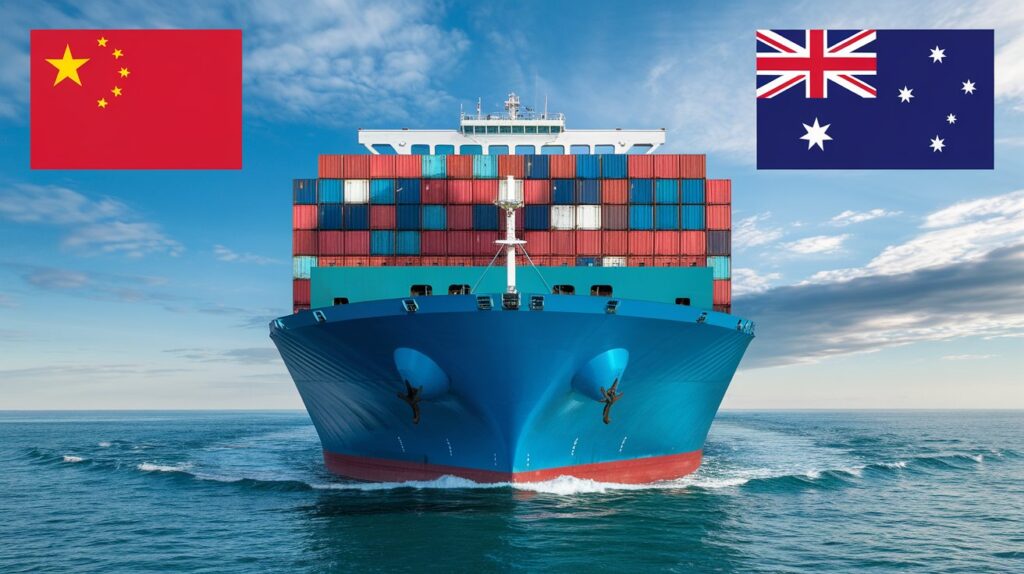
2026 Container Shipping Cost Snapshot (China to Australia)
As a quick reference, here are the typical planning ranges for sea freight from the main Chinese gateways (Shanghai, Shenzhen, Ningbo, Qingdao, Guangzhou) to Australia’s east-coast ports (Sydney, Melbourne, Brisbane) as of September 2026:
| Shipping Option | Typical Cost Range | Typical Transit | Best For |
|---|---|---|---|
| 20ft Container (FCL) | USD 1,300 – 2,200 | 12 – 22 days | Cargo above roughly 13-15 CBM |
| 40ft / 40ft High Cube (FCL) | USD 2,300 – 3,800 | 12 – 22 days | Bulk orders and light, bulky cargo |
| LCL (Less than Container Load) | USD 60 – 150 per CBM (sea freight) | 15 – 28 days | Small shipments under ~13-15 CBM |
Note: Rates are indicative and vary by origin/destination port, carrier, and season. South China origins (Shenzhen, Guangzhou) are usually USD 200-600 cheaper per container than northern ports (Shanghai, Qingdao), and Western Australia (Fremantle) typically costs USD 500-800 more than east-coast destinations. Quotes should be treated as valid for two to three weeks only.
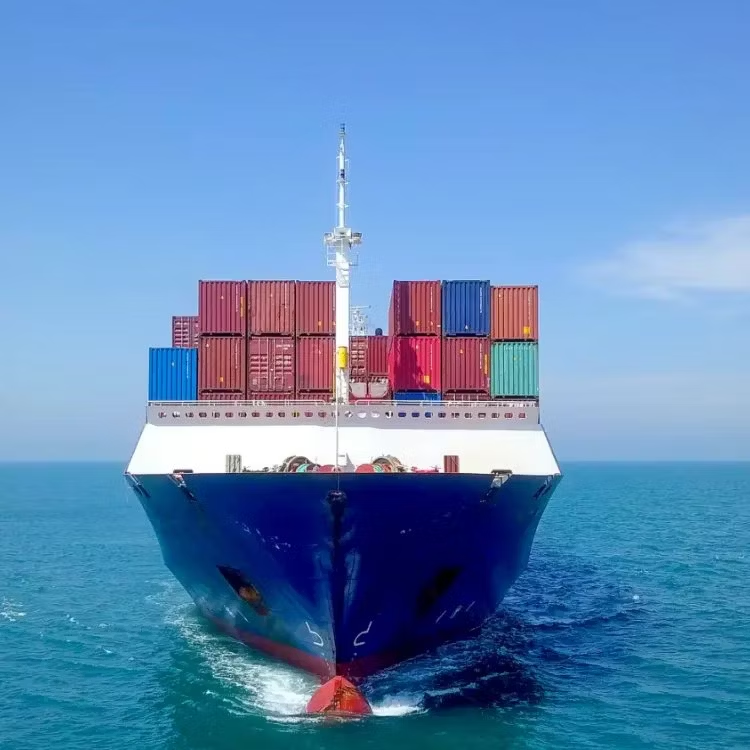
For most commercial cargo, shipping a full container by sea remains the most economical way to move goods between China and Australia – but the “headline” ocean freight is only part of the story. Keep reading to understand the full cost structure.
Key Factors That Determine Your Shipping Cost
Several variables decide how much your container shipment will cost. Understanding them before you book is the fastest way to avoid paying more than you need to.
Origin and Destination Ports
The route you choose is one of the biggest pricing levers. China’s major export hubs for the Australia trade are Shanghai, Shenzhen (Yantian and Shekou), Ningbo, Qingdao, and Guangzhou (Nansha). On the Australian side, containers arrive through Sydney (Port Botany), Melbourne, Brisbane, and Fremantle for Western Australia.
- South China to East Coast Australia is generally the cheapest and fastest corridor, with frequent direct sailings from Shenzhen or Guangzhou to Sydney, Melbourne, and Brisbane.
- Northern China ports (Shanghai, Ningbo, Qingdao) usually carry a premium of several hundred dollars per container, partly because of longer sailing distances and, for Qingdao, fewer weekly services.
- Western Australia (Fremantle) adds USD 500-800 per container versus east-coast destinations because it sits on a less dense trade lane.
Container Size: 20ft vs 40ft
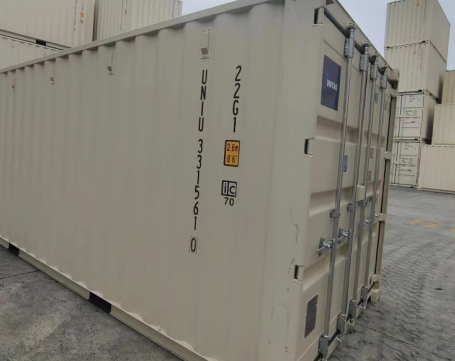
Container choice drives both your freight bill and your per-unit economics. The two standard sizes are the 20ft container (around 28 CBM of usable space) and the 40ft container (around 56 CBM). A 40ft High Cube (40HC) adds roughly 12 CBM more headroom at only a small freight premium – a smart choice for light, bulky goods.
A 40ft container typically costs only about 1.6-1.8 times as much as a 20ft while carrying twice the volume, so its cost per CBM usually lands 15-25% lower. If your cargo is anywhere close to half a container, it is usually worth pricing both sizes before deciding.
FCL vs LCL: The Choice That Affects Everything
Full Container Load (FCL) means your goods occupy an entire container. You pay a flat rate, your cargo is sealed at origin, handled fewer times, and cleared as one shipment.
Less than Container Load (LCL) means your cargo shares a container with other importers’ goods, and you pay only for the space you use. LCL is ideal for trial orders and small volumes – but Australia is one of the most expensive destinations in the world for LCL handling.
From our experience, the crossover point on this lane sits at roughly 13-15 CBM. Australian LCL consignments attract high destination terminal and deconsolidation charges (per-CBM handling fees at Sydney or Melbourne can exceed AUD 100/CBM), whereas a 20ft FCL shipment pays one flat terminal handling fee. Once your volume passes about 13-15 CBM, a 20ft FCL container is very often the cheaper option – and it arrives faster.
Seasonality, Demand, and Fuel Surcharges
Rates on the China-Australia lane are not fixed. Expect them to climb in these windows:
- Before Chinese New Year (January-February) and after Golden Week (early October), when factories rush orders and vessel space tightens.
- Q3-Q4 peak season, when carriers typically apply a Peak Season Surcharge (PSS) and space must be booked earlier.
- When bunker/fuel prices rise, carriers pass this on through a monthly BAF (Bunker Adjustment Factor).
In practice, peak-season rates can run 20-30% above off-peak levels. If your schedule allows, book during the lull windows (roughly March-June) to lock in lower prices.
Incoterms: Who Pays for What
Your commercial terms also change what you pay. Under FOB, the buyer controls the ocean freight and destination charges. Under CIF, the seller arranges freight but the buyer still pays import clearance and destination fees in Australia. If you want a single, predictable price that covers delivery to your door including duty and GST, a DDP arrangement with a forwarder that manages the Australian leg is worth considering – this is exactly the kind of end-to-end service Dantful offers to keep landed costs transparent. If you are weighing this route, our walkthrough of door to door shipping from China to Australia explains how the model works end to end.
How Much Does It Cost to Ship a Container from China to Australia?
To give you a realistic budget, here is how the main cost elements stack up for a 20ft and a 40ft shipment. Figures are typical planning ranges in USD for port-to-port movement including standard origin and destination charges, excluding import duty, GST, and optional insurance.
20ft Container Shipping Cost Breakdown
| Cost Element | Typical Cost (USD) |
|---|---|
| Ocean freight (port-to-port) | 800 – 1,400 |
| Origin charges (export haulage, THC, export docs) | 150 – 300 |
| Destination terminal handling (Australia) | 250 – 450 |
| Customs clearance and documentation | 100 – 250 |
| Cargo insurance (optional) | 50 – 150 |
Across these line items, a typical 20ft FCL shipment from China to Australia’s east coast lands between USD 1,300 and USD 2,200, excluding duty and GST. South China origins and off-peak bookings sit at the lower end of this band.
40ft Container Shipping Cost Breakdown
| Cost Element | Typical Cost (USD) |
|---|---|
| Ocean freight (port-to-port) | 1,500 – 2,600 |
| Origin charges (export haulage, THC, export docs) | 200 – 350 |
| Destination terminal handling (Australia) | 350 – 600 |
| Customs clearance and documentation | 100 – 250 |
| Cargo insurance (optional) | 100 – 200 |
A typical 40ft or 40HC FCL shipment therefore lands between USD 2,300 and USD 3,800, excluding duty and GST. Because the cost per CBM is lower than a 20ft, the 40ft is the standard choice for established importers with steady volume.
LCL Costs and the “Cheap Rate” Trap
LCL is quoted per CBM, which looks very affordable at USD 60-150/CBM of sea freight. But on the Australia lane, the destination side is where costs multiply: per-shipment minimums, deconsolidation fees, and high per-CBM destination terminal charges at Australian ports can turn a “cheap” LCL rate into a bill close to an FCL quote. Always ask your forwarder for the total landed cost, including destination charges, before choosing LCL. Dantful’s ocean freight team provides both FCL and LCL services and can help you run this comparison for your specific cargo volume. For a closer look at how per-CBM charges build up on this lane, read our dedicated guide to LCL Shipping from China to Australia.
Sea Routes, Transit Times, and Real Lead Times
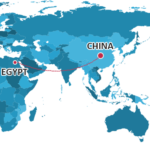
Most sea freight from China to Australia departs from Shanghai, Ningbo, Shenzhen, Qingdao, or Guangzhou and crosses the South China Sea via the Bashi Channel (or occasionally the Taiwan Strait) before joining the East Asian-Australasian trade lane. Services are usually direct, with some routings transshipped via Singapore or other regional hubs.
| Origin Port (China) | Destination Port (Australia) | Estimated Transit Time | Remarks |
|---|---|---|---|
| Shanghai | Sydney | 14 – 20 days | Direct and transshipment options |
| Ningbo | Melbourne | 15 – 21 days | Direct and transshipment options |
| Shenzhen (Yantian) | Brisbane | 12 – 18 days | Among the fastest direct services |
| Qingdao | Fremantle | 18 – 25 days | Fewer weekly sailings |
| Guangzhou (Nansha) | Adelaide | 16 – 22 days | May require transshipment |
Transit times depend on carrier schedules, port congestion, and seasonal conditions. Always confirm current sailings and lead times with your freight forwarder before planning.
A critical point that even experienced importers misjudge: port-to-port sailing time is not the same as delivery time. Your total lead time also includes supplier production, export packing and documentation, port cut-off waiting (containers usually need to be at the terminal 24-48 hours before departure), Australian customs clearance, and final trucking.
- FCL door-to-door: typically 20-35 days in total.
- LCL door-to-door: typically 25-40 days, because cargo must first wait for the container to be consolidated and is deconsolidated again on arrival.
Australian customs clearance is normally completed within 24-48 hours, but biosecurity inspections or documentation queries can add several days. Plan your inventory buffer accordingly, especially for peak seasons. For a fuller picture of sailing schedules, vessel options, and door-to-door timelines on this corridor, see our complete guide to Sea Freight From China to Australia.
Additional Fees, Duties, and Taxes in Australia
Beyond the freight itself, Australian importers need to budget for destination-side costs that are easy to underestimate. The following charges apply in AUD unless noted:
| Charge | Typical Amount | Who Applies It |
|---|---|---|
| Destination terminal handling (DTHC) | AUD 400 – 700 per FCL container | Shipping line / terminal |
| LCL deconsolidation and handling | AUD 60 – 120+ per CBM | Destination warehouse/CFS |
| Customs brokerage and entry fees | AUD 100 – 250 per shipment | Customs broker |
| Inland trucking (port to warehouse) | AUD 350 – 900 per container | Local carrier |
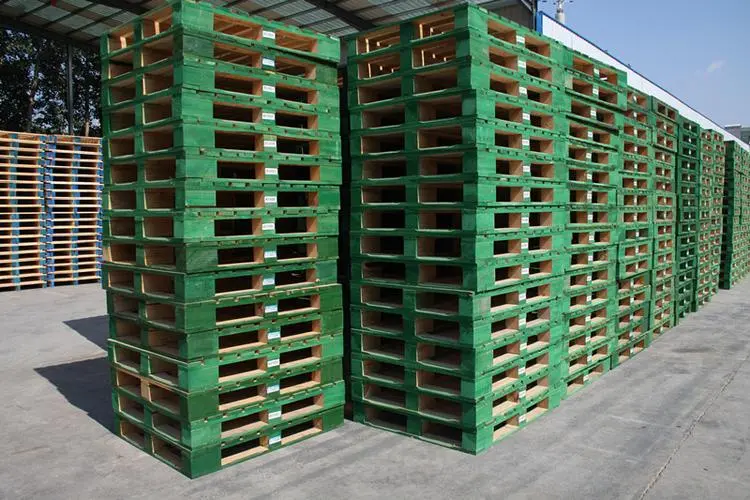
| ISPM 15 fumigation (wooden packaging/pallets) | AUD 150 – 300 per container | Licensed fumigator |
Customs Duties and the China-Australia Free Trade Agreement (ChAFTA)
Customs duty in Australia is assessed on the goods’ value and generally ranges from 0% to 10%, with most manufactured goods sitting around 5%. The good news for importers of Chinese-made goods: under the China-Australia Free Trade Agreement (ChAFTA), the vast majority of goods are now duty-free – provided you hold a valid Certificate of Origin (Form F) issued in China. Working with a forwarder that handles this paperwork correctly can save you thousands on a full container.
GST on Imports
Australia applies a 10% Goods and Services Tax (GST) on most imported goods valued above the AUD 1,000 low-value threshold. GST is calculated on the sum of the goods’ customs value, freight, insurance, and any duty payable – not just the product price. If your business is registered for GST in Australia, you can generally claim this back as an input tax credit, so keep your import documents organized.
Biosecurity Rules to Take Seriously
Australia has some of the world’s strictest border controls, managed by the Department of Agriculture, Fisheries and Forestry (DAFF). Common causes of delay include wooden packaging without ISPM 15 treatment and goods subject to the seasonal Brown Marmorated Stink Bug (BMSB) risk measures (roughly September through April for many goods shipped from China). A small compliance detail can turn into a multi-day hold – or a quarantine treatment bill – so confirm biosecurity requirements before your goods leave the factory.
For duty, GST, and border requirements, refer to the official guidance published by the Australian Border Force, DAFF biosecurity import conditions, and the ChAFTA text from the Department of Foreign Affairs and Trade.
How to Reduce Your Container Shipping Costs from China to Australia
With rates and fees understood, here are the tactics that save our clients the most money on this lane:
- Know your FCL/LCL crossover point. If your cargo reaches 13-15 CBM, get an FCL quote before defaulting to LCL. Australia’s LCL destination charges often make FCL the cheaper and faster option at this volume.
- Consolidate suppliers. Combine orders from multiple Chinese suppliers into one container at a consolidation warehouse. This turns several small, expensive LCL shipments into one economical FCL.
- Book outside peak windows. Avoid the weeks before Chinese New Year and the Q3-Q4 rush if you can. Off-peak bookings can save 20-30% on freight and are far easier to secure space for.
- Use ChAFTA to eliminate duty. Ensure your supplier provides a valid Certificate of Origin (Form F) so qualifying goods enter duty-free. This paperwork is worth real money on full-container shipments.
- Classify your goods correctly. Accurate HS codes prevent under- or over-declaration issues. Misclassification can trigger inspections, fines, or duties you did not budget for.
- Ask for an all-in, door-to-door price. A forwarder that manages both ends – like Dantful – removes surprise destination fees and gives you one predictable number, from factory pickup in China to delivery in Australia.
FAQs
How much does it cost to ship a container from China to Australia in 2026?
A 20ft container typically costs USD 1,300-2,200 and a 40ft/40HC container USD 2,300-3,800, including standard port charges but excluding import duty and GST. Rates vary by origin/destination port, season, and carrier.
How long does sea freight take from China to Australia?
Port-to-port transit is typically 12-22 days for FCL. Total door-to-door lead time is usually 20-35 days for FCL and 25-40 days for LCL once production, customs clearance, and trucking are included.
Is FCL or LCL cheaper for shipping from China to Australia?
Below roughly 13-15 CBM, LCL is usually cheaper. Above that crossover point, FCL is typically the better value because Australia’s per-CBM LCL destination charges are high and FCL avoids consolidation and deconsolidation delays.
Do I have to pay GST when importing from China to Australia?
Yes – a 10% GST applies to most commercial imports valued above AUD 1,000, calculated on the goods’ value plus freight, insurance, and duty. GST-registered Australian businesses can usually claim it back as an input tax credit.
Will I pay customs duty on goods from China?
Under the China-Australia Free Trade Agreement (ChAFTA), most goods originating in China are duty-free if you hold a valid Certificate of Origin (Form F). Goods without the certificate can attract duty of up to 10%.
Does Dantful provide door-to-door shipping from China to Australia?
Yes. Dantful International Logistics offers FCL, LCL, customs clearance, and door-to-door delivery from Chinese factories to Australian addresses, with one all-in quote and no hidden fees.

Young Chiu is a seasoned logistics expert with over 15 years of experience in international freight forwarding and supply chain management. As CEO of Dantful International Logistics, Young is dedicated to providing valuable insights and practical advice to businesses navigating the complexities of global shipping.