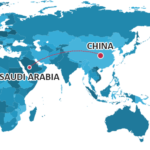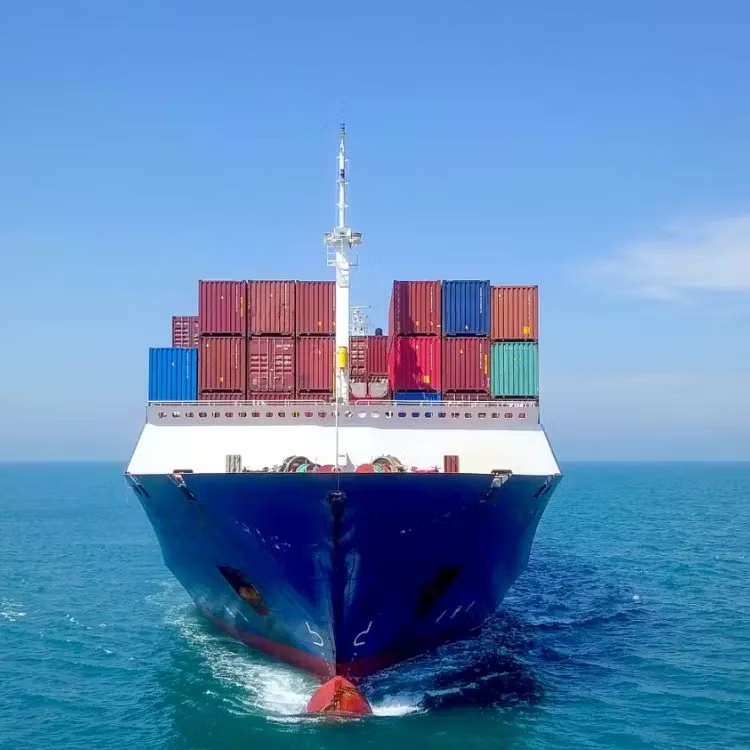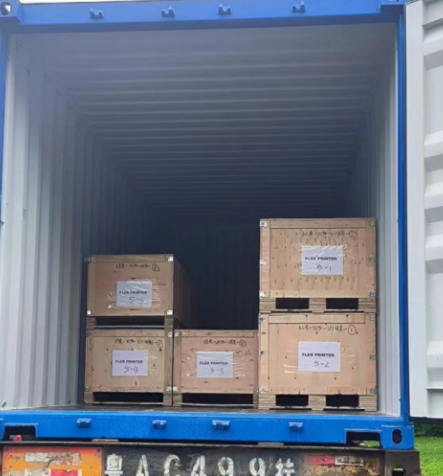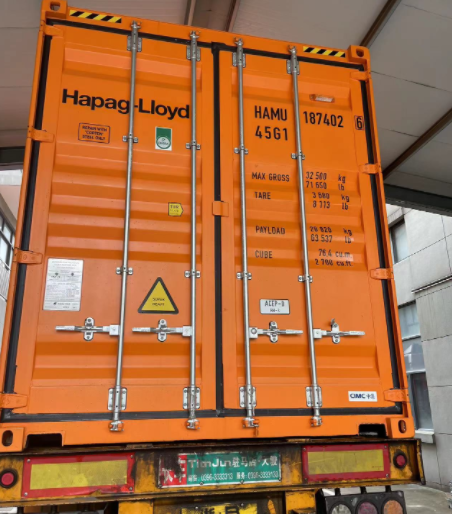
Importers shipping from China to Saudi Arabia need more than a rough freight estimate. They need a realistic view of current ocean rates, transit times, customs-related costs, and the operational factors that can change a quote between booking day and cargo arrival. Based on our daily quoting and shipment handling experience at Dantful International Logistics, this guide focuses on what buyers, distributors, and project cargo owners should budget for in April 2026.
Key Takeaways
In April 2026, the market is more stable than late-2025 peak season, but some carriers still apply contingency, risk, or emergency surcharges on selected Middle East and Gulf routings.
Indicative 20ft FCL port-to-port rates from major Chinese ports to Jeddah or Dammam are typically around $1,450–$2,100, while 40ft FCL usually ranges from $2,150–$3,150.
Shipments to Riyadh usually cost more than coastal Saudi ports because Riyadh is a dry port and requires additional inland transport after arrival.
Typical sea freight transit times remain around 16–26 days to major Saudi gateways, but final delivery can extend when feeder connections, inspections, or inland moves are involved.
Saudi imports generally face 15% VAT, while customs duty depends on the exact HS code, product category, and any applicable exemptions or regulatory approvals.
Overview of Container Shipping from China to Saudi Arabia in 2026
Saudi Arabia remains one of the most important destination markets in the Gulf for imports from China, especially for machinery, building materials, retail goods, consumer electronics, auto parts, and industrial supplies. The main container gateways are typically Jeddah Islamic Port for western Saudi Arabia and King Abdulaziz Port, Dammam for the eastern region, with Riyadh Dry Port serving inland cargo distribution.
From an operational perspective, importers should evaluate more than the headline ocean freight:
- Port of loading in China such as Shanghai, Shenzhen, Ningbo, Qingdao, or Guangzhou
- Port of discharge in Saudi Arabia such as Jeddah or Dammam
- Final destination if the cargo must continue to Riyadh or another inland city
- Cargo profile including weight, volume, commodity type, and whether the goods need special compliance handling
- Incoterms 2020 responsibility split, because FOB, CIF, EXW, and DDP create very different landed costs
At Dantful International Logistics, we normally advise importers to request an itemized quotation rather than comparing only the base ocean freight. This is the fastest way to identify destination THC, customs clearance, inland delivery, and possible storage-related risks before booking.
Key Factors Influencing Shipping Costs
Shipping Route and Distance
The route between origin and destination remains one of the biggest cost drivers.
| Port in China | Port in Saudi Arabia | Approximate Distance (Nautical Miles) |
|---|---|---|
| Shanghai | Jeddah | 5,500 |
| Shenzhen | Dammam | 5,300 |
| Ningbo | Yanbu | 5,800 |
| Guangzhou | Jeddah | 5,400 |
Longer distances usually mean higher bunker consumption, more operational cost, and more exposure to schedule changes. In April 2026, the China-Saudi market is still affected by mixed carrier routing strategies: some services are gradually normalizing through the Suez/Red Sea corridor, while others continue pricing in contingency costs, war-risk related insurance adjustments, or schedule buffers. This is why two quotations for the same route can differ even when the container size is identical.
Container Size: 20ft vs. 40ft

Container selection directly affects both the freight rate and your cost efficiency per cubic meter.
| Container Size | Approximate Capacity | Best For |
|---|---|---|
| 20ft | 28 CBM | Heavy cargo, dense cargo, smaller-volume full loads |
| 40ft | 56 CBM | Larger shipments with better unit economics |
In real bookings, a 40ft container often delivers better value per CBM than a 20ft container, especially for light or medium-density cargo. However, for heavy machinery, stone products, or metal goods, a 20ft container is often more practical because of payload limits.
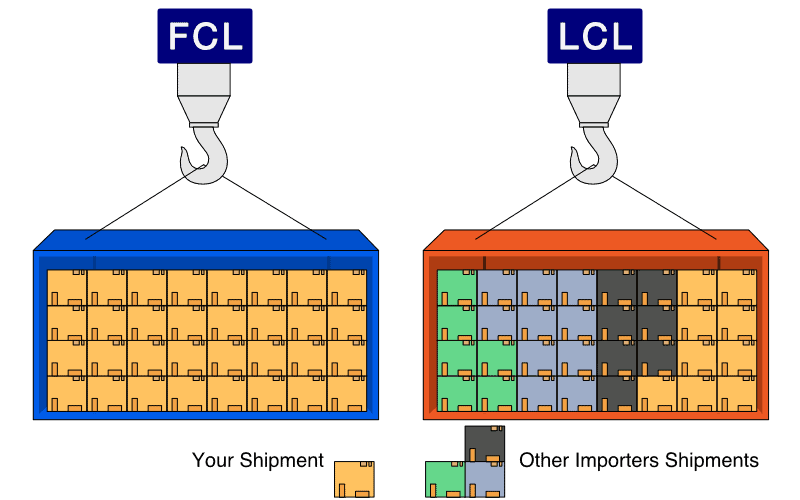
Mode of Transport: FCL vs. LCL
The choice between Full Container Load (FCL) and Less than Container Load (LCL) also changes both cost and transit predictability.
- FCL: Best for higher-volume cargo, better cargo control, lower handling risk, and usually faster release at destination
- LCL: Better for smaller shipments, but more handling, more consolidation steps, and usually higher cost per CBM
| Shipping Method | Advantages | Disadvantages |
|---|---|---|
| FCL | Better cost efficiency on larger loads; less cargo handling; lower damage risk | Higher upfront spend; not ideal for very small shipments |
| LCL | Flexible for SME shipments; lower initial spend | Higher per-unit cost; additional consolidation and deconsolidation time |
In our experience, when cargo volume approaches 12-15 CBM, it is already worth comparing LCL vs. 20ft FCL because local charges can narrow the price gap quickly.
You may be interested in the following related articles:
- The Ultimate Guide to Door to Door Shipping from China to Yemen
- Container Shipping Costs from China to Australia: What You Need to Know
- The Ultimate Guide to Container Shipping Costs from China to USA in 2024
- Cheapest Shipping Company from China to Russia: What You Need to Know
- A Comprehensive Guide to the Cheapest Shipping Companies from China to Spain
- The Ultimate Guide to Container Shipping Costs from China to Africa in 2024
Latest Container Shipping Costs from China to Saudi Arabia
The following figures are indicative April 2026 market ranges for general cargo, port-to-port ocean freight, based on current carrier quotations and forwarding market benchmarks. Final rates still depend on sailing week, shipping line, free time, cargo nature, and whether surcharges apply at booking.
20ft Container Shipping Cost from China to Saudi Arabia
For many importers, the 20ft container (TEU) remains the preferred option for dense or moderate-volume cargo.
Estimated 20ft Container Rates by Route (April 2026)
| Origin Port (China) | Destination Port (Saudi Arabia) | Estimated Cost (USD) | Transit Time |
|---|---|---|---|
| Shanghai (CNSHA) | Jeddah (SAJED) | $1,450 – $1,800 | 17 – 23 Days |
| Shenzhen (CNSZX) | Dammam (SADMM) | $1,650 – $2,000 | 18 – 25 Days |
| Ningbo (CNNGB) | Riyadh (SARYD) * | $2,050 – $2,500 | 24 – 31 Days |
| Guangzhou (CNCAN) | Jeddah (SAJED) | $1,400 – $1,750 | 16 – 22 Days |
| Qingdao (CNQDG) | Dammam (SADMM) | $1,700 – $2,100 | 20 – 26 Days |
Riyadh is a dry port. The rate usually includes inland rail or truck movement from Dammam, which is why it is higher than a pure seaport-to-seaport quote.
20ft Total Landed Cost Breakdown
Beyond the base ocean freight, most importers should budget for the following:
- Base Ocean Freight: $1,450 – $2,100
- Origin Charges and Documentation: $120 – $220
- Port Charges / THC: $220 – $380
- Insurance: $50 – $120
- Customs Clearance Service: $150 – $350
- Typical Total Logistics Budget Before Duty/VAT: $1,990 – $3,170
Dantful Insight: In April 2026, booking 10-14 days before ETD usually helps importers secure better vessel selection, more stable free time, and fewer last-minute surcharge surprises.
40ft Container Shipping Cost from China to Saudi Arabia
For larger-volume cargo, the 40ft container (FEU) remains the more economical option on a cost-per-CBM basis.
Estimated 40ft Container Rates by Route (April 2026)
| Origin Port (China) | Destination Port (Saudi Arabia) | Estimated Cost (USD) | Transit Time |
|---|---|---|---|
| Shanghai (CNSHA) | Jeddah (SAJED) | $2,150 – $2,600 | 17 – 23 Days |
| Shenzhen (CNSZX) | Dammam (SADMM) | $2,400 – $2,950 | 18 – 25 Days |
| Ningbo (CNNGB) | Riyadh (SARYD) * | $3,000 – $3,550 | 24 – 31 Days |
| Guangzhou (CNCAN) | Jeddah (SAJED) | $2,100 – $2,550 | 16 – 22 Days |
| Tianjin (CNTSN) | Dammam (SADMM) | $2,550 – $3,150 | 22 – 29 Days |
40ft Total Landed Cost Breakdown
For a standard general cargo shipment, the cost structure often looks like this:
- Base Ocean Freight: $2,150 – $3,150
- Origin Charges and Documentation: $150 – $260
- Port Charges / THC: $280 – $450
- Insurance: $75 – $150
- Customs Clearance Service: $180 – $380
- Typical Total Logistics Budget Before Duty/VAT: $2,835 – $4,390
Comparison of FCL and LCL Shipping Costs
For budget planning, use the table below as a practical rule of thumb:
| Shipping Method | Typical April 2026 Cost Range | Best Use Case | Main Caution |
|---|---|---|---|
| 20ft FCL | $1,450 – $2,100 | Dense cargo, medium loads | Destination charges still matter |
| 40ft FCL | $2,150 – $3,150 | Large-volume cargo | Higher absolute spend |
| LCL | $55 – $110 per CBM | Small shipments under roughly 12 CBM | More handling and longer transit |
For LCL, pricing is usually charged on a W/M basis according to the greater of 1 CBM or 1,000 kg, plus local handling charges at both ends.
Additional Fees and Charges
Accurate budgeting requires looking beyond the ocean freight line in the quotation.
Port Fees and Handling Charges
Common charge items for containerized imports into Saudi Arabia include:
| Fee Type | Estimated Cost (USD) |
|---|---|
| Origin Terminal / Loading Fee | $100 – $180 |
| Destination Discharge Fee | $120 – $220 |
| Terminal Handling Charge | $80 – $150 |
| Documentation / Release Fee | $50 – $120 |
| Miscellaneous Port Charges | $50 – $180 |
| Total Typical Port-Related Charges | $400 – $850 |
These figures vary by carrier, destination port, service contract, and whether the shipment is FCL or LCL.
Customs Duties and Taxes
When importing into Saudi Arabia, duty and VAT are not the same thing:
- Customs duty depends on the exact HS code and product category
- VAT is generally charged at 15%
- Certain goods may also require SABER/SASO conformity approval, SFDA clearance, or other regulatory review before release
Below is a practical reference table for commonly imported goods. These are indicative duty bands only and should always be confirmed against the exact Saudi tariff classification:
| Product Category | HS Chapter | Common Duty Range | VAT |
|---|---|---|---|
| Electronics | 85 | 5% | 15% |
| Clothing and Textiles | 61, 62 | 10% – 12% | 15% |
| Machinery and Equipment | 84 | 5% | 15% |
| Food and Beverages | 19 and related chapters | 5% – 20% | 15% |
| Pharmaceuticals | 30 | Case-specific / often regulated | 15% |
| Automotive Parts | 87 | 5% | 15% |
| Plastics and Articles | 39 | 10% – 15% | 15% |
For importers, the most common budgeting mistake is applying a flat duty percentage without checking the exact HS code, customs valuation basis, and destination compliance requirement. We normally recommend confirming the classification before cargo departure, not after arrival.
Hidden Costs Importers Often Miss
- The cheapest freight quote can still become the most expensive shipment if the following costs are ignored:
- Inland Delivery Charges: Especially relevant for Riyadh and other inland destinations
- Demurrage: Charged when the container stays too long at the port or terminal
- Detention: Charged when the container is kept outside the terminal beyond the free period
- Inspection Fees: Customs or regulatory inspections can add time and direct cost
- Storage Charges: Common when documents or approvals are delayed
Shipping From China to Middle East Countries:
- Shipping from China to Saudi Arabia
- Shipping from China to UAE
- Shipping from china to KUWAIT
- Shipping From China To EGYPT
- Shipping from China to Bahrain
- Shipping From China To Jordan
- Shipping From China To Israel
- Shipping from China to Qatar
- Shipping From China To IRAQ
- Shipping from China to Iran
Shipping Time from China to Saudi Arabia
Transit planning should separate port-to-port transit time from total delivery time. Many delays occur after vessel arrival, during customs release, terminal handling, or inland transportation.
Average Transit Times for Sea Freight
| Major Route | Estimated Transit Time (Days) |
|---|---|
| Shanghai to Jeddah | 17 – 23 |
| Shenzhen to Dammam | 18 – 25 |
| Ningbo to Yanbu | 20 – 27 |
| Guangzhou to Jeddah | 16 – 22 |
| Qingdao to Dammam | 20 – 26 |
For inland points such as Riyadh, add extra time for port handling, customs release, and onward rail or truck movement.
Factors Affecting Shipping Duration
Several practical issues are shaping transit reliability in April 2026:
- Port and Inland Coordination: Riyadh dry port cargo usually needs tighter control of release timing and inland handover
- Carrier Routing Decisions: Some lines are restoring more direct Red Sea patterns, while others still keep schedule buffers or rerouting flexibility
- Transshipment and Feeder Connections: Not every Saudi-bound service is a direct call, so feeder timing matters
- Customs Clearance Quality: Missing invoice data, unclear HS codes, or non-compliant documents can delay release
- Holiday and Blank Sailing Impact: Booking around Ramadan, Eid, or carrier schedule adjustments can affect available sailings
Dantful International Logistics Services:
- Dantful Ocean Freight Services
- Air Freight From China
- Amazon FBA Freight Forwarding
- WAREHOUSE Services
- One-Stop Customs Clearance Solution
- Cargo Insurance Services in China
- DDP Shipping Services By Dantful Logistics
- Out of Gauge Cargo Transportation Shipping Services
Tips for Reducing Container Shipping Costs
Reducing freight cost is not only about chasing the lowest rate. It is about lowering the total landed cost and reducing avoidable delay charges.
Before You Request a Quote
Prepare the following details before comparing freight offers:
- Cargo description and exact commodity
- HS code if available
- Total CBM, weight, and number of packages
- Required Incoterms 2020 basis such as EXW, FOB, CIF, or DDP
- Final destination, not only the discharge port
- Whether the shipment needs SABER, SFDA, or other import compliance support
The more accurate your shipping brief is, the more accurate your quotation will be.
Choosing the Right Freight Forwarder
When selecting a freight forwarder for China to Saudi Arabia, focus on:
- Route experience: Proven handling of Jeddah, Dammam, and Riyadh-bound shipments
- Transparent pricing: Separate ocean freight, local charges, clearance, and delivery
- Customs expertise: Ability to support compliance documentation before cargo arrival
- Service scope: One-stop solutions covering sea freight, customs clearance, insurance, warehousing, and inland delivery
At Dantful International Logistics, we help clients compare FCL, LCL, and door-to-door scenarios based on the actual cargo profile rather than generic market averages.
Consolidating Shipments for Cost Efficiency
Practical ways to control cost include:
- Align documents before ETD so customs clearance starts faster after arrival
- Combine smaller purchase orders into one shipment where timing allows
- Compare LCL and FCL early when cargo volume exceeds about 12 CBM
- Book ahead instead of shipping urgently during schedule-tight periods
- Request free-time details in writing to reduce demurrage and detention risk
FAQs
1. What factors influence container shipping costs from China to Saudi Arabia?
The main drivers are origin port, Saudi destination, container size, FCL or LCL mode, cargo type, carrier routing, and local charges such as THC, customs clearance, and inland delivery.
2. What is the typical 20ft container shipping cost in April 2026?
For most major China-Saudi routes, a 20ft FCL typically ranges from $1,450 to $2,100 port-to-port. Riyadh shipments are usually higher because they include inland movement after Dammam arrival.
3. What is the typical 40ft container shipping cost in April 2026?
A 40ft FCL usually ranges from $2,150 to $3,150 on mainstream routes, with higher costs for inland Saudi delivery points or sailings with contingency surcharges.
4. Is FCL or LCL better for Saudi Arabia shipments?
If your cargo is large enough, FCL is usually more predictable and more economical per unit. LCL is better for smaller shipments, but it involves more handling and often a longer total transit time.
5. What additional fees should I budget for besides ocean freight?
Budget for origin charges, terminal handling, documentation, insurance, customs clearance, duty, VAT, and possible demurrage, detention, inspection, or inland delivery charges.
6. What documents are commonly required for customs clearance in Saudi Arabia?
The standard set usually includes a commercial invoice, packing list, bill of lading, and often a certificate of origin. Depending on the product, you may also need SABER/SASO, SFDA, or other regulatory approvals.
7. How long does shipping from China to Saudi Arabia usually take?
For sea freight, major routes typically take around 16-26 days port-to-port, while total delivery time can be longer once customs clearance and inland transport are included.
For importers who want a practical, current, and itemized shipping plan, Dantful International Logistics provides professional support for FCL, LCL, customs clearance, warehousing, insurance, and door-to-door delivery from China to Saudi Arabia.

Young Chiu is a seasoned logistics expert with over 15 years of experience in international freight forwarding and supply chain management. As CEO of Dantful International Logistics, Young is dedicated to providing valuable insights and practical advice to businesses navigating the complexities of global shipping.