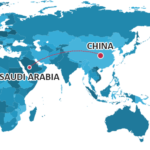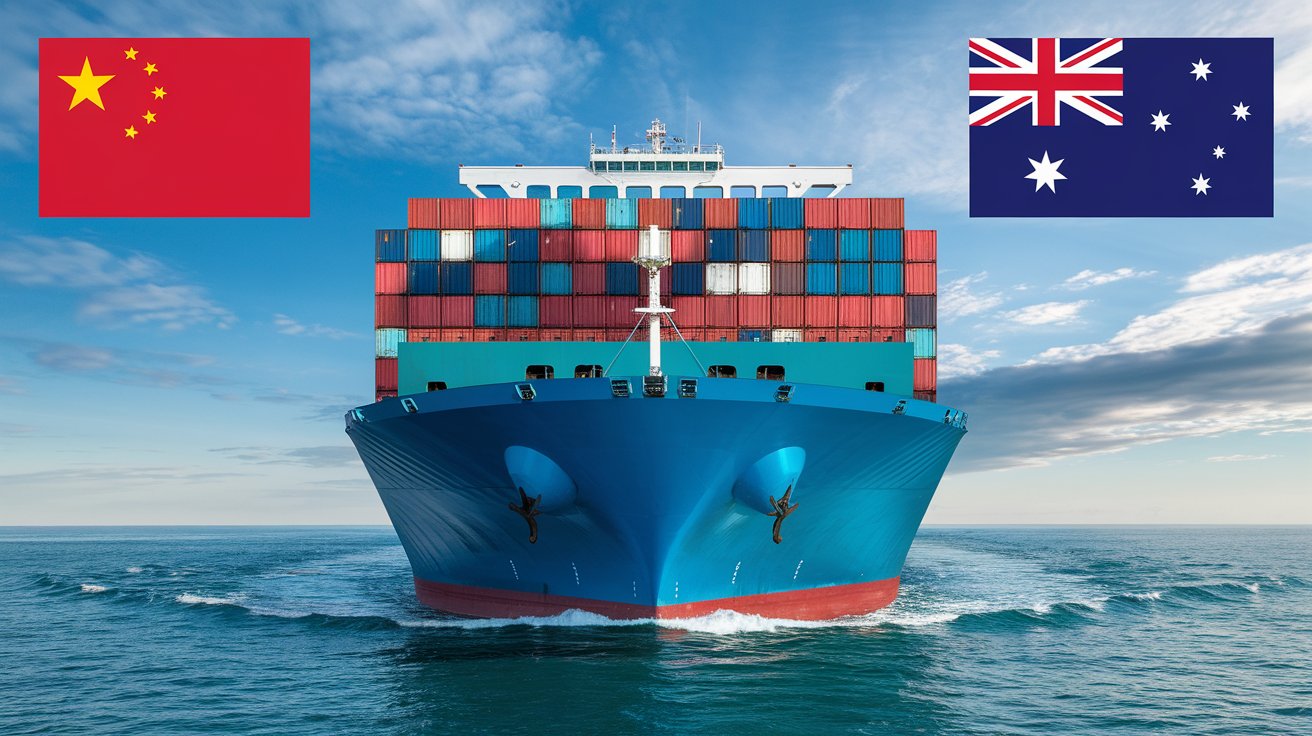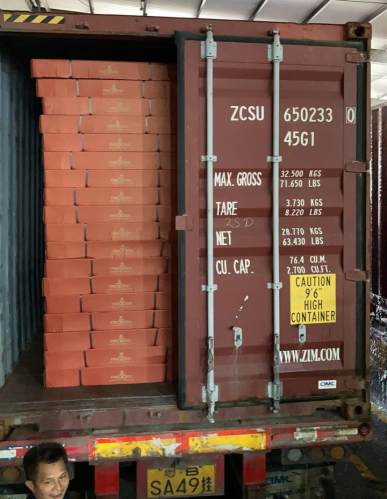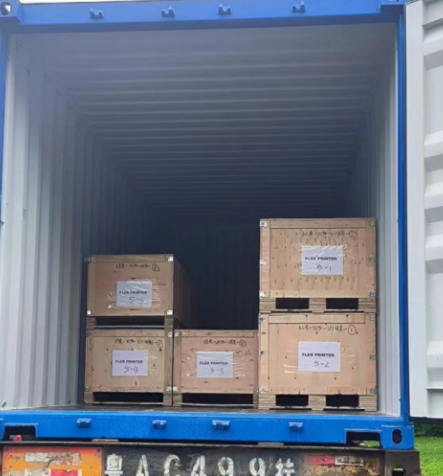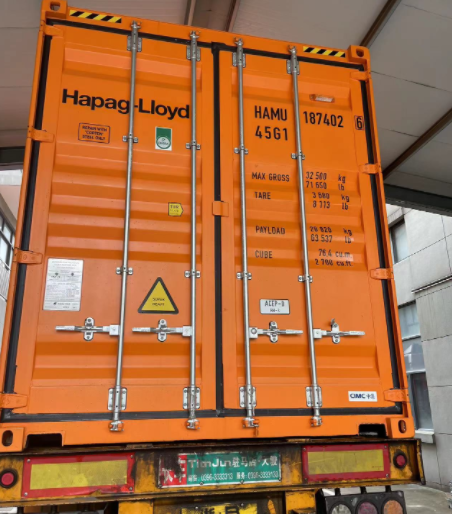
Freight from China to Saudi Arabia takes 18–30 days by sea (FCL), 25–38 days by sea (LCL), 2–7 days by air, and 3–7 business days by express courier in 2026. The fastest option to Jeddah or Dammam is express air, while the most economical is ocean freight — and the exact number depends on your Chinese port of loading, your Saudi destination port, whether Riyadh (an inland dry port) is your final stop, and whether your SABER conformity certificates are ready before the vessel sails.
As a Shenzhen-based freight forwarder that has handled thousands of containers on the China–Saudi lane since 2008, we keep this guide updated with real booking data. Below is the complete 2026 transit time picture, route by route, so you can plan inventory, quote customers, and avoid the delays that catch most first-time Saudi importers. For a full overview of the corridor, see our Shipping from China to Saudi Arabia guide.

How Long Does Shipping from China to Saudi Arabia Take in 2026?
Before diving into port-by-port numbers, here is the quick answer. These are total door-to-door port transit times (excludes Saudi customs clearance, which we cover in a dedicated section below).
| Shipping Method | Transit Time | Indicative Cost (Aug 2026) |
|---|---|---|
| Sea freight — FCL (20ft/40ft) | 18–30 days | 20ft $1,400–2,600; 40ft $2,000–3,800 |
| Sea freight — LCL | 25–38 days | $70–200 per CBM |
| Air freight | 2–7 days | $4.50–9.50 per kg |
| Express courier (DHL/FedEx/UPS) | 3–7 business days | $10–20 per kg |
| Door-to-door (sea + inland) | 28–40 days | Depends on cargo & incoterm |
| Door-to-door (air + inland) | 7–12 days | Depends on cargo & incoterm |
Two numbers matter more than the averages. First, southern Chinese ports (Shenzhen, Guangzhou) are typically 3–5 days faster to the Arabian Gulf than northern ports (Qingdao, Tianjin) because they sit closer to the main shipping lanes. Second, if your final destination is Riyadh, add 1–2 days of inland trucking from Jeddah or Dammam — Riyadh has no seaport. For pricing context, our container shipping costs from china to Saudi Arabia guide breaks down every fee component.
Sea Freight Transit Times from China to Saudi Arabia: Route-by-Route
Ocean freight is the workhorse of the China–Saudi trade lane, carrying everything from construction machinery for Vision 2030 megaprojects to electronics, furniture, and fast-moving consumer goods. Transit times below are actual port-to-port sailing times for direct or single-transshipment services in 2026, split by FCL (your own full container) and LCL (shared container).
| Route (China → Saudi Arabia) | FCL Transit | LCL Transit | Routing Notes |
|---|---|---|---|
| Shanghai → Jeddah Islamic Port | 20–28 days | 25–32 days | Direct services via Red Sea; some via Singapore |
| Shenzhen → Dammam (King Abdulaziz Port) | 18–26 days | 23–30 days | Direct to Arabian Gulf; fastest option |
| Ningbo → Jeddah Islamic Port | 22–30 days | 26–34 days | Direct or via Singapore/Port Klang |
| Guangzhou → Dammam (King Abdulaziz Port) | 20–28 days | 25–33 days | Frequent weekly departures |
| Qingdao → Jeddah Islamic Port | 24–30 days | 28–35 days | Northern route; longer due to distance |
Why southern ports win on time. Shenzhen and Guangzhou load directly onto mainline Gulf services, while Qingdao and Tianjin cargo often transships through Shanghai or Singapore first. In our booking experience, a Shenzhen–Dammam FCL consistently lands 4–7 days earlier than the same container from Qingdao. If speed matters, source from the Pearl River Delta or accept the longer lead time from the north.
LCL runs slower than FCL for a mechanical reason. Your shipment must first be consolidated at the origin warehouse, sail, then be deconsolidated at the destination port. Those two handling steps add roughly 5–8 days versus a sealed full container, which is why the LCL column is consistently slower even on the same route. If your cargo is over 15 CBM, FCL is almost always the better time-and-cost trade-off (see the FCL vs LCL section below).
Red Sea routing in 2026. Services to Jeddah now largely run via the Suez/Red Sea corridor again, but some carriers still add contingency buffers and war-risk-related schedule adjustments on Gulf routings. Expect occasional 2–4 day schedule swings compared with the pre-2024 baseline; this is normal and not a sign of a problem with your shipment. Full service details are on our Sea Freight From China to Saudi Arabia page.
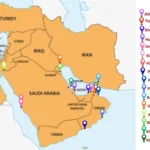
Shipping From China to Middle East Countries:
- Shipping from China to Saudi Arabia
- Shipping from China to UAE
- Shipping from china to KUWAIT
- Shipping From China To EGYPT
- Shipping from China to Bahrain
- Shipping From China To Jordan
- Shipping From China To Israel
- Shipping from China to Qatar
- Shipping From China To IRAQ
- Shipping from China to Iran
Shipping to Riyadh: How Much Longer Does the Inland Leg Take?
Riyadh is Saudi Arabia’s commercial capital — and it has no seaport. All ocean cargo destined for Riyadh arrives at Jeddah Islamic Port (west, Red Sea) or King Abdulaziz Port, Dammam (east, Arabian Gulf), then moves inland by truck. This inland leg is the single most underestimated time component on this lane.
| Final Destination | Discharge Port | Inland Leg | Total Sea Time (from Shenzhen) |
|---|---|---|---|
| Riyadh | Jeddah | 1–2 days trucking (~950 km) | 19–28 days |
| Riyadh | Dammam | 8–12 hours trucking (~400 km) | 19–27 days |
| Riyadh | Dammam | Optionally via rail to Riyadh Dry Port | 19–27 days |
| Dammam / Al Khobar (coastal) | Dammam | 0–1 day | 18–26 days |
| Jeddah / Mecca / Medina (coastal) | Jeddah | 0–1 day | 18–26 days |
Practical port-selection logic:
- East Province & Riyadh via Dammam: If your warehouse is in Riyadh or the Eastern Province (Dammam, Al Khobar, Jubail), discharge at Dammam. The shorter inland distance means lower trucking cost (roughly $200–600 per truck) and an 8–12 hour inland leg.
- West & central via Jeddah: If your market is Mecca, Medina, or western Saudi Arabia, Jeddah is the natural gateway — but trucking to Riyadh from Jeddah costs more (roughly $1,000–2,500 per truck) and takes 1–2 days.
- Riyadh via rail: SAR (Saudi Railways) operates container service between Dammam and Riyadh Dry Port. It is reliable and roughly cost-neutral with trucking, but sailings are less frequent — check the schedule before planning around it.
The takeaway: a “Shenzhen to Riyadh” quote that says 18 days is impossible — the honest number is 19–27 days including inland. Any forwarder quoting Riyadh as if it were a seaport is either inexperienced or hiding the inland leg. For a deeper look at Saudi gateway ports, our Shipping from Shenzhen to Saudi Arabia guide covers the southern-China angle in detail.
How Long Does Air Freight from China to Saudi Arabia Take?
Air freight compresses the China–Saudi corridor to days. Typical transit times in 2026:
| Route (Airport → Airport) | Transit Time | Indicative Rate (per kg) |
|---|---|---|
| Shanghai Pudong (PVG) → Jeddah (JED) | 2–4 days | $5.00–9.00 |
| Guangzhou (CAN) → Riyadh (RUH) | 3–5 days | $4.50–8.50 |
| Shenzhen (SZX) → Dammam (DMM) | 3–6 days | $5.00–9.00 |
| Beijing (PEK) → Jeddah (JED) | 3–5 days | $5.50–9.50 |
| Guangzhou (CAN) → Jeddah (JED) | 2–5 days | $4.50–8.50 |
Direct vs hub routing. Direct flights (PVG–JED, CAN–RUH) are the fastest and most predictable. Cargo routed via Gulf hubs (Dubai, Doha) adds 1–2 days but often opens more space during peak weeks. If you see a quote under $4.50/kg on this lane, question it — it usually excludes fuel surcharge (which is significant on Gulf routings) or hides airport handling fees.
What air freight is for on this lane: urgent production stoppages, high-value electronics and auto parts, samples ahead of bulk sea shipments, and event/retail deadlines (Saudi National Day, Ramadan promotions). It is not economical for furniture, machinery, or anything over roughly 300 kg unless the deadline justifies 3–5× the sea cost. For the full air product, see our Air Freight service page, and for rate benchmarks check shipping rates from china to Saudi Arabia.
Express Shipping Times from China to Saudi Arabia: DHL, FedEx & UPS
For documents, samples, spare parts, and e-commerce parcels under ~30 kg, international express is the fastest reliable option — and it includes customs clearance as part of the service, which removes the SABER-related hold-ups that affect larger air consignments.
| Courier | Typical Delivery | Best For |
|---|---|---|
| DHL Express | 3–5 business days | Urgent documents, small parcels |
| FedEx International | 4–6 business days | E-commerce shipments |
| UPS Worldwide | 5–7 business days | Time-sensitive items |
Express works on a business-day clock: a Friday booking from Shenzhen typically arrives Monday–Wednesday the following week, not counting Saudi weekends (Friday–Saturday). All three carriers deliver door-to-door across Saudi Arabia, including Riyadh, Jeddah, Dammam, and secondary cities. Rates run roughly $10–20/kg for typical parcels, with the per-kg price falling as weight increases.
Express vs air freight — when to use which: Under 30 kg, use express (it clears customs itself and delivers to your door). Between 30 and 300 kg, standard air freight with a forwarder is usually cheaper and still arrives within the week. Over 300 kg with a 1–2 week deadline, check sea freight before booking air — a 500 kg shipment can often be shipped LCL for less than the air difference.
Door-to-Door Shipping Time from China to Saudi Arabia
Door-to-door (DDP-style) service bundles supplier pickup, export clearance, the ocean or air leg, Saudi import clearance, and final delivery into one managed timeline. This is the option most Saudi importers end up choosing because it removes the coordination burden — and it makes the total time easier to predict, because one party controls every step.
Sea-based door-to-door total timeline (to Riyadh):
| Step | Duration |
|---|---|
| Factory pickup (Guangzhou/Shenzhen/Shanghai area) | 1–2 days |
| Export customs clearance + consolidation | 2–4 days |
| Ocean transit (incl. booking wait; Shenzhen → Jeddah/Dammam) | 20–28 days |
| Saudi customs clearance (docs + SABER verified) | 3–4 days |
| Inland trucking to Riyadh | 2 days |
| Total door-to-door | 28–40 days |
Air-based door-to-door total timeline:
| Step | Duration |
|---|---|
| Factory pickup | 1 day |
| Export clearance | 1–2 days |
| Air transit (CAN/SZX → RUH/JED) | 3–5 days |
| Saudi customs clearance | 1–3 days |
| Final delivery | 1 day |
| Total door-to-door | 7–12 days |
The door-to-door numbers matter because they are what your customer actually experiences. Many buyers compare “sea freight 20 days” with “door-to-door 35 days” and wrongly conclude the forwarder is slow — in reality, the sea leg was always only part of the chain. When you quote DDP to a Saudi buyer, quote the full timeline. See our door to door shipping from China to Saudi Arabia service page, and for the product itself, DDP Shipping Services.
What Delays Freight from China to Saudi Arabia?
Even with accurate base transit times, real shipments arrive late for a handful of recurring reasons. Here is what we actually see delaying cargo on this lane — and how to avoid each one.
1. Missing or incorrect SABER certificates (the #1 delay). Saudi Arabia requires electronic conformity certificates through the SABER platform for most consumer goods (electronics, toys, textiles, auto parts, appliances). Without a valid PCoC (Product Certificate of Conformity, valid 12 months) and its linked SCoC (Shipment Certificate of Conformity) for each consignment, cargo sits at the port — add 3–7 days minimum, sometimes more, while certificates are arranged from abroad. This is fully preventable: register before the vessel sails.
2. Documentation errors. Commercial invoice, packing list, bill of lading, and certificate of origin must match each other exactly — HS codes, weights, and values included. A mismatch between the invoice and the packing list is the most common rejection trigger we see at Saudi customs. One extra day of checking documents in China saves a week of delays in Jeddah.
3. Peak-season congestion. Chinese New Year (factory closures and pre-holiday booking rush), Ramadan/Eid (Saudi retail restocking), and the weeks before Saudi National Day (September 23) all compress capacity. Ports on both ends — especially Jeddah — run at high utilization during these windows.
4. Red Sea routing volatility. Although services have largely normalized, war-risk insurance and occasional re-routings around the Red Sea still add 2–4 days to some sailings. This shows up as schedule fluctuation, not a permanent change.
5. Weather. Typhoon season in the South China Sea (July–September) can delay departures from Shenzhen/Guangzhou by 2–5 days; sandstorms near the Red Sea coast rarely ground cargo but can slow port operations.
6. Riyadh inland scheduling. Even after the vessel arrives, a Riyadh-bound container needs a truck slot. During Ramadan and Q4, trucking capacity tightens and the inland leg can stretch from 1 day to 3–4 days.
How Long Does Saudi Customs Clearance Take?
Saudi customs clearance is fast when the paperwork is right: 2–4 days for a typical compliant container, 1–2 days for air cargo, and often same-day for express parcels. When paperwork is wrong, it stretches to 7–14 days. Here is the actual process:
- SABER registration (before shipping). Your supplier or forwarder registers the product and obtains a PCoC through the SABER platform (run by SASO, the Saudi Standards, Metrology and Quality Organization). One PCoC covers a product category for 12 months.
- Shipment certificate. Before each shipment, the SCoC is issued against the valid PCoC, tied to that consignment’s quantity and value.
- Arrival & FASAH declaration. Your Saudi customs broker files the import declaration through FASAH (the Saudi customs electronic system) with the commercial invoice, packing list, bill of lading, and certificate of origin.
- Duty & VAT payment. Saudi import duty applies per HS code (0–20%, most goods 5–10%) plus 15% VAT (ZATCA) on the CIF value plus duty.
- Inspection & release. Most containers clear on a green-channel risk assessment; a minority are physically inspected (adds 2–4 days).
The mistake that costs importers a week: shipping first and handling SABER after the vessel departs. The certificates cannot be created at the port; they must exist before the cargo arrives. Our Customs Clearance service handles the full SABER → FASAH → release chain, and keeping your SABER registration current before each shipment is the single highest-leverage step you can take to protect your lead time.
| Clearance Scenario | Typical Duration |
|---|---|
| Express parcel, docs complete | Same day–1 day |
| Air cargo, docs + SABER ready | 1–2 days |
| Sea container, docs + SABER ready | 2–4 days |
| Sea container, SABER missing | 7–14 days |
| Physical inspection triggered | +2–4 days on any scenario |
When Is Shipping to Saudi Arabia Slowest? 2026 Seasonal Calendar
Saudi import demand is heavily seasonal, and the calendar directly controls how long your shipment takes. Plan around these windows:
| Period | Impact | Action |
|---|---|---|
| Chinese New Year (early–mid Feb 2026) | Factories close ~2 weeks; pre-holiday booking rush in January | Book 3–4 weeks ahead; accept late-Feb sailings |
| Ramadan (expected ~Feb 17–Mar 18, 2026) | Retail restocking before Eid; reduced port hours in Saudi | Book 3–5 weeks ahead; expect trucking delays |
| Eid al-Fitr (expected ~Mar 19–21, 2026) | Ports and offices close 3–5 days | Plan arrivals after Eid week |
| Hajj (expected ~late May 2026) | Jeddah port congestion peaks; logistics diverted to Hajj support | Avoid Jeddah discharge late May–early June if possible |
| Saudi National Day (Sep 23) | Import surge 2–3 weeks before; capacity tightens | Book early September cargo in August |
| Q4 retail season (Oct–Dec) | Electronics/apparel volumes peak; rates rise | Confirm space 4+ weeks out |
A practical rule from our ops desk: on this lane, “book 2 weeks ahead” means “pay peak rates or wait an extra week.” The lanes that run smoothly are the ones booked 3–5 weeks out, especially for Ramadan, National Day, and Q4 windows.
FCL vs LCL: Which Gets Your Cargo to Saudi Arabia Faster?
Full container load (FCL) and less than container load (LCL) differ in more than cost — the time gap is real and predictable. Here is the decision framework we use with clients, in CBM terms:
| Cargo Volume | Recommended Mode | Time vs the Other | Cost Logic |
|---|---|---|---|
| Under 12 CBM | LCL | +5–8 days vs FCL | You pay only for space used |
| 12–15 CBM | Either — run the math | LCL slightly cheaper, FCL faster | Break-even zone per route |
| 15–18 CBM | FCL (20ft) | −5–8 days vs LCL | FCL per-CBM cost drops below LCL |
| Over 18 CBM | FCL (20ft/40ft) | Full speed | 40ft best per-CBM economics |
Why LCL is slower (again, mechanically): consolidation at origin + deconsolidation at destination + the fact that an LCL container sails only when full. On the China–Saudi lane, an LCL booking that misses its consolidation cut-off waits for the next weekly sailing — that alone is 5–7 days.
When LCL is still the right call: your first trial order, a product launch under 12 CBM, or irregular purchasing where a full container would sit in inventory. The time penalty is the price of flexibility. When volume is consistent and over 15 CBM, move to FCL and both your cost and your lead time improve. For the full cost comparison, see How much is shipping from China to Saudi Arabia, and if budget is the deciding factor, cheapest shipping company from china to Saudi Arabia lists what the low-cost options really include.
How to Choose a Freight Forwarder for China to Saudi Arabia: 6 Questions
The forwarder you pick determines whether your shipment arrives in 3 weeks or 3 months. Ask these six questions before signing anything:
- How many China→Saudi shipments do you move per month? Lane-specific volume means lane-specific relationships with carriers and brokers. A generalist forwarder books space at arm’s length; a Saudi-specialist gets allocation even in peak weeks.
- Do you handle SABER end-to-end? The forwarder should register products, issue PCoC/SCoC, and file the FASAH declaration — or connect you to a broker who does. If they say “your supplier handles SABER,” run the other way.
- Who is your agent at the destination? Ask for the name of their Saudi agent or office. A forwarder with a real presence in Jeddah or Dammam clears cargo faster than one emailing a broker they met once.
- Can you show me a recent shipment timeline? A credible forwarder will show last month’s actual transit: booking date, sailing date, arrival, clearance, delivery. Compare that against their quoted times.
- What exactly is in the quote? Ocean/air freight, BAF, THC, documentation, SABER fees, trucking to Riyadh — every line should be itemized. “All-in” prices that skip the breakdown are where surprises live.
- What happens when the vessel is delayed? The answer reveals whether they monitor shipments proactively or wait for you to call. On this lane, proactive exception handling is worth days.
Why Dantful International Logistics fits this lane. Based in Shenzhen since 2008, Dantful holds Class-A, NVOCC, FMC, and Jctrans credentials, with direct carrier contracts on the China–Gulf services, a dedicated Saudi desk, 24/7 shipment tracking, and a 50-strong operations team plus 50+ customer-service staff. We quote itemized, handle SABER/FASAH clearance, and deliver door-to-door across the Kingdom — from freight forwarder from china to Saudi Arabia and shipping agent from china to Saudi Arabia services to Riyadh, Jeddah, and Dammam.
FAQs
How long does sea freight take from China to Saudi Arabia?
Sea freight takes 18–30 days FCL and 25–38 days LCL from Chinese ports to Jeddah or Dammam in 2026. Southern ports (Shenzhen, Guangzhou) are fastest; add 1–2 days inland if the destination is Riyadh.
What is the fastest way to ship from China to Saudi Arabia?
Express courier (DHL/FedEx/UPS) delivers in 3–7 business days for parcels under 30 kg. Air freight takes 2–7 days. For full containers, ocean FCL at 18–30 days is the fastest sea option.
How long does shipping to Riyadh take?
Shipping to Riyadh takes 19–28 days from Shenzhen/Guangzhou (18–26 days sea to Jeddah or Dammam, plus 8 hours–2 days inland trucking). Riyadh has no seaport, so the inland leg is mandatory.
Is air freight from China to Saudi Arabia worth the cost?
For cargo under ~300 kg with a deadline inside 7 days, yes — air costs $4.50–9.50/kg but removes 2–4 weeks. For bulk cargo, the 3–5× air premium rarely justifies itself.
Do I need a SABER certificate to ship to Saudi Arabia?
Yes, for most consumer goods (electronics, toys, textiles, appliances, auto parts). You need a PCoC (valid 12 months) plus a per-shipment SCoC registered before the vessel departs. Missing SABER adds 7–14 days at the port.
How long does Saudi customs clearance take?
2–4 days for a compliant sea container, 1–2 days for air cargo, and same-day for express parcels. Missing documents or SABER certificates stretch this to 7–14 days.
How much does it cost to ship a container from China to Saudi Arabia?
In August 2026: 20ft $1,400–2,600, 40ft $2,000–3,800 port-to-port. LCL runs $70–200/CBM, air freight $4.50–9.50/kg. Add Saudi import duty (0–20%, most goods 5–10%) and 15% VAT on top.
What is the cheapest shipping method to Saudi Arabia?
LCL sea freight for small volumes ($70–200/CBM) and FCL for anything over 15 CBM. Air freight is the most expensive per kg. Book 3–5 weeks ahead during Ramadan, National Day, and Q4 to avoid peak surcharges.
Which Saudi port should I ship to?
Jeddah Islamic Port for western/central Saudi Arabia (Mecca, Medina, and Riyadh via road or rail). King Abdulaziz Port, Dammam for the Eastern Province and shorter inland access to Riyadh. Yanbu serves industrial cargo west of the Kingdom.
How long does door-to-door shipping from China to Saudi Arabia take?
28–40 days by sea (including pickup, clearance, and inland delivery) or 7–12 days by air. Door-to-door is the full timeline your Saudi customer actually experiences — quote it, not just the ocean leg.
Rates and transit times reflect the August 2026 market and change with season and carrier schedules. For a current, itemized quote on your specific route — FCL, LCL, air, or door-to-door from China to Saudi Arabia — contact our Shenzhen team via our freight forwarder in shenzhen china page.

Young Chiu is a seasoned logistics expert with over 15 years of experience in international freight forwarding and supply chain management. As CEO of Dantful International Logistics, Young is dedicated to providing valuable insights and practical advice to businesses navigating the complexities of global shipping.