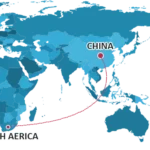
Shipping from China to Zambia in 2026 costs roughly $2,600–$4,500 for a 20ft container (FCL) delivered to Lusaka, $3,500–$5,800 for a 40ft high-cube, and $120–$250 per CBM for LCL cargo. Sea freight takes 30–50 days via the port of Dar es Salaam (Tanzania), Durban (South Africa), or Beira (Mozambique) plus the inland truck leg. As a specialist in Shipping From China To Zambia, our Shenzhen-based team has moved thousands of containers to Lusaka, Ndola, and Kitwe since 2008 — and in this complete guide, we break down exactly what you will pay, why, and how to cut the bill.
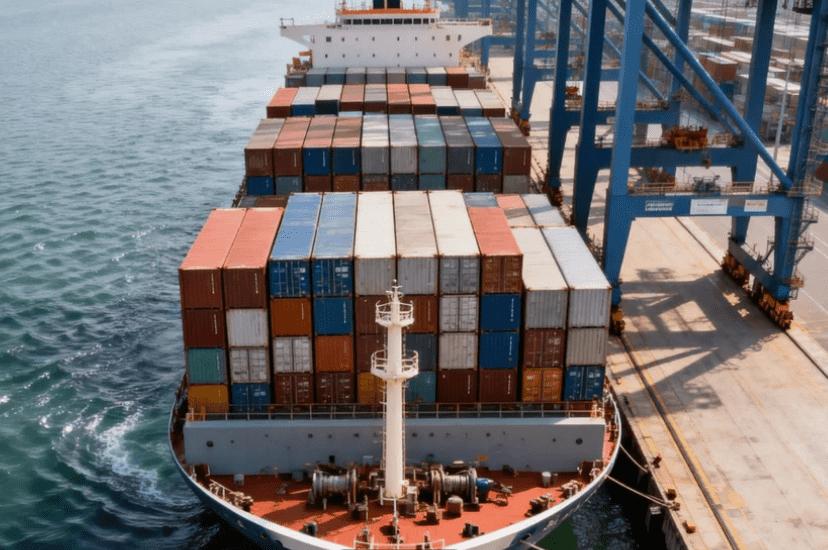
How Much Does Shipping from China to Zambia Cost in 2026? Quick Answer
If you only need the headline numbers, here is the August 2026 price picture for shipping from China to Zambia. Rates assume cargo from a major Chinese port (Shanghai, Shenzhen, Ningbo, Qingdao, or Tianjin) to Lusaka or the Copperbelt, including the inland truck leg from the transit port.
| Shipping Method | Estimated Cost (USD) | Transit Time |
|---|---|---|
| FCL 20GP container | $2,600–$4,500 | 30–50 days |
| FCL 40GP container | $3,200–$5,500 | 30–50 days |
| FCL 40HQ container | $3,500–$5,800 | 30–50 days |
| LCL (less than container load) | $120–$250 per CBM | 40–55 days |
| Door-to-door DDP (sea, all-in) | from ~$5,500 (20GP), varies with cargo value | 35–55 days |
Zambia is landlocked, so every sea quote is a two-leg price: ocean freight to a regional transit port (Dar es Salaam, Durban, or Beira) plus inland trucking or rail to your final city. That inland leg is a significant cost component — never assume a “port-to-port” rate is your final bill.
Factors Influencing the Cost of Shipping from China to Zambia
Based on Dantful’s 15+ years of logistics experience and analysis of thousands of shipments, shipping costs from China to Zambia are shaped by seven key factors. Understanding them helps you read any quote correctly — and avoid the surprise charges that inflate first-time importers’ bills.
- Origin and destination: The departure port in China (Shanghai vs. Tianjin can differ by several hundred dollars) and your final Zambian city (Lusaka vs. remote Copperbelt towns like Chingola or Solwezi) directly change the base rate. The inland leg from Dar es Salaam or Durban is priced by distance.
- Mode of transport: Whether you choose ocean freight or a rail/truck multimodal solution changes the pricing structure completely — ocean is charged per container or CBM.
- Fuel and surcharges: Carriers add bunker adjustment factors (BAF), peak-season surcharges (PSS), and general rate increases (GRI) that move weekly. A quote’s “freight rate” alone never tells the full story.
- Incoterms: Whether you buy EXW, FOB, CIF, or DDP decides who pays for the inland leg, insurance, and Zambia customs — and can shift thousands of dollars between buyer and seller.
- Cargo type and packaging: Hazardous goods, oversized cargo, and batteries require special handling and documentation at premium rates. Efficient palletization that minimizes wasted CBM can meaningfully lower LCL costs.
- Documentation: Special paperwork (dangerous-goods declarations, certificates of origin, inspection certificates) adds handling fees.
- Season and market conditions: Peak seasons (Chinese New Year, Golden Week, Q4) push rates up 20–40%; port congestion and container shortages can spike prices at any time.
Container Shipping Cost from China to Zambia: FCL Rates by Port
Full Container Load (FCL) is the most cost-effective choice when your cargo fills a container. You pay a flat rate for the exclusive use of the container, which lowers the cost per unit and reduces handling risk compared with LCL.
Container Options at a Glance
| Container Type | Usable Capacity | Best For | Typical All-in Cost to Zambia |
|---|---|---|---|
| 20GP | ~28 CBM | Heavy, dense cargo (tiles, machinery, steel) | $2,600–$4,500 |
| 40GP | ~58 CBM | Standard large shipments | $3,200–$5,500 |
| 40HQ | ~68 CBM | Voluminous, lightweight cargo (furniture, packaging) | $3,500–$5,800 |
FCL Rates by Chinese Port (August 2026)
The table below shows typical all-in FCL rates (ocean freight + transit-port handling + inland trucking to Lusaka) from China’s five busiest export ports. Rates are consensus ranges cross-checked across multiple forwarders in August 2026; exact quotes depend on sailing date, cargo weight, and final destination city.
| Origin Port (China) | 20GP FCL (USD) | 40HQ FCL (USD) | Recommended Corridor |
|---|---|---|---|
| Shanghai | $2,700–$3,800 | $3,600–$5,000 | Dar es Salaam (TAZARA rail or truck) |
| Ningbo | $2,700–$3,800 | $3,600–$5,000 | Dar es Salaam |
| Shenzhen | $2,850–$3,900 | $3,700–$5,200 | Durban (South Africa) or Beira |
| Qingdao | $3,050–$4,200 | $4,000–$5,500 | Durban or Beira |
| Tianjin | $3,100–$4,300 | $4,100–$5,600 | Durban or Beira |
Which Corridor Should You Use?
- Via Dar es Salaam (Tanzania): The busiest gateway for Zambia, especially for the Copperbelt. Cargo can continue by truck on the Great North Road or by rail freight on the TAZARA line (Dar es Salaam to Kapiri Mposhi). For Sea Freight From China to Tanzania schedules and rates, see our dedicated lane guide.
- Via Durban (South Africa): A reliable, frequent alternative with excellent road infrastructure into Lusaka and southern Zambia. Often preferred for breakbulk and heavy machinery. Transit is typically a few days longer than Dar es Salaam but schedules are very consistent.
- Via Beira (Mozambique): An emerging corridor to central Zambia, sometimes cheaper for cargo heading to Lusaka, though road quality and border processing vary.
- Via Walvis Bay (Namibia): A growing option for western Zambia, used mainly when Dar es Salaam or Durban face congestion.
For cargo destined for the Copperbelt (Ndola, Kitwe, Chingola), the Dar es Salaam corridor is usually the fastest and most cost-effective. For Lusaka and southern destinations, Durban is a strong default. Your forwarder should recommend the corridor based on current congestion, not a fixed template.
LCL Shipping Cost from China to Zambia: How Much per CBM?
Less than Container Load (LCL) lets you share a container with other shippers and pay only for the space you use. It is the right choice for shipments between roughly 1 and 15 CBM — but the per-CBM rate is higher than FCL, and your cargo changes hands more times, so transit can stretch to 40–55 days.
LCL rates from China to Zambia in 2026 typically run $120–$250 per CBM, including the inland leg to Lusaka. Your chargeable volume is the greater of actual CBM or the volume-equivalent of weight (usually 1 CBM = 1,000 kg), so dense cargo can be billed on weight instead.
FCL vs LCL: Where Is the Break-Even Point?
As a rule of thumb, if you are shipping more than 15–18 CBM, an FCL 20GP is usually better value. Here is the math at current August 2026 rates:
| Cargo Volume | LCL Cost ($120–$250/CBM) | FCL 20GP All-in | Recommendation |
|---|---|---|---|
| 12 CBM | $1,440–$3,000 | $2,600–$4,500 | LCL — clearly cheaper |
| 15 CBM | $1,800–$3,750 | $2,600–$4,500 | Borderline — compare live quotes |
| 18 CBM | $2,160–$4,500 | $2,600–$4,500 | FCL — better value and faster |
Below 12 CBM, LCL wins on cost. Above 18 CBM, the 20GP is almost always cheaper per CBM and arrives faster with fewer handling steps. Between 12 and 18 CBM, ask your forwarder to price both options with current sailing dates. Dantful offers both FCL and LCL with professional consolidated freight shipping — your cargo shares the container only with vetted, compatible shipments.
Door-to-Door vs Port-to-Port Shipping Cost from China to Zambia
When you book ocean freight from China to Zambia, the service scope you choose affects your final cost more than the freight rate itself. Two scopes dominate: port-to-port and door-to-door.
- Port-to-port: your container is delivered to a regional transit port — Dar es Salaam (Tanzania), Durban (South Africa), or Beira (Mozambique). Everything after that — transit-port handling, inland trucking to Lusaka or the Copperbelt, ZRA clearance, and duty/VAT — is arranged and paid for by you.
- Door-to-door: one provider takes the cargo from your supplier’s door in China and delivers it to your door in Zambia, handling the ocean leg, inland transport, and customs clearance along the way. DDP (Delivered Duty Paid) is the most common all-in form of door-to-door, with duties and VAT included in one price; door-to-door can also be quoted without the tax component if you prefer to settle duties yourself.
| What’s Included | Port-to-Port | Door-to-Door (e.g., DDP) |
|---|---|---|
| Ocean freight | ✅ China → transit port | ✅ China → transit port |
| Transit-port handling | ❌ You handle | ✅ Included |
| Inland trucking (30–40% of bill) | ❌ You arrange ($1,400–$2,800/container) | ✅ Included |
| ZRA clearance | ❌ You handle | ✅ Included |
| Duty & VAT (16%) | ❌ You pay separately | ✅ Included (DDP) |
| Typical 20GP price | ~$1,500–$2,800 (sea leg only) | ~$5,500–$9,500 (all-in) |
| Best for | Experienced importers with their own Zambian agent | First-time and SME importers |
Why Door-to-Door Matters for Zambia Specifically
- Transit-port clearance complexity: Your container is unloaded in Tanzania, South Africa, or Mozambique — a different customs jurisdiction from Zambia. Door-to-door providers manage the transit documentation and bond procedures you would otherwise face alone.
- Inland leg pricing risk: Trucking from Dar es Salaam to Lusaka (roughly 2,000 km) is a major cost that some cheap “port-to-port” quotes quietly exclude. Door-to-door quotes it up front.
- Duty and VAT prepayment: Zambia Revenue Authority (ZRA) duties and 16% VAT must be settled before release. Under DDP the provider handles payment and gives you a single all-in price — no surprise invoices after arrival.
The 8-Step Door-to-Door Journey
- Pickup — cargo collected from your supplier’s factory in China (EXW or FOB).
- Export clearance — Chinese export customs, documentation, and port loading.
- Ocean freight — to Dar es Salaam, Durban, or Beira (the sea leg).
- Transit-port handling — discharge, transit bond, and any transshipment formalities.
- Inland trucking or rail — to your Zambian city (Lusaka, Ndola, Kitwe, etc.).
- Import clearance — ZRA declaration via a licensed clearing agent.
- Duty and VAT settlement — calculated on the declared CIF value.
- Last-mile delivery — to your warehouse or doorstep.
What Does Door-to-Door vs Port-to-Port Cost?
Because door-to-door DDP includes duty and VAT, the all-in price scales with your cargo’s value and tariff band — there is no single “flat rate.” As a practical guide in August 2026, a 20GP door-to-door DDP shipment to Lusaka typically lands between $5,500 and $9,500 all-in, and a 40HQ between $7,500 and $13,000, depending on cargo type, CIF value, and the applicable duty rate (0–25% for most goods; see the customs section below). For comparison, a port-to-port quote on the same 20GP runs roughly $1,500–$2,800 — but you then add your own inland trucking ($1,400–$2,800), transit-port handling, clearance fees, duty, and VAT, which is exactly why the “cheaper” port-to-port number usually ends up costing as much or more once you assemble the legs yourself.
For a precise number, send your commercial invoice and dimensions to a forwarder offering DDP Shipping Services — Dantful provides itemized door-to-door quotes with every fee line spelled out, including the door to door shipping from China to Zambia option many of our SME clients use.
FOB vs CIF vs DDP: Which Incoterm Is Cheapest for Zambia Imports?
The Incoterm you choose decides who bears cost and risk at each step — and for landlocked Zambia, the choice matters more than for coastal destinations because of the long inland leg.
| Incoterm | Who Pays Ocean Freight | Who Pays Inland Leg (Transit Port → Zambia) | Who Handles Zambia Customs & Taxes | Your Total Spend (Buyer) | Effort Level |
|---|---|---|---|---|---|
| EXW | Buyer | Buyer | Buyer | Lowest line item, highest hidden exposure | High — you arrange everything |
| FOB | Buyer | Buyer | Buyer | Freight quoted at Chinese port only | High — inland leg + customs still yours |
| CIF | Seller | Buyer | Buyer | Includes freight + insurance to transit port only | Medium — inland leg + customs still yours |
| DDP | Seller | Seller | Seller | One all-in price, no surprises | Low — single provider manages all |
For a first-time Zambia importer, DDP usually works out cheapest in total terms even though the per-line freight looks higher: you avoid transit-bond mistakes, demurrage at Dar es Salaam, and customs penalties that routinely cost more than the forwarder’s margin. If you are an experienced importer with a trusted Zambian clearing agent, FOB + your own inland trucking can save money on high-value cargo. If you are unsure, ask for both FOB and DDP quotes side by side before deciding.
How Long Does Shipping Take from China to Zambia?
Transit time is the second question every importer asks, and the answer is route-specific. Because Zambia is landlocked, the sea option includes both the ocean voyage and the inland leg.
| Route / Mode | Transit Time | Notes |
|---|---|---|
| Sea: Shanghai → Dar es Salaam → Lusaka | 35–45 days | Busiest corridor; TAZARA rail or truck to Lusaka/Copperbelt |
| Sea: Shenzhen → Durban → Lusaka | 40–50 days | Reliable alternative via South Africa |
| Sea: Ningbo → Dar es Salaam → Copperbelt | 40–50 days | Good for Ndola/Kitwe-bound cargo |
| Sea: Beira corridor | 45–55 days | Emerging option; check current road conditions |
| LCL (any corridor) | 40–55 days | Adds consolidation + deconsolidation time |
Key planning note: the Dar es Salaam corridor is usually fastest for the Copperbelt, while Durban offers the most consistent schedules for Lusaka and southern Zambia. During peak season, add 3–5 days of buffer to sea schedules.
Zambia Customs Clearance: Duties, VAT 16%, and Import Fees
Every shipment entering Zambia is cleared by the Zambia Revenue Authority (ZRA). Understanding the process — and the taxes — is essential, because customs charges can add 20–45% on top of your freight bill.
The Clearance Process
- Register for a TPIN — a ZRA Taxpayer Identification Number, required for all importers.
- File an Import Declaration Form (IDF) — submitted electronically through ZRA with your commercial invoice, bill of lading, and packing list.
- Submit the customs declaration — with the correct HS code and declared CIF value.
- Pay duties and VAT — customs duty plus 16% VAT calculated on CIF + duty.
- Physical inspection (if flagged) — ZRA may examine the container; delays are common when documents are inconsistent.
- Release and inland delivery — cargo moves to your warehouse or the carrier’s final leg.
Zambia Import Duties by Product Category
Duty rates depend on the HS code. Typical bands for common China-origin imports:
| Product Category | Typical Duty Rate | Notes |
|---|---|---|
| Mobile phones & accessories | 0–15% | Depends on exact classification |
| Solar panels & energy products | 0–15% | Policy-sensitive category |
| Machinery & industrial equipment | 0–15% | Correct model/use declaration required |
| Electrical appliances | 15–25% | Check technical description carefully |
| Auto parts & tires | 15–25% | Product detail affects classification |
| Textiles & garments | up to 25% | Common consumer category |
| Furniture | 15–25% | Verify current ZRA tariff schedule |
How Duty and VAT Are Calculated
Zambia applies VAT at 16% on the CIF value plus duty. For a shipment declared at $10,000 CIF with a 15% duty rate:
- Customs duty = $10,000 × 15% = $1,500
- VAT = ($10,000 + $1,500) × 16% = $1,840
- Total duties & taxes = $3,340
The #1 mistake importers make: under-declaring the CIF value or mismatching the commercial invoice against the supplier’s packing list. ZRA routinely flags inconsistencies, which trigger inspections, penalties, and 3–7 days of delay. Declare accurately and have your supplier’s documents match yours exactly. Working with a licensed agent through a Customs Clearance service — Dantful’s Zambian network handles this daily — removes most of the risk.
Hidden Fees & Seasonal Rate Changes: When Is It Cheapest to Ship?
Hidden Fees to Budget For
Beyond freight and duties, budget for these common charges:
| Fee Type | Typical Cost (USD) | When It Applies |
|---|---|---|
| Origin terminal handling (THC) | $105–$245 / container | At the Chinese port |
| Transit-port charges (Dar es Salaam / Durban) | $210–$420 / container | Unloading, handling, storage at transit port |
| Documentation fee | $56–$105 / shipment | Bills of lading, certificates |
| Zambia clearing agent fee | $70–$140 | Import declaration + clearance |
| Inland trucking (transit port → Lusaka) | $1,400–$2,800 / container | The biggest “hidden” line — confirm it is in your quote |
| Demurrage & detention | $50–$150 / day | Container not returned on time |
| Remote delivery surcharge | Varies | Copperbelt towns, border areas |
Never accept a quote that doesn’t itemize the inland leg. “From $2,100 to Lusaka” port-only quotes are the classic trap on this lane.
Seasonal Rate Calendar
| Period | Rate Impact | Booking Advice |
|---|---|---|
| Chinese New Year (Jan–Feb) | +20–40%, space shortages | Book 4–6 weeks ahead |
| Golden Week (Oct 1–7) | +15–30% | Avoid or book early |
| Q4 peak (Oct–Dec) | +20–40% | Lock rates in September |
| Rainy season in Zambia (Nov–Apr) | Road delays inland | Add buffer to sea schedules |
| Off-peak (Mar–May, Jul–Sep) | Best time to ship | Negotiate harder, faster transit |
5 Cost-Cutting Tips from Our Operations Team
- Book 4–6 weeks ahead — early bookings dodge peak surcharges and secure space.
- Consolidate orders — combine multiple suppliers’ cargo into one FCL or LCL shipment to slash per-unit cost.
- Choose the right corridor — Copperbelt cargo via Dar es Salaam, Lusaka cargo via Durban; the wrong corridor adds days and dollars.
- Pack to the CBM — for LCL, tight palletization can cut your bill by 10–20%.
- Ask for both FOB and DDP quotes — on high-value cargo, the comparison often reveals a cheaper total route.
How to Choose a Reliable Freight Forwarder from China to Zambia?
Choosing a forwarder for Zambia is harder than for most African lanes, because you are really vetting three jobs in one quote: the ocean leg, the ~2,000 km inland truck leg from a foreign transit port, and ZRA clearance. Four checks separate a real Zambia specialist from a generalist:
- Does the quote itemize the inland leg? The trucking from Dar es Salaam (or Durban/Beira) to your city is 30–40% of the total bill ($1,400–$2,800 per container). A quote with no separate inland line is hiding the biggest cost on this lane.
- Can they name the corridor for your city? Copperbelt (Ndola, Kitwe) cargo goes via Dar es Salaam + TAZARA rail or truck; Lusaka cargo usually via Durban. “We ship everywhere” means they haven’t done this lane.
- Will they put DDP in writing with duty and VAT numbers? A transparent Zambia quote shows freight + inland + duty (0–25% by HS code) + 16% VAT = one total. Verbal DDP is where margin gets hidden.
- Where is their Zambia agent based? A named office in Lusaka or Ndola — not “we have partners” — and clear demurrage terms at the transit port (free time 4–7 days, $50–$150/day after).
Why Dantful International Logistics Is Your Best-Value Partner
As a Class-A licensed freight forwarder with NVOCC, FMC, and Jctrans certifications — operating from Shenzhen since 2008 — Dantful moves thousands of containers to Africa every year with direct carrier contracts that secure preferential rates. For Zambia specifically, our team manages the full chain: ocean freight, transit-port handling, ZRA clearance (IDF filing, TPIN compliance, duty and VAT settlement), and last-mile delivery to Lusaka, Ndola, Kitwe, and beyond. Our quotes itemize every line — freight, surcharges, inland leg, duties, and local fees — so you never meet a hidden cost at the border. Our 50-operator + 50-customer-service team provides 24/7 tracking and trilingual support.
When you need a partner you can trust with your supply chain, choose a freight forwarder in shenzhen china with real Zambia lane experience — or compare forwarder-selection criteria in depth with our guide on how to choose the right freight forwarder.
FAQs
1. How much does it cost to ship a 20ft container from China to Zambia?
A 20ft (20GP) container from major Chinese ports to Lusaka typically costs $2,600–$4,500 all-in including the inland truck leg from the transit port. The exact price depends on your origin port, sailing date, and final destination city.
2. How much does it cost to ship a 40ft container from China to Zambia?
A 40ft (40GP) container runs $3,200–$5,500, and a 40ft high-cube (40HQ) $3,500–$5,800. The 40HQ costs only slightly more than the 40GP while offering ~10 CBM extra space — best value for bulky cargo.
3. How long does shipping from China to Zambia take?
Sea freight takes 30–50 days depending on the corridor (Dar es Salaam is usually fastest to the Copperbelt; Durban is most consistent for Lusaka). Add buffer during peak season.
4. What are the import duties and VAT when shipping to Zambia?
Zambia Revenue Authority (ZRA) applies customs duty of 0–25% depending on the HS code (textiles up to 25%), plus 16% VAT calculated on the CIF value plus duty. A $10,000 CIF shipment at 15% duty pays $1,500 duty + $1,840 VAT = $3,340 total.
5. Is DDP shipping from China to Zambia worth it?
For most first-time and SME importers, yes. DDP gives one all-in price covering freight, transit-port handling, the inland truck leg, customs clearance, and duty/VAT — eliminating the three biggest surprise-cost risks on this landlocked lane.
6. Should I ship LCL or FCL from China to Zambia?
Below 12 CBM, LCL is cheaper ($120–$250/CBM). Above 18 CBM, an FCL 20GP is better value and faster. Between 12 and 18 CBM, compare live quotes for both options.
7. What is the cheapest way to ship from China to Zambia?
Sea freight LCL is the lowest cost per unit for small shipments, and FCL for volumes above ~18 CBM. Booking 4–6 weeks ahead, consolidating orders, and choosing the right corridor (Dar es Salaam for Copperbelt, Durban for Lusaka) are the most effective ways to cut the total bill.
8. What documents do I need to import into Zambia?
You need a ZRA TPIN (taxpayer number), an Import Declaration Form (IDF), commercial invoice, bill of lading, packing list, and sometimes a certificate of origin. A licensed clearing agent handles the submission on your behalf.
9. Can Dantful ship from China to Zambia door-to-door?
Yes. Dantful provides full door-to-door and DDP services from any Chinese city to Lusaka, Ndola, Kitwe, and other Zambian destinations, with one itemized quote covering freight, customs, duties, and final delivery. Contact our team for a free, obligation-free quote tailored to your cargo.
For the fastest, most reliable shipping from China to Zambia, get in touch with our logistics specialists today — we’ll quote your exact route and cargo in 24 hours. You can also explore our shipping agent from China to Zambia service page or the Sea Freight From China to South Africa lane guide if you are comparing regional options.

Young Chiu is a seasoned logistics expert with over 15 years of experience in international freight forwarding and supply chain management. As CEO of Dantful International Logistics, Young is dedicated to providing valuable insights and practical advice to businesses navigating the complexities of global shipping.