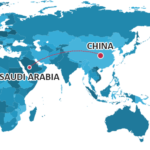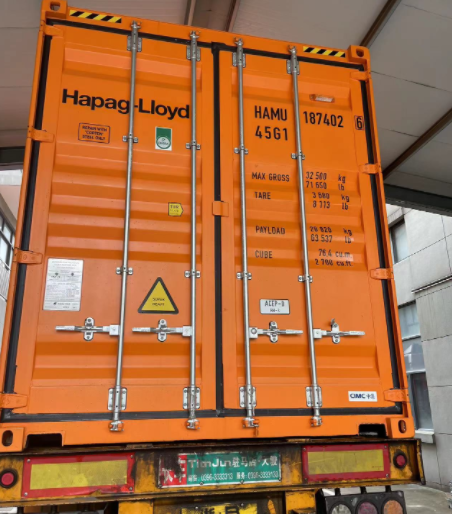
Are you planning to expand your business by importing goods from China to Saudi Arabia but feeling overwhelmed by the import procedures and complex customs regulations? Understanding the crucial steps, required documentation, and compliance standards is essential for smooth and cost-effective shipping. In this comprehensive guide updated for March 2026, we break down everything you need to know about import procedures from China to Saudi Arabia to help you navigate challenges, avoid costly mistakes, and achieve successful importation.
Dantful Insight: As we manage the post-Ramadan and Eid al-Fitr cargo backlogs this March, ensuring your SABER certificates are pre-approved is more critical than ever to avoid exorbitant port storage fees at Jeddah and Dammam.
Overview of Import Procedures from China to Saudi Arabia
When importing goods from China to Saudi Arabia, it’s essential to understand the step-by-step process to ensure smooth customs clearance, cost optimization, and regulatory compliance. The import procedure from China to Saudi Arabia is shaped by both countries’ trade regulations, logistics options, and the specific requirements of the Saudi Arabian Customs (ZATCA). As global supply chains evolve, businesses need up-to-date, practical, and reliable guidance to minimize delays and costs. If you are considering neighboring trade lanes, you may also want to read about Shipping from China to UAE, as many procedures and challenges are similar in the region.
Key Steps in the Import Process
A successful import from China to Saudi Arabia generally involves the following key steps:
Supplier Selection & Product Confirmation
- Identify reputable manufacturers or suppliers in China.
- Confirm that your products comply with Saudi Arabia’s technical regulations and standards (such as SASO requirements).
Contract & Payment Terms
- Negotiate and finalize contracts (commonly using Incoterms like FOB, CIF, DAP).
- Arrange secure payment methods (such as Letters of Credit or T/T).
Booking Freight & Logistics Provider
- Choose an experienced freight forwarder like Dantful International Logistics for professional, cost-effective, and one-stop solutions.
- Select the most suitable shipping mode: Sea Freight, Air Freight, or multimodal options.
Preparation of Shipping Documentation
- Gather all required documents, including Commercial Invoice, Packing List, Bill of Lading/Air Waybill, Certificate of Origin, and any necessary compliance certificates.
Customs Pre-Clearance in China
- Complete export customs declaration in China.
- Ensure that all documents and certificates are accurate to avoid shipment delays.
International Shipping
- Transport goods from the chosen port/airport in China (e.g., Shanghai, Shenzhen, Ningbo) to a Saudi Arabian port (e.g., Jeddah Islamic Port, King Abdulaziz Port Dammam, King Khalid International Airport).
Arrival & Customs Clearance in Saudi Arabia
- Submit required documentation to Saudi Customs.
- Pay applicable duties, tariffs, and taxes.
- Obtain import approval and arrange inspection if needed.
Final Delivery
- Goods are released for local delivery or storage.
- Arrange last-mile logistics or warehouse solutions as needed.
Common Challenges When Importing to Saudi Arabia
Importing into Saudi Arabia from China can be complex due to several challenges. From our daily operations clearing cargo at Jeddah Islamic Port, we see that mismatched HS codes between the Commercial Invoice and the SABER certificate account for over 60% of customs holds.
- Stringent Product Compliance: All goods must meet Saudi standards, especially electronics, machinery, toys, and food, which require SASO and, in many cases, SABER certification.
- Dynamic Regulatory Environment: Customs policies and import approvals can change rapidly. The continuous digital upgrades by ZATCA require strict adherence to the FASAH electronic clearance system.
- Documentation Errors: Missing or incorrect shipping documents (such as errors in the Commercial Invoice or Certificate of Origin) frequently cause delays or fines.
- Unexpected Costs: Tariffs, taxes, and port handling charges may be higher than anticipated, especially if tariffs change or if incorrect product classification is used.
- Port Congestion & Delays: Major Saudi ports sometimes experience congestion, increasing transit times, especially during peak trade seasons like Ramadan or Hajj.
- Language & Communication Barriers: Differences in business practices, documentation language, or time zones can slow down processes.
To address these challenges, working with a professional, experienced freight forwarder like Dantful International Logistics is highly recommended. Our dedicated Middle East team provides end-to-end support from compliance consulting and document preparation to customs clearance and local delivery.
Essential Import Documentation and Customs Requirements
Proper documentation is the backbone of a successful import procedure from China to Saudi Arabia. Understanding which documents are needed, and their specific roles in customs clearance, is critical for all importers.
Required Shipping Documents for Saudi Customs Clearance
Below are the key documents generally required by Saudi Customs:
| Document | Purpose | Issued By |
|---|---|---|
| Commercial Invoice | Declares value, description, and trade terms for the goods | Exporter/Supplier |
| Packing List | Details packing information: quantity, dimensions, weight, packaging type | Exporter/Supplier |
| Bill of Lading (Sea Freight) | Proof of shipment and contract of carriage | Shipping Line/Freight Forwarder |
| Air Waybill (Air Freight) | Equivalent to BL for air shipments | Airline/Freight Forwarder |
| Certificate of Origin (CO) | Confirms country of origin for customs/tariff purposes | Chamber of Commerce |
| SASO/SABER Certificate | Product conformity certificate required for regulated goods | Accredited Lab/Certifier |
| Insurance Certificate | Confirms cargo insurance (required for some shipments) | Insurance Company |
| Import License (if applicable) | Required for restricted or regulated products | Saudi Authorities |
Note: Additional documents may be required for specific product categories (e.g., health certificates for food, MSDS for chemicals).
Understanding Commercial Invoice, Packing List, and Bill of Lading
- Commercial Invoice: Must clearly state the full description of goods, quantity, unit price, total value, currency, supplier and consignee details, HS code, and Incoterms. It is the primary document for customs valuation and duty calculation. Expert Tip: Ensure your invoice matches your SABER PCoC exactly. Even a slight variation in the model number can trigger a customs rejection.
- Packing List: Provides detailed information about the physical packaging: number of packages, package type (carton, pallet, etc.), marks and numbers, dimensions, and gross/net weight.
- Bill of Lading (BL) / Air Waybill (AWB): The transport contract. Both documents must accurately match details on invoices and packing lists.
Certificate of Origin and Product Compliance Certificates
- Certificate of Origin (CO): Issued by the Chamber of Commerce in China, the CO is a mandatory document for customs clearance in Saudi Arabia.
- Product Compliance Certificates: For most regulated products, a SASO Certificate or its digital equivalent via the SABER platform is required. The process involves laboratory testing, inspection, and registration of products on the SABER system before shipment.
Saudi Arabia Customs Regulations and Import Restrictions
Prohibited and Restricted Goods in Saudi Arabia
When importing goods from China to Saudi Arabia, understanding the list of prohibited and restricted goods is crucial. Saudi Customs enforces strict controls to protect public health, national security, and Islamic values.
| Category | Prohibited | Restricted / Controlled |
|---|---|---|
| Alcohol & Narcotics | All forms prohibited | N/A |
| Pork & Pork Products | Prohibited | N/A |
| Weapons & Explosives | Firearms, ammunition, explosives | Certain knives, hunting gear require permits |
| Medications | Narcotics, psychotropic substances | Prescription drugs require MOH approval |
| Publications & Media | Materials violating Islamic morals | Books/magazines may be censored |
| Electronic Devices | N/A | Must comply with CITC standards |
| Cosmetics & Food | N/A | Must meet SFDA standards & ingredient rules |
Importers must check the latest Zakat, Tax and Customs Authority (ZATCA) and SASO lists, as items can shift categories.
Tariffs, Duties, and Taxes on Imports
Saudi Arabia applies a value-based Customs Duty on most imported goods, including those from China. The standard duty rate is generally 5%, but can range from 0% to 25% depending on the product type.
In addition to duties, imports are subject to Value Added Tax (VAT) at a current standard rate of 15%, calculated on the CIF (Cost, Insurance, and Freight) value plus duties.
| Cost Component | Rate/Description |
|---|---|
| Customs Duty | 5% standard; up to 25% for select goods |
| Value Added Tax (VAT) | 15% on CIF + duty |
| Excise Tax | 50%-100% (energy drinks, tobacco, etc.) |
If you are interested in understanding shipping costs in the region, see How much is shipping from China to Saudi Arabia for real-time cost breakdowns and influencing factors.
Recent Updates in Saudi Customs Laws (March 2026)
Saudi Customs continues to modernize regulations under Vision 2030. Recent 2026 changes include:
- Enhanced FASAH Integration: Pre-arrival clearance is now heavily enforced. Submitting documents via FASAH 48 hours prior to vessel arrival is highly recommended to avoid the new 2026 port dwell penalties.
- Stricter SABER Audits: ZATCA has integrated more deeply with the SABER system, automatically flagging shipments where the SCoC (Shipment Certificate of Conformity) was issued after the Bill of Lading date.
- E-Invoicing Requirements: Ensure your Chinese suppliers comply with the data structures required by Saudi’s Phase 2 e-invoicing rollout, affecting import valuations.
Choosing the Right Shipping Method from China to Saudi Arabia
Sea Freight vs. Air Freight: Pros and Cons
| Mode | Pros | Cons |
|---|---|---|
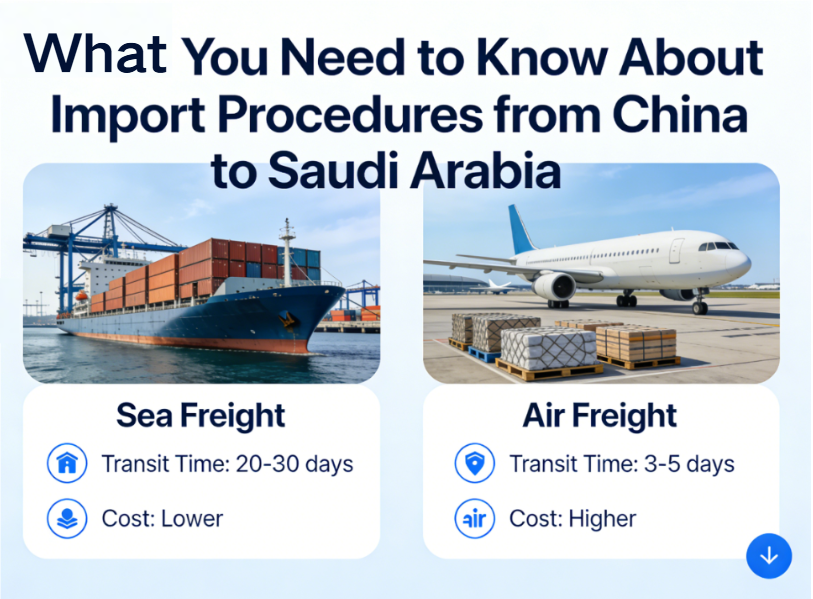
| Sea Freight | – Most cost-effective for large/bulky shipments – Suitable for FCL, LCL, OOG, Breakbulk | – Slower transit times (20-30 days) – Port/terminal handling fees |
| Air Freight | – Fastest mode (3-7 days) – Ideal for high-value, urgent, or perishable goods | – Significantly higher cost – Strict weight and size limits |
For related reading on containerized shipping costs, visit container shipping costs from China to Saudi Arabia.
Estimated Transit Times and Shipping Costs (March 2026)
The below table provides current March 2026 reference rates and transit times from major ports in China to key ports in Saudi Arabia. Note: These rates reflect the post-Chinese New Year market stabilization and adjustments for recent Red Sea routing shifts.
| Origin Port (China) | Destination Port (Saudi Arabia) | Sea Freight (FCL) Transit Time | Sea Freight (FCL) Cost (USD)* | Air Freight Transit Time | Air Freight Cost (USD/kg)* |
|---|---|---|---|---|---|
| Shanghai | Jeddah | 24-30 days | $2,300 – $3,200 (40HQ) | 4-7 days | $4.80 – $7.20 |
| Shenzhen | Dammam | 18-24 days | $2,200 – $3,100 (40HQ) | 3-5 days | $5.00 – $7.50 |
| Ningbo | Riyadh (via Dammam) | 22-28 days | $2,400 – $3,300 (40HQ) | 4-6 days | $5.20 – $7.80 |
FCL: Full Container Load, typical 40HQ container. Air freight rates are indicative, based on general cargo. Actual rates vary based on fuel surcharges and carrier capacity.
Choosing Reliable Freight Forwarders and Logistics Providers
Dantful International Logistics stands out as a highly professional, one-stop international logistics service provider. Our Middle East Special Line Team monitors Dammam and Jeddah port congestion daily, adjusting routing to save you time. As an A-class freight forwarder with over 15 years of industry experience, we handle Sea Freight, Air Freight, Customs Clearance, and Door to Door services, ensuring your shipments from China to Saudi Arabia are 100% compliant.
Import Licensing and Registration Procedures
How to Obtain an Importer Registration in Saudi Arabia
To import goods, businesses must obtain official registration:
- Commercial Registration (CR): Apply with the Saudi Ministry of Commerce.
- Chamber of Commerce Membership: Mandatory local registration.
- Customs Registration (Importer Code): Register with ZATCA to receive your unique Importer Code.
- SABER Platform Registration: Create an account on the official SABER platform to manage product conformity.
SASO and SABER Certification Requirements
SASO and SABER certification are critical for market access to Saudi Arabia.
- Product Certificate of Conformity (PCoC): For each regulated product, valid for 1 year.
- Shipment Certificate of Conformity (SCoC): Required for each specific shipment. Dantful Insight: Do not wait until your cargo is on the water to apply for your SCoC. If the PCoC expires while the goods are in transit, customs will hold the container.
Cost Breakdown and Tips for Reducing Import Expenses
Overview of Import Costs and Fee Structure (March 2026)
| Cost Item | Typical Range / Notes |
|---|---|
| Freight Charges | Varies by mode |
| Customs Duties | 0%–25% (most items: 5%–15%) |
| Value Added Tax (VAT) | 15% on CIF value (Cost + Insurance + Freight + Duties) |
| Port Handling Charges | $85–$160 per container (adjusted for 2026 tariffs) |
| Customs Clearance Fees | $120–$250 per shipment |
| Warehousing/Storage | $15–$35 per day per container (after free days expire) |
Strategies to Minimize Shipping and Customs Costs
- Pre-Clearance via FASAH: Utilize pre-arrival clearance to eliminate port storage fees entirely.
- Optimize Container Usage: Maximize container fill to reduce per-unit shipping costs.
- Consolidate Shipments: Group smaller orders into a single LCL shipment.
- Leverage Professional Freight Forwarders: Working with a one-stop solution provider like Dantful International Logistics can yield better rates and integrated customs services.
For detailed regional comparisons, check our Shipping from China to Middle East guide.
Common Mistakes to Avoid When Importing from China to Saudi Arabia
- Incomplete or Inaccurate Documentation: Errors in invoices or certificates can lead to cargo seizures.
- Ignoring Compliance Requirements: Failing to obtain necessary SASO/SABER certifications.
- Incorrect HS Code Use: Misclassification can result in unexpected duties and fines.
- Underestimating Total Costs: Overlooking port charges, local delivery fees, or VAT.
Pro Tip from Young Chiu, CEO of Dantful: “For a seamless, cost-effective import experience in 2026, always work with an experienced partner. We offer one-stop international logistics solutions to help you navigate the complexities of importing from China to Saudi Arabia with absolute confidence. Our team ensures your SABER paperwork and ZATCA declarations are flawless before the ship even leaves China.”
FAQs
1. What is the cheapest way to ship from China to Saudi Arabia?
For bulk shipments over 15 CBM or heavy cargo, Sea Freight (FCL or LCL) is significantly cheaper than air freight. However, if you are an SME looking for a hands-off approach that includes all customs clearances and taxes, opting for Sea DDP (Delivered Duty Paid) is often the most cost-effective overall solution, as it prevents hidden destination fees.
2. Do I need a SABER certificate for all products imported from China?
No, but you need it for all regulated products. Products like electronics, machinery, textiles, and toys are strictly regulated and require both a Product Certificate of Conformity (PCoC) and a Shipment Certificate of Conformity (SCoC) via the SABER platform. Non-regulated products only require a Self-Declaration through SABER.
3. How long does customs clearance take in Saudi Arabia?
Thanks to the digital FASAH system, if all your documentation is flawless and submitted pre-arrival, customs clearance typically takes 2 to 5 days. However, missing certificates, mismatched HS codes between the invoice and SABER, or incomplete packing lists can delay cargo for weeks.
4. Who is responsible for paying Saudi import duties and VAT?
It depends on the Incoterms agreed upon with your Chinese supplier or freight forwarder. Under standard FOB or CIF terms, the buyer (importer) is responsible for paying the Saudi Customs Duty (typically 5%-15%) and the 15% VAT upon arrival. If you choose DDP (Delivered Duty Paid), your freight forwarder handles all taxes and duties, meaning the price you are quoted is the final landed cost.
5. Can I import electronics with lithium batteries from China to Saudi Arabia?
Yes, but they require strict compliance. Electronics must meet SASO standards and often require the G-Mark. Furthermore, to transport lithium batteries, you must provide the carrier with an MSDS (Material Safety Data Sheet) and a UN38.3 test report to prove the batteries are safe for international transit.

Young Chiu is a seasoned logistics expert with over 15 years of experience in international freight forwarding and supply chain management. As CEO of Dantful International Logistics, Young is dedicated to providing valuable insights and practical advice to businesses navigating the complexities of global shipping.