Are you struggling with high shipping costs from China and wondering how to maximize your savings? Understanding the complexities of freight rates, cargo volume, Incoterms, and cost-effective shipping methods is crucial for your business success. In this comprehensive guide, we’ll explore practical strategies and insider tips to help you significantly reduce shipping costs from China without compromising efficiency or reliability. Get ready to optimize your logistics and boost your bottom line!
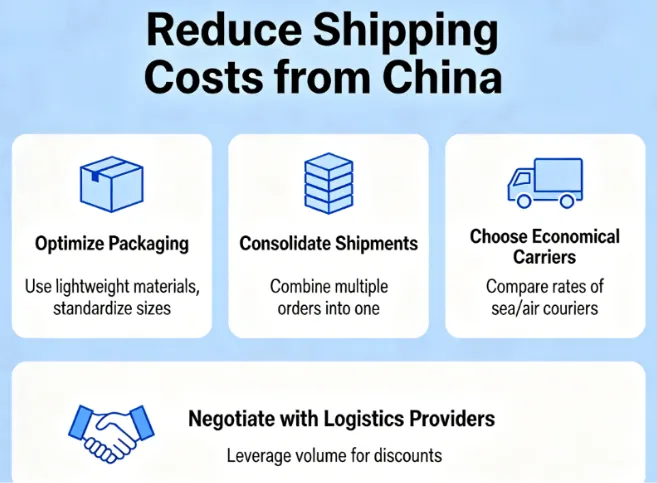
Key Factors Influencing Shipping Costs from China
Understanding Freight Rate Components
When shipping goods from China, it is essential to understand the main components that make up your total shipping cost. These components typically include:
| Component | Description |
|---|---|
| Base Freight Rate | The primary charge for moving goods from origin to destination. Varies by mode (sea, air, rail, road). |
| Fuel Surcharges | Fluctuate according to global oil prices and route distance. |
| Terminal Handling | Fees for loading/unloading containers at ports or airports. |
| Documentation Fees | Costs for preparing the necessary shipping documents (e.g., B/L, AWB, commercial invoice, packing list). |
| Customs Clearance | Includes brokerage, inspection, and clearance charges at both origin and destination. |
| Security Charges | Additional charges to ensure cargo safety, especially for air cargo. |
| Insurance | Optional, but highly recommended to protect goods against loss or damage. |
| Delivery Charges | Inland transportation costs, such as trucking from port to warehouse or final destination. |
Each component may vary significantly depending on the chosen freight forwarder, shipment route, and market fluctuations. Working with a reliable partner like Dantful International Logistics ensures transparent pricing and helps avoid hidden charges.
Impact of Cargo Volume and Weight on Shipping Fees
Cargo volume (CBM) and weight are crucial factors in calculating shipping fees. Shipping lines and airlines use two common pricing methods:
- Actual Weight: The real weight of your cargo.
- Volumetric (Dimensional) Weight: Calculated based on the cargo’s size, using specific formulas for each transport mode.
Sea Freight: Charges are primarily based on volume (CBM).
- 1 CBM (cubic meter) is typically the billing unit.
- For FCL, container capacities are key:
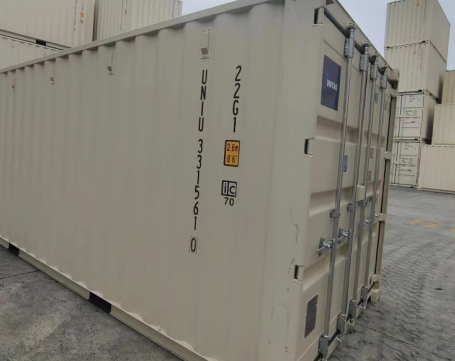
- 20FT: 28 CBM
- 40FT: 56 CBM
- 40HQ: 68 CBM
- 45HQ: 78 CBM
Air Freight: The chargeable weight is the greater of actual or volumetric weight.
- Volumetric weight formula: (Length x Width x Height in cm) / 6000
Rail Freight: Charges are usually based on either actual weight or volume, whichever is higher.
Optimizing your packaging to reduce wasted space and maximize load efficiency has a direct impact on shipping costs. Engaging a professional forwarder like Dantful International Logistics can help you accurately calculate and optimize your cargo’s chargeable weight.
The Role of Incoterms in Cost Calculation
Incoterms (International Commercial Terms) define the responsibilities of buyers and sellers for the delivery of goods under sales contracts. The chosen incoterm significantly affects the overall shipping cost:
| Incoterm | Seller’s Responsibility | Buyer’s Responsibility | Key Cost Implications |
|---|---|---|---|
| EXW | Minimal (at factory) | All costs from pickup onward | Buyer bears full logistics and risk; cheapest for seller. |
| FOB | Up to port of shipment | Ocean/air/rail freight, etc. | Seller covers export customs and local charges; buyer pays freight. |
| CIF | Delivery at destination port | Insurance, freight to port | Seller pays main carriage and insurance; buyer pays on-arrival fees. |
| DAP/DDP | Up to named place (DAP) or delivered, duty paid (DDP) | – | Seller covers nearly all costs (DDP includes duties/taxes). |
Choosing the right Incoterm can help allocate cost and risk correctly and avoid unexpected charges. If you want to deeply understand Delivered Duty Paid arrangements, see this detailed DDP guide. Consult with your freight partner to ensure you select the optimal term for your trade.
Choosing the Most Cost-Effective Shipping Method
Comparing Sea Freight, Air Freight, and Rail Freight
Your choice of shipping method is a key determinant of overall cost, transit time, and risk. Here is a comparison of the three main international shipping modes from China:
| Mode | Typical Transit Time | Cost (USD/CBM) | Best Use Cases | Limitations |
|---|---|---|---|---|
| Sea Freight | 20-40 days (to major ports) | $30-$80 | Large, heavy, non-urgent cargo | Slow, port-to-port, handling at both ends |
| Air Freight | 3-7 days | $4-$8 per kg | Urgent, high-value, perishable, small goods | High cost, limited by cargo size and weight |
| Rail Freight | 12-25 days (to Europe) | $100-$200 | Medium volume, faster than sea, cheaper than air | Limited destinations, schedule frequency |
Sea freight is most cost-effective for bulk shipments, while air freight is best for time-sensitive, high-value goods. Rail freight is gaining popularity for routes to Europe due to its balance of speed and cost.
For specific insights on international container pricing, refer to International Container Shipping Prices.
When to Use FCL vs. LCL for Savings
Choosing between Full Container Load (FCL) and Less than Container Load (LCL) impacts both cost and efficiency:
| Criteria | FCL | LCL |
|---|---|---|
| Volume Range | ≥15 CBM (fills most of 20FT container) | <15 CBM (doesn’t fill a container) |
| Cost per CBM | Lower (as volume increases) | Higher (shared with other shippers) |
| Handling | Less cargo handling | More handling, more risk of delay/damage |
| Transit Time | Faster (direct loading/unloading) | Slightly longer (requires consolidation/deconsolidation) |
| Use Cases | Bulk shipments, regular exports | Small shipments, infrequent or trial orders |
Tip: If your cargo volume is close to a full container (e.g., over 15 CBM), FCL is often more cost-effective. For small shipments, LCL helps save costs by sharing container space.
Courier Services vs. Traditional Freight Forwarders
For small, urgent, or sample shipments, courier services (such as DHL, FedEx, UPS) may be an option. For larger, commercial shipments, a traditional freight forwarder like Dantful International Logistics offers significant advantages.
| Criteria | Courier Services | Freight Forwarders (e.g., Dantful) |
|---|---|---|
| Shipment Size | Up to 100 kg | Flexible—small parcels to full containers |
| Transit Time | Fast (2-7 days) | Varies—sea, air, rail, road options |
| Cost | Higher per kg | Economical for medium/large shipments |
| Service | Door-to-door, customs included | Door-to-door, FCL/LCL, customs, consolidation, insurance |
| Customization | Standardized | Highly customizable (warehouse, OOG, Amazon FBA, etc.) |
| Expertise | Limited advice | Professional logistics advice and global compliance |
Recommendation: For businesses scaling up, using a professional freight forwarder like Dantful International Logistics ensures optimized shipping solutions, transparent costs, and a single point of contact for all your global logistics needs.
Tips to Optimize Packaging and Reduce Dimensional Weight
Selecting Efficient Packing Materials
The choice of packing materials significantly impacts your overall shipping cost from China. Using high-quality, lightweight, and durable materials—such as corrugated cardboard, air pillows, and molded pulp—can help protect your cargo while minimizing additional weight. Avoid over-packing or using unnecessarily bulky materials, as this increases the dimensional weight (also known as volumetric weight), which is often used by carriers like DHL, FedEx, and UPS to calculate shipping charges.
Key considerations for selecting packing materials:
- Strength vs. Weight: Opt for materials that provide sufficient protection but add minimal weight.
- Stackability: Use materials that maintain their integrity under pressure to optimize container space.
- Cost Efficiency: While premium materials may have a higher upfront cost, they can reduce damage claims and repeated shipments, saving costs in the long run.
For example, switching from traditional wooden crates to honeycomb paperboard or reinforced cardboard can reduce both material and transportation expenses.
| Packing Material | Weight Impact | Protection Level | Common Use Cases |
|---|---|---|---|
| Corrugated Cardboard | Low | Moderate-High | Consumer goods, electronics |
| Wooden Crates | High | Very High | Heavy machinery, fragile goods |
| Air Pillows/Bubble Wrap | Very Low | Moderate | Small electronics, accessories |
| Molded Pulp/Tray | Low | Moderate | Bottles, glassware |
Minimizing Wasted Space to Lower Shipping Charges
Efficient packaging design is essential to reduce wasted space, which directly affects your shipping costs through the dimensional weight pricing model. Here are some strategies:
- Custom-Fit Boxes: Use packaging tailored to the product dimensions to avoid unnecessary voids.
- Nesting & Stacking: Design products and packaging to stack or nest within each other, optimizing space inside each carton and container.
- Remove Excess Air: Compress soft goods and eliminate empty pockets with inserts or fillers that do not add weight.
For shipments utilizing Sea Freight or Air Freight, maximizing carton utilization within a container (such as a 20FT, 40FT, or 40HQ container) ensures you are not paying for unused capacity. For example, a 40HQ container has a capacity of 68CBM—if your cargo only fills 50CBM due to poor packing, you are effectively paying for 18CBM of unused space.
Consolidation Strategies for Lower Freight Costs
Benefits of Cargo Consolidation Services
Cargo consolidation—combining multiple shipments from different suppliers or buyers into a single container—offers substantial savings, particularly for small to medium-sized shipments. This approach allows shippers to share container space, reducing the per-unit shipping cost and minimizing the risk of paying for unused capacity.
Key advantages include:
- Cost Efficiency: Lower rates per cubic meter or ton compared to booking a full container for partial loads.
- Frequency and Flexibility: Ability to ship smaller volumes more often, improving inventory cycles and cash flow.
- Simplified Handling & Documentation: Fewer customs declarations and streamlined logistics processes.
Partnering with a professional freight forwarder like Dantful International Logistics ensures that consolidation is handled smoothly, from supplier coordination to customs clearance and final delivery. This is especially valuable for cross-border e-commerce sellers, SMEs, and businesses sourcing from multiple Chinese suppliers.
If you’re seeking more about this approach, you can explore consolidated freight shipping for flexible solutions.
How Groupage and Shared Containers Reduce Expenses
Groupage—also known as LCL (Less than Container Load)—means combining shipments from different clients into one container. This service is ideal when your cargo does not fill a standard container (like 20FT, 40FT, or 40HQ). You only pay for the space your cargo occupies.
Comparison: FCL (Full Container Load) vs. LCL (Groupage)
| Shipping Mode | Suitable For | Cost Basis | Typical Savings |
|---|---|---|---|
| FCL | Large volumes (>15CBM) | Flat rate per container | Lowest per-unit cost for large loads |
| LCL/Groupage | Small/Medium volumes (<15CBM) | Charged per CBM or weight | No need to pay for unused capacity; higher per-unit cost for very small volumes |
Shared containers are particularly effective during periods of lower demand or for businesses with diverse product lines from multiple sources. Additionally, Dantful International Logistics offers flexible consolidation schedules and extensive warehousing in major Chinese ports such as Shenzhen, Shanghai, and Ningbo, enabling efficient groupage solutions.
By leveraging consolidation strategies, you can:
- Access competitive rates without waiting to accumulate full container loads.
- Benefit from regular sailing schedules and faster cargo movement.
- Enjoy professional management of cargo sorting, labeling, and distribution.
In conclusion, optimizing your packaging and leveraging consolidation services from an experienced provider like Dantful International Logistics can deliver measurable savings and greater reliability in your international shipping operations. For customized solutions or to learn more about cost-effective shipment options from China, contact our team for a free consultation.
Negotiating with Freight Forwarders and Carriers
How to Get Better Freight Rates and Terms
Negotiating with your freight forwarder or carrier is a critical step in reducing shipping costs from China. Here are key strategies and considerations based on industry experience:
- Leverage Shipment Volume: Carriers and forwarders often offer tiered pricing. The more frequent or larger your shipments, the better your bargaining position. For example, shipping multiple containers monthly from Shanghai to Los Angeles can unlock volume discounts.
- Request All-Inclusive Quotations: Always ask for a detailed breakdown, including base freight, fuel surcharges, security fees, and any terminal handling charges. This transparency prevents unexpected costs later.
- Flexible Scheduling: If your timeline allows, offer flexibility in departure dates or routes. Carriers may provide lower rates for less popular sailings or off-peak days.
- Compare Multiple Quotes: Utilize freight rate comparison tools and request quotations from at least three different providers. This benchmarking will strengthen your negotiation stance.
- Long-Term Contracts: For ongoing needs, consider negotiating a yearly service agreement. Fixed-rate contracts can protect you from market volatility and ensure priority space allocation.
- Highlight Preferred Services: If you require specialized services (like Amazon FBA, OOG Freight, or Door to Door delivery), mention these upfront. Some forwarders, like Dantful International Logistics, specialize in comprehensive solutions and may offer bundled discounts.
| Negotiation Tactic | Potential Savings | When to Use |
|---|---|---|
| Volume-Based Discounts | 5–15% | Regular, high-volume shipments |
| Flexible Shipping Dates | 3–10% | Non-urgent goods |
| Multi-Route Comparison | Varies | To identify the most economical route |
| Long-Term Contract | Up to 20% | Annual or repeated shipments |
| Service Bundling | 5–12% | Need multiple value-added solutions |
A reliable partner like Dantful International Logistics customizes quotations to your shipping profile and offers transparent, competitive pricing for all major transport modes.
Building Long-Term Partnerships for Cost Savings
Establishing a durable relationship with your freight forwarder or carrier delivers consistent savings and operational benefits:
- Priority Space: Long-term clients are prioritized during peak seasons, minimizing the risk of rolled cargo.
- Customized Solutions: Deep understanding of your business enables forwarders to optimize routes, consolidate shipments, and proactively address compliance requirements.
- Faster Issue Resolution: Established communication channels lead to quicker problem-solving if delays or documentation issues arise.
- Exclusive Offers: Loyalty may unlock early access to new services or spot rate promotions.
When you work with an experienced, customer-focused provider such as Dantful International Logistics, you’ll benefit from seamless integration of sea, air, rail, and even door-to-door freight services, all tailored to your cost-saving goals.
Avoiding Hidden Fees and Unexpected Charges
Understanding Customs Duties, Taxes, and Surcharges
Many shippers underestimate the significant impact of customs-related costs on total shipping expenses. Being well-informed in these areas is essential:
- Customs Duties: Each destination country applies its own tariff schedule to goods imported from China. For example, importing electronics to the United States may attract a duty rate of 2–4%, while textiles sent to Germany may see 8–12%. Always verify the HS code and corresponding rates.
- Value-Added Tax (VAT) and GST: In the EU, VAT rates can range from 17% to 27% depending on country and product category. Some countries apply GST (like Australia at 10%) on imports.
- Port Charges & Local Fees: Terminal handling charges, documentation fees, and delivery order fees vary by port. For instance, Rotterdam may have higher THC than Singapore.
- Surcharges: Be aware of currency adjustment factors, peak season surcharges (PSS), war risk premiums, and bunker adjustment factors (BAF).
| Major Fee Type | Typical Range | Who Charges? |
|---|---|---|
| Customs Duties | 0–20% of goods value | Customs authorities |
| VAT/GST | 0–27% of goods value | Customs authorities |
| Terminal Handling Charges | $150–$400 per container | Port operators |
| Documentation Fees | $30–$80 per shipment | Forwarder/Carrier |
| Surcharges (e.g. BAF, PSS) | $50–$300 per container | Carrier |
Tip: Ask your forwarder for a comprehensive “landed cost” estimation upfront, including all possible fees.
How Documentation and Compliance Affect Total Costs
Accurate documentation and regulatory compliance are essential for avoiding delays, fines, or shipment holds that can result in unexpected expenses:
- Bill of Lading (B/L) Accuracy: Errors in B/L or commercial invoices can cause customs holds, incurring demurrage or detention fees.
- Proper Classification of Goods: Misdeclaring goods or using incorrect HS codes may lead to hefty penalties or even shipment seizure.
- Certificates and Permits: Certain products (e.g., food, medical equipment) require specific permits or certificates. Failure to comply extends clearance time and increases storage costs.
- Compliance with Destination Regulations: Each country may have unique packaging, labeling, and documentation standards. Non-compliance can result in re-export or disposal costs.
Best Practice: Partner with a knowledgeable and experienced provider like Dantful International Logistics. We assist with all documentation, customs clearance, and compliance needs, minimizing risk and ensuring your shipments move smoothly through every stage.
Leveraging Technology for Smarter Shipping Decisions
In today’s highly competitive logistics landscape, leveraging technology is key to optimizing every stage of your shipping process from China. By incorporating advanced digital tools and platforms, businesses can make informed decisions, reduce shipping costs, and enhance overall supply chain efficiency.
Using Freight Rate Comparison Tools
Freight rates can fluctuate significantly based on shipping route, service type, season, and carrier capacity. Utilizing freight rate comparison tools enables importers, exporters, and logistics managers to:
- Instantly compare current rates across multiple carriers.
- Identify cost-effective routes and alternative options.
- Access real-time market data for transparency.
- Automate quote requests and booking processes.
For example, Dantful International Logistics leverages these platforms to provide clients with up-to-date quotations and optimal routing options. Rate comparison tools such as Freightos, Flexport, and in-house Dantful systems analyze variables like container type (20FT, 40FT, 40HQ, 45HQ), destination ports, and service speed to recommend the most economical solution.
Table: Sample Sea Freight Rates from China to Major Ports (as of Q2 2026)
| Origin Port | Destination Port | 20FT Container (USD) | 40FT Container (USD) | Transit Time (Days) |
|---|---|---|---|---|
| Shanghai | Los Angeles | $1,100 | $1,900 | 15-18 |
| Shenzhen | Rotterdam | $1,250 | $2,150 | 33-36 |
| Ningbo | Sydney | $1,050 | $1,900 | 15-20 |
| Qingdao | Dubai | $1,200 | $2,000 | 22-25 |
Note: Actual rates fluctuate and should be confirmed at booking.
These tools empower businesses to make data-driven choices and avoid paying above-market rates. By working with a forwarder like Dantful International Logistics, clients benefit from access to proprietary comparison technology and negotiated bulk rates.
If you are planning container shipments to the US, you may want to check the latest container shipping costs from China to USA for more comprehensive pricing data.
Tracking and Optimizing Supply Chain Performance
Visibility is crucial for controlling international shipping costs. Modern supply chain management systems provide end-to-end tracking of shipments, enabling businesses to:
- Monitor real-time shipment status and exceptions.
- Analyze transit times and identify bottlenecks.
- Track KPIs such as on-time delivery, dwell times, and cost per unit shipped.
- Automate alerts for delays or disruptions.
For instance, Dantful Logistics’ online customer portal integrates GPS tracking, shipment milestone updates, and document management, offering clients unparalleled transparency for sea, air, rail, and courier shipments.
Benefits of Supply Chain Tracking:
- Risk Reduction: Early warning on delays enables corrective action and minimizes costly disruptions.
- Performance Optimization: Continuous monitoring helps identify inefficiencies and supports process improvement.
- Cost Control: Data-driven insights enable better negotiation with carriers and optimization of shipping schedules.
By adopting digital solutions, shippers can drive smarter, more agile shipping decisions from China, ensuring both cost efficiency and service reliability.
Planning Ahead: Timing and Seasonal Strategies
Strategic planning is essential for minimizing shipping costs and avoiding unnecessary surcharges or delays. Understanding seasonal trends and scheduling shipments with foresight can make a significant difference in your bottom line.
Shipping During Off-Peak Seasons to Save Money
Shipping demand fluctuates throughout the year, directly impacting freight rates. Peak seasons—such as the weeks preceding Chinese New Year, Golden Week, and back-to-school or holiday shopping periods—typically see surges in rates and reduced carrier capacity.
Advantages of Off-Peak Shipping:
- Lower Freight Rates: Carriers offer discounted rates to fill unused capacity during slow periods.
- Faster Transit Times: Less port congestion and priority handling.
- Greater Availability: Easier to secure preferred sailings and flight slots.
Table: Typical Peak vs. Off-Peak Periods Affecting Shipping from China
| Season | Months | Rate Trend | Advice |
|---|---|---|---|
| Chinese New Year | Jan-Feb | High | Ship early to avoid congestion |
| Golden Week | Early October | High | Advance bookings recommended |
| Off-Peak | Mar-Apr, Jul-Aug, Nov | Low | Book shipments for savings |
| Holiday Season | Sep-Dec | High | Plan ahead, secure slots early |
By aligning your shipping schedules with off-peak windows, you can benefit from more competitive rates and smoother logistics.
Booking Shipments in Advance for Better Rates
The earlier you plan and book, the more leverage you have in securing attractive rates and optimal shipping schedules. Advance booking allows for:
- Negotiated Discounts: Carriers often provide better terms for planned capacity.
- Guaranteed Space: Reduces risk of rolled cargo or last-minute premium charges.
- Predictable Delivery: Supports inventory planning and customer commitments.
For example, Dantful International Logistics advises clients to finalize bookings at least 2-3 weeks before the intended departure date, especially for FCL and large-volume shipments.
Best Practices for Advance Booking:
- Monitor production and sales cycles to anticipate shipment needs.
- Work closely with your logistics partner for forecast-based planning.
- Leverage digital booking systems for fast, secure slot reservations.
By combining advance planning with technology-driven tools and a reliable logistics partner, businesses shipping from China can unlock substantial savings and enhance supply chain resilience.

Young Chiu is a seasoned logistics expert with over 15 years of experience in international freight forwarding and supply chain management. As CEO of Dantful International Logistics, Young is dedicated to providing valuable insights and practical advice to businesses navigating the complexities of global shipping.