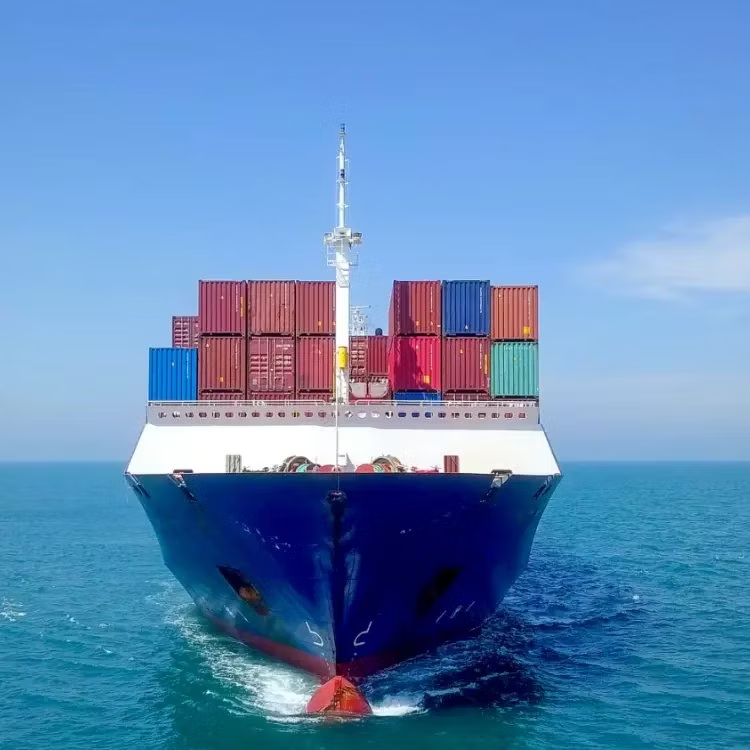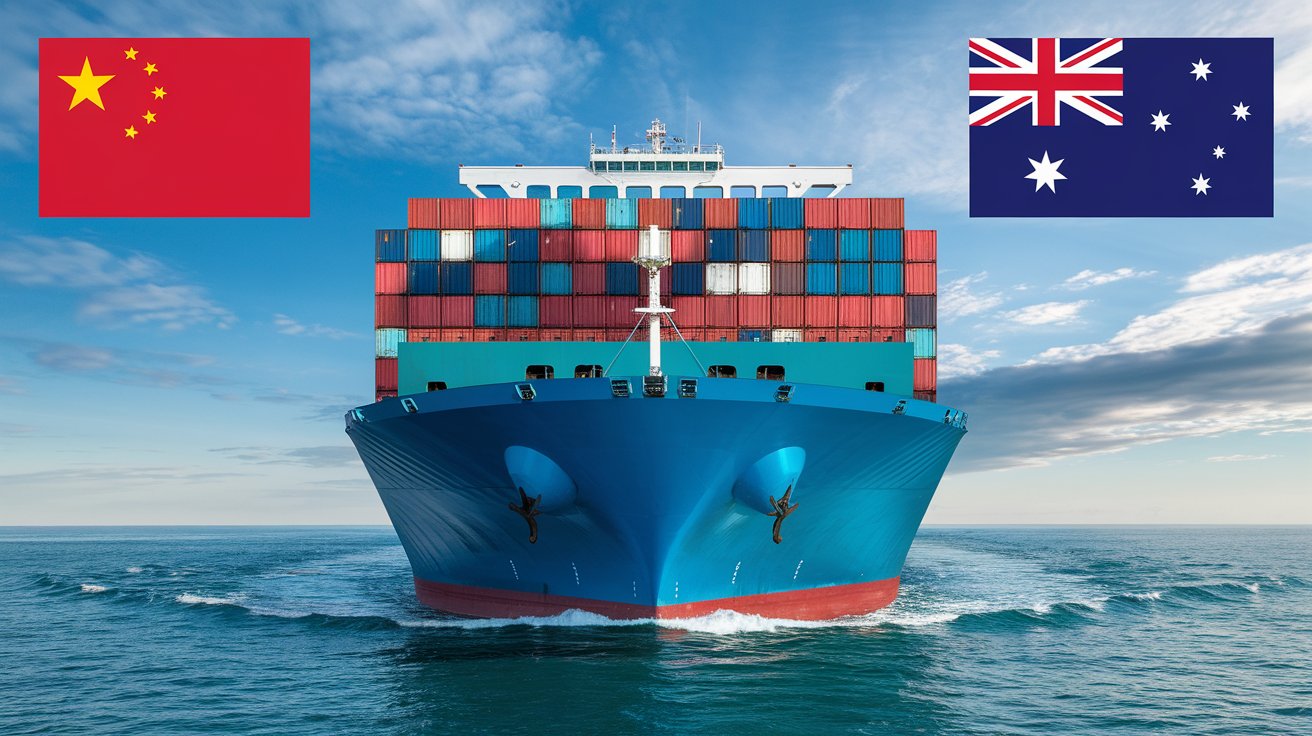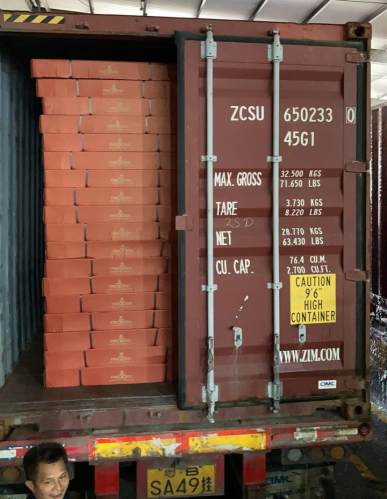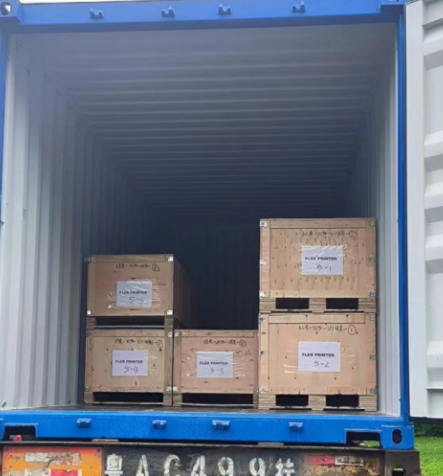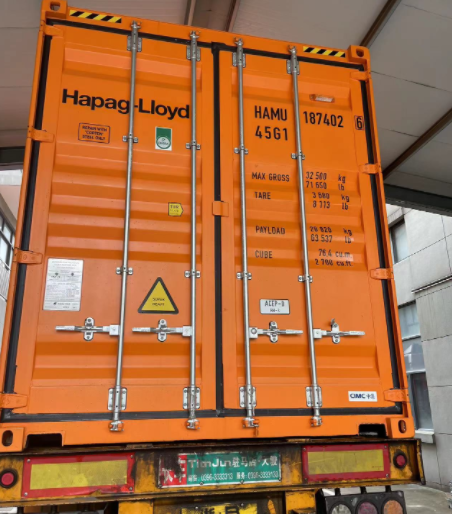
Container shipping prices are the fees carriers charge to move standardized containers on ocean routes, and they move on a weekly—sometimes daily—basis. As of early September 2026, the benchmark Drewry World Container Index (WCI) stands at about US$4,465 per 40ft container—roughly double its April 2026 low—driven by Middle East disruption, capacity management on the transpacific, and tariff-driven demand pull-forwards. If you import from China, the practical takeaway is simple: treat published rates as a moving reference, understand what you are actually paying for, and get a current, itemized quote before you book.
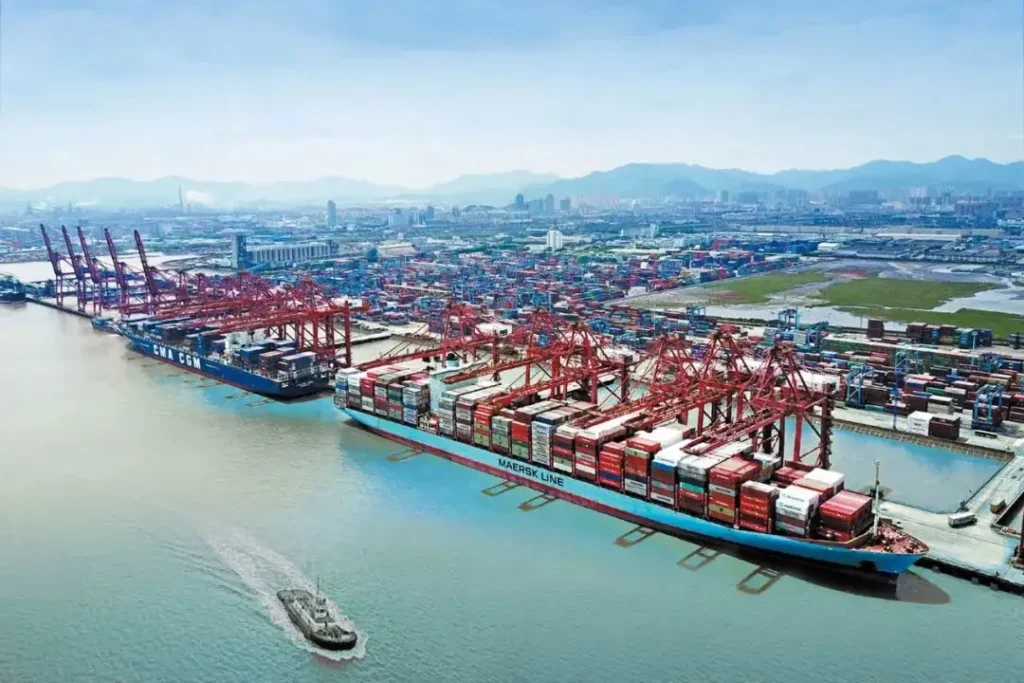
What Drives International Container Shipping Prices in 2026?
No single factor sets a freight rate. Container shipping prices are the product of supply and demand for vessel space, the cost of moving that space, and the risk of the route itself. Below is how each driver moves prices in 2026 and what we are actually seeing from our desk in Shenzhen.
| Driver | How it moves prices | What is happening in 2026 |
|---|---|---|
| Vessel supply & capacity management | More ships and empty slots push rates down; carriers counter by canceling sailings (“blank sailings”) to hold rates up | A record wave of roughly 10 million TEU of new capacity delivered between 2024 and 2026 is being offset on the transpacific by aggressive blank-sailing programs—carriers announced six blank sailings for the week ahead, twice the previous week (Drewry Container Capacity Insight, 03 Sep 2026) |
| Fuel costs | Marine fuel (VLSFO) is a large operating cost, recovered through base rates or fuel formulas (BAF/LSS) | Energy prices spiked after the February 2026 Gulf conflict and remain elevated, keeping the fuel component of rates structurally high |
| Geopolitics & rerouting | Closed or risky waterways force longer routings, absorbing capacity and adding cost | The Strait of Hormuz disruption raised risk premiums across 2026; most Asia–Europe tonnage still rounds the Cape of Good Hope, which analysts estimate absorbs 8–12% of global capacity. Carriers are now returning to the Suez Canal, which is softening Asia–Europe rates |
| Seasonality & demand pull-forwards | Peak season (roughly August–October) and pre-holiday stocking lift demand | 2026 demand was pulled forward by US tariff deadlines and retailer restocking, compressing the traditional seasonal curve and stretching the peak window |
| Equipment & congestion | Empty-container shortages and port delays add surcharges and lengthen cycles | Chinese export hubs have seen congestion after a series of typhoons (Typhoon Saudel in late August 2026), while Panama Canal drought limits of 32–34 daily transits add surcharges on US East Coast and Gulf services |
| Currency | A stronger US dollar raises import costs for buyers paying in weaker currencies | Currency swings are usually reflected in negotiated adjustments rather than a universal CAF in 2026, so monitor the USD trend for your market |
The common thread in 2026 is that carriers are using capacity discipline to protect rates even as huge amounts of new tonnage enter the water. That is why a price can stay high on one trade lane while softening on another in the same week.
READ MORE:
- Shipping From China to the USA
- Shipping From China TO Canada
- Shipping From China TO Mexico
- Shipping From China to Panama
- Shipping From China to Costa Rica
- Shipping From China to Brazil
- Shipping From China TO Colombia
- Shipping From China to Jamaica
- Shipping From China to Venezuela
- Shipping From China to Argentina
Container Shipping Prices Now: China Export Lane Snapshot (September 2026)
Below are the benchmark numbers we verify before advising clients. Spot rates are port-to-port quotes from Shanghai; they exclude origin/destination handling, surcharges, duties and inland delivery, and they change weekly—so treat them as a reference, not a quotation.
Benchmark indices
| Index | Latest value | As of | What it tells you |
|---|---|---|---|
| Drewry World Container Index (WCI), composite | US$4,465 / 40ft container | 03 Sep 2026 (weekly) | Global spot benchmark across 8 East–West routes; ~2x the 09 Apr 2026 level of US$2,309 |
| Shanghai Containerized Freight Index (SCFI), composite | 3,018.26 points (monthly average) | June 2026 | Chinese official export-market gauge; +35.9% month-on-month, reflecting the Q3 surge |
Indicative spot rates from Shanghai (Drewry WCI, 03 Sep 2026)
| Lane | Latest spot (US$ / 40ft) | Weekly change | June 2026 monthly average (SCFI) |
|---|---|---|---|
| Shanghai → Los Angeles | ~$7,185 | +5% | $5,351 / FEU |
| Shanghai → New York | ~$9,587 | +3% | $6,580 / FEU |
| Shanghai → Rotterdam | ~$4,092 | -5% | $3,042 / TEU (Europe basic port) |
| Shanghai → Genoa | ~$4,368 | -10% | n/a |
Sources: Drewry World Container Index (weekly assessment, 03 Sep 2026); Shanghai Shipping Exchange / Ministry of Transport of China, “China Export Container Transport Market Analysis, June 2026” (published 08 Jul 2026).
How to read SCFI and WCI for budgeting
Two indices dominate rate discussions, and they answer different questions. The Drewry WCI is a private weekly index of spot rates across eight major East–West routes, published every Thursday—use it to see where the market is this week and to time a booking against a GRI. The SCFI, published weekly by the Shanghai Shipping Exchange and aggregated monthly in Ministry of Transport reports, is the official Chinese view of spot prices out of Shanghai—use it as the reference your Chinese supplier and forwarder will recognize. Neither index is a quotation: real offers add origin/destination charges, surcharges and the forwarder’s margin. When a number in a news headline or a supplier email has no date attached, ask for the date before you treat it as current—in this market a figure from June and a figure from September can describe completely different conditions.
What these numbers show is a diverging market: transpacific rates are elevated and still climbing on resilient US demand and tight capacity, while Asia–Europe rates are easing as carriers restart Suez transits and inject capacity. Expect the transpacific to stay firm and volatile through the rest of the 2026 peak season.
For route-level detail and cost breakdowns, see our guides to container shipping costs from China to the USA and the cost of shipping a 40ft container from China to the USA, or read how much is ocean freight from China for the full cost picture.
What’s Inside a Container Shipping Quote in 2026?
The rate you see quoted is rarely just “ocean freight.” A 2026 quote typically stacks a base rate plus surcharges, and understanding each line is the fastest way to compare two quotes fairly.
| Line item | What it covers | Typical notes (2026) |
|---|---|---|
| Base ocean freight (FAK or contract rate) | Moving the container from origin to destination port | FAK = “freight all kinds,” the standard spot tariff; subject to change with GRI announcements |
| GRI (General Rate Increase) | Periodic carrier rate increases, often effective the 1st of a month | If your quote has a validity window, confirm whether a pending GRI applies |
| PSS (Peak Season Surcharge) | Added demand during peak season | Common on the transpacific in Q3–Q4 |
| BAF / LSS (bunker adjustment / low-sulphur surcharge) | Fuel cost recovery | Often bundled into “all-in” rates in 2026; ask whether it is separate or included |
| Origin charges (THC, export docs, trucking, VGM) | Handling at the Chinese port, customs documents and inland haulage | Depends on Incoterms: under FOB the buyer still pays these in the final landed cost |
| Destination charges (DTHC, ISPS, AMS/ENS) | Terminal handling, security and customs filings at arrival | AMS (US) / ENS (EU) filings are small but easy to miss |
| Cargo insurance | Cover for loss or damage in transit | Typically a small fraction of insured value; see the example below |
| Duties, VAT and import clearance | Taxes and brokerage at destination | Country- and HS-code-specific; never include these in “ocean freight” comparisons |
Example: what a US$10,000 shipment actually costs. Suppose you ship a 40ft container of consumer goods from Shenzhen to Rotterdam in early September 2026, spot booking:
| Cost component | Example amount (USD) |
|---|---|
| Goods value (EXW) | $10,000 |
| Inland trucking + origin handling in China | $450 |
| Ocean freight, Shanghai → Rotterdam (indicative spot) | $4,092 |
| Destination THC + customs brokerage | $500 |
| Cargo insurance (~0.3% of insured value) | $45 |
| Total before import duty and VAT | $15,087 |
Import duty and VAT are excluded because they depend on your commodity’s HS code and the destination country—in the EU, VAT alone commonly runs 19–25%. Use this only as a budgeting illustration; the DDP shipping option can bundle most of these into one fixed price.
How to read a quote line by line. A short checklist we give every client: (1) ask for an all-in breakdown rather than one round number; (2) confirm the validity date and whether any GRI/PSS is pending; (3) verify which costs sit on the seller’s side vs. yours under your Incoterms—for a clear explanation see our guide to FOB Incoterms; and (4) put the itemized lines into your booking contract. Any charge that is not itemized in the quote should be questioned in writing before you confirm.
FCL vs LCL: Why the Pricing Logic Is Different
Container shipping prices are quoted in two completely different units, and mixing them up is a common budgeting mistake:
- FCL (Full Container Load) — priced per container (20ft or 40ft). You pay for the box, so the per-unit cost falls as you fill it; the 20ft rate is lower than the 40ft rate per box, though not necessarily per cubic meter.
- LCL (Less than Container Load) — priced per cubic meter (CBM) plus a CFS handling fee for consolidation at origin and deconsolidation at destination.
As a rule of thumb, if your cargo reaches roughly 12–15 CBM, FCL usually becomes more economical and faster than LCL. For one shipment of 8 CBM, LCL almost always wins.
Want the details? See what is LCL and FCL in shipping, compare LCL vs FCL for small cargo, and check current LCL shipping rates from China to the USA or shipping costs from China to the USA for route numbers.
Spot vs Contract Rates: How to Buy Ocean Freight in a Volatile Market
In a market moving as fast as 2026’s, when and how you buy matters as much as the price itself.
| Spot rate | Contract (annual/quarterly) rate | |
|---|---|---|
| What it is | Current market price for immediate booking | Agreed rate for a committed volume over a period |
| Pros | Flexible, no volume commitment | Locks a level below spot spikes; protects peak-season budgets |
| Cons | Exposed to GRI and peak-season jumps | If rates fall, you may pay above market |
| Best for | One-off or low-volume shipments | Regular, predictable volumes |
A practical strategy that works for most SME importers:
- Commit what you can predict. If you ship monthly, put roughly 60–70% of volume on a contract with a review clause (quarterly is safer than annual in this market), and keep the rest on spot for flexibility.
- Time your bookings around the calendar. Chinese New Year (January–February 2027) pulls cargo forward for 3–4 weeks beforehand; Golden Week in October and US retail peak create similar windows. Book space 3–4 weeks ahead of these crunches, not one week.
- Watch GRI timing. Carriers announce rate increases in advance, usually effective the first of a month. Booking before the effective date can beat the increase.
- Use a forwarder who has direct carrier contracts. A licensed forwarder buys at wholesale levels and can compare spot vs. contract on your behalf—this is where most of our clients save money.
Choosing that partner is itself a skill—our guide on how to choose the right freight forwarder covers what to check in credentials, network and pricing transparency.
What’s Next? Container Shipping Rate Outlook for H2 2026
We do not do forecasts; freight rates are too event-driven. What we do is track the variables and present scenarios, so you can plan for each.
A short timeline of what already moved prices in 2026 helps explain why the scenarios below matter:
- February 2026 — The US–Iran conflict disrupts the Strait of Hormuz; energy prices and war-risk premiums jump, lifting the cost base for every route out of Asia.
- 9 April 2026 — The WCI composite sits near US$2,309 per 40ft container, among the lowest prints of 2026 before the summer surge.
- June 2026 — A memorandum reopens the Strait of Hormuz, but the official SCFI composite still averages 3,018.26 points (+35.9% month-on-month) as US-bound rates surge; Shanghai–US West Coast averages $5,351/FEU.
- July–August 2026 — Tariff-driven pull-forwards and early peak-season restocking keep transpacific space tight, while a series of typhoons (including Typhoon Saudel) congests Chinese export ports and Panama Canal drought caps tighten US East Coast supply.
- Late August to early September 2026 — The WCI holds near $4,465, Shanghai–Los Angeles climbs past $7,000, and Asia–Europe softens toward $4,000–$4,400 as carriers restart Suez transits.
| Variable | If it pushes rates UP | If it pushes rates DOWN | What to watch |
|---|---|---|---|
| Suez / Red Sea reopening | Faster transit attracts cargo but adds competition | Returning capacity releases the 8–12% now absorbed by Cape routings; analysts see potential 20–30% downside on Asia–Europe | Weekly carrier service announcements; blank-sailing counts |
| Strait of Hormuz | Attacks on commercial shipping continue to raise risk premiums | A durable reopening normalizes energy and insurance costs | Gulf security news; war-risk surcharge notices |
| Newbuild deliveries (~10M TEU, 2024–2026) | Slow steaming and scrapping absorb the surplus | Structural oversupply pressures rates, especially outside peak season | Fleet utilization data |
| US tariffs & front-loading | New tariff deadlines trigger another demand surge | Tariff easing removes the pull-forward effect | Trade-policy headlines |
| Peak season (Q3–Q4 2026) | Transpacific stays firm on US demand and blank sailings | Earlier-than-usual peak means a faster seasonal drop | SCFI/WCI weekly prints |
| Environmental rules (ETS, CII) and canal droughts | Compliance and Panama surcharges add to costs | — | EU ETS surcharges; Panama transit caps |
Our base reading for the rest of 2026: transpacific container shipping prices remain high and volatile into the peak season on US import demand and tight capacity management; Asia–Europe drifts softer as Suez services return; and into 2027 the biggest risk to high rates is the sheer volume of new capacity—unless geopolitical disruption keeps absorbing it.
How Dantful Helps You Manage Container Shipping Costs
Dantful International Logistics is a Chinese Class-A freight forwarder founded in Shenzhen in 2008, holding NVOCC, FMC and Jctrans credentials. Because we book directly with the shipping lines, we see carrier GRIs and capacity changes in real time—and we pass that visibility to you with Ocean Freight quotes that are itemized, current and valid for a stated window.
What that means in practice: one contact who tells you whether a spot booking or a contract makes sense for your lane and volume, watches your shipment through daily tracking updates, and keeps 24/7 support available when a blank sailing or a typhoon delays your cargo. Send us your cargo details through our contact page and we will respond with a market-based quote and a clear breakdown of every line on it.
FAQs
Why do container shipping prices change every week?
Because they track vessel supply and demand in real time. Carriers adjust base rates through GRIs, add or remove peak-season surcharges, and change capacity with blank sailings—so a rate quoted in week one can differ in week two.
Will container shipping prices fall in 2026?
Regionally, yes: Asia–Europe rates are already easing as carriers return to the Suez Canal. Transpacific rates are more likely to stay firm through the 2026 peak season. The structural wildcard is the large wave of new ships, which pressures rates whenever demand softens.
How much does a 40ft container cost from China to the US West Coast now?
As of 3 September 2026, the Drewry benchmark for Shanghai to Los Angeles is about US$7,185 per 40ft container—spot, port-to-port. Our guide to the cost of shipping a 40ft container from China to the USA breaks that figure down line by line.
What do GRI and PSS mean on my freight quote?
GRI (General Rate Increase) is a carrier-wide base-rate increase, typically effective on the 1st of a month. PSS (Peak Season Surcharge) is a temporary charge during high-demand periods. Always confirm whether a pending GRI applies to the validity window of your quote.
How far ahead should I book before Chinese New Year?
Book 3–4 weeks before the holiday rush, because exporters in China front-load cargo and vessel space fills quickly. The same applies to Golden Week in October and the US retail peak.
Is a spot rate or an annual contract better for me?
If you ship monthly with predictable volume, a contract with a quarterly review protects you from peak spikes; keep 30–40% on spot for flexibility. If you ship occasionally, spot is usually simpler.
How is LCL priced compared with FCL?
LCL is priced per cubic meter plus a consolidation fee; FCL is priced per container. Around 12–15 CBM, FCL generally becomes the cheaper and faster option.
What charges can be added after a quote?
Origin/destination terminal handling, AMS/ENS security filings, peak-season and fuel surcharges, demurrage and detention, and destination clearance are the usual additions. Ask for an all-in itemized quote with a validity date so you can compare offers fairly.
Can a freight forwarder get me a better rate than booking directly?
Often yes. A licensed forwarder with direct carrier contracts buys at wholesale levels, combines volume across clients, and can tell you when a contract beats the spot market—something most importers cannot see from the outside.
For current rates and advice on your specific trade lane, contact Dantful International Logistics today—our team ships from China to 200+ countries and answers around the clock.

Young Chiu is a seasoned logistics expert with over 15 years of experience in international freight forwarding and supply chain management. As CEO of Dantful International Logistics, Young is dedicated to providing valuable insights and practical advice to businesses navigating the complexities of global shipping.