Are you wondering how much it costs to ship a car from China to Nigeria? Navigating the complexities of international vehicle shipping, from understanding freight rates to choosing the right shipping method, can be overwhelming. In this guide we break down the 2026 numbers, the Nigerian duty stack that decides most of your landed cost, and the eligibility rules that get cars seized at Apapa every week.
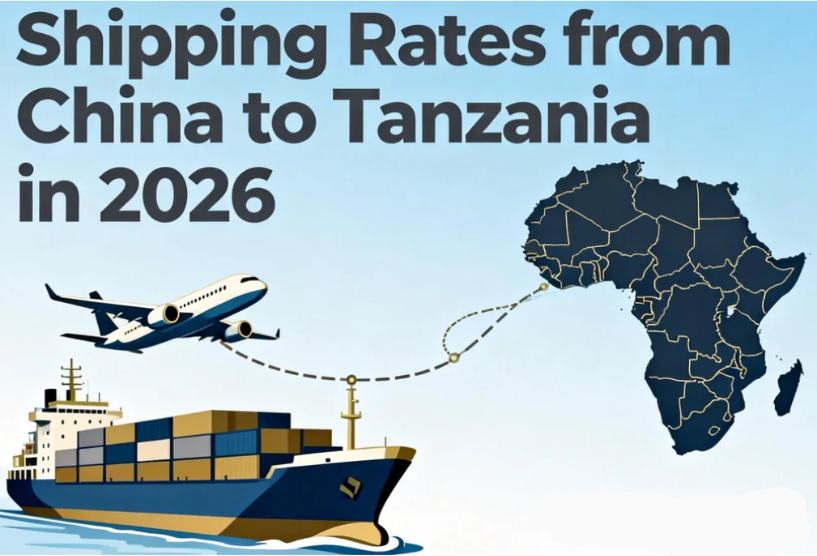
The short answer for November 2026: one used sedan or SUV from South China to Lagos costs US$1,200–3,000 on RoRo or US$2,900–3,900 in a 20GP container (port-to-port, ocean freight only). Nigerian duty, levies and VAT then add roughly 41–43% of the CIF value for a used car with a 2.0–3.9L engine, so a US$9,000 car typically lands at the port gate for around US$15,200 before terminal handling, clearing and delivery.
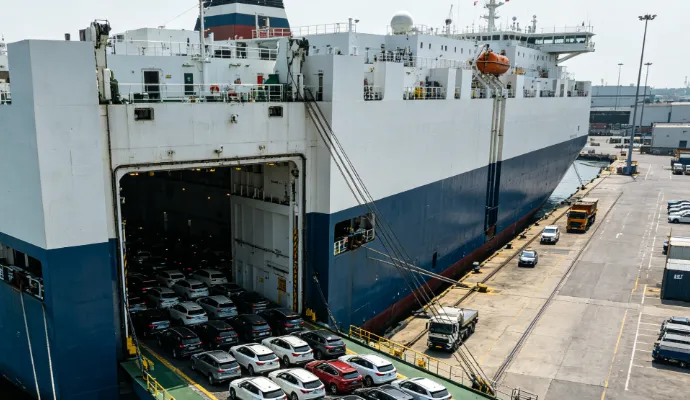
Overview of Car Shipping from China to Nigeria
Shipping a car from China to Nigeria has become increasingly common due to the growing demand for international vehicles and the strategic trade relationship between both countries. Whether you are an importer, an individual buyer, or a business looking to expand your fleet, understanding the car shipping process is essential for minimizing risks and optimizing costs.
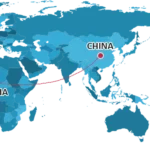
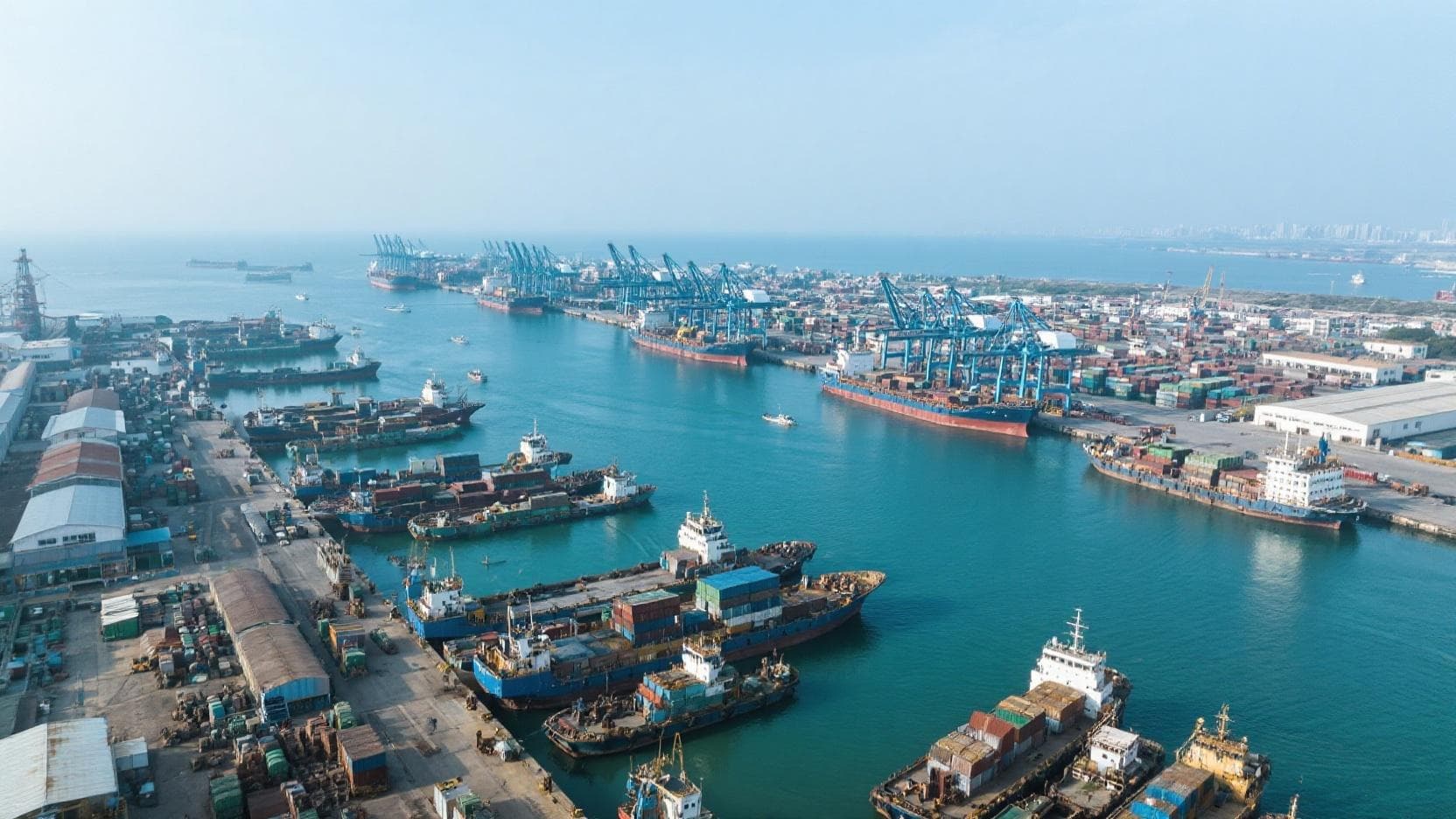
Typically, vehicles are shipped by ocean freight, given the large distance and cost-effectiveness compared to other modes. The most popular routing starts from major Chinese ports such as Shanghai, Shenzhen, Nansha and Guangzhou to Nigerian ports, with Lagos (Apapa, Tin Can Island and PTML) handling the vast majority of units and Onne serving the south-east. The process includes several key steps: obtaining documentation, vehicle inspection and loading, customs clearance, shipping, and delivery at the destination.
Cost at a glance — November 2026
| Cost line | Typical amount (USD) | Notes |
|---|---|---|
| RoRo, one sedan/SUV, South China → Lagos | 1,200 – 3,000 | Per unit, port-to-port; drivable vehicles only |
| 20GP container, one car | 2,900 – 3,900 | Better for non-runners, parts and personal effects |
| 40HQ container, large SUV plus cargo | 3,800 – 5,100 | Two to three cars only with racking |
| Ocean transit | 28 – 40 days | 35 – 48 days on transshipment services |
| Nigerian duty, levies and VAT (used, 2.0–3.9L) | ≈ 43% of CIF | 20% duty + 5% NAC + 7.5% VAT + smaller levies |
| Terminal handling, line release, clearing agent | 400 – 900 | Quoted in naira; varies by terminal and dwell time |
| Landed at the port gate, US$9,000 used SUV | ≈ 15,200 | Before inland delivery and registration |
To make the experience seamless, many shippers choose to work with a reliable international freight forwarder. As a leading logistics provider, Dantful International Logistics offers a comprehensive suite of services—including ocean freight, customs clearance, insurance, door-to-door delivery, and more—to ensure your vehicle arrives safely and compliantly.
Main Factors Influencing the Cost to Ship a Car from China to Nigeria
Shipping costs vary significantly based on several factors. Understanding these variables will help you budget accurately and avoid unexpected expenses.
Vehicle Type, Size, and Weight
The type, dimensions, and weight of your vehicle play a pivotal role in determining shipping costs:
| Vehicle Type | Typical Examples | Impact on Cost |
|---|---|---|
| Sedan/Compact | Toyota Corolla, VW Golf | Lowest RoRo band; fits a 20GP with room to spare |
| SUV/4×4 | Toyota Prado, Ford Explorer | Mid RoRo band; long-wheelbase units may need a 40HQ |
| Pickup/Truck | Hilux, Ford Ranger, HOWO tipper | Highest RoRo band or flat-rack/breakbulk; commercial vehicles are classified under HS 8704, not 8703 |
| Luxury/High-Value | Mercedes S-Class, premium EV | Higher insurance, usually containerised for security; vehicles valued at US$100,000 and above lose the EV/CNG duty exemption |
- Container shipping rates are based on the container type needed (20GP, 40GP, 40HQ, 45HQ), which have fixed volume capacities (see below).
- RoRo (Roll-on/Roll-off) is charged per unit in a published size band — not per cubic meter — so a Corolla and a Land Cruiser pay different flat rates on the same sailing.
Industry Standard Container Capacities:
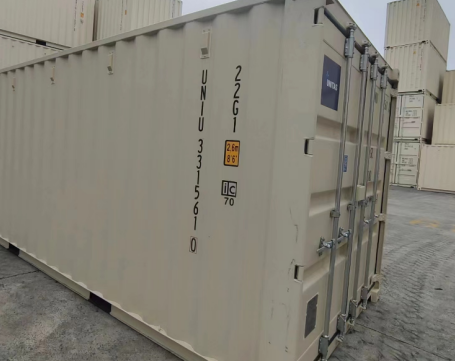
- 20GP Container: ~28 CBM usable (one sedan, or one car plus parts)
- 40GP Container: ~58 CBM usable
- 40HQ Container: ~68 CBM usable (large SUV plus cargo; 2–3 cars only with racking)
- 45HQ Container: ~78 CBM usable
Oversized or heavy vehicles may require special equipment — flat racks, open tops or breakbulk — increasing handling and shipping costs. Chinese commercials such as tippers, tankers and crane trucks frequently exceed container dimensions and are quoted as breakbulk freight instead.
Distance, Origin and Destination Ports
The physical distance and the specific origin and destination ports considerably impact total shipping costs. Major Chinese ports like Shanghai, Shenzhen and Guangzhou offer frequent sailings and competitive rates, while less common ports may incur additional inland transport charges. In practice, Nansha and Shenzhen carry more West Africa sailings than the smaller river ports, and Apapa versus Tin Can versus Lekki carry different terminal and congestion costs.
Ocean freight to Lagos, November 2026 (port-to-port, ocean only):
| Route | RoRo per car (USD) | 20GP (USD) | 40FT / 40HQ (USD) | Transit (days) |
|---|---|---|---|---|
| Nansha / Shenzhen / Guangzhou → Lagos (Apapa, Tin Can, PTML) | 1,200 – 3,000 | 2,900 – 3,900 | 3,800 – 5,100 | 28 – 40 |
| Shanghai → Lagos (premium direct sailings) | 2,200 – 2,600 | 3,200 – 3,900 | 5,600 – 6,700 | 35 – 45 |
Two things explain the gap between the two rows. Shanghai is a premium direct loading point with fewer West Africa strings, while South China is the loading region most Chinese vehicle exporters actually use, and quotes there include transshipment-heavy services. A general September 2026 benchmark put a standard 40ft into Lagos at about US$3,150–3,850, and one carrier’s all-in direct-service number was quoted near US$6,000 per 40ft — different scopes, same lane. Rates exclude origin handling, destination terminal charges, customs and insurance.
For the container-only version of this lane, including terminal and clearing costs by port, see our guide to container shipping costs from China to Nigeria.
Shipping Season and Market Demand
Shipping costs are heavily influenced by seasonal fluctuations and global trade trends. Peak seasons, such as pre-holiday periods (September–December) or after the Chinese New Year, often see increased demand, leading to limited space and higher rates. Conversely, off-peak periods can result in more competitive pricing. Shippers are advised to plan and book in advance, especially during high-demand windows, to lock in favorable rates.
The last quarter is also when Lagos gets tight. Kuehne+Nagel put the 7-day average vessel waiting time at Apapa at about 4.67 days in the week to 3 November 2026, with queues, landside trucking limits and customs procedures all restricting cargo flow. The Lagos Chamber of Commerce and Industry has separately flagged Q4-to-January as peak clearance season, when truck gridlock at Apapa and Tin Can is at its worst. A car that arrives in December can sit for a fortnight longer than the same car arriving in March.
Current Freight Rates and Fuel Surcharges
Freight rates are dynamic and subject to frequent changes due to:
- Bunker Adjustment Factors (BAF): Fuel price surcharges imposed by carriers, typically 5–12% of the base ocean rate.
- General Rate Increases (GRI): Periodic adjustments based on market conditions.
- Currency Fluctuations: USD/CNY and the naira rate used for duty assessment both change the final bill — Nigerian charges are quoted in naira but assessed on a USD customs value.
Rate snapshot, November 2026:
| Cost Component | Typical Range (USD) |
|---|---|
| Ocean freight, 20GP (South China → Lagos) | 2,900 – 3,900 |
| RoRo, one standard vehicle | 1,200 – 3,000 per unit |
| Origin THC, documentation, export clearance | 250 – 500 per unit / per container |
| Marine insurance | 0.5 – 1.2% of CIF |
| Fuel surcharges (BAF) | 5 – 12% of base rate |
These rates are indicative and should be confirmed with a professional freight forwarder like Dantful International Logistics for the latest and most accurate quotations.
To accurately estimate how much it will cost to ship a car from China to Nigeria, you must consider the vehicle’s specifications, the ports used, prevailing market conditions, and the up-to-date freight rates. Dantful International Logistics stands ready to provide transparent quotations and tailored solutions to suit your individual shipping needs. For a wider view of the corridor, see sea freight from China to Nigeria and our regional page on Shipping From China To Nigeria.
Car Shipping Methods: Ocean Freight, Air Freight, and Roll-on/Roll-off (RoRo)
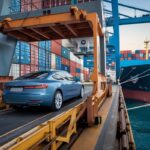
Shipping a car from China to Nigeria can be completed via several methods, each offering different advantages in cost, speed, and security. The three primary modes are Container shipping, Roll-on/Roll-off (RoRo) and, for exceptional cases, air freight.
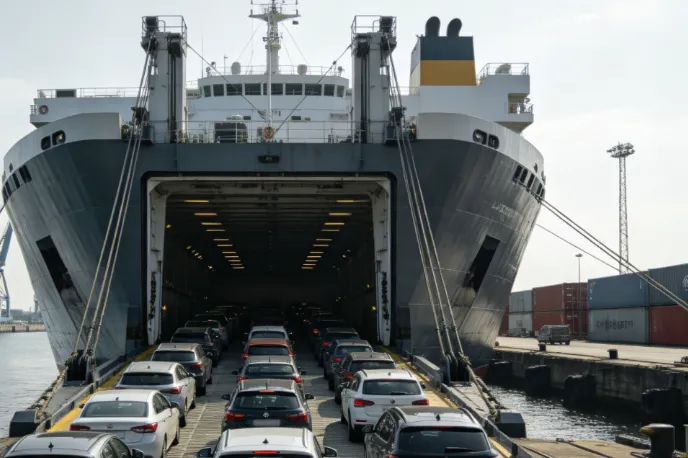
Comparing Container Shipping vs. RoRo Services
| Feature | Container Shipping | RoRo (Roll-on/Roll-off) Shipping |
|---|---|---|
| Loading Method | Car is loaded inside a sealed container (20GP/40GP/40HQ/45HQ) | Car is driven onto the vessel and secured on a deck |
| Security/Protection | High – car is protected from weather, theft, and damage | Moderate – exposed to salt air and deck handling |
| Suitable for | High-value, rare, or new vehicles; also allows shipping of parts or personal effects | Standard, drivable vehicles only |
| Flexibility | Can ship non-operational vehicles and additional cargo | No personal items; vehicle must start, steer and brake |
| Transit Time | Standard 28–40 days from South China to Lagos | 28–40 days, occasionally slower where the vessel calls multiple West African ports |
| Cost | Generally higher than RoRo for a single car | Cheapest option for one operable vehicle |
| Ports | Apapa, Tin Can, PTML, Lekki, Onne | PTML (Tin Can, Lagos) is the main dedicated RoRo terminal |
Container Shipping:
- Utilizes standard containers (20GP ~28 CBM, 40GP ~58 CBM, 40HQ ~68 CBM, 45HQ ~78 CBM).
- Offers maximum protection, suitable for luxury cars, classic vehicles, or when combining vehicles with goods.
- Allows for consolidation, which can reduce per-unit costs when shipping multiple vehicles.
RoRo Shipping:
- The vehicle is driven onto the ship and secured in a designated lane.
- Most cost-effective for standard, drivable cars.
- Does not permit shipping of personal goods inside the car, and non-runners are refused at the terminal.
Air Freight:
- Fastest transit time (as quick as 5–10 days), but cost is extremely high — a full-size car does not fit a freighter’s main-deck profile, so air is realistically limited to prototypes, engines, parts and very high-value classics.
- Typically reserved for urgent shipments, luxury vehicles, or special projects.
For those exploring alternative cargo types or specialized shipments, the topic of fcl autoparts shipping can help you understand container solutions for auto parts and similar freight.
What RoRo Really Costs — and Why It Is Priced Per Unit
RoRo tariffs are quoted per unit in a size band, then adjusted for the vehicle’s length, height and whether it is a high-and-heavy unit. A 4.8m sedan, a 5.4m pickup and a 5.9m Land Cruiser sit in three different bands on the same sailing, and a rooftop rack or snorkel can push a car into the next band. Two practical consequences:
- Declare the real dimensions. Carriers re-measure at the gate; under-declaring gets the unit re-rated and, in a full season, rolled to the next sailing.
- RoRo is not available for every Chinese port pair. Dedicated car carriers call at a limited set of Chinese load ports and at PTML in Lagos, so a Guangdong purchase may need a short feeder or a truck move before it ever reaches the vessel.
Pros and Cons of Each Shipping Method
Container Shipping:
- Pros: Highest security, can ship non-operational vehicles, allows for additional cargo, suitable for valuable or delicate cars.
- Cons: More expensive than RoRo for a single vehicle, longer handling times at ports, and racking is needed for more than one car.
RoRo Shipping:
- Pros: Cost-effective, straightforward process, suitable for large volumes of operational vehicles.
- Cons: Less protection, no cargo inside vehicles, not suitable for non-running cars or high-value vehicles.
Air Freight:
- Pros: Fastest method, best for high urgency, premium security.
- Cons: Extremely costly, limited capacity, not feasible for complete vehicles.
Choosing the Right Method:
Selecting between container shipping and RoRo largely depends on your vehicle’s value, condition, urgency, and personal requirements. For most standard car imports from China to Nigeria, RoRo offers an economical option. However, if you are shipping multiple vehicles, a non-runner, or require added security, container shipping is recommended.
How to Import Trucks from China to Nigeria
Trucks are the second-largest vehicle category on this lane, and they behave differently from cars in three places:
- Classification. Goods vehicles sit under HS 8704, not 8703, so the duty line and the levy base are assessed on the truck’s tariff code rather than the passenger-car schedule.
- Dimensions. A 6×4 tractor unit is roughly 6.8m long and 2.5m wide — it does not fit a 20GP and rarely fits a 40HQ without dismantling. Tippers, tankers and crane trucks are normally quoted as flat rack or breakbulk.
- Drivability. New Chinese trucks (HOWO, Shacman, Foton, JAC) are usually driven on and off, which makes RoRo possible; project trucks and accident units go into containers or on mafi roll-trailers.
A workable default: one pickup or light truck ships in a 40HQ at US$3,800–5,100 with spare parts loaded around it; one heavy tractor or tipper is quoted as breakbulk or flat rack, needs a lifting plan, and must still be LHD and within the age limit. Nigerian buyers sourcing Chinese trucks should confirm the tariff code, the axle weight and the exact dimensions on the invoice before booking — a reclassified unit at Apapa is an expensive correction.
Car Shipping Costs from China to Nigeria
Shipping costs are determined by several transparent factors. Below is a breakdown of the typical expenses involved when shipping a car from China to Nigeria.
Base Freight Charges
The base freight charge is the core cost for transporting your vehicle from the origin port in China (e.g., Shanghai, Nansha, Shenzhen, Guangzhou) to the destination port in Nigeria (most commonly Lagos Tin Can, Apapa or PTML).
Estimated Ocean Freight Rates (November 2026)
| Origin Port (China) | Destination Port (Lagos) | RoRo (USD/car) | 20GP (USD) | 40FT / 40HQ (USD) | Transit Time (Days) |
|---|---|---|---|---|---|
| Nansha | Tin Can / Apapa / PTML | 1,200 – 3,000 | 2,900 – 3,900 | 3,800 – 5,100 | 28 – 40 |
| Shenzhen | Tin Can / Apapa / PTML | 1,300 – 3,000 | 2,950 – 3,950 | 3,850 – 5,150 | 28 – 40 |
| Shanghai | Tin Can / Apapa | 2,200 – 2,600 | 3,200 – 3,900 | 5,600 – 6,700 | 35 – 45 |
Rates are subject to market fluctuations, seasonal demand, and surcharges. Port-to-port figures exclude origin handling, destination terminal charges, duty and clearing. For consolidated or multiple vehicles, consult your freight forwarder for discounted rates.
If you’re seeking a comparison of international container prices and current market trends, review our resource on International Container Shipping Prices.
Port Charges, Customs Duties, and Taxes in Nigeria
Upon arrival at Nigerian ports, several local fees apply:
- Port Handling Charges: fees for unloading, storage and stevedoring, quoted in naira and vary by terminal.
- Customs Duties: assessed on CIF, not on the invoice price you remember paying. For a used passenger car the structure is 20% import duty plus levies, with engine size deciding the extra green tax.
- Value Added Tax (VAT): 7.5%, charged on CIF plus duty and the applicable levies — not on CIF alone.
- Other charges: ETLS (0.5% of CIF), CISS (1% of CIF), a 7% surcharge on the duty, and the 4% FOB charge that Customs is again collecting in late 2026.
The detail that surprises first-time importers: Nigeria changed this stack twice in two years. The NAC levy on used vehicles was cut from 15% to 5% on 1 July 2026 under the 2026 Fiscal Policy Measures, at the same time as a green tax of 2% (2,000–3,999cc) or 4% (4,000cc and above) came in. Any guide still quoting “35% duty” is describing the pre-2026 arithmetic.
Worked example: a US$9,000 used SUV with a 2.4L engine, shipped RoRo
| Item | Calculation basis | Amount (USD) |
|---|---|---|
| FOB vehicle price | Exporter quote | 9,000.00 |
| Ocean freight (RoRo) | South China → Lagos | 1,500.00 |
| Marine insurance | 1% of FOB + freight | 105.00 |
| CIF value | FOB + freight + insurance | 10,605.00 |
| Import duty | 20% of CIF | 2,121.00 |
| NAC levy (used vehicle) | 5% of CIF (cut from 15% on 1 July 2026) | 530.25 |
| Green tax | 2% of CIF (2,000–3,999cc) | 212.10 |
| ETLS | 0.5% of CIF | 53.03 |
| CISS | 1% of CIF | 106.05 |
| Surcharge on duty | 7% of import duty | 148.47 |
| FOB charge | 4% of FOB value | 360.00 |
| VAT | 7.5% of CIF + duty + levies | 1,060.19 |
| Total statutory charges | 4,591.08 | |
| Landed at the port gate | CIF + statutory charges | 15,196.08 |
Note: Customs values come from the NCS VIN Valuation system, not from your supplier invoice, so your assessment can be higher than the numbers above. Always get a pre-shipment duty estimate from a licensed agent.
Insurance and Additional Fees
- Marine Insurance: highly recommended to cover loss or damage in transit. Vehicle cover typically runs 0.5%–1.2% of CIF, depending on the value, the carrier and whether you take all-risk or a narrower institute cargo clause.
- Documentation Fees: bill of lading, export declaration, certificate of origin and paperwork (typically US$100–200).
- Conformity and inspection fees: VehCAP, SONCAP/CCVO and any pre-shipment inspection add cost but are no longer optional for vehicles entering Nigeria.
Door-to-Door vs. Port-to-Port Delivery Pricing
Port-to-Port Service:
- The vehicle is shipped from the departure port in China to the arrival port in Nigeria. The consignee is responsible for customs clearance, inland transport, and delivery from port.
Door-to-Door Service:
- A comprehensive solution where the freight forwarder, such as Dantful International Logistics, handles pickup at the supplier’s location in China, export clearance, ocean shipping, import customs clearance in Nigeria, and final delivery to your address.
| Service Type | What’s Included | Estimated Extra Cost (USD) |
|---|---|---|
| Port-to-Port | Shipping only between main ports | Basic freight cost |
| Door-to-Door | Inland pickup, export clearance, duty and levies, clearing agent, last-mile delivery | 600 – 1,200 on top of freight plus duty |
Advantages of Door-to-Door:
- Convenience and peace of mind, reduced risk of delays, and often better coordination.
- Especially recommended for first-time importers or those unfamiliar with Nigerian customs procedures.
Nigeria Vehicle Import Rules and Duty Calculation in 2026
Four rules decide whether your car can enter Nigeria at all. They are checked at the terminal, and none of them can be fixed after the vessel sails.
The 12-Year Age Limit and the Left-Hand-Drive Rule
- Age. The Nigeria Customs Service import prohibition list still bars used motor vehicles more than 12 years from the year of manufacture (HS 8703.10–8703.90). For a 2026 shipment that means a 2014 model year is the outer edge, and 2015 or newer is the safe zone. Customs reads the VIN build date, not the model year on the advert.
- Steering. Nigeria drives on the right, and only left-hand drive vehicles are accepted for normal registration. Conversions from RHD are not accepted either. Chinese-market cars are LHD from the factory, which is why the lane works.
- Route. Vehicle imports through land borders have been banned since 2017 — cars clear at designated seaports: Apapa, Tin Can Island, PTML, Lekki and Onne.
- Condition. RoRo requires a car that starts, steers and brakes. Non-runners, salvage and accident units must travel in a container.
Note the moving parts: some 2026 commercial sources describe the age limit as scrapped, while the prohibition list and the larger clearing community still apply the 12-year threshold. Plan to the stricter rule — a car seized for age is a total loss, not a delay.
How the Duty Stack Is Calculated (2026 Rates)
| Charge | Rate in 2026 | Calculated on |
|---|---|---|
| Import duty | 20% | CIF value |
| NAC levy (import adjustment tax) | 5% used / 10% new (cut from 15% / 20% on 1 July 2026) | CIF value |
| Green tax | 0% under 2,000cc; 2% at 2,000–3,999cc; 4% at 4,000cc+ | CIF value |
| ETLS levy | 0.5% | CIF value |
| CISS | 1% | CIF value (rate contested) |
| Surcharge | 7% | Import duty only |
| FOB charge | 4% | FOB value, Chapter 99 goods excluded |
| VAT | 7.5% | CIF + duty + NAC + green tax + other charges |
Two live controversies worth knowing before you budget:
- The 4% FOB charge is being collected again. Customs suspended it in 2025, revived it in August 2026, exempted manufacturers and government projects, and is now collecting it alongside the 1% CISS that the 2023 Act was supposed to replace. Manufacturers’ associations are still contesting the double charge. Budget for both and confirm the position on the day your PAAR is raised.
- Valuation beats invoice. The NCS VIN Valuation system assigns a dutiable value from an international database. A cheap invoice does not lower the assessment; it just gets rejected.
Electric, CNG and LPG Vehicles: The Exemption Route
Under the Presidential Gas for Growth Initiative, 100% electric vehicles, extended-range EVs with at least 200km of electric-only range, and 100% CNG or LPG vehicles are exempt from both import duty and VAT. The exemption is not automatic: the importer must obtain an Import Duty Exemption Certificate (IDEC) from the Federal Ministry of Finance, and the vehicles must be factory-built to the relevant fuel type.
Excluded from the scheme: hybrids (petrol-electric and diesel-electric), dual-fuel conversions, vehicles converted overseas without factory CNG capability, spare parts, and any vehicle — EV included — valued at US$100,000 or more. Pure EVs and mass-transit buses are also outside the green tax. For a Chinese EV, that combination is the single largest landed-cost lever on this lane: the same US$15,000 car that pays roughly 43% of CIF in duty and levies as a petrol unit can clear with duty and VAT at zero, leaving freight, the 4% FOB charge and terminal costs. Budget the IDEC process time into your schedule — it is not an arrival-day fix. For the customs mechanics, see our import procedure from China to Nigeria.
Step-by-Step Guide to Shipping a Car from China to Nigeria
Preparing Required Documentation
The documentation process is crucial for smooth vehicle shipping from China to Nigeria. Ensure you have the following documents prepared:
| Document Name | Issuing Party | Purpose/Requirement |
|---|---|---|
| Form M | Nigerian bank / Form M portal | Mandatory import declaration, opened before shipment and validated against the proforma invoice |
| Bill of Lading (B/L) | Freight forwarder / shipping line | Proof of shipment and title; required for release at destination |
| Commercial Invoice | Seller/Exporter | Transaction value, used as the starting point for customs valuation |
| Packing List | Seller/Exporter | Vehicle details: VIN, make, model, year, weight, dimensions |
| Export Licence & After-Sales Confirmation | Chinese commerce authorities / manufacturer | Used vehicles need an export licence; vehicles registered less than 180 days before export also need the manufacturer’s after-sales service confirmation |
| Vehicle Title/Proof of Ownership | Car owner/exporter | Confirms legal ownership and build year |
| VehCAP Certificate | SON / NADDC-accredited inspector | Pre-shipment vehicle conformity assessment, required before Form M approval and customs valuation |
| SONCAP / CCVO | Standards Organisation of Nigeria | Conformity certificate for automobiles; used vehicles are not exempt |
| PAAR | Nigeria Customs Service | Pre-Arrival Assessment Report — the duty assessment your agent clears against |
| Insurance Certificate | Insurance company/forwarder | Confirms cargo insurance coverage during transit |
Tip: Work closely with a professional freight forwarder like Dantful International Logistics to ensure all documents are verified and compliant with the latest Chinese and Nigerian regulations.
Vehicle Inspection, Packing, and Loading Procedures
A thorough inspection and professional handling are essential for protecting your investment and ensuring compliance.
1. Vehicle Inspection:
- Conduct a comprehensive pre-shipment inspection. Record the car’s condition with time-stamped photos and a written report.
- Confirm the VIN build date against the 12-year rule before you pay a deposit, not after.
- Ensure the car is clean, with no personal items inside (per shipping regulations).
2. Packing:
- For container shipping, secure the vehicle with wheel chocks, lashings and protective wraps, and rack a second car only with rated equipment.
- For RoRo, the vehicle must be operational as it will be driven on and off the vessel. No personal items allowed inside.
3. Loading Procedures:
- For containerized shipping, vehicles are loaded into 20GP or 40GP/40HQ containers (depending on car size and number of cars).
- Loading happens at an export warehouse or port terminal, supervised by logistics professionals.
- All loading steps are documented with photos or video for your records.
Customs Clearance Process in China and Nigeria
In China:
- Submit the export documents to Chinese Customs at the loading port (e.g., Nansha, Shenzhen, Shanghai).
- Present the used-vehicle export licence. Since 1 January 2026, vehicles registered less than 180 days before export must be accompanied by a manufacturer’s after-sales service confirmation, or no licence is issued — the rule that closed the “new car sold as used” channel.
- Vehicle is released for shipment after clearance.
In Nigeria:
- On arrival at the destination port (commonly Tin Can Island, Apapa or PTML), your agent lodges the Form M, PAAR and VehCAP/SONCAP certificates.
- Customs raises the assessment from the VIN Valuation database rather than the invoice, and issues the duty and levy demand.
- Pay duties, taxes and terminal charges; the terminal then issues delivery order.
- Undergo physical or scanner inspection, then arrange release and delivery — port or door-to-door if pre-arranged.
- Watch free time. Storage and demurrage accrue per day after the free period, and December queues at Apapa are the classic way a cheap freight quote becomes an expensive shipment.
Pro Tip: Customs practice in Nigeria changes faster than the published tariff. Partnering with an experienced forwarder like Dantful International Logistics keeps your shipment compliant and avoids costly delays or penalties.
Tips to Save Money When Shipping a Car from China to Nigeria
How to Choose a Reliable Freight Forwarder
A trustworthy freight forwarder is key to a hassle-free and cost-effective shipping process. Consider the following criteria:
- Experience & Credentials: China-licensed Class-A forwarder status, NVOCC registration, FMC and Jctrans membership — and a track record on the Nigeria lane specifically, like Dantful International Logistics.
- Comprehensive Service Portfolio: sea freight, air freight, insurance, customs clearance, door-to-door, consolidated shipments, OOG and breakbulk services.
- Transparent Pricing: a quote broken down by ocean freight, origin charges, destination charges, duty and agent fees. Avoid “all-in” numbers with no line items.
- Customer Support: responsive, multi-lingual support and photo updates at loading, at sea and at clearance.
- Market Reputation: reviews, certifications and case studies from importers who ship repeatedly.
Consolidating Shipments and Booking in Advance
- Consolidation: if shipping multiple cars or combining vehicles with other cargo, a shared container can cut the per-unit ocean cost sharply.
- Advance Booking: book well before peak export windows (pre-Chinese New Year and the Q4 rush) to hold space and rate.
| Shipping Strategy | Potential Savings | Recommended For |
|---|---|---|
| Consolidation | 10%–30% of ocean freight | Dealers, SMEs, individuals shipping 2+ units |
| Advance Booking | 5%–15% | All shippers |
| EV / CNG route with IDEC | Up to 30–40% of the landed cost | Buyers able to source a factory-built EV or CNG vehicle |
Avoiding Common Pitfalls and Hidden Fees
- Check for Hidden Charges: ask for every cost line — freight, origin THC, destination terminal handling, documentation, insurance, brokerage, duty and levies.
- Understand Port Storage Rules: clearance delays trigger storage and demurrage at Nigerian ports. Have Form M and PAAR ready before the vessel arrives.
- Regulatory Compliance: age, steering and conformity rules are checked at the terminal. A car that fails is seized, not repriced.
- Insurance: always insure the vehicle for the CIF value plus a margin; a 0.5%–1.2% premium is trivial against a total loss.
FAQs
Q1: How much does it cost to ship a car from China to Nigeria in 2026?
A: For one standard sedan or SUV, RoRo ocean freight from South China to Lagos runs US$1,200–3,000, a 20GP container US$2,900–3,900 and a 40HQ US$3,800–5,100 port-to-port. Add Nigerian duty, levies and VAT at roughly 41–43% of CIF, plus US$400–900 for terminal handling and clearing. A US$9,000 used SUV lands at about US$15,200 at the port gate.
Q2: How long does it take to ship a car from China to Nigeria?
A: Ocean transit is 28–40 days from South China and 35–45 days from Shanghai, with 35–48 days on transshipment-heavy services. Add 5–10 days for clearance and delivery at Lagos, more in the Q4 peak.
Q3: Is RoRo or container shipping cheaper?
A: RoRo is cheaper for a single operable car. A container wins when the car does not run, when you ship two or three units, or when you need to include parts and personal effects. For a single non-runner, a 20GP at US$2,900–3,900 is usually still cheaper than a RoRo booking plus separate parts freight.
Q4: What is the import duty on a car in Nigeria in 2026?
A: 20% import duty on CIF, plus a 5% NAC levy for used cars (10% new, cut from 15%/20% on 1 July 2026), a green tax of 0–4% by engine size, 0.5% ETLS, 1% CISS, a 7% surcharge on the duty, the 4% FOB charge and 7.5% VAT on the stacked total. Together that is about 41–43% of CIF for a 2.0–3.9L used car.
Q5: Can I import a right-hand-drive car into Nigeria?
A: No. Only left-hand-drive vehicles are accepted for normal registration, and RHD-to-LHD conversions are not accepted either. Chinese-market cars are LHD from the factory, which is one reason this lane works.
Q6: What is the age limit for used cars imported into Nigeria?
A: The NCS prohibition list bars used vehicles more than 12 years from the year of manufacture — a 2014 model is the outer edge for 2026, and 2015 or newer is safer. Customs works from the VIN build date, so verify it before paying a deposit.
Q7: Can I ship personal belongings inside the car?
A: Not on RoRo — carriers prohibit it and terminal checks enforce it. In a container, a limited quantity is possible if declared on the packing list and invoiced; undeclared goods risk seizure of the whole container.
Q8: Which Nigerian ports accept car imports from China?
A: Apapa, Tin Can Island and PTML in Lagos (PTML is the dedicated RoRo terminal), Lekki Deep Sea Port for containerised units — it has run bonded vehicle services since 2025 — and Onne for Port Harcourt and the south-east. Land-border imports have been banned since 2017.
Q9: Are electric cars duty-free in Nigeria?
A: Pure EVs, EREVs with 200km+ electric range and 100% CNG/LPG vehicles are exempt from import duty and VAT under the Presidential Gas for Growth Initiative, provided the importer holds an IDEC from the Federal Ministry of Finance. Hybrids, overseas conversions, spare parts and vehicles valued at US$100,000 or more remain dutiable.
Q10: What documents do I need to ship a car from China to Nigeria?
A: Form M, bill of lading, commercial invoice, packing list, the Chinese used-vehicle export licence, the VehCAP certificate, SONCAP/CCVO, a PAAR issued by Customs on arrival, and insurance. Missing any one of them holds the unit at the terminal and starts the storage clock.

Young Chiu is a seasoned logistics expert with over 15 years of experience in international freight forwarding and supply chain management. As CEO of Dantful International Logistics, Young is dedicated to providing valuable insights and practical advice to businesses navigating the complexities of global shipping.