Are you sourcing goods from China’s manufacturing heartland and looking for a reliable way to handle shipping from Guangzhou to Kenya? Whether you’re a Nairobi-based importer buying furniture from Foshan, a Mombasa trader sourcing electronics from Huaqiangbei, or an entrepreneur exploring Kenya’s growing e-commerce market, navigating the logistics of international freight from Southern China to East Africa can feel overwhelming — especially with the significant customs regulatory changes Kenya introduced in early 2026.
In this comprehensive guide, we break down everything you need to know about sea freight, air freight, and door-to-door (DDP) shipping from Guangzhou to Kenya in 2026. We cover current costs, transit times, the critical new PVOC/COC compliance requirements, packaging best practices, and practical strategies to avoid costly delays at Mombasa Port. Let’s dive in.
Key Routes & Ports for Guangzhou–Kenya Shipping
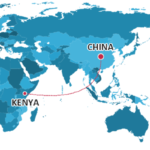
When planning shipping from Guangzhou to Kenya, understanding the physical routes available to you is the first step toward an efficient logistics strategy. For a broader view of all China–Kenya trade lanes, including departures from Shanghai, Shenzhen, and Ningbo, visit our dedicated Shipping From China To Kenya regional page. Guangzhou serves as the maritime gateway of the Pearl River Delta — the world’s largest manufacturing region — offering multiple departure options depending on your cargo type and timeline.
Major Departure Ports in Guangzhou
Nansha Port is the primary deep-water container terminal serving Guangzhou and the preferred choice for most Kenya-bound ocean freight. Located at the mouth of the Pearl River, Nansha handles the majority of Southern China’s Africa trade volume. Its advantages include:
- Fixed weekly sailings to Mombasa on major carriers (Maersk, MSC, CMA CGM, COSCO), with typical cut-off times of ETD minus 3 days
- Excellent heavy-lift and OOG (Out of Gauge) cargo handling — ideal for machinery and industrial equipment destined for Kenya’s infrastructure projects
- Direct rail and barge connections from Guangzhou’s manufacturing districts (Panyu, Huadu, Nansha FTZ)
Huangpu Port, located closer to Guangzhou’s city center, handles primarily smaller vessels and barge traffic. For LCL (Less than Container Load) consolidations originating from Guangzhou’s wholesale markets, Huangpu can sometimes offer faster inland transit and marginally lower trucking costs compared to Nansha.
If your cargo is near the Shenzhen border, you may also consider Yantian or Shekou ports in Shenzhen, which offer comparable transit times and sometimes slightly lower ocean freight on the Kenya lane. A professional freight forwarder can help you compare schedules and choose the optimal departure port based on your cargo origin and delivery deadline.
Destination Ports & Airports in Kenya
| Location | Port/Airport | Role |
|---|---|---|
| Mombasa, Kenya | Port of Mombasa | Kenya’s principal maritime gateway; handles 90%+ of all imports. Connected to Nairobi via Standard Gauge Railway (SGR). |
| Nairobi, Kenya | Jomo Kenyatta International Airport (NBO) | East Africa’s busiest air cargo hub; serves as the entry point for all air freight shipments. |
| Nairobi, Kenya | Inland Container Depot (ICD) | Receives SGR-rail-transferred containers from Mombasa; reduces port demurrage risk. |
| Kisumu, Kenya | Port of Kisumu | Serves Western Kenya and cross-border trade to Uganda/Tanzania via Lake Victoria. |
Direct Routes vs. Transshipment
| Route Type | Transit Time | Cost Profile | Best For |
|---|---|---|---|
| Direct (Nansha to Mombasa) | 22–30 days | Moderate | Time-sensitive bulk cargo, FCL shipments |
| Transshipment via Singapore | 30–40 days | Lower | Budget-flexible general cargo |
| Transshipment via Dubai/Colombo | 35–50 days | Lowest | LCL consolidations with flexible delivery dates |
Direct sailings from Nansha to Mombasa are available 2–3 times per week across major carrier alliances. While direct routes command a premium of roughly 10–15% over transshipment options, the time savings of 7–14 days often justify the additional cost for importers managing inventory cycles or seasonal demand.
Shipping Methods: Sea Freight, Air Freight & Door-to-Door from Guangzhou to Kenya
Choosing the right shipping method is the single most impactful decision you’ll make — it determines your landed cost, delivery timeline, and the level of involvement required from your team. Here’s how the three main options compare for Guangzhou–Kenya freight in 2026.
Sea Freight: FCL & LCL
Sea freight remains the backbone of China–Kenya trade, accounting for over 95% of cargo volume on this corridor. For a complete overview of ocean shipping options on this lane, see our guide to Sea Freight From China to Kenya. Two service types are available:
FCL (Full Container Load) — Your goods occupy a dedicated container:
- 20ft container (TEU): Holds approximately 33 CBM / 28,000 kg. Break-even recommendation: use FCL if your shipment exceeds 15 CBM.
- 40ft container (FEU): Holds approximately 67 CBM / 30,480 kg. Break-even recommendation: use FCL if your shipment exceeds 30 CBM. Note that a 40ft container typically costs only 60–80% more than a 20ft, making it substantially more cost-effective per cubic meter.
- 40ft High Cube (HQ): Adds approximately 30 cm of extra height, ideal for bulky but lightweight goods like furniture and insulation materials.
FCL is the preferred choice for construction materials, machinery, furniture, textiles, auto parts, and electronics — all common exports from Guangzhou to Kenya.
LCL (Less than Container Load) — Your goods share container space with other shippers:
- Recommended for shipments between 2–15 CBM
- Cost range: $140–$180 per CBM (Guangzhou to Mombasa, June 2026)
- Expect 5–10 days longer transit than FCL due to consolidation/deconsolidation at both ends
- Popular among Guangzhou wholesale market buyers (Baima Garment, Zhongda Fabric, Huadu Leather) shipping smaller, regular orders to Kenyan retailers
Dantful Insights: Many first-time importers default to LCL because their initial order is small. But if you’re shipping 12–14 CBM, ask your forwarder to run both LCL and 20ft FCL quotes. We’ve frequently seen cases where a 20ft FCL costs only $150–$300 more than LCL at 14 CBM — and you get the entire container’s remaining capacity for future shipments.
Air Freight: Express vs. Standard
Air freight from Guangzhou Baiyun International Airport (CAN) to Nairobi (NBO) is the go-to choice for urgent, high-value, or perishable cargo:
| Service | Transit Time | Best For |
|---|---|---|
| Express Air | 3–5 days door-to-door | Samples, urgent spare parts, medical supplies |
| Standard Air | 5–8 days door-to-door | High-value electronics, seasonal fashion, perishables |
| Consolidated Air | 7–10 days door-to-door | Budget-conscious air shipments; cargo consolidated with others on same route |
Direct CANtoNBO flights operate multiple times weekly, with layover options via Dubai (DXB) or Doha (DOH) offering additional schedule flexibility at slightly lower rates.
Door-to-Door (DDP) Shipping — The All-Inclusive Option
DDP (Delivered Duty Paid) is increasingly popular among Kenyan importers who want a single, predictable landed cost without managing multiple service providers. For a complete walkthrough of the door-to-door process on this route, see our guide on door to door shipping from China to Kenya. Under this Incoterm, your freight forwarder handles every step:
Guangzhou supplier pickup to China export customs clearance to Ocean/Air freight to Kenya import customs clearance to KRA duty & VAT payment to Last-mile delivery to your door in Nairobi, Mombasa, or Kisumu
| Incoterm | What the Seller/Forwarder Covers | Best For |
|---|---|---|
| EXW Guangzhou | Seller makes goods available at factory | Experienced importers with their own logistics chain |
| FOB Guangzhou | Delivery to Guangzhou port + China export clearance | Buyers who have an existing freight forwarder or customs broker in Kenya |
| CIF Mombasa | Ocean freight + insurance to Mombasa | Importers comfortable handling their own Kenya customs and inland delivery |
| DDP Kenya | Everything — pickup through duty-paid delivery | First-time importers, SMEs without a Kenya customs broker, Amazon/e-commerce sellers who need predictable total cost |
DDP is particularly valuable for businesses that:
- Don’t have a registered importer license in Kenya (your forwarder uses their own)
- Want a single invoice with no surprise charges at destination
- Need clear landed cost visibility for pricing and margin calculations
- Are shipping to multiple addresses across Kenya
2026 Shipping Costs from Guangzhou to Kenya: Complete Breakdown (Q2/Q3 Update)
Understanding what you’ll actually pay is critical for budgeting and supplier negotiations. For a deeper dive into detailed per-container pricing, check our container shipping costs from china to Kenya guide. Below are the latest reference rates based on actual bookings and market data as of June 2026.
Sea Freight FCL Costs (by Origin Port)
| Origin Port (China) | 20ft GP (USD) | 40ft GP/HQ (USD) | Transit (Days) | Best For |
|---|---|---|---|---|
| Guangzhou (Huangpu) | $1,850 – $2,300 | $2,200 – $3,100 | 25–35 | LCL consolidations from city-center suppliers |
| Guangzhou (Nansha) | $2,200 – $2,800 | $3,000 – $3,900 | 23–33 | FCL shipments; direct Africa line services |
| Shenzhen (Yantian/Shekou) | $1,700 – $2,200 | $2,800 – $3,500 | 22–32 | Electronics; southern Guangdong factories |
| Shanghai | $1,750 – $2,300 | $3,100 – $4,050 | 28–38 | Heavy machinery; Yangtze River Delta cargo |
Rates are port-to-port (ocean freight only) and reflect market conditions as of June 2026. Spot rates fluctuate weekly — contact us for a live quotation. CMA CGM applied Peak Season Surcharges (PSS) of $100–$300 per 20ft and $500–$900 per 40ft on Asia–East Africa lanes during the March–May 2026 period; similar adjustments may return during the late-summer peak.
LCL Sea Freight Costs (Guangzhou to Mombasa)
| Volume | Estimated Cost (USD) | Notes |
|---|---|---|
| 1–3 CBM | $180 – $250 / CBM | Higher per-unit rate for very small volumes |
| 3–10 CBM | $150 – $180 / CBM | Standard LCL rate tier |
| 10–15 CBM | $140 – $160 / CBM | Volume discount tier; consider FCL crossover |
| Minimum charge | 1 CBM | Applies even for shipments under 1 CBM |
Air Freight Costs (Guangzhou CAN to Nairobi NBO)
| Service Type | Cost (USD/KG) | Transit | Best For |
|---|---|---|---|
| Express Air Freight | $5.50 – $8.50 | 3–5 days | Samples, urgent orders, time-critical parts |
| Standard Air Freight | $3.50 – $5.50 | 5–8 days | Regular commercial air cargo |
| Consolidated Air Freight | $2.80 – $4.00 | 7–10 days | Cost-optimized air shipments |
DDP Door-to-Door All-Inclusive Costs
| Mode | Cost (All-Inclusive) | Includes |
|---|---|---|
| Sea DDP | $350 – $450 / CBM | Pickup + export clearance + ocean freight + Kenya customs + KRA duty/VAT + last-mile delivery |
| Air DDP | $8 – $11 / KG | Pickup + export clearance + air freight + Kenya customs + KRA duty/VAT + last-mile delivery |
DDP rates vary based on the HS code, duty rate, and final delivery address in Kenya. Rates above are indicative reference ranges based on our June 2026 bookings. Ocean freight spot rates can fluctuate weekly due to carrier GRI (General Rate Increases), PSS (Peak Season Surcharges), and bunker fuel adjustments. We always recommend requesting a live quotation before finalizing your procurement budget. Contact Dantful with your cargo details for a precise, obligation-free quotation.
Hidden Fees Checklist: What Else to Budget For
Even with “all-in” quotes, it pays to understand every potential charge. Here’s a comprehensive checklist of fees that can inflate your total cost if not accounted for upfront:
| Fee Type | Estimated Range | When It Applies |
|---|---|---|
| BAF (Bunker Adjustment Factor) | $150 – $400 / container | Always included in ocean freight (varies quarterly) |
| THC (Terminal Handling Charge) | $200 – $350 / container | Loading/unloading at both origin and destination ports |
| Documentation Fee | $50 – $150 / shipment | Bill of lading issuance, certificate processing |
| Customs Brokerage Fee | $150 – $400 / shipment | Kenya-side customs clearance service |
| PVOC / COC Certification | $300 – $800 / shipment | Required for most regulated goods (see Section 6) |
| IDF (Import Declaration Form) Fee | 2.25% of CIF value | All commercial imports to Kenya |
| Railway Development Levy (RDL) | 2% of CIF value | All imports arriving via Mombasa |
| Demurrage (Port Storage) | $20 – $80 / day (after free days) | If containers not picked up within free period (typically 7–14 days at Mombasa) |
| Detention | $30 – $100 / day (after free days) | If containers not returned to carrier within allowed time |
| Import Duty | 0% – 35% of CIF value | Per EAC Common External Tariff (CET) 2026 |
| VAT | 16% of (CIF + Duty) | All commercial imports |
How to Estimate Your Total Landed Cost
Here’s a simplified formula to calculate your all-in cost for a Kenya-bound shipment:
Landed Cost = FOB Value + Ocean Freight + Insurance + Import Duty + VAT + Clearance Fees + Inland DeliveryExample calculation — Shipping a 20ft container of furniture from Guangzhou to Nairobi (Sea DDP):
| Cost Component | Amount (USD) |
|---|---|
| FOB value of goods | $20,000 |
| Ocean freight (Nansha to Mombasa) | $2,500 |
| Insurance (0.3% of FOB) | $60 |
| IDF fee (2.25%) | $450 |
| RDL (2%) | $400 |
| Import duty (furniture: 25%) | $5,000 |
| VAT (16% of CIF + Duty) | $4,490 |
| Clearance, PVOC, documentation | $800 |
| SGR rail + Nairobi delivery | $600 |
| Total Landed Cost | $34,300 |
Dantful Insights: “The IDF fee and Railway Development Levy are two charges that catch many first-time Kenya importers by surprise. Combined, they add 4.25% to your CIF value before duty and VAT are even calculated. We always include them in our DDP quotations so there are zero surprises at destination.”
Transit Times: How Long Does Shipping Take from Guangzhou to Kenya?
Timeline planning is critical for inventory management, seasonal promotions, and project deadlines. For a focused breakdown of transit durations, see our how long is freight from china to Kenya guide. Here’s what you can realistically expect on the Guangzhou–Kenya corridor in 2026.
Sea Freight Transit Times
| Route | Direct Sailing | With Transshipment |
|---|---|---|
| Nansha to Mombasa | 22–30 days | 35–45 days |
| Huangpu to Mombasa | 24–32 days | 35–50 days |
| Shenzhen to Mombasa | 22–30 days | 32–42 days |
Key factors that affect sea transit time:
- Carrier schedule: Direct services operate 2–3 times per week; missing a cut-off means waiting 3–5 days for the next sailing
- Season: Q3 (July–September) typically sees tighter capacity and potential schedule delays due to peak season congestion
- Mombasa Port throughput: While Mombasa’s average container dwell time has improved to 3–5 days (down from 8–10 days in previous years), unexpected surges can still cause 2–3 day delays
Air Freight Delivery Times
| Service | Transit Time (Total Door-to-Door) | Notes |
|---|---|---|
| Direct flights (CAN to NBO) | 5–8 days | Fastest; includes pickup, customs both ends, delivery |
| Via Dubai/Doha layover | 8–14 days | More frequent departures; slightly lower cost |
| Consolidated air | 10–15 days | Budget option; wait for consolidation at origin |
DDP Door-to-Door Total Timeline
| DDP Mode | Total Time (Pickup to Final Delivery) | Breakdown |
|---|---|---|
| Sea DDP | 28–38 days | Pickup (1–2d) + Export clearance (2–3d) + Ocean transit (23–30d) + Kenya clearance (3–5d) + Inland delivery (1–3d) |
| Air DDP | 5–10 days | Pickup (1d) + Export clearance (1–2d) + Air transit (1–2d) + Kenya clearance (1–2d) + Inland delivery (1d) |
A practical tip: if your goods are in high demand and you need them on shelves quickly, consider a split shipment strategy — send 20–30% of your order via air freight (arrives in 5–8 days) to start selling immediately, while the remaining 70–80% comes by sea (arrives in 4–5 weeks) at a fraction of the cost.
Kenya Customs Clearance & PVOC/COC Compliance (Critical 2026 Update)
This is the most important section of this guide — especially in 2026. Kenya’s import compliance regime underwent a major overhaul in February 2026, and failure to understand the new requirements is the single biggest cause of shipment delays, penalties, and unexpected costs on the Guangzhou–Kenya lane. For a step-by-step import walkthrough, refer to our import procedure from china to Kenya guide. We also offer professional Customs Clearance services to handle every aspect of Kenya-side documentation on your behalf.
What Changed in February 2026? The KEBS PVOC Contract Restructure
On February 8, 2026, the Kenya Bureau of Standards (KEBS) — the statutory body responsible for Kenya’s quality standards under the Standards Act (Cap 496) — allowed all existing PVOC (Pre-Export Verification of Conformity) service provider contracts to expire. This transition was officially gazetted and communicated through KEBS public notices to all importing stakeholders. New contracts were awarded on a zonal basis:
| Zone | Countries Covered | Appointed Inspection Body |
|---|---|---|
| Zone 1 | Mainland China, Taiwan, Hong Kong, Mongolia | Cotecna & Intertek |
| Zones 2–8 | India, Japan, Korea, Middle East, Americas, CIS, Southeast Asia | SGS |
For anyone shipping from China (including Guangzhou), this means: your PVOC applications now go exclusively through Cotecna or Intertek — not through the previous providers you may have used before February 2026.
Mandatory COC from March 1, 2026
Effective March 1, 2026, all regulated products entering Kenya must be accompanied by a valid Certificate of Conformity (COC) issued by the authorized inspection body. There are no exceptions or grace periods — this is a hard requirement enforced at Mombasa Port and Nairobi Airport.
Consequences of Non-Compliance
Shipping without a valid COC triggers severe penalties:
| Scenario | Penalty |
|---|---|
| Shipment arrives without COC | Destination Inspection Fee = 5% of approved customs value (Legal Notice No. 78 of 2020) |
| Country without an appointed body | Destination inspection fee = 0.6% of customs value (min $300 / max $3,500) |
| Additional risks | Container detention & demurrage charges, potential rejection/destruction of goods, importer blacklisting by KRA |
On a $30,000 shipment, a missing COC could cost you $1,500 in inspection penalties alone, plus potentially thousands more in port storage and demurrage while your goods are held.
The Three PVOC Certification Routes
| Method | Process | Validity | Best For |
|---|---|---|---|
| Route A (Per-Shipment) | Submit documents + undergo physical inspection before each shipment | Single use | One-off or infrequent shippers |
| Route B (SOR — Statement of Registration) | Product registration with KEBS | 1 year, renewable | Exporters shipping the same products regularly |
| Route C (SOL — Statement of License) | Full product licensing | 3 years | Manufacturers with ISO 9001 certification exporting large volumes |
Most Guangzhou-based exporters and Kenya importers will use Route A for their first few shipments until they establish a regular trade pattern.
Step-by-Step PVOC/COC Process (Route A)
- Kenyan importer applies for IDF (Import Declaration Form) via the KRA SIMBA online system. The exporter cannot apply for this — it must be initiated by the Kenyan buyer.
- Exporter (or their freight forwarder) submits RFC package to Cotecna or Intertek, including:
- Completed RFC (Request for Certification) form
- IDF number and copy
- Product test report from an ISO/IEC 17025-accredited laboratory, tested to Kenya Standards (KS) or equivalent international standards (ISO, IEC, EN)
- Commercial invoice and packing list
- Product description, specifications, and photos
- Document review by Cotecna/Intertek (typically 3–5 working days)
- Physical pre-shipment inspection — inspector visits the factory/warehouse in Guangzhou to verify:
- Products match the submitted descriptions and test reports
- Packaging and labeling meet Kenyan requirements
- Quantity and specifications align with the invoice
- COC issued — typically within 5–10 working days after successful inspection (but budget 12–15 working days during peak periods with the new providers in 2026)
Dantful Insights — PVOC Battle-Tested Process: “Since the Cotecna/Intertek transition began, our Guangzhou compliance team has processed over 40 PVOC applications for Kenya-bound shipments. The biggest bottleneck we’re seeing is incomplete or outdated product test reports — many Chinese factories have test reports based on EU or US standards, but KEBS requires testing to Kenya Standards (KS) or recognized equivalents. We now pre-audit every client’s test report before submitting to Cotecna/Intertek, which has reduced our rejection rate to near zero. If you’re unsure about your test report compliance, reach out — we’ll review it at no cost.”
Essential Import Documentation Checklist
| Document | Prepared By | Purpose |
|---|---|---|
| Commercial Invoice | Exporter | Details goods, quantities, unit prices, total value, and Incoterm |
| Packing List | Exporter | Specifies dimensions, weight, and packaging type for each item |
| Bill of Lading (B/L) | Carrier / Freight Forwarder | Contract of carriage for sea freight; serves as cargo receipt |
| Air Waybill (AWB) | Carrier / Freight Forwarder | Contract of carriage for air freight |
| Certificate of Conformity (COC) | Cotecna / Intertek | MANDATORY since March 2026 — certifies goods meet Kenyan standards |
| Import Declaration Form (IDF) | Kenyan Importer | Pre-arrival customs declaration filed via KRA SIMBA |
| Certificate of Origin | Exporter / CCPIT | Required for any preferential tariff claims under trade agreements |
| Insurance Certificate | Freight Forwarder / Insurer | Strongly recommended — Kenya customs may require proof of insurance |
| Customs Entry (Form C52) | Licensed Clearing Agent | Electronic customs declaration lodged upon arrival |
Kenya Import Duty & VAT Structure (EAC CET 2026)
Kenya applies the East African Community Common External Tariff (EAC CET) , which categorizes imports into four duty bands. The Kenya Revenue Authority (KRA) enforces these rates through its SIMBA customs management system and regularly publishes updated tariff schedules on its official portal (kra.go.ke):
| Product Category | Duty Rate | Examples Relevant to Guangzhou Exports |
|---|---|---|
| Raw materials & capital goods | 0% | Industrial machinery, manufacturing equipment |
| Intermediate goods | 10% | Electronic components, industrial chemicals, hardware parts |
| Finished goods (general) | 25% | Most consumer products: electronics, furniture, home goods |
| Sensitive / protected items | 35% | Textiles & apparel, iron & steel products, certain agricultural products |
| VAT (all imports) | 16% | Applied to (CIF Value + Import Duty) |
Prohibited imports include counterfeit goods, certain single-use plastics, and unmarked GMO food products. Restricted imports (requiring additional permits) include pharmaceuticals (Pharmacy and Poisons Board), food products (KEBS sanitation certification), chemicals, used electronics, and firearms.
Packaging & Labeling Requirements for Kenya-Bound Shipments
Proper packaging and labeling aren’t just about protecting your goods — they’re a regulatory requirement for Kenya customs clearance. Getting this wrong can result in COC rejection during PVOC inspection, or goods being held at Mombasa for re-labeling at your expense. We also strongly recommend securing cargo insurance for all Kenya-bound shipments — even a single damaged container can erase months of profit margins.
Export Packaging Best Practices for the Guangzhou–Mombasa Route
The journey from Guangzhou to Kenya involves ocean transit (high humidity), port handling (multiple lifts), and potentially SGR rail transit (vibration) — your packaging needs to withstand all three:
- Moisture protection is non-negotiable: Mombasa is a tropical port with year-round high humidity. Use moisture-resistant corrugated boxes, vapor-barrier bags for sensitive items, and desiccant packs in every carton. Electronics and textiles are particularly vulnerable.
- ISPM-15 compliant pallets: All solid wood packaging materials (pallets, crates, dunnage) must be heat-treated or fumigated per the International Standards for Phytosanitary Measures No. 15 (ISPM-15) , as adopted by the International Plant Protection Convention (IPPC) and enforced by Kenyan customs. Non-compliant pallets will be rejected at the port of entry.
- Weight distribution: For containerized cargo, distribute weight evenly across the container floor. Heavy items on bottom, lighter cartons on top. Improper weight distribution can cause container handling issues at port.
- Secure sealing: Use heavy-duty packing tape and strapping. Cargo shifts during the 25+ day ocean voyage are common if boxes aren’t properly sealed.
- Fragile items: Double-box with cushioning material. Mark clearly with “FRAGILE” and “THIS SIDE UP” labels.
Kenyan Labeling Standards — KEBS Requirements
All consumer goods imported into Kenya must carry labels that comply with KEBS standards:
| Requirement | Details |
|---|---|
| Language | English or Swahili (English is the standard for imported goods) |
| Product name & description | Clear, accurate product identification |
| Country of origin | “Made in China” must be clearly indicated |
| Manufacturer/importer details | Name and physical address of manufacturer or Kenyan importer |
| Ingredients / materials | Full list for food, cosmetics, and textile products |
| Net weight / volume | In metric units (kg, g, L, mL) |
| Expiry / best-before date | Mandatory for food, beverages, cosmetics, and pharmaceuticals (format: DD/MM/YYYY) |
| Safety warnings | Hazard symbols and precautionary statements for chemicals, electronics, etc. |
| Electrical specifications | Voltage, frequency, and power rating for all electronic products |
Critical PVOC note: The product labels on your actual goods must match exactly what’s described in your test report and PVOC application. If your test report says “100% cotton” but your labels say “cotton-polyester blend,” your COC will be rejected during inspection. This sounds obvious, but it’s one of the most common causes of PVOC failure we see in practice.
FAQs
1. How long does sea freight take from Guangzhou to Mombasa, Kenya?
Direct sailings from Nansha Port to Mombasa take 22–30 days port-to-port. With transshipment (via Singapore or Dubai), expect 30–50 days. Door-to-door sea DDP (including pickup, customs, and final delivery) typically takes 28–38 days total.
2. What is the cheapest way to ship from Guangzhou to Kenya?
For shipments over 15 CBM, FCL sea freight (20ft container) is the most cost-effective option at approximately $1,850–$2,800 for the ocean leg. For smaller volumes, LCL sea freight at $140–$180/CBM offers the lowest entry cost. If you want all-inclusive, predictable pricing, Sea DDP starts at around $350/CBM including all duties, taxes, and delivery. Many importers also compare options with a cheapest shipping company from china to Kenya before deciding.
3. Do I need a PVOC/COC certificate to ship goods from China to Kenya?
Yes — it is now mandatory (since March 1, 2026). All regulated products shipped from China to Kenya must be accompanied by a valid Certificate of Conformity (COC) issued by Cotecna or Intertek (the appointed inspection bodies for China Zone 1 under the new KEBS PVOC programme). Shipping without a valid COC will result in a destination inspection penalty of 5% of customs value, plus detention, demurrage, and potential rejection of goods.
4. How much does it cost to ship a 20ft container from Guangzhou to Kenya in 2026?
Port-to-port ocean freight for a 20ft container from Guangzhou (Nansha) to Mombasa ranges from $2,200 to $2,800 (June 2026 reference). The total landed cost — including freight, insurance, IDF, RDL, import duty (varies by product), VAT (16%), clearance, and inland delivery — typically falls between $6,000 and $12,000 depending on cargo value and applicable duty rate.
5. What documents are required for importing from China to Kenya?
The essential documents are: (1) Commercial Invoice, (2) Packing List, (3) Bill of Lading (sea) or Air Waybill (air), (4) Certificate of Conformity (COC) from Cotecna/Intertek, (5) Import Declaration Form (IDF) obtained by the Kenyan importer, (6) Certificate of Origin, (7) Insurance Certificate, and (8) Customs Entry (Form C52) filed by a KRA-licensed clearing agent.
6. Can I get door-to-door delivery from Guangzhou to Nairobi or Mombasa?
Absolutely. Dantful International Logistics provides Sea DDP and Air DDP door-to-door services covering the complete process: supplier pickup in Guangzhou, China export customs clearance, ocean or air freight, Kenya import customs clearance, KRA duty and VAT payment, and final delivery to your address in Nairobi, Mombasa, Kisumu, or any other Kenyan city. You receive a single all-inclusive quote and one point of contact throughout.
7. How is import duty calculated for goods entering Kenya?
Import Duty = CIF Value × Duty Rate (0%–35% depending on product category per the EAC Common External Tariff 2026). Then, VAT = 16% × (CIF Value + Import Duty). Additionally, the IDF fee (2.25% of CIF) and Railway Development Levy (2% of CIF) apply to all commercial imports. Your freight forwarder or clearing agent can provide an exact duty estimate based on your product’s HS code.
8. What goods are prohibited or restricted for import into Kenya?
Prohibited: counterfeit products, certain single-use plastic bags, unmarked genetically modified foods, and goods infringing on Kenyan intellectual property rights. Restricted (require additional permits): pharmaceuticals (Pharmacy and Poisons Board approval), food products (KEBS certification), chemicals, used electronics, firearms, and certain agricultural products. Always verify your product’s status with your freight forwarder before shipping.
9. Should I choose FOB or DDP when shipping from Guangzhou to Kenya?
It depends on your experience and setup. Choose FOB if you already have a trusted freight forwarder or a KRA-licensed customs broker in Kenya, and you’re comfortable managing the destination-side process. Choose DDP if you’re a first-time importer, don’t have a Kenyan import license, want a single predictable landed cost, or prefer to have one provider handle everything from Guangzhou pickup to your door. Many of our clients start with DDP and transition to FOB once they establish their own Kenya-side operations.
10. How can I track my shipment from Guangzhou to Kenya?
Dantful provides real-time shipment tracking with daily status updates and operational photos at key milestones (cargo pickup, warehouse loading, container sealing, vessel departure, port arrival, customs clearance, and final delivery). Our 24/7 online tracking platform and dedicated account managers ensure you always know exactly where your cargo is.
Why Dantful Is Your Best Freight Forwarder for Guangzhou to Kenya Shipping
After covering the routes, costs, customs, and challenges of the Guangzhou–Kenya trade lane, one thing should be clear: the right freight forwarder makes all the difference. As a leading freight forwarder from china to Kenya, here’s why importers across Kenya choose Dantful International Logistics for their China–Kenya shipments.
Guangzhou-Based Operations, Deep Local Expertise
Unlike generic international forwarders, Dantful has a dedicated operations team physically based in Guangzhou, providing:
- Supplier pickup across the Pearl River Delta — Guangzhou, Foshan, Dongguan, Zhongshan, Shenzhen, Huizhou — with free collection for qualifying shipments
- Intimate knowledge of Guangzhou’s export ecosystem — from Nansha and Huangpu port cut-off schedules to the specific packaging requirements of Baima Garment Wholesale Market, Zhongda Fabric District, and Huadu Leather City
- Chinese + English + Cantonese bilingual operations — seamless communication with your Guangzhou suppliers
Kenya-Side Advantage That Competitors Can’t Match
- Licensed KRA clearing agents at Mombasa Port and Nairobi Airport — no third-party handoffs
- Dedicated PVOC/COC compliance team that manages the entire Cotecna/Intertek application process on your behalf, from test report pre-audit through to COC issuance
- SGR railway inland transport partnerships — faster, more reliable Mombasa-to-Nairobi container transfers at competitive rates
- Local delivery network covering Nairobi, Mombasa, Kisumu, Nakuru, Eldoret, and beyond
Globally Recognized Credentials
Dantful International Logistics, established in 2008 and headquartered in Shenzhen, China, is:
- A Class-A international freight forwarder licensed by China’s Ministry of Commerce
- An NVOCC (Non-Vessel Operating Common Carrier) certified by China’s Ministry of Transport
- A member of the U.S. Federal Maritime Commission (FMC) and Jctrans
- Backed by 15+ years of industry experience with a reliable agent network spanning 200+ countries
- Powered by 50 operations specialists and 50+ customer service professionals providing 24/7 support
What You Get When You Ship with Dantful
| Capability | Your Benefit |
|---|---|
| Direct carrier contracts | Competitive rates on Guangzhou–Mombasa lane that smaller forwarders can’t access |
| End-to-end service | One provider for EXW, FOB, CIF, or DDP — you choose the level of service you need |
| Real-time tracking | Daily cargo status updates + operational photos at every key milestone |
| PVOC/COC management | Complete Cotecna/Intertek application handling — no compliance headaches |
| Cargo insurance | Comprehensive coverage options to protect your investment from origin to destination |
| No hidden fees | Transparent quotations with all charges itemized upfront |
Take the Next Step
Whether you’re shipping your first LCL pallet from Guangzhou’s wholesale markets or managing regular FCL container loads of machinery and building materials for Kenya’s growing economy, Dantful has the expertise, infrastructure, and local presence to make every shipment smooth and predictable.
Ready to get started? Contact our Guangzhou–Kenya specialist team today for a free, no-obligation shipping quote. Tell us what you’re shipping, where it’s going, and when you need it there — we’ll handle the rest.

Young Chiu is a seasoned logistics expert with over 15 years of experience in international freight forwarding and supply chain management. As CEO of Dantful International Logistics, Young is dedicated to providing valuable insights and practical advice to businesses navigating the complexities of global shipping.