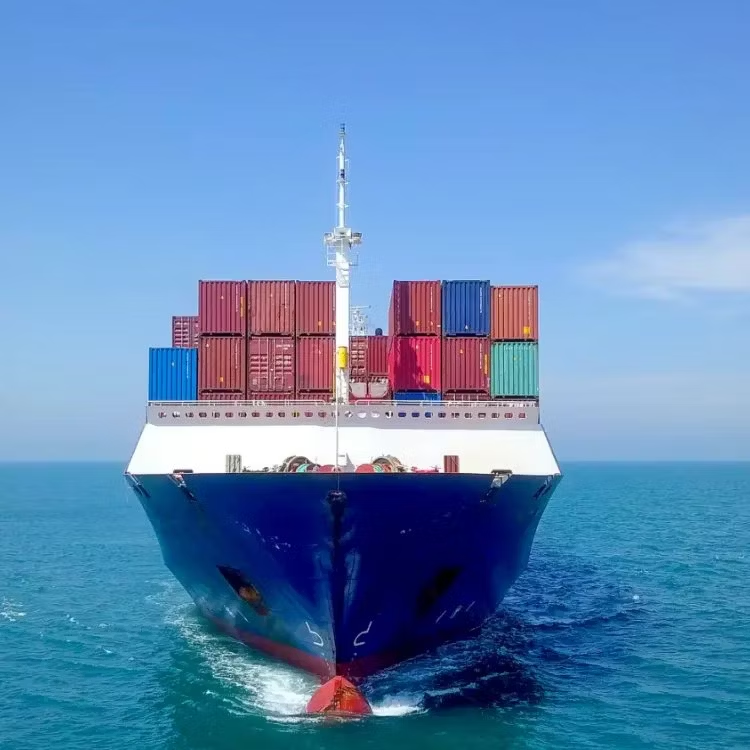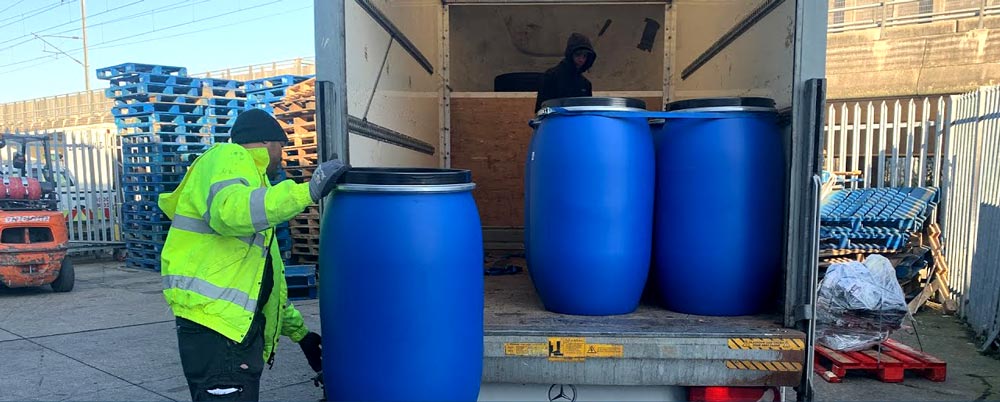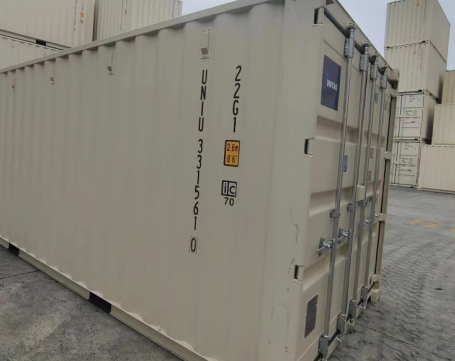
The factory quoted you $120 per dining chair FOB Foshan — $9,600 for 80 chairs, with margins looking solid on paper. But when shipping furniture from China, the freight forwarder’s invoice tells a very different story: $2,200 ocean freight, $650 in origin charges, $950 in destination fees, $720 in import duties, plus insurance and surcharges. By the time those chairs reach your warehouse, your total landed cost sits at $14,250 — a 48% premium over the FOB price you budgeted against.
Furniture is one of the trickiest cargo categories to ship internationally — bulky but rarely heavy enough to hit weight limits, irregularly shaped, highly susceptible to damage, and subject to a labyrinth of customs regulations that vary by destination country and even by wood species. Whether you are a retailer stocking your showroom, an e-commerce brand building inventory, an interior designer outfitting a hotel, or a first-time importer testing the waters, getting the logistics right is the difference between protecting your margin and watching it evaporate in fees you never saw coming.
This guide gives you exactly what you need: a clear comparison of every shipping method, a line-by-line cost breakdown with real 2026 figures, packaging strategies that prevent damage claims, customs compliance checklists by destination, and a practical framework for choosing a freight forwarder who actually understands furniture. By the end, you will know how to budget accurately, avoid the most expensive mistakes, and move your furniture from Chinese factories to your destination with confidence.
Why Shipping Furniture from China Is Different from Other Cargo
Most importers learn the hard way: furniture does not behave like standard cargo. A container of electronics ships predictably — dense, uniform boxes that maximize weight before they fill volume. Furniture does the opposite. It “cubes out” — filling the container’s physical space long before approaching its weight limit. This single dynamic shapes every logistics decision you will make.
Beyond volume, furniture presents compounding complexity. A single 40-foot container might hold dining tables from one factory, upholstered sofas from another, and glass-topped coffee tables from a third — each requiring fundamentally different handling, packaging, and sometimes even different customs classifications.
Furniture Category Shipping Matrix
Understanding how furniture type dictates your logistics approach is the foundation of smart planning. Here is how the most common furniture categories break down:
| Furniture Type | Key Logistics Challenge | Recommended Packaging | Special Compliance Notes |
|---|---|---|---|
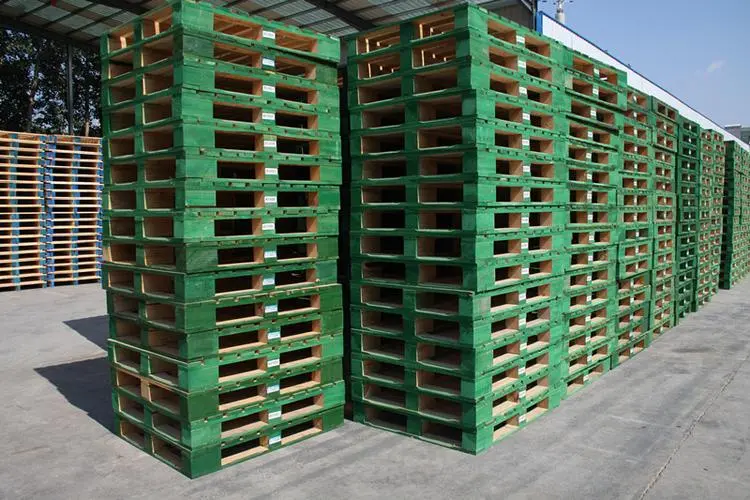
| Solid Wood Furniture | Moisture warping, scratching, pest risk | 7-ply cartons + corner protectors + desiccants | ISPM-15 fumigation required for solid wood packaging; CARB/TSCA for US |
| Upholstered Furniture (Sofas, Beds) | Compression damage, mold from humidity | Breathable fabric covers + foam padding + desiccant bags | UK/EU fire safety certificates often required |
| Flat-Pack / KD Furniture | Low damage risk but assembly dependency | 5-ply corrugated cartons with foam inserts | Easiest to ship; verify assembly instructions are destination-language |
| Glass / Marble Furniture | Breakage, chipping — highest damage risk | Wooden crate + foam dividers + “Fragile” / “Do Not Stack” labels | Insurance mandatory; budget 5-10% of product value for premium packaging |
| Outdoor Furniture (Rattan, Metal, Teak) | Weathering during transit, pest risk for rattan | Shrink wrap + edge guards + palletized stacking | Australia requires fumigation for rattan/bamboo; EU may require FLEGT license for teak |
| Smart Furniture (with Electronics) | ESD damage, battery shipping restrictions | Anti-static foam + separate battery packaging per IATA/IMDG | Lithium battery regulations apply; may require UN38.3 testing |
KD vs. Assembled: The Decision That Multiplies or Divides Your Freight Bill
Knock-down (KD) — also called flat-pack or RTA (Ready to Assemble) — means furniture is disassembled into flat panels for shipping and reassembled at the destination. The math is compelling:
A solid wood dining table that occupies 3 CBM (cubic meters) fully assembled shrinks to approximately 0.8 CBM when broken down and flat-packed — a 73% volume reduction. At a representative LCL rate of $95/CBM from China to the US West Coast, that single table’s freight cost drops from $285 to $76. Across 200 tables, the savings exceed $41,000 in ocean freight alone.
Fully assembled shipping makes sense in exactly two scenarios: when disassembly would compromise structural integrity (certain joinery, antique pieces, or delicate mechanisms), or when destination labor costs for reassembly are prohibitively high. For 90% of commercial furniture imports, KD is the economically rational choice.
Shipping Methods for Furniture from China: Sea, Air, Rail & Door-to-Door Compared
Choosing your shipping method is the single most consequential logistics decision you will make. It determines your per-unit cost, transit time, damage risk, and the complexity of your customs clearance process.
Sea Freight: FCL vs. LCL
sea freight is the default for furniture — and for good reason. Furniture is bulky relative to its value, and ocean freight offers per-CBM costs that air freight cannot touch.
FCL (Full Container Load)
With FCL, you rent an entire container. Nobody else’s cargo shares the space. The container is loaded and sealed at your factory, and not opened again until it reaches the destination port or your warehouse.
| Container Type | Internal Dimensions | Usable Volume | Typical Furniture Capacity |
|---|---|---|---|
| 20ft Standard (20GP) | 5.9m × 2.35m × 2.39m | 25-28 CBM | 60-150 chairs, or 15-30 sofas, or 25-40 dining tables |
| 40ft Standard (40GP) | 12.03m × 2.35m × 2.39m | 55-60 CBM | Double 20ft capacity |
| 40ft High Cube (40HQ) | 12.03m × 2.35m × 2.69m | 65-68 CBM | Best for tall items: wardrobes, shelving, display cabinets |
FCL advantages include lower per-unit costs at scale, faster transit (no consolidation/deconsolidation delays), and significantly lower damage risk since goods are handled only at origin and destination. The trade-off: you pay for the entire container whether it is full or not.
LCL (Less than Container Load)
With LCL, your furniture shares container space with shipments from other importers. You pay only for the volume you use, calculated per CBM.
Typical LCL rates from China in 2026:
| Route | Rate per CBM | Minimum Charge |
|---|---|---|
| China → US West Coast | $55-$120/CBM | 1 CBM or $150 |
| China → US East Coast | $85-$160/CBM | 1 CBM or $200 |
| China → UK | $65-$130/CBM | 1 CBM or $160 |
| China → Australia | $50-$100/CBM | 1 CBM or $130 |
| China → Middle East (Jebel Ali) | $45-$90/CBM | 1 CBM or $120 |
LCL works well for shipments under 12 CBM — test orders, samples, or mixed-supplier consolidation. But for furniture specifically, LCL carries risks: each additional handling step (consolidation warehouse → container → deconsolidation at destination CFS) increases the probability of dents, scratches, and broken parts. Transit time also extends by 10-20 days compared to FCL.
The Crossover Point: When FCL Becomes Cheaper
A 20-foot container offers approximately 27 CBM of usable space. At a representative rate of $2,200 for China to the US West Coast, that works out to roughly $81/CBM. If LCL on the same route costs $95/CBM, FCL becomes cheaper at around 23 CBM. But the real crossover happens earlier — around 15 CBM — once you factor in faster transit and lower damage risk.
Rule of thumb: If your shipment exceeds 12 CBM, request both FCL and LCL quotes. Above 15 CBM, FCL nearly always wins on total value. For a deeper comparison between these two shipping modes and how to choose the right one for your cargo volume, see our guide on what is lcl and fcl in shipping.
Air Freight: Reserved for Urgency, Not Bulk
Air freight has a narrow but critical role in furniture logistics. It is the right call for urgent samples needed before committing to a container order, high-value small pieces (designer lighting, luxury hardware), replacement parts for ongoing projects, and trade show materials with fixed deadlines.
The cost differential is stark: air freight runs $5-$10 per kilogram versus sea freight at $30-$63 per CBM — a roughly 8-15x premium on a per-unit-volume basis. A single upholstered armchair that costs $180 to ship by sea LCL would cost approximately $1,500-$3,000 by air. For bulk furniture, air freight is economically non-viable.
Rail Freight: The China-Europe Middle Ground
For Europe-bound furniture shipments, the China-Europe Railway Express has emerged as a strategic alternative. Departing from inland hubs like Chengdu, Chongqing, and Xi’an, containers reach European terminals in Duisburg, Hamburg, or Madrid in 16-22 days — roughly half the ocean transit time — at a cost approximately 30-40% above sea freight.
Rail is worth considering when your European buyers need faster shelf-replenishment than ocean allows but cannot justify air freight economics. It is especially relevant for seasonal furniture collections with narrow retail windows. For businesses shipping furniture to European markets, Rail Service From China to Europe offers a compelling time-cost balance between ocean and air freight.
Door-to-Door (DDP) vs. Port-to-Port
| Service Type | Scope | Best For |
|---|---|---|
| Port-to-Port | Freight forwarder handles origin pickup through destination port arrival. You arrange customs clearance and final delivery separately. | Experienced importers with established customs brokers at destination |
| Door-to-Door (DDP) | Single provider handles everything: factory pickup → export customs → ocean/air freight → destination customs → duty payment → final delivery to your warehouse or project site | First-time importers, e-commerce sellers shipping to 3PLs, project buyers who want one point of accountability |
For first-time furniture importers, DDP door-to-door shipping eliminates the coordination burden and provides cost certainty. For experienced importers with established destination logistics partners, FOB with port-to-port offers more control and potentially lower costs.
Incoterms at a Glance
| Incoterm | Seller Handles | Buyer Handles | Common in Furniture |
|---|---|---|---|
| EXW (Ex Works) | Goods at factory gate | Everything else | Rare; maximum buyer responsibility |
| FOB (Free on Board) | Export clearance, delivery to port, loading onto vessel | Ocean freight, insurance, import clearance, delivery | Most common (~65% of China furniture exports) |
| CIF (Cost, Insurance, Freight) | Ocean freight + minimum insurance to destination port | Import clearance, duties, delivery | Common for LCL or smaller buyers |
| DDP (Delivered Duty Paid) | Everything — freight, insurance, customs, duties, final delivery | Unloading only | Simplest for buyer; highest seller responsibility |
How Much Does It Cost to Ship Furniture from China? A Transparent Cost Breakdown
The ocean freight rate you see on a quote is never the full picture. Importers who budget against FOB product cost routinely face 40-50% cost surprises when the final invoice arrives. Here is every line item that goes into your total landed cost.
The Complete Cost Stack
Origin Charges (China Side)
| Cost Item | Range (USD) | Notes |
|---|---|---|
| Inland Trucking (Factory → Port) | $150-$400 | Depends on distance from manufacturing hubs (Foshan, Dongguan) to ports (Nansha, Yantian) |
| Export Customs Declaration | $50-$80 | Handled by your freight forwarder |
| Terminal Handling Charge (THC) | $100-$180 | Port charges at origin |
| Bill of Lading Fee | $30-$60 | Document issuance |
| Fumigation (Wood Packaging) | $80-$150 | ISPM-15 compliance for solid wood pallets/crates |
| Origin Subtotal | $420-$990 | — |
Ocean Freight (2026 Q2-Q3 Estimates)
| Route | 20ft Container | 40ft Container | 40ft High Cube |
|---|---|---|---|
| China → US West Coast (LA/Long Beach) | $1,600-$2,800 | $2,800-$4,500 | $3,000-$4,800 |
| China → US East Coast (NY/Savannah) | $2,800-$4,200 | $4,200-$6,500 | $4,500-$6,800 |
| China → UK (Felixstowe/Southampton) | $1,800-$3,200 | $3,200-$5,000 | $3,400-$5,200 |
| China → Europe (Rotterdam/Hamburg) | $2,000-$3,500 | $3,500-$5,500 | $3,800-$5,800 |
| China → Australia (Melbourne/Sydney) | $1,200-$2,400 | $2,200-$3,800 | $2,400-$4,000 |
| China → Middle East (Jebel Ali) | $1,800-$2,600 | $2,800-$3,800 | $3,000-$4,200 |
| China → Southeast Asia (Singapore) | $400-$800 | $700-$1,300 | $800-$1,500 |
Rates fluctuate significantly by season. Chinese New Year (January-February) and the pre-holiday peak season (August-October) push rates toward the higher end. Q2 (April-June) tends to be the most competitive booking window.
Destination Charges (Import Side)
| Cost Item | Range (USD) | Notes |
|---|---|---|
| Destination THC | $200-$350 | Port unloading fee |
| Customs Broker Fee | $150-$300 | Filing entry, HTS classification, duty calculation |
| Drayage (Port → Warehouse) | $300-$700 | Varies by distance from port |
| Customs Examination (if selected) | $0-$500 | Random or targeted inspection; includes unstuffing/restuffing |
| Chassis Fee | $50-$120 | Per day if container held beyond free time |
| Destination Subtotal (excl. duty) | $700-$2,070 | — |
Duties & Taxes by Destination
| Destination | Typical Furniture Duty Rate | Additional Tariffs | VAT/GST |
|---|---|---|---|
| United States | 0-9.5% (varies by HTS) | Section 301: 25% + Section 122: 10% on Chinese-origin goods | No federal VAT; state sales tax may apply |
| European Union | 0-5.6% | — | 19-25% VAT (varies by member state) |
| United Kingdom | 0-4% | — | 20% VAT |
| Australia | 0-5% | — | 10% GST |
| United Arab Emirates | 5% | — | 5% VAT |
| Saudi Arabia | 5-15% | — | 15% VAT |
Insurance
Cargo insurance for furniture costs 0.3-0.8% of the CIF value. On a $30,000 shipment, that is $90-$240. Many importers skip it — and one water-damaged container later, they regret every dollar they saved. Furniture is among the highest-damage-risk cargo categories. Insure every shipment.
Real-World Dantful Furniture Shipping Cases
Below are two actual furniture shipments handled by Dantful International Logistics, illustrating how different destinations demand different logistics strategies.
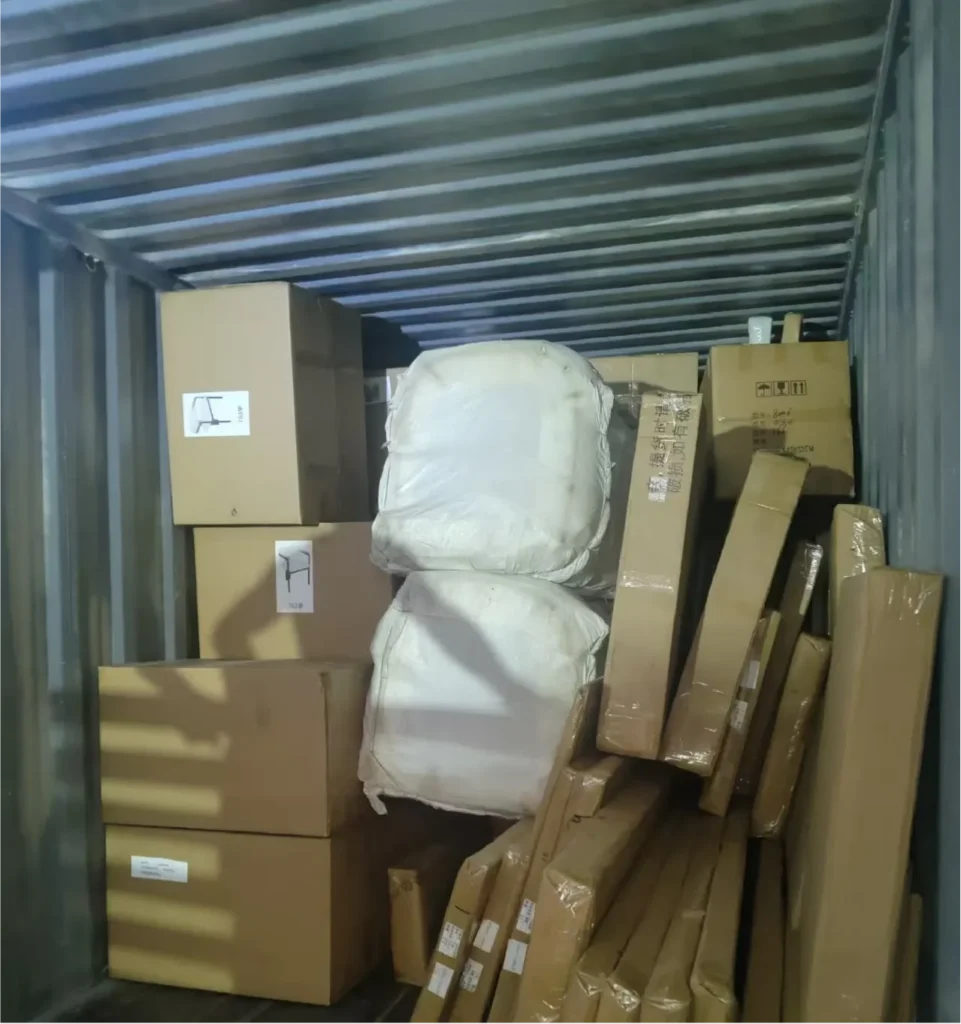
Case 1: Nansha, China → Rotterdam, Netherlands — 1×20GP General Furniture
This 20-foot container of mixed furniture departed from Nansha Port in Guangzhou — the primary export gateway for China’s Pearl River Delta furniture manufacturing cluster — and arrived at Rotterdam, Europe’s largest container port and the main distribution hub for Benelux and western Germany. For European-bound furniture, Rotterdam’s strategic position means goods clear customs at the point of entry and can be trucked to warehouses in the Netherlands, Germany, Belgium, or northern France within 24-48 hours. Importers shipping to the EU should budget for destination VAT (typically 19-25% depending on the member state), which is calculated on CIF value plus duty and paid at the time of customs clearance. Working with a freight forwarder experienced in European customs procedures — including EORI registration and correct HS code classification under the EU TARIC system — prevents clearance delays that can add storage fees of €50-€150 per day. For businesses targeting the European market, Shipping From China To Netherlands via Rotterdam provides the most efficient entry point for containerized furniture into the EU.
Case 2: Nansha, China → Fremantle, Australia — 1×20GP Office Furniture
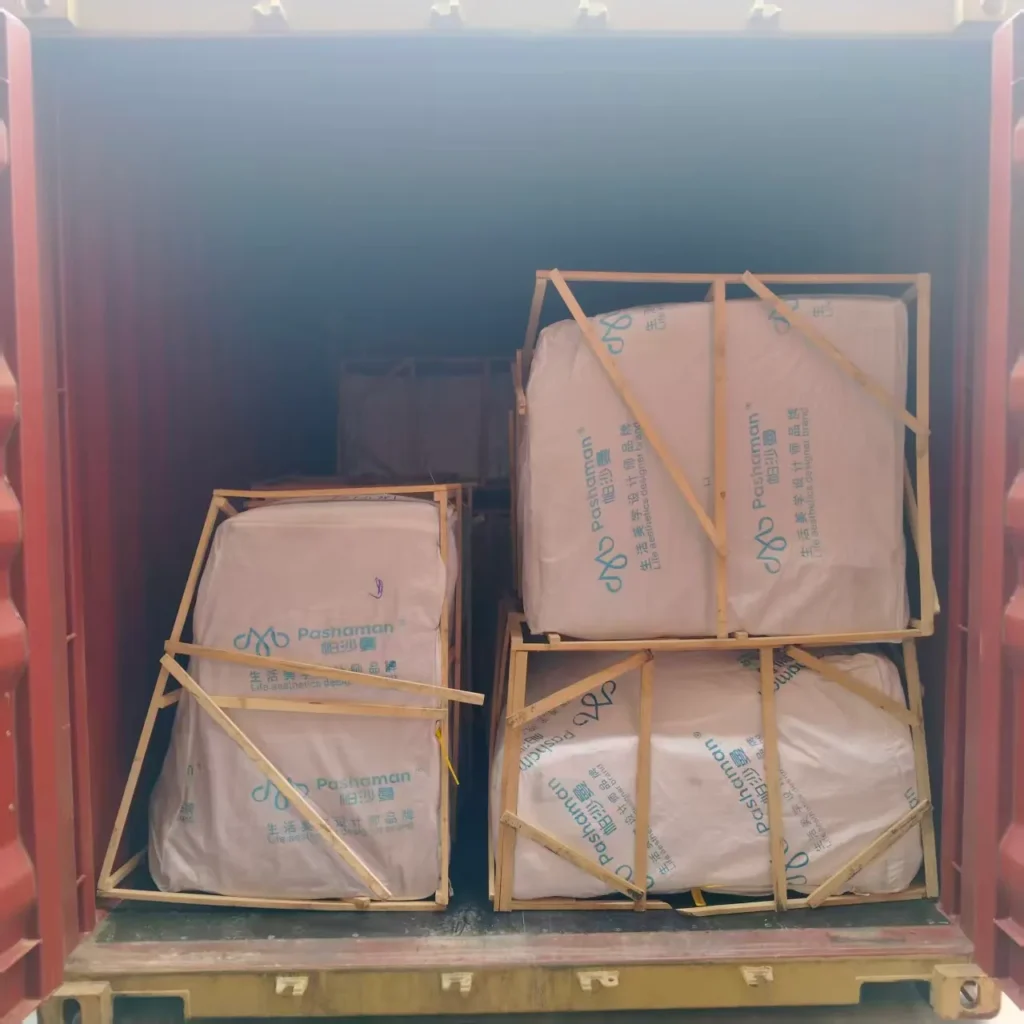
This shipment of office furniture — desks, chairs, filing cabinets, and workstation partitions — was loaded into a 20ft container at Nansha and shipped to Fremantle, the primary container port serving Perth and Western Australia. Australia enforces some of the world’s strictest biosecurity regulations. All solid wood packaging materials must comply with ISPM-15 standards, and rattan, bamboo, or cane materials require mandatory fumigation with a valid Fumigation Certificate. Additionally, composite wood products in office furniture (particleboard, MDF, plywood) must meet Australia’s formaldehyde emission limits under the National Construction Code. Importers should verify that their Chinese factories provide compliant materials documentation before shipment. Working with a freight forwarder familiar with Australian Border Force and Department of Agriculture, Fisheries and Forestry (DAFF) clearance procedures is essential to avoid costly inspection delays. For detailed route information and current freight rates, see our dedicated Shipping From China to Australia page.
Hidden Costs That Catch Importers Off Guard
Even experienced importers get surprised by these charges:
- Demurrage & Detention: $100-$350 per day. You typically get 3-7 free days at the destination port. Every day beyond that adds up fast. Customs delays, missing documents, or late trucking arrangements are the most common triggers.
- Port Congestion Surcharges: $200-$800 per container. When major ports back up — Los Angeles/Long Beach and Savannah are repeat offenders — carriers add these surcharges. You cannot prevent them, but your freight forwarder should proactively suggest alternative routing.
- ISPM-15 Non-Compliance Rework: $300-$500. If your solid wood pallets or crates arrive at the destination without the required IPPC stamp, customs will order re-fumigation at your expense — or reject the shipment entirely.
- Customs Exam Fees: $500-$1,500 for a full intensive examination (container fully unstuffed, inspected, and reloaded). Plus 3-7 days of delay.
- Warehouse Receiving Fees: $150-$600 per container. If your warehouse charges by the hour for unloading, a dense furniture container can take 2-4 hours with a forklift team.
Furniture Packaging & Protection: Preventing Damage During International Transit
A 30-day ocean voyage subjects furniture to constant vibration, temperature swings from near-freezing to 40°C+ inside the container, humidity levels approaching 95%, and rough handling at multiple port transfers. Furniture that survives the factory floor can arrive at the destination warehouse with dents, scratches, warping, mold, or structural damage — unless it is packed for the journey it will actually take, not just the journey you hope for.
Standard Export Packaging vs. Premium Solutions
Standard export-grade packaging consists of 5-ply corrugated cartons sized to the furniture piece, foam or cardboard corner protectors on all exposed edges, PE film or bubble wrap for scratch prevention, and desiccant packets (one 500g silica gel bag per CBM as a baseline) for humidity control. Palletization — securing cartons to standard 1200mm × 1000mm pallets — keeps goods off the container floor and enables forklift handling.
Premium protection — mandatory for high-value, fragile, or irreplaceable pieces — involves custom-built wooden crates with internal foam padding and individual compartments. Glass table tops, marble surfaces, antique solid wood furniture, and pieces with intricate carving or gilding demand this level of protection. Premium packaging typically costs 5-10% of the product value but prevents damage claims of 20-100%.
Material-Specific Packaging Guidelines
| Furniture Material | Core Protection Strategy | Critical Detail |
|---|---|---|
| Solid Wood | Foam corner protectors + PE film + desiccants | ISPM-15 stamp on any solid wood pallets/crates |
| Marble / Stone | Full wooden crate + foam dividers + “This Side Up” labeling | Temperature differential can cause cracking — acclimatize before unpacking |
| Glass | Individual wrapping + cardboard edge guards + wooden frame supports | Never stack; always load at container door for last-out/first-in access |
| Leather / Fabric Upholstery | Breathable fabric covers (not plastic — traps moisture) + desiccant packs | Mold is the #1 enemy; silica gel is non-negotiable |
| Metal Components / Hardware | VCI (Vapor Corrosion Inhibitor) film or anti-rust paper | Salt air during ocean transit accelerates corrosion |
Container Loading Principles
How the container is loaded matters as much as how each piece is packed. Three principles that prevent most damage claims:
- Heavy bottom, light top. Solid wood tables and cabinets go on the floor layer. Upholstered pieces and lighter cartons stack above.
- Fragile items at the door. Glass and marble pieces should be the last items loaded — so they are the first items unloaded, reducing handling time at risk.
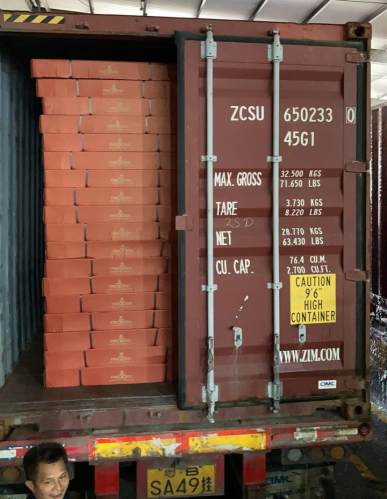
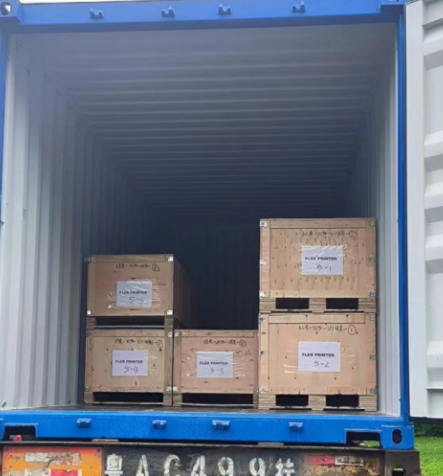
- Photograph every loading stage. Layer-by-layer loading photos — and a final shot of the door with the container seal number visible — are not decoration. They are your evidence if damage occurs and you need to file an insurance claim. At Dantful, our 50-person operations team ensures every container is photographed at each loading stage before the seal is applied.
Customs Clearance, Duties & Import Regulations for Furniture
Customs is where preparation meets reality. The difference between a shipment that clears in 2 days and one held for 2 weeks — accumulating storage fees daily — is almost always the quality of documentation prepared before the vessel departs. Our Customs Clearance service handles this documentation end-to-end, ensuring your furniture shipment clears without storage-fee-inducing delays.
HS Code Classification for Furniture
Every furniture item must be classified under the Harmonized System (HS) — a standardized numerical code used by customs authorities worldwide. Misclassification is not a minor paperwork error; it can mean 5-15% overpayment in duties, customs penalties, or shipment holds.
| HS Heading | Category | Key Sub-Codes |
|---|---|---|
| 9401 | Seats (chairs, sofas, recliners) | 9401.61 — Upholstered wooden seats; 9401.71 — Upholstered metal seats; 9401.80 — Other seats |
| 9403 | Other furniture (tables, cabinets, beds, desks) | 9403.40 — Wooden kitchen furniture; 9403.50 — Wooden bedroom furniture; 9403.60 — Other wooden furniture; 9403.20 — Metal furniture |
A wooden dining table classified under 9403.40 (kitchen furniture) may face a different duty rate than one under 9403.60 (other wooden furniture). Confirm HS codes with your customs broker before shipment, not after arrival.
Destination-Specific Regulatory Requirements
| Destination | Key Regulation | What It Covers |
|---|---|---|
| USA | CARB ATCM Phase 2 + TSCA Title VI | Formaldehyde emission limits for composite wood products (particleboard, MDF, hardwood plywood) |
| USA | Section 301 + Section 122 Tariffs | Combined 35% additional duty on most Chinese-origin furniture (as of 2026) |
| EU | CE Marking + REACH | General product safety + chemical substance restrictions |
| EU | EU Deforestation Regulation (EUDR) | Wood legality and traceability; applies to wooden furniture from mid-2025 |
| UK | UKCA Marking + UK Timber Regulation | Post-Brexit equivalent of EU standards; mandatory for furniture sold in Great Britain |
| Australia | National Construction Code (NCC) | Formaldehyde emission limits for composite wood in furniture |
| Australia | Biosecurity Act | Mandatory treatment for rattan, bamboo, cane; ISPM-15 for wood packaging |
| Saudi Arabia | SASO/SABER Certification | Mandatory conformity assessment for regulated products including furniture |
| UAE | ESMA (Emirates Authority for Standardization) | Product safety and quality standards for furniture imports |
Essential Documentation Checklist
Ensure these documents are complete before your container departs:
- Commercial Invoice — with line-item descriptions, HS codes, unit prices, and Incoterm
- Packing List — carton count, dimensions, weights per carton
- Bill of Lading (B/L) — issued by the ocean carrier; confirms cargo receipt and contract of carriage
- Certificate of Origin — required to claim preferential duty rates under free trade agreements
- ISPM-15 Compliance Certificate — for any solid wood packaging materials (pallets, crates, dunnage)
- CARB/TSCA Compliance Documentation — for composite wood furniture entering the US
- Fire Safety Certificate — required for upholstered furniture in the UK and certain EU markets
Duties & Taxes Calculation
The formula is consistent across destinations, but the rates vary:
Your freight forwarder or customs broker should provide a landed cost estimate before booking. If they cannot — or will not — find one who will.
How to Choose a Reliable Freight Forwarder for Furniture Shipping
Furniture logistics demands specialized knowledge. A freight forwarder who excels at moving electronics or apparel may have no experience with the packaging requirements, container loading strategies, or customs documentation specifics that furniture demands. Choosing the right partner is the single most impactful logistics decision you will make. For a comprehensive framework on evaluating logistics partners, read our guide on how to choose the right freight forwarder.
Six Criteria for Evaluating a Furniture Freight Forwarder
1. Credentials & Certifications
The baseline for competence: Class-A freight forwarding license (issued by China’s Ministry of Commerce), NVOCC (Non-Vessel Operating Common Carrier) qualification from China’s Ministry of Transport, FMC (Federal Maritime Commission) registration for US-bound shipments, and Jctrans membership — an industry network verifying the forwarder’s standing among global logistics peers. These are not marketing badges; they are regulatory and industry validations that the forwarder operates legally and maintains professional standards.
2. Furniture-Specific Experience
Ask directly: “How many furniture containers did you ship last year?” and “What furniture categories have you handled?” A forwarder who has moved 500+ containers of sofas, dining sets, office furniture, and hotel FF&E (Furniture, Fixtures & Equipment) has encountered the edge cases — the marble table that cracked, the rattan chairs delayed for fumigation, the 40HQ that needed a loading plan reworked at the last minute — and knows how to prevent them.
3. Price Transparency
An honest freight quote is an all-in quote. It includes origin pickup, export customs, ocean freight, destination THC, customs brokerage, duties (where applicable), and final delivery — or it clearly states what is excluded and what each excluded item will cost. If a quote looks 30% below market, the forwarder is either leaving out major cost items or planning to make up the difference with back-end surcharges. Neither scenario ends well for you.
4. Destination Coverage
Your forwarder should have established agent relationships in your target country — not just a partner they call for the first time when your container arrives. In-country agents handle customs clearance, coordinate with local trucking companies, and resolve the inevitable day-of issues (wrong delivery address, dock scheduling conflicts, customs holds) that are impossible to manage remotely from China.
5. Team Scale & Responsiveness
A forwarder’s team size directly affects what happens when problems arise. A two-person operation cannot provide 24/7 coverage across time zones. Dantful fields 50 operations specialists and over 50 customer service representatives — meaning when your container arrives in Rotterdam at 3 a.m. China time, someone is watching.
6. Tracking & Communication
Real-time shipment visibility is not a value-add in 2026; it is baseline. Your forwarder should provide an online tracking platform with container status updates, vessel ETAs, and customs clearance milestones — supplemented by proactive communication from a dedicated account manager who knows your specific shipment details without digging through a file.
At Dantful International Logistics, we have spent 15 years building exactly this infrastructure — Class-A licensed, NVOCC qualified, FMC and Jctrans certified, with 50+ operations specialists and a 50+ customer service team managing furniture shipments from China’s key manufacturing hubs (Foshan, Dongguan, Shenzhen, Shanghai, Ningbo) to over 200 countries. Our direct contracts with major shipping lines and airlines ensure competitive rates and secured space even during peak season. Whether you are importing a single 20ft container of hotel furniture to Rotterdam, consolidating office furniture from multiple Foshan factories to Australia, or setting up a recurring supply chain from China to the US, we provide transparent, all-in door-to-door shipping solutions with daily tracking updates and a dedicated account manager.
Common Mistakes When Shipping Furniture from China
After 15 years of managing furniture logistics, here are the ten mistakes we see importers make most often — and how to avoid every single one.
- Budgeting against FOB price alone. Your total landed cost typically adds 40-50% over FOB. Always request an all-in door-to-door estimate before finalizing your purchase order.
- Choosing LCL for shipments over 15 CBM. Above this threshold, FCL is cheaper per unit, faster, and safer. A 20ft container at $2,200 for 27 CBM works out to $81/CBM — competitive with or below most LCL rates.
- Ignoring packaging compliance. ISPM-15 non-compliance can cost $300-$500 in re-fumigation at the destination port. CARB/TSCA non-compliance for composite wood furniture entering the US can result in shipment rejection. Specify compliance in your purchase order.
- Preparing customs documents after the vessel departs. Customs clearance documentation should be complete before sailing. Delays at the destination port cost $100-$350 per day in storage fees.
- Using retail packaging for export. The box that protects a chair from a 50-mile truck ride will not survive a 30-day ocean voyage with multiple handling transfers. Invest in export-grade packaging.
- Skipping cargo insurance. A single container of water-damaged furniture can erase the margin from a dozen successful shipments. Insurance costs $90-$240 on a $30,000 shipment — less than one day of demurrage fees.
- Misclassifying HS codes. Wooden chairs (9401.61) and metal chairs (9401.71) carry different duty rates. Misclassification triggers overpayment at best, penalties and shipment holds at worst.
- Booking during peak season without planning. August through October freight rates run 20-50% higher than Q2. If your inventory cycle allows, align production schedules with off-peak shipping windows.
- Failing to coordinate between factory and forwarder. When the factory loads without a plan, the container’s cube utilization suffers. Your forwarder should provide a loading plan — carton placement, stack order, fragile item positioning — before the truck arrives at the factory.
- Choosing a generalist freight forwarder for furniture. Furniture logistics is a specialization. A forwarder who primarily moves standard palletized cargo may not understand the packaging, loading, and customs nuances that prevent damage claims and clearance delays. Work with a forwarder who moves furniture every day.
One recurring theme across this list: a reliable, furniture-experienced freight forwarder from China prevents roughly 80% of these problems before they start. The right partner catches compliance issues at origin, provides accurate all-in quotes, manages customs documentation proactively, and loads containers as if the cargo were their own.
Frequently Asked Questions
What is the cheapest way to ship furniture from China?
For shipments over 15 CBM, sea freight FCL offers the lowest per-unit cost. Combine this with KD (knock-down) flat-pack packaging, which can reduce shipping volume by 40-60%, and you achieve the optimal cost structure. For smaller volumes under 12 CBM, LCL is the practical choice — but be aware of the increased handling damage risk.
How long does it take to ship furniture from China by sea?
Port-to-port ocean transit times: US West Coast (12-20 days), US East Coast (25-35 days), Northern Europe (25-35 days), Australia (18-28 days), Middle East (18-25 days). Add 2-4 weeks for factory-to-port trucking, export customs, destination customs clearance, and final delivery. A realistic total door-to-door timeline is 6-12 weeks, depending on destination and customs complexity.
Do I need to pay customs duties when importing furniture from China?
Yes. Import duties apply in virtually every destination country. As of 2026, the United States imposes Section 301 (25%) and Section 122 (10%) additional tariffs on most Chinese-origin furniture, on top of standard MFN duty rates of 0-9.5%. EU duties range from 0-5.6%, AU duties 0-5%. Duty is calculated on CIF value (product cost + insurance + freight). For a complete cost breakdown by route, see our Shipping From China to USA page.
What documents are required for furniture customs clearance?
The core stack: Commercial Invoice, Packing List, Bill of Lading (ocean) or Airway Bill (air), and Certificate of Origin. Additional documents vary by destination: ISPM-15 compliance proof for wood packaging, CARB/TSCA formaldehyde test reports for US-bound composite wood furniture, and fire safety certificates for UK/EU upholstered furniture.
Contact Dantful today for a free, no-obligation furniture shipping consultation tailored to your specific route, volume, and timeline.

Young Chiu is a seasoned logistics expert with over 15 years of experience in international freight forwarding and supply chain management. As CEO of Dantful International Logistics, Young is dedicated to providing valuable insights and practical advice to businesses navigating the complexities of global shipping.