
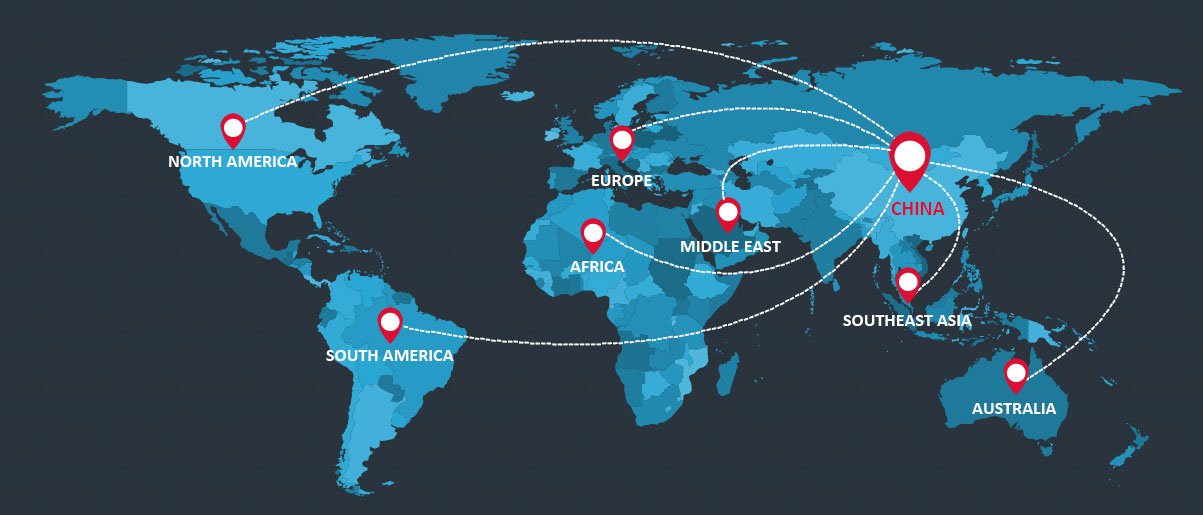
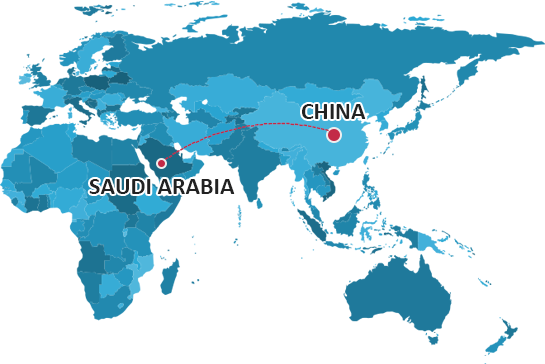
The trade relationship between China and Saudi Arabia has flourished over the past few decades, becoming a cornerstone of global commerce. China, as the world’s largest exporter, supplies a wide range of goods, while Saudi Arabia imports these products to support its diverse economy. This robust partnership has driven the demand for reliable logistics services, with the bilateral trade volume reaching approximately USD 108.16 billion in 2025, a 0.5% year-on-year increase (source: China Customs Statistics).
When it comes to efficient and reliable shipping from China to Saudi Arabia, Dantful International Logistics is the go-to choice. With years of industry experience, Dantful offers comprehensive services including ocean freight, air freight, warehouse services, customs clearance, and insurance services. We provide cost-effective solutions without compromising quality, supported by advanced technology for real-time tracking and dedicated customer support.
Shipping Methods From China to Saudi Arabia
Ocean Freight from China to Saudi Arabia
Ocean Freight is a popular and cost-effective method for shipping large quantities of goods from China to Saudi Arabia. As a leading provider of sea freight from China to Saudi Arabia, Dantful helps businesses transport goods via sea routes using large container ships at competitive rates, with both FCL and LCL options available.
Pros and Cons:
Pros:
Cost-Effective: Ideal for bulk shipments due to lower costs compared to air freight.
Capacity: Can accommodate large and heavy consignments.
Environmental Impact: Lower carbon footprint compared to air freight.
Cons:
Transit Time: Longer shipping times, typically ranging from 20 to 30 days.
Weather Dependency: Susceptible to delays caused by adverse weather conditions.
Port Congestion: Possible delays due to congestion at major ports.
Major Sea Routes and Ports:
Major Sea Routes: Goods are commonly shipped through the South China Sea, the Indian Ocean, and the Red Sea before reaching Saudi ports.
Key Ports in China: Shanghai, Shenzhen, Ningbo, and Guangzhou.
Key Ports in Saudi Arabia: Jeddah Islamic Port, King Abdulaziz Port in Dammam, and King Abdullah Port. For a complete guide to all major ports in Saudi Arabia — including the largest 13 ports and the latest port infrastructure updates — visit our dedicated Saudi port resources. Stay informed with our Saudi Arabia port news coverage for developments that may affect your shipping schedule.
Air Freight from China to Saudi Arabia
Air Freight is the preferred method for shipping high-value or time-sensitive goods from China to Saudi Arabia. This method involves transporting goods via commercial airlines or dedicated cargo planes.
Pros and Cons:
Pros:
Speed: Significantly faster transit times, typically ranging from 2 to 7 days.
Reliability: More predictable schedules and less susceptibility to delays.
Security: Enhanced security measures reduce the risk of damage or theft.
Cons:
Cost: Higher shipping costs compared to ocean freight.
Capacity Limitations: Limited space for large or heavy consignments.
Environmental Impact: Higher carbon footprint compared to sea freight.
Major Airlines and Airports:
Major Airlines: China Southern Airlines, Air China Cargo, and Saudi Arabian Airlines Cargo.
Key Airports in China: Beijing Capital International Airport, Shanghai Pudong International Airport, and Guangzhou Baiyun International Airport.
Key Airports in Saudi Arabia: King Khalid International Airport in Riyadh, King Abdulaziz International Airport in Jeddah, and King Fahd International Airport in Dammam.
Whether opting for the cost-effectiveness of Ocean Freight or the speed of Air Freight, partnering with a reliable freight forwarder like Dantful International Logistics ensures a smooth and efficient shipping experience from China to Saudi Arabia.
Shipping Cost From China to Saudi Arabia(2026)
Understanding the breakdown of shipping costs is crucial for businesses looking to import goods from China to Saudi Arabia. The total cost of shipping can be influenced by a variety of factors, each adding to the overall expense. For a detailed overview of current market rates, see our guide on shipping rates from China to Saudi Arabia. Below, we delve into the primary components of shipping costs.
Shipping Costs Breakdown
Freight Charges
Freight charges are the core component of shipping costs. These charges vary depending on the shipping method chosen, the volume and weight of the goods, and the distance between the origin and destination ports.
Ocean Freight: Typically more cost-effective for large, heavy shipments, ocean freight charges are calculated based on container rates. Common container sizes include 20-foot, 40-foot, and 40-foot high cube containers. Rates may fluctuate based on market demand, fuel prices, and seasonal factors. As of 2026, the average cost of shipping a 20ft container from China to Saudi Arabia ranges from $1,800 to $2,800 (source: Freightos).
Air Freight: Air freight charges are generally higher than ocean freight due to the speed and reliability of this shipping method. Rates are calculated based on the chargeable weight, which considers both the gross weight and the volumetric weight of the shipment. As of 2026, air freight rates from China to Saudi Arabia range from $4.5 to $8.5 per kilogram, depending on the airline and service level (source: IATA).
Customs Duties and Taxes
Customs duties and taxes are mandatory charges imposed by the Saudi Arabian government on imported goods. These costs can significantly impact the total shipping expense and must be carefully calculated to avoid unexpected financial burdens. To understand the full import procedure from China to Saudi Arabia, including required documentation and compliance steps, refer to our comprehensive import guide.
Customs Duties: The duty rate varies depending on the type of goods being imported. For example, electronics may attract a different duty rate compared to textiles. The Saudi Customs Authority provides detailed information on applicable duty rates for various product categories.
Value Added Tax (VAT): Saudi Arabia imposes a 15% VAT on most imported goods. This tax is calculated based on the CIF (Cost, Insurance, and Freight) value of the goods, which includes the cost of the goods, insurance, and freight charges.
Excise Taxes: Certain goods, such as tobacco products and sugary beverages, may be subject to additional excise taxes, further increasing the overall import cost.
Additional Fees
In addition to freight charges and customs duties, several additional fees may apply during the shipping process. These fees cover various services and contingencies that arise during the transportation and handling of goods.
Handling Fees: These fees cover the cost of loading, unloading, and handling the goods at the ports of origin and destination. Handling fees can vary based on the complexity and volume of the shipment.
Warehousing Fees: If the goods need to be stored temporarily, warehousing fees will apply. These fees are typically charged based on the duration of storage and the amount of warehouse space required. Companies like Dantful International Logistics offer competitive warehouse services to ensure secure and efficient storage of goods.
Documentation Fees: The preparation and processing of necessary shipping and customs documentation may incur additional fees. These documents include the bill of lading, commercial invoice, packing list, and certificates of origin.
Insurance Fees: To safeguard against potential loss or damage during transit, many businesses opt for shipping insurance. Insurance fees are calculated based on the value of the goods and the level of coverage required.
Delivery Duty Paid (DDP) Fees: If you choose a Delivery Duty Paid (DDP) service, the freight forwarder takes responsibility for all shipping costs, including duties, taxes, and additional fees, delivering the goods to the final destination with all charges prepaid. This can simplify the shipping process for importers and ensure a hassle-free experience.
Comparative Table of Shipping Costs
To provide a clearer comparison, the table below summarizes the key cost components for ocean freight and air freight from China to Saudi Arabia:
| Major Route | Air Freight (USD/KG, 100kg+) | Sea Freight (USD/Container & LCL) | Notes |
|---|---|---|---|
| How much does shipping from Shanghai to Jeddah cost | $4.5 – $7.0 | FCL: 20’GP: $1,300–$1,800 40’GP: $2,100–$2,800 LCL: $40–$70/cbm (min 2–3cbm) | Multiple direct flights & sailings weekly; air for urgent; sea for bulk |
| How much does shipping from Ningbo to Dammam cost | $4.6 – $7.2 | FCL: 20’GP: $1,400–$1,900 40’GP: $2,200–$2,950 LCL: $42–$75/cbm | Dammam is a major Persian Gulf port; strict Saudi import compliance required |
| How much does shipping from Shenzhen to Riyadh cost | $4.8 – $7.5 | FCL (via Dammam + truck): 20’GP: $1,450–$2,000 40’GP: $2,300–$3,100 LCL: $45–$80/cbm + Trucking to Riyadh: $500–$900 | Riyadh is inland; needs multimodal (port+truck) or direct air import |
| How much does shipping from Guangzhou to Jeddah cost | $4.5 – $7.3 | FCL: 20’GP: $1,350–$1,850 40’GP: $2,150–$2,850 LCL: $40–$70/cbm | Guangzhou offers rapid air; Jeddah port busy during peak seasons |
| How much does shipping from Qingdao to Dammam cost | $4.9 – $7.8 | FCL: 20’GP: $1,500–$2,050 40’GP: $2,300–$3,100 LCL: $48–$85/cbm | May require transshipment; sea transit ~25 days |
| How much does shipping from Hong Kong to Jeddah cost | $4.3 – $6.9 | FCL: 20’GP: $1,250–$1,700 40’GP: $2,080–$2,600 LCL: $39–$68/cbm | HK is global hub; accurate paperwork for LCL & FCL is essential |
Terminology & Shipping Modes
FCL (Full Container Load): Best for large shipments, exclusive use of a container.
LCL (Less than Container Load): Shared container, charged by cbm (cubic meter); ideal for small cargo.
20’GP/40’GP: Standard 20-foot and 40-foot containers.
By understanding these cost factors, businesses can better plan and budget for their shipments from China to Saudi Arabia. If you’re looking to minimize expenses, check our guide on the cheapest shipping from China to Saudi Arabia for practical cost-saving strategies without sacrificing service quality.
Shipping Time From China to Saudi Arabia
One of the critical considerations for businesses importing goods from China to Saudi Arabia is the shipping time. The duration of transit can impact inventory management, customer satisfaction, and overall supply chain efficiency. For a detailed breakdown by route and shipping method, see our guide on how long freight takes from China to Saudi Arabia. Understanding the typical shipping times for different methods can help businesses plan better and set realistic expectations.
Ocean Freight Transit Times
Ocean Freight is a widely used method for shipping large volumes of goods due to its cost-effectiveness, but it comes with longer transit times compared to air freight.
Transit Time: The average transit time for ocean freight from major ports in China to ports in Saudi Arabia typically ranges from 20 to 30 days. This time frame can vary based on factors such as the specific route taken, weather conditions, and port congestion.
Major Sea Routes: The standard route involves shipping through the South China Sea, crossing the Indian Ocean, and entering the Red Sea before reaching Saudi ports. This route is used by many shipping lines to ensure efficient and reliable delivery.
Key Ports in China: Shanghai, Shenzhen, Ningbo, and Guangzhou are the primary ports of origin in China for goods destined for Saudi Arabia.
Key Ports in Saudi Arabia: Jeddah Islamic Port, King Abdulaziz Port in Dammam, and King Abdullah Port are the main ports where goods from China are received.
Air Freight Transit Times
Air Freight is the preferred option for time-sensitive or high-value shipments. Although more expensive, it offers significantly faster transit times compared to ocean freight.
Transit Time: The average transit time for air freight from China to Saudi Arabia ranges from 2 to 7 days. This rapid delivery is ideal for businesses that require quick replenishment of stock or have urgent delivery needs.
Major Airlines: China Southern Airlines, Air China Cargo, and Saudi Arabian Airlines Cargo are among the key airlines providing reliable air freight services between China and Saudi Arabia.
Key Airports in China: Beijing Capital International Airport, Shanghai Pudong International Airport, and Guangzhou Baiyun International Airport are the primary airports for air freight shipments.
Key Airports in Saudi Arabia: King Khalid International Airport in Riyadh, King Abdulaziz International Airport in Jeddah, and King Fahd International Airport in Dammam are the major airports receiving cargo from China.
Factors Influencing Shipping Times
Several factors can affect the shipping time from China to Saudi Arabia, regardless of the method chosen:
Weather Conditions: Adverse weather can delay both ocean and air freight. For instance, typhoons in the South China Sea can disrupt sea routes, while sandstorms in the Middle East can affect air traffic.
Port Congestion: Busy ports can lead to delays in loading and unloading goods. Both Chinese and Saudi ports can experience congestion, particularly during peak seasons.
Customs Clearance: Efficient customs clearance is crucial for timely delivery. Delays in processing can extend the transit time. Partnering with experienced freight forwarders like Dantful International Logistics can help streamline customs clearance processes.
Holidays and Peak Seasons: Shipping times can be longer during Chinese New Year, Ramadan, and other major holidays when the volume of shipments increases, and operational hours may be reduced.
Comparative Table of Shipping Times
To summarize the typical transit times for ocean and air freight from China to Saudi Arabia, the table below provides a comparative overview:
| Major Route | Air Freight Transit Time | Sea Freight Transit Time | Notes |
|---|---|---|---|
| How long does it take to ship from Shanghai to Jeddah | 2 – 4 days | 23 – 28 days | Direct flights available; sea freight is direct or via Singapore |
| How long does it take to ship from Ningbo to Dammam | 3 – 5 days | 24 – 32 days | Sea route may involve transshipment in Singapore or Malaysia |
| How long does it take to ship from Shenzhen to Riyadh | 2 – 4 days (direct) | 26 – 36 days (to Dammam port + 2–4 days inland trucking) | Riyadh is inland; after arrival at port, allow extra days for truck transport |
| How long does it take to ship from Guangzhou to Jeddah | 2 – 4 days | 24 – 29 days | Frequent departures; customs clearance efficiency may affect total time |
| How long does it take to ship from Qingdao to Dammam | 3 – 5 days | 25 – 33 days | Sea routes may transit via major Asian hub ports |
| How long does it take to ship from Hong Kong to Jeddah | 2 – 3 days | 20 – 26 days | Hong Kong offers fast air links and rapid customs processing |
By understanding the typical shipping times for different methods, businesses can make informed decisions that align with their logistical needs and budget constraints.
Saudi Arabia Import Regulations & Compliance
Importing goods into Saudi Arabia requires navigating a structured regulatory framework. Non-compliance can result in cargo rejection at port, hefty fines, or even blacklisting. Below is a concise overview of the key requirements every importer must know.
SABER Certification System
SABER is Saudi Arabia’s mandatory online conformity assessment platform, managed by SASO (Saudi Standards, Metrology and Quality Organization). All imported consumer goods must be registered through SABER before shipment. The process involves two certificates:
Product Certificate of Conformity (PCoC): Issued per product category, valid for one year. Requires lab test reports, product specifications, and factory information. Your supplier must obtain this before shipping.
Shipment Certificate of Conformity (SCoC): Issued per shipment, linked to a valid PCoC. Covers the specific quantity and invoice value of each consignment.
Products covered by SABER: Electronics, toys, machinery, textiles, construction materials, cosmetics, and most consumer goods. Non-compliance leads to mandatory re-export or destruction at the importer’s expense — typically costing $2,000–$5,000 per container.
Additional Regulatory Bodies
| Body | Scope | Key Requirement |
|---|---|---|
| SFDA (Saudi Food and Drug Authority) | Food, pharmaceuticals, medical devices, cosmetics | Pre-market registration; Arabic labeling mandatory for food products; shelf-life minimum of 6 months upon arrival |
| CITC (Communications and Information Technology Commission) | Wireless devices, telecom equipment | Type approval certificate required before import |
| MOI (Ministry of Interior) | Security-related equipment | Special import license; applies to cameras, surveillance systems |
Labeling & Packaging Requirements
Arabic language labels are mandatory for all consumer products. Bilingual (English + Arabic) is acceptable and recommended.
Product labels must include: country of origin, manufacturer name, product description, ingredients/materials, expiration date (if applicable), and net weight in metric units.
Wooden packaging (pallets, crates) must comply with ISPM 15 international standards — heat-treated or fumigated and stamped accordingly.
How Dantful Simplifies Compliance
Navigating Saudi regulations alone can be overwhelming, especially for first-time importers. Dantful International Logistics offers dedicated pre-shipment compliance checks — we verify your product classification, coordinate SABER certification with your supplier, review labels for Arabic-language compliance, and prepare all customs documentation. This proactive approach prevents costly delays and ensures your shipment clears Saudi customs on the first attempt.
Restricted & Prohibited Items for Import to Saudi Arabia
Saudi Arabia enforces strict import controls based on religious, cultural, and security considerations. Shipping a prohibited item — even inadvertently — can result in cargo confiscation, fines, and legal consequences. Before placing an order, verify your product against the categories below.
Prohibited Items (Cannot Be Imported)
| Category | Examples |
|---|---|
| Religious violations | Alcohol, pork products, non-halal meat, religious materials contrary to Islam |
| Narcotics & stimulants | Recreational drugs, khat, poppy seeds, certain prescription medications without SFDA pre-approval |
| Gambling devices | Slot machines, gambling tables, lottery materials |
| Offensive materials | Pornography, politically sensitive publications, materials deemed contrary to public morality |
| Weapons & explosives | Firearms, ammunition, fireworks, certain drones without security clearance |
| Endangered species | Ivory, certain leather goods, wildlife products restricted under CITES |
| Used goods | Used tires, used medical equipment (strictly regulated; most are banned) |
Restricted Items (Permitted Under Specific Conditions)
| Item | Requirement |
|---|---|
| Drones & wireless cameras | CITC approval + MOI security clearance |
| Pharmaceuticals | SFDA registration + licensed importer + original prescription documentation |
| Chemical substances | Ministry of Interior clearance + safety data sheets |
| Cosmetics | SFDA notification + ingredient review |
| Tobacco products | Special import license; subject to 100% excise tax |
| Food supplements | SFDA registration; ingredient and health-claim review |
| Telecom equipment | CITC type approval |
| Vehicles | SASO conformity certificate; model-year restrictions apply |
Quick Pre-Check Before Ordering
Verify your HS code — cross-reference with Saudi Customs’ banned/restricted list.
Check SASO/SABER requirements — if your product category isn’t registered, certification may not be possible.
Consult your freight forwarder — Dantful’s customs specialists can pre-screen your product list and flag potential issues before you commit to a purchase order, saving you time and money.
Step-by-Step Shipping Process from China to Saudi Arabia
Understanding the end-to-end journey of your cargo eliminates uncertainty and helps you plan effectively. Below is a clear, actionable walkthrough of how goods move from a Chinese supplier to your door in Saudi Arabia — along with the documents required at each stage.
The 7-Stage Shipping Journey
Stage 1: Supplier Preparation (1–5 days)
Your supplier manufactures the goods and prepares them for export. At this stage, confirm product specifications, packaging meets international standards, and SABER PCoC is in place if required. Dantful can communicate directly with your supplier in Chinese to coordinate pick-up details and verify readiness.
Stage 2: Pick-up & Consolidation (1–3 days)
Goods are collected from the supplier’s factory or warehouse and transported to a consolidation center or port of departure. If sourcing from multiple suppliers, Dantful consolidates all shipments at our Shenzhen warehouse to reduce overall freight costs.
Stage 3: Export Customs Clearance in China (1–2 days)
Chinese customs processes the export declaration. Required documents at this stage include:
| Document | Purpose |
|---|---|
| Commercial Invoice | Lists goods, values, buyer/seller details for customs valuation |
| Packing List | Details weight, dimensions, and package count per shipment |
| Bill of Lading (B/L) or Airwaybill (AWB) | Contract of carriage between shipper and carrier |
| Certificate of Origin | Verifies goods were manufactured in China (may reduce Saudi duties under trade agreements) |
| Export License (if applicable) | Required for restricted product categories |
Stage 4: International Transit (varies by mode)
Goods travel by ocean or air to Saudi Arabia. During transit, Dantful provides real-time tracking updates and daily status reports so you always know where your cargo is.
Stage 5: Arrival & Import Customs Clearance in Saudi Arabia (2–5 days)
Upon arrival, Saudi Customs processes the import declaration. This is the most critical stage. The following must be in order:
SABER SCoC (Shipment Certificate of Conformity)
Commercial invoice with accurate CIF value (underpricing triggers audits)
Packing list matching the physical cargo
Bill of Lading or Airwaybill
Certificate of Origin (attested by the Chamber of Commerce)
SFDA approval (if applicable, for food/pharma/cosmetics)
Dantful’s customs brokerage team pre-files documentation before the vessel arrives, minimizing dwell time at port. Any discrepancy at this stage can result in demurrage charges of $50–$150 per container per day.
Stage 6: Duty & Tax Payment (on clearance day)
Once customs assesses the shipment, import duties and the 15% VAT must be paid before cargo is released. Duties are calculated on the CIF value (Cost of goods + Insurance + Freight). Certain goods may also attract excise taxes — for example, tobacco products are subject to a 100% excise tax on top of standard duties and VAT.
Stage 7: Final Delivery (1–5 days)
Cleared cargo is transported from the port or airport to the final delivery address — whether a warehouse, retail store, or Amazon FBA fulfillment center. For inland cities like Riyadh, additional trucking from Dammam port takes 2–4 days.
Documents Checklist at a Glance
| # | Document | Stage Required |
|---|---|---|
| 1 | Commercial Invoice | Export → Import |
| 2 | Packing List | Export → Import |
| 3 | Bill of Lading / Airwaybill | Export → Import |
| 4 | Certificate of Origin | Import |
| 5 | SABER PCoC | Pre-shipment |
| 6 | SABER SCoC | Import clearance |
| 7 | Insurance Certificate | Import (if insured) |
| 8 | SFDA / CITC Approval | Import (product-dependent) |
Pro Tip: Keep digital and physical copies of all documents. Discrepancies between documents and physical cargo are the #1 cause of Saudi customs delays.
Incoterms Guide: Choosing the Right Trade Term for Saudi Shipments
International Commercial Terms (Incoterms 2020) define who pays for what — freight, insurance, duties, and last-mile delivery. For imports into Saudi Arabia, your choice of Incoterm directly affects your total cost, risk exposure, and administrative burden. Below we compare the four most commonly used terms for China-to-Saudi shipments.
Incoterms Comparison Table
| Responsibility | EXW (Ex Works) | FOB (Free On Board) | CIF (Cost, Insurance, Freight) | DAP (Delivered at Place) | DDP (Delivered Duty Paid) |
|---|---|---|---|---|---|
| Who arranges export clearance? | Buyer | Seller | Seller | Seller | Seller |
| Who pays ocean/air freight? | Buyer | Buyer | Seller | Seller | Seller |
| Who pays insurance? | Buyer | Buyer | Seller (minimum cover) | Seller | Seller |
| Who pays Saudi import duties & VAT? | Buyer | Buyer | Buyer | Buyer | Seller / Forwarder |
| Who arranges last-mile delivery? | Buyer | Buyer | Buyer | Seller (to named place) | Seller / Forwarder |
| Risk transfers to buyer at… | Seller’s premises | Goods loaded on vessel | Goods loaded on vessel | Named destination | Final delivery address |
| Best for Saudi buyer who wants… | Maximum control, lowest upfront price | Cost visibility on freight | Fixed cost to port | Fixed cost to inland point | Zero admin burden |
Which Incoterm Is Right for You?
EXW (Ex Works) — Not Recommended for Saudi Importers
While EXW offers the lowest factory-gate price, it places every logistical and regulatory burden on the buyer: export clearance in China, freight booking, insurance, Saudi import clearance, and last-mile delivery. Unless you have an established logistics team in both countries, EXW often ends up costing more due to inefficiencies and surprise fees. If your supplier quotes EXW, Dantful can step in to handle everything from factory pick-up onward — effectively converting your EXW purchase into a managed shipment.
FOB (Free On Board) — Common for Experienced Importers
Under FOB, the seller handles export clearance and delivers goods to the vessel. You — the buyer — control freight booking and everything that happens on the Saudi side. This works well if you have a trusted freight forwarder like Dantful International Logistics managing the ocean freight, Saudi customs clearance, and inland delivery on your behalf. FOB gives you cost transparency on freight while keeping you in control.
CIF (Cost, Insurance & Freight) — Convenient but Limited
CIF is popular because the seller arranges shipping and basic insurance to the Saudi port. However, the seller chooses the carrier and typically buys minimum insurance cover — which may not fully protect high-value cargo. Once goods arrive at port, you handle customs clearance and onward delivery. CIF is simple but leaves you exposed at the most complex stage: Saudi import procedures.
DAP (Delivered at Place) — Near Door-to-Door, Without Duties
Under DAP (replacing the outdated DDU term), the seller delivers goods to a named destination in Saudi Arabia — your warehouse, for example — but duties, VAT, and import clearance remain the buyer’s responsibility. This is useful when you have a Saudi-registered entity capable of handling customs but want the seller to manage transport.
DDP (Delivered Duty Paid) — The Recommended Choice for Most Buyers
DDP is the gold standard for hassle-free importing. The seller — or their freight forwarder — assumes responsibility for everything: export clearance, freight, insurance, Saudi import duties, 15% VAT, customs clearance, and final delivery. You receive your goods at your door with all charges prepaid. Dantful International Logistics specializes in DDP shipping from China to Saudi Arabia, offering a single invoice with transparent cost breakdowns — no hidden fees, no last-minute customs surprises. For detailed pricing and process information, see our DDP shipping from China to Saudi Arabia guide.
Quick Decision Guide
| Your Situation | Recommended Incoterm |
|---|---|
| First-time importer; want zero hassle | DDP |
| Have a Saudi entity & customs broker; want freight cost control | FOB + Dantful freight management |
| Want seller to handle shipping; OK with managing Saudi customs | CIF |
| Supplier is quoting EXW | EXW + Dantful managed shipping (we convert EXW to a full-service solution) |
Note: DDP is not always offered by suppliers on Alibaba or 1688. In these cases, ask for FOB or EXW pricing, then engage Dantful to handle the remaining steps — you’ll often get better freight rates and smoother customs clearance than relying on the supplier’s default shipping arrangements.
Door to Door Shipping from China to Saudi Arabia
Dantful International Logistics offers a comprehensive door to door shipping from China to Saudi Arabia service, designed to simplify the shipping process for businesses and ensure seamless delivery of goods. This service encompasses every step of the logistics chain, from pick-up at the supplier’s location in China to final delivery at the consignee’s address in Saudi Arabia.
What is Door to Door Shipping?
Door to Door Shipping is a logistics service where the freight forwarder takes full responsibility for transporting goods from the seller’s location to the buyer’s destination. This service is particularly beneficial for businesses seeking a hassle-free shipping experience, as it eliminates the need for multiple intermediaries and streamlines the entire process.
Key Features of Dantful’s Door to Door Shipping
Comprehensive Handling
Pick-up Service: Dantful arranges for the collection of goods from the supplier’s warehouse or factory in China.
Packaging and Labeling: Ensuring goods are suitably packaged and labeled according to international shipping standards to prevent damage and meet regulatory requirements.
Export Documentation: Taking care of all necessary export documentation to facilitate smooth customs clearance in China.
Freight Management
Ocean Freight: Cost-effective ocean freight solutions for large and heavy shipments, including full container load (FCL) and less than container load (LCL) options.
Air Freight: Fast and reliable air freight services for time-sensitive and high-value goods, ensuring swift delivery.
Customs Clearance
Expert Customs Brokerage: Dantful’s experienced customs clearance team handles all import procedures in Saudi Arabia, ensuring compliance with local regulations and minimizing delays.
Duties and Taxes: Managing the payment of all import duties, taxes, and fees, providing a clear cost structure.
Domestic Transportation
Local Delivery: Arranging for the transportation of goods from the arrival port or airport in Saudi Arabia to the final delivery address, whether it be a warehouse, distribution center, or retail location.
Insurance and Risk Management
Comprehensive Insurance: Offering insurance coverage to protect against potential loss or damage during transit, providing peace of mind for businesses.
Benefits of Choosing Dantful’s Door to Door Shipping
Convenience: Eliminates the complexities of coordinating with multiple providers, offering a single point of contact for all logistics needs.
Time-Saving: Streamlined process reduces transit times and ensures timely delivery, critical for maintaining supply chain efficiency.
Cost-Effectiveness: Competitive pricing without hidden charges, ensuring businesses can budget accurately.
Reliability: Dantful’s established network and expertise ensure reliable and secure shipping, minimizing risks of delays or damages.
End-to-End Visibility: Providing real-time tracking and updates, allowing businesses to monitor the status of their shipments throughout the journey.
Why Choose Dantful for Door to Door Shipping?
Dantful International Logistics stands out as a trusted partner for Door to Door Shipping from China to Saudi Arabia due to its:
Expertise: Extensive experience in international logistics and a deep understanding of both Chinese and Saudi markets.
Comprehensive Services: Offering a full range of logistics services, from freight forwarding to warehouse services and delivery duty paid (DDP) solutions.
Customer-Centric Approach: Committed to providing exceptional customer service, with dedicated support to address any queries and ensure satisfaction.
Advanced Technology: Utilizing state-of-the-art logistics management systems to provide accurate tracking and efficient handling of shipments.
By opting for Dantful’s Door to Door Shipping, businesses can focus on their core operations while leaving the intricacies of logistics to seasoned professionals, ensuring their goods are delivered safely, efficiently, and cost-effectively.
Freight Forwarder from China to Saudi Arabia
Understanding the Role of a Freight Forwarder
A freight forwarder serves as an essential intermediary between shippers and various transportation services. Their primary role is to arrange and coordinate the transport of goods from one location to another, ensuring that cargo reaches its destination safely, efficiently, and cost-effectively. When it comes to international shipping, especially between countries like China and Saudi Arabia, the expertise of a professional freight forwarder from China to Saudi Arabia is invaluable. They handle complex logistics, regulatory compliance, and provide a range of services that simplify the entire shipping process for businesses.
Why Choose Dantful as Your Freight Forwarder from China to Saudi Arabia
Shipping from China to Saudi Arabia can be a complex undertaking due to the different regulations, documentation requirements, and logistical challenges involved. Here’s why partnering with Dantful International Logistics is the smart choice for your business:
Expertise in Regulatory Compliance
Navigating the regulatory landscape is one of the biggest challenges in international shipping. Dantful’s experienced team has in-depth knowledge of both Chinese export procedures and Saudi customs regulations — including SASO/SABER certification requirements, import duties, and the 15% VAT system. This expertise ensures that all shipments comply with legal requirements, minimizing the risk of delays, fines, or cargo rejection at Saudi ports.
Comprehensive End-to-End Logistics Management
We manage every aspect of the shipping process, from picking up goods at your supplier’s factory in China to booking cargo space, handling customs clearance on both ends, and arranging final delivery to your warehouse or store in Saudi Arabia. This one-stop service eliminates the hassle of coordinating with multiple providers and ensures your cargo reaches its destination on time.
Cost-Effective Shipping with Volume Discounts
Thanks to our long-term partnerships with major shipping lines and airlines, Dantful secures competitive freight rates that individual shippers simply cannot access. Whether you need FCL, LCL, or air freight, we help you optimize your shipping budget without compromising on service quality or reliability.
Real-Time Tracking & 24/7 Customer Support
Our advanced logistics management system provides real-time tracking updates and daily status reports with detailed photos, so you always know exactly where your cargo is. With 50+ dedicated customer service professionals, Dantful offers round-the-clock support to address any questions or concerns throughout the shipping journey.
Risk Management & Comprehensive Insurance
We offer tailored cargo insurance to protect your shipments against damage, loss, or theft during transit. Combined with our rigorous operational standards, this added layer of security gives you peace of mind — especially when shipping high-value or fragile goods.
Sourcing from Alibaba & 1688? We Handle the Shipping for You
Many international buyers source products from Chinese B2B platforms such as Alibaba and 1688. While these platforms connect you with suppliers, they don’t typically handle the complex international logistics that follow. That’s where Dantful International Logistics steps in:
Supplier Coordination: Once you’ve placed your order, we communicate directly with your supplier (in Chinese and English) to arrange pick-up, verify packaging, and confirm shipment readiness — saving you language barriers and time-zone headaches.
Consolidation Services: Buying from multiple suppliers across different cities (e.g., furniture from Foshan, electronics from Shenzhen, textiles from Yiwu)? We collect goods from all your vendors, consolidate them at our Shenzhen warehouse, and ship them together — significantly reducing your overall freight costs compared to shipping each order separately.
Quality Inspection & Re-packaging: Before your goods leave China, our team can perform basic visual inspection, re-label cartons, and re-pack items to meet international shipping standards, ensuring they arrive in Saudi Arabia in perfect condition and clear customs smoothly.
Flexible Shipping Options: Based on your order volume, budget, and urgency, we recommend the most suitable shipping method — LCL for smaller consolidated loads, FCL for full container quantities, or air freight for urgent restocking — all with transparent pricing and no hidden fees.
Full Saudi Compliance Support: We guide you through the necessary documentation for Saudi import, including SASO certificates of conformity, commercial invoices, packing lists, and certificates of origin, so your Alibaba or 1688 purchases clear Saudi customs without unnecessary delays.
Partnering with Dantful International Logistics means you can focus on growing your business and sourcing great products, while we take care of the entire shipping process from your Chinese supplier’s door to your door in Saudi Arabia — efficiently, reliably, and cost-effectively.
Customized Shipping Solutions Tailored to Your Business
No two businesses are alike, and a one-size-fits-all approach rarely delivers the best results in international logistics. At Dantful International Logistics, we specialize in designing customized shipping solutions that align precisely with your product type, volume, timeline, and budget. Here are some of the tailored scenarios we handle:
For E-Commerce Sellers (Amazon FBA, Noon, Shopify)
Need fast restocking for your Saudi fulfillment centers? We offer expedited air freight + DDP solutions with pre-arranged customs clearance, ensuring your inventory reaches Amazon FBA warehouses or Noon fulfillment centers without delays. We handle FBA labeling, palletizing, and shipping plan compliance so your goods are shelf-ready upon arrival.
For Large-Scale Importers & Wholesalers
If you’re shipping bulky goods like furniture, construction materials, or industrial machinery, we recommend FCL ocean freight combined with our inland trucking network from Dammam or Jeddah port to any city in Saudi Arabia — including Riyadh, Jeddah, Dammam, Mecca, and Medina. We also offer breakbulk and OOG (Out of Gauge) solutions for oversized cargo that exceeds standard container dimensions.
For Small Businesses & Sample Orders
Just testing the market with a small shipment or sending product samples? Our LCL consolidation and express air courier options give you affordable access to Saudi Arabia without committing to a full container. You only pay for the space you use, with the same level of professional customs support.
For Project Cargo & Special Requirements
Handling a large-scale project — such as factory relocation, event logistics, or government tenders? Dantful provides dedicated project cargo management, including route survey, multimodal planning (sea + air + land), on-site supervision, and milestone-based progress reporting. We’ve successfully delivered complex project shipments to Saudi Arabia’s major industrial zones, including Jubail Industrial City and King Abdullah Economic City.
For Temperature-Controlled & Sensitive Goods
Shipping perishable foods, pharmaceuticals, or electronics that require cold chain logistics? We arrange reefer containers with temperature monitoring throughout the journey, ensuring your sensitive cargo arrives in Saudi Arabia in perfect condition.
Whatever your shipping needs, Dantful International Logistics works closely with you to understand your requirements and craft a logistics plan that balances speed, cost, and reliability — so you get exactly the service you need, nothing more and nothing less.
FAQs
1. How much is shipping from China to Saudi Arabia?
Shipping rates from China to Saudi Arabia depend on the shipping method, cargo volume, and specific origin/destination. For an in-depth answer, visit our dedicated page on how much shipping from China to Saudi Arabia costs. As of 2026:
Sea freight (FCL 20ft container): Typically ranges from $1,800–$2,500 USD.
Sea freight (LCL): From $60–$120 USD per CBM.
Air freight: Usually $5–$8 USD per kg, depending on carrier and urgency.
2. How to order from China to Saudi Arabia?
To order goods from China to Saudi Arabia:
Find a reliable supplier (Alibaba, Made-in-China, etc.).
Confirm product details, pricing, and incoterms (such as DDP).
Arrange payment securely (Alibaba Trade Assurance, LC, etc.).
Choose a professional freight forwarder from China to Saudi Arabia to handle shipping, customs clearance, and final delivery.
Track your shipment until arrival at your destination in Saudi Arabia.
3. How much is shipping from China per kg?
Air freight rates from China generally range from $5–$10 USD per kg, influenced by destination, season, and carrier. For sea freight, LCL shipments may cost less per kg but are quoted per cubic meter.
4. How long does it take to ship from China to Saudi Arabia?
Sea freight: 18–28 days (major ports like Shanghai/Ningbo to Jeddah/Dammam).
Air freight: 3–7 days, depending on availability and customs process.
5. Does Alibaba ship to Saudi Arabia?
Alibaba itself is a platform, not a shipping provider. However, most suppliers on Alibaba offer international shipping to Saudi Arabia, either directly or through recommended shipping agents. It’s advisable to confirm logistics arrangements and consider using a professional forwarder like Dantful for end-to-end service.