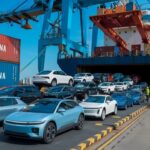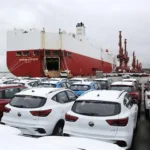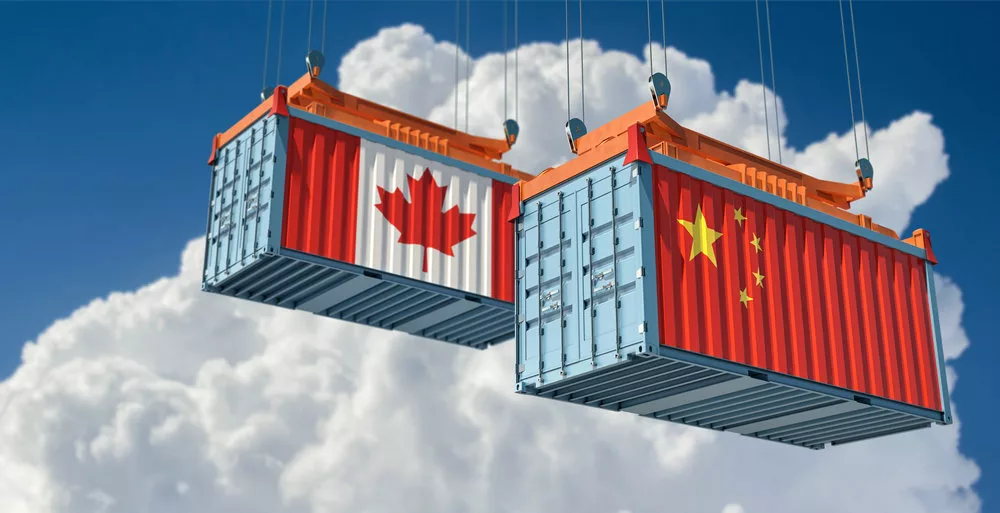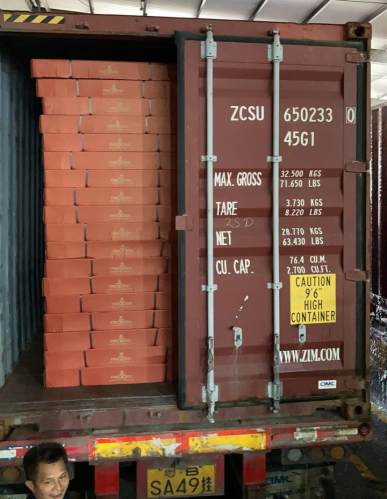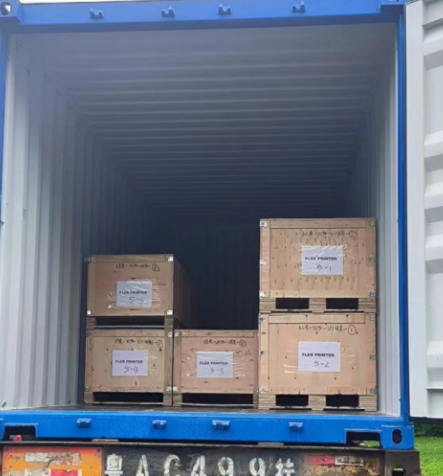
In a landmark policy shift announced on January 16, 2026, during Canadian Prime Minister Carney’s visit to China, Canada has officially restructured its import regulations for Chinese electric vehicles (EVs). Moving away from the prohibitive 100% surtax introduced in 2024, Canada is launching a new Annual Import Quota System.
For Chinese EV manufacturers (like BYD, Nio, Xpeng) and Canadian automotive importers, this represents a massive reopening of the trade corridor. However, navigating the new quota system, compliance standards, and logistics requirements requires precision.
As a logistics expert with over 15 years of experience in the China-to-North America trade lane, Dantful International Logistics breaks down what this policy means for your supply chain and how to execute a seamless Door-to-Door logistics strategy.
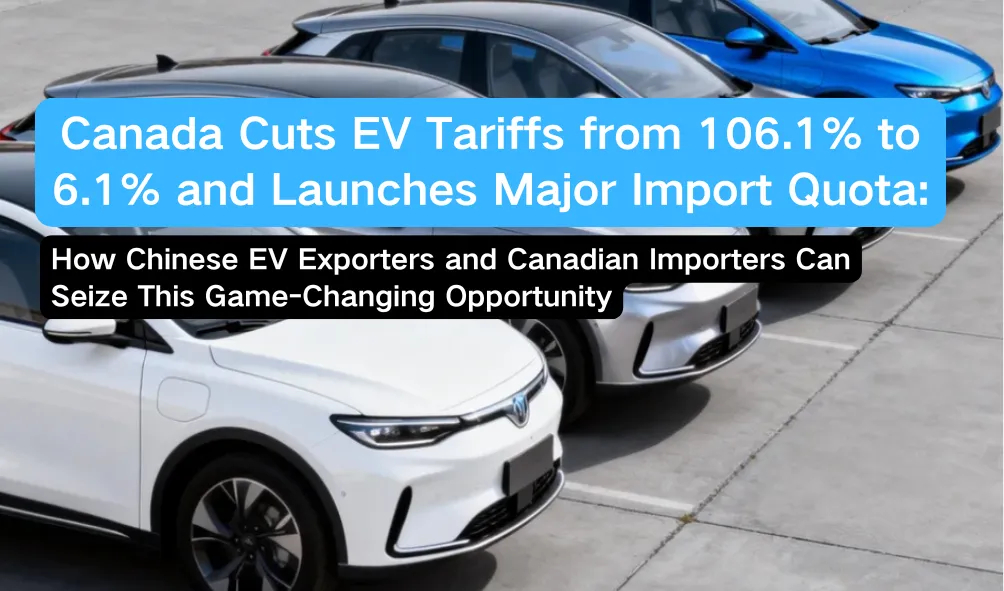
Policy Overview: Tariffs and Import Quotas
The core of this new policy consists of two major components:
- Tariff Reduction: The punitive 100% surtax on EVs imported from China, imposed in October 2024, will be abolished. In its place, a Most Favored Nation (MFN) rate of 6.1% will apply to EVs within an annual quota, reverting to pre-trade friction tariff levels .
- Import Quota: Canada will allocate an initial quota of 49,000 Chinese EVs per year, referencing pre-2024 trade volumes (when China exported 41,700 EVs to Canada in 2023) and covering less than 3% of the national new car market . The quota is planned to increase proportionally to approximately 70,000 units within five years.
For vehicles exceeding the annual quota, the applicable tariff is expected to revert to the 106.1% combined rate, though formal confirmation is pending . The policy will take effect after domestic regulatory revisions in Canada, with an anticipated launch window between late January and early February 2026—2026 will serve as the first full implementation year, with quotas prorated from the effective date . Notably, vehicles imported before January 16, 2026 but not yet cleared by customs will still be subject to the original 106.1% combined tariff .
Supporting Initiatives
- Localization Incentives: Over the next three years, Canada will incentivize Chinese companies to set up joint ventures domestically, aiming to strengthen the local EV supply chain.
- Affordable Models: By 2031, over half of quota-allotted EVs must have a landed price below CA$35,000, directly benefiting price-sensitive Canadian consumers.
- Eligibility & Certification: The policy covers pure electric (BEV) and plug-in hybrid (PHEV) passenger vehicles and selected light commercial vehicles, excluding electric motorcycles and low-speed EVs . Vehicles must meet Canadian Motor Vehicle Safety Standards (CMVSS) and Industry Canada Electromagnetic Compatibility Standards (ICES), including winter tire adaptability and low-speed warning sounds .
Sources: Xinhuanet, Canadian International Trade Tribunal, Ministry of Commerce of the People’s Republic of China
Background and Bilateral Context
The policy shift follows a year of significant disruption in the Canadian EV market, triggered by the 2024 surtax under U.S. pressure . Chinese EVs, renowned for their cost-efficiency and technological innovation, faced prohibitive duties that doubled retail prices and eliminated budget options for Canadian buyers . As a result, sales of EVs under CA$55,000 plummeted, threatening Canada’s 2035 zero-emission mandate and creating an 110,000-unit annual supply gap—one that Canadian automakers could meet only 10% of .
This recalibration is designed not only to stabilize local markets but also to revitalize diplomatic and economic relations between China and Canada, following years of strained bilateral engagement . The move also underscores China’s strategic role as a “predictable partner” in the words of Prime Minister Carney .
Bilateral Synergies: “EVs for Agri-food” and Financial Cooperation
This opening of the automotive market is matched by new concessions from China, forming a complementary “EVs for agri-food” trade pattern . Starting March 1, 2026, China will lower consolidated tariffs on Canadian canola from approximately 84-85% to 15% . Additionally, China will suspend retaliatory duties on 12 categories of Canadian products, including canola meal, lobster, crab, and peas—with the exemption set to last at least until the end of 2026 .
To support cross-border transactions, the two countries have also renewed a 200 billion yuan currency swap agreement, enhancing trade settlement flexibility and stabilizing business operations . These agricultural concessions are expected to bring nearly 3 billion Canadian dollars in new orders for Canadian exporters, benefiting farmers and fishermen directly .
Industry Response
- Chinese Perspective: The Ministry of Commerce of China has lauded Canada’s step as a “positive move in the right direction,” urging both sides to build a stable, competitive, and mutually beneficial environment for two-way automotive trade and industrial collaboration .
- Canadian Market Reaction: The Canadian Electric Vehicle Association’s CEO, Daniel Breton, expects the move to foster fair competition and incentivize affordable model launches by other automakers. Academic experts, such as McMaster University’s Professor Rashtav, highlight relief for consumers and the policy’s alignment with climate goals. Pulse Canada President Greg Cherewyk noted the agreement will restore approximately 700 million Canadian dollars in pea exports, boosting farmer confidence .
Strategic Implications for Stakeholders
For Chinese EV Exporters
- Market Access: Leading brands like BYD and NIO now have a defined, scalable channel for penetrating the North American market, building on pre-2024 growth momentum that saw 500% year-on-year export growth in H1 2024 .
- Product Positioning: Incentives favor affordable, high-tech models—manufacturers must align pricing and value-added features to maximize within-quota volumes.
- Certification Priority: Early completion of CMVSS and ICES certifications is critical to secure quota allocations, as Canadian authorities prioritize certified enterprises .
For Canadian Importers and Dealers
- Portfolio Expansion: Access to dependable, attractively priced Chinese EVs enables differentiation and market share growth, addressing the gap in budget-friendly EV options.
- Timing and Compliance: Early quota reservation via Canada’s Automated Commercial System (ACROSS) and adherence to bilingual labeling requirements are essential for speed to market .
- Supply Chain Solutions: Efficient international freight forwarding and customs clearance services are critical to capitalize on quota allocations and minimize landed costs.
Key Considerations for Trade and Logistics
| Factor | Impact of New Policy | Action Points |
|---|---|---|
| Tariff Structure | 6.1% MFN duty (within quota), 106.1% combined rate (expected above quota) | Plan import volumes to maximize within-quota savings |
| Quota Scale | 49,000 units (2026), grows to 70,000 (2031); unused quotas do not roll over | Secure quota application and shipment slots early via ACROSS system |
| Mode of Transport | Ocean freight preferred for volume; air freight for speed | Optimize shipment routes/frequencies via expert forwarders |
| Localization Efforts | JV establishment, Canadian distribution network required | Pursue local partnerships to satisfy policy goals |
| Compliance & Certification | Mandatory CMVSS (safety) and ICES (EMC) certifications; bilingual labeling | Complete Transport Canada certification and CBSA importer registration in advance |
How Dantful International Logistics Can Empower Your China–Canada EV Supply Chain
In the context of this seismic policy change, choosing a logistics partner with deep expertise in cross-border trade, regulatory compliance, and adaptable shipping solutions is key. Dantful International Logistics provides a full spectrum of one-stop international logistics services—including customs clearance, warehousing, sea and air freight, and local delivery designed specifically for automotive shipments.
Conclusion
Canada’s decision to reduce EV tariffs and introduce a progressive import quota for Chinese vehicles marks a once-in-a-decade opportunity for both Chinese exporters and Canadian importers. Navigating this evolving regulatory and commercial landscape requires not just agility, but also trusted international logistics support to capture quota benefits and serve the Canadian market efficiently. For automotive brands, distributors, and retailers ready to act, the window for first-mover advantage is open—partnering with an established international freight forwarder can make all the difference.
References
- Xinhuanet – Coverage of Canada–China trade relations
- Canadian International Trade Tribunal – Official trade policy updates
- 2026 Canadian Government Policy Release (Primary sources, in Chinese)
- Electric Vehicle Trade Data: Canadian Automotive Association
- Ministry of Commerce of the People’s Republic of China – Anti-discrimination Investigation Ruling
For detailed, real-time shipping solutions or regulatory consultation about EV exports from China to Canada, contact Dantful International Logistics—your trusted international logistics partner for automotive trade.

Young Chiu is a seasoned logistics expert with over 15 years of experience in international freight forwarding and supply chain management. As CEO of Dantful International Logistics, Young is dedicated to providing valuable insights and practical advice to businesses navigating the complexities of global shipping.