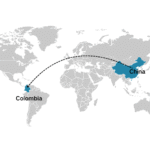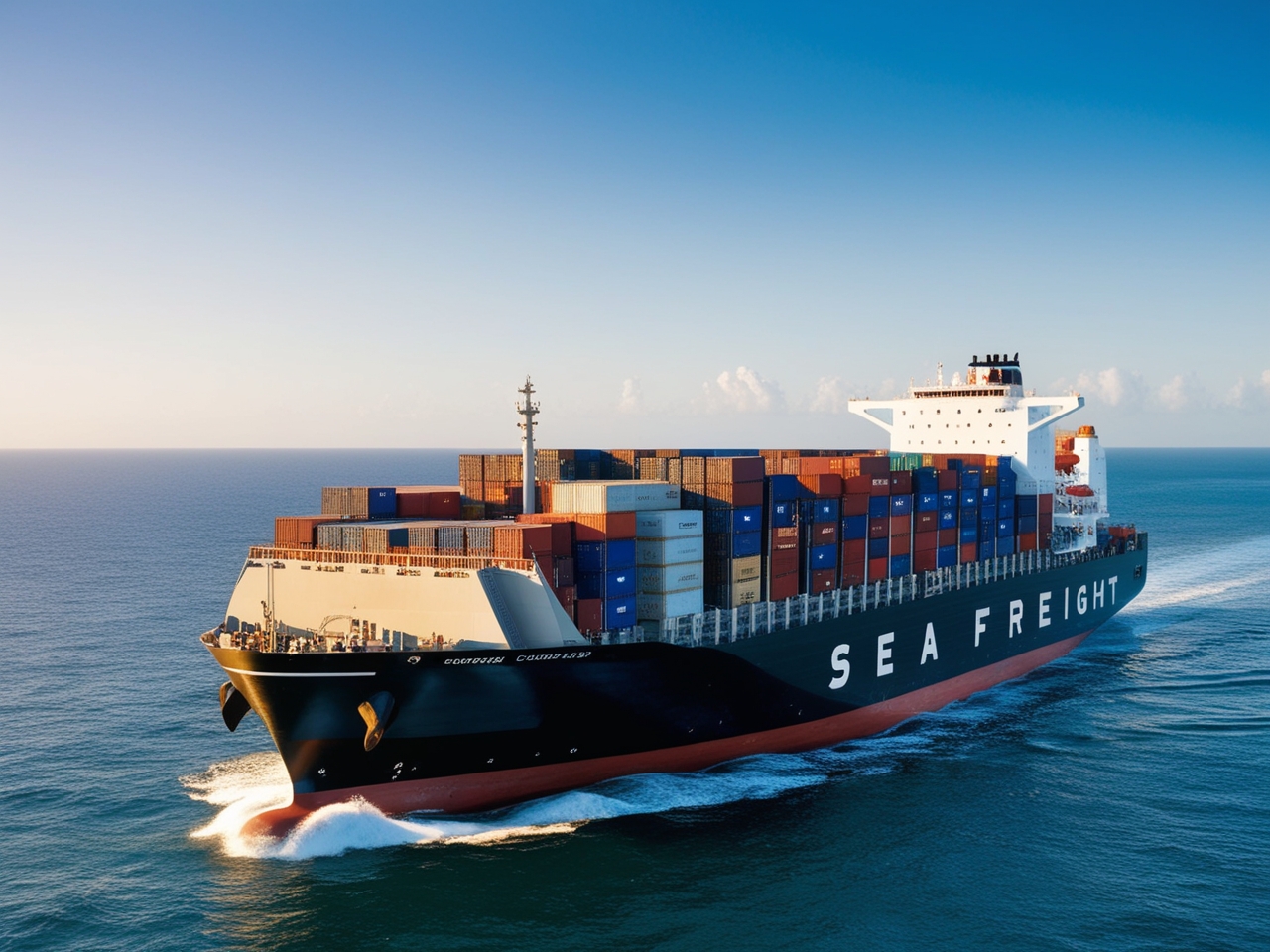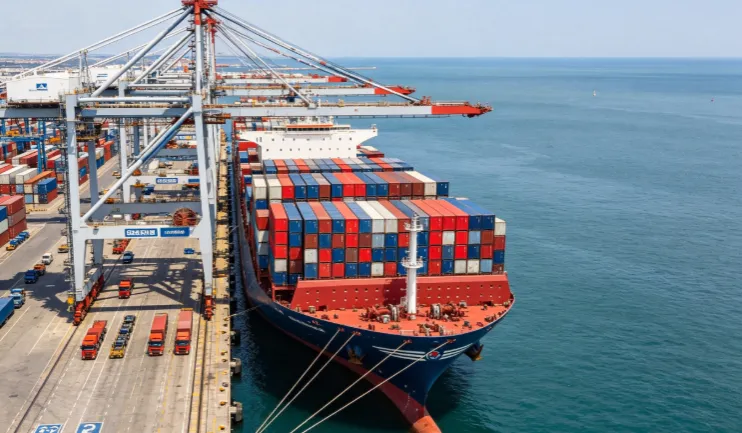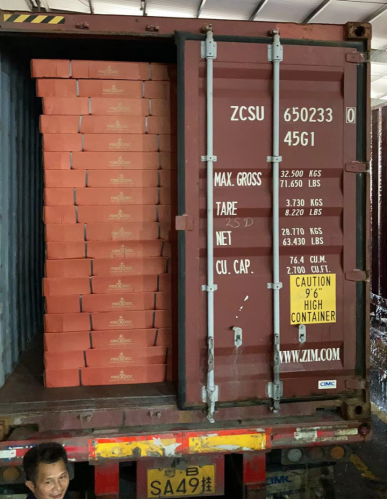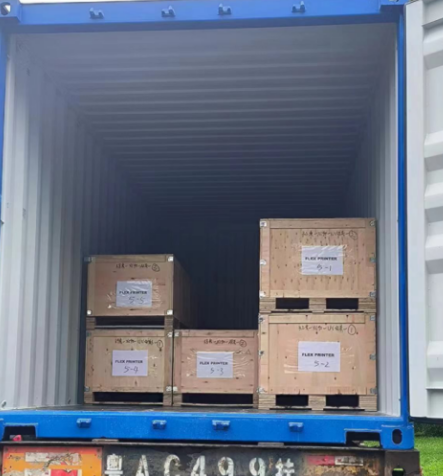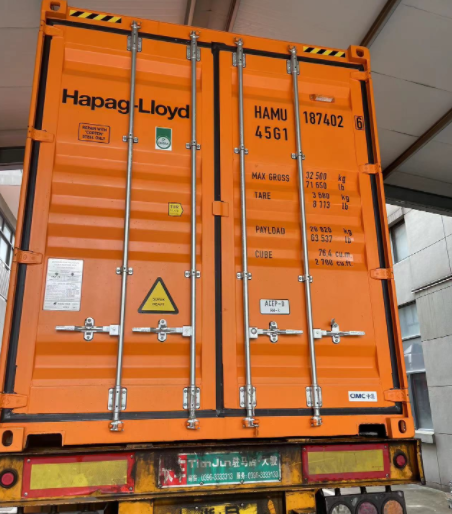
How long is shipping from China to Colombia? In November 2026: 28 to 40 days by sea from Yantian or Shanghai to Buenaventura on the Pacific, 32 to 45 days to Cartagena on the Caribbean, and 4 to 9 days by air into Bogotá. Door to door, the realistic figure is 36 to 50 days by sea — and the last of those days is not sailing time at all, it is a 6 to 8 hour climb from sea level to a 2,600 m plateau where Bogotá sits.
We have been routing Colombian cargo out of Shenzhen and Ningbo since 2008: electronics and homeware into Bogotá, industrial spares into Medellín, packaging and chemicals into Cali. What follows is the transit arithmetic behind those bookings — both coasts compared port pair by port pair, the mountain leg and what it does to a delivery date, the DIAN clearance days, and the two market conditions that decide whether your container arrives on the range or outside it.
Table of Contents
How Long Is Shipping from China to Colombia? The Answer by Mode
| Mode | Port or airport to port | Door to door | November 2026 rate anchor |
|---|---|---|---|
| Sea FCL to Buenaventura | 28 – 40 days | 36 – 48 days | $3,800 – 5,200 per 20GP |
| Sea FCL to Cartagena | 32 – 45 days | 38 – 52 days | $4,400 – 5,800 per 20GP |
| Sea FCL to Barranquilla | 36 – 48 days | 42 – 55 days | Quote only; draft-dependent |
| Sea LCL | 35 – 46 days | 43 – 58 days | $90 – 130 per CBM |
| Air freight to BOG / MDE | 2 – 4 days flying | 4 – 9 days | $11.60 – 17.60 per kg |
| Express courier | 1 – 3 days flying | 3 – 6 days | $14 – 22 per kg |
Two things about that table matter more than the numbers themselves. First, the sea ranges overlap: a well-booked Cartagena container can beat a badly booked Buenaventura one, because the ocean leg is the part you do not control and the truck leg is the part you do. Second, the air column is the only one that survives a launch date — at five to ten times the sea rate per kilo it is still the cheapest way to protect a fixed retail window.
Why the Rate Anchors Look Higher Than Last Year
Colombia sits on the South America rate complex, which repriced hard through 2026. The SCFI South America assessment stood at $4,371 per TEU on 30 October 2026, and Panama Canal slot costs plus transshipment surcharges are layered on top for any routing that touches Balboa or Colón. Published forwarder pages quoting “$2,200 to Buenaventura” are quoting an August 2026 or earlier market; the November 2026 quotes we see run several hundred to a thousand dollars above that for the same box. This article is a transit guide, so the rate column is only an anchor — but do not budget from a page that has not been updated since the summer.
Sea Freight Transit Times: Buenaventura vs Cartagena by Port Pair
Both coasts are served weekly from China, and the fastest string on the lane is a direct Pacific service rather than a canal transit.
Port-to-port transit, November 2026 (days, FCL):
| China origin | Buenaventura (Pacific) | Cartagena (Caribbean) | Barranquilla (river) |
|---|---|---|---|
| Shenzhen / Yantian | 28 – 38 | 32 – 44 | 38 – 48 |
| Guangzhou / Nansha | 29 – 38 | 33 – 44 | 38 – 48 |
| Shanghai | 30 – 40 | 32 – 45 | 36 – 48 |
| Ningbo | 31 – 41 | 33 – 46 | 38 – 50 |
| Qingdao | 33 – 43 | 35 – 47 | 40 – 52 |
Buenaventura is shorter from every Chinese port because the vessel crosses the Pacific once instead of crossing it and then threading the Panama Canal. The terminal complex — the SPRB container facility and Puerto Bahía — handles most of Colombia’s Pacific boxes, and the trade-off is volatility: Buenaventura dwell time moves sharply in the September to November import peak, and a two-day queue at the gate erases the ocean advantage in an afternoon.
Cartagena is the Caribbean hub with the widest weekly choice of Asia services, which matters when a booking gets rolled. Its ocean transit looks 3 to 6 days longer on paper, and it usually involves one transshipment at Balboa, Colón or Kingston. For Medellín, Barranquilla, Santa Marta and the Atlantic industrial belt it still wins door to door, because the truck leg is shorter than from the Pacific coast.
Barranquilla is the river option. The Magdalena channel depth governs how much a vessel can load, sailings are thinner, and 36 to 48 days is realistic. For cargo staying inside the Barranquilla free zone or moving up the river corridor, the extra week is still cheaper than trucking from another coast.
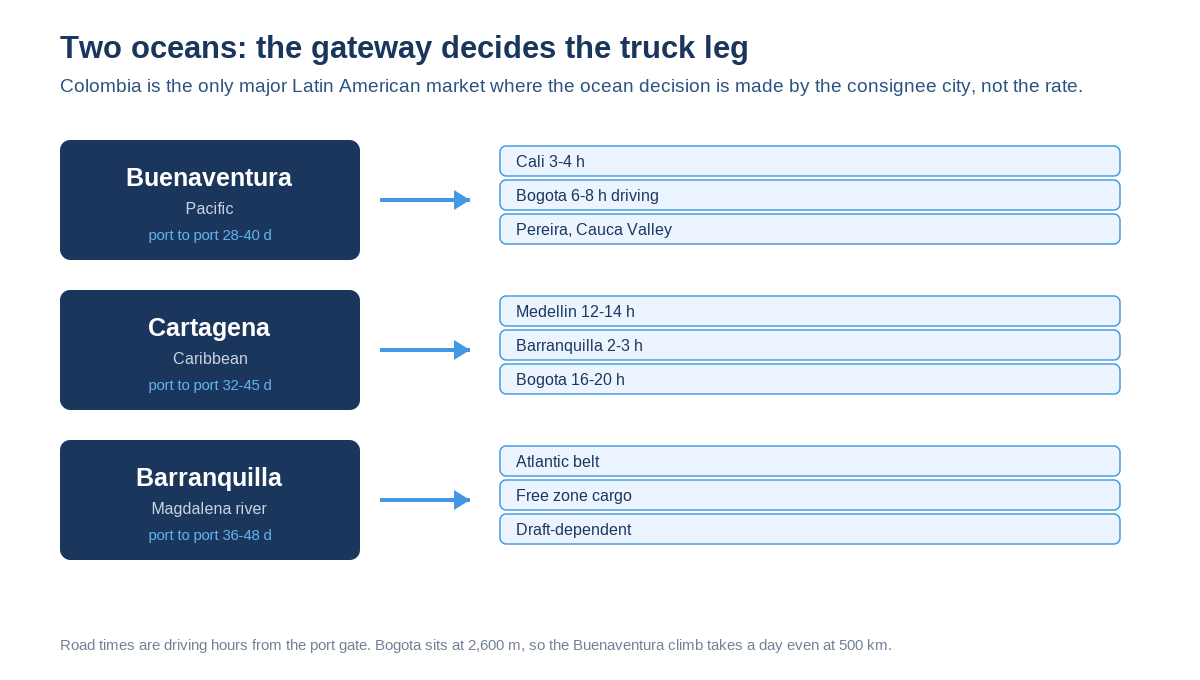
Which Coast Should You Book? The Decision by Destination
| Consignee city | Book | Why |
|---|---|---|
| Bogotá | Buenaventura, or Cartagena in the Pacific peak | 500 km and a day of driving, against 1,000 km and two to three days from Cartagena |
| Cali, Palmira, Yumbo | Buenaventura | 120 km of valley road, the cheapest inland leg in the country |
| Pereira, Manizales, Armenia | Buenaventura | Coffee-axis roads are shorter from the Pacific |
| Medellín, Rionegro | Cartagena | 12 to 14 hours, against a two-cordillera run from Buenaventura |
| Barranquilla, Santa Marta, Cartagena | Cartagena | Same coast, same day |
| Bucaramanga, Cúcuta | Cartagena, or Barranquilla for river cargo | Northern haul is shorter from the Caribbean |
| Free zone or maquila cargo | Nearest free zone to the port | Moving bonded goods across the country is its own procedure |
How Long Does LCL Take to Colombia?
LCL into Colombia runs 35 to 46 days port to door, roughly 5 to 10 days more than FCL on the same sailing. Two of those days are the wait for the last co-loader’s cargo before the container is stuffed; the remainder is de-consolidation at a Buenaventura or Cartagena CFS, which cannot start until the whole box has cleared.
Colombian LCL is also where paperwork mistakes cost the most time. A groupage container has several importers’ files attached to one bill of lading, and one importer’s missing permit holds the de-consolidation for everybody. If you ship LCL into Colombia regularly, insist that your forwarder files your declaration before the vessel berths rather than after.
The Mountain Leg: Why Bogotá Adds Days Nothing Else Adds
No other lane in the region has an inland leg like this one, and it is the single most under-quoted part of a Colombia transit estimate.
| Route | Distance | Road time | What sets it |
|---|---|---|---|
| Buenaventura to Cali | 120 km | 3 – 4 hours | Flat valley road, the easy leg |
| Buenaventura to Bogotá | 500 km | 6 – 8 hours’ driving, 1 – 3 days with staging | Climb through the Cordillera Occidental to 2,600 m |
| Buenaventura to Medellín | 480 km | 10 – 14 hours | Two cordilleras, coffee-axis roads |
| Cartagena to Barranquilla | 120 km | 2 – 3 hours | Coastal highway |
| Cartagena to Medellín | 640 km | 12 – 14 hours | Magdalena valley, then the climb |
| Cartagena to Bogotá | 1,000 km | 16 – 20 hours’ driving, 2 – 3 days | Long haul via the Magdalena valley |
Four practical consequences follow, and each one shows up in the delivery date:
Truck capacity out of Buenaventura is a real constraint. A 40HQ needs a compliant chassis and a permitted route, and the number of trucks willing to take a 40-foot box up the cordillera is limited compared with the flat runs around Cartagena. In peak weeks, waiting for a truck adds 1 to 2 days before the wheels even turn.
Bogotá’s altitude changes the truck, not the ship. Above 2,600 m, naturally aspirated diesels lose power and hauliers plan slower average speeds and more rest stops. It is a 500 km leg that takes a day of driving either side of the staging.
Rainy season closes roads, not ports. The two wet periods — roughly April to May and October to November — bring landslides on the Buenaventura corridor. A closure that lasts 36 hours costs three days of delivery schedule because the queue to clear takes longer than the closure.
The coast decision should follow the consignee city, not the ocean rate. Buenaventura for Bogotá, Cali, Pereira and the Cauca Valley; Cartagena for Medellín, the Atlantic coast and anything that cannot tolerate Pacific congestion. Getting this wrong does not add hours — it adds days and $600 to $1,500 of trucking on a 40GP.
Air Freight and Express to Bogotá and Medellín
Air is a 4 to 9 day door-to-door product, and the airport you choose matters less than two facts about Colombian geography.
Bogotá is hot and high. El Dorado sits at 2,640 m, so aircraft take off with reduced payload on warm days — freighters cannot always lift a full load, and rates on BOG reflect that. Medellín’s José María Córdova airport at Rionegro is lower but further from the city, which moves the cost from the air leg to the truck.
| Route | Flight time | Door to door | November 2026 rate anchor |
|---|---|---|---|
| Shanghai (PVG) to Bogotá (BOG) | 2 – 3 days | 4 – 8 days | $11.60 – 16.00 per kg |
| Shenzhen (SZX) / Guangzhou (CAN) to BOG | 2 – 4 days | 5 – 9 days | $12.00 – 17.60 per kg |
| Any China gateway to Medellín (MDE) | 3 – 4 days | 6 – 10 days | Quote only |
| Express courier, major cities to major cities | 1 – 3 days | 3 – 6 days | $14 – 22 per kg |
Express tiering, business days, door to door: DHL Express and FedEx International Priority typically deliver in 3 to 5 business days to Bogotá, Medellín and Cali; UPS Worldwide Saver in 4 to 6. All three price per chargeable kilo (volumetric weight divided by 6,000) and all three stop being economical above roughly 100 to 150 kg, where a consolidated air booking wins on price for one or two extra days.
The transit killer on air is not the flight. It is a consignee without a RUT, or an invoice whose declared value does not match the supplier’s paperwork — either one turns a five-day shipment into a ten-day one, and both are fixable before the cargo leaves China.
Door to Door from China to Colombia: The Full Timeline
| Stage | Typical days | What actually happens |
|---|---|---|
| Supplier pickup and origin handling | 2 – 5 | Truck to port or CFS, booking confirmed against cut-off |
| Export declaration and loading | 1 – 3 | Chinese export clearance, VGM, stuffing and sealing |
| Ocean leg | 28 – 45 | Buenaventura, Cartagena or Barranquilla, per the matrix above |
| Discharge and terminal release | 1 – 3 | Berth waiting, discharge, release against the bill of lading |
| DIAN declaration and levante | 2 – 5 working days | Muisca filing, aforo channel, duty and IVA settlement |
| Inland trucking to consignee | 4 hours to 3 days | The mountain leg, depending on city and season |
| Total, door to door by sea | 36 – 52 | Varies by coast and destination city |
Air compresses the same chain to 4 to 9 days because it removes the ocean leg and the cordillera, not because either is handled better. The DDP version — one price covering freight, DIAN clearance, duty, 19% IVA and delivery — is described on our door to door shipping from China to Colombia page and on DDP Shipping Services.
DIAN Clearance: How Many Days It Adds
Colombian clearance runs through the DIAN and is filed on the Muisca system by a licensed customs broker (agente aduanero). With a complete file it takes 2 to 5 working days from arrival; with a problem it takes 10 to 20, and the aforo channel decides which.
| Clearance outcome | Time added | Trigger |
|---|---|---|
| Aforo verde (green channel) | 2 – 3 working days | Documentation accepted, no inspection |
| Aforo naranja (orange) | 3 – 5 working days | Documentary review of value or classification |
| Aforo rojo (red) | 5 – 15 working days | Physical inspection; the expensive outcome |
The four things that push a file from green to red:
- A missing RUT or an unregistered importer. The importer of record needs a NIT and RUT; a foreign seller without a Colombian entity needs either a local importer or an indirect representation arrangement, and setting that up is a multi-week project, not a port-day fix.
- An HS code that does not match the Chinese export declaration. Mismatches between the two ends are the most common cause of a red channel, and they are free to prevent.
- A product needing a permit. Electrical goods need RETIE conformity, food and cosmetics need INVIMA registration, and both are checked at declaration. Labels must be in Spanish.
- Anti-dumping exposure. Textiles, footwear and some steel lines carry anti-dumping duties on Chinese origin, which changes the duty calculation and sometimes the classification.
| Charge | Rate | Basis |
|---|---|---|
| Import duty (arancel) | 0% – 35% by HS code; 0% – 5% on most industrial inputs | Customs value (CIF) |
| IVA | 19% | Customs value + duty |
| Anti-dumping duty | Product-specific | Applies on listed Chinese origin lines |
| Brokerage | $200 – 450 per entry | Muisca filing, classification, levante |
| Postal/courier threshold | Goods up to US$200 via tráfico postal may enter duty-free | Only for compliant postal/courier traffic, not commercial sea freight |
There is no China–Colombia free trade agreement, so Chinese-origin goods pay MFN rates. Our Customs Clearance team files Colombian entries with local brokers and checks the HS code at both ends before the vessel sails — the cheapest inspection is the one that never happens.
Why Two Forwarders Quote Different Transit Times
Three structural conditions explain most of the spread on this lane, and none of them is a carrier being slow.
The Panama Canal sets the Cartagena schedule, not the carrier. Canal transit slots and draft limits govern how many vessels can pass and how heavily they can load, and every booking that routes through Balboa or Colón inherits that queue. When slots tighten, Cartagena services absorb 3 to 7 days that no sailing schedule shows.
Buenaventura congests on a calendar. The Pacific gateway’s dwell times rise through the September to November import peak, which is exactly when Q4 stock is moving. The ocean advantage of the Pacific route can be wiped out by gate queues, and importers who book Cartagena for December delivery are often buying predictability rather than speed.
Rollovers cost a week, not a day. Asia–South America strings do not all call weekly, so a rolled booking can mean a seven-day wait on some services and up to fourteen on the thinner ones. A container at the terminal 24 hours before cut-off with the VGM and export declaration filed is not the box that gets rolled.
Where Your Container Actually Relays
Almost nothing on this lane is a straight port-to-port call, and the relay point explains four to ten days of the difference between two quotes.
| Relay hub | Routes that use it | Time added |
|---|---|---|
| Balboa (Panama) | Pacific services connecting to Caribbean Colombia | 3 – 7 days |
| Colón (Panama) | Cartagena-bound cargo, Atlantic side of the canal | 4 – 8 days |
| Kingston (Jamaica) | Caribbean transshipment to Cartagena and Barranquilla | 4 – 10 days |
| Busan (South Korea) | North China cargo without a direct West Coast South America call | 5 – 9 days |
| Manzanillo (Mexico) | Occasional relay on transpacific services | 4 – 8 days |
A direct West Coast South America call into Buenaventura removes the relay entirely, which is why a Yantian booking can beat a Qingdao booking by two weeks even though the sailing distances are similar. Ask for the relay port and the connection window in writing: a four-day connection at Kingston is a normal cost of the routing, and a nine-day one is a schedule that has already gone wrong.
When Is the Fastest and Slowest Time to Ship from China to Colombia?
| Window | Transit risk | Why |
|---|---|---|
| Mid-January to mid-February | Highest | Pre-CNY rush and rolled bookings. CNY falls 6 February 2027 |
| February to April | Falling | Production restarts; sailings normalise |
| April to May | Moderate inland risk | First rainy season; landslides on the Buenaventura corridor |
| June to August | Lowest | Stable schedules on both coasts |
| September to November | Highest inland and port risk | Buenaventura peak congestion plus the second rainy season |
| Early October | Moderate | Golden Week closes Chinese factories and CFS operations |
| December | Moderate | Colombian holidays slow clearance and trucking, not the ocean leg |
Two dates deserve a place in the 2027 calendar. Chinese New Year falls on 6 February 2027, eleven days earlier than 2026, which squeezes the pre-holiday booking window into January. And the second rainy season, October to November, is when the Buenaventura-to-Bogotá road is most likely to close — if your delivery date cannot move, that is the month to book Cartagena and pay the trucking difference.
FCL or LCL: How the Choice Changes Transit
The gap between the two modes on this lane is 5 to 10 days, and at the boundary volumes the money is close enough that time should decide.
| Cargo volume | LCL at $90 – 130 per CBM | 20GP at $3,800 – 5,200 | Recommended |
|---|---|---|---|
| 8 CBM | $720 – 1,040 | $3,800 – 5,200 | LCL |
| 12 CBM | $1,080 – 1,560 | $3,800 – 5,200 | LCL |
| 15 CBM | $1,350 – 1,950 | $3,800 – 5,200 | LCL unless time-critical |
| 18 CBM | $1,620 – 2,340 | $3,800 – 5,200 | Judgement call: FCL buys 5 – 10 days |
| 20 CBM | $1,800 – 2,600 | $3,800 – 5,200 | FCL |
| 25 CBM | $2,250 – 3,250 | $3,800 – 5,200 | FCL |
The dollar crossover sits above 25 CBM at the cheap end of the LCL range, but the practical answer arrives earlier, because LCL carries de-consolidation days and a shared-container risk profile. Above 18 CBM, book the box if the arrival date matters. The mechanics are in what is LCL and FCL in shipping.
How to Choose a Freight Forwarder from China to Colombia?
This lane has two coasts, two oceans’ worth of routing options, a canal queue in the middle and a mountain at the end — which means the forwarder’s job is choosing a route, not booking a sailing. Three checks tell you who is doing that work:
- Ask which coast they would book for your consignee city, and why. The answer should name the truck leg and the season. A forwarder who quotes Buenaventura for a Medellín delivery without discussing the cordillera has not planned the journey.
- Ask who files the Muisca declaration and under whose NIT. Clearance is where 3 days becomes 15, and the broker’s identity and experience with your HS code matter more than the ocean rate.
- Ask what happens if the container is rolled or the road closes. A named alternative routing — Cartagena via Panama when Buenaventura backs up, or air for the last urgent pallets — is the mark of a lane specialist.
Dantful has routed Colombian cargo since 2008 from Shenzhen, with Class-A freight forwarding, NVOCC, FMC and Jctrans certification, direct carrier contracts on the transpacific and Caribbean strings, and Spanish-speaking coordination at destination. Tracking updates and loading photos arrive daily while the cargo is still in China; 50 operations staff and 50+ customer service staff cover the lane around the clock. Details on our freight forwarder in Shenzhen page and in the freight forwarder from china to Colombia guide.
For cost rather than time, the container shipping costs from China to Colombia and sea freight from China to Colombia pages carry the full build-up, cheapest shipping company from China to Colombia covers the small-shipment cases, and the service overviews sit on ocean freight and Air Freight. For the sourcing side, see shipping agent from China to Colombia and the country landing page at Shipping From China TO Colombia.
FAQ: Shipping Time from China to Colombia
How long does sea freight from China to Colombia take?
28 to 40 days port to port into Buenaventura and 32 to 45 days into Cartagena. Door to door, add 3 to 7 days for DIAN clearance and inland trucking, which gives 36 to 52 days depending on coast and destination city.
Is Buenaventura or Cartagena faster?
For Bogotá, Cali and the Cauca Valley, Buenaventura is usually 2 to 4 days faster overall. For Medellín, Barranquilla and the Atlantic coast, Cartagena wins despite the longer ocean leg. During the September to November Pacific congestion peak the answer can flip.
How long does air freight from China to Bogotá take?
4 to 9 days door to door, with 2 to 4 days of flying. Rates in November 2026 run $11.60 to $17.60 per kg, higher than Europe-bound air because of distance, limited capacity and Bogotá’s high-altitude payload limits.
How many days does customs clearance take in Colombia?
2 to 5 working days with a complete file. A red-channel inspection adds 5 to 15 working days, and the most common triggers are an HS code mismatch between the Chinese and Colombian declarations or a missing RUT on the importer.
What does it cost to ship a 20ft container from China to Colombia?
$3,800 to $5,200 to Buenaventura and $4,400 to $5,800 to Cartagena port to port in November 2026, plus origin charges, destination handling, duty and 19% IVA. Rates on this lane have risen through 2026, so treat any quote older than a month as indicative.
Do I pay VAT and duty on imports into Colombia?
Yes. Duty ranges from 0% to 35% by HS code on the CIF value, and IVA is 19% on the CIF value plus duty. Textiles, footwear and some steel lines carry product-specific anti-dumping duties on Chinese origin.
Can shipping to Bogotá be done door to door?
Yes, and it usually should be, because the Bogotá leg combines port handling, a mountain road and DIAN clearance that are simpler to price as one movement. Expect 36 to 52 days by sea DDP and 6 to 10 days by air DDP.

Young Chiu is a seasoned logistics expert with over 15 years of experience in international freight forwarding and supply chain management. As CEO of Dantful International Logistics, Young is dedicated to providing valuable insights and practical advice to businesses navigating the complexities of global shipping.