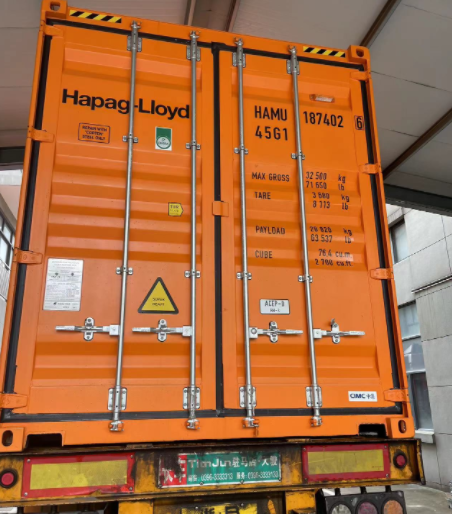
As a first-time importer, you finally find the perfect supplier on Alibaba or Global Sources, and they agree to send a sample. The product costs $30. But then, the supplier quotes you $120 for shipping.
Sticker shock. This is the most common reaction we see from new buyers.
Shipping your first sample from China often feels disproportionately expensive. However, understanding how these costs are calculated, what hidden fees to watch out for, and how to negotiate can save you hundreds of dollars before you even place your first bulk order.
Here is the ultimate guide to the true logistics costs of shipping samples from China and how to navigate the process like a pro.
What to Expect When Shipping Your First Sample from China
The transition from finding a supplier online to holding a physical product in your hands involves a specialized micro-logistics process.
Key Steps in the Sample Shipping Process
- Sample Production/Preparation: The factory prepares the item (often a pre-production prototype or off-the-shelf stock).
- Packaging and Weighing: The supplier packs the sample and calculates the Gross Weight and Dimensional (Volumetric) Weight.
- Quoting and Payment: The supplier (or your freight forwarder) quotes the shipping cost. You pay upfront.
- Dispatch: The courier (DHL, FedEx, UPS) picks up the package from the factory.
- Export Clearance (China): The courier handles the Chinese customs declaration.
- Transit: International air transport to your destination country.
- Import Clearance: Customs authorities in your country assess the package for duties and taxes.
- Final Delivery: The local courier delivers the sample to your door.
Common Challenges Faced by First-Time Importers
- The “Supplier Shipping Markup”: Suppliers are manufacturers, not logistics experts. They often use standard retail courier rates or add a markup to the shipping fee to cover their handling time.
- Dimensional Weight Surprises: You assume you are paying for a 2kg item, but because the supplier used a large box, you are billed for 6kg of “volumetric weight.”
- Customs Hold-Ups: The sample lacks a proper Commercial Invoice, causing customs to hold it and charge you warehouse storage fees.
Understanding the True Logistics Costs for Sample Shipping
To avoid being overcharged, you must understand exactly what you are paying for.
Breakdown of Freight Charges: Air vs. Sea vs. Express
For 95% of first-time samples, Express Courier (DHL, FedEx, UPS) is the only logical choice.
- Express Courier: Door-to-door, fast (3-7 days), and includes basic customs clearance. Best for parcels under 45kg.
- Standard Air Freight: Airport-to-airport. Requires a customs broker. Not cost-effective for shipments under 100kg.
- Sea Freight: Far too slow (30-40 days) and involves high destination port fees. Never use sea freight for a standard sample unless it is a massive piece of heavy machinery.
Hidden Fees: Customs Duties, Taxes, and Handling Charges
The freight quote is rarely the final cost. Be prepared for:
- Import Duties & Taxes: Depending on your country, you may have to pay import taxes. However, many countries have a De Minimis threshold. For example, in the USA, shipments valued under $800 are generally duty-free. In the EU, VAT applies to almost all imports regardless of value.
- Courier Disbursement/Advancement Fee: If FedEx or DHL pays customs duties on your behalf, they will charge you an admin fee (usually around $15-$20 or 2% of the duty amount).
- Remote Area Surcharge: If your delivery address is outside standard courier routes, expect an extra $30-$50 fee.
Sample Size, Weight, and Packaging: How They Impact Your Shipping Cost
Couriers charge based on the Chargeable Weight, which is the greater of the Gross Weight or the Dimensional (Volumetric) Weight.
- Formula: Length(cm) x Width(cm) x Height(cm) / 5000 = Dimensional Weight (kg).
- Example: A plush toy weighs 1kg. But it’s packed in a 40x40x40cm box. The dimensional weight is (40x40x40)/5000 = 12.8kg. You will be charged for 13kg, not 1kg.
Choosing the Best Shipping Method for Your Sample
Comparing Air Freight, Sea Freight, and Express Courier for Samples
| Feature | Express Courier (DHL/UPS/FedEx) | Standard Air Freight | Sea Freight (LCL) |
|---|---|---|---|
| Best For | 99% of samples (0.5kg – 45kg) | Large/Heavy prototypes (>100kg) | Massive machinery only |
| Transit Time | 3 – 7 Days | 7 – 14 Days | 30 – 45 Days |
| Service Level | Door-to-Door | Airport-to-Airport | Port-to-Port |
| Clearance | Handled by Courier | Broker Required | Broker Required |
How to Select the Right Shipping Option for Speed and Cost
If you need it in 3 days, ask for DHL or FedEx Priority. If you can wait 7-10 days, ask for Economic Express (like UPS Expedited or FedEx IE), which can save you 20-30% on the freight cost.
Essential Documents and Compliance for Shipping Samples from China
Even a $10 sample needs paperwork to cross international borders legally.
Commercial Invoice, Packing List, and Proforma Invoice Explained
- Proforma Invoice (PI): The preliminary bill sent by the supplier for you to pay for the sample.
- Commercial Invoice (CI): The official document used by Customs to determine the value of the goods and assess duties.
- Packing List: Details the weight, dimensions, and materials of the package.
Customs Regulations: Avoiding Delays and Extra Costs
Expert Tip: Ask your supplier to declare the goods accurately on the Commercial Invoice. If the item is strictly for evaluation and cannot be resold, they should mark it as: “Sample of no commercial value – Not for resale.” Sometimes, Customs will mutilate (e.g., punch a hole in a garment) “free samples” to ensure they aren’t sold, so communicate clearly with your supplier.
How to Calculate Your Total Landed Cost When Importing Samples
The “Landed Cost” is the total price of getting the sample to your desk.
All-In Cost Formula: Freight, Insurance, Duties, and Clearance
Total Landed Cost = Sample Product Cost + Express Freight Cost + Import Duties + Local Taxes (VAT) + Courier Admin Fees.
Avoiding Surprises: Cost Scenarios for Small Sample Shipments
- Scenario A (USA): $50 sample + $80 DHL shipping. Total value $130 (Under $800 De Minimis). Duties = $0. Total Landed Cost = $130.
- Scenario B (UK): $50 sample + $80 DHL shipping. Total value £100. UK VAT (20%) applies to product + shipping. VAT = £20. Courier admin fee = £12. Total Landed Cost = £132.
Tips to Save Money and Avoid Pitfalls When Shipping Samples
Negotiating with Chinese Suppliers and Freight Forwarders
- Don’t use the supplier’s default quote blindly. Suppliers often don’t have the best courier discounts.
- Use a Freight Forwarder for Sample Consolidation: If you are ordering samples from 3 different factories, do not ship 3 separate DHL packages. Instead, have all three suppliers ship domestically to a China-based shipping agent like Dantful (domestic shipping costs pennies) to consolidate all 3 samples into one box in China, then ship it to you. This cuts costs by 40-50%.
Minimizing Damages and Losses During International Transit
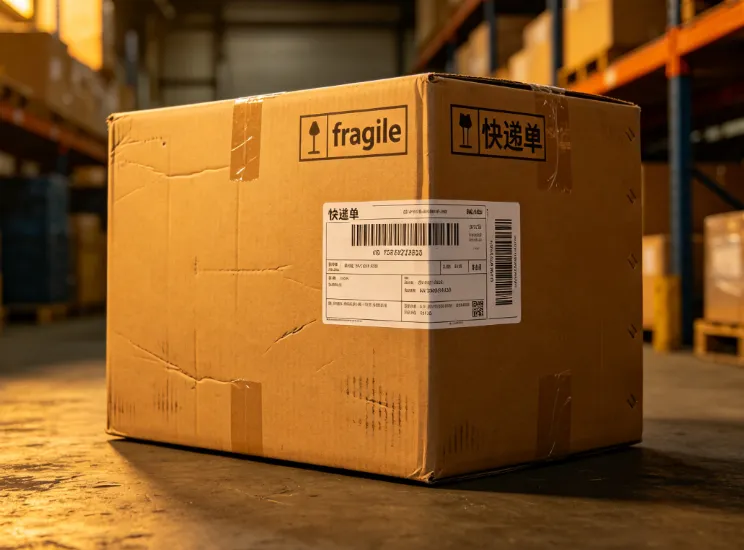
Express couriers throw boxes. It is a harsh reality. Insist that your supplier uses a 5-ply corrugated carton and fills all empty space with bubble wrap. A damaged sample wastes money and delays your product launch by weeks.
Read More:
- Shipping From China to the United States
- Shipping From China TO CANADA
- Shipping From China To Netherlands
- Shipping From China To UNITED KINGDOM
- Shipping From China To ALGERIA
- Shipping from China to UAE
- Shipping from China to Saudi Arabia
Tracking and Receiving Your Sample Shipment
Real-Time Tracking Tools for First-Time Importers
Always demand a tracking number (AWB – Air Waybill) from your supplier as soon as the package ships. Track it directly on the DHL/FedEx/UPS website.
What to Do If Your Sample Shipment Is Delayed or Lost
Delays usually happen at Customs. If your tracking status shows “Clearance Delay,” immediately contact the local courier’s customer service. They usually just need a proof of purchase (a PayPal receipt or the Proforma Invoice) to release the goods.
Transitioning from Samples to Bulk: How Dantful Can Help
Successfully receiving and evaluating your sample is just step one. Once you approve the product and place a bulk order of 500kg or 10 CBM, Express Courier becomes financially impossible. That is when you need a strategic logistics partner.
At Dantful International Logistics, we don’t just ship boxes; we build supply chains. We seamlessly transition our clients from cost-effective sample consolidation to high-volume Air Freight, Sea Freight (FCL/LCL), and complete DDP Shipping Services door-to-door solutions.
We navigate the complex world of Chinese export Customs Clearance, international freight rates, and destination compliance so you can focus on growing your brand.
FAQs About Shipping Samples from China
1. Why is the shipping cost for a sample higher than the product price?
This is the most common surprise for new importers. International express couriers charge based on either the actual weight or the “dimensional weight” (the space the box takes up)—whichever is greater. Because samples lack the economies of scale of bulk shipments, they incur the highest per-kilogram freight rates. A $10 plush toy in a large box can easily cost $80 to ship.
2. Should I use my own FedEx/DHL account or let the Chinese supplier pay?
Almost always let the supplier (or your China-based freight forwarder) pay the shipping upfront (Freight Prepaid). Chinese exporters ship massive volumes and have deeply discounted contracts with express couriers—often 50% to 70% cheaper than the standard public rates you would pay using your own local account (Freight Collect).
3. How can I avoid paying customs duties on a small sample?
Ask your supplier to clearly declare the item on the Commercial Invoice as a “Sample of No Commercial Value – Not for Resale.” Additionally, if you are shipping to the USA, any shipment valued under $800 falls under the De Minimis threshold and is exempt from import duties.
4. How long does it actually take to receive a sample from China?
If you use standard Express Courier (DHL, FedEx, UPS), it typically takes 3 to 7 business days to reach the US or Europe. If you opt for an “Economic Express” route to save 20-30% on costs, expect it to take 7 to 12 days. Never use Sea Freight for standard samples, as it takes 30-45 days.
5. I’m buying samples from three different Alibaba suppliers. How do I save on shipping?
Do not let them ship three separate packages internationally. Instead, use a Sample Consolidation service. Have all three suppliers ship their items to a freight forwarder in China (like Dantful) for a few dollars. The forwarder will combine them into one single, tightly packed box and ship it to you. This strategy typically saves 40-50% on international shipping fees.
6. Can I ship products with lithium batteries or liquids as samples?
Yes, but they are classified as “Sensitive Goods” (DG – Dangerous Goods). You cannot use standard shipping channels. The supplier must provide a UN38.3 test report or MSDS, and the sample must be routed through specialized DG courier channels. This usually adds $20-$50 to the cost and extends transit time by a few days.
7. What happens if Customs holds my sample?
If your tracking shows a “Clearance Delay,” it usually means Customs is missing information (like a proper Commercial Invoice) or questioning the declared value. Contact the courier’s local customer service immediately. Usually, providing a screenshot of your PayPal receipt or the Proforma Invoice from the supplier is enough to get the package released.

Young Chiu is a seasoned logistics expert with over 15 years of experience in international freight forwarding and supply chain management. As CEO of Dantful International Logistics, Young is dedicated to providing valuable insights and practical advice to businesses navigating the complexities of global shipping.