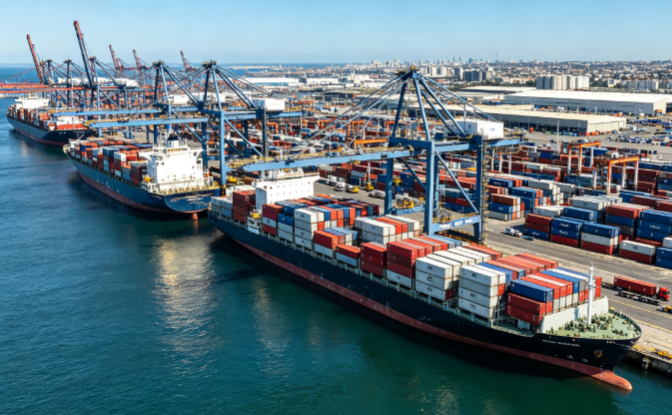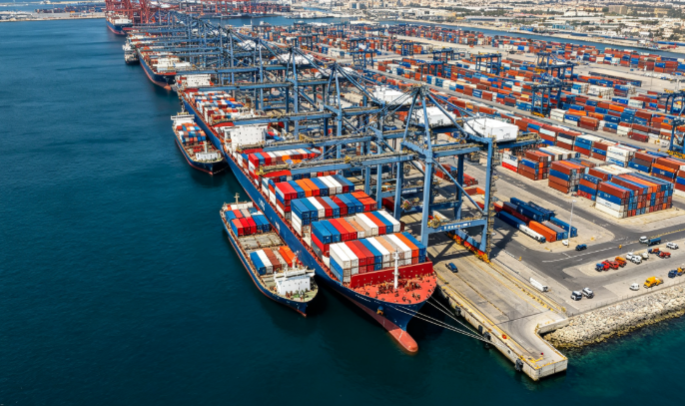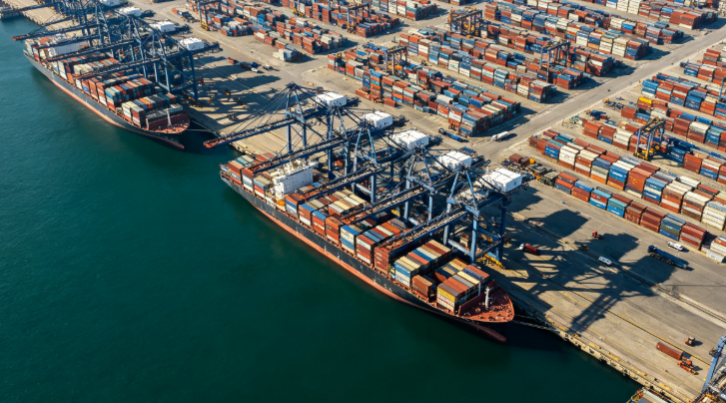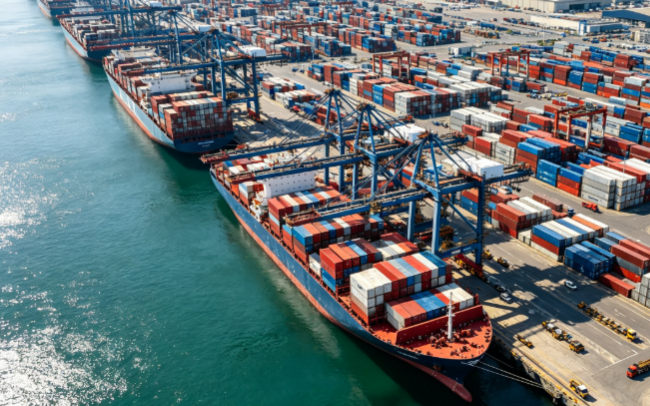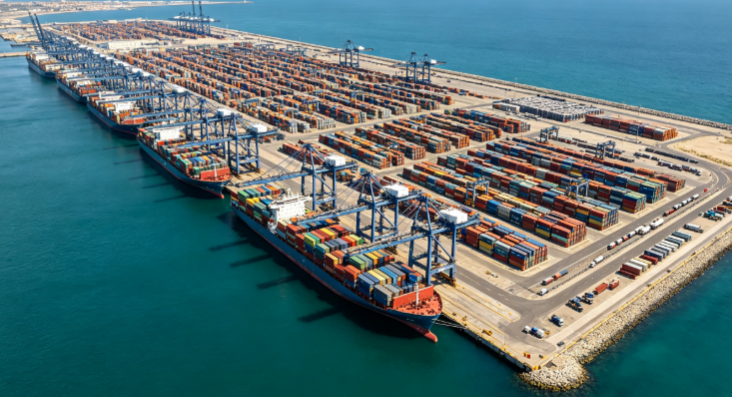
China exported over $3.4 trillion in goods in 2025. Behind every container that departed from Shenzhen, Shanghai, or Ningbo stood a freight forwarding company managing Chinese export customs, carrier negotiations, and global logistics networks. Yet for international importers, identifying which of the hundreds of top freight forwarding companies in China is the right logistics partner remains one of the most consequential — and confusing — business decisions they face.
The challenge is twofold. First, the sheer volume: over 70% of China’s international freight forwarders are concentrated in Shenzhen alone, creating an overwhelming sea of options. Second, the information gap: most English-language “top China forwarder” lists are written by forwarders promoting themselves, while authoritative Chinese-language rankings remain inaccessible to global importers. The result is that importers making six- and seven-figure sourcing commitments from China often select a logistics partner based on incomplete or biased information.
This guide solves that problem. Drawing on 15-plus years of hands-on experience operating a Class-A certified freight forwarding company from Shenzhen — China’s largest logistics hub — we have combined Transport Topics 2026 ranking data with practitioner-level insights on what actually differentiates Chinese forwarders. By the end, you will know exactly who the top Chinese freight forwarders are by revenue, ocean TEU volume, and air freight tonnage; how to navigate China’s forwarder tiers and port ecosystem; which certifications actually verify a Chinese forwarder’s legitimacy; real rate benchmarks from every major Chinese port to global markets; and a 12-point vetting checklist to evaluate any Chinese forwarder before you commit a single shipment.
China’s Place in Global Freight Forwarding
To understand the top freight forwarding companies in China, you first need to understand China’s position in the global logistics landscape — and why a China-based forwarder is a fundamentally different proposition from a global forwarder with a China office.
The Numbers That Define China’s Forwarding Industry
China’s dominance in global freight forwarding is not just a function of being the world’s largest exporter. It reflects a rapidly maturing logistics industry that is producing world-class companies at an accelerating rate. In the 2026 Transport Topics Global Freight Forwarder Top 50 rankings — the industry’s most authoritative benchmark — 16 Chinese companies made the ocean freight list, up from 11 in 2024. On the air freight side, 16 Chinese companies made the Top 50, up from 10 just two years earlier. China now fields more companies on both global Top 50 lists than the United States.
These rankings are not vanity metrics. They reflect real operational scale: Chinese forwarders collectively handle over 10 million TEUs of ocean freight annually and move millions of tons of air cargo through China’s airport network. Sinotrans alone — China’s largest forwarder — moved 4.93 million TEUs in 2025, making it the world’s #1 ocean freight forwarder by volume, ahead of Kuehne + Nagel and DSV.
Why a China-Based Forwarder Is Different
International importers often ask whether they should use a Chinese forwarder or a Western global forwarder for their China-origin shipments. The answer depends on your specific needs — but the structural differences between the two are clear and significant.
| Factor | Global Forwarder (K+N, DSV, DHL) | China-Based Forwarder |
|---|---|---|
| Pricing on China-origin lanes | Standard market rates; higher overhead reflected in pricing | Typically 10–20% lower via direct contracts with Chinese carriers and lower operating costs |
| Multi-country logistics platform | Unified global platform with owned offices in major markets | Varies — strongest forwarders maintain 100+ country agent networks, but may not own destination offices |
| China supplier consolidation | Often subcontracted to local Chinese agents | Core competency — own consolidation warehouses in Shenzhen, Guangzhou, Yiwu, and other hubs |
| Chinese export customs | Typically subcontracted to a local customs broker | Handled in-house daily by dedicated documentation teams |
| Destination customs (your country) | Own licensed brokerage offices in major markets | Depends on agent network quality — verify before booking |
| SME-friendly volumes | May deprioritize accounts under certain volume thresholds | Flexible minimums; dedicated account management regardless of shipment size |
| Global compliance infrastructure | Enterprise-grade across all major regulatory regimes | Varies by forwarder — top-tier certified forwarders match global standards |
Three structural advantages make China-based forwarders uniquely valuable for China-origin shipments:
1. Direct carrier relationships in China. Chinese forwarders maintain direct contracts with Chinese carriers — COSCO, OOCL, SITC — and with the China-based shipping desks of every major global carrier. These relationships translate into secured space allocation during peak season and rates that global forwarders’ China offices — which often operate as separate profit centers — cannot match.
2. Chinese export customs as a daily competency. China’s export customs system has specific documentation requirements that differ from other origins: Customs Form 2992, CCPIT-certified Certificates of Origin, export licenses for restricted product categories, and China-specific HS code interpretations. A forwarder whose documentation team handles these daily — not through a subcontracted local broker — processes shipments faster and with fewer customs holds.
3. Multi-supplier consolidation infrastructure. The YiwutoGuangdongtoShenzhen supplier triangle is the backbone of China export sourcing. Importers purchasing from multiple Chinese suppliers need a forwarder with physical consolidation warehouses in these hubs, Chinese-language supplier coordination capability, and the operational discipline to inspect, repackage, and combine disparate shipments into efficient FCL or LCL loads. For importers managing multiple suppliers across different Chinese provinces, consolidated freight shipping is the most cost-effective approach — combining disparate shipments into a single FCL or optimized LCL load through a central warehouse.
2026 China Freight Forwarder Rankings
These rankings are drawn from the Transport Topics 2026 Global Freight Forwarder Top 50 (published April 2026) and Armstrong & Associates data — the two most authoritative third-party sources in the freight forwarding industry. Companies are ranked by gross logistics revenue, ocean TEU volume, and air freight tonnage. Where Chinese forwarders are privately held and do not separately disclose financials, rankings reflect best available public data as of June 2026.
China’s Top Ocean Freight Forwarders
China dominates ocean freight forwarding at a level no other country approaches. Here are the Chinese companies on the 2026 Global Ocean Freight Top 50:
| Global Rank | Company | 2026 Ocean TEU | Headquarters | Key Strengths |
|---|---|---|---|---|
| #1 | Sinotrans | 4.93M | Beijing (HK-listed) | World’s #1 ocean forwarder; all major lanes; full-service state-owned giant |
| #5 | COSCO Shipping Logistics | 1.96M | Shanghai | Jumped from #12; dominant China-Asia and China-Europe lanes |
| #6 | Ningbo Port Southeast Logistics | 1.82M | Ningbo | Ningbo-Zhoushan port specialist; strong Asia-Pacific network |
| #11 | Kerry Logistics | 1.15M | Hong Kong | Premier SE Asia network; cold chain and pharma specialty |
| #13 | CIMC Wetrans | 961K | Shenzhen | Container manufacturing heritage; multi-modal integration |
| #15 | Worldwide Logistics | — | Shanghai | Strong emerging-market lanes (Africa, Middle East, South Asia) |
| #18 | CTS International Logistics | — | Shenzhen | Greater Bay Area specialist; HK/Macau cross-border expertise |
| #19 | OOCL Logistics | — | Hong Kong | Premium service positioning; strong transpacific; carrier-integrated |
Additional Chinese forwarders on the Global Ocean Top 50: Haihang Bonda (#28), Changfan International Logistics (#29), Pacer Group (#31), Jia Hong Freight (#32), Huili Logistics (#36), Honour Lane Shipping (#43), AWOT Group (#45), and EV Cargo (#47).
China’s Top Air Freight Forwarders (by Air Tonnage)
Chinese air freight forwarders have been the fastest-growing segment, driven by e-commerce demand and expanding cargo airline networks:
| Global Rank | Company | Est. Air Tons | Key Strengths |
|---|---|---|---|
| #6 | Sinotrans | 912,000 | #1 Asian air forwarder; full coverage across all major Chinese airports |
| #7 | Kerry Logistics | 841,000 | Asia-Pacific air network leader; pharmaceutical cold chain certified |
| #9 | AWOT Group | 785,000 | Fastest-growing Chinese air forwarder; e-commerce and express integration |
| #14 | CTS International Logistics | — | Guangdong airport hub (CAN/SZX) specialist; exhibition logistics |
| #16 | Best Services International Freight | — | Strong on China-Europe air routes; growing North America presence |
| #25 | COSCO Shipping Logistics | — | Integrated sea-air solutions; carrier-network synergy |
Additional Chinese forwarders on the Global Air Top 50: Haihang Bonda (#29), Hongyi (#33), CIMC Wetrans (#40), Yifei Freight (#42), Lichihang International (#44), Jiahong Logistics (#47), and Dewei International (#48).
China’s Largest Freight Forwarders by Revenue
Revenue data for Chinese forwarders is less transparent than for their publicly traded Western counterparts, but available figures illustrate the scale:
| Rank | Company | Est. Logistics Revenue (USD) | Type |
|---|---|---|---|
| #1 | COSCO Shipping Group (logistics segment) | ~$32.5B | State-owned integrated maritime and logistics group |
| #2 | Sinotrans | ~$13.6B | State-owned, Hong Kong-listed; China’s largest pure freight forwarder |
| #3 | SF Express (logistics segment) | ~$8.2B | Private; 97 all-cargo aircraft; express freight + international forwarding |
Data note: Many Chinese forwarders — including fast-growing private specialists — are privately held or operate as subsidiaries of larger groups and do not separately disclose freight forwarding revenue. Revenue rankings alone understate the competitive strength of mid-tier Chinese forwarders, which often deliver superior service and pricing on China-origin lanes despite not appearing on revenue-based lists.
Chinese Forwarders by Service Specialty
Scale tells only part of the story. For importers evaluating forwarders, service specialization often matters more than total TEU volume:
| Specialty | Leading Chinese Forwarders | Best For |
|---|---|---|
| Full-Service (All Modes, All Lanes) | Sinotrans, COSCO Shipping Logistics | Enterprise importers needing one partner for multi-lane, multi-modal coverage |
| Cross-Border E-Commerce / Amazon FBA | AWOT Group, 4PX, Best Services | Amazon sellers, DTC brands, Shopify merchants needing origin prep and fast transit |
| Cold Chain / Pharmaceuticals | Kerry Logistics | Temperature-sensitive healthcare products, clinical trial logistics, perishable foods |
| Project Cargo / OOG / Heavy Lift | COSCO Shipping Logistics, CIMC Wetrans | Industrial equipment, construction machinery, oversized manufacturing components |
| Dangerous Goods / Chemicals | Shanghai Yadong International, Siyuan Freight | IMDG-regulated cargo, chemical exports requiring certified handling and documentation |
| China-Europe Rail Freight | China Railway Container Transport, CTS International | Mid-speed EU shipments (12–20 day transit) at 40–60% less than air freight |
| SE Asia Land Freight | Shenzhen Wanshunhang | Cross-border trucking to Vietnam, Thailand, Myanmar — faster than sea for SE Asia |
China’s Freight Forwarder Landscape: Tiers, Ports & Business Models
Understanding who the top Chinese forwarders are is only half the equation. Understanding how China’s forwarding industry is structured — its tiers, its geography, and its business models — is what enables you to match the right forwarder to your specific import needs.
The Three Tiers of Chinese Freight Forwarders
Chinese forwarders fall into three distinct tiers, each with fundamentally different ownership structures, operating models, and ideal customer profiles:
| Tier | Description | Typical Forwarders | Best Suited For |
|---|---|---|---|
| Tier 1: State-Owned Giants | Full-service, massive scale, government-backed balance sheets. Integrated with state maritime and aviation infrastructure. | Sinotrans, COSCO Shipping Logistics | Enterprise importers; government-linked projects; shippers needing all-lane, all-mode coverage under one contract |
| Tier 2: Listed / Public Specialists | Publicly listed or large private companies with strong positions in specific lanes or service verticals. Corporate governance standards provide additional trust signals for foreign importers. | Kerry Logistics, CTS International, CIMC Wetrans, OOCL Logistics | Mid-to-large importers seeking lane-specific expertise (e.g., SE Asia cold chain, Greater Bay Area) with the transparency of publicly reported operations |
| Tier 3: Private Specialist Forwarders | Agile, service-intensive, often Shenzhen-based. Typically 15–20 year operational track records. Hold full certification suites (Class-A, NVOCC, FMC, Jctrans). Compete on service quality and flexibility rather than scale. | Dantful International Logistics, and the thousands of certified forwarders concentrated in Shenzhen’s logistics districts | SMEs importing from China; multi-supplier consolidation; DDP door-to-door shipping; importers who want a dedicated account manager who knows their business personally |
The tier that works best for you depends on your volume, complexity, and service requirements. A Fortune 500 company running 500 TEUs per month across 12 lanes needs Tier 1 infrastructure. An SME importing two containers per month from three Guangdong suppliers to one destination in Europe is far better served by a Tier 3 specialist who will answer the phone on the first ring and know exactly which supplier’s cargo is in which container.
China’s Port Ecosystem: Why Forwarder Location Matters
A Chinese forwarder’s headquarters city is not a trivial detail — it determines their port access, supplier proximity, carrier relationships, and even their English-language capability. Here is what each major port hub means for your shipments:
Shenzhen (Yantian & Shekou ports) — The undisputed capital of Chinese freight forwarding. Over 70% of China’s international forwarders are headquartered here. Yantian is the world’s 4th-busiest container port; Shekou provides additional capacity and ferry-feeder connections. Shenzhen-based forwarders — including freight forwarder in shenzhen china Dantful International Logistics — benefit from intense competition (driving rates down and service up), proximity to the Pearl River Delta’s electronics and consumer goods manufacturing, and the strongest English-language capability of any Chinese port city. For importers of electronics, tech products, consumer goods, and Amazon FBA cargo, a Shenzhen-based forwarder is almost always the optimal choice.
Shanghai (Yangshan & Waigaoqiao ports) — The world’s busiest container port and the gateway to the Yangtze River Delta manufacturing corridor. Shanghai-based forwarders excel at heavy industrial cargo, automotive components, and high-volume FCL shipments. Yangshan’s deep-water berths accommodate the largest vessels afloat. Shanghai forwarders tend to serve larger corporate accounts and may have higher minimum volume expectations than their Shenzhen counterparts.
Ningbo-Zhoushan — The world’s 3rd-busiest port and the natural export point for Zhejiang province’s manufacturing clusters (hardware, tools, home goods, textiles). Ningbo-based forwarders like Ningbo Port Southeast Logistics (#6 globally) offer specialized knowledge of Zhejiang supply chains and strong intra-Asia feeder connections.
Guangzhou (Nansha) — A major Pearl River Delta alternative to Shenzhen. Nansha port has expanded rapidly and offers competitive rates with less congestion risk than Yantian during peak periods. Guangzhou-based forwarders are well-positioned for importers sourcing from Guangdong’s manufacturing heartland who want port optionality.
Qingdao, Tianjin, Xiamen — Northern and secondary gateways serving specific provincial manufacturing bases. Best used when your suppliers are clustered in Shandong (Qingdao), Beijing-Tianjin-Hebei (Tianjin), or Fujian (Xiamen) — shipping from the nearest port reduces domestic trucking costs by 30–50%.
Why Shenzhen Dominates Chinese Forwarding
Shenzhen’s dominance is not accidental. Four structural factors created this concentration:
- Geographic position: Shenzhen sits at the center of the Pearl River Delta, the densest manufacturing region on earth. The factories that produce your electronics, home goods, and consumer products are often within a 2-hour truck drive of Yantian port.
- Special Economic Zone policy legacy: Shenzhen’s business-friendly regulatory environment and early opening to foreign trade created China’s first generation of internationally-capable logistics companies.
- Talent density: Decades of logistics industry concentration have created a deep pool of experienced operations staff, customs specialists, and English-speaking account managers that newer logistics hubs cannot replicate.
- Competition intensity: With thousands of forwarders competing in one city, rates stay sharp and service standards stay high. A Shenzhen forwarder who delivers poor service loses clients to a competitor three blocks away.
For importers, the practical implication is clear: if you are evaluating Chinese forwarders, the highest concentration of experienced, certified, English-capable options is in Shenzhen. This does not mean non-Shenzhen forwarders are inferior — but it does mean your odds of finding a strong partner are highest there.
How to Choose a China Freight Forwarder: The Importer’s Decision Framework
Selecting a freight forwarder in China is not about finding the “best” company on a list — it is about finding the right company for your specific import profile. If you are new to the process, our guide on how to choose the right freight forwarder walks through the fundamentals. Here is a three-step framework to get you to the right decision.
Step 1: Define Your Import Profile
Before contacting any forwarder, document these five dimensions of your shipping needs:
- Cargo type: General cargo, or specialized (hazardous materials, perishable/pharma, oversized/OOG, high-value electronics)?
- Annual volume and frequency: Occasional LCL (1–2 shipments/year) to regular LCL (monthly) to consistent FCL (monthly/multi-monthly) to enterprise (weekly multi-container)?
- Supplier geography: Single city? Single province? Multiple provinces across Yiwu, Guangdong, Zhejiang?
- Destination and service needs: Port-to-port only? Door-to-door DDP? Amazon FBA with origin prep? Warehousing and distribution at destination?
- Your internal logistics capability: Do you have your own customs broker at destination? Or do you need the forwarder to handle everything?
Your answers to these five questions will point you toward one of three forwarder types — and eliminate the other two.
Step 2: Match Your Profile to the Right Forwarder Tier
| Your Import Profile | Best Forwarder Fit | Examples | Why This Works |
|---|---|---|---|
| Enterprise, multi-lane, multi-country, high volume | Tier 1 State-Owned or Global Top 10 | Sinotrans, COSCO, Kuehne + Nagel, DSV | Scale, global compliance infrastructure, unified multi-country platform |
| Mid-volume, 1–3 defined lanes, value reliability over lowest price | Tier 2 Listed Specialist | Kerry Logistics, CTS International, CIMC Wetrans | Lane expertise backed by public-company governance and financial transparency |
| SME, 1–2 lanes, want personal service, often need consolidation | Tier 3 Private Specialist | Dantful International Logistics, certified Shenzhen forwarders | Dedicated account manager, consolidation flexibility, DDP expertise, competitive rates |
| Amazon FBA only, China to specific marketplace (USA, EU, UK) | FBA specialist with China prep warehouse | AWOT Group, Best Services, 4PX | FNSKU labeling, carton compliance, Amazon Carrier Central booking, pre-splitting |
| Single project cargo shipment (heavy equipment, machinery) | OOG / breakbulk specialist | COSCO Shipping Logistics, CIMC Wetrans | Specialized equipment, route survey, lift engineering |
| Multi-supplier, mixed product types, need consolidation | China-based forwarder with own warehouse | Tier 3 Shenzhen forwarders with demonstrated consolidation capability | Multi-vendor pickup, quality inspection, repacking, combined FCL/LCL optimization |
Step 3: Evaluate Beyond the Website
Once you have shortlisted forwarders that match your profile tier, go deeper:
Request lane-specific on-time delivery data. Ask for OTD rates on your specific origin-destination pair, not a generic company average. A forwarder may have 98% OTD globally but 89% on your particular lane. The minimum acceptable is 95%; strong performers deliver 98% or higher.
Verify the destination agent before booking. This is where many China-based forwarder relationships succeed or fail. Before your first shipment, demand: the name of the company handling customs clearance and last-mile delivery in your country, their office address and contact information, and ideally a brief introductory call. A forwarder who cannot or will not provide this before you book is one you should not book with.
Run a communication test. Send a real inquiry — not a generic “tell me about your services,” but a specific question about your actual lane and cargo type. Measure response time (≤4 hours is standard; ≤2 hours is strong), English quality, and how directly they answer your question. Communication quality during the sales process is a reliable indicator of communication quality during live operations.
Call references — and ask the right question. Ask for 2–3 reference clients shipping from China to your country with similar cargo. When you call, do not ask “are you happy with them?” — every reference will say yes. Instead, ask: “Tell me about a time something went wrong with a shipment — how did they handle it?” The answer will tell you more than any brochure.
Run a paid trial shipment. Start with 5–10% of your projected volume for 60–90 days before signing any long-term agreement. Evaluate: communication quality during the live shipment, documentation accuracy, transit time versus the quoted estimate, destination handling quality, and final invoice accuracy versus the initial quote.
Red Flags: When to Walk Away from a Chinese Forwarder
These six warning signs should stop you immediately:
- Cannot produce license scans. A legitimate Chinese forwarder can produce their business license (营业执照) and Class-A or NVOCC certificate within minutes. Refusal or deflection = move on.
- Quote is 20% or more below other forwarders. Aggressive pricing is normal in China’s competitive market. Suspiciously low pricing means charges are being hidden — and they will surface after your cargo is in transit and you have no leverage.
- No physical warehouse address. “Virtual office” forwarders — companies with a registered address but no actual logistics facility — are shockingly common in China. A forwarder without their own consolidation warehouse is a middleman reselling another forwarder’s services at a markup.
- No English capability and you do not speak Chinese. This is not about language elitism — it is about operational reality. When a shipment goes wrong at 2 AM your time, you need to communicate clearly and quickly. If there is no shared language, every problem becomes a crisis.
- Unwilling to do a video call showing their office or warehouse. In 2026, there is no legitimate reason a forwarder cannot do a 5-minute video walkthrough. Refusal strongly suggests the operation is not what it claims to be.
- Claims to handle “all products to all countries.” No forwarder — not even Sinotrans — is equally strong at everything. A forwarder with no specialization is either a reseller with no operational capability or a marketing front with no substance.
China Freight Forwarder Certifications & Licenses Decoded
International importers are typically familiar with Western logistics credentials: FMC (Federal Maritime Commission) licensing for US-bound freight, FIATA membership for international standards, IATA accreditation for air cargo. But Chinese forwarders operate under a parallel certification system that is equally important — and far less understood by foreign importers.
Understanding these credentials is critical because an unlicensed Chinese forwarder cannot legally issue a House Bill of Lading from Chinese ports — a document that is the foundation of your shipment’s legal and financial chain.
The Complete Certification Table
| Certification | Issuing Authority | What It Proves | How to Verify |
|---|---|---|---|
| Class-A Freight Forwarder License | China Ministry of Commerce (MOC) | Highest-tier Chinese forwarder license. Requires minimum RMB 5M registered capital, bonded warehouse capability, qualified customs brokerage staff, and a verifiable operational track record. | Request license scan; cross-reference company name and license number against China MOC business registration database |
| NVOCC License | China Ministry of Transport (MOT) | Legal authority to issue House Bill of Lading from Chinese ports and operate as a non-vessel-operating common carrier. Without this, a forwarder cannot legally be the carrier of record for your ocean shipment. | China MOT NVOCC public registry; license number should appear on all Bills of Lading issued by the forwarder |
| CIFA Membership | China International Freight Forwarders Association | Member of China’s national forwarder association. Demonstrates standing within the Chinese logistics community and adherence to professional standards. | CIFA member directory |
| FMC OTI License | US Federal Maritime Commission | Legal authorization to act as an Ocean Transportation Intermediary for cargo bound to the United States. Mandatory for any forwarder arranging US-destination ocean freight. | Search company name or license number at www2.fmc.gov/oti (public database, free access) |
| IATA Cargo Agent | International Air Transport Association | Authorization to issue airline-recognized air waybills. Required for direct airline cargo bookings and essential for competitive air freight rates. | IATA Cargo Agency List (online directory) |
| FIATA Membership | International Federation of Freight Forwarders Associations | Adherence to FIATA model rules and international forwarding standards. The most globally recognized forwarder credential. | FIATA online member directory |
| AEO (Authorized Economic Operator) | China Customs | Trusted trader status with expedited Chinese export customs processing. Mutual recognition agreements with 40+ countries mean AEO status also accelerates import clearance at destination. | China Customs AEO registry |
| Jctrans Membership | Jctrans (China’s largest logistics B2B platform) | Verified member of China’s premier logistics marketplace. Provides an additional layer of community-vetted credibility within the Chinese forwarding industry. | Jctrans member directory |
What Full Certification Coverage Looks Like
A fully certified China-based freight forwarder serving international importers should hold at minimum: Class-A (China MOC) + NVOCC (China MOT) + FMC (if handling any US-bound cargo) + IATA (air cargo) or FIATA (global standards) + Jctrans (China community standing).
At Dantful International Logistics, we hold all five certifications — Class-A from China MOC, NVOCC from China MOT, FMC OTI licensing, active FIATA and Jctrans membership, and a 200-country agent network built over 15-plus years of operations from Shenzhen. This credential combination represents what a fully certified China-based forwarder should offer — and provides a benchmark against which you can evaluate any forwarder you consider.
Shipping Costs from China: Rate Benchmarks by Forwarder Tier
One of the most frequent questions importers ask is how much shipping from China actually costs — and how much cheaper Chinese forwarders really are compared to global alternatives. The answer depends on your forwarder tier, your lane, and your volume. Below are real-market benchmarks as of Q2 2026.
Why Forwarder Tier Affects Your Rate
Each forwarder tier operates with a fundamentally different pricing model:
- Tier 1 (state-owned giants): Volume-driven pricing. Excellent rates for large accounts committing substantial TEU volumes. SME shipments may receive less competitive pricing — you are a small fish in a very large pond.
- Tier 2 (listed specialists): Competitive on their core lanes where they have carrier leverage and consolidation density. Less competitive on non-core routes where they lack volume.
- Tier 3 (private specialists): Typically the most rate-competitive option for SME importers. Lower overhead (Shenzhen operating costs vs. European/North American headquarters), flexible negotiation, and direct carrier relationships on their active lanes produce rates 10–20% below Tier 1/2 forwarders on comparable China-origin shipments.
Ocean Freight Rate Benchmarks (China to Major Markets, Q2 2026)
| Route | 20ft FCL (Tier 1 / Tier 2) | 20ft FCL (Tier 3 Private Specialist) | LCL (per CBM) | Typical Transit |
|---|---|---|---|---|
| Shenzhen to Los Angeles / Long Beach | $2,800–$3,500 | $2,200–$2,800 | $75–$110 | 25–32 days |
| Shanghai to Rotterdam | $3,000–$3,800 | $2,500–$3,200 | $85–$125 | 28–35 days |
| Ningbo to Dubai (Jebel Ali) | $1,800–$2,400 | $1,450–$1,900 | $60–$90 | 18–25 days |
| Guangzhou to London (Felixstowe) | $3,200–$4,000 | $2,700–$3,400 | $90–$135 | 30–38 days |
| Qingdao to Sydney | $2,500–$3,200 | $2,100–$2,700 | $80–$115 | 22–30 days |
| Shenzhen to Mombasa | $2,300–$3,100 | $1,900–$2,500 | $70–$100 | 25–35 days |
Rates are all-in port-to-port (including origin THC and documentation). Actual rates fluctuate with bunker fuel prices, peak season demand, and carrier capacity management. Obtain current quotes before budgeting.
Air Freight Rate Benchmarks (China to Major Hubs, 100 kg+ General Cargo)
Air freight rates drop significantly above the 300 kg threshold. The benchmarks below assume 100–500 kg commercial shipments:
| Route | Tier 1 / Tier 2 | Tier 3 Private Specialist | Typical Transit |
|---|---|---|---|
| Shanghai Pudong (PVG) to Los Angeles (LAX) | $5.50–$7.80/kg | $4.80–$6.50/kg | 4–7 days |
| Shenzhen Bao’an (SZX) to Frankfurt (FRA) | $5.80–$8.20/kg | $5.00–$6.80/kg | 4–7 days |
| Guangzhou Baiyun (CAN) to Dubai (DXB) | $4.50–$6.50/kg | $3.80–$5.50/kg | 3–6 days |
| Hong Kong (HKG) to London Heathrow (LHR) | $5.60–$7.80/kg | $4.90–$6.50/kg | 3–6 days |
DDP Door-to-Door Scenarios (All-Inclusive)
DDP (Delivered Duty Paid) is the simplest shipping option for importers — one price covers factory pickup in China, export customs, international freight, import customs clearance, all duties and VAT, and last-mile delivery to your door. For a complete door-to-door solution, explore our DDP Shipping Services. Here is what DDP costs by forwarder tier:
| DDP Scenario | Tier 1 / Tier 2 | Tier 3 Private China Forwarder |
|---|---|---|
| 1 CBM / 200 kg LCL DDP to US West Coast | $750–$950 | $550–$750 |
| 20ft FCL DDP to UK (general cargo, major city delivery) | $5,500–$7,000 | $4,200–$5,500 |
| Air DDP 45 kg samples / small consignment to Germany | $650–$850 | $500–$700 |
| 40ft FCL DDP to UAE (Jebel Ali to door, major city) | $5,000–$6,500 | $3,800–$5,200 |
Hidden Costs to Watch When Shipping from China
Every forwarder quote omits something. These are the most common exclusions to check before booking:
- Chinese port THC (Terminal Handling Charges) : ¥800–¥1,500 per container. Often excluded from initial quotes — confirm it is included.
- Documentation fees: Bill of Lading issuance (¥300–¥600), Certificate of Origin processing (¥200–¥500), export declaration filing. These small fees add up across a shipment.
- Chinese customs inspection: Random inspections occur on 2–8% of shipments and can add 2–4 days of port stay plus inspection fees. Your forwarder should explain their process for handling inspections — and whether inspection-related storage costs are passed through.
- Destination demurrage and detention: Free time varies dramatically by carrier and destination port — from 3 days to 14 days. Confirm your free time allowance before booking and understand what happens if your cargo exceeds it.
- Remote-area delivery surcharge: Applies to inland destinations beyond major metropolitan areas. Can add $150–$400 for the final delivery leg.
- Currency Adjustment Factor (CAF) : Fluctuates with the RMB/USD exchange rate. Most quotes include a CAF assumption — understand what happens if the rate moves against you.
- Peak Season Surcharge (PSS) : Typically applied June through October and again in the weeks preceding Chinese New Year (January/February). Can add $200–$600 per container. Lock in rates before PSS season or budget for the surcharge.
12-Point China Freight Forwarder Vetting Checklist
Use this checklist to evaluate any Chinese freight forwarder before you commit cargo. Each point includes the specific action to take and the standard to apply.
1. Verify the Chinese Business License. Request a scan of the company’s official business license. Verify: the company name matches the forwarder you are dealing with, the registered address is a physical location (not a virtual office), and the business scope explicitly includes “国际货运代理” (international freight forwarding). A forwarder who hesitates to share this most basic document is hiding something.
2. Verify the Class-A Forwarder License. This is China’s highest forwarder tier, issued by the Ministry of Commerce. Request a scan and cross-reference the company name and certificate number. An unlicensed entity cannot legally operate as a principal forwarder for international shipments.
3. Verify NVOCC Registration. For any ocean shipment, confirm the NVOCC license number via the China Ministry of Transport’s public registry. Without this registration, the forwarder cannot legally issue a House Bill of Lading from Chinese ports — a document you will need for insurance, letters of credit, and cargo release at destination.
4. Verify FMC OTI License (if shipping to the USA). This takes 60 seconds: go to www2.fmc.gov/oti, search the company name, and confirm the license is active. An unlicensed forwarder cannot legally arrange ocean transportation to the United States. Working with one exposes you to cargo holds and regulatory penalties.
5. Confirm a Physical Warehouse. Request the warehouse address, recent photos showing their branding and actual operations (not stock photos), and ideally a brief video tour. A forwarder without their own warehouse is reselling another forwarder’s consolidation service — adding cost and removing accountability.
6. Request an All-Inclusive, Itemized Quote. Insist on a full line-item breakdown: origin charges (supplier pickup, THC, documentation) + ocean or air freight + destination charges (customs clearance, duties/taxes, last-mile delivery). Request 2–3 quotes from different forwarders and compare them line by line — not just the bottom-line number.
7. Identify Your Destination Agent. Before booking, demand: the full company name of who will clear your goods and deliver them in your country, their office location, a contact person and direct phone/email, and ideally a brief introductory call. If the forwarder cannot name the agent, the cargo is being handed off to whoever is cheapest on the day.
8. Test Communication Responsiveness. Send a real, specific inquiry about your actual lane and cargo type. Evaluate: response time (≤4 hours standard; ≤2 hours strong), quality of English (if you do not speak Chinese), and how directly they answer your questions versus sending generic marketing language.
9. Verify On-Time Delivery Track Record. Request OTD data for your specific origin-destination lane, not a company-wide average. Apply benchmarks: ≥95% minimum acceptable; ≥98% strong; 100% over a meaningful sample size is exceptional and worth paying a premium for.
10. Request and Call Trade-Lane References. Ask for 2–3 reference clients shipping similar cargo from China to your country. When you call, ask the question that actually matters: “Tell me about a time something went wrong — how did they handle it?” A good forwarder’s clients will describe specific problems and specific solutions. A bad forwarder’s clients will give vague answers because they have never received real support when things went sideways.
11. Run a Paid Trial Shipment. Start with 5–10% of your projected volume over 60–90 days. Evaluate: communication quality, documentation accuracy, transit time versus quote, destination handling, and final invoice accuracy versus the initial quote. Do not commit to a master agreement until you have lived through at least one real shipment.
12. Define SLAs in Writing. Minimum service level commitments should include: booking confirmation within 2 hours of request, Bill of Lading delivered within 48 hours of vessel departure, invoice accuracy at 98% or above on first submission, a defined claims process with timeline, and clear termination and transition terms.
Red Flags — Walk Away Immediately If You See These
- ❌ Cannot or unwilling to share business license, Class-A, or NVOCC certificate scan
- ❌ Quote is 20% or more below the other two quotes you received (hidden fees guaranteed)
- ❌ No physical warehouse — “we use partner facilities” without naming the partner
- ❌ Cannot name your destination agent before booking
- ❌ No English capability when you do not speak Chinese
- ❌ Claims to handle “all products to all countries” — no one does everything well
- ❌ Unwilling to do a 5-minute video call showing their office or warehouse
FAQs
1. Who are the top 10 freight forwarding companies in China?
By scale and global ranking: Sinotrans (4.93M TEU, world #1 ocean forwarder), COSCO Shipping Logistics (1.96M TEU, global #5), Ningbo Port Southeast Logistics (1.82M TEU, global #6), Kerry Logistics (1.15M TEU, global #11), CIMC Wetrans (961K TEU, global #13), Worldwide Logistics (global #15), CTS International Logistics (global #18), OOCL Logistics (global #19), AWOT Group (global #45 ocean, #9 air), and Best Services International Freight (global #16 air). However, the “best” forwarder for your business depends on your cargo type, volume, destination, and service needs — not just scale. See the service specialty breakdown in Section 3.4 for targeted recommendations.
2. Should I use a Chinese freight forwarder or a global forwarder for China-origin shipments?
It depends on your profile. Global forwarders like Kuehne + Nagel, DSV, and DHL offer unified multi-country platforms, destination-country infrastructure, and enterprise-grade compliance — ideal if you ship to multiple countries and need one logistics platform. Chinese forwarders offer 10–20% lower China-origin rates, deeper Chinese port and customs expertise, and stronger multi-supplier consolidation capability — ideal if you primarily import from China and care about China-side execution. For importers targeting specific regions, we provide dedicated services for shipping from China to USA, shipping from China to Germany, shipping from China to UK, and over 200 other destinations. Many importers use both: a Chinese forwarder for China-side origin management and consolidation, plus a local customs broker at destination for import clearance.
3. How do I verify a Chinese freight forwarder’s license and certifications?
Five verifications: (1) Class-A forwarder license — request a scan from the forwarder and cross-check the company name and number against the China Ministry of Commerce registry. (2) NVOCC license — verify the license number on the China Ministry of Transport’s public NVOCC registry. (3) FMC OTI license (if shipping to the USA) — search the company name at www2.fmc.gov/oti. (4) Business license (营业执照) — verify the registered address is a physical location, not a virtual office. (5) IATA/FIATA — check the respective online member directories. A legitimate forwarder can produce all relevant certificates within minutes.
4. Are Chinese freight forwarding companies reliable?
Certified ones are. China operates a rigorous forwarder licensing system: Class-A forwarders must maintain RMB 5 million or more in registered capital, demonstrate bonded warehouse capability, employ qualified customs brokerage staff, and sustain a verifiable operational track record. The challenge for international importers is distinguishing licensed Class-A operators from the thousands of unlicensed resellers that market themselves as forwarders. That is exactly what the 12-point vetting checklist in this guide is designed to solve.
5. How much cheaper are Chinese freight forwarders compared to Western forwarders?
On China-origin ocean freight, Tier 3 private Chinese forwarders typically offer rates 10–20% below global forwarders booking on the same lanes. This differential comes from three factors: direct carrier contracts with Chinese shipping lines and China-based global carrier desks, lower operating costs (Shenzhen overhead versus European or North American headquarters), and consolidation density on high-volume China export lanes. For specific lane-by-lane rate comparisons, see the cost benchmark tables in Section 7.
6. Which Chinese freight forwarder is best for Amazon FBA shipping?
Amazon FBA from China requires specific capabilities beyond general freight forwarding: FNSKU labeling on every unit before departure (mandatory for non-Brand Registry sellers as of March 2026), carton-level labeling compliance, GMA Grade B pallet specifications, ISF 10+2 filing at least 24 hours before vessel departure, Amazon Carrier Central appointment scheduling, and pre-splitting at origin to minimize Inbound Placement Service fees. Top Chinese forwarders for FBA include AWOT Group (air-focused, e-commerce integration), Best Services (strong China-Europe FBA lanes), 4PX (Cainiao/Alibaba ecosystem), and certified Shenzhen-based private specialists that combine consolidation, prep, labeling, and DDP delivery into FBA warehouses. For a full-service AMAZON FBA solution from China — including origin prep, labeling, and direct delivery to Amazon warehouses — verify FBA-specific capability rather than assuming any large forwarder excels at it.
7. Which Chinese freight forwarder is best for DDP door-to-door shipping?
DDP (Delivered Duty Paid) quality depends primarily on the destination agent, not the origin forwarder’s brand. State-owned giants (Sinotrans, COSCO) have strong destination infrastructure in major markets. However, Tier 3 private Shenzhen-based forwarders often deliver superior DDP service for SME importers — with dedicated account managers who handle customs issues personally rather than through a corporate escalation queue. Before booking DDP with any forwarder, verify: who their destination agent is in your country, how long that agent relationship has been in place, and what happens if your shipment faces a customs hold or duty dispute at destination.
8. Why are most Chinese freight forwarders headquartered in Shenzhen?
Shenzhen’s forwarding dominance stems from four structural advantages: (1) geographic position at the center of the Pearl River Delta, the densest manufacturing region on earth; (2) proximity to Yantian port (world’s 4th-busiest container port) and Bao’an International Airport; (3) Special Economic Zone policies that created China’s first internationally-capable logistics companies; and (4) talent density — decades of industry concentration have built a deep pool of experienced operations staff, customs specialists, and English-speaking account managers unmatched in any other Chinese city. Over 70% of China’s international freight forwarders are headquartered in Shenzhen.
9. How do I handle shipping when I buy from multiple Chinese suppliers?
Use a forwarder with a consolidation warehouse — ideally in Shenzhen or Guangzhou. Here is how it works: each of your suppliers delivers their portion of your order to the forwarder’s central warehouse. The forwarder inspects incoming goods for damage and quantity accuracy, repackages as needed, and combines everything into a single FCL (Full Container Load) or optimized LCL (Less than Container Load) shipment. This process typically reduces total logistics cost by 25–35% compared to shipping from each supplier separately. Critically, verify the forwarder’s consolidation capability — including warehouse capacity, inspection procedures, and supplier communication processes — rather than assuming it.
10. What is the difference between a Class-A and non-Class-A Chinese freight forwarder?
Class-A is the highest forwarder tier issued by China’s Ministry of Commerce. The license requires: minimum RMB 5 million registered capital, bonded warehouse facility, qualified in-house customs brokerage staff, and a demonstrable operational track record. Non-Class-A forwarders may legally handle certain logistics functions (domestic trucking, basic documentation, courier services), but they cannot act as principal forwarders for full-service international freight shipments. For an international importer, Class-A certification is the single strongest signal that a Chinese forwarder is a legitimate, established, and properly capitalized operation — not a one-person reseller with a website.
11. How long does shipping from China take?
Ocean freight port-to-port: 18–38 days depending on destination (US West Coast: 25–32 days; Northern Europe: 28–35 days; Middle East Gulf: 18–25 days; East Africa: 25–35 days; Australia: 22–30 days). Air freight airport-to-airport: 3–7 days depending on routing. DDP door-to-door: add 3–7 days for destination customs clearance and last-mile delivery, longer for inland destinations. Transit time is determined by routing and carrier schedules — not significantly by forwarder brand. What does differ between forwarders is schedule reliability, how proactively they communicate delays, and whether they have contingency routings when your scheduled vessel is rolled.
12. Can I use one Chinese freight forwarder for multiple Chinese ports?
Yes — and this is an important capability to verify. The strongest Chinese forwarders can handle cargo from Shenzhen (Yantian, Shekou), Shanghai (Yangshan, Waigaoqiao), Ningbo-Zhoushan, Guangzhou (Nansha), Qingdao, Xiamen, and Tianjin. Multi-port capability matters if your suppliers are in different Chinese provinces — shipping from the nearest port reduces domestic trucking cost by 30–50% and eliminates unnecessary transit time. When evaluating forwarders, specifically confirm: “Can you handle shipments from all of my supplier locations, and do you have staff or reliable partners at each port?”

Young Chiu is a seasoned logistics expert with over 15 years of experience in international freight forwarding and supply chain management. As CEO of Dantful International Logistics, Young is dedicated to providing valuable insights and practical advice to businesses navigating the complexities of global shipping.