A 20-foot container from Shanghai to Budapest runs about $3,200 in ocean freight. Reasonable enough. But by the time that same container clears Hungarian customs and reaches your warehouse, the bill is closer to $17,000. The culprit is not a mystery surcharge or an unscrupulous forwarder — it is Hungary’s 27% VAT, the highest in the European Union, applied on top of import duties that most freight guides conveniently leave out of the conversation.
Below, you will find real port-by-port freight rates, a line-by-line landed cost breakdown, three worked examples with actual math, and seven actionable strategies that can cut your total shipping bill by 20–35% — all updated for 2026, including the EU’s July 1 rule change that killed the €150 duty-free exemption.
Sea Freight from China to Hungary: FCL & LCL Container Rates
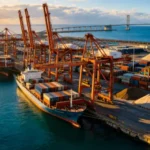
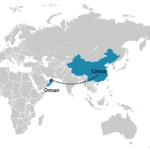
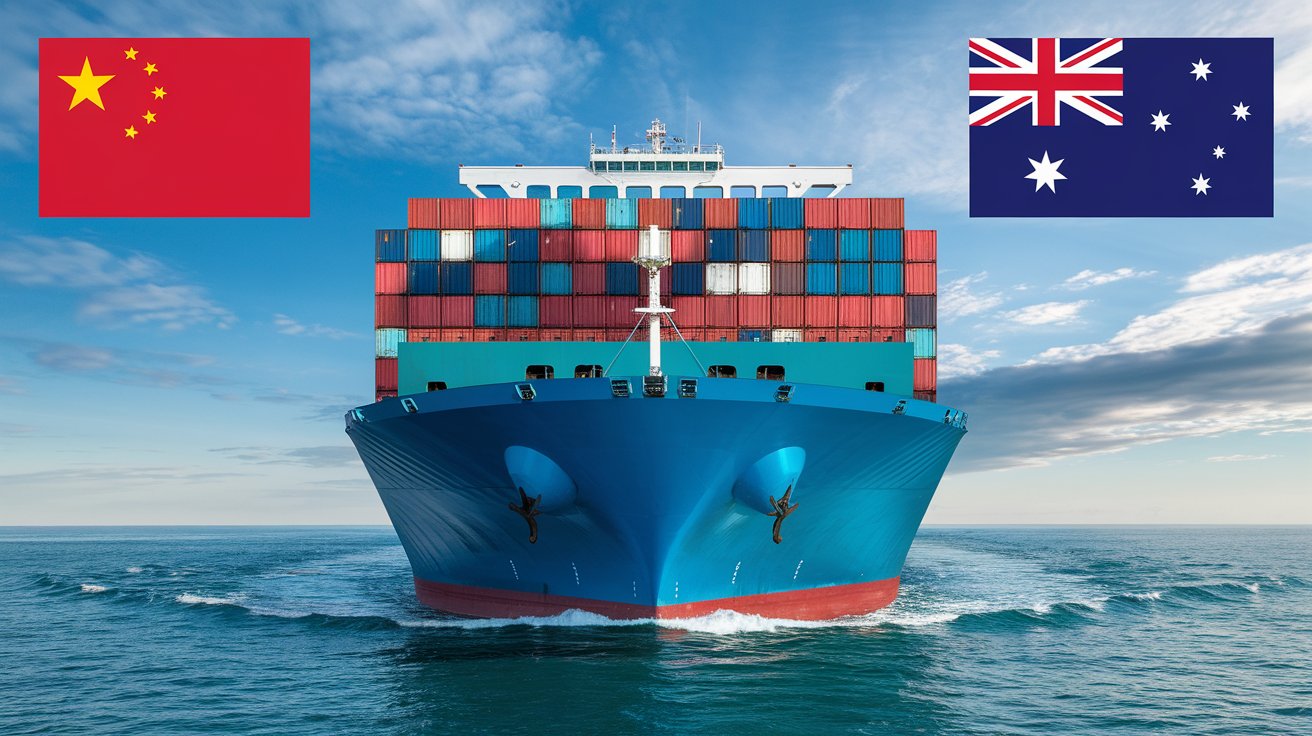
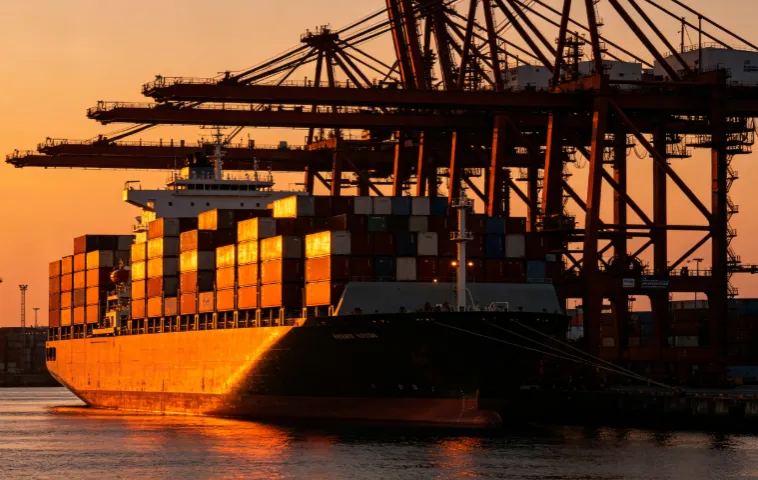
Over 90% of all freight moving from China to Hungary travels by ocean, despite the country being completely landlocked. The reason is simple economics: sea freight offers the lowest cost per cubic meter for any shipment larger than about 2 CBM. But because Hungary has no coastline, your container does not simply arrive in Budapest — it first calls at a northern European gateway port and then continues 800 to 1,200 kilometers inland by truck or rail.
The transshipment port you or your forwarder chooses has a direct impact on both cost and transit time. Koper (Slovenia) is geographically closest to Budapest at roughly 500 km by road, which usually means the cheapest and fastest inland leg. Hamburg (Germany) and Rotterdam (Netherlands) offer more frequent sailings from Asia and occasionally lower ocean rates, but the 1,200+ km trucking distance to Hungary often erases those savings. Gdansk (Poland) and Rijeka (Croatia) are viable alternatives worth considering if your cargo is destined for northern or southern Hungary respectively.
FCL Container Rates by Origin Port (2026)
Below are current market rates for FCL (Full Container Load) shipments from China’s five busiest ports to Budapest, including the transshipment and inland leg. Ranges reflect seasonal fluctuation — the low end represents the March–May off-peak window, while the high end reflects the pre-Chinese New Year and pre-Christmas peak seasons.
| Origin Port | 20ft Container (USD) | 40ft Container (USD) | Typical Transshipment Port |
|---|---|---|---|
| Shanghai | $2,300 – $4,500 | $2,800 – $5,000 | Hamburg / Koper |
| Shenzhen (Yantian) | $2,400 – $4,200 | $2,900 – $5,500 | Hamburg / Rotterdam |
| Ningbo | $2,350 – $4,150 | $2,950 – $4,650 | Koper / Rotterdam |
| Qingdao | $2,200 – $4,300 | $2,800 – $5,500 | Hamburg / Gdansk |
| Guangzhou (Nansha) | $2,400 – $4,200 | $3,050 – $4,750 | Rotterdam / Koper |
LCL (Less than Container Load) Rates
If you are shipping less than a full container — typically 2 to 15 CBM — LCL (Less than Container Load) is your most cost-effective option. You only pay for the space your cargo occupies, shared with other importers’ goods in a consolidated container.
| Origin Port | LCL Rate (USD per CBM) |
|---|---|
| Shanghai | $100 – $220 |
| Shenzhen | $100 – $220 |
| Ningbo | $105 – $215 |
| Qingdao | $105 – $225 |
| Guangzhou | $100 – $220 |
For very small LCL shipments, some forwarders quote by weight rather than volume. As a rough benchmark, a 100 kg LCL sea shipment from Shenzhen to Budapest typically runs between $1.25 and $1.50 per kilogram, with a minimum charge equivalent to 1 CBM. For shipments originating in Guangdong, our Shipping from Shenzhen to Hungary service offers weekly consolidated departures.
Transit time for sea freight ranges from 30 to 45 days door-to-door, broken down as: 22–30 days ocean transit from China to the European gateway port, 3–7 days for port handling and transshipment, and 5–8 days for inland trucking or rail to your final destination in Hungary. Koper-to-Budapest routes typically land at the lower end (30–35 days), while Rotterdam-to-Budapest routes sit at the higher end (38–45 days).
When sea freight makes sense: Shipments of 2 CBM or larger, non-urgent cargo, heavy or bulky goods such as furniture, machinery, building materials, and automotive parts. For detailed per-container estimates, see our container shipping costs from China to Hungary breakdown.
Air Freight from China to Hungary
When speed is non-negotiable, air freight into Budapest Ferenc Liszt International Airport (BUD) is your answer. The airport handles direct passenger and cargo flights from every major Chinese aviation hub, with roughly 21 passenger flights and 8 dedicated cargo flights arriving from China each week.
Air Freight Rates by Departure Airport (USD per KG)
| Origin Airport | Destination | Rate (USD/kg) |
|---|---|---|
| Shanghai Pudong (PVG) | Budapest (BUD) | $4.50 – $8.50 |
| Shenzhen (SZX) | Budapest (BUD) | $5.00 – $9.00 |
| Guangzhou (CAN) | Budapest (BUD) | $4.80 – $8.50 |
| Beijing (PEK) | Budapest (BUD) | $4.60 – $8.10 |
| Chengdu (CTU) | Budapest (BUD) | $4.50 – $6.50 |
Air freight rates follow a volume discount structure: the heavier your shipment, the lower your per-kilogram rate. Here is what that looks like in practice for a typical Shenzhen-to-Budapest lane:
| Weight Tier | Approximate Rate (USD/kg) | Total Cost at Tier Minimum |
|---|---|---|
| 45 kg+ | $7.50 – $9.00 | ~$338 – $405 |
| 100 kg+ | $5.50 – $6.50 | ~$550 – $650 |
| 300 kg+ | $4.80 – $5.80 | ~$1,440 – $1,740 |
| 500 kg+ | $4.30 – $5.20 | ~$2,150 – $2,600 |
| 1,000 kg+ | $3.80 – $4.80 | ~$3,800 – $4,800 |
One of the most common pricing surprises in air freight is chargeable weight. Airlines charge based on whichever is greater: your shipment’s actual gross weight, or its volumetric weight — calculated as (Length × Width × Height in cm) ÷ 6,000. A lightweight but bulky box of 50 kg that measures 120 × 80 × 80 cm has a volumetric weight of (76,800 ÷ 6,000) = 76.8 kg — and you will be billed for 77 kg, not 50 kg. This is why packaging optimization (covered in Section 8) can yield immediate savings.
For smaller, urgent consignments, express courier services (DHL, UPS, FedEx) charge $6 to $15 per kilogram with door-to-door transit of 3 to 7 days. Express is ideal for samples, documents, and parcels under 50 kg, but becomes prohibitively expensive at scale. For a broader view of air cargo options across the continent, see our guide to air freight from China to Europe.
When air freight makes sense: Sub-300 kg shipments, high-value electronics, medical equipment, seasonal goods with hard delivery deadlines, and urgent restocking.
Rail Freight from China to Hungary: The China-Europe Railway Express
The China-Europe Railway Express has quietly matured into a compelling middle lane between sea and air — delivering transit times of 15 to 22 days at roughly 40–50% of the cost of air freight. For Hungary specifically, this mode is particularly relevant given the country’s position on the Belt and Road corridor and its thriving automotive and electronics manufacturing sectors that depend on steady component flow from Chinese suppliers.
Major rail departure hubs connecting to Budapest (or nearby European terminals with onward trucking) include Xi’an, Chengdu, Chongqing, Zhengzhou, Yiwu, Jinhua, and Xiamen. Many trains terminate at Malaszewicze (Poland), Europe’s primary rail freight gateway, from where containers are trucked approximately 400–600 km into Hungary within 1–3 days.
Rail Freight Pricing (2026)
| Rail Service Type | Cost | Transit Time |
|---|---|---|
| FCL (40ft container) | $8,000 – $11,500 per container | 15–22 days terminal-to-terminal |
| LCL (per CBM) | $200 – $400 per CBM | 18–25 days terminal-to-terminal |
To put these numbers in perspective: at $300/CBM for rail LCL versus $150/CBM for sea LCL, rail is about 2× more expensive — but it arrives 18–25 days faster. For a shipment worth $50,000, those three extra weeks of inventory sitting in transit represent a significant carrying cost that often justifies the rail premium on its own, before you even factor in the improved cash-to-cash cycle.
When rail freight makes sense: Medium-value cargo (auto parts, electronics, retail inventory, machinery) where a 3-week pipeline is operationally comfortable and the 50–60% savings versus air freight materially improves your margins.
DDP Door-to-Door Shipping from China to Hungary
If you are new to importing or simply want predictable, all-in costs with zero administrative burden, DDP (Delivered Duty Paid) shipping — defined under Incoterms 2020 — is the closest thing to a turnkey logistics solution. Under DDP terms, your freight forwarder handles every step: pickup from your supplier in China, Chinese export customs clearance, international freight (by your chosen mode), Hungarian import customs brokerage, payment of all import duties and VAT, and final delivery to your specified address in Hungary. You receive the goods. That is it.
DDP All-Inclusive Pricing by Mode
| DDP Service | Cost (All-In) | Door-to-Door Transit |
|---|---|---|
| DDP Sea (LCL) | $150 – $300 per CBM | 35–45 days |
| DDP Rail (LCL) | $200 – $400 per CBM | 18–25 days |
| DDP Air | $5.50 – $12.00 per kg | 7–12 days |
| DDP Express (DHL/UPS/FedEx) | $10 – $15 per kg | 5–8 days |
What is included in a DDP quote: Export customs clearance in China, international freight, import customs brokerage in Hungary, all import duties (0–14% depending on HS code), the 27% Hungarian VAT, and final-mile delivery to your door. What is generally not included: Storage or demurrage fees caused by consignee delays, product re-labeling or rework costs, and penalties from incorrect HS code classification — which is why working with an experienced forwarder that audits your product classifications upfront is critical.
DDP is the smartest choice when you do not have an EU EORI number (Economic Operators Registration and Identification number), you lack a relationship with a Hungarian customs broker, you want a single predictable invoice rather than managing five separate vendor payments, or you are a first-time importer who cannot afford a customs hold-up. For small and mid-sized importers especially, the premium you pay for DDP over FOB or CIF terms is often less than the cost of a single customs delay — which in Hungary can run €100–€300 in storage fees per day. For a deeper dive into how DDP works, read our full guide on what DDP (Delivered Duty Paid) means for importers. If you are shipping to Hungary specifically, our door to door shipping from China to Hungary service handles the entire process under one transparent quote.
Hungary Import Duties, VAT & Customs Clearance Fees
Here is the section that, remarkably, none of the competing freight guides cover — and it is the one that matters most to your bottom line. The freight charge itself typically represents only 40–60% of your total landed cost. The rest is duties, taxes, and fees that are entirely predictable once you know how they work.
Hungary’s VAT: The Single Biggest Line Item
Hungary applies a 27% standard VAT rate — tied with Croatia for the highest in the entire European Union. This tax is calculated not just on your product value, but on the CIF value (Cost + Insurance + Freight) plus any import duty already applied. In practice:
Example: A shipment with a CIF value of $10,000 and a 3% import duty pays duty of $300, bringing the taxable base to $10,300. VAT at 27% on that amount equals $2,781 — nearly 28% of the original cargo value, on top of the freight you have already paid.
If you are VAT-registered in Hungary, you can reclaim this amount through your regular VAT return — but you must pay it upfront at the time of import. Under DDP terms, your forwarder handles this cash flow for you.
EU Import Duties by Product Category
Hungary applies the EU’s Common External Tariff (CXT) , with rates determined entirely by your product’s HS (Harmonized System) code. Rates range from 0% (many electronics and machinery categories) to 14% (certain textiles and footwear).
| Product Category | HS Code Chapter | Typical Duty Rate |
|---|---|---|
| Electronics (computers, phones, semiconductors) | Chapter 85 | 0% – 3.7% |
| Machinery & industrial equipment | Chapter 84 | 0% – 2.7% |
| Furniture | Chapter 94 | 0% – 5.6% |
| Automotive parts & components | Chapter 87 | 3% – 4.5% |
| Textiles, apparel & footwear | Chapters 61–63, 64 | 8% – 14% |
| Toys & sporting goods | Chapter 95 | 0% – 4.7% |
Correct HS code classification is not optional — Hungarian customs authorities routinely inspect shipments, and misclassification can result in backdated duty demands, penalties of 50% or more of the underpaid amount, and weeks-long shipment holds. Working with a provider that offers professional Customs Clearance services significantly reduces this risk.
The 2026 EU Rule Change
As of July 1, 2026, the European Union has eliminated the €150 duty-free de minimis threshold for low-value imports. Previously, any parcel valued under €150 entered the EU without customs duty or formal declaration — a rule that approximately 91% of affected parcels from China relied on. Under the new regime, every commercial import faces customs processing, with a temporary flat fee of €3 per shipment applied to parcels that were previously exempt.
If you import small e-commerce packages, samples, or low-value spare parts from China to Hungary, this change means additional per-shipment costs and potential VAT liability on items that previously entered tax-free. Consolidating small orders into fewer, larger shipments is now the most direct way to mitigate this new cost.
Other Customs & Clearance Fees
| Fee Type | Typical Cost (USD) |
|---|---|
| Customs brokerage (per entry) | $100 – $150 |
| Customs entry processing fee | $30 – $50 |
| EU port handling (THC) | $80 – $150 per container |
| Customs inspection (if selected) | $150 – $500 |
| Bonded warehouse storage (per day) | $50 – $100 |
The Total Landed Cost Formula
When you are budgeting for a shipment from China to Hungary, here is the complete equation:
Total Landed Cost = Ocean/Air/Rail Freight + Insurance + China Origin Charges + EU Port Handling + Customs Brokerage + Import Duty (0–14%) + VAT (27%) + Hungary Inland Transport
Ignore any single one of these line items and you are under-budgeting. Taken together, duties, VAT, and clearance fees typically add 30–50% on top of the freight charge itself — sometimes more for high-duty product categories. We also recommend securing Insurance Services for your cargo — at 0.3–0.5% of declared value, it is one of the smallest line items with the largest downside protection.
7 Proven Ways to Reduce Your Shipping Costs from China to Hungary
Knowing what a shipment costs is step one. Here are seven concrete strategies — drawn from 15 years of hands-on experience on the China–Europe route — to bring that number down.
1. Know Your LCL-to-FCL Break-Even Point
Many importers default to LCL because they are not shipping a full container — but at a certain volume, LCL becomes more expensive than just booking the whole container. The math: 15 CBM × $150/CBM LCL = $2,250. A 20ft FCL from the same port might cost $2,500. At 15 CBM, you are nearly even — and every cubic meter above that is effectively free space with the full container. If you regularly ship 12–15 CBM or more, run the FCL comparison before you default to LCL.
2. Choose Your Transshipment Port Strategically
As discussed in Section 2, Koper (Slovenia) is roughly 500 km from Budapest, versus 1,200+ km from Hamburg or Rotterdam. While northern ports sometimes offer slightly lower ocean rates due to higher sailing frequency, the inland trucking difference — often $300–$500 — usually outweighs a $100–$200 ocean rate advantage. For most Hungary-bound shipments, Koper or Rijeka should be your first-choice gateway unless a northern port offers a substantially better overall rate.
3. Ship During Off-Peak Windows
Ocean freight spot rates can spike 2–3× during peak season. The worst windows for China-to-Europe rates are the 4–6 weeks before Chinese New Year (typically late January through February) and the August-through-October pre-Christmas rush. The best rate windows are March through May and November through early December. If you have procurement flexibility, shifting your shipping schedule by even 3–4 weeks around these windows can save thousands of dollars per container.
4. Use Rail as Your Strategic Middle Lane
At $200–$400/CBM, rail freight costs about 2× sea LCL but 50–60% less than air freight per kilogram. For a shipment valued at $50,000, the three weeks you save versus sea freight translate to real inventory-carrying-cost reductions — and a faster cash conversion cycle. Rail hits the sweet spot for importers who find sea too slow but cannot justify air’s premium. Hungary, with its central European location and strong rail connectivity via the Belt and Road network, is particularly well-served by this mode.
5. Consolidate Multiple Suppliers Before Shipping
If you source from three or four different suppliers across Shenzhen, Yiwu, and Guangzhou, shipping each supplier’s goods separately as individual LCL shipments means paying the LCL minimum charge — typically 1 CBM — multiple times. Instead, have all your goods trucked to a single consolidation warehouse (Dantful operates consolidation facilities in Shenzhen and Shanghai) and ship them together as one LCL or FCL load. This approach — known as consolidated freight shipping — can reduce per-unit freight costs by 20–35%.
6. Optimize Packaging to Cut Chargeable Volume
For air freight and LCL sea, the space your cargo occupies — not just its weight — determines your cost. We have seen importers reduce their chargeable CBM by 10–25% through simple measures: flat-packing furniture, using vacuum compression for textiles, nesting hollow items, and replacing oversized retail packaging with compact transit packaging. In one recent case, a furniture importer reduced CBM by 18% through flat-packing, saving $1,350 on a single 40-foot container shipment to Budapest.
7. Partner with a China-Based Freight Forwarder
Freight forwarders based in China — particularly those with direct contracts with major carriers — operate with a structural cost advantage over overseas agents who buy space through intermediaries. A China-based forwarder manages your shipment at the source: supplier pickup, consolidation, export documentation, and carrier booking all happen in the same time zone, in the same language, by the same team. This eliminates the communication gaps and markup layers that inflate costs when multiple agents hand off your shipment across countries. At Dantful, our 50-person operations team and direct contracts with major shipping lines mean the rate we quote is the rate you pay — no intermediary surcharges, no last-minute GRI surprises.
Sea vs Air vs Rail vs Express: How to Choose the Right Shipping Method
With five viable shipping modes from China to Hungary — sea FCL, sea LCL, air freight, rail freight, and express courier — the right choice depends on the interplay of four factors: your shipment volume, cargo value, urgency, and budget. Below is a summary comparison to help you decide.
All-Mode Comparison Table
| Shipping Method | Cost | Transit Time | Best For | Avoid When |
|---|---|---|---|---|
| Sea FCL | $2,200–$5,500 /container | 30–45 days | Bulk goods ≥15 CBM | Urgent shipments |
| Sea LCL | $80–$250 /CBM | 35–45 days | 2–15 CBM, flexible timing | Very small (<2 CBM) |
| Air Freight | $4.50–$9.00 /kg | 3–8 days | High-value, urgent, <300 kg | Heavy/bulky cargo |
| Rail Freight | $200–$400 /CBM or $8K–$11.5K /40ft | 15–22 days | Medium-value, time-sensitive | Ultra-urgent (<1 week) |
| Express Courier | $6–$15 /kg | 3–8 days door-to-door | Samples, parcels <50 kg | Shipments >50 kg |
Three Buyer Profiles, Three Shipping Strategies
The B2B Wholesaler — Ordering 5,000 kg of electronics quarterly with predictable inventory cycles. Best choice: Sea FCL or LCL. Lowest per-unit freight cost. Plan for a 35–45 day lead time from order to delivery and keep 4–6 weeks of safety stock to absorb transit variability.
The E-commerce Seller — Restocking 200 kg of trending products each week, where stockouts mean lost sales. Best choice: Air freight with DDP terms. Speed is your competitive advantage, and DDP ensures duties and VAT are handled upfront with no delivery-day surprises for your customers.
The Auto Parts Manufacturer — Shipping 10 CBM of components monthly to feed a just-in-time production line. Margins are thin, but line stoppages are catastrophic. Best choice: Rail freight. The 18–22 day transit keeps your production pipeline flowing at roughly half the cost of air, and Hungary’s direct rail connectivity from Chinese hubs makes this mode operationally seamless.
FAQs
How much does it cost to ship a 20ft container from China to Hungary?
The ocean freight portion for a 20ft container runs $2,200–$4,500 USD depending on the Chinese origin port and season. However, the total landed cost — including origin charges, insurance, customs brokerage, import duty (0–14% depending on HS code), Hungary’s 27% VAT, and inland transport to your Hungarian destination — typically adds 35–50% on top of the freight charge. For a container with $40,000 worth of furniture from Shanghai, expect to budget approximately $16,000–$17,000 all-in (see the detailed breakdown in Section 7).
How long does shipping from China to Hungary take?
Sea freight: 30–45 days door-to-door. Rail freight: 15–22 days. Air freight: 3–8 days. Express courier: 3–8 days. The wide range for sea freight is driven primarily by your choice of European transshipment port — Koper-to-Budapest routes typically complete in 30–35 days, while Rotterdam-to-Budapest routes take 38–45 days.
What is the cheapest way to ship from China to Hungary?
Sea freight LCL (Less than Container Load) is the cheapest option for shipments under approximately 15 CBM, at $80–$250 per cubic meter. For larger volumes, a 20ft or 40ft FCL container offers the lowest per-unit cost. Rail freight is a cost-effective middle ground — about 2× the cost of sea LCL but 50–60% cheaper than air — when transit time matters but air freight rates are prohibitive.
Do I have to pay VAT when importing from China to Hungary?
Yes. Hungary applies 27% VAT on the CIF value plus import duty of all commercial imports. This is mandatory at the point of entry unless you are VAT-registered in Hungary and use a deferred accounting scheme. Under DDP (Delivered Duty Paid) shipping terms, your freight forwarder pays the VAT upfront on your behalf and includes it in your all-in quote — you never deal with Hungarian tax authorities directly. If you are VAT-registered, you can reclaim the VAT through your regular return after import.
Do I need an EORI number to import goods from China to Hungary?
Yes. Any business importing goods into the EU must hold an EORI (Economic Operators Registration and Identification) number, obtained through the Hungarian Customs Authority (NAV). The registration process is straightforward and typically takes 1–2 weeks. If you use a DDP freight forwarder, they can often clear your goods under their own EORI, eliminating this requirement on your side entirely — one of the less obvious but significant operational benefits of shipping DDP.
How does the new 2026 EU customs rule affect my shipments?
Effective July 1, 2026, the EU abolished the €150 duty-free de minimis exemption. All commercial imports — regardless of value — now face customs processing. A flat €3 processing fee applies to parcels that were previously exempt, and VAT may be assessed on low-value items that previously entered tax-free. If you import e-commerce packages, samples, or small spare parts regularly, the most effective mitigation is to consolidate small orders into larger, less frequent shipments to amortize the new per-shipment fees.

Young Chiu is a seasoned logistics expert with over 15 years of experience in international freight forwarding and supply chain management. As CEO of Dantful International Logistics, Young is dedicated to providing valuable insights and practical advice to businesses navigating the complexities of global shipping.