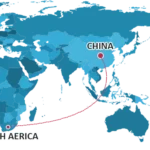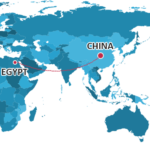
Your Johannesburg warehouse just ran out of stock two weeks before peak season, and your supplier in Shenzhen has 500 kg of electronics ready to go. Sea freight will take 30 to 40 days — you don’t have that kind of time. That’s when air freight from China to South Africa becomes the practical solution. In 3 to 7 days airport-to-airport, your cargo can be at OR Tambo International Airport, cleared through customs, and on its way to your customers.
This guide walks you through the real numbers: what you’ll actually pay per kilogram from different Chinese cities, how long each route takes door-to-door, what SARS expects at the border, and how to avoid the mistakes that cost South African importers thousands of rand in delays and unexpected charges. You’ll also find actionable strategies to cut your per-kg rate without sacrificing reliability. For a broader overview of all freight modes — air, sea, and door-to-door — check our complete guide to Shipping From China To South Africa.
Air Freight Costs From China to South Africa: Full 2026 Rate Breakdown
Before comparing rates, it helps to understand how air freight pricing actually works — because the number on your quote isn’t the whole story.
How Chargeable Weight Determines What You Pay
Airlines charge based on chargeable weight, which is the greater of two numbers: your shipment’s actual gross weight, and its volumetric weight — a measure of how much space it occupies in the aircraft.
The formula is straightforward:
Chargeable Weight (kg) = max(actual weight, volumetric weight) Volumetric Weight (kg) = Length × Width × Height (cm) ÷ 6,000
Here’s a real example: a carton of clothing weighs 80 kg on the scale but measures 120 × 80 × 100 cm. Its volumetric weight comes to (120 × 80 × 100) ÷ 6,000 = 160 kg. The airline charges you for 160 kg, not 80 kg. That’s effectively double what you might have budgeted. This is why smart packaging — reducing empty space inside boxes — is one of the fastest ways to lower your air freight bill.
Air Freight Rates by Weight Bracket (2026 Estimates)
Larger shipments almost always get lower per-kg rates. Here’s what the market looks like across three service tiers as of mid-2026:
| Weight Bracket | Economy Air (per kg) | Standard Air (per kg) | Express Air (per kg) |
|---|---|---|---|
| 45–100 kg | $5.00–$7.00 | $6.00–$8.00 | $8.00–$12.00 |
| 100–300 kg | $4.00–$6.00 | $5.00–$7.00 | $7.00–$10.00 |
| 300–500 kg | $3.50–$5.00 | $4.50–$6.00 | — |
| 500+ kg | $3.00–$4.50 | $4.00–$5.50 | — |
Economy Air (sometimes called consolidated freight shipping, or deferred air freight) is the most cost-effective option. It typically takes 6–10 days door-to-door because the forwarder waits to consolidate enough cargo to fill a ULD (Unit Load Device) — an air cargo container — before booking space. For non-urgent shipments over 100 kg, this is where the real savings live.
Standard Air offers a balance: 4–7 days door-to-door with regularly scheduled consolidations. Most shipments from China to South Africa fall into this category.
Express Air means your cargo flies on the next available flight, with no waiting for consolidation. It’s 2–4 days door-to-door and costs roughly 30–60% more than Standard. Reserve this for truly time-critical situations — medical equipment, urgent replacement parts, or samples for a time-sensitive trade show.
Air Freight Rates by Origin City (China to Johannesburg)
Where your goods leave China matters. Different airports have different flight frequencies, carrier competition, and rate structures:
| Origin City | 100 kg Rate | 300 kg Rate | 500+ kg Rate |
|---|---|---|---|
| Hong Kong (HKG) | $4.00/kg | $3.70/kg | $3.40/kg |
| Shanghai (PVG) | $4.20/kg | $3.90/kg | $3.50/kg |
| Guangzhou (CAN) | $4.25/kg | $3.95/kg | $3.55/kg |
| Shenzhen (SZX) | $4.30/kg | $4.00/kg | $3.60/kg |
| Beijing (PEK) | $4.40/kg | $4.10/kg | $3.70/kg |
Hong Kong consistently offers the lowest rates thanks to its position as the world’s busiest cargo airport, with the highest frequency of flights to Johannesburg. For exporters based in Shenzhen or Guangzhou, trucking goods 2–3 hours to HKG can sometimes save $0.30–$0.50/kg — which adds up fast on a 500 kg shipment.
Costs Beyond the Per-Kg Rate
The base freight rate is only part of the picture. These surcharges and fees appear on virtually every air freight shipment to South Africa:
- Fuel surcharge: $0.50–$1.50/kg, adjusted monthly based on jet fuel indices
- Security surcharge: $10–$30 per shipment
- Terminal handling charges: $50–$150 at origin and again at destination
- Customs clearance fee (South Africa): R1,500–R4,000 per customs entry (roughly $80–$215), paid to the clearing agent at OR Tambo, Cape Town, or Durban
- Documentation fee: $25–$75 for preparing and processing the Airway Bill and export declarations
When requesting a quote, ask for an all-inclusive breakdown — and compare against benchmark shipping rates from china to South Africa to spot outliers. A rate that looks $0.50/kg cheaper can turn out more expensive if the forwarder tacks on undisclosed surcharges later.
Air Freight vs Sea Freight
For context, here’s how air stacks up against sea freight — South Africa’s dominant import channel. If you’re shipping larger volumes, you may also want to compare Sea Freight From China to South Africa rates and transit times:
| Method | Cost | Transit Time | Best For |
|---|---|---|---|
| Air Freight | $3–$8/kg | 3–10 days | Urgent, high-value, lightweight goods |
| Sea Freight (LCL) | $80–$250/m³ | 25–40 days | Smaller volumes of bulk cargo |
| Sea Freight (FCL 20ft) | $1,800–$3,500 | 28–40 days | Full container loads |
| Express Courier | $8–$15/kg | 2–5 days | Documents, samples, small parcels under 30 kg |
Air freight costs more per kilogram, no question. But if your 100 kg shipment is worth R150,000 at retail, paying $400–$600 to get it to Johannesburg in a week instead of waiting six weeks can make commercial sense — especially when you factor in the cost of missed sales from empty shelves.
Seven Ways to Lower Your Air Freight Costs
- Consolidate shipments. Combining orders from multiple suppliers into one shipment pushes you into a higher weight bracket with a lower per-kg rate. If you normally ship 60 kg at a time, waiting until you have 150 kg can cut your rate by $1–$2/kg.
- Book 2–3 weeks ahead. Last-minute bookings on the spot market can cost 15–30% more. Forward bookings lock in better rates and guarantee space.
- Choose Economy Air for non-urgent cargo. If 7–10 days is acceptable, you’ll pay 20–30% less than Standard.
- Optimize packaging to reduce volumetric weight. Use snug-fitting boxes, avoid excessive void fill, and nest products where possible. A 10% reduction in carton volume translates directly to a lower chargeable weight.
- Compare departure airports. If you’re based in Shenzhen, compare SZX rates against Hong Kong — trucking to HKG adds 2–3 hours but can save hundreds of dollars.
- Build a relationship with one forwarder. Consistent volume over time earns negotiated rates that casual shippers can’t access.
- Avoid peak windows. Chinese New Year (late January through February) and South Africa’s pre-Christmas rush (September–November) drive rates up. If you can, ship in March–April or June–August when demand softens.
Air Freight Transit Times & Major Routes From China to South Africa
Transit time depends on three things: where you’re shipping from, where you’re shipping to, and whether your cargo flies direct or transits through a Middle Eastern or East African hub.
Airport-to-Airport Transit Times by Route
| Route | Type | Airport-to-Airport | Door-to-Door |
|---|---|---|---|
| Shanghai (PVG) to Johannesburg (JNB) | Direct available | 1–3 days | 5–7 days |
| Guangzhou (CAN) to Johannesburg (JNB) | Direct available | 2–4 days | 6–8 days |
| Shenzhen (SZX) to Johannesburg (JNB) | Via HKG/Dubai | 2–4 days | 6–9 days |
| Guangzhou (CAN) to Cape Town (CPT) | Via JNB/Dubai | 3–5 days | 7–10 days |
| Shanghai (PVG) to Durban (DUR) | Via JNB | 5–7 days | 8–12 days |
Direct flights from Shanghai and Guangzhou to OR Tambo International Airport (JNB) are the fastest option. Ethiopian Airlines, Emirates, Qatar Airways, and Air China all operate regular cargo services on China–Africa routes, with many flights transiting through Addis Ababa, Dubai, or Doha. A connection typically adds 1–3 days but often opens up more flexible scheduling and, during peak periods, better space availability than direct flights.
China Departure Hubs
Shanghai Pudong (PVG) handles the highest cargo volume in mainland China and offers the most frequent departures to Africa. Guangzhou Baiyun (CAN) is the primary hub for southern China — if your goods come from factories in the Pearl River Delta, CAN is typically your closest and most cost-effective departure point. Hong Kong (HKG) operates more weekly freighter flights to Johannesburg than any other airport in the region. Shenzhen Bao’an (SZX) serves the electronics manufacturing corridor and connects easily to both CAN and HKG for transshipment.
South Africa Arrival Gateways
Over 90% of air freight from China lands at OR Tambo International Airport (JNB) in Johannesburg. It’s Africa’s busiest airport, with bonded warehouses, on-site SARS inspection facilities, and a well-established road freight network connecting to Pretoria (1 hour), Durban (6 hours), and Cape Town (14 hours).
Cape Town International Airport (CPT) receives limited direct cargo flights from China. Most CPT-bound freight arrives via JNB and is trucked down — or flies a domestic leg on a connecting flight. King Shaka International Airport (DUR) in Durban serves mainly as a sea freight hub; air cargo to Durban typically arrives through JNB.
What Slows Down Transit Time
Beyond flight schedules, the biggest variable is customs clearance. When all documents are correct and complete, clearance at JNB takes 1–2 days. Missing paperwork, incorrect HS codes, or insufficient commercial invoice detail can add 3–7 days of storage and processing — and storage charges accumulate daily.
Step-by-Step Air Freight Process: From Chinese Factory to South African Doorstep
Understanding the full chain of events helps you plan lead times and anticipate where things can go wrong. Here’s a typical door-to-door timeline for a 300 kg shipment from Shenzhen to Johannesburg under a DDP arrangement:
Stage 1: Pre-Shipment Preparation (1 Week Before Pickup)
You confirm the following with your freight forwarder: product descriptions and quantities, gross weight and carton dimensions, the correct HS Code for each item, and your chosen Incoterm. Your forwarder issues a booking confirmation and provides an all-inclusive quote covering freight, surcharges, export clearance, destination customs brokerage, duties, VAT, and final delivery.
Stage 2: Supplier Pickup & Consolidation (Day 1–2)
The forwarder arranges truck pickup from your supplier’s factory — this covers Shenzhen, Guangzhou, Dongguan, Yiwu, Shanghai, and most major industrial cities. Goods arrive at the forwarder’s export warehouse, where the team inspects carton condition, verifies quantities against the packing list, and consolidates shipments from multiple suppliers if applicable. Cartons are labeled with consignee details and any required handling marks.
Stage 3: China Export Clearance (Day 2–3)
The forwarder submits the export customs declaration electronically through China Customs’ integrated platform. Required documents include the commercial invoice, packing list, and export contract. For goods containing lithium batteries, the forwarder also submits the UN38.3 test report and MSDS (Material Safety Data Sheet). Branded goods require a brand authorization letter. Customs Clearance on both ends — China export and South Africa import — must be handled by licensed brokers; working with a forwarder that offers in-house brokerage on both sides avoids handoff delays.
Stage 4: Air Transport (Day 3–8)
The cargo is built onto a ULD (air cargo pallet or container) and loaded onto the aircraft. The Airway Bill (AWB) — the contract of carriage and the single most important document in air freight — is issued with a unique tracking number. You can track the shipment’s status using this AWB number on the airline’s cargo tracking portal. If the flight transits through Dubai, Doha, or Addis Ababa, the AWB tracking will show the transfer.
Stage 5: South Africa Import Clearance (Day 8–10)
The aircraft lands at JNB and the cargo is transferred to a bonded warehouse. The clearing agent submits the customs declaration (SAD 500 form) to SARS (South African Revenue Service), along with the commercial invoice, packing list, AWB, and your SARS Importer Code. Duties and VAT are calculated and paid. Once SARS releases the goods — typically 1–2 days if documents are in order — the cargo is available for collection.
Stage 6: Last-Mile Delivery (Day 10–12)
The forwarder arranges truck delivery from JNB to your address. Major centers — Johannesburg, Pretoria, Midrand, Sandton — receive delivery within 24 hours of customs release. Cape Town takes 2–3 additional days by road, Durban roughly 1 day. You receive a Proof of Delivery (POD) confirming receipt.
Key Documents Checklist
- Commercial Invoice (with accurate values and HS codes)
- Packing List (matching the invoice line by line)
- Air Waybill / AWB (issued by the airline or forwarder)
- Certificate of Origin (required for certain preferential duty rates)
- SARS Importer Code (mandatory — you cannot clear goods without one)
- Import Permit (required for regulated products: electronics, food, chemicals, medical devices)
- MSDS / UN38.3 Report (mandatory for lithium battery shipments)
- Brand Authorization Letter (required for branded goods to prevent IP infringement holds)
South Africa Customs Clearance: Duties, VAT, HS Codes, and Documentation
Customs clearance is where most delays and unexpected costs occur — and it’s the topic that competing guides cover least thoroughly. Here’s what you need to know before your cargo reaches OR Tambo.
Step 1: Register for a SARS Importer Code
Every commercial importer in South Africa must register with SARS and obtain an Importer’s Code. This is a unique identifier linked to your business, and without it, customs will not release your goods — period. The registration process takes about 1–2 weeks and requires your company registration documents, tax clearance certificate, and proof of address. If you’re a first-time importer, start this process before your goods leave China.
Import Duties by Product Category
South Africa applies duties based on the HS Code (Harmonized System tariff code) assigned to each product. Rates vary dramatically by category:
| Product Category | Typical Duty Rate | Notes |
|---|---|---|
| Electronics & consumer goods | 0%–20% | Many electronics qualify for 0% under WTO ITA |
| General merchandise | 10%–20% | Broad category; depends on specific HS code |
| Textiles & apparel | 20%–45% | Among the highest duty rates — budget accordingly |
| Footwear | 30%–45% | Similar to apparel, with additional anti-dumping duties on some origins |
| Machinery & industrial parts | 0%–15% | Many categories are duty-free for manufacturing inputs |
| Medical equipment | 0% (most exempt) | Most medical devices and equipment enter duty-free |
| Automotive parts | 15%–30% | Varies by whether OEM or aftermarket |
Getting your HS code right is worth the effort. Classifying a product under one heading instead of another can swing the duty rate by 10–20 percentage points. If you’re unsure, ask your clearing agent to confirm the classification before shipment — changing it after the goods arrive is far more difficult.
How VAT Is Calculated (It’s Not Just 15% of Invoice Value)
South Africa charges 15% VAT on all commercial imports. But the tax base isn’t your supplier’s invoice value — it’s a figure called the ATV (Added Tax Value):
The 10% uplift is a SARS-mandated surcharge applied before calculating VAT. Here’s a worked example for a typical electronics shipment:
Example: R100,000 worth of consumer electronics (20% duty rate, R5,000 freight and insurance)
| Component | Calculation | Amount |
|---|---|---|
| Customs value | Supplier invoice | R100,000 |
| Customs duty | R100,000 × 20% | R20,000 |
| ATV | (R100,000 + R20,000 + R5,000) × 1.10 | R137,500 |
| VAT | R137,500 × 15% | R20,625 |
| Total payable to SARS | R20,000 + R20,625 | R40,625 |
On a R100,000 shipment, you’re paying over R40,000 in duties and VAT — that’s a 40.6% effective rate on the invoice value. If you imported the same goods as textiles at a 40% duty rate, the total would climb past R63,000.
One important detail: if your business is VAT-registered in South Africa, you can claim the R20,625 VAT portion back as input VAT on your next return. The R20,000 customs duty, however, is a permanent cost you cannot recover.
Five Customs Mistakes That Cost Importers Money
- Wrong HS code. A misclassification that understates duty looks like evasion to SARS and can trigger audits, penalties, and back-duty assessments going back years.
- Under-declared invoice values. SARS cross-checks declared values against international trade data. If your declared value is far below market rates for that HS code, expect a valuation audit.
- No Importer Code on arrival. Your freight forwarder cannot clear goods without one. Storage charges (demurrage) at JNB bonded warehouse start accruing immediately — roughly R300–R800 per day.
- Missing permits. Certain categories — electronics (ICASA or NRCS certification), food (Port Health), medical devices (SAHPRA), and chemicals — require import permits obtained before shipment. Arriving without one means the goods sit in bond until you secure it.
- Incomplete commercial invoices. SARS officers review invoices for consistency. Vague product descriptions like “electronic parts” will trigger a manual inspection; use specific descriptions with model numbers and HS codes.
Cargo Types, Packaging, and Special Handling for Air Freight
Not everything that can fly should fly. Choosing the right mode by cargo type prevents surprises at both the cost and customs stages.
What Flies Well — And What Doesn’t
| Cargo Type | Suitability for Air Freight | Key Consideration |
|---|---|---|
| Electronics (phones, laptops, PCBs) | Excellent | Lithium batteries require UN38.3 + MSDS documentation |
| Medical equipment | Excellent | Often duty-free; speed is critical for healthcare supply chains |
| Samples & prototypes | Excellent | Small volumes — Express or courier is often cheapest |
| Auto parts & machinery | Good | Heavy; volumetric weight can make rates uneconomical above ~300 kg |
| Fashion & apparel | Moderate | SA duties of 20–45% eat into margins; do the landed-cost math first |
| Perishable goods | Moderate | Requires cold chain logistics; costs 2–3× standard air rates |
| Furniture & bulky items | Poor | Volumetric weight will dominate; sea freight is almost always cheaper |
Packaging That Protects Your Cargo — And Your Wallet
Air freight subjects cargo to pressure changes, vibration, and stacking. Weak packaging that survives a truck journey can fail at 35,000 feet.
Volumetric weight optimization is worth the effort. A standard approach: use double-wall corrugated cartons rated for stacking, minimize empty space inside each carton (nest items where possible, avoid oversized boxes), and palletize onto standard air freight pallets (96 × 125 cm or 96 × 238 cm). One exporter reduced their chargeable weight by 18% simply by switching from loose-fill packaging to custom-cut foam inserts that let them use smaller cartons. On a 300 kg monthly shipment at $4.50/kg, that saves roughly $240 per shipment.
For South Africa specifically, consider moisture protection — containers can sit on the tarmac during Johannesburg’s summer afternoon thunderstorms (October–March), and even brief water exposure damages corrugated cartons.
Lithium Batteries, Liquids, and Other Special Cargo
Lithium batteries (classified as Dangerous Goods Class 9) are the most common special cargo in China–South Africa air freight. Requirements include a UN38.3 test report (proving the battery passed safety testing), an MSDS, a completed Shipper’s Declaration for Dangerous Goods, and lithium battery handling labels on the outer carton. There are also watt-hour limits: batteries installed in equipment must not exceed 100 Wh; standalone (spare) batteries are capped at 20 Wh per cell or 100 Wh per battery pack. Exceed these limits and the shipment must travel as fully regulated dangerous goods — a more expensive process with limited carrier acceptance.
Liquids, cosmetics, and powders require an MSDS plus a non-dangerous goods declaration letter. Branded goods (clothing, accessories, electronics bearing a recognizable brand) need a brand authorization letter from the rights holder or a purchase invoice from an authorized distributor; without it, Chinese export customs may seize the shipment on suspicion of IP infringement.
Cargo Insurance
Air freight is statistically the safest transport mode — but cargo still gets damaged by rough handling, crushed by heavier pallets, or lost during transit between warehouses. Cargo Insurance typically costs 0.3%–0.5% of the shipment’s declared value. A R100,000 electronics shipment costs R300–R500 to insure — less than the margin on a single damaged iPhone. Most forwarders offer insurance as an add-on, or you can arrange coverage through a marine cargo insurance broker.
Incoterms for Air Freight: DDP, EXW, and FOB Explained for South African Importers
The Incoterm you choose determines who pays for what, who bears the risk at each stage, and how much work you’ll do yourself. This is one area where competing guides say almost nothing — but it directly affects your total landed cost.
Incoterms 2020 Quick Reference for Air Freight
| Incoterm | Risk Transfers At | Who Arranges Freight? | Who Pays SA Duties & VAT? | Best For |
|---|---|---|---|---|
| EXW (Ex Works) | Supplier’s factory gate | Buyer | Buyer | Experienced importers with their own China logistics team |
| FCA (Free Carrier) | Forwarder’s warehouse in China | Buyer | Buyer | Buyers who want the forwarder to handle China-side logistics |
| FOB (Free On Board) | On board the aircraft | Buyer | Buyer | Historically for sea freight; used less commonly for air |
| CIF (Cost, Insurance, Freight) | Destination airport | Seller | Buyer | Buyers who want the supplier to arrange transport but handle their own clearance |
| DAP (Delivered at Place) | Your doorstep | Seller | Buyer | Similar to DDP, but you pay duties and VAT yourself |
| DDP (Delivered Duty Paid) | Your doorstep | Seller | Seller | Most recommended for first-time and small-scale SA importers |
DDP Air Freight: Pay One Price, Get Your Goods at Your Door
Under a DDP arrangement for door-to-door shipping from China to South Africa, the forwarder handles every step: factory pickup, export customs clearance in China, air transport to Johannesburg, import customs brokerage at OR Tambo, payment of all SARS duties and VAT, and last-mile truck delivery to your address. You receive a single all-inclusive quote, wire the payment, and the goods show up at your door. There are no surprise invoices from SARS, no calls from the bonded warehouse about storage fees, and no last-minute scramble to find a clearing agent.
For South African businesses importing for the first time — or those without a dedicated logistics team — DDP removes the most common points of failure. The forwarder’s customs broker in Johannesburg handles SARS clearance daily and knows exactly what documentation each HS code needs. For a deeper dive into the full logistics chain, read our guide on door to door shipping from China to South Africa.
When EXW or FOB Makes Sense
If you have an established South African customs broker and want to control the freight booking yourself, EXW or FOB can save 8–15% on total costs compared to DDP. The trade-off is that you’re now responsible for coordinating at least three separate service providers (China-side trucking, the airline or freight forwarder, and your SA-side clearing agent). When something goes wrong — a delayed pickup in Shenzhen, a missed flight connection in Dubai, a customs hold at JNB — you’re the one tracking down answers.
A practical decision framework: if you can answer “yes” to both “do I have a reliable contact in China who can manage factory pickups?” and “do I have a regular customs broker in South Africa?”, then EXW or FCA can work. If the answer to either is “no,” DDP is the safer route.
How to Choose a Reliable Air Freight Forwarder for China–South Africa Shipments
Your forwarder is the single biggest variable in whether your shipment arrives on time, on budget, and without headaches. Here’s what to look for — and for a broader framework, read our guide on how to choose the right freight forwarder.
What a Good Forwarder Looks Like
Route-specific experience. A freight forwarder from China to South Africa that moves the majority of its volume on this lane knows the flight schedules, the airline sales managers, and the customs officers at JNB. A generalist that “ships everywhere” may not have the same depth of relationships on this specific route.
Certifications. Look for IATA accreditation (required to issue airline-neutral AWBs), a Class-A freight forwarding license from China’s Ministry of Commerce, and ideally NVOCC certification. These aren’t marketing badges — they represent regulatory compliance, financial bonding, and operational standards that unlicensed operators skip.
Transparent all-in pricing. A forwarder that gives you a per-kg rate without disclosing the fuel surcharge, security fee, and destination handling charge isn’t being cheap — they’re being opaque. Ask for a line-item quotation that breaks out every component.
South Africa-side capability. A forwarder with its own customs brokerage team or a long-standing local partner in Johannesburg will clear goods faster than one that subcontracts clearance to the lowest bidder on a per-shipment basis.
FAQs
How long does air freight take from China to South Africa?
Airport-to-airport transit takes 3–7 days for direct or single-connection flights from major Chinese hubs (Shanghai, Guangzhou, Hong Kong) to OR Tambo International Airport (JNB). Door-to-door delivery — including pickup, export clearance, customs clearance at JNB, and last-mile trucking — typically takes 7–12 days. Cape Town and Durban add 1–3 extra days over Johannesburg due to domestic trucking from JNB.
How much does air freight cost per kg from China to South Africa?
As of mid-2026, standard air freight from China to Johannesburg ranges from $3.00 to $8.00 per kilogram, depending on your shipment weight, departure city, and service level. A 100 kg shipment runs roughly $4.00–$6.50/kg, while 500+ kg shipments drop to $3.00–$4.50/kg. These are base freight rates — fuel surcharges, security fees, and terminal handling add roughly $0.70–$2.00/kg on top.
What is the cheapest way to ship by air from China to South Africa?
Economy Air (consolidated air freight) is the most affordable option at $3.00–$5.00/kg for shipments over 300 kg. The forwarder combines cargo from multiple customers into a single ULD before booking space, which lowers the per-kg rate. The trade-off is an extra 2–4 days in transit compared to Standard Air. Other cost-saving tactics: ship from Hong Kong instead of mainland airports, consolidate multiple orders into one larger shipment, and book at least 2–3 weeks ahead to avoid spot-market premiums.
What documents do I need for air freight from China to South Africa?
The essential documents are: Commercial Invoice (with accurate values, product descriptions, and HS codes), Packing List (matching the invoice line by line), and the Air Waybill (AWB) issued by the airline or forwarder. Depending on your product type, you may also need a Certificate of Origin, an Import Permit (for regulated goods like electronics, food, or medical devices), and your SARS Importer Code. Shipments containing lithium batteries additionally require a UN38.3 test report and MSDS.
Can I ship lithium batteries by air freight from China to South Africa?
Yes, but with strict requirements. Lithium batteries are classified as Dangerous Goods Class 9 under IATA regulations. You must provide a UN38.3 test report (battery safety certification), a Material Safety Data Sheet (MSDS), and a completed Shipper’s Declaration for Dangerous Goods. Batteries installed in equipment are limited to 100 Wh per unit; standalone (spare) batteries are limited to 20 Wh per cell. Exceeding these limits requires full dangerous goods handling — fewer airlines accept this, and rates are higher. Always confirm battery compliance with your forwarder before booking.

Young Chiu is a seasoned logistics expert with over 15 years of experience in international freight forwarding and supply chain management. As CEO of Dantful International Logistics, Young is dedicated to providing valuable insights and practical advice to businesses navigating the complexities of global shipping.