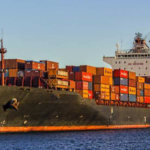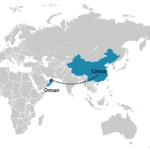
Shipping a container from China to Yemen in 2026 means navigating one of the world’s most volatile maritime corridors — where a single War Risk Surcharge (WRS) can inflate your freight bill by 30% overnight. Understanding container shipping costs from China to Yemen isn’t just about comparing base rates. It’s about knowing which hidden fees hit this route, how the Red Sea crisis has reshaped transit times, which port to use, and what your real landed cost will be once duties clear.
Below, we break down 20ft and 40ft FCL rates by Chinese origin port, LCL per-CBM pricing, a step-by-step landed cost example, and the surcharges, customs duties, and Incoterms that determine your final bill.
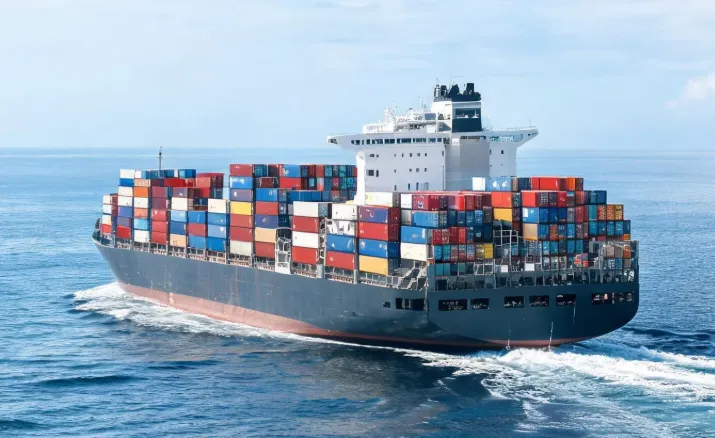
How Much Does It Cost to Ship a Container from China to Yemen?
Several forces make the China–Yemen route structurally more expensive than neighboring Middle East destinations like shipping from China to Saudi Arabia or the UAE. Since late 2023, Houthi attacks in the Red Sea have forced most major carriers — COSCO, MSC, CMA CGM, and Maersk — to bypass the Bab el-Mandeb Strait and reroute around the Cape of Good Hope, adding 7–14 days of sailing time and a mandatory WRS that adjusts weekly. Three routing scenarios exist:
| Route | Transit to Aden | WRS per TEU | Current Status |
|---|---|---|---|
| Direct Red Sea (Bab el-Mandeb) | 21–30 days | $300–$800 | Limited carriers; only during security windows |
| Cape of Good Hope rerouting | 35–50 days | $0–$100 | Default for most shipments in 2026 |
| Gulf transshipment (via Jebel Ali / Salalah) | 28–40 days | $150–$400 | Emerging middle ground; shaves 5–7 days off the Cape route |
Cargo destined for Hodeidah or Saleef faces an additional layer: the United Nations Verification and Inspection Mechanism (UNVIM) requires pre-arrival documentation and possible physical inspection, adding 3–7 days. A new regulation effective January 2026 requires all vessels to apply for port entry permits immediately upon departure from China — delayed paperwork can result in denied entry.
Yemen operates under a dual administrative system, with different customs practices in the north (Sana’a authorities) and south (Aden authorities). For businesses placing Middle East orders directly from China, working with a forwarder who understands both Chinese export procedures and Yemeni import requirements is essential. A registered local consignee is almost always mandatory, which is why door-to-door (DDP) shipping is more complex here than in the UAE or Saudi Arabia.
FCL Container Shipping Rates to Aden (2026)
The table below reflects all-in port-to-port rates — ocean freight plus standard surcharges (BAF, THC, documentation) — for FCL shipments to the Port of Aden, the recommended discharge port for commercial cargo:
| Origin Port (China) | 20ft Container (USD) | 40ft / 40HQ Container (USD) |
|---|---|---|
| Shenzhen (Yantian / Shekou) | $2,500 – $3,500 | $4,500 – $6,000 |
| Guangzhou (Nansha) | $2,500 – $3,500 | $4,500 – $6,100 |
| Shanghai (Yangshan) | $2,600 – $3,700 | $4,600 – $6,000 |
| Ningbo-Zhoushan | $2,600 – $3,700 | $4,600 – $6,200 |
| Qingdao | $3,000 – $3,800 | $5,000 – $6,600 |
| Xiamen | $2,800 – $3,600 | $4,700 – $6,300 |
Add $300–$500 if your destination is Hodeidah (higher WRS + UNVIM processing fees).
LCL (Less than Container Load) Rates
For shipments under 15 cubic meters, LCL sea freight is the more economical choice:
| Destination Port | Rate per CBM (USD) | Transit Time | Notes |
|---|---|---|---|
| Aden | $80 – $180 | 30–40 days | Recommended; lower WRS, faster clearance |
| Hodeidah | $100 – $220 | 35–50 days | Includes UNVIM waiting time; higher risk |
DDP Door-to-Door Reference Pricing
For importers who want a single all-in price from factory pickup in China to final delivery in Yemen:
| Container Size | DDP All-In Estimate (USD) |
|---|---|
| 20ft | $4,500 – $6,500 |
| 40ft / 40HQ | $6,000 – $9,000 |
These include Chinese export clearance, ocean freight, Yemen import customs brokerage, duties and taxes, and last-mile trucking — ranges vary because inland distances and product-specific duty rates differ substantially.
A Real Landed Cost Example
Here is why comparing only base ocean freight leads to budget blowouts. A 20ft container of construction materials shipped from Shenzhen to Aden:
| Cost Component | Amount (USD) |
|---|---|
| Base ocean freight | $3,000 |
| Bunker Adjustment Factor (BAF) | $400 |
| War Risk Surcharge (WRS) | $500 |
| Terminal Handling Charges (THC) | $200 |
| Documentation & seal fees | $100 |
| Cargo insurance (0.4% of $50,000) | $200 |
| Yemen import duty (10% on CIF ~$53,000) | ~$530 |
| Yemen VAT (5% on CIF + duty) | ~$265 |
| Inland trucking (Aden → Sana’a) | $300 |
| Total landed cost | ~$5,495 |
The base freight was $3,000. The actual landed cost: nearly $5,500 — an 83% premium over the headline rate. Always ask for a line-by-line, all-in breakdown with stated validity dates.
20ft & 40ft Container Shipping Rates from China to Yemen by Port
Southern Chinese ports — Shenzhen and Guangzhou — have denser feeder connections to Middle East hubs and typically price 10–15% lower than northern gateways like Qingdao. But the cheapest port on paper isn’t always the cheapest in practice: trucking a container from Yiwu (Zhejiang) to Shenzhen adds $400–$800 — money better spent on ocean freight from nearby Ningbo or Shanghai. Ship from the port closest to your supplier.
Full Rate Comparison: 6 Origin Ports × 2 Container Sizes
| Origin Port | 20ft to Aden (USD) | 40ft/40HQ to Aden (USD) | Hodeidah Surcharge |
|---|---|---|---|
| Shenzhen (Yantian / Shekou) | $2,500 – $3,500 | $4,500 – $6,000 | +$300 – $500 |
| Guangzhou (Nansha) | $2,500 – $3,500 | $4,500 – $6,100 | +$300 – $500 |
| Shanghai (Yangshan) | $2,600 – $3,700 | $4,600 – $6,000 | +$300 – $500 |
| Ningbo-Zhoushan | $2,600 – $3,700 | $4,600 – $6,200 | +$300 – $500 |
| Qingdao | $3,000 – $3,800 | $5,000 – $6,600 | Minimal direct service |
| Xiamen | $2,800 – $3,600 | $4,700 – $6,300 | +$300 – $500 |
Rates are all-in port-to-port estimates for August 2026. WRS and BAF fluctuate weekly — request a real-time quote with locked-in surcharges.
LCL Pricing by Destination
| Destination | Rate per CBM | Best For |
|---|---|---|
| Aden | $80 – $180 | General commercial cargo; recommended default |
| Hodeidah | $100 – $220 | Northern Yemen deliveries (Sana’a, Sa’dah); higher risk |
Rates are door-to-CFS (container freight station); consignee handles clearance and pickup unless the forwarder adds DDP. Expect a 50–80% gap between base freight and true all-in cost on this route. If a forwarder won’t provide a line-by-line breakdown, treat that as a red flag.
How Long Does Container Shipping Take from China to Yemen?
Transit times on the China–Yemen corridor vary more than almost any Middle East route. Your timeline depends on origin port, destination port, and which routing the carrier uses that week.
Port-to-Port Transit Time Matrix
| Origin Port (China) | → Aden (Direct) | → Hodeidah (Direct) | Cape Rerouting Add |
|---|---|---|---|
| Guangzhou (Nansha) | 21 – 34 days | 24 – 37 days | +10 – 15 days |
| Shenzhen (Yantian / Shekou) | 23 – 32 days | 26 – 35 days | +10 – 15 days |
| Shanghai (Yangshan) | 25 – 35 days | 28 – 38 days | +10 – 15 days |
| Ningbo-Zhoushan | 30 – 40 days | 32 – 42 days | +10 – 15 days |
| Qingdao | 30 – 42 days | 32 – 45 days | +10 – 15 days |
| Xiamen | 28 – 38 days | 30 – 40 days | +10 – 15 days |
LCL shipments add 5–10 days for consolidation and deconsolidation. In practice, budget 35–50 days from booking to cargo availability — roughly double the pre-crisis timeline.
Which Yemeni Port Should You Use?
| Port | Recommendation | Why |
|---|---|---|
| Aden | ✅ Default choice | Stable operations, lowest WRS ($200–$500), unified customs process, deep-water berths, modern container terminals. Over 90% of commercial cargo enters through Aden. |
| Hodeidah | ⚠️ Conditional only | Technically operational but severe congestion, intermittent disruptions, mandatory UNVIM clearance, WRS $400–$800. Use only if your consignee is in northern Yemen and your forwarder has an active local team there. |
| Mukalla | 🔸 Niche | Serves eastern Yemen; limited vessel frequency; primarily handles breakbulk and project cargo rather than standard containers. |
Sea Freight Surcharges & Additional Costs When Shipping to Yemen
On a stable route, surcharges might add 15–25% to your base freight. On the Yemen corridor, they can add 50–85%. Know what each line item means and which ones you can negotiate.
| Surcharge | Typical Range | Leverage |
|---|---|---|
| War Risk Surcharge (WRS) | $200 – $800 / TEU | 🟢 Lock rate at quote acceptance |
| Bunker Adjustment Factor (BAF) | $200 – $600 / container | 🟢 Request fixed all-in quote |
| Terminal Handling Charges (THC) | $150 – $300 / container | 🟡 Relatively stable |
| Peak Season Surcharge (PSS) | $150 – $500 / container | 🟢 Book 3–4 weeks ahead to avoid |
| Documentation & seal fees | $60 – $125 / shipment | 🔴 Minor cost; don’t over-negotiate |
| Demurrage & Detention (D&D) | $50 – $200+ / day | 🟢 Negotiate 14–21 days free time |
| Customs inspection fee | $80 – $300 / occurrence | 🔴 Accurate paperwork minimizes risk |
| Cargo insurance | 0.3% – 0.5% of cargo value | 🟢 Compare policies; confirm war risk included |
A $1,200 base freight quote can become $2,800+ once WRS, BAF, THC, and documentation fees are added — before customs duties or inland delivery. Ask every forwarder the same question: “Is this an all-in quote? If not, list every surcharge with its current rate and validity period.”
Cargo insurance deserves special attention. Standard carrier liability under Hague-Visby Rules covers a fraction of actual cargo value. We recommend a policy covering 110% of CIF value with explicit war risk and piracy extensions — basic Institute Cargo Clauses (C) policies exclude these perils. A specialized cargo insurance provider familiar with high-risk routes can help structure the right coverage.
FCL vs. LCL Shipping from China to Yemen: Which Is Cheaper?
The choice between FCL and LCL comes down to one number: your shipment volume in cubic meters.
| Factor | FCL (Full Container) | LCL (Consolidated) |
|---|---|---|
| How it works | Your goods fill an entire container, sealed at origin | Your goods share container space with other importers’ cargo |
| Minimum volume | ~15 CBM to be cost-effective | As little as 1 CBM |
| Transit speed | Faster — direct port-to-port | 5–10 days slower (consolidation + deconsolidation) |
| Cargo security | Higher — fewer handling touchpoints | Moderate — multiple warehouse handlings |
| Cost structure | Fixed per-container rate | Per-CBM or per-ton rate (whichever is higher) |
| Yemen-specific risk | More predictable | Hodeidah LCL must clear UNVIM inspection; extra delays possible |
The Break-Even Point
| Your Shipment Volume | Cheaper Option | Why |
|---|---|---|
| Under 15 CBM | LCL | You only pay for the space you use |
| 15 – 30 CBM | 20ft FCL | Per-unit cost begins to beat LCL at ~15 CBM |
| Over 30 CBM | 40ft HQ FCL | Lowest cost per CBM; ~76 m³ of usable space |
Quick math: 18 CBM × $150/CBM LCL = $2,700. A 20ft FCL at $3,000 all-in gives you 15 extra CBM for $300 more — FCL is the obvious choice if you can consolidate that volume.
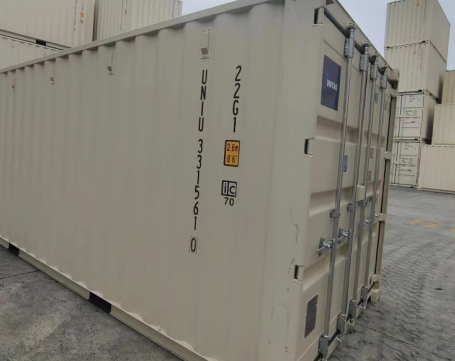
Container Specs at a Glance
| Type | Internal Dimensions (L×W×H) | Capacity | Max Payload |
|---|---|---|---|
| 20GP | 5.90 × 2.35 × 2.39 m | ~33 CBM | ~28,000 kg |
| 40GP | 12.03 × 2.35 × 2.39 m | ~67 CBM | ~26,500 kg |
| 40HQ (High Cube) | 12.03 × 2.35 × 2.69 m | ~76 CBM | ~26,500 kg |
Yemen Customs Clearance: Import Duties, Taxes & Required Documents
Customs clearance in Yemen is more complex than in neighboring Gulf states. The country calculates import duties on CIF value (Cost + Insurance + Freight), not the FOB price on your supplier’s invoice — a $30,000 FOB shipment becomes a ~$33,000 CIF base for duty calculation once freight and insurance are added.
Import Duty Rates by Product Category
| HS Chapter | Product Category | Duty Rate | Additional Tax |
|---|---|---|---|
| 61 – 63 | Textiles & apparel | 10% – 15% | 5% VAT |
| 84 – 85 | Machinery & electronics | 5% – 10% | 5% VAT |
| 68 – 70 | Construction materials & ceramics | 10% – 20% | 5% VAT |
| 94 | Furniture | 15% – 25% | 5% VAT |
| 39 | Plastic products | 10% – 15% | 5% VAT |
| — | Luxury goods, vehicles, jewelry | 20% – 25% | Possible excise tax |
The Yemen Standards, Metrology and Quality Control Organization (YSMO) enforces product compliance — food, medical supplies, and electronics face the highest scrutiny.
Six Documents You Must Have Ready
- Commercial Invoice — Values must match payment records exactly.
- Packing List — Carton counts and weights; discrepancies with the B/L are the #1 cause of clearance delays.
- Bill of Lading (B/L) — Consignee details must match invoice and packing list character for character.
- Certificate of Origin — Determines applicable duty rates; issued by CCPIT or equivalent chamber.
- Import License — Required for regulated categories (medical equipment, food, chemicals, telecom).
- Port Entry Permit (NEW 2026) — Applied immediately upon vessel departure from China. Late filing = denied entry.
The Clearance Process
Pre-shipment (HS code + license checks) → Document compilation → Declaration submission → Inspection (common for food, medical, electronics) → Duty payment & release.
Three mistakes to avoid: undervaluation (triggers fines/seizure), document inconsistency (195 cartons on packing list vs. 200 on B/L halts everything), and missing product certificates (food without health certificates sits at port).
DDP vs. FOB vs. CIF: Shipping Terms for China to Yemen Shipments
The Incoterm you choose determines who pays for what — and who bears the risk at each stage. For Yemen, one term has a hidden insurance trap.
What the Buyer Pays Under Each Term
| Incoterm | Ocean Freight? | Insurance? | Yemen Customs? | Final Delivery? | Best For |
|---|---|---|---|---|---|
| EXW | Yes | Yes | Yes | Yes | ❌ Not recommended |
| FOB | Yes | Yes | Yes | Yes | Experienced importers |
| CIF | No | No* | Yes | Yes | Simpler freight booking |
| DDP | No | No | No | No | Hands-off, all-in solution |
The CIF Insurance Trap
Under CIF, the seller purchases insurance — but typically only the minimum: Institute Cargo Clauses (C). This covers total loss and specific named perils. It does not cover war, piracy, or civil commotion — the very risks that define the Yemen corridor. If your cargo is lost to a conflict-related event under CIF with basic insurance, you have no claim. Always verify the policy scope and purchase a supplemental war-risk policy if necessary.
Three Questions Before Choosing DDP
Not all DDP offerings are equal on this route. Ask your forwarder:
- “Which duties and taxes are included — and which are excluded?” Some quotes exclude product-specific consumption taxes.
- “Do you have a vetted trucking partner in Yemen?” Without one, “door-to-door” stops at the port gate.
- “How many DDP shipments to Yemen in the last 12 months?” A forwarder running containers monthly is very different from one running a few per year.
Most China–Yemen importers are best served by FOB + a freight forwarder with direct carrier contracts and active Yemen operations. You control shipping and insurance, and avoid risk premiums embedded in CIF or DDP markups. If you prefer hands-off, DDP works — but only with a forwarder who passes the three questions above.
Cheapest Way to Ship a Container from China to Yemen
Reducing your container shipping costs from China to Yemen isn’t about finding the lowest headline rate — it’s about stacking decisions that compound into real savings.
1. Use FOB, not EXW. Let your supplier quote FOB so you control ocean freight and insurance. This typically saves 5–10% vs. EXW where the supplier books shipping with a markup.
2. Consolidate LCL shipments into one FCL. If you source from three suppliers in Guangdong, have them deliver to one warehouse, consolidate into a single container, and ship FCL. This alone cuts 25–35% off total freight.
3. Lock WRS and BAF at quote acceptance. A forwarder quoting $500 WRS today might invoice $800 next week if it’s left floating. Demand surcharges be fixed with a written validity period.
4. Book 3–4 weeks ahead and avoid three peak windows. Rates jump 20–40% during Chinese New Year (January–February), Ramadan, and Q4 (October–December). Early booking secures space at pre-peak rates.
5. Don’t ship a half-empty container. A 40HQ carrying 40 CBM is one of the costliest mistakes in freight — you’re paying for 76 CBM. Maximize density with palletization, or drop to a 20ft.
6. Ship from South China when possible. Shenzhen and Guangzhou have the densest connections to Middle East hubs and price 10–15% below Qingdao or Tianjin.
7. Choose your forwarder by capability, not price tag. A $2,400 quote from a forwarder with no Yemen track record costs far more than $3,000 from one clearing 200+ containers to Aden annually. Knowing how to choose the right freight forwarder is especially critical on complex routes like this one. Look for proven Yemen volume, direct carrier contracts (COSCO, MSC, CMA CGM, HMM), a licensed agent in Aden, line-by-line all-in quotes, and real-time tracking. Red flags: quotes far below market, no Yemen experience, no local presence, and vague WRS answers.
Frequently Asked Questions
How much does it cost to ship a 20ft container from China to Yemen?
$2,500–$3,800 all-in to Aden. Add $300–$500 for Hodeidah. Always request a line-by-line quote — base freight alone tells you nothing about the final bill.
How much does a 40ft container from China to Yemen cost?
$4,500–$6,600 all-in to Aden. A 40HQ costs about the same but provides ~76 CBM — roughly 9 CBM more than a standard 40GP, ideal for bulky, lightweight cargo.
What is the cheapest way to ship from China to Yemen?
Under 15 CBM: LCL ($80–$180/CBM). Over 15 CBM: 20ft FCL. Over 30 CBM: 40ft HQ delivers the lowest cost per CBM. Combine South China ports + off-peak booking + consolidation for the lowest total.
How long does container shipping take from China to Yemen?
21–35 days direct to Aden; 35–50 days via Cape of Good Hope (current default). LCL adds 5–10 days. Budget 35–50 days from booking to cargo availability.
Is the Port of Hodeidah open for container shipping?
Operational but congested, with mandatory UNVIM clearance and WRS at $400–$800/TEU. Route through Aden unless your consignee is in northern Yemen and your forwarder has a team in Hodeidah.
How much import duty and tax will I pay in Yemen?
Import duties: 5%–25% depending on product category, calculated on CIF value. Add 5% VAT on CIF + duty. See the HS-code table in the customs section above for category-specific rates.
What documents do I need to ship from China to Yemen?
Commercial invoice, packing list, bill of lading, certificate of origin, import license (for regulated goods), and the new 2026 port entry permit — applied immediately upon vessel departure from China.

Young Chiu is a seasoned logistics expert with over 15 years of experience in international freight forwarding and supply chain management. As CEO of Dantful International Logistics, Young is dedicated to providing valuable insights and practical advice to businesses navigating the complexities of global shipping.