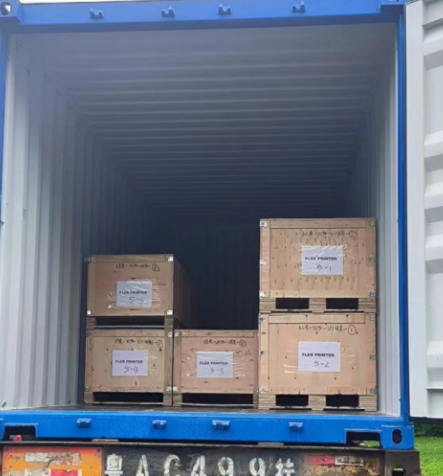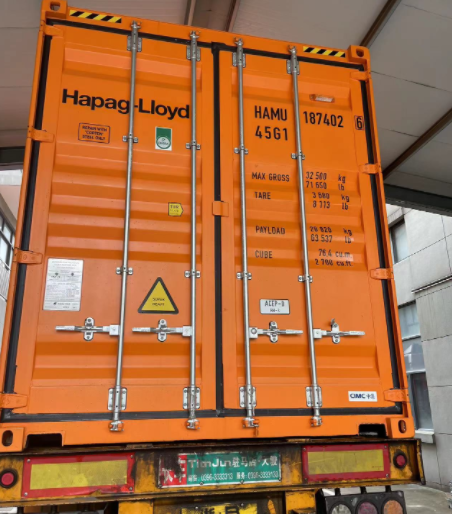
Choosing a freight forwarder from China to Portugal is rarely about the lowest number on a quote — it is about which company actually controls your cargo from the factory gate in Shenzhen or Ningbo to your door in Lisbon, Porto or Madrid. In 2024, China–Portugal trade reached about US$9.28 billion, and most of those electronics, machinery, textiles, furniture and auto parts moved by sea through Portugal’s Atlantic gateways at Sines, Leixões and Lisbon. Yet the same container is routinely quoted at 28 days by one forwarder and 48 days by another — and neither explains why.
This guide answers the question the rate tables ignore: how do you tell a real forwarder from a broker with a phone number? You will get a pre-booking vetting checklist, a clear read on door-to-door vs DDP, realistic transit times by route, a worked landed-cost example in euros — including Portugal’s 23% IVA — and the exact customs steps (EORI, ICS2, TARIC) your goods must survive. All figures are current for Q4 2026.
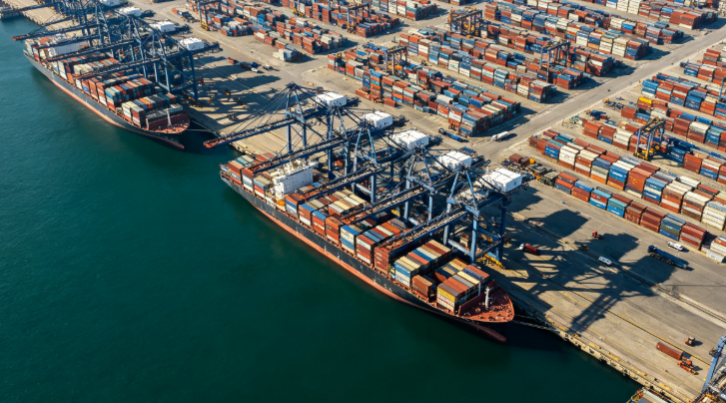
What Does a Freight Forwarder from China to Portugal Actually Do?
A freight forwarder is the party that organises your entire shipment — supplier pickup, export declaration, international transport, destination customs clearance, duty and tax payment, and final delivery — without necessarily owning the ship, the plane or the truck. On the China–Portugal lane the forwarder is the single thread that ties a Shenzhen supplier to a consignee in Braga, Coimbra or Faro.
It helps to separate four roles that buyers constantly confuse:
| Role | Owns the transport? | Signs the transport document | Answers for customs? |
|---|---|---|---|
| Freight forwarder (NVOCC) | No — books space | Issues its own House B/L | Only if you ask (as IOR agent) |
| Carrier (MSC, Maersk, COSCO…) | Yes — the vessel | Issues the Master B/L | No |
| Customs broker (despachante aduaneiro) | No | No | Yes — files the SAD |
| Courier (DHL, FedEx, UPS) | Yes — end to end | Issues an AWB | Yes — bundled in the rate |
The practical difference between an NVOCC and a licensed forwarder is authority, not marketing: an NVOCC files with the Chinese Ministry of Transport and can issue its own Bill of Lading (B/L), which means the contract of carriage runs through that company — not through a stranger. The Importer of Record (IOR) is a separate legal concept again: the entity that engages with Portugal’s customs authority, AT (Autoridade Tributária e Aduaneira), and carries the liability for valuation and classification.
The real journey, end to end
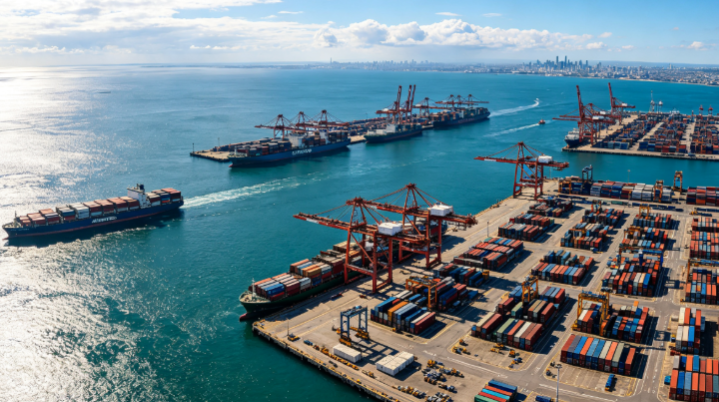
Your cargo flows through a chain most quotes never show: Chinese port of loading → South China Sea → Strait of Malacca → Indian Ocean → Red Sea → Suez Canal (or the Cape of Good Hope when the Red Sea is disrupted) → Mediterranean or direct Atlantic crossing → Sines, Leixões or Lisbon → inland trucking to the final address. Each hand-off is a place where days — and money — quietly disappear. A forwarder’s real value is owning the hand-offs, not just the sailing.
How to Choose a Freight Forwarder from China to Portugal: The Pre-Booking Vetting Checklist
Most competitors describe the service; almost none tell you how to audit the provider. This section is the shortlist test — run it before you send a single purchase order. A reusable version of this framework, applicable to any lane, is laid out in our guide on how to choose the right freight forwarder.
Credentials you must verify
| Credential | What it proves | Why it matters on this lane |
|---|---|---|
| FIATA membership | Professional standing, standard trading conditions | Governs liability and dispute behaviour |
| NVOCC licence (MOC filing) | Can issue its own B/L | Contract of carriage is with a real, accountable entity |
| IATA CASS accreditation | Air cargo settlement authority | Necessary for reliable air freight space |
| AEO status (China and EU mutual recognition) | Customs-compliance track record | Faster, lower-risk clearance in Portugal |
| FMC registration | US-bound authority | Signals group scale and compliance culture |
Ask for the licence numbers, not adjectives. A forwarder that cannot name its NVOCC filing or its Portuguese counterparty is a broker reselling someone else’s space — and when a shipment goes wrong, nobody is accountable.
Does the forwarder actually own the Portuguese leg?
The single most revealing question: who clears and delivers my cargo in Portugal? The best answer names a bonded own agent or licensed despachante with an AT relationship and staff who speak Portuguese, English and Mandarin. The weakest answer is “our partner network handles it” — which usually means the destination leg is subcontracted at the last minute, at the last minute’s price. Confirm: does the same company control drayage from the port, and does its tracking actually cover the inland leg, not just the ocean crossing?
Red flags of a cheap-quote broker
- A port-to-port price presented as if it were door-to-door.
- No written statement of what is excluded (destination THC, storage, ISPM-15, clearance fee).
- No liability limit disclosed (per kg or per B/L).
- Repeated refusal to name the Portuguese clearing party.
- No real-time tracking, or tracking that stops at the Portuguese port.
- A different account manager every time you reply.
The eight questions to ask before you book
Run these against any shipping agent from china to Portugal you are shortlisting, and treat a vague answer as a red flag:
- Is the quote all-in, and what exactly is excluded?
- Is the sailing direct or transshipped, and via which hub?
- Who files EORI / ICS2 / the SAD, and who advances duty and IVA?
- What are the destination THC, storage and ISPM-15 charges?
- What is the free time, and what is your demurrage/detention exposure?
- What is your liability limit, and is the cargo insured under ICC (A)?
- Does your tracking cover the inland leg into Portugal?
- Can I speak to a reference importer on this exact lane?
Our industry insight. In our experience, the cheapest quote on the China–Portugal lane is almost never the cheapest shipment. The difference reappears after arrival — as a destination terminal handling charge the importer did not expect, an ISPM-15 fumigation bill on wood pallets, or three days of storage at Sines while an EORI question is resolved. We quote in two parts — ocean and destination — precisely so importers can see which cost is ours and which is the port’s.
Door-to-Door vs DDP Shipping from China to Portugal: Choosing the Right Service Model
The service model decides who carries the risk — and the time — on the Portuguese leg. On this lane the choice usually comes down to FOB — where the buyer controls everything after the port — versus a managed door to door shipping from China to Portugal service where the forwarder owns the whole chain.
| Model | Forwarder handles | Buyer handles | Best for |
|---|---|---|---|
| Port-to-port | Ocean freight only | Everything after arrival | Experienced importers with a broker |
| Port-to-door | Ocean + inland delivery | Duty, IVA and clearance | Buyers with their own despachante |
| Door-to-door | Pickup → delivery to your door | Duty and IVA (billed) | Most first-time importers |
| DDP (Delivered Duty Paid) | Everything, including duty and IVA | Nothing — one landed price | E-commerce sellers, SMEs without an EORI |
The governing framework is Incoterms 2020. FOB dominates China–Portugal trade because it lets the buyer control freight, but it also hands the buyer every destination cost. CIF shifts the ocean leg to the seller while leaving clearance with the buyer. DAP adds delivery but stops short of duty. DDP is the only term under which the seller side owns the full journey — and it is the one most abused. If the acronyms blur together, our explainer on ddp shows exactly where each term hands off cost and liability.
The “fake DDP” trap
A genuine DDP quote includes duty, 23% IVA, clearance and delivery. A fake one says “DDP” and then invoices the importer after arrival for destination THC, storage, the clearance fee, or a surprise IVA bill because the quote was actually FOB. The test is simple: ask for the all-in price and the itemised exclusions in the same email. If duty and IVA are not named, it is not DDP.
When DDP makes sense — and when FOB wins
DDP is the right call for cross-border e-commerce sellers and SMEs with no EORI, no Portuguese VAT registration and no appetite for customs. FOB wins for established B2B importers who already have a Portuguese broker and want to control cost line by line. Dantful’s door-to-door service is built for the first group, with a named account manager handling the destination leg so the importer never negotiates with a stranger at the port. If you would rather not run the clearance chain yourself, our DDP Shipping Services fold duty, IVA and delivery into a single landed price.
Sea Freight vs Air Freight from China to Portugal: Transit Times by Route
This is where competitors collide. Published FCL figures for the same lane range from 23 days to 48 days — because they are quoting different routings without saying so. Transit is not one number; it is a function of the route, and the honest way to present it is a route-named band. If you only need the headline figure, how long is freight from china to Portugal gives the summary view.
| Routing (China → Portugal) | Ocean transit | Door-to-door | Notes |
|---|---|---|---|
| Shenzhen Yantian → Lisbon via Algeciras | ~28–31 days | 35–42 days | Fastest South China option; direct Atlantic relay |
| Shanghai → Sines direct call | 27–33 days | 35–42 days | Deep-water direct; best for central/south Portugal |
| Ningbo → Lisbon via Suez, direct | 30–38 days | 38–45 days | Route-dependent schedule |
| Guangzhou → Leixões | 30–40 days | 38–48 days | Northern Portugal destination |
| Shanghai → Leixões via Rotterdam | ~43–48 days | 48–55 days | Slower feeder; better for northern Iberia |
Why the routing — not the carrier — drives your days
A direct Sines call skips the transshipment hub entirely (27–33 days). A service that relays through Algeciras adds a near-Atlantic connection that is fast for South China cargo. A Rotterdam or Hamburg relay adds 4–7 days of feeder time but opens more capacity and sometimes a lower base rate. Add LCL consolidation and deconsolidation (+7–10 days) and the reason for the 23–48 day spread becomes obvious — and quotable. Our Sea Freight From China to Portugal guide maps the main services by gateway.
FCL vs LCL: the ~15 CBM crossover
Below roughly 12–15 CBM, LCL is cheaper; above it, FCL wins on both cost per CBM and speed, because a sole-use box avoids consolidation, deconsolidation and the damage risk of shared handling. A 40ft/40HQ also carries more per CBM than a 20ft, which matters on bulky furniture and machinery. If the terminology is new to you, start with what is lcl and fcl in shipping.
Air freight and the rail-truck alternative
Air freight runs 3–7 days door-to-door via Lisbon (LIS) or Porto (OPO), billed on chargeable weight (the greater of actual and volumetric weight, calculated as L×W×H cm ÷ 6000). Since Portugal is not a direct terminus of the China–Europe Railway Express, rail + truck runs 22–30 days via Xi’an, Chongqing or Zhengzhou and then road into Lisbon or Porto — faster than sea, cheaper than air, and a genuine middle option.
The 2026 Red Sea factor
When the Red Sea is disrupted, carriers reroute around the Cape of Good Hope, adding 10–14 days and significant fuel cost. As of 2026, most services have returned to Suez, but the Cape option remains live — a reason to ask any forwarder which routing your quote assumes.
Major Ports in Portugal: Sines, Leixões & Lisbon — Which Gateway Fits Your Cargo
Portugal has more container gateways than most importers assume, and the right one can cut your inland cost by hundreds of euros per box. All of them plug into the country’s Shipping From China To Portugal corridor, so the gateway — not the ocean leg — usually decides your inland cost.
| Port | Position | Best for |
|---|---|---|
| Sines | Southwest Atlantic, deep-water | Main Asia entry; direct calls and MSC transshipment; central/south Portugal and Spain |
| Leixões (Porto) | Northwest coast | Northern Portugal and northern Iberia; less congested, cheaper for the north |
| Lisbon (Lisboa) | Tejo estuary, three terminals | Lisbon metro distribution; consumer goods and small-batch LCL |
| Setúbal | South of Lisbon | Industrial and automotive cargo; good motorway access |
| Aveiro | Central-west coast | Central Portugal; industrial goods; smaller volumes |
Sines is one of the few European Atlantic ports that can berth the largest container vessels without draft restrictions, which is why MSC routes transatlantic traffic through it. Leixões almost always produces the lowest total logistics cost when the delivery address is in Porto, Braga or the north, because the goods never travel down to Lisbon.
Island regions: Madeira and Azores
Deliveries to Madeira (Caniçal) and the Azores (Ponta Delgada) follow special island VAT regimes with lower IVA rates than the mainland, and they add a feeder sailing from the mainland — plan extra transit and confirm the regional rate before you price the shipment.
All-In Shipping Cost from China to Portugal: Rates, Hidden Fees & the Landed-Cost Maths
A rate is not a cost. Below are Q4 2026 market benchmarks — useful for comparison, not guaranteed prices — followed by the maths competitors skip. The fuller rate tables sit in container shipping costs from china to Portugal.
| Mode | Market benchmark (2026) | Basis |
|---|---|---|
| FCL — 20ft (20GP) | US$1,700–2,600 | Per container, port-to-port |
| FCL — 40ft / 40HQ | US$2,900–4,500 | Per container, port-to-port |
| LCL | US$30–190 per CBM | Per cubic metre, port-to-port |
| Air freight | US$4.80–11.00 per kg | Per chargeable kg |
| Door-to-door (sea, DDP) | US$120–300 per CBM | All-in, incl. duty and IVA |
| Door-to-door (air, DDP) | US$4.50–9.80 per kg | All-in, incl. duty and IVA |
A worked landed-cost example in euros
Assume a 20ft container with a FOB value of €40,000, destination Lisbon, a general-product duty rate of 6%, and Portugal’s standard 23% IVA.
| Line | Basis | Amount |
|---|---|---|
| Goods value (FOB) | — | €40,000 |
| Ocean freight + insurance | — | €3,200 |
| CIF value | FOB + freight + insurance | €43,200 |
| Import duty | 6% of CIF | €2,592 |
| IVA base | CIF + duty | €45,792 |
| IVA (23%) | 23% of IVA base | €10,532 |
| Destination charges (THC, drayage, clearance) | fixed | €1,100 |
| Total landed cost | — | ≈ €57,424 |
The lesson is in the IVA line: it is charged on CIF plus duty, not on the FOB value — and it is the single largest cash item after the goods themselves. A quote that never mentions it cannot possibly be “all-in.”
The hidden-fee list competitors omit
- Destination THC (DTHC) and terminal charges at Sines, Leixões or Lisbon
- Storage accruing while clearance is pending
- ISPM-15 heat treatment / marking for wood packaging (≈ €200–500)
- ENS / ICS2 filing fees
- The customs broker’s clearance fee
- The cash-flow cost of advancing duty and IVA at arrival
Cost-composition terms, decoded
Freight quotes pack in acronyms: BAF (bunker adjustment), CAF (currency adjustment), PSS (peak-season surcharge), GRI (general rate increase) and ISPS (security). In LCL, pricing is often W/M (weight or measure) with a minimum billable CBM, so a small but heavy shipment can cost more than its volume suggests. Ask which surcharges are locked and which float.
Portugal Customs Clearance Process for Imports from China: EORI, ICS2, TARIC & IVA 23%
Goods do not become yours when the ship docks; they become yours when AT releases them. The sequence below is the destination leg that determines how many days your cargo actually sits. Handled end to end, this is exactly what our Customs Clearance team runs on every Portugal shipment.
| Step | Action | Who / system | Typical time |
|---|---|---|---|
| 1 | Prepare documents (invoice, packing list, B/L, origin, HS summary, CE/REACH) | Exporter + forwarder | Before sailing |
| 2 | ICS2 advance cargo declaration (pre-arrival) | Forwarder / carrier | 3–5 days before arrival |
| 3 | Vessel arrives; container discharged at Sines / Leixões / Lisbon | Terminal | Day 0 |
| 4 | SAD declaration filed; HS codes and value verified | Broker + AT | 1–3 days |
| 5 | Duty + 23% IVA paid | Importer / forwarder (DDP) | Same day |
| 6 | Compliance check (CE, REACH, labelling) | AT / market authority | 0–3 days |
| 7 | Release and inland truck delivery | Forwarder | 1–3 days |
Straightforward declarations clear in 3–7 working days; shipments selected for physical inspection can take 10–18 days. That spread — not the ocean sailing — is where most “late” deliveries are actually lost.
EORI: the number that stops cargo
Every importer clearing goods in Portugal needs a valid EORI number, issued free by AT (usually within 1–5 working days). Without it, the shipment is suspended — no exceptions, no grace period. Obtain it before you book, not after the vessel sails.
Duty and VAT maths
Classification runs on the 10-digit TARIC code under the EU Common Customs Tariff. General-product duty ranges from 0–12% on the CIF value; IVA is then charged at 23% on CIF + duty. The €150 duty de minimis applies to duty only, while commercial goods carry a €0 VAT de minimis — the “small parcel is tax-free” myth does not survive contact with a commercial consignment.
The mandatory document checklist
- Bill of Lading (sea) or airway bill (air), issued to a Portuguese company with a valid EORI
- Commercial invoice and packing list that match line for line
- EORI and Portuguese VAT number of the importing company
- Certificate of origin (Chamber-authenticated)
- HS-code summary for ICS2 filing
- CE / REACH documentation for regulated goods
Trustworthiness note. There is no free trade agreement between China and the EU. A Chinese Certificate of Origin therefore unlocks no preferential duty — it is a compliance document, not a discount. We say this plainly because we see importers budget for a saving that cannot exist, then discover the TARIC rate at arrival.
Common Import Mistakes & Anti-Dumping Traps When Importing from China to Portugal
The fastest way to lose money on this lane is a classification or compliance surprise that was avoidable.
The anti-dumping trap: wood parquet vs vinyl flooring
This is the most misclassified pair on the lane. Multilayer wood parquet (HS 4418.75) from China carries EU definitive anti-dumping duties of 21.3%–36.1% under Reg. (EU) 2025/1342. Vinyl SPC/LVT flooring (HS 3918) is not covered by that measure. Sellers sometimes describe vinyl as “engineered wood” to sound premium — and importers who accept that wording walk into a duty they never budgeted for.
New EU cost layers: CBAM and IOSS
CBAM (Carbon Border Adjustment Mechanism) adds carbon-cost reporting for carbon-intensive goods such as steel and aluminium. IOSS collects VAT at the point of sale for B2C consignments of €150 or less. Both are new line items that older guides ignore entirely.
Product compliance that stops shipments
- CE marking for electronics, toys, machinery and PPE
- REACH for chemicals and cosmetics (plus CPNP notification)
- EN 71 for toys, INFARMED for medical devices, ASAE / DGAV for food
- ISPM-15 heat-treated wood packaging — non-compliant pallets block release outright
The 2026 delay calendar
No competitor publishes a Portugal-specific calendar. Portugal’s public holidays — Jan 1, Carnival (~Feb 17), Good Friday, Apr 25, May 1, Corpus Christi (~Jun 4), Jun 10 (Portugal Day), Aug 15, Oct 5, Nov 1, Dec 1, Dec 8 and Dec 25 — pause customs, inspection and trucking simultaneously. On the origin side, Chinese New Year, Labour Day (May 1–5) and Golden Week (Oct 1–7) pull vessel cut-offs forward by seven to ten days. Q3–Q4 peak season adds roughly 15–25% to Asia–Europe rates.
Real-life scenario. A Portuguese importer booked a 40HQ of flooring into Leixões in early Q4, holding an “all-in” quote that turned out to be FOB. On arrival, the vinyl was correctly classed under HS 3918 — but the supplier had also shipped untreated solid-wood crates, which failed ISPM-15 and held the container four extra days. The importer paid storage, a fumigation bill and a clearance fee the quote never mentioned. Two fixes would have prevented it: a genuine DDP quote that named duty and IVA, and an ISPM-15 statement secured before sailing. The forwarder who owns the destination leg catches both.
FAQs
What does a freight forwarder from China to Portugal do?
It organises the full chain — Chinese supplier pickup, export declaration, ocean or air transport, destination clearance with AT, duty and IVA payment, and final delivery — and issues its own transport document as an NVOCC.
How do I choose the best freight forwarder from China to Portugal?
Verify its FIATA / NVOCC / IATA / AEO credentials, confirm whether it owns the Portuguese clearing and delivery leg, and require a written statement of what the quote excludes (DTHC, storage, ISPM-15, clearance fee).
How long does shipping from China to Portugal take?
Sea freight is 27–33 days on a direct Sines call and 35–48 days door-to-door depending on routing; LCL adds 7–10 days; air freight runs 3–7 days; rail + truck takes 22–30 days.
How much does it cost to ship a container from China to Portugal?
Around US$1,700–2,600 for a 20ft and US$2,900–4,500 for a 40ft/40HQ port-to-port in 2026, before duty, IVA and destination charges.
What is the import VAT rate in Portugal?
Standard IVA is 23%, charged on the CIF value plus duty; Madeira and the Azores use lower regional rates, and commercial goods have no VAT de minimis.
Conclusion: Choose a Freight Forwarder from China to Portugal You Can Trust
The rate is the easy part. The value of a freight forwarder from China to Portugal shows up in the layers nobody quotes: verified credentials, a Portuguese clearing agent you can actually name, an all-in price that names duty and IVA, route-transparent transit, and a customs process run by people who do it every week.
Before you book, do three things: vet the provider with the eight questions above, get a two-part quote that separates ocean from destination, and confirm the landing maths in euros — because 23% IVA on a CIF-plus-duty base is the number that decides your margin.
Ship with Dantful International Logistics. Founded in 2008 and headquartered in Shenzhen, China, Dantful is a Class-A licensed forwarder and NVOCC, a FMC and Jctrans member, with a service network spanning 200 countries. On the China–Portugal lane we hold direct carrier contracts for rate and space security, own the full door-to-door execution so the Portuguese leg never falls to a third party, and run clearance through a licensed local team fluent in EORI, ICS2 and TARIC. Our 50-strong operations team and 50+ customer-service staff provide 24/7 support, daily tracking updates with photos across the entire journey, and cargo insurance covering the inland leg. Our promise is simple: a transparent, itemised quote with no hidden fees — and a transit window by layer, not one blended number. Request your free all-in quote for this lane and see exactly where every euro and every day goes.

Young Chiu is a seasoned logistics expert with over 15 years of experience in international freight forwarding and supply chain management. As CEO of Dantful International Logistics, Young is dedicated to providing valuable insights and practical advice to businesses navigating the complexities of global shipping.