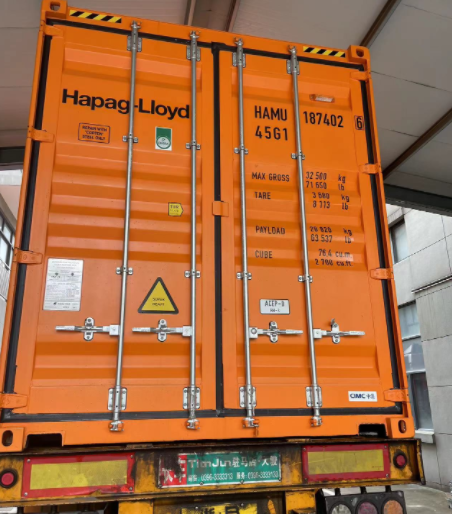
If you’re shipping auto parts from China, the freight rate on your quote isn’t your real problem. It’s everything that rate doesn’t cover — the wrong shipping method eating your margin, an HS code that triggers a customs hold, a Section 301 tariff nobody warned you about. After 15 years in Shenzhen, I’ve watched these same mistakes drain 15–30% from perfectly good deals. Every one of them is preventable.
Sea Freight, Air Freight, or Rail for Auto Parts from China
Choosing how to ship auto parts isn’t about picking the “best” method in the abstract. It’s about matching your specific situation — cargo type, volume, urgency, and destination — to the right mode. Here’s the decision framework that eliminates the guesswork.
The Decision Matrix
Match your shipment profile to the recommended method:
| Your Situation | Recommended Method | Why |
|---|---|---|
| Heavy/dense parts (engines, brake discs, transmissions) + large volume (15+ CBM) | Sea Freight FCL | Lowest cost per kg; minimal handling reduces damage risk |
| Heavy/dense parts + small volume (<15 CBM) | Sea Freight LCL | Only pay for the space you use; flexible for mixed orders |
| Light/fragile parts (headlights, ECUs, sensors) + urgent | Air Freight | 3–7 day transit; less handling = less breakage risk |
| Mid-value parts + Europe destination + moderate urgency | Rail Freight | 15–25 days; 40–60% cheaper than air to EU destinations |
| Samples, prototypes, or orders under 100 kg | Express Courier (DHL/FedEx/UPS) | Door-to-door in 3–7 days with full tracking; convenient for small shipments |
The “Critical CBM” Rule
Here’s something most forwarders won’t volunteer: at approximately 12–15 cubic meters of cargo volume, FCL becomes cheaper per unit than LCL. For businesses doing regular fcl autoparts shipping, consolidating orders to reach this threshold delivers immediate per-unit savings.
Let’s look at the math. Suppose you’re shipping 10 CBM of mixed auto parts via sea freight from Shenzhen to Los Angeles:
| Shipping Mode | Rate | Total Freight Cost | Cost Per CBM |
|---|---|---|---|
| LCL (10 CBM) | $120/CBM | $1,200 | $120 |
| 20ft FCL (max ~28 CBM) | $2,800/container | $2,800 | $100 (at 28 CBM fill) |
At 10 CBM, LCL wins. But if you can consolidate to 15 CBM, the per-unit math shifts in FCL’s favor — and you get the added benefits of faster transit (no consolidation/deconsolidation delays) and less handling (lower damage risk). If you’re regularly shipping 10+ CBM per order, you’re almost certainly leaving money on the table by sticking with LCL.
Real Transit Times by Route
Generic “25–40 days” estimates don’t help you plan inventory. Here are actual port-pair timings based on real-world auto parts shipments from Chinese ports:
| Origin Port | Destination | FCL Transit | LCL Transit | Air Freight |
|---|---|---|---|---|
| Shenzhen / Yantian | Los Angeles, USA | 15–18 days | 20–25 days | 3–5 days |
| Shanghai / Ningbo | New York, USA | 28–33 days | 33–40 days | 4–6 days |
| Shanghai / Ningbo | Rotterdam, Netherlands | 25–30 days | 30–38 days | 4–7 days |
| Shenzhen / Guangzhou | Dubai, UAE | 15–20 days | 20–28 days | 3–5 days |
| Shanghai / Ningbo | Lagos, Nigeria | 28–35 days | 35–45 days | 4–7 days |
| Shenzhen / Guangzhou | Sydney, Australia | 15–20 days | 20–28 days | 3–5 days |
Pro tip: Add 5–10 days to these figures for door-to-door delivery, which includes export customs clearance at origin and import clearance plus last-mile trucking at destination.
For detailed lane-specific guidance, read our guide on shipping from Shenzhen China to USA — covering port options, transit times, customs requirements, and cost optimization for the busiest China-US trade lane.
The 7-Step Auto Parts Shipping Timeline: From Factory Floor to Your Door
This is the operational heart of the playbook. Each step includes the typical duration, the responsible party, and — critically — the most common mistake we see importers make at that stage, so you can avoid it.
| Step | What Happens | Typical Duration | Who Handles It | 🚩 Most Common Mistake |
|---|---|---|---|---|
| 1. Production & Quality Control | Parts manufactured; third-party inspection (TPI) verifies specs, quantity, and packaging before shipment release | 2–6 weeks (depends on order size) | Supplier + TPI company | Skipping pre-shipment inspection entirely — damaged or incorrectly spec’d parts get discovered only after reaching the destination country, where returns are logistically impossible |
| 2. Consolidation & Warehousing | Parts from multiple suppliers collected at the forwarder’s China warehouse; cartons counted, labels verified, packaging inspected, cargo consolidated | 2–5 days | Freight forwarder | Not labeling every carton with SKU codes, supplier codes, and carton-number-of-total counts — when 300 identical brown boxes arrive, the destination warehouse team has no way to identify or sort anything |
| 3. Export Customs Declaration | Forwarder files the export declaration with China Customs; documents verified; cargo cleared for export | 1–3 days | Freight forwarder + China Customs | Missing the Certificate of Origin — without it, you lose eligibility for reduced or zero-duty treatment under trade agreements (e.g., GSP, USMCA indirect benefits) |
| 4. International Transit | Container loaded onto vessel, cargo loaded onto aircraft, or container placed on China-Europe rail | Sea: 15–40 days / Air: 3–7 days / Rail: 15–25 days | Carrier + freight forwarder | Picking the absolute cheapest carrier instead of the most reliable one — a 7-day port congestion delay on the cheap carrier wipes out 3× whatever you saved on the freight rate in lost sales and customer penalties |
| 5. Import Customs Clearance | Destination customs reviews documents, assesses duties and taxes, and releases the shipment | 2–7 days (varies significantly by country) | Customs broker + importer | Using the wrong HS code — customs holds the shipment for reclassification, charges storage fees by the day, and may issue fines. This single mistake is responsible for more auto parts customs delays than all other causes combined |
| 6. Duties, Taxes & Fees Payment | Customs duties, processing fees, and applicable tariffs calculated and paid | Same-day (if pre-arranged with broker) | Importer (or forwarder, under DDP) | Not budgeting for Section 301 tariffs (USA) — certain Chinese auto parts face an additional 25% tariff on top of the standard duty rate. This line item alone can turn a profitable shipment into a loss |
| 7. Last-Mile Delivery | Truck transport from port/airport/rail terminal to your warehouse, distribution center, or Amazon FBA facility | 1–5 days | Local trucking company (arranged by forwarder) | Assuming the “port-to-port” quote includes inland delivery — it almost never does. Always verify whether your forwarder’s quote covers trucking to the final address, and under which Incoterms terms |
This timeline isn’t theoretical. We’ve guided over 3,000 auto parts shipments through this exact sequence from our Shenzhen operations center, and the pattern of mistakes is remarkably consistent across importers of all sizes. The seven flags above account for over 80% of the shipment problems we’re asked to rescue.
In one recent case, a first-time importer of suspension components from Zhejiang province lost $4,700 in demurrage and storage fees because they shipped under a generic HS code their supplier suggested — triggering a customs exam, reclassification, and a 12-day hold at Long Beach. One hour of HS code verification with an experienced forwarder would have prevented the entire situation.
Incoterms for Auto Parts: FOB, CIF, DDP — Which One Actually Protects You?
Most Incoterms 2020 articles read like a textbook glossary. Here’s the version that matters for auto parts importers: a practical decision guide based on who you want controlling each stage of the process.
The Three-Path Decision
Path 1: “I want everything handled — parts delivered to my door with all costs included.” → Choose DDP (Delivered Duty Paid). Your freight forwarder manages the entire chain: China export, international freight, destination import clearance, duties and taxes, and last-mile delivery. You pay one all-in price.
Path 2: “I want control over freight costs and shipping decisions, but I want the forwarder to handle destination customs.” → Choose CIF (Cost, Insurance, Freight) for the ocean leg plus a separate customs broker for import clearance. You get freight rate transparency and a say in carrier selection; the broker handles the paperwork at destination.
Path 3: “I want the lowest ex-factory price possible and I’ll manage the entire logistics chain myself.” → Choose FOB (Free on Board) or EXW (Ex Works). You take control of freight booking, insurance, and destination clearance — higher effort, but for experienced importers with an established logistics team or broker relationship, this typically delivers the lowest total cost.
Note on DDU: You may encounter DDU (Delivered Duty Unpaid) in older references or supplier quotes. Under Incoterms 2020, DDU was officially replaced by DAP (Delivered at Place). The key distinction from DDP: under DDU/DAP, the buyer — not the forwarder — is responsible for import duties, taxes, and customs clearance at destination. If a supplier quotes you “DDU,” clarify whether they mean DAP and who handles the destination customs process.
The DDP Trap Nobody Warns You About
DDP sounds like the safest choice — and for many first-time importers, it is. But there’s a catch most forwarders don’t disclose.
Under DDP, your forwarder pre-calculates the destination duties and taxes and builds them into the quote. If they underestimate those duties — because they used the wrong HS code, misjudged the customs value, or missed an applicable anti-dumping duty — you still owe the shortfall. Customs holds your cargo until every cent is paid. The forwarder’s “all-inclusive” price suddenly isn’t.
How to verify a DDP quote before committing:
- Ask for the exact HS codes the forwarder plans to use, and independently verify the duty rate yourself.
- Request a line-item breakdown showing what portion of the quote covers duties vs. freight vs. other charges.
- Confirm in writing that the DDP quote includes Section 301 tariffs (USA), VAT (EU/GCC), and any other destination-specific surcharges.
A reputable freight forwarder will provide all three without hesitation. If they push back or offer vague “don’t worry, we handle everything” reassurances, get a second quote.
When FOB Beats DDP
If you’re importing regularly and have a relationship with a customs broker in your country, FOB typically delivers 8–12% lower total landed costs than DDP. Why? Because DDP pricing includes a risk premium — the forwarder is taking on the liability of potential cost overruns and pricing that uncertainty into your quote. With FOB, you carry the destination-side risk directly, but you also capture the savings when things go smoothly.
The trade-off is active management. Under FOB, you need to coordinate with your broker, ensure ISF is filed on time (USA), track the vessel, and arrange last-mile delivery. For importers shipping 3+ containers per month, this effort is usually worth the savings. For one-off shipments, DDP’s convenience premium is worth paying.
How to Package Auto Parts for International Shipping from China?
How you pack an engine is completely different from how you pack a headlight. Treat them the same, and you’ll open your container to find broken glass and rusted metal. Here’s the part-type-by-part-type packaging standard.
| Part Type | Packaging Method | Critical Protection Detail | Cost Impact |
|---|---|---|---|
| Engines & Transmissions | Custom wooden crate, engine bolted to pallet base, all fluids drained | Internal bracing to prevent shifting during vessel roll; desiccant bags inside crate to control moisture during ocean transit | Crating adds ~$80–150/unit but reduces damage claims by 90%+. One damaged engine costs more than 10 crates |
| Headlights, Taillights, Mirrors | Double-wall corrugated carton with 2″ closed-cell foam padding on all six sides; individual compartment dividers for multi-unit cartons | Corner protectors on outer carton; bold “FRAGILE — GLASS” and “THIS SIDE UP” markings; never stack more than 4 cartons high during consolidation | Foam inserts add ~5% to carton CBM but eliminate breakage — the most common auto parts damage claim |
| Brake Discs, Rotors, Suspension Parts | Heavy-duty corrugated boxes (minimum 32 ECT rating), strapped to a heat-treated pallet, zero empty space inside cartons to prevent internal movement | Apply anti-rust oil coating before packing; shrink-wrap the entire finished pallet for moisture protection | Palletizing is mandatory for FCL loading — budget ~$25–40 per pallet |
| ECUs, Sensors, Electronic Modules | Anti-static shielding bag → custom-cut foam insert → rigid outer carton → moisture-barrier bag as outermost layer | Silica gel desiccant packets inside each carton; never stack more than 3 cartons high; avoid shipping during peak humidity monsoon months (May–August in Southern China) | Anti-static packaging adds ~$3–8 per unit; one short-circuited ECU costs $300–2,000 to replace |
| Bumpers, Fenders, Body Panels | Molded foam corner protectors + full-body stretch film wrap; shipped upright on custom-sized pallet; never folded or bent | Body panels are dimensionally large but lightweight — carriers charge based on dimensional weight, not actual weight. Do NOT compress or fold to reduce CBM; deformation is permanent and the parts become unsellable | Dimensional weight cost is unavoidable — build it into your product pricing model, don’t try to cheat it with bad packaging |
The Multi-Supplier Labeling Standard
If your freight forwarder provides consolidated freight shipping and collects parts from four or five different factories into one consolidation warehouse, every single carton needs this information clearly printed:
- Supplier Code (e.g., “SUP-FOSHAN-03”)
- Purchase Order Number (e.g., “PO-2026-0417”)
- SKU Code (e.g., “BP-D1065-FR”)
- Quantity in Carton (e.g., “QTY: 20”)
- Carton Number / Total Cartons (e.g., “Box 7 of 24”)
Without this standard, your 300 brown boxes arrive at the destination warehouse as 300 identical mysteries. The warehouse team can’t sort by supplier, can’t prioritize by SKU, and can’t verify quantities without opening every carton. A $50 label printer and an extra hour of pre-shipment coordination prevents days of chaos downstream.
Forwarders with dedicated warehouse services in China enforce labeling standards at the consolidation point, catching these issues before cargo ships.
Customs Clearance: The 5 Mistakes That Hold Your Auto Parts at the Border
Customs clearance isn’t inherently complicated — but it’s ruthlessly unforgiving of small errors. These five mistakes are the ones we see most frequently, and each one is entirely preventable.
Mistake #1: Using the Wrong HS Code
Auto parts span dozens of Harmonized System (HS) codes, and the duty rate difference between similar codes can be substantial. Brake pads (HS 8708.31) and engine parts (HS 8409.91) have different rates. Classify a shipment of brake components under a generic “auto parts” catch-all code, and customs will flag it for reclassification — triggering a hold, storage fees, and potentially a penalty.
Quick Reference: Common Auto Parts HS Codes & USA Duty Rates
| Auto Part | HS Code | USA Base Duty Rate | Section 301? |
|---|---|---|---|
| Brake pads & linings | 8708.31 | 2.5% | Yes (25%) |
| Engine parts (spark-ignition) | 8409.91 | 2.5% | Varies |
| Transmission parts | 8708.40 | 2.5% | Yes (25%) |
| Suspension shock absorbers | 8708.80 | 2.5% | Yes (25%) |
| Radiators | 8708.91 | 2.5% | Yes (25%) |
| Lighting/visual signaling equipment | 8512.20 | 2.5% | Varies |
| Tires (new, for motor cars) | 4011.10 | 4% | Yes (25%) |
| Steering wheels, columns, boxes | 8708.94 | 2.5% | Yes (25%) |
| Safety airbags | 8708.95 | 2.5% | Yes (25%) |
| Clutches & parts | 8708.93 | 2.5% | Yes (25%) |
Note: Section 301 tariff applicability changes periodically based on USTR rulings. Always verify the current status for your specific HS code before finalizing your cost calculation. Your freight forwarder should confirm this as part of their quote.
Mistake #2: Missing EPA and DOT Forms
Certain auto parts imported into the United States require additional federal agency documentation beyond standard customs forms. If your forwarder doesn’t flag these requirements, your shipment sits at the port accruing demurrage charges while you scramble to file the missing paperwork.
| Auto Part Category | Required Form | Trigger |
|---|---|---|
| Engines & engine components | EPA Form 3520-1 | Required for all non-exempt engines and engine parts; covers emissions compliance |
| Headlights, brake hoses, tires, glazing | DOT HS-7 Declaration | Required for parts regulated under Federal Motor Vehicle Safety Standards (FMVSS) |
| Catalytic converters | EPA Form 3520-1 | Emissions control device — strictly regulated |
| Airbags & seatbelt assemblies | DOT HS-7 | Safety equipment under NHTSA jurisdiction |
A professional freight forwarder with auto parts experience will identify these requirements during the quoting phase — not after your container has already arrived at the port of entry.
Mistake #3: Accepting an Undervalued Commercial Invoice
Some suppliers offer a “favor”: they’ll declare a lower value on the Commercial Invoice so you pay less in duties.
This is not a favor. It’s customs fraud.
U.S. Customs and Border Protection (CBP) can seize the entire shipment, blacklist your company from future imports, and levy civil fines up to the domestic value of the goods. Even if the shipment clears, undervaluation creates a paper trail problem — your declared value doesn’t match your bank transfer records, your insurance coverage, or your resale pricing, exposing you to audit risk on multiple fronts.
The correct approach: Declare the actual transaction value — what you genuinely paid the supplier. Pay the correct duties. It’s a predictable cost of doing business, not a negotiable variable.
Mistake #4: Ignoring Section 301 Tariffs on Chinese Auto Parts
Since 2018, the U.S. Trade Representative has imposed additional tariffs of up to 25% on a wide range of Chinese-origin products, including many common auto parts categories. This tariff is applied on top of the standard duty rate — meaning a brake pad shipment might face 2.5% base duty plus 25% Section 301 tariff for a combined 27.5% rate.
Not all auto parts are affected. Certain categories have been granted exclusions, and the list changes periodically. The mistake: assuming Section 301 doesn’t apply to your parts, only to discover the 25% surcharge when your customs broker sends the final bill.
How to check: Visit the USTR Section 301 tariff list for the current applicable categories, or ask your freight forwarder to confirm applicability for your specific HS codes before you place the order.
Mistake #5: Missing the ISF Filing Deadline (USA)
Importer Security Filing (ISF), also known as “10+2,” must be submitted to U.S. Customs and Border Protection (CBP) at least 24 hours before your container is loaded onto the vessel at the origin port. The filing requires 10 data elements from the importer (including manufacturer information, consolidator details, and commodity HTS codes) plus 2 from the carrier.
Miss the deadline, and CBP can levy a fine of $5,000 to $10,000 per violation. For a 40ft container holding $30,000 worth of auto parts, that penalty alone could represent 15–30% of the shipment value.
For shipments to the European Union, the equivalent filing is the Entry Summary Declaration (ENS), which must be lodged before the goods arrive at the EU border.
A reliable freight forwarder files ISF as part of their standard service. If you’re managing logistics yourself or using a forwarder you haven’t vetted, specifically confirm that ISF/ENS filing is included in their scope of work.
Auto Parts Shipping Rates from China (2026)
The single most common question we receive: “What’s the cost to ship auto parts from China?” After 15+ years on the ground in Shenzhen managing auto parts logistics, here’s our honest answer. The useful version is the data below — real rate ranges our operations team works with daily, based on mid-2026 market conditions.
Sea Freight FCL — 40ft Container, from Shenzhen
| Destination | Rate Range (40ft) | Notes |
|---|---|---|
| USA West Coast (Los Angeles / Long Beach) | $3,500 – $4,500 | Most competitive lane; highest sailing frequency |
| USA East Coast (New York / Savannah) | $4,500 – $5,500 | Includes Panama Canal transit |
| Northern Europe (Rotterdam / Hamburg) | $3,800 – $5,000 | Rates influenced by EU ETS carbon surcharge |
| Middle East (Dubai / Jeddah) | $2,500 – $3,500 | Fastest transit among all lanes listed |
| West Africa (Lagos / Tema) | $4,000 – $6,000 | Higher due to port congestion premiums and limited carrier options |
| Australia (Sydney / Melbourne) | $2,800 – $3,800 | Stable lane with consistent scheduling |
For a complete picture of shipping rates from china to usa — including FCL, LCL, air, and express options with current market data — see our US-specific pricing guide.
Sea Freight LCL — Per Cubic Meter (CBM), from Shenzhen
| Destination | Rate Per CBM | Best For |
|---|---|---|
| USA | $80 – $150 | Shipments under 15 CBM |
| Europe | $70 – $130 | Mixed-SKU auto parts orders |
| Middle East | $60 – $100 | Smaller aftermarket parts batches |
| Australia | $70 – $120 | Regional distribution restocking |
Air Freight — Per Kilogram, from Shenzhen (SZX) / Guangzhou (CAN)
| Destination | Rate Per KG | Transit Time (Door-to-Door) |
|---|---|---|
| USA | $4.50 – $7.50 | 3–7 days |
| Europe | $4.00 – $6.50 | 3–7 days |
| Middle East | $3.50 – $5.50 | 3–6 days |
Express Courier — Per KG (Door-to-Door)
| Service | Rate Per KG | Best For |
|---|---|---|
| DHL / FedEx / UPS | $8 – $15 | Orders under 100 kg, samples, prototypes |
Rates drop meaningfully above the 100 kg threshold — if you’re shipping 80 kg regularly, it’s often worth consolidating to 100+ kg to cross into the discounted weight bracket.
The Hidden Costs Most Freight Quotes Don’t Include
This is where budget forecasts get destroyed. Standard freight quotes typically cover the base ocean or air freight rate — and nothing else. Here’s what gets added after:
| Cost Category | Description | Typical Range |
|---|---|---|
| Origin Charges (China) | Terminal handling charge (THC), documentation fee, export customs declaration fee, VGM filing, trucking from factory to port | $200 – $500 |
| Destination Charges | Port handling, container cleaning, customs broker fee, customs examination fee (if flagged for inspection), trucking from port to final address | $300 – $800 |
| Demurrage / Detention | Container usage fee after free time expires (typically 4–7 days free). After that: $100–$400/day for a 40ft container | Variable — one customs delay can add $1,000+ |
| Cargo Insurance | ~0.3%–0.5% of the declared cargo value. A $25,000 shipment costs $75–$125 to fully insure | $75 – $125 for typical order |
| DG Surcharge | Dangerous goods surcharge applies if shipping lithium batteries, airbags, or other classified DG items | $300 – $800 per shipment |
Example: True landed cost for a $25,000 brake pad shipment (12 CBM, LCL, Shenzhen → Los Angeles, DDP)
| Cost Line | Amount |
|---|---|
| Product cost (FOB) | $25,000 |
| Sea freight LCL (12 CBM × $120) | $1,440 |
| Origin charges | $350 |
| Destination charges | $450 |
| US duty (2.5%) | $625 |
| Section 301 tariff (25%) | $6,250 |
| MPF (0.3464%) | $86.60 |
| Cargo insurance (0.4%) | $100 |
| Last-mile trucking (included in DDP) | $0 |
| Total Landed Cost | $34,301.60 |
| Effective cost per $1 of product | $1.37 |
The ocean freight itself accounts for just 4.2% of the total landed cost. The real cost drivers are tariffs and duties. This is why shipping strategy isn’t just about comparing freight rates — it’s about understanding the total cost picture.
Disclaimer: Freight rates are volatile and the figures above reflect mid-2026 spot market conditions. Fuel surcharges, peak season demand (August–October), carrier capacity adjustments, and geopolitical events can shift rates by 15–30% within a single quarter. Always request a current, shipment-specific quote from your freight forwarder before budgeting.
For a detailed breakdown of all cost components — including port-specific charges, peak season surcharges, and customs brokerage fees — see our complete guide to the Cost of Shipping from China to USA.
How to Ship Electric Vehicle (EV) & Lithium Battery Auto Parts from China
The electric vehicle parts market is growing at 20%+ annually, and with it comes a shipping category that zero competitor guides address: regulated EV components.
What Makes EV Parts Different?
Lithium-ion batteries, battery modules, and certain high-energy electronic controllers used in EVs are classified as Dangerous Goods (DG) Class 9 — Miscellaneous under UN3480 (lithium-ion batteries shipped alone) and UN3481 (lithium-ion batteries packed with or contained in equipment) regulations. For air shipments, the IATA Dangerous Goods Regulations (DGR) impose additional packaging, labeling, and State of Charge (SoC) limits — lithium batteries shipped by air must not exceed 30% charge.
This classification triggers requirements that don’t apply to standard mechanical auto parts:
| Requirement | What It Means | Who Provides It |
|---|---|---|
| UN38.3 Test Report | Battery must pass a series of 8 safety tests (altitude simulation, thermal test, vibration, shock, external short circuit, impact, overcharge, forced discharge) | Battery manufacturer or certified testing lab |
| MSDS (Material Safety Data Sheet) | Document detailing the chemical composition, hazards, handling, and emergency procedures for the battery | Battery manufacturer |
| DG-Compliant Packaging | Fire-resistant outer packaging; individual battery terminals protected against short circuits; cushioning to prevent movement; maximum weight limits per package | Freight forwarder or DG packaging specialist |
| DG Surcharge | Additional fee levied by the carrier for handling regulated dangerous goods | Applied by the carrier; typically +$300–$800 per shipment |
| Carrier Pre-Approval | Not all airlines and ocean carriers accept DG Class 9 cargo. The forwarder must pre-book space with a DG-approved carrier — last-minute bookings are often impossible | Freight forwarder coordinates this |
Non-DG EV Parts: Normal Rules Apply
Many EV components do not fall under dangerous goods regulations: electric motors, charging cables, body panels, non-battery controllers, onboard chargers, DC-DC converters, and thermal management components ship under standard freight rules. However, these parts typically have higher declared values than conventional auto components, so cargo insurance is strongly recommended even for non-DG shipments.
The HS Code Warning for EV Parts
EV part classifications are evolving faster than customs harmonization systems can keep up. New component categories — like battery management systems (BMS), electric drive units (EDU), and vehicle control units (VCU) — don’t always have an obvious corresponding HS code. Misclassification risk is significantly higher for EV parts than for traditional auto components. Always have your freight forwarder confirm the HS code with destination customs before shipping, and document the confirmation in writing.
Amazon FBA Auto Parts Sellers: Special Logistics Rules
If you sell auto parts via Amazon FBA, your logistics requirements don’t end at the port — they extend all the way to the fulfillment center receiving dock, where Amazon’s rules are non-negotiable.
FBA Labeling Compliance for Auto Parts
Every unit sent to Amazon FBA needs a scannable FNSKU label. Every carton needs an Amazon shipment label. For auto parts — especially items with oily, textured, or curved surfaces — standard paper labels fail frequently. Use waterproof, synthetic thermal-transfer labels, and for parts with irregular surfaces, apply labels to a flat section or use a hang-tag label format.
Pallet Requirements
Amazon mandates 40″ × 48″ GMA-standard 4-way wooden pallets in good condition — no broken boards, no protruding nails, no excessive splinters. Auto parts tend to be heavy: a pallet stacked with brake rotors can easily exceed 1,500 lbs. Strapping and stretch-wrapping must be robust enough to survive forklift handling without collapse. A pallet that tips or breaks apart at the Amazon receiving dock results in a refused shipment and a carrier return at your expense.
The Removal Order Risk
If Amazon flags your auto parts listing for an authenticity concern — particularly common for branded OEM replacement parts — they may freeze your inventory and demand removal. Removal order shipping costs can be substantial for heavy auto parts. Always budget 3–5% of your shipment value as a contingency for potential removal or disposal fees.
FBA vs. FBM: Split Strategy for Auto Parts
Heavy and dense auto parts (brake rotors, suspension components, ball joints) generate high FBA fulfillment fees that quickly eat into margins. Many successful sellers use a split strategy:
- FBA: Lightweight, high-velocity parts (sensors, switches, gaskets, O-rings, small electrical components)
- FBM (Fulfilled by Merchant) or 3PL: Heavy parts, large-dimension parts (bumpers, exhaust systems, brake rotors), and slow-moving SKUs
Your shipping method from China should align with this split from the start — there’s little point shipping brake rotors via express air freight to FBA only to watch Amazon’s fulfillment fees consume 35% of your sale price.
FAQs
How long does it take to ship auto parts from China?
Sea freight takes 15–40 days depending on destination. Air freight takes 3–7 days. Rail freight to Europe takes 15–25 days. Door-to-door delivery adds approximately 5–10 days for customs clearance and last-mile trucking. Express couriers (DHL, FedEx, UPS) deliver within 3–7 days door-to-door for small shipments.
What is the cheapest way to ship auto parts from China?
For shipments under approximately 12–15 cubic meters (CBM), sea freight LCL offers the lowest cost per unit. For shipments above 15 CBM, sea freight FCL becomes cheaper per unit and provides faster transit with less handling damage risk. Rail freight is a mid-budget option for European destinations. Air freight should be reserved for urgent, high-value, or lightweight shipments where speed justifies the premium.
Do I need a license to import auto parts from China?
For most aftermarket auto parts, no import license is required. However, certain regulated categories — engines and emissions components (EPA), safety equipment such as airbags and brake hoses (DOT/NHTSA), and tires — require additional federal agency certification or declaration forms. Check with your freight forwarder before ordering to confirm your specific parts don’t trigger licensing requirements.
What documents are required to ship auto parts from China?
The core documentation package includes: Commercial Invoice, Packing List, Bill of Lading (sea) or Air Waybill (air), and Certificate of Origin. Additional documents may be required depending on destination and product type: Importer Security Filing / ISF (USA), Entry Summary Declaration / ENS (EU), EPA Form 3520-1 (USA — engines/emissions), DOT HS-7 (USA — regulated safety parts), and dangerous goods declaration (lithium batteries and other DG items).
How much are import duties on auto parts from China?
Duty rates vary by HS code and destination country. For the USA, most mechanical auto parts carry a base duty rate of 2.5%–4%, with an additional 25% Section 301 tariff applicable to many Chinese-origin parts categories. For the EU, typical rates are 3%–4.5% plus VAT (varies by member state). For the GCC/Middle East, standard duty is 5%. Always confirm the exact duty rate for your specific HS code before calculating landed costs.
Can I ship used auto parts from China?
Yes, but with additional requirements. Used auto parts may require fumigation certificates (for wooden packaging material), pre-shipment inspection reports, and additional EPA or equivalent environmental agency documentation depending on the destination country. Some countries restrict or prohibit used auto parts imports entirely — verify with your freight forwarder and destination customs before committing to a purchase.
For a step-by-step framework on how to get a shipping agent in china — including provider verification checklists, interview questions, and common red flags to avoid — see our dedicated agent selection guide.

Young Chiu is a seasoned logistics expert with over 15 years of experience in international freight forwarding and supply chain management. As CEO of Dantful International Logistics, Young is dedicated to providing valuable insights and practical advice to businesses navigating the complexities of global shipping.