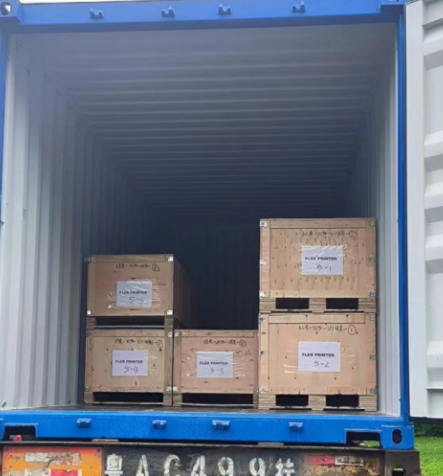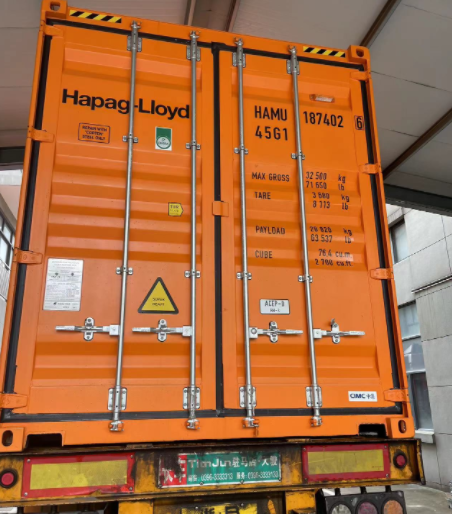
Container shipping costs from China to Mozambique are never a single number. The ocean rate is what gets quoted first, but the figure that decides whether your shipment makes money is the landed cost — and on this lane that means import duty, ICE, and 16% IVA stacked on top of CIF value, plus a pre-shipment conformity certificate you cannot board a vessel without.
This guide lays out the real 2026 numbers for importers, wholesalers and e-commerce sellers: FCL and LCL rates from every major Chinese port, the complete landed-cost formula with a worked example, how to choose between Maputo, Beira and Nacala, transit times you can plan around, and the CoC / CAP compliance rules — including the expansion that took effect on 1 June 2026.
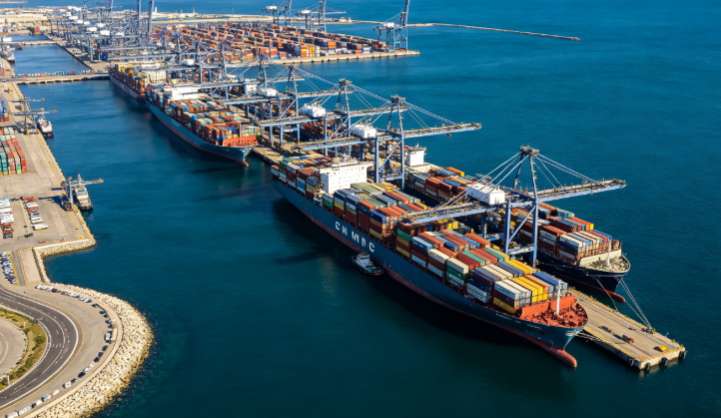
Container Shipping Costs from China to Mozambique: 2026 Rate Overview
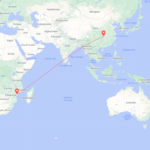
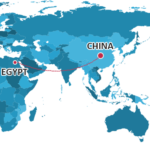
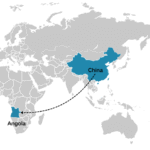
Mozambique sits at the end of a medium-to-long Southern African routing: cargo sails from East and South China, transships through a hub such as Singapore, Port Klang, Colombo or Durban, then enters one of three main container gateways. That extra leg is why this lane prices higher than a direct Asia–Europe service. Because so few services sail direct, Shipping From China To Mozambique almost always relays through a hub before the final gateway.
| Shipping mode | 2026 indicative rate | Transit time | Best for |
|---|---|---|---|
| 20ft FCL (20GP) | US$2,500–US$4,500 | 25–37 days | Heavy, dense cargo — tiles, machinery, steel |
| 40ft / 40HQ FCL | US$2,800–US$5,200 | 25–37 days | Bulky, light cargo — furniture, appliances, retail stock |
| LCL (sea), port-to-port | US$80–US$200 per CBM | 30–45 days | Shipments under ~13 CBM |
| LCL (sea), all-in DDP | US$180–US$400 per CBM | 40–60 days | SMEs wanting one delivered price |
| Air freight | US$4.5–US$10.00 per kg | 5–10 days | Urgent, high-value goods and spare parts |
| Express courier | US$8–US$18 per kg | 2–7 days | Samples and parcels under ~100 kg |
These are indicative 2026 bands, not firm quotes. The final figure depends on your origin port, destination gateway, container availability, cargo type and — more than most importers expect — the surcharges stacked on top of the base rate. For a wider view of the region, see our breakdown of Sea Freight from China to Africa.
What the headline rate hides: the surcharge stack
A quoted ocean freight rate is the base freight. Your invoice will usually carry more. Learn these five acronyms before you compare quotes:
- BAF / CAF — Bunker Adjustment Factor and Currency Adjustment Factor, covering fuel and exchange-rate movement.
- PSS — Peak Season Surcharge, applied when capacity tightens.
- GRI — General Rate Increase, a carrier-wide uplift.
- THC / DTHC — Terminal Handling Charges, charged at both origin and destination.
The PSS alone can rival a meaningful share of the base rate. CMA CGM’s March 2026 China-to-Mozambique notice set a PSS of US$850 per 20′ and US$1,500 per 40′ from North and South China (US$650 / US$1,300 from Central China), revised in June 2026 to US$550 per TEU (North/Central) and US$350 per TEU (South). This is why two quotes for the same container can differ by thousands of dollars — one may already include the peak surcharge, the other may not.
Our industry insight: when two China–Mozambique quotes differ by more than double, the gap is almost never the sailing rate. It is scope and surcharge timing. One quote stops at the port and quietly omits destination handling; the other prices the whole door-to-door chain. Always ask whether BAF, PSS, DTHC and customs service fees are inside the number — or waiting outside it.
FCL vs LCL: the unit-cost rule
As a rule of thumb, FCL beats LCL once your cargo passes about 13–15 CBM, because LCL spreads per-shipment handling, documentation and deconsolidation charges across less cargo. Below that threshold, LCL is the more economical choice. We cover the crossover in detail in the LCL section below, and our guide to LCL vs FCL Shipping: How to Choose the Right Option for Small Cargo walks through the decision with worked examples.
20ft vs 40ft vs 40HQ Container Cost from China to Mozambique
Container choice drives both your freight cost and your duty base, so it deserves its own decision — not a default.
Indicative FCL averages by Chinese origin port (to Maputo)
| China origin port | 20ft FCL (20GP) | 40ft FCL (40GP/40HQ) |
|---|---|---|
| Shenzhen / Guangzhou | from ~US$2,550 | from ~US$3,250 |
| Shanghai | from ~US$2,650 | from ~US$3,350 |
| Ningbo-Zhoushan | from ~US$2,650 | from ~US$3,450 |
| Qingdao | from ~US$2,750 | from ~US$3,550 |
| Tianjin | from ~US$2,800 | from ~US$3,650 |
| Xiamen / Hong Kong | from ~US$2,950 | from ~US$3,500–3,700 |
| Dalian / Yingkou | from ~US$3,050 | from ~US$3,850–4,050 |
Northern ports generally price a little higher because more of the cargo relays through an extra transshipment hub before the Southern African leg. Sailings to Beira and Nacala can sit above or below the Maputo benchmark depending on the service and season.
A 40ft does not simply double a 20ft
Volume roughly doubles between a 20ft and a 40HQ, but freight does not — the 40HQ carries the lowest cost per CBM of any container on this lane. That is why the 40HQ is the default for light, bulky cargo and the 20ft is reserved for heavy, dense goods that would hit the weight limit before the volume limit.
| Container | Internal dimensions | Usable volume | Max payload | Suits |
|---|---|---|---|---|
| 20GP | ~5.9 × 2.35 × 2.39 m | ~33 CBM | ~28 t | Metal, stone, tiles, dense machinery |
| 40GP | ~12.03 × 2.35 × 2.39 m | ~67 CBM | ~28 t | Furniture, cartons, general retail |
| 40HQ | ~12.03 × 2.35 × 2.69 m | ~76 CBM | ~28 t | Appliances, plastic goods, light bulky stock |
Why the per-container breakdown matters
A 20ft shipment usually breaks down into a base rate plus origin and destination port fees, duty and insurance; a 40HQ follows the same structure with slightly higher handling. The critical correction most published guides get wrong: customs duty is not a flat $200–$400. It is a percentage of CIF value — so a container of high-value electronics can carry far more duty than a container of cement. We show the exact maths in the next two sections.
LCL Shipping Cost from China to Mozambique: Cost per CBM Explained
LCL (Less than Container Load) — also called carga consolidada — lets you pay only for the space your cargo occupies, with your goods consolidated alongside other shippers’ cargo. It is the practical route for SMEs, mixed-supplier orders and sample batches. New to the vocabulary? Our primer on what is lcl and fcl in shipping explains both terms from the ground up.
| LCL variant | Rate | What it covers |
|---|---|---|
| Port-to-port LCL | US$80–US$200 per CBM | Ocean consolidation only |
| All-in door-to-door DDP LCL | US$180–US$400 per CBM | Pickup, export, freight, clearance, duty, delivery |
Why your LCL total is not simply CBM × rate
The per-CBM figure is only the sea portion. Layered on top are per-shipment charges that do not scale with volume: CFS handling at origin, deconsolidation at destination, documentation, a bill-of-lading fee, and often a minimum charge of one to two CBM. That is why the effective all-in rate falls sharply as volume grows — a one-CBM consignment pays the same flat documentation stack as a ten-CBM one.
Our industry insight: the most common LCL disappointment we see is a buyer who budgets US$150 × 5 CBM and receives a bill closer to double that. The sea rate was accurate; the per-shipment fees were never in the estimate. Ask your forwarder for an all-in CBM figure, not a port-to-port rate, before you commit.
LCL transit also runs longer than FCL — typically 30–45 days, sometimes up to 55 — because cargo waits for consolidation and deconsolidation.
Total Landed Cost: Mozambique Import Duty, ICE & 16% IVA
This is the section most China–Mozambique guides skip, and the one that decides your margin. The ocean rate is a component; the landed cost is the outcome.
The landed-cost formula
Landed Cost = CIF Value + Customs Duty + ICE + IVA (16%) + Service Fees
Where CIF = FOB goods value + international freight + insurance. In one line:
Landed tax = Duty + (CIF + Duty) × 16% + ICE
There is no China–Mozambique free trade agreement
This is the fact importers most often assume away. Mozambique has no FTA with China. Chinese-origin goods pay standard MFN (Most-Favoured-Nation) duty, which ranges from 0% to 25% ad valorem on CIF, with a trade-weighted average of roughly 7.1%. Mozambique’s duty-free access under the SADC protocol applies to SADC member states — not to China. A Certificate of Origin is still useful for other schemes, but it will not remove Chinese-origin duty.
| Product category | Indicative duty (CIF) |
|---|---|
| Solar panels, medical equipment | 0% |
| Agricultural equipment | 0–2.5% |
| Industrial machinery | 2.5–5% |
| Laptops | 5% |
| Cement, iron & steel bars | 7.5% |
| Mobile phones | 7.5% |
| PVC pipes | 10% |
| Textiles & fabrics | 15% |
| New clothing, footwear, TVs | 20% |
How IVA stacks on top of duty
Mozambique’s VAT (IVA) is 16%, and it is charged on (CIF + duty) — not on CIF alone. Duty therefore raises the base the VAT is calculated on. Some essentials qualify for a 5% reduced rate, but the standard 16% applies to most imported goods.
ICE: the selective excise
ICE (Imposto sobre Consumos Específicos) is a selective excise on specific categories: vehicles (25–110% by engine size and type), alcohol (40–65%), tobacco, sugary drinks, TVs, games consoles and air conditioners. If your cargo falls in one of these classes, ICE sits in the duty chain before IVA.
Worked example: a 40HQ of general goods
| Line | Amount (US$) |
|---|---|
| Goods value (FOB China) | 30,000 |
| Ocean freight + insurance | 3,350 |
| CIF value | 33,350 |
| Customs duty @ 10% | 3,335 |
| ICE (not applicable) | 0 |
| IVA @ 16% on (CIF + duty = 36,685) | 5,870 |
| Customs service fee | 150 |
| Brokerage + destination handling | 700 |
| Inland delivery (Maputo metro) | 500 |
| Total landed cost | ≈43,905 |
On a shipment of 5,000 units, that is roughly US$8.78 per unit landed — a number you can actually price against. Notice that duty plus IVA (US$9,205) is larger than the ocean freight itself. This is the reality the “US$3,000 container” headline hides.
Our industry insight: importers routinely under-budget Mozambique by treating duty and IVA as an afterthought. Because IVA is charged on CIF plus duty, a 20% tariff product effectively pays close to 39% in combined tax. Model the tax chain first, then negotiate freight — not the other way around.
Maputo vs Beira vs Nacala: Choosing the Right Gateway
All three gateways can receive your container, but they serve different inland markets, and the wrong choice quietly inflates your last-mile cost.
| Factor | Maputo | Beira | Nacala |
|---|---|---|---|
| Role | Largest container gateway | Central corridor port | Deep-water northern port |
| Serves | Southern Mozambique, capital, South Africa (Gauteng) & Eswatini transit | Central Mozambique + Zimbabwe, Zambia, Malawi | Northern Mozambique + Malawi via rail |
| Pricing | Most stable of the three | Varies more with service | Competitive for northern cargo |
| Best for | Maputo/Matola, southern distribution | Hinterland & landlocked transit | Nampula, northern projects, mining |
| Operator | MPDC (Maputo Port Development Company) | Cornelder de Moçambique | CDN (Corredor de Desenvolvimento do Norte) |
Why the wrong port costs more
The ocean rate difference between gateways is usually the smallest variable. The inland leg is the expensive one. Booking Beira for a consignee in Maputo, or Nacala for a customer in the far south, means a long — and in the wet season, slow — truck haul that can erase any ocean saving. Always give your forwarder the final delivery address, not just “Mozambique”, and ask for the inland leg priced both ways. Maputo is also the natural gateway for cargo bound for Gauteng and Eswatini — if that is your final market, compare the numbers in container shipping costs from china to South Africa.
Transshipment is the norm, not the exception
Most China–Mozambique services relay through Singapore, Port Klang, Colombo, Durban or Jebel Ali. That is why total door-transit can be far longer than the ocean-sailing figure alone. When a forwarder quotes “20 days”, confirm whether that is the sea leg or the full journey.
The SADC corridor overlay
If your cargo is destined for a landlocked neighbour — Zimbabwe, Zambia or Malawi — it moves under a bonded transit regime (Documento de Trânsito) through the Beira or Nacala corridor. This adds transit-document handling, lashing for rough terrain and higher cargo-insurance exposure. If your consignee sits inland, it is worth pricing Shipping From China To Zimbabwe, Shipping From China To Zambia and Shipping From China To Malawi as full corridor services rather than port-to-port.
Our industry insight: the single most expensive routing mistake we see is choosing a gateway on ocean rate alone. A US$200 saving on freight can cost US$800 in inland haulage. On this lane, the gateway decision should always be made from the delivery address backwards.
China to Mozambique Shipping Time & Transit Schedules
Plan around ranges, never a single number. Transit depends on origin port, service, transshipment hub and clearing efficiency.
| Route | Typical transit |
|---|---|
| Shanghai / Shenzhen → Maputo (direct) | ~20–30 days |
| China → Maputo (with transshipment) | 30–45 days |
| China → Beira | 30–42 days |
| China → Nacala | 32–45 days |
| LCL (sea), any gateway | 30–45 days |
| Air freight → Maputo (MPM) | 5–10 days |
| Express courier | 2–7 days |
Direct versus transshipment
A direct sailing to Maputo can arrive in about three weeks. The same lane via a hub can take six weeks. Most China–Mozambique volume travels the transshipment route, so build your schedule on 30–45 days, then add clearance time on top.
Seasonality you can plan around
Space tightens into Q4 restocking and around Chinese New Year and Golden Week, when factory closures bunch shipments and carriers layer on PSS and GRI. Booking two to three weeks earlier in those windows typically beats paying a peak-season premium.
How to Choose the Cheapest Mode: Sea Freight vs Air Freight vs Door-to-Door (DDP/DDU)
The “cheapest” mode depends on what you are optimising — cost, speed or simplicity. For importers who would rather hand over the whole chain, Door to Door Shipping folds pickup, freight, clearance and final delivery into a single quote.
| Mode | Cost basis | Speed | Best cargo |
|---|---|---|---|
| Sea FCL | Per container | Slow, cheapest per CBM | Bulk, heavy, non-urgent |
| Sea LCL | Per CBM | Slow | Small, mixed shipments |
| Air freight | Per kg (chargeable weight) | Fast | Urgent, high-value, light |
| Express | Per kg | Fastest | Samples, parcels under 100 kg |
| Door-to-door (DDP/DDU) | Per CBM or per shipment | Depends on mode | Importers wanting one provider end-to-end |
Air freight: what you pay for
Air Freight bills on chargeable weight — the greater of actual weight and volumetric weight (length × width × height in cm ÷ 6,000). Rate tiers improve with volume:
| Weight tier | Rate per kg |
|---|---|
| +100 kg | US$5.00–US$7.50 |
| +500 kg | US$4.00–US$6.50 |
Direct China–Mozambique freighters are limited, so cargo usually transits Addis Ababa, Dubai, Doha or Istanbul on Ethiopian, Emirates, Qatar or Turkish services before reaching Maputo (MPM).
Incoterms 2020: who pays what
| Incoterm | Who clears import customs | Who pays duty, ICE & IVA |
|---|---|---|
| EXW / FOB / FCA | You | You |
| CIF / CFR | You | You |
| DAP / DDU | You | You |
| DDP | Forwarder (under your importer ID) | Forwarder, re-invoiced to you |
Under Incoterms 2020, DDP (Delivered Duty Paid) is the only term where the seller side clears import customs and pays destination taxes — which is why door-to-door DDP is popular with importers who lack a local broker.
How to reduce your container shipping costs
| Lever | What to do | Typical effect |
|---|---|---|
| Consolidate suppliers | Merge multiple factory orders into one shipment | Lower per-unit freight |
| Book early | Reserve space before Q4 and CNY peaks | Avoids PSS/GRI |
| Match the container | 40HQ for bulky, 20GP for dense cargo | Lowest cost per CBM |
| Cross the break-even | Switch LCL → 20ft past ~13–15 CBM | 10–20% versus LCL |
| Verify HS codes early | Prevent reassessment and inspection delays | Avoids storage fees |
| Compare scope | Price port-to-port against door-to-door | Reveals true cheapest |
Hidden fees and surcharges to watch
Watch for demurrage and detention, port storage (armazenagem), destination THC, and customs service fees. These appear after you commit and can add 15–30% to a headline rate. A forwarder who itemises them up front — rather than invoicing them later — is worth more than the lowest quote. Not sure how to vet one? Our checklist on how to choose the right freight forwarder is a good starting point.
Our industry insight: the cheapest quote is rarely the lowest total cost. A rate that looks US$300 lower often arrives with US$600 of unbudgeted destination charges. Ask for a fully itemised landed-cost quote and compare totals, not headlines.
Mozambique Customs Clearance & Import Compliance
Customs Clearance is where Mozambique surprises first-time importers. Get the compliance chain wrong and your container can sit — and cost — while you fix it.
The 2026 compliance checklist
| Requirement | Detail |
|---|---|
| CoC (Certificate of Conformity) | Mandatory before shipment for regulated goods under the CAP (Conformity Assessment Programme), run by INNOQ and executed internationally by Intertek |
| CoC exemption | Shipments with FOB value under US$2,000 (except used vehicles) |
| ⚠ 1 June 2026 expansion | CoC now also applies to rice, fortified foods (flour, cooking oil, sugar, salt), used vehicles, rubber tyres and rolled steel / building materials |
| NUIT | Mozambique tax identification number, required for clearance |
| MIC importer card | Import authorisation required for shipments over US$500 |
| Used vehicles | Pre-shipment inspection mandatory over US$3,000; a MOZ number must be obtained before shipping |
| Labelling | Instructions, markings and manuals must be in Portuguese |
| Wood packaging | Pallets and crates must be ISPM-15 heat-treated |
The 1 June 2026 expansion caught many rice, food, tyre and steel importers unprepared. If your product now falls under CAP, the CoC must be secured before the vessel sails — arriving without one means delays, penalties or returned cargo.
Declarations and the JUE system
Import cargo is declared through the AT (Autoridade Tributária de Moçambique), the national revenue authority. Declarations take the form of a DU (Documento Único) for full entries, a DUA (abreviado) or DS (simplificado) for smaller consignments, and are filed electronically through the JUE (Janela Única Electrónica) single window. Your broker — the despachante aduaneiro — files and manages this process.
Documents to prepare
Commercial invoice, packing list, bill of lading or air waybill, HS code, certificate of origin, import licence where required, product certificates (including the CoC), cargo-insurance certificate, and bank payment evidence matched to the invoice. Inconsistent values, weights or descriptions between documents trigger inspection and reassessment.
Deadlines that cost money
Two timelines decide whether your shipment is profitable or penalised:
- Pay duty within 10 working days of the payment notice, or penalties accrue.
- Collect cargo within 25 days of arrival, after which it is deemed abandoned and moved for public auction.
Clearance itself can take 3–6 weeks for non-tier-one importers, against 3–10 days at Durban — so accuracy in documentation is not optional.
Our industry insight: the two facts that strand the most containers in Mozambique are a missing pre-shipment CoC and slow duty payment. Both are preventable and both start in China, weeks before arrival. As a freight forwarder in Shenzhen, China, we pre-validate HS codes, CoC status and document consistency at origin, so clearance begins the day the vessel berths instead of weeks after.
FAQs
How much does it cost to ship a container from China to Mozambique?
A 20ft (20GP) runs US$2,500–US$4,500 and a 40HQ US$2,800–US$5,200 from most Chinese ports to Maputo, before destination charges and taxes. Door-to-door landed cost is considerably higher once duty and IVA are included.
How much is VAT on imports into Mozambique?
IVA is 16%, charged on (CIF + duty) — not on CIF alone. A reduced 5% rate applies to selected essentials.
How long does shipping from China to Mozambique take?
25–37 days to Maputo (direct ~20–30; with transshipment 30–45). LCL takes 30–45 days and air freight 5–10 days. Add customs-clearance time on top.
What documents do I need to import into Mozambique?
Commercial invoice, packing list, bill of lading or air waybill, HS code, certificate of origin, import licence (if required), CoC and other product certificates, insurance certificate, and bank payment evidence — filed through the JUE system via a licensed broker.
What is the cheapest way to ship from China to Mozambique?
For volume above ~13–15 CBM, sea FCL in a 40HQ gives the lowest cost per CBM. Below that, LCL is cheaper. Consolidating suppliers and booking early avoids peak-season surcharges.
Can Dantful handle door-to-door DDP shipping to Mozambique?
Yes. Dantful manages pickup in China, export, freight, import clearance, duty and IVA payment, and final delivery to Maputo, Beira and Nampula, under a single itemised quote.

Young Chiu is a seasoned logistics expert with over 15 years of experience in international freight forwarding and supply chain management. As CEO of Dantful International Logistics, Young is dedicated to providing valuable insights and practical advice to businesses navigating the complexities of global shipping.