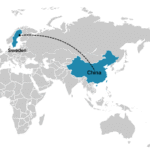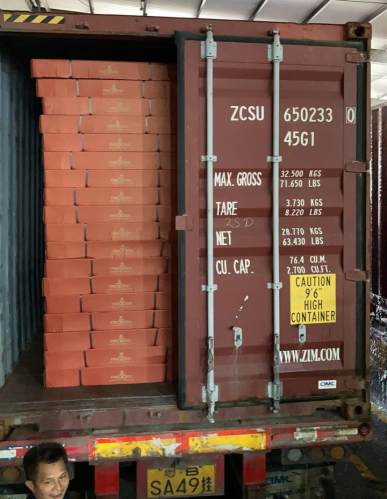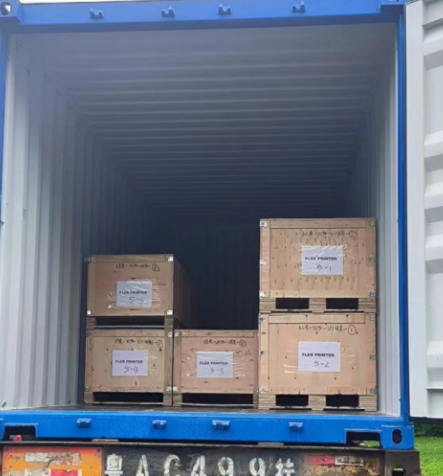
How much is shipping from China to Sweden? It is one of the first questions every importer asks before confirming a purchase order — and one of the hardest to answer with a single number. The honest reason is simple: your final cost depends on how you ship (sea, air, rail, or express courier), how much you ship (a few cartons or a full container), and where your goods enter Sweden. “It depends” may be accurate, but it doesn’t help you budget, price your products, or negotiate confidently with suppliers.
This guide breaks the China-to-Sweden lane down mode by mode, with realistic 2026 rate ranges, dependable transit times, a landed-cost formula that factors in Sweden’s 25% import VAT and customs duties, and practical strategies to lower your freight bill. Whether you’re a B2B wholesaler, an e-commerce seller shipping into Amazon FBA, or a small business making your first import, you’ll close this article knowing what to expect from Shipping From China To Sweden — and how to secure a transparent, all-in quote.

How Much Is Shipping from China to Sweden? The Cost Overview
The short answer is a range. As of 2026, most importers pay anywhere from roughly $90 per CBM for consolidated LCL (Less than Container Load) sea freight to $14 per kilogram for express courier, while a full 20ft container typically lands between $1,800 and $3,500 in base ocean freight, depending on the port pair and season.
The table below summarizes typical 2026 rates across every mode on the China–Sweden lane. Treat these as planning benchmarks, not fixed prices — the final number always depends on your exact cargo, route, and booking date. For a detailed breakdown of box rates by port pair, see our guide to container shipping costs from China to Sweden.
| Shipping Method | Typical 2026 Cost | Transit Time | Best For |
|---|---|---|---|
| LCL Sea Freight | $90 – $180 per CBM | 35 – 45 days | 2–15 CBM shipments |
| FCL Sea Freight (20ft) | $1,800 – $3,500 per container | 32 – 45 days | 15+ CBM, bulk cargo |
| FCL Sea Freight (40ft/40HQ) | $2,600 – $5,500 per container | 32 – 45 days | Large volume, light goods |
| Air Freight | $5.00 – $8.00 per kg | 3 – 7 days | Time-sensitive, high value |
| Express Courier | $8.00 – $14.00 per kg | 1 – 3 days | Parcels under 150 kg |
| Rail Freight (China–Europe Express) | $1.50 – $3.00 per kg | 18 – 22 days | Mid-value, seasonal goods |
| Door-to-Door / DDP | from ~$150 per CBM (sea) | 38 – 55 days | Hands-off, all-in delivery |
What Determines Your Shipping Cost
Every quote you receive — whether from a carrier or a freight forwarder — is built from a handful of variables:
- Volume vs. weight. Sea freight is priced by volume (CBM, or cubic meter); air freight is priced by chargeable weight, which is the greater of actual weight and volumetric weight. This single distinction explains why light, bulky cargo is often far more expensive by air than importers expect.
- Mode and routing. Direct deep-sea calls to Gothenburg, Scandinavia’s largest port, are cheaper per unit than services that transship through Rotterdam or Hamburg.
- Seasonality. Rates climb 10–20% ahead of Chinese New Year and the pre-Christmas peak, when carrier space tightens across Asia–North Europe.
- Surcharges. BAF (Bunker Adjustment Factor), THC (Terminal Handling Charges), peak season surcharges, and documentation fees all sit on top of the base rate.
- Incoterm. Whether you buy on EXW, FOB, CIF, or DDP determines which portion of the journey you actually pay for.
Why the Cheapest Quote Isn’t Always the Cheapest Shipment
A low headline rate is the most common trap in international shipping. The number a forwarder quotes upfront is usually the base ocean freight — and it typically represents only 60–75% of what you will ultimately pay. Bunker surcharges can add $300–$600 per container, terminal handling runs $200–$400 at each end, and consolidation or CFS (Container Freight Station) fees on LCL cargo can quietly double a seemingly cheap per-CBM rate.
Our Industry Insight: We routinely see LCL quotes that look unbeatable on paper fall apart on the final invoice. One client shipping 4 CBM of LED lighting from Shenzhen to Gothenburg was quoted $95 per CBM — a clean $380. By the time CFS handling ($180), BAF ($65), documentation ($45), and a minimum billable weight adjustment ($70) were added, the real cost was $740. A side-by-side FCL comparison would have shown the true picture from day one. Always ask for a line-by-line, all-in quote — not a headline rate.
Sea Freight Cost from China to Sweden: FCL and LCL Rates
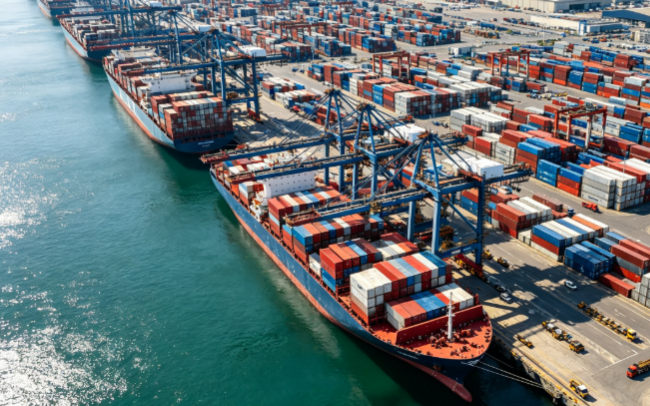
Sea freight remains the cost backbone of the China–Sweden lane. If your cargo is heavy, bulky, or simply not urgent, ocean shipping delivers the lowest cost per unit by a wide margin. You have two structures to choose from: FCL (Full Container Load) and LCL (Less than Container Load).
FCL Rates by Origin Port (2026)
With FCL, you rent an entire container exclusively. It’s sealed at your supplier’s facility and stays sealed until it reaches destination customs clearance. The table below shows estimated base ocean freight from China’s major export ports to Gothenburg.
| Origin Port (China) | Destination | 20GP (USD) | 40GP / 40HQ (USD) | Transit Time |
|---|---|---|---|---|
| Shenzhen (Yantian/Shekou) | Gothenburg | $2,800 – $4,200 | $4,800 – $7,000 | 34 – 42 days |
| Shanghai | Gothenburg | $2,800 – $4,200 | $4,800 – $6,800 | 32 – 40 days |
| Ningbo | Gothenburg | $2,900 – $4,400 | $5,100 – $7,100 | 31 – 39 days |
| Guangzhou (Nansha) | Gothenburg | $3,000 – $4,600 | $5,200 – $7,300 | 35 – 44 days |
| Qingdao | Gothenburg | $3,100 – $4,700 | $5,300 – $7,400 | 35 – 43 days |
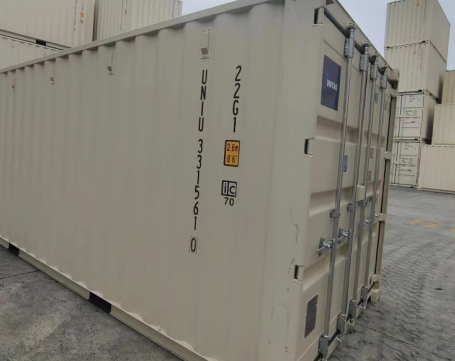
A 20ft container (20GP) holds about 28 CBM and suits dense, heavy cargo such as machinery and tiles. A 40ft (40GP) or 40ft High Cube (40HQ) holds 56–68 CBM and is better for voluminous, lighter goods like furniture, textiles, and consumer electronics.
LCL Rates (Per CBM)
If you’re shipping 2–15 CBM, LCL is usually the smarter starting point. You pay only for the space you occupy, charged per CBM with a minimum billable charge. If you’re still weighing the two structures, our guide on LCL vs FCL Shipping: How to Choose the Right Option for Small Cargo explains the trade-offs.
| Route | Rate per CBM (USD) | Minimum Charge (USD) | Transit Time |
|---|---|---|---|
| Shenzhen – Gothenburg | $90 – $130 | $230 – $290 | 38 – 45 days |
| Shanghai – Gothenburg | $85 – $120 | $220 – $280 | 36 – 43 days |
| Ningbo – Gothenburg | $88 – $125 | $225 – $285 | 35 – 42 days |
Shipping from Shenzhen to Sweden
Because the Pearl River Delta is the manufacturing heartland for electronics, textiles, and consumer goods, shipping from Shenzhen to Sweden is the most common origin for Guangdong-based suppliers. Routing cargo through Yantian or Shekou avoids the $300–$600 in inland haulage it would cost to truck containers north to Shanghai — even when the Shanghai base rate looks $100–$200 cheaper on paper.
Dantful International Logistics is headquartered in Shenzhen, which means we consolidate, load, and clear cargo at the source rather than subcontracting it out. On a standard 40HQ from Dongguan to Gothenburg, that local presence typically removes about $400 in pre-carriage cost and one full day of handling risk.
Major Ports on Both Ends
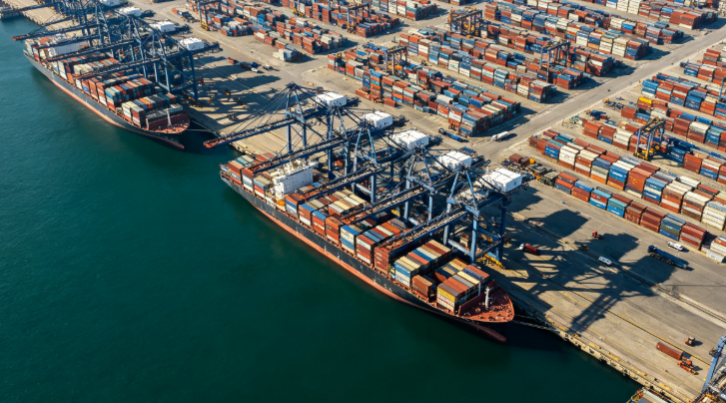
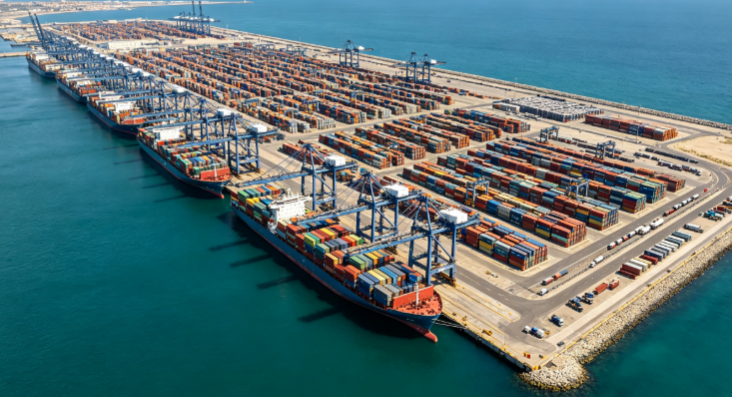
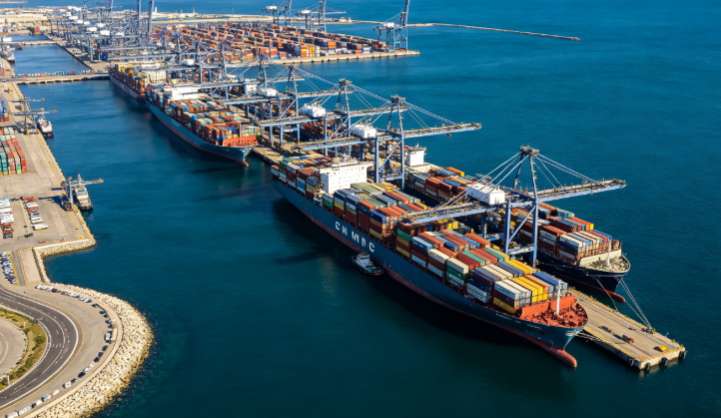
Your choice of gateway shapes both cost and lead time. On the Swedish side, Gothenburg (Göteborgs Hamn) handles more than 60% of Sweden’s container traffic and receives direct calls from Maersk, MSC, CMA CGM, and COSCO. Stockholm is the east-coast gateway, best for importers in eastern or northern Sweden, while Helsingborg and Malmö serve southern Sweden and the Öresund region near Copenhagen. Choosing Gothenburg usually means one fewer transshipment and a shorter, more predictable inland leg. For a full comparison of routing options and carriers, see our dedicated guide to Sea Freight From China to Sweden.
Air Freight Cost from China to Sweden: Rates and Transit Times
When speed outweighs cost, air freight is the answer. It is the fastest and safest commercial option for high-value, time-sensitive cargo — electronics, fashion, samples, and replenishment stock that can’t wait six weeks at sea.
Air Freight Rates by Weight Bracket
| Shipment Weight | Typical Rate (USD/kg) | Transit Time |
|---|---|---|
| Under 100 kg | $8.00 – $15.00 | 3 – 7 days |
| 100 – 500 kg | $7.00 – $11.00 | 3 – 7 days |
| 500 kg and above | $6.50 – $9.00 | 4 – 8 days |
Chargeable Weight Explained
Air freight is not billed on actual weight alone. Carriers use chargeable weight — the greater of your shipment’s actual gross weight and its volumetric weight, which is calculated from dimensions using a standard divisor. A large box of pillows may weigh very little but occupy enormous space, so it is billed at the higher volumetric figure. Optimizing packaging to reduce empty volume is one of the fastest ways to cut an air freight bill.
Major Airports and Routes
On the China side, the main air cargo hubs are Shanghai Pudong (PVG), Guangzhou Baiyun (CAN), Beijing Capital (PEK), and Hong Kong (HKG). In Sweden, Stockholm Arlanda (ARN) is the primary air cargo gateway, with Gothenburg Landvetter (GOT) as the secondary hub. Because direct China–Sweden freighter capacity is limited, cargo often connects through Frankfurt (FRA) or Amsterdam (AMS) before its final hop into Sweden — a routing detail worth clarifying so your transit estimate stays realistic.
Air Freight vs. Express Courier
For parcels under 150 kg, express couriers such as DHL, FedEx, and UPS offer door-to-door delivery in as little as 1–3 days. For anything heavier, standard air freight is significantly cheaper per kilogram and becomes the practical choice. A useful rule of thumb: below 150 kg, compare express directly; above it, air freight almost always wins on cost.
Door-to-Door Shipping Cost from China to Sweden
Door to door shipping from China to Sweden is the ultimate hands-off option. Instead of coordinating a Chinese exporter, a carrier, and a Swedish customs broker separately, you hand the entire journey to a single freight forwarder. Dantful’s door-to-door service covers the full chain: supplier pickup, export clearance in China, international transport, Tullverket import clearance, payment of duties and VAT, and final-mile delivery to your warehouse.
What Door-to-Door Actually Includes
- Pickup from your supplier’s factory or a consolidation warehouse in China
- Export customs declaration and documentation
- Ocean, air, or rail transport to Sweden
- Swedish customs clearance and duty/VAT settlement
- Last-mile trucking to your final address
DDP vs. FOB vs. CIF: Which Incoterm Fits You?
Your Incoterms 2020 choice determines where your cost and risk responsibility ends. The table below compares the three most common structures for China–Sweden trade.
| Incoterm | Who Arranges Freight | Who Pays Duty & VAT | Best For |
|---|---|---|---|
| FOB | Buyer | Buyer | Experienced importers with a customs broker |
| CIF | Seller (to Swedish port) | Buyer | Importers who want the seller to handle ocean freight |
| DDP | Seller/Forwarder (full chain) | Seller/Forwarder | New importers who want a single, all-in price |
DDP (Delivered Duty Paid) is the most convenient structure. You receive your goods at the door with duties and VAT already settled — no surprise terminal charges, no customs paperwork. FOB gives you the most control and can be cheaper if you already have brokerage in place, while CIF sits in the middle, shifting the ocean leg to the seller but leaving import clearance with you.
Your Landed-Cost Formula
The number that actually matters is your landed cost — everything it takes to get goods from the factory floor to your Swedish shelf. Here is the formula we use with clients:
Landed Cost = Goods Value + Freight + Duty (CIF × duty rate) + Import VAT (25%) + Clearance Fee + Last-Mile Delivery
Three realistic scenarios bring this to life:
| Scenario | Goods | Freight & Handling | Duty | Import VAT (25%) | Approx. Landed Cost |
|---|---|---|---|---|---|
| A. Small importer | 3 CBM furniture (LCL), $6,000 goods | ~$900 | ~$200 (2.7%) | ~$1,775 | ~$8,875 |
| B. B2B distributor | 1×20GP machinery, $40,000 goods | ~$4,500 | ~$1,800 (4.5%) | ~$11,575 | ~$57,875 |
| C. E-commerce seller | 200 kg electronics (air), $18,000 goods | ~$1,900 | ~$720 (4%) | ~$5,155 | ~$25,775 |
Note how VAT dominates many of these totals — and how it can often be recovered (more on that below).
Swedish Last-Mile Nuances
Last-mile delivery in Sweden has local quirks that catch first-time importers off guard. Northern regions such as Norrland require long-haul trucking over significant distances, and winter deliveries demand vehicles fitted with mandatory winter tires. Many standard Swedish trailers lack a tail-lift (bakgavellyft), so if your receiving warehouse has no loading dock, you must request a truck that does — arriving without one triggers a failed-delivery fee. We coordinate final delivery through established networks including PostNord, DHL Freight Sweden, and DB Schenker to avoid exactly these problems.
How Long Does Shipping from China to Sweden Take?
Transit time is the other half of every cost decision. The matrix below shows realistic lead times by mode, from the moment cargo leaves the factory to the moment it reaches your door. For a mode-by-mode comparison, read our deeper guide on how long is freight from China to Sweden.
| Shipping Mode | Estimated Transit Time | Reliability |
|---|---|---|
| Express Courier | 1 – 3 days | Extremely high |
| Air Freight | 3 – 7 days | High |
| Rail Freight | 18 – 22 days | Moderate to high |
| Sea Freight (port-to-port) | 32 – 45 days | Moderate |
| Door-to-Door (sea) | 38 – 55 days | Moderate |
The Full Door-to-Door Timeline
A port-to-port transit time of 35 days becomes closer to 45–50 days once you add origin and destination handling. Here is how a typical Shenzhen-to-Gothenburg FCL shipment actually unfolds.
| Stage | Duration | Cumulative |
|---|---|---|
| Factory pickup & origin handling | 2 – 4 days | Day 0 – 4 |
| Export customs clearance (China) | 1 – 2 days | Day 2 – 6 |
| Port delivery, VGM filing & vessel loading | 2 – 4 days | Day 4 – 10 |
| Ocean transit (Shenzhen → Gothenburg via Suez) | 28 – 38 days | Day 10 – 48 |
| Arrival, discharge & terminal handling | 2 – 3 days | Day 40 – 51 |
| Swedish import clearance (Tullverket) | 2 – 5 days | Day 42 – 56 |
| Last-mile delivery within Sweden | 1 – 3 days | Day 43 – 59 |
What Delays Transit in 2026
A few factors can stretch these timelines. Ongoing Red Sea disruptions have pushed some carriers to route around the Cape of Good Hope, adding roughly 10–14 days and higher fuel surcharges to affected services. Chinese New Year and the autumn peak season congest both departure and arrival ports. On the Swedish side, Baltic winter conditions can occasionally slow feeder services — though Gothenburg itself stays largely ice-free year-round, which is one reason it remains the most reliable entry point.
Import Duties and VAT When Shipping from China to Sweden
Cost doesn’t stop at the port. As an EU member, Sweden applies the EU’s Common External Tariff and a standard 25% VAT (known locally as Moms) on imported goods. Understanding these charges before you order prevents ugly surprises at customs. Pairing with an experienced shipping agent from China to Sweden removes most of the guesswork from Swedish import clearance.
Do I Pay Customs, and How Much?
Yes — commercial imports into Sweden are subject to customs duty, calculated as a percentage of the CIF value (Cost, Insurance, and Freight) of your goods. The exact rate depends on your product’s HS Code. Across most categories, EU duty rates range from 0% to about 17%.
Import Duty Rates for Common Goods
| Product Category | Typical Duty Rate |
|---|---|
| Electronics (e.g., smartphones) | 0 – 14% |
| Machinery parts | 1.7 – 4.5% |
| Textiles & clothing | 8 – 12% |
| Plastics articles | 6.5% |
| Steel products | 0 – 7% |
| Furniture | 2.7 – 5.6% |
| Footwear | 8 – 17% |
| Toys | 0 – 4.7% |
Sweden’s 25% Moms (Import VAT)
VAT is the larger charge for most importers. Sweden levies a standard 25% import VAT, calculated on the combined value of your goods, freight, insurance, and duty. Reduced rates of 12% or 6% apply only to specific categories such as food and books.
The critical nuance: VAT-registered Swedish businesses can generally reclaim import VAT through their regular filings with Skatteverket (the Swedish Tax Agency), or via Postponed VAT Accounting at the point of import. For VAT-registered B2B importers, VAT is therefore a cash-flow consideration rather than a true cost. For non-registered sellers — including many overseas e-commerce brands — it is a real, permanent expense and must be built into pricing.
Documents You Need to Clear Customs
Tullverket processes declarations electronically, and incomplete paperwork is the number-one cause of clearance delays at Gothenburg. Assemble these before your cargo sails:
- Commercial Invoice — must state HS codes (6+ digits), Incoterm, country of origin, and value per line item
- Packing List — per-carton contents, dimensions, and weights
- Bill of Lading (B/L) or Airway Bill (AWB) — proof of ownership; telex release is standard for Sweden
- Certificate of Origin — required if claiming preferential duty rates under EU trade agreements
- CE Marking documentation — mandatory for electronics, machinery, toys, PPE, and medical devices
- MSDS — required for batteries, chemicals, and liquids
Every commercial importer also needs an EORI number (Economic Operators Registration and Identification), the EU-wide customs identifier. Apply through Skatteverket; the process is free and typically takes 3–5 business days. Do not book your first shipment without one.
Tullverket Practical Tips
Our Industry Insight: Tullverket is strict about documentation accuracy. A mismatch between your declared HS code and the actual product description can trigger a “Red Channel” physical inspection, which adds days of delay and racks up port storage fees at Gothenburg. We review every commercial invoice line by line before a container ships, and we always confirm whether the freight charge is stated separately — small details that keep cargo moving through the Green Channel. Getting this right upfront is exactly the kind of preemptive work a dedicated account manager handles so you never see the problem at all.
Cheapest Way to Ship from China to Sweden
“Cheapest” is not a single mode — it’s the right mode for your specific cargo profile. The decision framework below turns that into a practical choice. For a side-by-side of providers, see our guide to the cheapest shipping company from China to Sweden.
FCL vs. LCL: The Crossover Point
The volume at which FCL becomes cheaper than LCL is lower than most importers assume.
| Cargo Volume | Recommended Option | Notes |
|---|---|---|
| Under 3 CBM | LCL almost always cheaper | Watch for minimum billable weight clauses |
| 3 – 8 CBM | Compare both carefully | Request line-by-line all-in quotes |
| 8 – 12 CBM | FCL becomes competitive | The crossover often arrives sooner than expected |
| 12 – 15+ CBM | FCL almost always more economical | Lower per-unit cost plus faster transit |
Mode Selection by Cargo Profile
- Heavy or bulky, not urgent: sea freight (FCL or LCL)
- Urgent and high-value: air freight
- Mid-value and moderately time-sensitive: rail via the China–Europe Express
- Small parcels or samples: express courier
Practical Ways to Cut Your Freight Bill
- Consolidate shipments. Combining orders to exceed 100 kg by air or 1 CBM by sea lowers your per-unit rate and often unlocks a better rate bracket.
- Ship off-peak. Avoiding the weeks around Chinese New Year and the pre-Christmas rush can save up to 20%.
- Reduce volumetric weight. Right-sized packaging lowers the chargeable weight on air shipments — sometimes dramatically.
- Right-size your container. Overpaying for a 40ft when a 20ft fits your cargo is a common, avoidable waste.
- Lock in contract rates. Partnering with a forwarder that holds direct carrier contracts insulates you from volatile spot-market pricing during peak season.
- Choose the right Incoterm. DDP simplifies life; FOB with your own broker may cut cost if you have import experience.
- Avoid demurrage and detention. Clear customs promptly so containers aren’t sitting at the terminal accruing daily fees.
Our Industry Insight: During peak-season capacity crunches, importers who rely on spot-market rates are the first to get squeezed — space disappears and prices spike. Our direct contracts with major ocean and air carriers secure both space and rate stability when the market tightens, which is often the difference between a shipment that sails on schedule and one that sits waiting for a slot.
Amazon FBA Shipping from China to Sweden
For e-commerce sellers, Amazon FBA shipping from China to Sweden adds a layer of compliance that generic freight quotes ignore. Getting it wrong means rejected inventory and lost selling days.
The FBA Head-Haul Process
A complete FBA head-haul covers supplier pickup, quality inspection, FNSKU labeling, carton prep, export clearance in China, Tullverket import clearance, and delivery to the assigned Swedish FBA fulfillment center.
FBA Compliance for Sweden and the EU
Sellers must hold a valid EORI number and, typically, an EU VAT registration for the countries where inventory is stored. Products must meet EU rules — CE, RoHS, and REACH where applicable — and comply with Amazon’s prep requirements.
FBA by Mode
For large restocks, sea DDP keeps unit costs low. For product launches or stockout emergencies, air and express deliver in days rather than weeks. Matching the mode to your inventory cycle is how successful sellers avoid both overstocking and stockouts.
Dantful’s end-to-end FBA service manages the entire chain — supplier pickup, inspection, labeling, clearance, and final delivery to Amazon — with real-time tracking and daily photo updates so sellers always know exactly where their inventory stands.
FAQs
How much does it cost to ship a 20ft or 40ft container from China to Sweden?
A 20ft container typically costs $1,800–$3,500 in base ocean freight, and a 40ft ranges from $2,600–$5,500. Rates fluctuate with seasonality, bunker fuel prices, and carrier capacity.
What is the cheapest way to ship from China to Sweden?
For shipments over 2 CBM or 300 kg, sea freight (LCL or FCL) is the most cost-effective. Under 100 kg, express couriers often offer the best value once minimums are considered. If you’re unsure which container structure fits, start with what is LCL and FCL in shipping.
How long does shipping from China to Sweden take?
Air freight takes 3–7 days, express 1–3 days, rail 18–22 days, and sea freight 32–45 days port-to-port. Add 5–10 days for full door-to-door delivery.
How much is the import VAT and duty when shipping from China to Sweden?
Sweden charges a standard 25% import VAT plus customs duty of roughly 0–17% depending on the HS Code. VAT-registered B2B importers can generally reclaim the VAT.
Is it cheaper to ship from Shenzhen or Shanghai to Sweden?
If your supplier is in Guangdong, Shenzhen is usually cheaper because it eliminates inland trucking. If your supplier is near the Yangtze Delta, Shanghai or Ningbo is the natural gateway.
Conclusion
Shipping costs from China to Sweden depend on three things: mode, volume, and Incoterm. Sea freight is the cheapest route for bulk cargo, air freight the fastest for urgent or high-value goods, and DDP the most convenient for hands-off delivery. Use the rate tables in this guide to set a realistic budget, and apply the landed-cost formula — including Sweden’s 25% VAT and applicable duties — to protect your margins before you place an order.
Dantful International Logistics has specialized in the China-to-Europe lane since 2008. As a Class-A licensed freight forwarder holding NVOCC, FMC, and Jctrans certifications, we back every shipment with direct carrier contracts, a 200-country agent network, 50 operations specialists, and a dedicated 24/7 support team. Whether you need sea freight, air freight, door-to-door DDP, or Amazon FBA forwarding, we deliver transparent, all-in pricing with no hidden fees — and real-time tracking with daily photo updates at every milestone. As a dedicated freight forwarder from China to Sweden, we keep every handover under one roof so you have a single point of contact from factory pickup to final-mile delivery.
Ready to see your exact number? Request a free, no-obligation quote and get a clear, line-by-line cost for your shipment from China to Sweden.

Young Chiu is a seasoned logistics expert with over 15 years of experience in international freight forwarding and supply chain management. As CEO of Dantful International Logistics, Young is dedicated to providing valuable insights and practical advice to businesses navigating the complexities of global shipping.