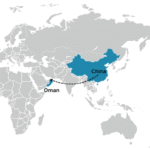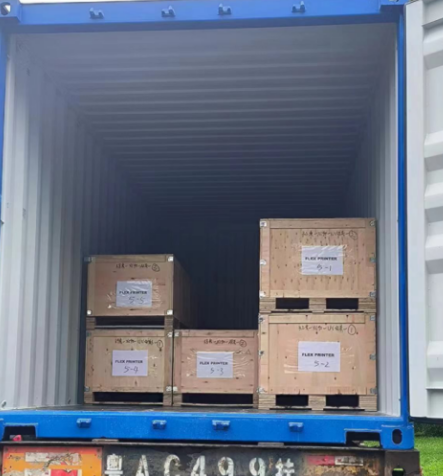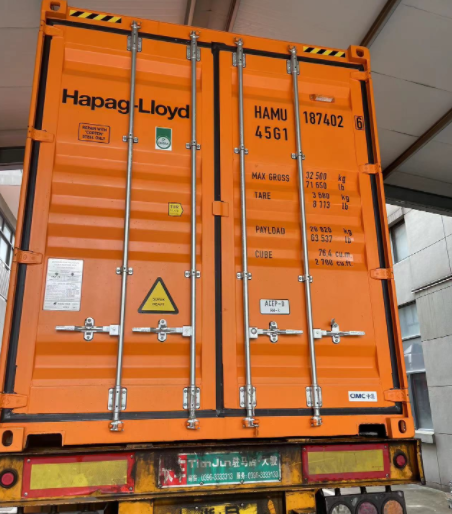
If you are asking how much shipping from China to Pakistan costs in November 2026, the short answer is that it depends on your shipping mode, cargo volume, HS code, delivery city, and whether your quote is port-to-port or door-to-door. Based on our daily quotation and shipment coordination experience at Dantful International Logistics, most importers should budget for both the visible freight charge and the less obvious destination costs that appear after booking.
This page gives you the current rate references on the corridor by mode – cost per kg, 20ft and 40ft container rates to Karachi and Port Qasim, LCL, air and overland trucking – and then works through the duty, sales tax and clearance charges that decide your real landed cost. Every rate on the page was refreshed in November 2026 and is attributed to a public source, because on this lane the difference between a 2025 quote and a current one can be more than 30%.
Key Takeaways (November 2026)
- 20ft FCL from major Chinese ports to Karachi / Port Qasim is quoted at $3,105-$3,794, and 40ft FCL at $3,595-$4,396 in the October-November 2026 forwarder rate cards. The gap between the two sizes is unusually narrow, so price both before you lock a booking.
- LCL is $15-$20 per CBM. Air freight is $3-$8 per kg (about $5/kg above 1,000 kg), express courier $4.80-$8 per kg, and overland trucking through the Karakoram corridor $1.50-$3 per kg.
- A per-kg sea rate is only real if you fill the box. A 20ft holds roughly 15,000-18,000 kg, so $3,450 of ocean freight works out at about $0.20/kg – but a half-empty container doubles that.
- Transit: sea is 15-25 days port-to-port to Karachi or Port Qasim, air is 3-5 days airport-to-airport, and door-to-door LCL runs 25-40 days once consolidation and clearance are included.
- The 2026 duty stack is customs duty (8% under CPFTA on many lines, higher at MFN), plus ACD 2%, RD 4%, sales tax 18% and advance income tax of 1-6%. Duty and tax routinely add 30-45% to the CIF value.
- Clearance is no longer the bottleneck it was: FBR reports average dwell time of about 66 hours after the Faceless Customs Assessment reform, down from about 108 hours. Budget 2-5 days anyway for a red-channel consignment.
- Dantful quotes this corridor both port-to-port and DDP door-to-door, and every quotation states in writing whether duty, sales tax, THC and inland delivery are inside the price or outside it.
What Determines Shipping Costs From China to Pakistan
In practice, two importers shipping the same product from China to Pakistan can receive very different quotations. The main reasons are:
- Shipping mode: Ocean freight, air freight, and express courier use different pricing models.
- Incoterms 2020: EXW, FOB, CIF, DAP, and DDP shift costs and responsibilities between supplier and buyer.
- Cargo profile: Weight, volume, commodity type, dangerous goods classification, and packing method all affect the rate.
- Origin and destination: Shanghai to Karachi may price differently from Shenzhen to Lahore because the routing, feeder connection, and inland delivery requirements are not the same.
- Market timing: Carrier space, fuel surcharges, congestion, risk surcharges, and peak-season demand can change rates quickly.
At Dantful, we usually advise importers not to compare only the base freight number. The more accurate comparison is the total landed logistics cost, including origin charges, freight, customs-related charges, delivery, and time risk.
China to Pakistan Shipping Cost per Kg (November 2026)
Half the searches that reach this page ask for a price per kilogram, but a kilogram is only a valid unit for air, courier and overland cargo. Sea freight is sold per container or per CBM, so a per-kg figure for ocean shipping is always a derived number – useful for budgeting, misleading at the quotation stage. The table below keeps the two units apart.
| Mode | Reference rate (Nov 2026) | Transit | When it is the right choice |
|---|---|---|---|
| Air freight, general cargo | $3-$8 per kg | 3-7 days | Electronics, spare parts, urgent 100-2,000 kg |
| Air freight, 1,000 kg+ | about $5 per kg | 3-4 days | Commercial air cargo to KHI or LHE |
| Express courier | $4.80-$8 per kg | 2-5 days | Samples, documents, parcels under 100 kg |
| Sea LCL | $15-$20 per CBM | 25-40 days | Under roughly 15 CBM |
| Sea FCL, 20ft | $3,105-$3,794 per container | 15-25 days | 15,000-18,000 kg of dense cargo |
| Sea FCL, 40ft | $3,595-$4,396 per container | 15-25 days | Bulky cargo where volume, not weight, is the limit |
| Sea freight, per-kg equivalent | about $0.20-$0.30 per kg | – | Budgeting only, and only if the container is full |
| Overland truck, Kashgar corridor | $1.50-$3 per kg | 10-18 days | Inland Chinese origins, limited-capacity cargo |
Two caveats matter more than the table itself. First, air and express rates are quoted on chargeable weight, so a light, bulky carton is billed on volume, not on the scale. Second, FCL and LCL rates exclude duty and sales tax – the numbers in this table are freight only.
Why Sea Freight Looks So Cheap per Kg
A 20ft container carries roughly 15,000-18,000 kg of general cargo. Spread a $3,450 ocean freight across 17,000 kg and you get about $0.20 per kg, which is why so many guides quote “sea freight from $0.20/kg”. That number is arithmetically true and practically useless for a 300 kg shipment: below roughly 15 CBM, consolidation fees, minimum charges and destination handling push the effective cost per kg far higher, which is exactly why LCL is priced per CBM and air per chargeable kilo.
Cost per Kg by Shipment Weight
This is the comparison most importers actually need – what a given shipment size costs, all-in on freight, before duty and sales tax:
| Shipment weight | Best mode | Approximate freight cost |
|---|---|---|
| 1 kg | Express courier | $8-$15 |
| 5 kg | Express courier | $30-$50 |
| 20 kg | Air freight or express | $80-$160 |
| 100 kg | Air freight | $300-$800 |
| 500 kg | Air freight at a lower per-kg rate | $1,500-$3,000 |
| 1,000 kg and above | Air freight or LCL sea | $2,500-$5,000 |
| Full 20ft (about 15,000 kg) | Sea FCL | $3,105-$3,794 per container |
The crossover is blunt: below 100 kg, express and air cost about the same per kilo, so choose on whether you need door pickup. Above 300 kg, air’s per-kg rate drops sharply. Above roughly 500-1,000 kg of non-urgent cargo, LCL sea starts to win, and once you pass 15 CBM a 20ft container is usually cheaper than paying LCL per CBM.
Overland Trucking via the Karakoram Corridor
Cargo can also move by road from western China through the Karakoram corridor into northern Pakistan, at roughly $1.50-$3 per kg with 10-18 days transit. It sits between air and sea on both cost and speed, and it is the only practical option for some inland Chinese origins – but capacity is limited, the route is seasonal, and the receiving side handles clearance at the northern dry ports rather than at Karachi. Treat this option as a specialist lane: confirm current crossing status and capacity before you plan a shipment around it.
Sea Freight Costs From China to Pakistan
For most commercial cargo, sea freight remains the most cost-effective choice. It is especially suitable for machinery, building materials, furniture, auto parts, textiles, and general trading cargo where unit cost matters more than speed.
Main Ports and Typical Sea Transit Times
The main Chinese loading ports for Pakistan-bound cargo are usually Shanghai, Shenzhen, Ningbo, Qingdao, and Guangzhou. On the Pakistan side, the core gateways are Karachi Port and Port Qasim.
| Origin Port (China) | Destination Port (Pakistan) | Typical Port-to-Port Transit |
|---|---|---|
| Shanghai | Karachi / Port Qasim | 18-24 days |
| Shenzhen | Karachi / Port Qasim | 17-22 days |
| Ningbo | Karachi / Port Qasim | 18-23 days |
| Qingdao | Karachi / Port Qasim | 20-25 days |
| Guangzhou | Karachi / Port Qasim | 17-22 days |
These are typical sailing-time references for November 2026, not a guaranteed door delivery timeline. Current carrier schedules on the lane are usually published as 15-25 days port-to-port, and actual delivery can take longer when there is transshipment, customs inspection, port congestion, or delayed document release.
Latest Sea Freight Rate Reference (November 2026)
The following table reflects the October-November 2026 forwarder rate cards for standard general cargo on the China-Pakistan lane:
| Container Type | Route Scope | Reference Rate (USD) | Comment |
|---|---|---|---|
| 20ft FCL | Major China ports to Karachi / Port Qasim | $3,105-$3,794 | Quoted up about 33% month-on-month in October |
| 40ft FCL | Major China ports to Karachi / Port Qasim | $3,595-$4,396 | Only about $500 above a 20ft – volume is cheap right now |
| 40HQ | Major China ports to Karachi / Port Qasim | 40ft rate plus carrier premium | Usually the best value per CBM for bulky cargo |
| LCL | Major China ports to Karachi / Port Qasim | $15-$20 per CBM | Unchanged while FCL climbed |
Pakistan is not one of the eight lanes in the Drewry World Container Index, so there is no single public benchmark for this corridor – which is why the published figures differ so much between guides. Other 2026 sources still quote 20ft anywhere from $1,400 to $3,500 depending on port, carrier and month, and the July 2026 peak alone pushed 20ft rates up 25-31% in a single month. Treat any number on this page as a snapshot of a moving market, and ask for a quote with an explicit validity date.
These are market reference levels, not fixed tariffs. A final quotation may move up or down depending on carrier, ETD week, free time, cargo density, commodity restrictions, and origin booking terms.
What Is Usually Included in Sea Freight Pricing
A common mistake is assuming the ocean rate covers the entire shipment. In reality, a quote may include only part of the logistics chain.
| Cost Item | Typical Status in a Basic Quote |
|---|---|
| Ocean freight | Usually included |
| Origin documentation | Sometimes included, sometimes separate |
| Export customs in China | Depends on term and supplier arrangement |
| Destination THC | Often separate |
| Pakistan customs clearance | Usually separate |
| Duties and taxes | Usually separate |
| Inland delivery in Pakistan | Usually separate |
| Cargo insurance | Optional |
Dantful Insight: For Pakistan-bound cargo, the lowest FCL ocean rate is not always the cheapest real option. Free time, destination THC, and document handling terms can make a cheap booking more expensive after arrival.
Air Freight Costs From China to Pakistan
If your shipment is urgent, high-value, or relatively light, air freight is usually the better solution. We commonly see importers choose air freight for electronics, samples, spare parts, fashion replenishment, medical items, and seasonal e-commerce cargo.
Major Airports and Typical Air Transit Times
The most common China origin airports include PVG (Shanghai Pudong), CAN (Guangzhou Baiyun), SZX (Shenzhen Bao’an), and PEK/PKX (Beijing). In Pakistan, the main cargo gateways are KHI (Karachi), LHE (Lahore), and ISB (Islamabad).
| Origin Airport (China) | Destination Airport (Pakistan) | Typical Airport-to-Airport Transit |
|---|---|---|
| PVG | KHI | 2-4 days |
| CAN | LHE | 2-4 days |
| SZX | KHI / LHE | 2-5 days |
| PEK / PKX | ISB | 3-5 days |
For urgent shipments, the airport transit itself is only one part of the timeline. Pickup, security screening, customs release, and local delivery can add 2-4 additional days.
Latest Air Freight Rate Reference (November 2026)
Air rates on this lane are quoted by weight break, and the break matters more than the origin airport. Current general-cargo levels run $3-$8 per kg, with commercial consignments above 1,000 kg priced at about $5 per kg into Karachi:
| Chargeable weight band | Typical rate per kg (USD) | Typical use |
|---|---|---|
| 45-100 kg | $5-$8 | Small urgent shipments, samples with commercial value |
| 100-300 kg | $4-$6 | E-commerce replenishment, spare parts |
| 300-1,000 kg | $3-$5 | Bulk air cargo, seasonal stock |
| 1,000 kg and above | about $5 | Consolidated commercial air cargo to KHI |
| Express courier equivalent | $4.80-$8 | Parcels and documents, door delivery included |
Minimum charges, handling fees, and screening fees may apply, especially for smaller shipments. Air freight is normally priced on chargeable weight, meaning the carrier charges whichever is greater:
- Actual weight
- Volumetric weight
For air cargo, bulky but lightweight shipments can cost more than expected because the volumetric formula increases the billable weight.
When Air Freight Makes Sense
- You need delivery much faster than sea freight
- Your cargo is high-value or time-sensitive
- The shipment is relatively small and cannot justify a full container
- Delayed stock would cost more than the freight premium
If speed is critical but budget still matters, ask for both standard air and deferred air options before booking.
Door-to-Door Shipping Costs From China to Pakistan
For importers who want fewer handoffs and less operational complexity, door-to-door shipping is often the most practical solution. This model can include pickup in China, export handling, main freight, customs coordination, and final delivery in Pakistan.
At Dantful International Logistics, we usually recommend door-to-door solutions for buyers who prefer:
- One logistics contact for the full shipment
- Better visibility on total landed cost
- Less coordination between supplier, carrier, broker, and local trucker
- Lower risk of missed handovers and document delays
How a Door-to-Door Price Is Built (Worked Example, November 2026)
A door-to-door number is a build-up, not a market rate, so it is worth seeing the components separately. Below is a 20ft container of building materials, CIF $40,000 of goods plus $3,450 freight and $120 insurance, delivered to Lahore:
| Cost line | Example (USD) | Note |
|---|---|---|
| Goods, freight and insurance (CIF) | $43,570 | Supplier invoice plus ocean freight plus 0.3% insurance |
| Origin THC and documentation | $225 | China port handling, B/L, export declaration |
| Destination THC and delivery order | $275 | Karachi / Port Qasim terminal and release |
| Customs clearance service | $140 | Licensed clearing agent, GD filing |
| Inland delivery to Lahore | $700 | Karachi or Qasim to up-country warehouse |
| Duty and sales tax | $16,531 | 8% CD + ACD 2% + RD 4% + ST 18% + AIT 3%, see the duty section |
| Landed cost | $61,441 | Freight is 5.6% of landed cost; duty and tax are 26.9% |
Change the delivery point to a Karachi warehouse and the same container lands at roughly $60,891 – inland haulage is the one line that swings most with destination city. Smaller shipments follow the same logic per CBM: LCL freight of $15-$20 per CBM becomes $135-$185 per CBM once origin handling, destination de-consolidation, clearance and delivery are added.
Door-to-Door Services Importers Should Clarify
Before accepting a quote, confirm whether it includes:
- Pickup from the supplier
- Export customs declaration in China
- Main freight
- Pakistan customs clearance service
- Duty and tax payment or only brokerage
- Inland delivery to warehouse, shop, or project site
- Unloading assistance if needed
This is particularly important for DAP and DDP quotations, because the difference between the two can materially change your final landed cost.
DDP Shipping and Double Customs Clearance Explained
Double customs clearance simply means the shipment is declared twice: once on export in China, and once on import in Pakistan. Every commercial shipment needs both, but the two declarations can be arranged by different parties – and that is what separates the Incoterms. Under FOB, you or your forwarder arrange the freight and the Pakistan import declaration. Under DDP (Delivered Duty Paid), the seller side handles both declarations, pays the duty and sales tax, and delivers to your address.
| Term | Export clearance | Main freight | Pakistan import clearance | Duty and sales tax |
|---|---|---|---|---|
| FOB | Supplier | Buyer | Buyer | Buyer |
| CIF | Supplier | Supplier | Buyer | Buyer |
| DAP | Supplier | Supplier | Buyer | Buyer |
| DDP | Supplier / forwarder | Supplier / forwarder | Supplier / forwarder | Supplier / forwarder |
Three practical warnings for buyers choosing DDP shipping services into Pakistan. First, DDP is a commercial arrangement, not a legal transfer of liability: the importer of record on the Goods Declaration is normally still a Pakistani entity, so your NTN and STRN files must be clean. Second, an unusually cheap DDP rate usually means the declared value on the GD is lower than the invoice – which is precisely what triggers valuation audits and post-clearance recovery notices later. Third, if you claim a CPFTA concession, the Form P certificate must be issued before shipment, so the DDP provider has to be told at booking, not after arrival.
If you would rather keep control of the declaration, take customs clearance as a separate service and let a forwarder handle only the freight – it is a legitimate structure, as long as someone is clearly accountable for the GD.
How to Import From China to Pakistan: 7 Steps
- Classify the product first. Get the 8-digit PCT/HS code from the supplier and confirm it against the current FBR Customs Tariff. The code decides duty, ACD, RD, whether an import permit is needed, and whether the line is on the CPFTA schedule at all.
- Check CPFTA eligibility before you book. If the line is covered, your supplier must obtain the Form P certificate of origin from CCPIT or China Customs before shipment. A certificate issued after arrival cannot be used.
- Choose the Incoterm deliberately. FOB keeps control and is the usual starting point for first-time importers; DDP buys convenience at the cost of visibility.
- Book space with a validity date. On this lane rates have moved 25-33% in a month, so a quote without an expiry is not a quote. Confirm free time at destination at the same time.
- Get the documents right before departure – commercial invoice, packing list, B/L or AWB, certificate of origin, and any product-specific permit.
- File the import declaration on PSW. Pakistan’s Single Window single declaration replaced the old standalone filing, and the importer needs an authorised PSW user and integrated banking profile.
- Clear and deliver. Green-channel consignments can release the same day; red-channel cargo needing examination or lab tests takes several days, so plan inland trucking after release, not before.
Most import failures we see are not freight failures. They are classification failures, missing certificates, or a valuation mismatch between the invoice and the GD – all of which are decided before the vessel sails.
Factors That Influence Shipping Cost from China to Pakistan
1. Shipping Mode
- Sea freight is cheapest per unit for larger cargo volumes
- Air freight is fastest but significantly more expensive
- Express courier works for samples and low-volume urgent cargo, but the per-kg cost is highest
2. Cargo Weight and Volume
LCL shipments are billed mainly by CBM, while air cargo is billed by chargeable weight. Poor packaging design can increase both.
3. Commodity and Compliance Risk
Cargo such as batteries, chemicals, cosmetics, food items, medical goods, and branded products may require extra documentation, permits, or inspections.
4. Incoterms 2020
Under EXW, the buyer pays more of the origin cost. Under FOB, the supplier typically handles export-side delivery to the port. Under CIF, ocean freight is included but destination charges are still not fully covered.
5. Seasonal and Market Conditions
Rates can change around:
- Chinese New Year production cycles
- Pre-holiday shipment peaks
- Carrier blank sailings
- Fuel cost increases
- Security-related surcharges affecting regional routes
6. Pakistan Destination and Clearance Speed
Karachi delivery is usually cheaper than inland delivery to Lahore, Faisalabad, Islamabad, or other up-country destinations because inland transport and coordination add cost.
Understanding Import Duties and Taxes in Pakistan
Freight is only part of the budget. Importers also need to calculate the Pakistan-side tax structure correctly. In our experience, this is where many first-time buyers underestimate their true landed cost.
Main Duty and Tax Components
Under Pakistan’s FY2026-27 tariff framework, the following charges apply depending on the exact HS code and importer profile. The statutory rates below are taken from the Trade Information Portal of Pakistan:
- Customs Duty (CD) – product-specific; 8% is the common CPFTA rate on covered lines, while MFN rates on many consumer goods run 15-25%. Calculated on the customs value, normally CIF.
- Additional Customs Duty (ACD) – 2% on applicable lines.
- Regulatory Duty (RD) – 4% on the schedule in force from July 2026 to June 2027.
- Sales Tax (ST) – 18% standard rate, applied on CIF plus CD, ACD and RD. Exceptions exist for some categories, but the standard rate is what to budget.
- Advance Income Tax (AIT) – 1-6% for active taxpayers under Section 148, collected at the port and adjustable against your income tax; non-filers pay materially more.
Practical Duty Example: CPFTA vs MFN
The same $10,000 CIF consignment produces two very different tax bills depending on whether a valid Form P is presented. This example uses 15% as the MFN duty rate:
| Description | Calculation | CPFTA (Form P) | MFN (no Form P) |
|---|---|---|---|
| CIF value | – | $10,000 | $10,000 |
| Customs duty | 8% vs 15% of CIF | $800 | $1,500 |
| Additional customs duty | 2% of CIF | $200 | $200 |
| Regulatory duty | 4% of CIF | $400 | $400 |
| Sales tax | 18% of CIF + CD + ACD + RD | $2,052 | $2,178 |
| Advance income tax | 3% of CIF + CD + ACD + RD | $342 | $363 |
| Total duty and tax | – | $3,794 (37.9% of CIF) | $4,641 (46.4% of CIF) |
The difference is $847 on a single $10,000 consignment – which is why the certificate of origin is the highest-return document in the shipment. Because HS classification drives the duty outcome, importers should never use a generic duty percentage without checking the exact product code first.
How CPFTA Phase II and Form P Change Your Duty Bill
Phase II of the China-Pakistan Free Trade Agreement has been in force since December 2019, and roughly 75% of China-origin product lines can now enter Pakistan at reduced or zero customs duty. The concession is not automatic. It is claimed by presenting the CPFTA certificate of origin (Form P) when the Goods Declaration is filed – a generic certificate of origin will not do, and a Form P issued after the goods have arrived cannot be used retroactively.
What the concession does and does not touch: it reduces customs duty, and in some cases ACD, but it does not reduce sales tax or advance income tax. It also only covers goods that genuinely originate in China – goods transshipped through China from another origin do not qualify, even when the exporter is a Chinese company.
Approximately a quarter of tariff lines sit on the protected list, including many textiles, iron and steel, auto parts and agricultural items. If your product is on that list, no certificate will produce a concession, and the MFN rate applies.
Advice from Dantful
In real shipments, the biggest customs problems are usually not caused by the freight line. They come from:
- Incorrect or incomplete HS codes
- Under-declared or inconsistent invoice values
- Missing certificates, licenses, or product documents
- Branded or regulated goods shipped without prior review
Our recommendation is simple: verify the HS code, invoice description, packing list, and import eligibility before cargo departs China. Fixing these issues after arrival in Pakistan is more expensive and more time-consuming.
Hidden Fees Importers Should Budget for in 2026
A shipment can look affordable at booking and still become expensive at destination. These are the charges importers most often overlook:
| Fee Type | Typical Cost Range | Why It Happens |
|---|---|---|
| Origin documentation | $30-$80 | Bill of lading and origin paperwork |
| Origin handling | $80-$180 | Warehouse, terminal, and export handling |
| Destination THC | $120-$280 | Terminal handling at Karachi or Port Qasim |
| Customs clearance service | $80-$180 | Broker or clearance agent fee |
| Delivery order / release fee | $25-$80 | Carrier or agent release processing |
| Demurrage / detention | $25-$120 per day | Late customs release or late container return |
| Port storage after free days | $15-$60 per day per container | Cargo left at the terminal past free time |
| Inspection fee | $50-$250 | Customs or regulatory inspection |
| Valuation uplift | 15-30% of declared value | Customs revalues an under-declared consignment |
| Cargo insurance | 0.2%-0.5% of cargo value | Optional but strongly recommended |
In November 2026, importers should also watch for carrier contingency surcharges, BAF adjustments, and risk-related charges on selected routings, because these can change faster than the base freight rate. BAF alone commonly adds $50-$120 per TEU on this corridor.
How to Reduce Shipping Costs from China to Pakistan
The most effective cost-control strategy is not chasing the lowest quoted freight. It is reducing the total landed cost per sellable unit.
Practical Ways to Lower Cost
- Consolidate smaller shipments – consolidated freight shipping or buyer’s consolidation can reduce repeated origin and destination charges.
- Compare LCL with FCL early – once cargo volume grows, 20ft FCL may become more economical than LCL.
- Optimize packaging – better carton and pallet design reduces wasted CBM and air volumetric weight.
- Book before peak weeks – advance booking usually gives better routing choices and fewer last-minute surcharges.
- Prepare documents before departure – delays at destination often cost more than minor freight savings.
- Claim the CPFTA concession properly – a Form P obtained before shipment can cut duty from 15% to 8% or lower.
- Use cargo insurance – insurance is usually a small percentage of cargo value but can prevent major financial loss.
- Work with an experienced freight forwarder – a strong forwarder helps control origin charges, routing risk, customs issues, and delivery coordination.
| Cost Reduction Strategy | Typical Savings Potential |
|---|---|
| Shipment consolidation | Up to 20%-35% on small frequent shipments |
| Packaging optimization | 5%-15% depending on cargo density |
| Early booking | 5%-12% in stable weeks |
| CPFTA Form P claimed correctly | 7 percentage points of customs duty or more |
| Better customs preparation | Avoids storage, delay, and penalty costs |
FAQs
Q: How much does it cost to ship a 20ft container from China to Pakistan in November 2026?
A: For general cargo, a 20ft container from major Chinese ports to Karachi or Port Qasim is quoted at $3,105-$3,794 for the base ocean freight in the October-November 2026 rate cards. Final landed cost will be higher after origin charges, destination THC, customs clearance, taxes, and inland delivery – typically $4,500-$5,500 before duty.
Q: How much does a 40ft container cost from China to Pakistan right now?
A: A 40ft runs $3,595-$4,396 on the same lane, only about $500 above a 20ft. Because the 40ft carries roughly 2.3 times the volume for a small increment, it is usually the better value per CBM – but only if you can fill it, since you pay the same freight whether the box is full or half empty.
Q: What is the shipping cost per kg from China to Pakistan?
A: Air freight is $3-$8 per kg (about $5/kg above 1,000 kg), and express courier $4.80-$8 per kg. Air and express are priced on chargeable weight, so volumetric cargo costs more. By sea, the per-kg figure of $0.20-$0.30 only holds if you fill a container – for small lots the real unit is $15-$20 per CBM for LCL, plus destination handling.
Q: How long does shipping from China to Pakistan take?
A: Sea freight is typically 15-25 days port-to-port to Karachi or Port Qasim, air is 3-5 days airport-to-airport, and express courier 2-5 days. Door-to-door LCL usually runs 25-40 days once consolidation, clearance and inland delivery are included.
Q: Is air freight from China to Pakistan faster than sea freight?
A: Yes. Air freight usually takes 2-5 days airport-to-airport, while sea freight commonly takes 15-25 days port-to-port. Door-to-door timing is longer for both modes once pickup, clearance, and delivery are included.
Q: Which is better for small cargo, LCL or air freight?
A: It depends on urgency and cargo density. LCL is usually cheaper for non-urgent cargo, while air freight is better for urgent, high-value, or lightweight shipments where time matters more than freight cost.
Q: What taxes apply when importing from China to Pakistan?
A: Importers face customs duty (8% under CPFTA on covered lines, higher at MFN), additional customs duty of 2%, regulatory duty of 4%, sales tax of 18% and advance income tax of 1-6%. Always confirm the exact HS code before booking, because the duty rate and the availability of the CPFTA concession both depend on it.
Q: Do I need a Form P to get the China-Pakistan FTA duty rate?
A: Yes. The CPFTA concession is claimed by presenting the Form P certificate of origin when the Goods Declaration is filed. It must be issued by CCPIT or China Customs before or at the time of shipment; a certificate obtained after the cargo arrives cannot be used, and without it Pakistan Customs applies the full MFN rate.
Q: How long does customs clearance take at Karachi Port?
A: FBR reports an average dwell time of around 66 hours after the Faceless Customs Assessment reform, down from about 108 hours. Green-channel consignments can release the same day, while red-channel cargo requiring examination, lab tests or permits can take several days. Budget 2-5 days for planning.
Q: Can Dantful provide door-to-door DDP shipping from China to Pakistan?
A: Yes. Door to door shipping from China to Pakistan through Dantful covers pickup, export handling, ocean or air freight, Pakistan customs clearance, duty and tax payment where agreed, and final delivery – with the scope of each line written into the quotation.
Q: Is there a land route from China to Pakistan?
A: Yes – cargo can move by road through the Karakoram corridor from western China into northern Pakistan at roughly $1.50-$3 per kg and 10-18 days. Capacity is limited and the crossing is seasonal, so it suits specific inland origins rather than general commercial volume.
Q: How do I start importing from China to Pakistan?
A: Five things in order: confirm the HS code and import policy, check whether the line is covered by CPFTA and arrange Form P, agree the Incoterm, book freight with a validity date, and prepare the invoice, packing list, B/L or AWB and certificate of origin before departure. The import declaration itself is filed on Pakistan Single Window by an authorised importer or clearing agent.
For the most accurate and tailored shipping solution from China to Pakistan, contact Dantful International Logistics for a customized quotation based on your cargo type, shipment size, trade term, and delivery city.

Young Chiu is a seasoned logistics expert with over 15 years of experience in international freight forwarding and supply chain management. As CEO of Dantful International Logistics, Young is dedicated to providing valuable insights and practical advice to businesses navigating the complexities of global shipping.