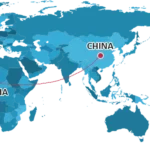
If you are importing goods from China to Nigeria — whether machinery, electronics, furniture, or consumer products — you have probably wrestled with the same question every importer faces: how do I get my cargo from a factory in Guangzhou or Shenzhen all the way to my warehouse in Lagos, Abuja, or Kano without getting buried in logistics headaches? The answer for a growing number of Nigerian businesses is door to door shipping from China to Nigeria under DDP (Delivered Duty Paid) terms. This all-in-one logistics model shifts the entire burden — pickup, export clearance, ocean or air freight, Nigeria import customs, duty payment, and last-mile delivery — onto a single freight forwarder, letting you focus on your business instead of chasing documents and customs brokers.
In this comprehensive guide, we break down exactly how door to door shipping under DDP terms works on the China–Nigeria route, what it costs, which documents and certifications you absolutely cannot skip, how long each mode takes, and how to choose a freight forwarder that will actually deliver on its promises. Whether you are a first-time importer or a seasoned trader shipping multiple containers per month, this article gives you the practical, ground-level knowledge you need to ship with confidence. For a broader overview of all freight modes, routes, and service options on this trade lane — including port-to-port and express solutions — see our main Shipping From China To Nigeria hub page.

What Is Door to Door Shipping from China to Nigeria?

Door to Door Shipping is a full-service logistics arrangement where a single freight forwarder takes responsibility for the entire journey of your cargo — from the supplier’s factory floor in China to your designated address in Nigeria. In international trade terms, this is most commonly structured as DDP (Delivered Duty Paid) under Incoterms 2020, meaning the forwarder (acting on behalf of the seller or buyer) covers all transportation costs, export and import customs clearance, and — critically — all import duties and taxes at the Nigerian border.
Here is what distinguishes door to door shipping under DDP from other shipping arrangements:
| Aspect | DDP Door to Door | DAP Door to Door | FOB / CIF (Traditional) |
|---|---|---|---|
| Factory pickup in China | ✅ Included | ✅ Included | ❌ Buyer arranges |
| China export clearance | ✅ Included | ✅ Included | ❌ Seller handles (FOB) |
| Ocean/air freight | ✅ Included | ✅ Included | ✅ Included (CIF) |
| Nigeria import duties & taxes | ✅ Included | ❌ Buyer pays | ❌ Buyer pays |
| Nigeria customs clearance | ✅ Included | ✅ Included | ❌ Buyer arranges |
| Last-mile delivery in Nigeria | ✅ Included | ✅ Included | ❌ Buyer arranges |
| Risk of unexpected costs | Minimal | Moderate | High |
For Nigerian importers specifically, DDP is almost always the superior choice. The reason is simple: Nigeria’s import clearance process involves multiple agencies (Customs, SON, NAFDAC), mandatory certifications (SONCAP, Form M), and a notoriously congested port environment. Under FOB or CIF terms, the buyer shoulders all of this alone — often without a reliable local broker. Under DDP, your forwarder handles everything at a pre-agreed all-in price.
Advantages of Door to Door Shipping from China to Nigeria
Beyond the obvious convenience, door to door shipping under DDP delivers specific, measurable advantages for businesses importing from China:
1. True All-In Cost Predictability
With DDP, you receive a single quote covering every cost component: factory pickup in China, export documentation, ocean or air freight, insurance, Nigeria customs brokerage, import duties and taxes, and final trucking to your door. There are no surprise demurrage charges at Apapa, no last-minute “processing fees” demanded by a local agent you have never met. For Nigerian businesses operating on tight margins, this budgeting certainty is invaluable.
2. Nigeria Customs Expertise Built In
Nigeria’s customs regime is among the most complex in West Africa. A professional China–Nigeria freight forwarder handles SONCAP certification, Form M filing, PAAR processing, and duty assessment as part of the standard service. This alone can save weeks of delays and thousands of dollars in potential fines compared to attempting clearance through an unfamiliar local broker.
3. Bypassing the Lagos Port Congestion Trap
The Apapa and Tin Can Island port complexes in Lagos are infamous for gridlock — trucks can wait days or even weeks just to enter the terminal. An experienced DDP forwarder pre-arranges terminal handling, has relationships with clearing agents who expedite documentation, and coordinates trucking to avoid the worst bottlenecks. This operational knowledge directly translates into faster delivery times.
4. Single Point of Accountability
Under FOB or CIF terms, when something goes wrong — a customs hold, a delayed truck, a damaged shipment — you find yourself juggling a Chinese supplier, a shipping line, a Nigerian clearing agent, and a local transport company, each pointing fingers at the other. With door to door shipping on DDP terms, one company owns the entire chain. One call, one responsible party.
5. Nationwide Last-Mile Coverage
A quality DDP forwarder delivers beyond Lagos. Whether your goods need to reach a warehouse in Kano, a retail store in Abuja, a factory in Port Harcourt, or a distributor in Onitsha, the forwarding partner arranges secure, tracked road freight from the port of entry to any destination within Nigeria.
How Door to Door Shipping from China to Nigeria Works: Step by Step
Understanding the physical and documentary flow of a DDP shipment helps you plan better and spot potential issues early. Here is the full chain:
Step 1: Factory Pickup in China
The forwarder dispatches a truck to your supplier’s location — whether that is a factory in Shenzhen, a wholesale market in Guangzhou, a manufacturing hub in Yiwu, or an industrial park in Shanghai, Ningbo, or Qingdao. Goods are inspected, properly packed for international transit, and transported to the port or airport of departure.
Step 2: China Export Customs Clearance
Before the cargo can leave China, the forwarder files the export declaration with China Customs. Required documents include the commercial invoice, packing list, and export contract. For most general cargo, this is a straightforward process completed within 1–2 working days. Special categories (e.g., batteries, chemicals) require additional documentation and testing reports.
Step 3: Ocean Freight or Air Freight to Nigeria
The cargo is loaded onto a vessel or aircraft bound for Nigeria. Key departure ports include Shenzhen (Yantian/Shekou), Guangzhou (Nansha), Shanghai, Ningbo, and Qingdao. The primary Nigerian entry points are the seaports of Lagos (Apapa and Tin Can Island) and Port Harcourt (Onne), and the airports at Lagos (LOS), Abuja (ABV), and Port Harcourt (PHC). For a deeper dive into ocean routing, carrier options, and port-specific transit data, refer to our dedicated guide on Sea Freight From China to Nigeria.
Step 4: Nigeria Import Customs Clearance
This is where the forwarder’s expertise matters most. Upon arrival, the forwarder’s Nigerian clearing agent processes the shipment through the Nigeria Customs Service using the pre-filed Form M and PAAR (Pre-Arrival Assessment Report). SONCAP certification is validated, applicable duties and taxes are paid, and the cargo is released. We cover each of these compliance elements in detail below.
Step 5: Duty & Tax Payment
Under DDP terms, the forwarder pays all assessed import duties, VAT (currently 7.5% on most goods), and any applicable levies directly to Nigeria Customs on your behalf. You do not need to maintain a domiciliary account, worry about exchange rate fluctuations at the point of payment, or negotiate with customs officers.
Step 6: Last-Mile Delivery in Nigeria
Once cleared, goods are loaded onto trucks for final delivery to your specified address — anywhere from Lagos Mainland to Kano, Abuja, Port Harcourt, Onitsha, or beyond. A professional forwarder provides tracking updates throughout this leg and confirms delivery in writing.
Read More:
- Shipping From China to the United States
- Shipping From China TO CANADA
- Shipping From China To Netherlands
- Shipping From China To UNITED KINGDOM
- Shipping From China To ALGERIA
- Shipping from China to UAE
- Shipping from China to Saudi Arabia
Nigeria Import Compliance: SONCAP, Form M, PAAR & NAFDAC
If there is one section of this guide you cannot afford to skim, it is this one. Nigeria’s import control framework is multilayered, and non-compliance stops your cargo at the port — period. Here is what you need to know about each mandatory requirement. For a step-by-step walkthrough of the complete import clearance workflow — from opening Form M to final release — refer to our dedicated guide covering what import procedure from china to Nigeria entails.
SONCAP Certification
SONCAP (Standards Organization of Nigeria Conformity Assessment Program) is a mandatory pre-shipment certification program enforced by the Standards Organization of Nigeria (SON) . It applies to virtually all regulated products imported into Nigeria — from electronics and machinery to textiles, tires, and construction materials.
SONCAP operates under three certificate types:
| SONCAP Type | Validity | Best For |
|---|---|---|
| Unregistered (Form C) | Single shipment | One-time or occasional importers; certificate issued per consignment |
| Registered (Form R) | 1 year | Regular importers shipping the same product categories repeatedly |
| Licensed (Form L) | 3 years | High-volume importers with consistent, proven product quality |
The process works as follows: for an unregistered certificate, a sample or test report of your product is reviewed by an accredited laboratory in China (or a recognized international lab). Once the product passes testing, a Product Certificate is issued, which the forwarder then uses to obtain the SONCAP Certificate for your specific shipment. Without a valid SONCAP Certificate, Nigeria Customs will not release your goods — no exceptions.
How Dantful handles it: An experienced China–Nigeria freight forwarder like Dantful International Logistics coordinates the SONCAP process on your behalf — arranging product testing, liaising with accredited labs, and securing the final certificate before your cargo sails. This is part of the standard DDP service.
Form M
Form M is the foundational import document required by the Nigeria Customs Service. It must be opened by the importer (or the importer’s authorized agent) through an authorized Nigerian bank before any goods are shipped from China.
Key facts about Form M:
- It declares the nature, quantity, value, and origin of the goods being imported.
- It is processed through the Nigeria Integrated Customs Information System (NICIS) .
- Each Form M is valid for 180 days for general goods and 365 days for capital goods.
- The Form M number is referenced on the Bill of Lading, PAAR, and all subsequent customs documentation.
- It requires supporting documents: proforma invoice, insurance certificate, and (where applicable) a SONCAP Product Certificate.
Important: If you do not have a Nigerian bank account or are unfamiliar with the Form M process, a DDP freight forwarder can guide you through it — and in many cases, handle the entire filing on your behalf through their Nigerian banking partners.
PAAR (Pre-Arrival Assessment Report)
PAAR replaced the older RAR (Risk Assessment Report) system in 2013 and is now the mandatory customs entry document for all commercial imports into Nigeria. It is issued by the Nigeria Customs Service after the Form M has been approved and the final import documentation has been submitted.
The PAAR confirms:
- The HS (Harmonized System) code classification of your goods
- The applicable customs duty rate
- The assessed value for duty purposes
- Whether the shipment is cleared for release or requires physical examination
A well-prepared freight forwarder submits the PAAR application as soon as the vessel departs China, so that by the time your container arrives at Lagos, the assessment is already complete — minimizing dwell time at the port.
NAFDAC Registration (For Food, Drugs, Cosmetics, and Chemicals)
If your shipment includes food products, beverages, pharmaceuticals, cosmetics, medical devices, or certain chemicals, you will also need registration and clearance from the National Agency for Food and Drug Administration and Control (NAFDAC) . This is separate from SONCAP and involves product-specific registration, lab testing, and labeling compliance. NAFDAC clearance adds time and cost to the import process, so factor this in during planning.
Door to Door Shipping Costs from China to Nigeria
One of the most common questions we receive is: “What does door to door shipping from China to Nigeria actually cost?” The answer depends on your cargo volume, weight, commodity type, and chosen transport mode. If you are looking for a broader cost comparison beyond door to door — including port-to-port and FOB pricing — see our complete guide on How much is shipping from China to Nigeria. Below are transparent benchmark ranges for door to door service under DDP terms — prices that include factory pickup in China, export clearance, freight, insurance, Nigeria import customs clearance, duties and taxes, and final delivery.
Sea Freight DDP (Containerized)
| Container Type | Typical Capacity | DDP Door to Door Price Range | Transit Time |
|---|---|---|---|
| 20ft FCL | 25–28 CBM / ~10–15 tons | $3,500 – $5,500 | 35–50 days |
| 40ft FCL | 55–58 CBM / ~20–25 tons | $5,000 – $7,500 | 35–50 days |
| 40ft HQ | 65–68 CBM / ~22–27 tons | $5,500 – $8,000 | 35–50 days |
Prices vary by cargo type (general goods vs. machinery vs. sensitive items), departure port in China, season, and Nigeria Customs duty rates for the specific HS code.
Sea Freight DDP (LCL — Less than Container Load)
| Volume | DDP Door to Door Price Range | Notes |
|---|---|---|
| 1–3 CBM | $280 – $450 / CBM | Higher per-unit cost for small volumes |
| 3–10 CBM | $180 – $320 / CBM | Sweet spot for LCL shipments |
| 10–15 CBM | $150 – $250 / CBM | Approaching FCL economics |
Minimum chargeable volume is typically 1–2 CBM. LCL is ideal for smaller importers testing new products or shipping lower-volume orders.
Air Freight DDP
| Weight Tier | DDP Door to Door Price Range | Transit Time |
|---|---|---|
| 45–100 kg | $9.00 – $13.00 / kg | 5–10 days |
| 100–300 kg | $8.00 – $11.00 / kg | 5–10 days |
| 300–500 kg | $7.00 – $9.50 / kg | 5–10 days |
| 500+ kg | $6.50 – $8.50 / kg | 5–10 days |
What These Prices Include (and What They Do Not)
Included in DDP pricing:
- Factory/supplier pickup anywhere in mainland China
- Export packaging and palletization (standard)
- China export customs clearance and documentation
- Ocean freight or air freight to Nigeria
- Cargo insurance (basic coverage; enhanced coverage available)
- Nigeria import customs clearance (including broker fees)
- SONCAP certification handling
- Import duties, VAT, and applicable levies
- Last-mile trucking to your specified Nigerian address
Not typically included (confirm with your forwarder):
- NAFDAC registration fees (if applicable)
- Storage or demurrage charges caused by importer-side delays (e.g., delayed Form M processing)
- Special handling for dangerous goods or oversized cargo
- Customs inspection fees (if a physical examination is ordered — rare but possible)
Factors That Influence Your Final Cost
- Cargo nature: Machinery, vehicles, and products with batteries or liquid components incur additional handling charges. For a detailed comparison of port-to-port container rates — which form the freight base of any door to door quote — see our breakdown of container shipping costs from china to Nigeria.
- HS Code and duty rate: Nigeria applies varying duty rates (typically 5%–35%) depending on the product category. Electronics, for example, may attract different rates than furniture or machinery.
- Departure port: Shenzhen and Guangzhou generally offer the most competitive rates due to volume and proximity to manufacturing clusters. Ningbo and Shanghai are slightly higher; Qingdao and Tianjin add more inland trucking cost.
- Seasonality: Shipping rates spike during peak season (August–November, ahead of Christmas and Chinese National Day), and during the weeks leading up to Chinese New Year (January–February).
DDP vs. DAP vs. FOB: Which Shipping Term Is Best for Nigeria?
Nigerian importers often receive quotes in different Incoterms and struggle to compare them. Here is a practical breakdown:
| Feature | DDP (Delivered Duty Paid) | DAP (Delivered at Place) | FOB (Free on Board) |
|---|---|---|---|
| You pay duties & taxes? | No — forwarder pays | Yes — you pay at customs | Yes — you handle everything |
| Nigeria customs broker? | Forwarder arranges | Forwarder arranges | You find and pay separately |
| Port congestion risk? | Forwarder’s responsibility | Shared risk | Entirely your risk |
| Forex exposure? | Forwarder absorbs | You pay in Naira at prevailing rate | You pay in Naira |
| Best for | Most importers, especially first-timers and SMEs | Buyers with their own Nigeria customs broker | Large corporations with in-house logistics teams |
Why DDP wins for Nigeria specifically: When you import under FOB or even CIF terms, you must arrange Nigeria-side clearance yourself. This means finding a reliable clearing agent at Apapa or Tin Can (easier said than done), opening Form M through your bank, paying duties in Naira at the prevailing exchange rate (which can shift while your container sits at the port), and navigating terminal delivery orders, demurrage deadlines, and trucking logistics. One mistake, and your container racks up storage charges that can exceed the freight cost itself. DDP eliminates all of these variables.
How Long Does Door to Door Shipping Take from China to Nigeria?
| Transport Mode | Pickup + Export Clearance | Main Transit | Import Clearance | Last-Mile Delivery | Total Door to Door |
|---|---|---|---|---|---|
| Sea Freight (FCL) | 2–4 days | 30–42 days | 3–7 days | 1–5 days | 35–52 days |
| Sea Freight (LCL) | 2–4 days | 30–42 days | 3–10 days | 1–5 days | 38–55 days |
| Air Freight | 1–2 days | 1–3 days | 1–3 days | 1–3 days | 5–10 days |
| Express (Courier) | 1 day | 1–2 days | 1 day | 1–2 days | 3–7 days |
LCL shipments add a few days because multiple consignments must be deconsolidated and cleared separately at destination.
What Can Delay Your Shipment
- Holiday periods: Chinese New Year (January/February), Sallah celebrations in Nigeria, and Christmas/New Year all affect logistics throughput.
- Incomplete documentation: A missing SONCAP certificate or Form M error stops clearance cold.
- Port congestion: Apapa and Tin Can Island experience periodic severe congestion; an experienced forwarder plans around this.
- Customs examination: Random physical inspections happen — a compliant shipment passes quickly.
Common Challenges in Nigeria Door to Door Shipping & How to Avoid Them
Even with a door to door arrangement, being aware of the common friction points helps you make better decisions and avoid preventable delays.
Lagos Port Congestion
The Apapa and Tin Can Island ports handle the vast majority of Nigeria’s containerized imports, and they are chronically congested. Access roads are often gridlocked; terminal space is limited. How Dantful mitigates this: we pre-clear shipments before vessel arrival (using the PAAR system), book terminal appointments in advance, and maintain relationships with multiple trucking partners who know the fastest entry lanes.
Exchange Rate Volatility
Nigeria Customs assesses duties based on the prevailing official exchange rate, which fluctuates. Under DDP, the forwarder assumes this currency risk — your price is locked at the time of booking. This alone can save you 10–20% versus self-arranged clearance during periods of Naira depreciation.
Demurrage and Terminal Storage Fees
Once a container is discharged, the shipping line grants a limited number of free days (typically 5–7 days for FCL) before demurrage charges begin. After containers are cleared, storage fees at the terminal also kick in after a free period (typically 3–5 days). These fees escalate fast — a professional DDP forwarder clears your cargo within the free period to avoid them entirely.
Last-Mile Delivery Beyond Lagos
Road conditions, security considerations, and distance make deliveries to northern and eastern Nigeria more complex. An experienced forwarder uses trusted, bonded trucking partners who are insured and tracked. Typical delivery times from Lagos port: 1–2 days to Southwest destinations, 2–4 days to Abuja, 3–5 days to Kano, and 2–3 days to Port Harcourt and Onitsha.
Choosing the Right Freight Forwarder for China–Nigeria Door to Door
Not all freight forwarders are equal — and the China–Nigeria route demands specific expertise. When you choose a specialist freight forwarder from china to Nigeria with proven, on-the-ground experience on this trade lane, you avoid the costly delays and compliance failures that plague generalist operators. Here is what to look for:
- Proven Nigeria experience: Ask how many shipments the forwarder handles to Nigeria per month. Generalist forwarders without a Nigeria desk will struggle with SONCAP, Form M, and local clearance nuances.
- In-house Nigeria customs capability: The best forwarders have dedicated clearing agents on the ground in Lagos — not subcontracted third parties. This means faster clearance and direct accountability.
- China-side presence and licensing: Your forwarder should be a licensed Chinese freight forwarder (Class-A, NVOCC-certified, and ideally FMC-registered for credibility) with physical offices near the major ports. This ensures they can negotiate competitive freight rates directly with carriers and respond quickly to pre-shipment issues.
- Transparent DDP quoting: A trustworthy forwarder provides a line-item breakdown, not just a single number. You should see exactly what you are paying for freight, duties, clearance, and delivery.
- SONCAP and Form M handling: Confirm explicitly that the forwarder handles SONCAP certification and can assist with or fully manage Form M filing. If they hesitate on this question, walk away.
- Customer support and communication: You need a forwarder who provides proactive updates — ideally with a dedicated account manager available on WhatsApp, WeChat, or email, and who responds in hours, not days.
Ultimately, finding a reliable china shipping agent to nigeria is about more than comparing quotes — it is about verifying that your agent has the licenses, the local presence, and the Nigeria-specific compliance knowledge to protect your cargo and your cash flow from start to finish.
Why Dantful International Logistics for Your China–Nigeria Door to Door Shipments
For businesses seeking a reliable, experienced partner for door to door shipping from China to Nigeria, Dantful International Logistics brings a combination of credentials, local expertise, and service depth that is hard to match:
- China-Based, Nigeria-Focused: Headquartered in Shenzhen — the epicenter of China’s export manufacturing — Dantful operates at the source. Being physically present at China’s busiest container ports (Yantian, Shekou, Nansha) means faster pickup, better freight rates, and real-time oversight of your cargo before it departs. For cargo originating in Guangdong province, this translates to lower inland trucking costs and faster consolidation.
- Full Nigeria Compliance Management: Dantful handles the entire Nigeria import documentation chain — SONCAP certification, Form M facilitation, PAAR processing — as part of the standard DDP service. Our clearing agents in Lagos are on the ground daily, not occasional subcontractors. This means your container is cleared and on the road while other shipments are still awaiting document verification.
- Comprehensive Service Portfolio: As a full-service freight forwarder, Dantful provides air freight, ocean freight, customs clearance, cargo insurance, and warehouse services — meaning you never need to coordinate multiple vendors for a single shipment.
- Institutional Credentials: Dantful holds a Class-A freight forwarding license issued by China’s Ministry of Commerce, NVOCC certification from China’s Ministry of Transport, and is a member of both FMC and Jctrans. These are not marketing badges — they represent regulatory compliance, financial stability, and industry standing that unlicensed operators simply do not have.
- Guaranteed Pricing Integrity: Dantful provides all-in DDP quotes with a clear breakdown of every cost component. The price you are quoted is the price you pay — no surprise charges upon arrival, no “customs processing fees” invented at the port.
- 50+ Operations Staff, 24/7 Support: With a dedicated team of over 50 logistics operations professionals and a customer support staff of 50+, Dantful provides round-the-clock communication, proactive shipment tracking with daily updates and detailed photos, and a single point of contact for your entire shipment.
- 15+ Years of Industry Experience: Since 2008, Dantful has built a global agent network spanning 200+ countries. Our Nigeria desk specifically understands the nuances of Lagos port operations, the SONCAP ecosystem, and the expectations of Nigerian importers.
Choosing Dantful International Logistics means your China–Nigeria supply chain is managed by a licensed, experienced, and accountable partner — not an anonymous consolidator or a broker with no physical presence at either origin or destination.
FAQs
1. Do I need SONCAP certification for my shipment to Nigeria?
Yes — for the vast majority of regulated consumer and industrial products. SONCAP is mandatory for goods including electronics, machinery, auto parts, textiles, construction materials, tires, toys, and many others. A small subset of products (primarily raw agricultural commodities and certain pharmaceutical inputs) may be exempt. Always confirm with your freight forwarder whether your specific HS code requires SONCAP. Dantful verifies this and handles the entire certification process as part of the DDP service.
2. What is Form M, and who is responsible for opening it?
Form M is the mandatory import declaration document processed through an authorized Nigerian bank and submitted to the Nigeria Customs Service via the NICIS platform. Legally, the importer of record is responsible for opening Form M. In practice, a DDP freight forwarder like Dantful works with you and its Nigerian banking partners to open and process the Form M efficiently, so you do not need to navigate the process alone.
3. Can you deliver to Kano, Abuja, Port Harcourt, and other states beyond Lagos?
Yes. Dantful’s door to door service (on DDP terms) covers all 36 Nigerian states and the FCT. Last-mile delivery times vary by distance from the port of entry: 1–2 days for southwestern states, 2–4 days for Abuja and the central belt, 3–5 days for Kano and northern destinations, and 2–3 days for Port Harcourt, Onitsha, and southeastern states.
4. What happens if my goods are held at Nigerian customs?
Customs holds are generally due to one of three reasons: missing or invalid SONCAP certification, discrepancies on the Form M or PAAR, or a flagged physical inspection. Under DDP, your freight forwarder is responsible for resolving the hold. Dantful’s Lagos-based clearing agents address the issue directly with Nigeria Customs — correcting documentation, paying any additional assessed duties, or facilitating the physical examination — to get your cargo released as quickly as possible.
5. How are import duties calculated on shipments from China to Nigeria?
Nigeria Customs assesses duties based on the CIF value (Cost of goods + Insurance + Freight) multiplied by the applicable duty rate for your product’s HS code. On top of the duty, a 7.5% VAT is applied to the sum of CIF value plus duty. Certain products also attract additional levies (e.g., sugar, alcohol, tobacco). Under DDP terms, Dantful pays all assessed duties, VAT, and levies on your behalf — you receive a single all-in price upfront.
6. What items are prohibited or restricted from import into Nigeria?
Nigeria maintains a regularly updated prohibition list. Commonly prohibited items include: used tires, certain used vehicles over a specified age, counterfeit goods, hazardous waste, weapons and ammunition (without special permits), and certain agricultural products subject to import bans. Restricted items — such as pharmaceuticals, chemicals, and food products — require additional agency approvals (NAFDAC, etc.) beyond standard customs clearance. Always confirm your product’s status with your forwarder before purchasing from a supplier.
7. How can I track my door to door shipment from China to Nigeria?
Dantful provides real-time shipment tracking with daily status updates and detailed photographs at key milestones: pickup at the supplier, cargo arrival at the Chinese port/airport, vessel departure, vessel arrival at the Nigerian port, customs clearance completion, and final delivery. You will always know exactly where your goods are and what happens next.
Door to door shipping from China to Nigeria is more than a logistics choice — it is a strategic decision that directly impacts your supply chain reliability, cost predictability, and peace of mind. By understanding the full process, the compliance requirements, the real costs, and the importance of choosing a qualified, experienced freight forwarder, you position your business to import from China with confidence. For professional, fully managed door to door shipping services under DDP terms, partner with Dantful International Logistics.
References
- Nigeria Customs Service — Official website providing current import regulations, duty rates, and procedural guidance. Nigeria Customs Service
- Standards Organization of Nigeria (SON) — Official source for SONCAP certification requirements, product categories, and accredited laboratories. SON – Standards Organization of Nigeria
- National Agency for Food and Drug Administration and Control (NAFDAC) — Regulatory requirements for food, drug, cosmetic, and chemical imports. NAFDAC Nigeria
- International Trade Administration — Nigeria — U.S. government resource covering Nigeria’s trade policies, import requirements, and market entry. ITA – Nigeria Import Requirements
- ICC — Incoterms 2020 — The official International Chamber of Commerce rules defining DDP, DAP, FOB, CIF, and all other international commercial terms. ICC – Incoterms 2020
- World Bank — Doing Business in Nigeria — Comprehensive data on Nigeria’s business environment and regulatory framework. World Bank – Doing Business in Nigeria
For comprehensive, professional door to door shipping services from China to Nigeria, partner with Dantful International Logistics.

Young Chiu is a seasoned logistics expert with over 15 years of experience in international freight forwarding and supply chain management. As CEO of Dantful International Logistics, Young is dedicated to providing valuable insights and practical advice to businesses navigating the complexities of global shipping.