Want to know the latest rates for Shipping From China to Paraguay in 2026? Or maybe you’re trying to compare sea freight against air freight and can’t figure out which one actually makes sense for your cargo — especially since Paraguay is landlocked and every ocean shipment has to go through a transshipment port first.
This article breaks down the real costs — by sea, air, and door-to-door — so you know what a fair price looks like for Paraguay. We’ll walk through how the landlocked route affects pricing, cover customs duties and taxes, look at a couple real-world examples, and share some practical ways to keep your total shipping costs under control.
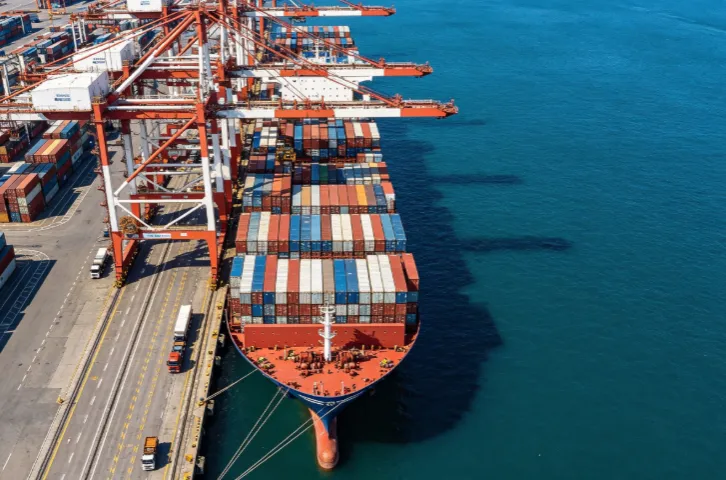
China to Paraguay Shipping Methods & Routes at a Glance
Paraguay is one of only two landlocked countries in South America. There is no seaport in Asunción. Every container that leaves Shanghai, Shenzhen, or Ningbo bound for Paraguay must first arrive at a coastal transshipment hub in a neighboring country, then complete an inland leg — either by river barge or by truck — before reaching one of Paraguay’s dry ports. Understanding this geography is fundamental to understanding your cost.
There are three primary transshipment corridors:
| Corridor | Ocean Destination | Inland Leg to Asunción | Typical Use Case |
|---|---|---|---|
| Montevideo (Uruguay) → Barge | Port of Montevideo | 1,200 km river barge on Paraná-Paraguay Waterway | Most common; most cost-effective for FCL and LCL |
| Buenos Aires (Argentina) → Road | Port of Buenos Aires | ~1,050 km highway to Asunción | Faster inland transit; popular when barge delays are expected |
| Santos (Brazil) → Road | Port of Santos | ~1,250 km highway | Best for cargo destined to eastern Paraguay (Ciudad del Este) |
Once your container reaches Paraguay, it will be discharged at one of the main river ports near Asunción: Terport (Villeta), Puerto Fenix, or Caacupemi. These are not deep-water ocean terminals — they are inland river ports handling barge traffic from Montevideo and Buenos Aires. Your freight forwarder issues a single Through Bill of Lading that covers the entire journey from the Chinese loading port to the Paraguayan discharge port, which simplifies documentation and gives you a unified cost quote.
Five Shipping Methods at a Glance
Before diving into the detailed cost breakdown, here is the macro-level comparison of your five options:
| Method | Cost Range | Transit Time | Best For |
|---|---|---|---|
| LCL Sea Freight | $120–$180 per CBM | 50–60 days | Small to medium shipments (1–15 CBM) |
| 20ft FCL | $2,500–$3,500 per container | 45–55 days | Medium bulk cargo (~28 CBM) |
| 40ft FCL/HQ | $3,500–$4,800 per container | 45–55 days | Large bulk cargo (~56–68 CBM) |
| Air Freight | $7.00–$12.00 per kg | 5–12 days | Urgent, high-value, perishable goods |
| Express Courier (DHL/FedEx/UPS) | $10.00–$18.00 per kg | 5–9 days | Samples, documents, small parcels |
Major Chinese Departure Ports for Paraguay Trade
Your choice of Chinese departure port directly affects both transit time and cost. Here is how the major ports compare for China to South America shipping routes:
- Shenzhen (Yantian/Shekou): The most frequent sailings to East Coast South America (ECSA). Ideal if your suppliers are in Guangdong — shorter inland drayage to port means lower domestic trucking cost and fewer delays.
- Shanghai / Ningbo: Best for factories in eastern China (Zhejiang, Jiangsu, Anhui). Transit to ECSA is roughly 3–5 days longer than from Shenzhen.
- Guangzhou (Nansha): Strong LCL consolidation infrastructure. If you are shipping less than a full container from multiple southern China suppliers, Nansha’s CFS (Container Freight Station) network is among the most cost-effective in the country.
- Qingdao: Competitive pricing for cargo originating in northern China. Fewer weekly sailings to South America than Shenzhen or Shanghai, so schedule planning is more important.
Complete Shipping Cost Breakdown from China to Paraguay
The table below expands on the overview above, adding cost-per-unit metrics and typical cargo types so you can quickly identify which method fits your shipment profile. For a deeper dive into these numbers, see our dedicated container shipping costs from china to Paraguay page. These are all-inclusive estimates covering the international freight leg plus standard inland transit to Asunción, based on July 2026 market data.
| Method | Price Range | Cost per Unit | Typical Cargo | Transit Time |
|---|---|---|---|---|
| LCL (Sea) | $120–$180 per CBM | ~$150/CBM avg | Electronics, textiles, small machinery, auto parts | 50–60 days |
| 20ft FCL | $2,500–$3,500 | ~$90–$125/CBM (28 CBM capacity) | Bulk consumer goods, building materials, furniture | 45–55 days |
| 40ft FCL/HQ | $3,500–$4,800 | ~$63–$85/CBM (56–68 CBM capacity) | Large machinery, wholesale furniture, industrial equipment | 45–55 days |
| Air Freight | $7.00–$12.00/kg | ~$9.50/kg avg (100–500 kg) | Electronics, medical devices, seasonal fashion, urgent orders | 5–12 days |
| Express Courier | $10.00–$18.00/kg | ~$14.00/kg avg | Samples, prototypes, documents, small e-commerce parcels | 5–9 days |
Important note on current surcharges (July 2026): As of mid-2026, carriers on the Far East Asia to East Coast South America (ECSA) trade lane are applying a Peak Season Surcharge (PSS) of approximately $750 per 20ft container and $1,500 per 40ft container during the August–November window (Maersk, Hapag-Lloyd). When requesting quotes, always ask whether PSS and BAF (Bunker Adjustment Factor) are included in the base rate — these surcharges can add $700–$1,500 to your container cost if quoted separately.
DDP vs. FOB: Which Incoterm Actually Costs You Less?
Most first-time importers fixate on the freight rate and ignore the Incoterm they are booking under — and then face an unpleasant surprise when hidden destination charges appear. Here is the comparison:
| Dimension | DDP (Delivered Duty Paid) | FOB + Self-Broker Clearance |
|---|---|---|
| Upfront cost clarity | ✅ Single invoice; all costs known before shipment | ❌ Multiple invoices; destination charges revealed later |
| Customs risk | On the freight forwarder | On you — the importer of record |
| Broker requirement | Forwarder arranges Despachante de Aduanas | You must find and manage your own broker |
| Typical total cost premium | ~8–15% above FOB freight-only rate | Potentially cheaper — if you have an established local broker |
| Best for | First-time importers, e-commerce sellers, SMEs without Paraguay office | Large importers with in-country logistics teams |
DDP is especially valuable for the Paraguay trade lane because it eliminates the uncertainty of transshipment-related charges. When your forwarder quotes you a single DDP rate, that rate already accounts for the Montevideo or Buenos Aires inland leg, which is often the most unpredictable cost variable in the entire journey.
Seasonal Rate Fluctuation: When to Ship for the Best Price
Freight rates on the China–ECSA–Paraguay corridor are not static. They follow a predictable annual cycle that every importer should factor into their procurement calendar:
| Period | Rate Level | What’s Happening | Recommended Action |
|---|---|---|---|
| March–June | ✅ Low (baseline) | Post-CNY lull, ample vessel capacity | Best window to ship: 20ft FCL ~$2,500 |
| July | ⚠️ Moderate | Pre-peak ramp-up begins | Still acceptable; book 2–3 weeks ahead |
| August–November | 🔴 High (PSS applies) | Q4 holiday rush + $750–$1,500 PSS | 20ft FCL ~$3,200+; book 4+ weeks ahead |
| December–February | 🟡 Elevated | South America agricultural export season reduces inbound container availability; CNY closure looms | Rates 15–25% above baseline; avoid January if possible |
Bottom line: If your business can accommodate a 50–60 day ocean transit, scheduling your factory shipments to depart between March and June will consistently deliver the lowest freight rates of the year. If you must ship during peak season, lock in your booking and rate at least four weeks in advance — last-minute spot bookings during the October rush can carry a 30–40% premium over contracted rates.
Sea Freight from China to Paraguay
When evaluating your options, Sea Freight From China to Paraguay is almost always the most cost-effective choice for shipments over 1 CBM — but choosing between FCL and LCL makes a significant difference to both your budget and your timeline.
FCL (Full Container Load)
FCL means you book an entire container exclusively for your cargo — nobody else’s goods share the space. For the Paraguay lane, this is the preferred method for shipments exceeding approximately 15 CBM.
| Container Type | Internal Capacity | Typical Max Payload | Best Cargo |
|---|---|---|---|
| 20ft GP | ~28 CBM / 33 m³ | ~22,000 kg | Machinery, building materials, medium-volume FMCG |
| 40ft GP | ~56 CBM / 67 m³ | ~26,000 kg | Furniture, bulk textiles, large wholesale orders |
| 40ft HQ (High Cube) | ~68 CBM / 76 m³ | ~26,000 kg | Volume-heavy cargo: foam products, assembled furniture, bulky packaging |
FCL shipments on this trade lane benefit from a single Through Bill of Lading that covers the ocean segment from China to Montevideo or Buenos Aires and the inland passage to Asunción. Customs inspection is less frequent with FCL because the container seal remains intact across the journey — a meaningful risk-reduction factor for high-value cargo.
FCL makes economic sense when your shipment volume exceeds the break-even point with LCL. (If you are unsure about the difference between the two, our guide on what is lcl and fcl in shipping breaks it down in detail.) As a rule of thumb: if you are shipping more than 15 CBM, an FCL 20ft container almost always costs less per cubic meter than paying LCL rates.
LCL (Less than Container Load)
LCL (Less than Container Load) is exactly what it sounds like: your cargo shares a container with shipments from other importers. You pay only for the cubic meters you use, typically at a rate of $120–$180 per CBM with a minimum charge of 1 CBM.
LCL is the cheapest way to ship from China to Paraguay for small to medium volumes — and compared to sea freight FCL for larger shipments, it offers maximum flexibility — but it comes with two trade-offs you need to plan around:
- Deconsolidation delay: At the Montevideo transshipment hub, the shared container must be unpacked and each importer’s cargo separated before being loaded onto individual barges or trucks. This adds 3–5 extra transit days compared to FCL.
- Higher handling risk: Each time cargo is handled (loaded at origin, unloaded at transshipment, reloaded for inland transit, unloaded at destination), the probability of damage or misrouting increases. For fragile or high-value goods, this risk premium should factor into your packaging decisions.
LCL is the best choice when you are test-ordering a new product, sourcing from multiple suppliers who cannot fill a full container, or shipping 1–15 CBM where FCL simply does not make economic sense.
The Paraná-Paraguay River Barge Leg
No other competitor article discusses this in detail, but any experienced freight forwarder on the China–Paraguay route will tell you: the river barge leg is the single biggest variable in your transit time.
After your container arrives at Montevideo (or, less commonly, Buenos Aires), it is transloaded onto a river barge for the 1,200 km journey up the Paraná and Paraguay Rivers to Asunción. Here is what actually happens on the ground:
- Dry season (August–November): Water levels on the Paraguay River drop significantly. Barges must reduce their draft (load), which means fewer containers per voyage and bottleneck congestion at Montevideo’s barge terminal. In severe drought years, we have seen barge delays add up to 14 extra days to the scheduled transit. If your shipment window falls during the dry season, ask your forwarder whether the Buenos Aires trucking alternative can bypass the barge queue.
- Wet season (December–March): Water levels are high and barge capacity is optimal. However, heavy rains can occasionally flood access roads to the Terport and Villeta terminals, causing sporadic last-mile delays.
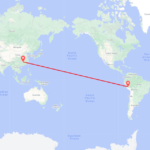
Figure: The China-to-Paraguay sea freight route — ocean transit from Chinese ports to Montevideo or Buenos Aires, followed by the 1,200 km river barge leg up the Paraná-Paraguay Waterway to the Asunción river ports (Terport, Villeta, Puerto Fenix).
Sea Freight Transit Time by Route
| Route | Ocean Leg (China → Transshipment Port) | Inland Leg (Transshipment → Asunción) | Total Transit |
|---|---|---|---|
| Via Montevideo (barge) | 35–40 days | 7–12 days | 42–52 days |
| Via Buenos Aires (truck) | 33–38 days | 3–5 days | 36–43 days |
| Via Santos (truck) | 30–35 days | 5–8 days | 35–43 days |
The Montevideo barge route is generally the most cost-effective but the slowest inland leg. Buenos Aires trucking is faster but the Argentina customs transit documentation can add complexity. Always discuss the route trade-off with your forwarder before booking.
Air Freight from China to Paraguay
For time-sensitive shipments, Air Freight from China to Paraguay delivers door-to-door in as little as 7 days — but the rate you pay depends heavily on your shipment’s weight bracket.
Air Freight Rate Tiers by Weight Bracket
Air freight is the right choice when goods are time-sensitive, high-value, or perishable — but the cost varies significantly by shipment weight. As of July 2026, here are the market rates for the China-to-Paraguay air corridor:
| Weight Bracket | Estimated Rate (USD/kg) | Example: 200 kg Shipment | Typical Use Case |
|---|---|---|---|
| 45–99 kg | $10.00–$12.00 | ~$2,000–$2,400 | Urgent samples, replacement parts |
| 100–299 kg | $8.50–$10.50 | ~$1,700–$2,100 | Small commercial orders, electronics |
| 300–499 kg | $7.50–$9.00 | ~$1,500–$1,800 | Mid-size e-commerce inventory |
| 500–999 kg | $7.00–$8.50 | ~$1,400–$1,700 | Bulk urgent cargo |
| 1,000+ kg | $7.00–$8.00 | ~$7,000–$8,000 | Large commercial shipments |
Critical pricing detail — chargeable weight: Airlines charge based on the higher of actual gross weight and volumetric weight (calculated as Length × Width × Height in cm ÷ 6000). This means lightweight but bulky items — think foam packaging, assembled furniture, or empty display boxes — can cost significantly more than their actual weight suggests. For air freight, always optimize your packaging for density.
Air Freight Routes & Transit Realities
There are no direct flights from China to Asunción. All air cargo transits through one of three major hubs:
- Miami (MIA) → Asunción (ASU): Most common routing; frequent connections; reliable
- São Paulo (GRU) → Asunción (ASU): Shorter South America final leg; good for southern China departures
- Frankfurt (FRA) → Asunción (ASU): Alternative for European-carrier routings from eastern China
The transit time including hub connection is 5–12 days total. The Silvio Pettirossi International Airport (ASU) in Asunción handles all international air cargo for Paraguay.
Air Freight vs. Express Courier: Which One for Your Cargo?
| Factor | Air Freight | Express Courier (DHL/FedEx/UPS) |
|---|---|---|
| Cost per kg | $7–$12 | $10–$18 |
| Total transit time | 5–12 days | 5–9 days |
| Minimum practical shipment | ~45 kg | 0.5 kg |
| Door-to-door included? | Optional (extra fee for last mile) | Included by default |
| Customs clearance | Forwarder or 3rd-party broker | Built-in courier brokerage |
| Best for | 100–500 kg commercial cargo | Documents, samples, <50 kg parcels |
Decision rule of thumb: If your shipment weighs less than 50 kg, express courier is almost always the better choice — the built-in brokerage and door-to-door convenience outweigh the higher per-kg rate. For shipments above 100 kg, air freight through a forwarder delivers far better economics. Between 50–100 kg, compare both quotes — the winner depends on origin city, season, and dimensional weight.
DDP & Door-to-Door Shipping: The All-Inclusive Route
For importers who prefer a hands-off experience, door to door shipping from China to Paraguay eliminates every logistical headache — from factory pickup to the final kilometer into your Asunción warehouse.
What DDP (Delivered Duty Paid) Actually Covers
DDP (DDP Shipping Services) is an Incoterms 2020 rule under which the seller (or, in freight forwarding, the forwarder acting on your behalf) assumes responsibility for every cost and risk from the factory floor in China to your doorstep in Paraguay — including import duties and VAT. For Paraguay-bound shipments, a DDP service typically includes:
- Pickup from your Chinese supplier’s factory or warehouse
- Export customs clearance at the Chinese port
- International freight (ocean or air)
- Transshipment at the regional hub (Montevideo, Buenos Aires, or Santos)
- Inland transport to Asunción (river barge or truck)
- Import customs clearance through a licensed Despachante de Aduanas
- Payment of import duties and VAT (IVA) on your behalf
- Last-mile delivery to your specified address in Paraguay
Key distinction most articles miss: Brazil strictly prohibits direct DDP shipments. Paraguay does allow DDP, particularly for e-commerce parcels, electronics, and smaller commercial shipments via air or specialized consolidators. This makes DDP a uniquely viable option for the Paraguay trade lane compared to neighboring Brazil or Argentina.
DDP vs. FOB with Self-Arranged Clearance
For importers trying to decide between a hassle-free DDP solution and a potentially cheaper FOB + local broker setup, here is a practical comparison:
| Factor | DDP (All-Inclusive) | FOB + Your Own Broker |
|---|---|---|
| Single point of contact | ✅ One forwarder, one invoice | ❌ At least 3 parties: forwarder + broker + trucker |
| Customs risk ownership | On the forwarder | On you |
| Surprise destination charges | Unlikely (all-in rate) | Common if terminal fees are not pre-negotiated |
| Cost | ~8–15% premium over FOB freight | Lower base cost, but higher coordination burden |
| Local language barrier | Forwarder handles Spanish-language DNA interactions | You or your broker must navigate this |
| Best suited for | First-time importers, SMEs, e-commerce sellers | Large importers with in-country logistics teams |
Our recommendation for Paraguay: Unless you already have a trusted, established Despachante de Aduanas and a track record of importing into Paraguay, a DDP arrangement will almost certainly save you money on total landed cost — even if the freight rate looks higher on paper. One incident of demurrage from a document discrepancy at the Terport terminal can cost more than the DDP premium on an entire year of shipments.
Figure: End-to-end DDP door-to-door shipping process — from factory pickup in China through export clearance, ocean freight, transshipment at Montevideo, river barge to Asunción, Paraguay customs clearance by a Despachante de Aduanas, and final delivery.
Paraguay Customs Clearance: Duties, Taxes & Required Documents
Navigating Paraguayan Customs Clearance is one of the most common friction points for first-time importers — the Dirección Nacional de Aduanas (DNA) enforces documentation standards rigorously, and even small errors can trigger inspection holds that cost you days of demurrage.
MERCOSUR Common External Tariff (CET) Explained
Paraguay is a full member of MERCOSUR (Mercado Común del Sur), which means it applies the Common External Tariff (CET) to imports from non-member countries — including China. The CET rate depends entirely on your product’s HS Code (Harmonized System code), making accurate product classification one of the most consequential decisions in your import process.
| Product Category | Typical CET Rate | Examples |
|---|---|---|
| Capital goods / Industrial raw materials | 0%–5% | CNC machinery, steel coils, chemical intermediates |
| Intermediate goods / Components | 6%–12% | Electronic components, industrial fasteners, packaging materials |
| Consumer goods / Textiles / Footwear | 10%–20% | Apparel, household electronics, furniture, toys |
| Vehicles / Luxury items | 18%–35% | Passenger vehicles, motorcycles, luxury watches, premium spirits |
A single digit difference in your 6-digit HS code can mean the difference between a 2% and an 18% duty rate. Before your supplier ships, verify the correct HS code with your freight forwarder’s customs team or your Despachante — do not rely on the supplier’s default declaration alone.
How VAT (IVA) and Import Duties Are Calculated
Paraguay applies a 10% VAT (Impuesto al Valor Agregado — IVA) on imported goods. The tax base is not just the CIF value — it is the CIF value plus the import duty. Here is the formula:
Total Import Tax = (CIF Value × CET Rate) + [(CIF Value + Import Duty) × 10% VAT]
Worked example:
| Line Item | Calculation | Amount (USD) |
|---|---|---|
| CIF Value (Cost + Insurance + Freight) | — | $10,000 |
| Import Duty (CET @ 14%) | $10,000 × 14% | $1,400 |
| VAT Base (CIF + Duty) | $10,000 + $1,400 | $11,400 |
| VAT (IVA @ 10%) | $11,400 × 10% | $1,140 |
| Total Import Taxes Payable | $1,400 + $1,140 | $2,540 |
Effective tax rate on CIF: 25.4% — far higher than the 14% headline CET rate once VAT compounding is applied. Always include both layers when modeling your total landed cost.
Required Documents for Paraguay Customs Clearance
Paraguay’s Dirección Nacional de Aduanas (DNA) is known for being strict about documentation accuracy. Even minor discrepancies — a typo in the shipper’s address, an inconsistent HS code — can trigger a physical inspection, customs hold, and demurrage fees that accumulate daily. Here is the complete checklist:
- Commercial Invoice (Factura Comercial) — Preferably bilingual (English and Spanish). Must include the seller’s and buyer’s full legal names, detailed product descriptions, HS codes, unit values, and Incoterm.
- Packing List (Lista de Empaque) — Detailed breakdown of every box/pallet: net weight, gross weight, dimensions, and contents.
- Bill of Lading (B/L) or Airway Bill (AWB) — Through Bill of Lading strongly recommended for ocean freight.
- Certificate of Origin (Certificado de Origen) — Required only if claiming preferential tariff treatment under a trade agreement; otherwise recommended as supporting documentation.
- Import License (Licencia de Importación) — Required only for restricted categories (pharmaceuticals, firearms, certain agricultural products).
- Despachante de Aduanas Engagement — Paraguayan law mandates that all import customs clearance must be conducted through a licensed customs broker. This is not optional; your forwarder must either provide one or connect you with one.
7 Smart Ways to Reduce Your China to Paraguay Shipping Costs
1. Choose LCL Over Air for Shipments Above 1 CBM
The most impactful cost decision you can make: if your cargo is not time-sensitive and exceeds 1 CBM, sea freight almost always wins. A 1 CBM / 200 kg electronics shipment costs approximately $1,600–$2,400 by air freight versus $150–$250 by LCL sea freight — a savings of 85–90%. The trade-off is 50–60 days of transit, but for most B2B importers, the margin improvement more than compensates.
2. Consolidate Shipments from Multiple Suppliers
If you source from three or four factories in Guangdong, paying separate LCL minimum charges for each shipment is inefficient. Instead, have all suppliers deliver to a single CFS (Container Freight Station) in Shenzhen or Guangzhou, where your freight forwarder consolidated freight shipping service combines everything into one shipment. You save on per-CBM rates, reduce the number of customs clearance entries, and may push your total volume over the FCL break-even threshold.
3. Ship During the Off-Peak Window (March–June)
As detailed in Section 3, the March–June window consistently delivers the lowest ocean freight rates on the China–ECSA corridor. A 20ft FCL that costs ~$2,500 in April can cost ~$3,200+ in October — a ~28% difference. If your procurement cycle is flexible, timing your shipments for the March–June window is one of the simplest cost levers available.
4. Optimize Packaging to Reduce Chargeable Volume
This matters for both air freight (volumetric weight ÷ 6000) and LCL sea freight (charged per CBM). For air freight in particular, compact, dense packaging can reduce the chargeable weight by 15–30%. Practical tactics include: vacuum-sealing textiles, using custom-sized cartons instead of standardized oversized boxes, and nesting hollow items where structurally safe.
5. Use DDP If You Lack a Local Customs Broker
If you do not already have a relationship with a Paraguayan Despachante de Aduanas, a DDP arrangement is almost always cheaper on a total-cost basis than attempting to self-manage customs clearance. The DDP premium (typically 8–15% above the FOB freight rate) usually costs less than the risks of: customs hold demurrage ($50–$150/day at Terport), documentation re-filing fees, and the currency risk of paying duties at an unfavorable exchange rate.
6. Partner with a Forwarder That Has Direct Carrier Contracts
Freight forwarders who have direct service contracts with ocean carriers — rather than buying space through consolidators — can offer more competitive base rates and, critically, more reliable space allocation during peak season. When the October PSS hits and spot rates spike, a forwarder with contracted allocation can still secure a container at the agreed rate, while spot-buyers may face a 30–40% premium.
7. Insure Your Cargo — It Costs Less Than You Think
Marine Insurance Services for the China–Paraguay route — covering your cargo against damage during transshipment, theft, and moisture exposure on the river barge — typically cost 0.3%–0.5% of the cargo’s declared value. On a $20,000 shipment, that is $60–$100. Now consider: your cargo will be handled at a minimum of four points (Chinese port, Montevideo transshipment terminal, barge loading, and Asunción discharge) — and potentially more. Each handling point is a risk. A single damaged pallet of electronics can represent thousands of dollars in unrecoverable loss. All-Risk (Institute Cargo Clauses A) coverage is the standard recommendation for this route given the multiple transshipment points.
FAQs
Q1: How much does it cost to ship a 20ft container from China to Paraguay?
A 20ft FCL container from China to Paraguay typically costs $2,500–$3,500 as of July 2026, including the ocean freight leg to Montevideo or Buenos Aires and the inland transit to Asunción. During the peak shipping season (August–November), expect pricing toward the upper end of this range due to the Peak Season Surcharge (PSS) of approximately $750 per 20ft container applied by major carriers on the Far East–ECSA trade lane.
Q2: What is the cheapest way to ship from China to Paraguay?
LCL (Less than Container Load) sea freight is the most economical shipping method, priced at $120–$180 per CBM. For a typical 3 CBM shipment, your freight cost would be approximately $360–$540 — about 85–90% less than air freight for the same volume. The trade-off is a longer transit time of 50–60 days. For volumes above 15 CBM, FCL becomes more cost-effective per cubic meter.
Q3: How long does sea freight take from China to Paraguay?
Sea freight from China to Paraguay takes 45–60 days in total. The ocean leg from Chinese ports (Shenzhen, Shanghai, Ningbo) to the transshipment hub in Montevideo or Buenos Aires accounts for 35–40 days. The inland leg — by river barge from Montevideo (7–12 days) or by truck from Buenos Aires (3–5 days) — accounts for the remainder. LCL shipments add 3–5 extra days for deconsolidation at the transshipment hub. During the dry season (August–November), low water levels on the Paraguay River can add an additional 7–14 days to barge transit.
Q4: How much import duty and tax do I pay when importing from China to Paraguay?
Paraguay applies the MERCOSUR Common External Tariff (CET) on Chinese imports, with rates ranging from 0% to 20% depending on the product’s HS code classification. On top of the duty, a 10% VAT (IVA) is applied to the sum of CIF value plus import duty. As a worked example: on a CIF value of $10,000 with a 14% CET rate, the total import tax bill would be approximately $2,540 (effective rate: 25.4%). Capital goods and industrial raw materials benefit from the lowest rates (0–5%), while consumer goods, textiles, and luxury items face the highest rates (10–35%).
Q5: What documents are required for Paraguay customs clearance?
Required documents include a Commercial Invoice (preferably bilingual English-Spanish), Packing List with detailed box-level contents and weights, Bill of Lading or Airway Bill (Through B/L recommended), Certificate of Origin (for applicable preferential treatment), and, for restricted product categories, an Import License. By Paraguayan law, all import clearance must be handled through a licensed Despachante de Aduanas (customs broker). The Dirección Nacional de Aduanas (DNA) is strict about documentation accuracy — invoice discrepancies can trigger inspection holds, customs delays, and daily demurrage charges.

Young Chiu is a seasoned logistics expert with over 15 years of experience in international freight forwarding and supply chain management. As CEO of Dantful International Logistics, Young is dedicated to providing valuable insights and practical advice to businesses navigating the complexities of global shipping.