Are you looking to streamline your shipping from Guangzhou to Singapore? This is one of the shortest and most competitive international trade lanes in Asia — a direct sailing from Nansha to the Port of Singapore takes as little as four days, and Singapore levies zero customs duty on most goods.
That combination makes Guangzhou one of the smartest sourcing gateways for Singapore importers. But “short route” does not mean “no complexity.” In our 15+ years handling this lane, the problems we fix are almost never about sailing time — they are about incorrect HS codes, GST calculated on the wrong value, and shippers paying LCL rates for cargo that should have been a full container.
In this guide, we will walk through the shipping methods, real 2026 costs, transit times, and customs clearance rules you need — plus the specific tactics we use to cut landed cost on this route.
Why the Guangzhou–Singapore Lane Is Different
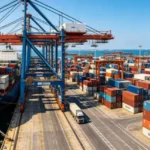
Guangzhou is the export gateway for the Pearl River Delta’s manufacturing base — electronics, furniture, hardware, textiles, lighting, and consumer goods. Cargo moves out through Nansha Port, Guangzhou’s deep-water container terminal, with Huangpu Port handling a large share of feeder and regional volumes.
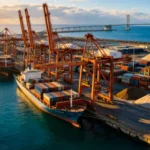
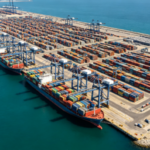
On the other end, the Port of Singapore is the world’s second-busiest container port and the region’s dominant transshipment hub, with PSA’s Tuas and Pasir Panjang terminals and Jurong Port handling everything from consumer goods to bulk cargo.
Two structural advantages matter for your bottom line:
- Distance. Nansha to Singapore is roughly 1,500 nautical miles — a fraction of a China–Europe or China–US voyage. That means lower bunker costs, more frequent sailings, and far less exposure to the schedule disruption that hits long-haul routes.
- Free-port status. Singapore applies customs duty to only four categories of goods: intoxicating liquors, tobacco products, motor vehicles, and petroleum products. Everything else enters duty-free. For most importers, GST is the only border tax you will pay.
For a full breakdown of the corridor — ports, carriers, and available service options — see our Shipping From China To Singapore hub.
Shipping Methods from Guangzhou to Singapore
1. Sea Freight (FCL and LCL)
For most importers moving goods from Guangzhou to Singapore, ocean freight is the default choice, and our Sea Freight From China to Singapore guide covers the wider lane carrier by carrier. There are two models:
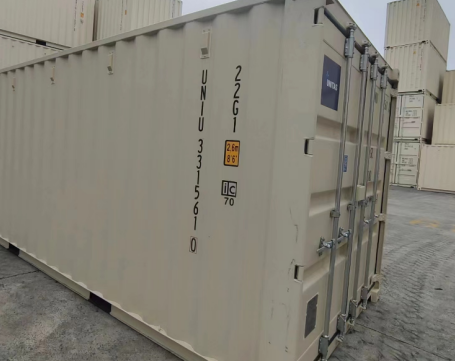
FCL (Full Container Load) — you book an entire 20ft or 40ft container for your cargo. FCL is sealed at origin, never consolidated, and generally clears faster because the container moves as a single unit.
LCL (Less than Container Load) — your cargo is consolidated with other shippers’ goods at a CFS (Container Freight Station) in Guangzhou. You pay only for the cubic meters you occupy. This is the right choice for test orders, sample runs, and small replenishment shipments.
A practical rule we give clients: once your cargo passes roughly 12–15 CBM, FCL usually becomes cheaper than LCL, because LCL adds consolidation, deconsolidation, and CFS handling fees on both ends. Below that threshold, LCL keeps your cash and inventory flexible.
If you are consolidating goods from several Guangzhou or Foshan suppliers, consolidated freight shipping lets you merge them into one booking and one set of clearance documents — cheaper and far easier to track than shipping each order separately.
2. Air Freight
Air Freight from Guangzhou Baiyun International Airport (CAN) to Singapore Changi (SIN) is the fastest option, typically 1–3 days airport-to-airport. It suits high-value, lightweight, or launch-critical cargo — electronics, fashion drops, spare parts, and goods tied to a hard retail deadline.
Be aware that air freight is charged on chargeable weight, which is the greater of actual weight and volumetric weight (volume in cm ÷ 6,000 for most carriers). A bulky but light shipment can therefore cost far more by air than you expect. We always compare chargeable weight against sea freight before recommending air.
3. Door-to-Door and DDP Shipping
Door to Door Shipping is the “hands-off” option: we collect from your supplier in Guangzhou, handle export declaration, move the cargo by sea or air, clear it through Singapore Customs, pay the GST, and deliver to your warehouse, shop, or home office address.
For Singapore specifically, many importers choose door to door shipping from China to Singapore so that the landed cost is fixed before the goods leave China. If you already have a GST-registered entity in Singapore and want to reclaim import GST as input tax, a DDU structure may suit you better. We will explain the trade-off honestly rather than push you toward the option that is easier for us to sell.
4. Amazon FBA and E-commerce Forwarding
If you are sending stock into Amazon Singapore (FBA), the requirements differ from ordinary cargo — each carton needs FBA labels and shipment IDs, and the receiving warehouse imposes its own appointment and packing rules. Our Amazon FBA team handles labeling, palletization, and delivery appointments so your shipment is not rejected at the door.
Shipping Costs from Guangzhou to Singapore
The table below shows indicative 2026 market rates for general dry cargo on this lane. Treat them as planning benchmarks, not quotes — ocean freight on any Asia route moves weekly with fuel surcharges, peak-season demand, and container availability.
| Shipping Method | Typical Rate (2026) | Best For |
|---|---|---|
| LCL sea freight | $30 – $85 per CBM (1 CBM minimum) | Shipments under ~12 CBM |
| FCL — 20ft container | $300 – $700 | Heavy, dense cargo under 28 CBM |
| FCL — 40ft container | $550 – $1,200 | Furniture, textiles, bulky mixed goods |
| Air freight | $2.50 – $5.50 per kg | Urgent or high-value cargo |
| Express courier | $8 – $15 per kg | Samples and parcels under 100 kg |
What Is (and Isn’t) Included
This is where quotes genuinely differ, and where we see importers get caught out. A “port-to-port” ocean freight rate typically covers the sea leg only. It does not normally include:
- Origin pickup and inland trucking in Guangdong
- China export declaration and terminal handling charges (THC)
- Singapore import permit filing and clearance
- GST at 9% on the CIF value
- Destination trucking and final-mile delivery
- Cargo insurance
A rate that looks 30% cheaper often simply excludes three of these lines. Our quotes itemize every charge up front, with no hidden fees, so you can compare like for like. If your priority is purely rate, compare cheapest shipping company from china to Singapore quotes carefully — the lowest headline number is rarely the lowest landed cost.
Worked Example: 12 CBM of Furniture from Guangzhou
Consider a Singapore furniture retailer importing 12 CBM weighing 2,400 kg:
| Cost Item | LCL Route | FCL Route (20ft) |
|---|---|---|
| Ocean freight | 12 CBM × ~$55 = $660 | ~$450 |
| CFS / consolidation & deconsolidation | ~$180 | Included |
| Export declaration + THC (China) | ~$150 | ~$220 |
| Singapore clearance & delivery | ~$200 | ~$260 |
| Estimated subtotal | ~$1,190 | ~$930 |
The lesson: at 12 CBM the LCL route already looks more expensive, and it also carries a longer transit time. Below 8–10 CBM, LCL wins clearly; above 15 CBM, FCL almost always does. Our operations team runs this comparison for every client before booking.
Shipping Times from Guangzhou to Singapore
| Service | Transit Time | Notes |
|---|---|---|
| FCL sea freight | 4 – 7 days (port-to-port) | Direct Nansha–Singapore sailings, several per week |
| LCL sea freight | 8 – 12 days (port-to-port) | Add 2–4 days for CFS consolidation and deconsolidation |
| Air freight | 1 – 3 days (airport-to-airport) | Baiyun (CAN) to Changi (SIN) |
| Door-to-door by sea | 8 – 14 days total | Includes pickup, clearance, GST and delivery |
| Door-to-door by air | 3 – 5 days total | Best for deadline-driven cargo |
What moves these numbers: vessel schedule and cut-off reliability, whether your booking is a direct sailing or a relay service, documentation accuracy at both ends, and peak-season congestion. Chinese New Year, Golden Week (early October), and the pre-Christmas build-up from September to November are the three windows where booking early matters most.
In our experience on this lane, shippers who book 7–10 days ahead during peak season avoid both rollover risk and the spot-rate spikes that hit last-minute bookings. Direct sailings also eliminate the transshipment handling that causes most LCL delays.
Customs Clearance and Duties for Shipping to Singapore
Singapore is consistently ranked among the easiest places in the world to clear goods, but the process is digital, permit-driven, and unforgiving of inaccurate declarations.
Duty and GST: What You Actually Pay
- Customs duty: 0% on almost all goods. Duty applies only to intoxicating liquors, tobacco products, motor vehicles, and petroleum products. If you import furniture, electronics, apparel, toys, hardware, or homewares, your duty is zero.
- GST: 9% (in effect since 1 January 2024), calculated on the CIF value — Cost, Insurance and Freight — not just the product price. If duty does apply, it is added to the CIF value before GST is computed, so GST applies on top of duty.
- GST relief: Goods imported by air or post with a CIF value up to S$400 may qualify for GST relief. Sea freight does not qualify for this threshold — a detail that regularly surprises first-time importers.
GST rates and thresholds are set by the Inland Revenue Authority of Singapore (IRAS); you can confirm current rules on the IRAS GST pages.
TradeNet and Your UEN
All import permits in Singapore are filed electronically through TradeNet, the national single-window platform operated by Singapore Customs. Non-controlled goods are usually auto-approved within minutes; shipments flagged for agency approval take longer.
To import under your own company name you need:
- An active UEN (Unique Entity Number) and a Customs Account activated with Singapore Customs (free, and normally approved within one to two working days).
- A declaring agent — usually your freight forwarder — licensed by Singapore Customs to file the permit.
Customs Clearance on this lane typically takes 1–2 working days for sea freight once documents are in order, and same-day for air freight. In our experience, virtually every delay traces back to one of three causes: a mismatched HS code, a missing product-specific permit, or an invoice value that does not match the declared value. We pre-audit documents before vessel arrival precisely to close those gaps.
Free Trade Agreement Benefits
Because Singapore is an ASEAN member, China-origin goods can qualify for preferential treatment under the ASEAN–China Free Trade Area (ACFTA) using a Form E certificate of origin, or under RCEP. Since Singapore already charges 0% duty on most goods, the practical value of these certificates is limited for general cargo — but they remain essential for controlled categories and for goods you later re-export into higher-tariff ASEAN markets. Your supplier must issue the correct certificate; it cannot be created after the fact.
Free Trade Zones and GST Deferral
Singapore’s Free Trade Zones (at the seaport terminals and Changi Airport) sit outside Singapore’s customs territory. Goods stored or transhipped there are not subject to GST until they are released into the local market. If you use Singapore as a regional distribution base, that deferral can free up significant working capital. Ask us about FTZ routing if you re-export part of your inventory.
Documents You Need to Ship from Guangzhou to Singapore
Getting this list right the first time is the single fastest way to avoid delays:
| Document | Purpose |
|---|---|
| Commercial invoice | Declared value, description, quantity — the basis for GST |
| Packing list | Must reconcile line-by-line with the invoice |
| Bill of Lading (B/L) or Airway Bill (AWB) | Contract of carriage and release document |
| HS Codes | Determines duty treatment and whether permits are needed |
| Form E / RCEP certificate of origin | Preferential tariff treatment, where applicable |
| Product-specific permits | SFA for food; HSA for health products and cosmetics; IMDA for telecom and RF devices |
| MSDS / non-hazardous certificate | Required for many chemical and liquid products |
| IPPC fumigation certificate | Required for solid wood packaging |
If you are also shipping oversized machinery or out-of-gauge items, the documentation set changes — talk to us early, because out-of-gauge and breakbulk cargo need their own handling plan and permit checks.
Strategies for Reducing Shipping Costs
- Check the FCL break-even point. Compare your total CBM against the ~12–15 CBM threshold before assuming LCL is cheaper.
- Optimize packaging, not just price. On LCL, you pay for volume. Reducing carton size or stacking efficiency directly lowers your freight bill.
- Book ahead of peak season. Chinese New Year, Golden Week, and the September–November pre-holiday rush are when rates and rollover risk both spike.
- Consolidate suppliers. Merge multiple Guangzhou-area orders into one shipment and one clearance to cut fixed fees.
- Declare accurately. Under-declaring value to reduce GST is a false economy — Singapore Customs can reassess the value and impose penalties.
- Insure the right cargo. Insurance through our Insurance Services costs a small fraction of cargo value, but a single water-damaged or crushed container can erase a season’s margin.
- Use a forwarder with direct carrier contracts. Our direct agreements with major ocean and air carriers secure space and competitive rates even when market capacity tightens.
Why Work with Dantful on This Lane
Dantful International Logistics has been moving cargo from China to Singapore and the wider ASEAN region for over 15 years — a track record that is why importers looking for a dependable freight forwarder from china to Singapore tend to stay with us. We are a Class-A licensed freight forwarder with NVOCC certification, and members of FIATA and Jctrans, operating with a network of trusted agents across 200 countries.
What that means in practice on the Guangzhou–Singapore route:
- Transparent, itemized pricing — no hidden fees, no surprise destination charges.
- Direct carrier contracts for space security and competitive rates during peak season.
- A dedicated account manager who knows your cargo, plus 24/7 support with daily milestone updates and photos.
- End-to-end control — pickup in Guangzhou, export declaration, customs clearance, GST handling, warehousing if needed, and final delivery anywhere in Singapore.
Tell us your cargo details — commodity, volume, weight, and delivery address — and we will return a costed comparison of sea, air, and door-to-door options, with the trade-offs explained plainly. Contact our team for a custom quote.
Frequently Asked Questions
How long does shipping from Guangzhou to Singapore take?
Direct FCL sailings take 4–7 days port-to-port. LCL takes 8–12 days because of consolidation. Air freight takes 1–3 days. Add clearance and delivery for a door-to-door total of roughly 8–14 days by sea or 3–5 days by air.
How much does it cost to ship a container from Guangzhou to Singapore?
For 2026, budget roughly $300–$700 for a 20ft container and $550–$1,200 for a 40ft, port-to-port. These are indicative rates that move with market conditions.
Do I pay import duty in Singapore?
Almost certainly not. Singapore charges customs duty on only four categories — liquor, tobacco, motor vehicles, and petroleum products. Everything else clears duty-free, but 9% GST still applies on the CIF value.
Is LCL or FCL cheaper from Guangzhou to Singapore?
Below roughly 8–10 CBM, LCL is cheaper. Above about 12–15 CBM, FCL is usually cheaper once consolidation and handling fees are counted. We run the comparison for you before booking.
Do I need a Singapore company to import?
You need a UEN and an activated Customs Account to import in your own name. If you do not have one, DDP shipping lets us act as the importer of record and deliver to your door.
Can I ship dangerous goods?
Some classes of hazardous cargo can move on this lane with the correct MSDS, classification, and packaging. We assess each case individually — contact us with the product details before booking.

Young Chiu is a seasoned logistics expert with over 15 years of experience in international freight forwarding and supply chain management. As CEO of Dantful International Logistics, Young is dedicated to providing valuable insights and practical advice to businesses navigating the complexities of global shipping.