Ask three forwarders for a shipping from Shenzhen to Jordan quote and you will get three different numbers for the same container — because one is a port-to-port ocean rate out of Yantian, one is a DDP price delivered to an Amman warehouse, and one quietly excludes the destination charges, duty and 16% GST that decide your true landed cost. None of them is necessarily wrong. The problem is that “Shenzhen to Jordan” is really four quotes stacked together — origin, ocean, destination and customs — and most price lists never tell you which layer you are looking at.
This guide takes the lane apart layer by layer. It follows your cargo from a Guangdong factory gate to a Jordanian warehouse door: which Shenzhen terminal your box loads from, where it transships, what a 20-foot, 40-foot and LCL shipment costs in 2026, how many days it really takes to Aqaba and Amman, where the FCL-versus-LCL break-even actually sits, what Jordan Customs demands, and how to compare forwarder quotes line by line. Every figure is an indicative 2026 market range — not a quotation — issued by a Shenzhen-headquartered forwarder that moves this lane every week.
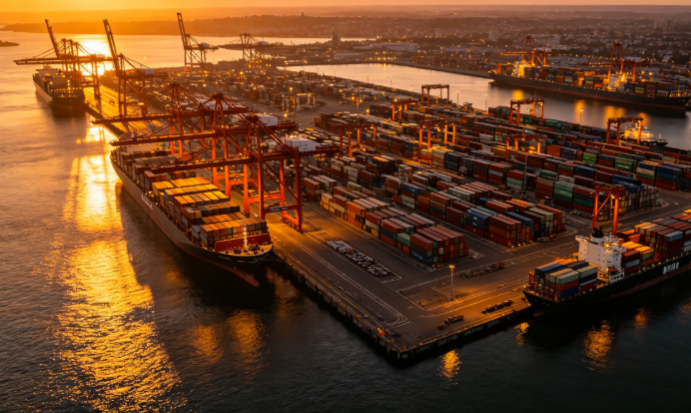
Shenzhen to Jordan Shipping Route: Yantian, Shekou and the Pearl River Delta Origin Gateway
In short: Shenzhen is the fastest South China gateway to Jordan’s only seaport, Aqaba, at roughly 20–28 days port-to-port — and the terminal you load from (Yantian, Shekou, Chiwan or Dachan Bay) sets your cut-off, your sailing options and your inland trucking bill.
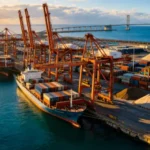
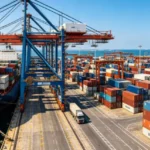
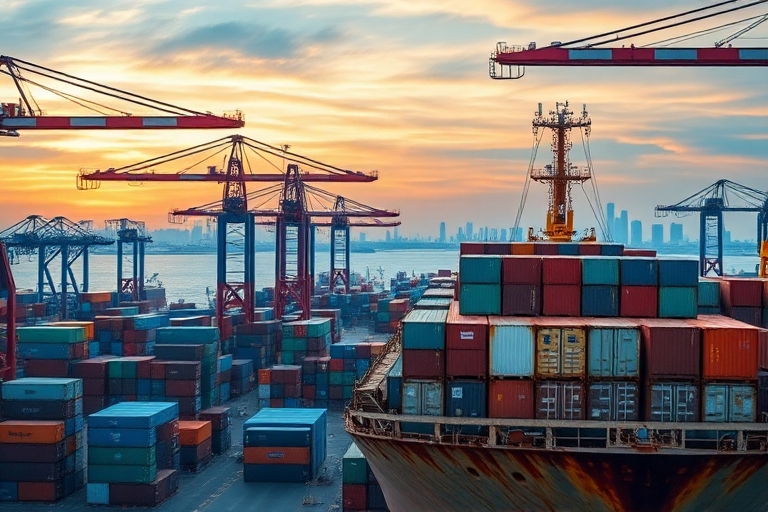
Shenzhen is not one port but a cluster of container terminals, and which one handles your box matters more than most importers realize.
| Shenzhen terminal | Character | Typical role | Practical note |
|---|---|---|---|
| Yantian | Deep-water, mega-vessel hub | Main Europe and Middle East strings | Broadest carrier choice; strict VGM and SI cut-off discipline |
| Shekou | Flexible, port-adjacent | Intra-Asia and some Middle East loops | Convenient for western Shenzhen and Nanshan suppliers |
| Chiwan | Modern, river-sea | Regional and relay services | Often paired with Shekou sailings |
| Dachan Bay | Newer, automated | Growing feeder and regional load | Best for eastern Pearl River Delta cargo |
Your origin port should follow your supplier’s location, not the rate sheet — trucking a container an extra 150 km to save USD 100 on ocean freight is a losing trade. The inland haulage reference on this lane runs about USD 180–300 per container from a Pearl River Delta factory to Yantian or Shekou.
| Supplier region | Typical products | Trucking to Yantian | Trucking to Shekou |
|---|---|---|---|
| Shenzhen (Huaqiangbei, Bao’an) | Electronics, hardware, PCB, components | 1–2 hours | 1 hour |
| Dongguan | Consumer electronics, toys, plastics | 1.5–2.5 hours | 2 hours |
| Guangzhou / Foshan | Ceramics, tiles, lighting, furniture | 3–5 hours | 2.5–4 hours |
| Zhongshan / Huizhou | Appliances, LED, machinery | 3–4 hours | 2.5–3.5 hours |
Why Shenzhen Is the Fastest South China Gateway to Aqaba
Shenzhen sits further south than Shanghai, Ningbo, Qingdao and Tianjin, and its dense Middle East service loops give it a 20–28 day port-to-port edge to Aqaba that northern ports cannot match. Published comparisons put Shenzhen and Guangzhou at 20–28 days against 25–34 days from Qingdao and Tianjin — roughly five to seven extra sailing days simply for loading further north. For a Guangdong supplier, choosing Shenzhen also removes the inland truck to a northern port. If you are still comparing gateways, our overview of Shipping From China To Jordan shows how the other China ports stack up.
Routing and Transshipment Reality
Most importers assume their container sails straight from Shenzhen to Aqaba. In practice, very few vessels run a direct China–Aqaba service; the majority transship. The dominant relay hub is Jebel Ali in the UAE, with Jeddah and Salalah used as alternatives depending on carrier and rotation. Each transshipment adds roughly 3–7 days to total transit, and direct sailings, where they exist, are less frequent and usually command a premium. When you read a quote, look for the words “direct” or “transshipment” — an unstated routing is a hidden variable in your arrival date. Because Jebel Ali is the same gateway behind our Shipping from China to UAE service, we already have daily visibility on congestion there.
Aqaba as the Single Gateway
Jordan has a logistics feature no neighbor shares: a single seaport. Every container from China effectively lands at the Port of Aqaba (JOAQJ) on the Red Sea, then moves inland by road to Amman, Zarqa or Irbid. The Aqaba Container Terminal (ACT), operated by APM Terminals, handles well over one million TEU a year. That concentration simplifies planning but concentrates risk — congestion or a delay at one gateway touches the whole national supply chain, which is why pre-clearance and pre-booked haulage are not optional.
Export Mechanics and Peak Season
From booking to loaded vessel, plan a realistic countdown: booking and S/O issue, container pickup at the factory, VGM submission, SI and documentation cut-off, gate-in, then loading on board. Sequence it around China’s Golden Week (October 1–7) and Chinese New Year, when factory shutdowns collide with vessel cut-offs and yard density spikes. Booking three to four weeks ahead protects your production schedule.
Our Industry Insights: importers often assume “China to Jordan” rates are interchangeable, then discover that a Shenzhen quote and a Qingdao quote differ by both rate and transit. Because we load out of Yantian and Shekou on direct carrier contracts, we can usually keep your preferred service even when your supplier’s location shifts across the Pearl River Delta — without re-quoting the whole lane.
Fastest Way to Ship from Shenzhen to Jordan: Sea, Air and Rail Compared
In short: The fastest way to ship from Shenzhen to Jordan is air freight — 3–7 days to Amman at roughly USD 5–8 per kg. The cheapest is ocean FCL, at about USD 1,800–3,200 per 20-foot container port-to-port. Rail via the Middle Corridor is a niche third option that rarely beats sea on cost or air on speed.
| Channel | Cost basis (indicative 2026) | Door-to-door transit | Best fit | Main limitation |
|---|---|---|---|---|
| Ocean FCL | USD 1,800–5,000 per container | 30–45 days | 15+ CBM, heavy or bulky cargo | Slowest door-to-door |
| Ocean LCL | USD 80–180 per CBM | 33–50 days | 1–14 CBM, trial orders | Destination CFS fees add up |
| Air freight | USD 5–8 per kg | 5–12 days | High-value, urgent, under 500 kg | Cost scales with weight |
| Rail (Middle Corridor) | FCL-equivalent + rail fees | 30–45 days | Inland Central Asia transit | Not a true Aqaba route; complex |
| DDP door-to-door | All-in per shipment | 30–50 days | SMEs, first shipments | Least cost transparency |
Air Freight from Shenzhen to Amman
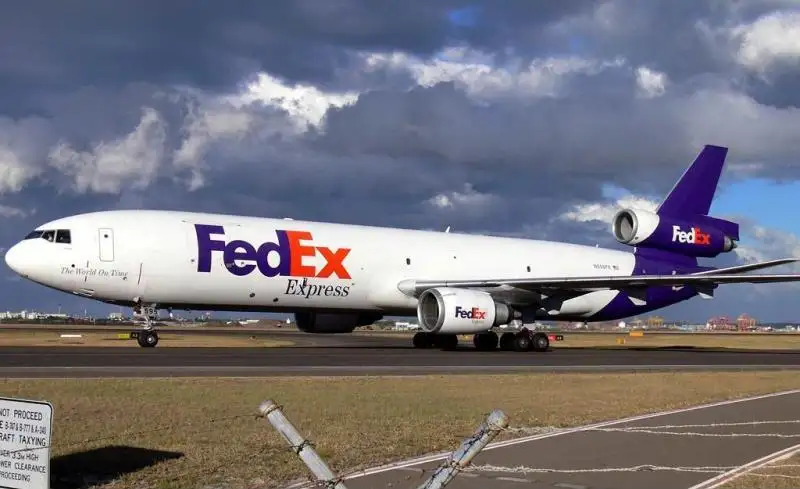
Air cargo leaves Shenzhen Bao’an (SZX) direct or connects through a Gulf hub, landing at Queen Alia International Airport (AMM) in Amman. Rates are bracketed by weight and billed on chargeable weight — the greater of actual and volumetric weight — at a volumetric ratio of 1:167, so light, bulky cargo can be billed far above its physical weight. Below roughly 100 kg, air and LCL converge: neither is clearly cheaper once minimum charges apply.
| Weight tier | Indicative air rate (USD/kg) | Transit to AMM |
|---|---|---|
| 100–300 kg | 6.00–8.00 | 3–5 days |
| 300–500 kg | 5.50–7.50 | 3–6 days |
| 500 kg+ | 5.00–7.00 | 4–7 days |
Rail via the Middle Corridor
There is no practical, direct rail service from Shenzhen to Aqaba. The Middle Corridor route through Central Asia and the Caspian is a genuine option for some landlocked destinations, but for Jordan it adds handling, gauge changes and border complexity while rarely beating sea on cost or air on speed. Treat it as a specialist alternative, not a default.
The Decision Framework
Cost-led cargo goes by sea freight from China to Jordan, typically as FCL. Speed-led cargo goes by air. Cargo needing a balance can use sea plus a faster relay or a sea-air combination. Convenience-led cargo — especially for SMEs without a Jordanian broker — goes DDP.
Our Industry Insights: we regularly tell clients that air freight only makes sense for high-value, low-volume cargo or a genuine supply-chain emergency. A 500 kg air shipment can cost roughly as much as an entire 20-foot sea container — so unless the goods are urgent or high-value, the ocean advantage is overwhelming.
Cost of Shipping from Shenzhen to Jordan in 2026: FCL, LCL and Air Rate Benchmarks
In short: In 2026 a 20-foot container from Shenzhen to Aqaba runs about USD 1,800–3,200 port-to-port, a 40GP about USD 3,100–4,900, a 40HQ about USD 3,300–5,000, and LCL about USD 80–180 per CBM. Then add destination charges, duty and 16% GST.
FCL Rates from Shenzhen to Aqaba
| Container | Internal volume | Max payload | Indicative 2026 rate (USD) | Best fit |
|---|---|---|---|---|
| 20GP | ~28–33 CBM | ~28 t | 1,800–3,200 | Dense, heavy cargo; tiles, machinery, hardware |
| 40GP | ~67 CBM | ~26.5 t | 3,100–4,900 | Standard FCL; best per-CBM economics |
| 40HQ | ~76 CBM | ~26.3 t | 3,300–5,000 | Light, bulky cargo; +13% volume for near-equal cost |
Shenzhen’s southern location also carries a pricing edge: published comparisons show southern ports (Shenzhen, Guangzhou) running roughly USD 100–300 per container cheaper than northern ports (Qingdao, Tianjin). Carriers on the Far East–Middle East lane include COSCO, MSC, Maersk, CMA CGM, ONE and Evergreen. For a rolling view of how these numbers move month to month, see our shipping rates from China to Jordan benchmark.
LCL Rates per CBM
LCL prices at roughly USD 80–180 per CBM on a 1 CBM minimum. The spread between published LCL rates is the widest on this lane — some sources quote USD 70–130 from South China ports, others USD 150–250 — because one is a bare port-to-port rate and the other folds in origin CFS handling, documentation and destination charges. Light, bulky cargo pays more; heavy cargo may be billed on weight.
Air Freight Rates from Shenzhen to Amman
See the weight-tier table in Section 2: USD 5.00–8.00 per kg, dropping as volume increases. Air is cost-effective only for urgent or high-value cargo.
The Complete Landed-Cost Breakdown
Four blocks make up your real cost, and ocean freight is only one of them:
| Cost block | Components | Typical 2026 range |
|---|---|---|
| Origin (China) | Factory pickup, inland trucking to Yantian/Shekou, export declaration, documentation, origin THC, port security, booking fee | USD 150–400 per container |
| International freight | Ocean freight, BAF/LSS fuel, PSS, GRI, Red Sea / war-risk surcharge | Carrier-published; resets quarterly |
| Destination (Jordan) | Destination THC/DTHC, Delivery Order fee, clearance agency fee, Aqaba demurrage & detention, inland trucking | USD 300–800 per container |
| Duties & taxes | Import duty by HS code, then GST 16% on (CIF + duty) | 0–30%+ duty, plus 16% GST |
A Worked Landed-Cost Example
Take a 40HQ bound for Amman with goods valued FOB Shenzhen at USD 25,000, ocean freight and insurance of USD 3,000, giving a CIF value of USD 28,000. Assume a 10% duty band and 16% GST:
| Line | Calculation | Amount (USD) |
|---|---|---|
| CIF value | Goods + freight + insurance | 28,000 |
| Import duty | 10% × 28,000 | 2,800 |
| GST 16% | 16% × (28,000 + 2,800) | 4,928 |
| Destination + inland | THC, D/O, clearance, Aqaba→Amman trucking | ~1,200 |
| Total landed cost | ~36,928 |
The border charges alone — duty plus GST — come to USD 7,728, about 27.6% of the CIF value, before a dollar of freight is counted. This is why “you cannot estimate landed cost without an accurate HS code”: change the duty band and the whole business case moves.
How to Compare Two Forwarder Quotes Apples to Apples
Demand each quote itemize the same lines before you sign:
- Is it port-to-port or door-to-door?
- Are BAF/LSS, PSS, GRI and the war-risk surcharge included?
- Is destination DTHC and the D/O fee included?
- How many free-time days at Aqaba are included?
- Is the inland leg quoted, and on what basis?
- Are duty and 16% GST included, or billed on arrival?
Our Industry Insights: these are indicative 2026 ranges with stated scope, not firm prices. Rates move with fuel, capacity and season. When two quotes look 40% apart, the difference is almost always scope — one includes destination THC, brokerage and inland delivery and the other does not.
How Long Does Shipping from Shenzhen to Jordan Take in 2026?
In short: Port-to-port, Shenzhen to Aqaba runs about 20–28 days and door-to-door to Amman about 30–45 days. Published figures differ by up to 13 days because they mix port-to-port with door-to-door, direct with transshipment, and dated with undated data — and because 2026 Red Sea routing throws an extra variable on top.
| Route | Direct ocean transit | Via transshipment | Door-to-door | Notes |
|---|---|---|---|---|
| Shenzhen → Aqaba | 20–28 days | Add 3–7 days | 30–45 days | Weekly sailings on the main services |
| Shenzhen → Amman | — | — | 32–47 days | Includes Aqaba clearance and road leg |
| Shenzhen → Zarqa Free Zone | — | — | 33–48 days | Road leg to Zarqa ~320 km |
Shenzhen to Aqaba Transit Time
On the main Far East–Middle East services, sailings are weekly and port-to-port transit sits at 20–28 days when direct and 23–35 days with a relay. Note the honest conflict in published data: some sources cite 20–28 days (fastest of six China ports), others 25–38 days. The difference is usually transshipment assumption, not error. For a lane-level benchmark, our reference on how long is freight from China to Jordan tracks the same range.
Shenzhen to Amman Door-to-Door Shipping Time
Build the timeline phase by phase:
| Phase | Day range |
|---|---|
| Factory pickup and export declaration | Days 1–3 |
| Gate-in and loading at Yantian/Shekou | Days 2–5 |
| Ocean leg (incl. transshipment) | Days 5–30 |
| Aqaba discharge and customs clearance | Days 30–36 |
| Inland delivery Aqaba → Amman | Days 36–38 |
Why the Numbers Disagree: Routing, Hubs and Season
Four variables get silently swapped between sources: scope (port-to-port versus door-to-door), routing (direct versus transshipment via Jebel Ali), season (peak versus off-peak capacity), and dating (is the figure from this quarter or last year?). A trustworthy figure states its assumption.
2026 Red Sea Risk and Contingency Routing
The single biggest variable on this lane in 2026 is the Red Sea. Security disruption around the Bab-el-Mandeb has pushed a large share of Asia–Europe traffic onto the Cape of Good Hope routing, adding days and fuel cost, while carriers levy a Red Sea / war-risk surcharge on affected services. Congestion at Jeddah and Salalah spills over into transshipment reliability, so a relay that “normally” adds three days can add more when hubs back up. Plan with a contingency framework:
| Scenario | Routing choice | Trade-off |
|---|---|---|
| Normal conditions | Direct or Jebel Ali relay | Lowest cost, standard transit |
| Jebel Ali congestion | Salalah or Jeddah relay | Marginally longer, more reliable |
| Red Sea closure | Cape of Good Hope | +10–15 days, higher fuel and war-risk cost |
Aqaba Port Congestion and Waiting Time
A single-seaport country concentrates risk. Pre-Ramadan and Q4 peaks tighten Aqaba’s yard, and berth waiting plus inspection queues can add days. Pre-clearing customs documents before the vessel arrives is the single most effective protection.
The Five Factors That Move Your Arrival Date
- Origin terminal and cut-off discipline
- Direct sailing versus transshipment
- Carrier port rotation
- Red Sea routing and hub congestion
- Operational variables — weather, berth waiting, blank sailings
Build a 5–7 day buffer into any delivery date you promise.
Real-Life Scenario: a Guangdong importer shipping furniture to Amman lost nine days when a Jebel Ali relay backed up during a Red Sea disruption. In the next booking we pre-filed the ASYCUDA entry, pre-booked the Aqaba haulier, and chose a Salalah relay instead — the transit held within two days of plan, and the demurrage exposure that had cost them on the first shipment never materialized.
FCL vs LCL Shipping from Shenzhen to Jordan
In short: FCL (Full Container Load) means booking the whole box; LCL (Less than Container Load) means sharing one and paying per CBM. Published break-evens cluster at ~15 CBM, but the true crossover — once destination CFS handling and DTHC are added — often sits slightly lower in FCL’s favor.
| Container | Internal volume | Max payload | When to use |
|---|---|---|---|
| 20GP | ~28–33 CBM | ~28 t | Dense, heavy cargo; smaller FCL loads |
| 40GP | ~67 CBM | ~26.5 t | Standard FCL; best per-CBM economics |
| 40HQ | ~76 CBM | ~26.3 t | Light, bulky cargo — more volume for near-equal rate |
Note on the 20-foot figure: some sources cite a nominal 33 CBM internal volume, while practical loadable volume is closer to 28 CBM once pallets and stowage are accounted for. Budget on the practical number, not the nominal one.
20ft vs 40ft — Which Is Cheaper per CBM?
Run the maths at mid-range rates: a 20GP at ~USD 2,500 over ~33 CBM is ~USD 75/CBM; a 40GP at ~USD 4,100 over ~67 CBM is ~USD 61/CBM; a 40HQ at ~USD 4,300 over ~76 CBM is ~USD 57/CBM. The 40-foot is typically 17–25% cheaper per CBM than the 20-foot. Two 20-footers usually cost more than one 40-foot for the same volume — the only reasons to choose two 20s are a truck or unloading bay that cannot take a 40-foot chassis, or cash-flow constraints.
The Break-Even, Resolved Honestly
Pure freight-rate break-even sits near 15 CBM. But the landed-cost break-even is different, because LCL adds destination CFS handling, deconsolidation labor, a DTHC charged per shipment rather than per container, and 3–7 extra transit days.
| Volume | LCL estimate (USD 80–180/CBM) | 20GP FCL | Verdict |
|---|---|---|---|
| 10 CBM | USD 800–1,800 + CFS | USD 1,800–3,200 | LCL usually ahead |
| 15 CBM | USD 1,200–2,700 + CFS | USD 1,800–3,200 | Crossover zone — the quote decides |
| 20 CBM | USD 1,600–3,600 + CFS | USD 1,800–3,200 | FCL usually wins once CFS is added |
When LCL Is Genuinely the Right Call
A first trial order from a new Guangdong supplier, 1–10 CBM of non-urgent, non-fragile cargo, and lean-inventory replenishment where no strict delivery window exists.
When FCL Is Worth the Commitment
Fragile or high-value cargo (a sealed container has fewer handling points), time-sensitive restocks, 15+ CBM, and cargo needing a clean, single-consignee customs profile.
Points Nobody Mentions
LCL carries minimum charges at both origin and destination, so your per-CBM cost rises as volume grows. CFS segregation raises handling and mixing risk, and consolidating dangerous goods with general cargo triggers restrictions. LCL loses its price edge at precisely the volume where most importers still assume it is winning.
Real-Life Scenario: a Jordanian wholesaler consolidated three Dongguan suppliers into weekly LCL shipments of about 14 CBM. Once destination CFS and per-shipment DTHC were added, the landed cost-per-CBM exceeded that of a shared 40HQ loading two months of stock. The lesson was not “FCL is always cheaper” — it was that LCL’s cost structure punishes volume right where importers stop watching.
Door to Door Shipping from Shenzhen to Jordan
In short: Door-to-door covers supplier pickup, export clearance, international freight, Jordan customs clearance, duty and GST settlement, and inland delivery. DDP (Delivered Duty Paid) includes duty and tax; DDU/DAP stops short of them.
The cleanest way to judge any door-to-door shipping service is to map who owns each cost line, and the table below does exactly that.
| Element | DDP | DDU / DAP | Port-to-Port |
|---|---|---|---|
| Factory pickup and export declaration | Seller | Seller | Seller |
| International freight | Seller | Seller | Seller |
| Jordan customs clearance | Seller | Buyer | Buyer |
| Duty and 16% GST | Seller | Buyer | Buyer |
| Destination THC and inland delivery | Seller | Seller | Buyer |
| Final delivery to consignee | Seller | Seller | Buyer |
When DDP Is the Smart Choice
SMEs without a Jordanian customs broker, first shipments to Jordan, and buyers who want one all-in figure that includes duty and 16% GST so there are no surprises on arrival.
When DDP Is Not the Smart Choice
Importers with an established Jordanian broker, businesses able to manage their own GST position, and high-value cargo where full cost transparency matters. In these cases, buying on FOB Shenzhen and appointing your own broker often yields better cost control — you see the freight, brokerage and duty lines separately.
Incoterms 2020 on the Shenzhen Lane
Practical guidance: EXW leaves everything at the factory gate and is the riskiest for a buyer; FOB Yantian/Shenzhen is the balanced default, giving the buyer origin-cost control while the seller handles export clearance; CIF Aqaba hands the seller the ocean leg and insurance; DDP Jordan hands over everything. FOB usually gives better origin-cost control than EXW, because you choose the forwarder and the terminal.
Inland Delivery from Aqaba
| Destination | Distance from Aqaba | Indicative trucking | Transit |
|---|---|---|---|
| Amman | ~300 km | USD 300–500 | 1 day |
| Zarqa (incl. Free Zone) | ~320 km | USD 350–550 | 1 day |
| Irbid | ~380 km | USD 400–600 | 1–2 days |
Aqaba also acts as a land bridge to Iraq, Syria and Lebanon, but transit is a separate customs procedure with its own guarantees, documents and route conditions. The sale term and port of discharge should be built on the full route, not just the first leg.
What a Good Door-to-Door Quote Must Itemize
Free time at Aqaba, destination THC included, clearance scope, whether duty and GST are included or billed on arrival, and the basis of the inland leg. If you want to see how these line items are usually priced on the corridor, our door to door shipping from China to Jordan guide breaks them out.
Our Industry Insights: while DDP offers a hassle-free experience for many importers, if you have an established customs broker in Jordan, combining FOB freight with your own brokerage might offer better cost control and full input-tax visibility. We quote both, and we tell you which one fits.
Importing from Shenzhen to Jordan: Customs Clearance, Duty and 16% GST
In short: Jordan Customs clears imports through the electronic ASYCUDA World system; duty varies by HS code (0–30%+), and GST applies at a standard 16% on (CIF + duty). Prepare classification, conformity and documents before the vessel sails.
ASYCUDA World — How Jordan Customs Clears Your Container
Your broker files the declaration electronically with documents attached, and the entry routes to a documentary or physical examination channel based on risk and commodity. What actually stalls declarations is rarely the system — it is inconsistent data: a weight that differs between packing list and B/L, a generic goods description that does not match the tariff heading, or a value unsupported by payment documents. Fix those three before anything is issued in China; correcting them at Aqaba costs time and demurrage.
Jordan Import Duty and General Sales Tax
| Charge | Basis | Rate |
|---|---|---|
| Import duty | HS code heading | 0–30%+, varying widely |
| GST | CIF + duty | Standard 16% |
| Reduced GST categories | Selected goods | 1 / 2 / 4 / 5 / 10% |
| Zero-rated | Exports, free zones, ASEZA | 0% |
| Excise / special tax | Cars, cement, tobacco, fuel, alcohol | Varies |
Unlike the Gulf’s flat ~5% tariff, Jordanian duty varies widely by heading, so a preliminary classification and duty estimate — obtained before you contract with the factory — can change whether a product is viable at all.
JSMO Conformity and Product Standards
The Jordan Standards and Metrology Organization (JSMO) issues standards and runs control schemes over imported products, including the Jordanian quality mark. Regulated goods such as electrical appliances and construction materials require conformity evidence — test reports and technical data — and labelling in the required language. Request the test file from the factory before production.
JFDA and Sector Approvals
Food, pharmaceuticals and cosmetics require registration with the Jordan Food and Drug Administration (JFDA); other commodities need sector approvals from the relevant authority.
Importer Credentials and Documentation
You will need a Commercial Registration (CR) and Tax Registration Number (TRN), plus an import licence for restricted goods. The certificate of origin must be legalized or attested by the Amman Chamber of Commerce or the Jordanian embassy, and customs-facing documents require Arabic translation. Solid-wood packing and wooden furniture need IPPC fumigation or heat-treatment marks.
| Document | Issued by | Notes |
|---|---|---|
| Commercial invoice | Chinese supplier | Must match payment and specification |
| Packing list | Chinese supplier | Accurate weights, dimensions, carton counts |
| B/L or AWB | Carrier / forwarder | Review the draft before issuance |
| Certificate of origin | Authorised body in China | Legalized/attested; drives customs treatment |
| Conformity / test certificates | Accredited labs and JSMO | Category-dependent |
| Customs declaration | Broker via ASYCUDA | Filed electronically |
Free-Trade Access That Changes Your Duty
Jordan’s verified preferential access runs through the Jordan–US FTA, the Jordan–EU Association Agreement, GAFTA and the Agadir Agreement. How the goods qualify — and the origin evidence you can present — affects the rate. Confirm the applicable preference before you classify.
The Aqaba Special Economic Zone (ASEZA)
ASEZA administers an area with a tax and customs regime distinct from the rest of the kingdom, with advantages for entities registered inside it and for goods that remain within its boundary or are re-exported. The critical point: goods moving from the zone into the domestic market become liable for duty and GST at the point of transfer. If you sell domestically, treat Aqaba as a port of arrival, not an exemption.
Demurrage and Detention at Aqaba
Aqaba typically offers 5–7 free storage days for import containers. Once free time expires, demurrage (storage) and detention (late equipment return) accrue daily. Incomplete documentation is the single most common cause of these charges — pre-clearance is the fix.
Real-Life Scenario: an Amman importer of electrical goods shipped a 40HQ without a JSMO conformity file, and the container sat at Aqaba eight days past free time while test reports were sourced — several hundred dollars in demurrage for a document that could have been requested before production. Preparing the conformity and translation file in China removed the problem entirely on the next shipment.
Shipping EVs, Electronics, Furniture and Solar Panels to Jordan
In short: Different Guangdong export categories carry different packing, compliance and stuffing rules. Match the playbook to the cargo before you book the box.
Electronics and Hardware from Shenzhen
Shenzhen’s electronics ecosystem — from Huaqiangbei components to finished consumer devices — makes it the natural load port for this category. Plan HS classification, JSMO conformity and labelling, and anti-static (ESD) packing. Electronics are high-value, so cargo insurance is essential, and our Insurance Services can be arranged at the time of booking.
Furniture and Wood Products
Solid-wood packing and many wooden products require IPPC fumigation or heat treatment. Plan moisture protection (desiccants and liners) and stow for a single FCL to limit handling.
Building Materials, Ceramics and Tiles
These are heavy and dense, so a 20-foot container usually wins on weight economics even when volume is low. Palletization and breakage protection matter more than speed.
Solar Panels and Energy Storage
Jordan sources about 27% of its power mix from renewables, targeting 40% by 2035 — a growing import category. Solar panels are oversized and fragile: crate them and handle as out-of-gauge (OOG) where a standard box will not fit. Energy-storage batteries fall under dangerous-goods rules and may require a DGD and compliant packing.
Electric Vehicles (NEVs)
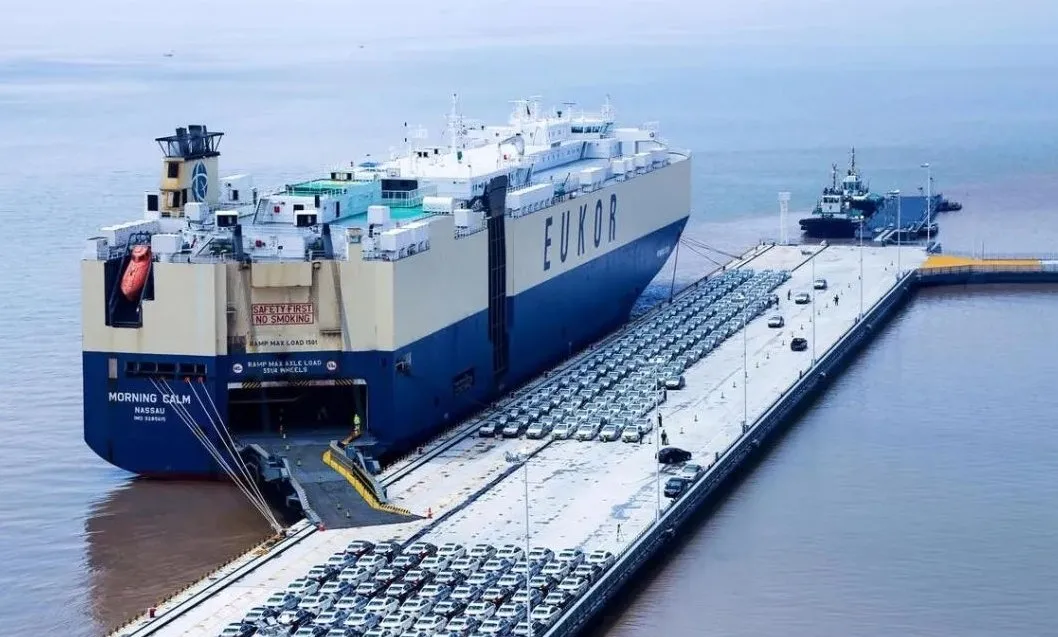
The Zarqa Free Zone EV trade has grown fast — Chinese NEV deliveries rose from a few thousand units to tens of thousands within a few years. Choose ro-ro versus container based on route and battery compliance, and prepare the battery documentation and HS classification early.
Machinery and Spare Parts
Heavy machinery may exceed container dimensions, calling for an OOG or breakbulk solution. Confirm lift points, weight distribution and any lifting certificates before booking.
Our Industry Insights: categories that look similar on an invoice behave very differently in a container. Batteries and solar panels trigger dangerous-goods and OOG rules; furniture triggers IPPC; electronics trigger JSMO. Asking about the cargo type at quotation — not at booking — is what keeps a shipment off the problem list.
Best Freight Forwarder for Shenzhen to Jordan Shipments
In short: The right forwarder has direct carrier contracts on the Shenzhen–Middle East lane, knows your terminal, files your ASYCUDA entry and itemizes every charge. Ask seven questions before you commit. The guidance below applies to any freight forwarder in Shenzhen, China, not just this lane.
The Seven Questions to Ask Any Forwarder on This Lane
- Do you hold direct carrier contracts on the Shenzhen–Middle East lane?
- Which Shenzhen terminal and cut-off applies to my booking?
- Is the quote port-to-port or door-to-door?
- What free time is included at Aqaba?
- Who files the ASYCUDA declaration and handles JSMO compliance?
- Is 16% GST and duty included, or billed on arrival?
- What is your contingency if the Red Sea is disrupted again?
Red Flags in a Shenzhen → Jordan Quote
An LCL rate with no destination charges; a “DDP all-in” with no duty/GST scope defined; a transit time with no routing assumption; free time that turns out to be zero; and a rate that changes after booking. For a vendor-neutral checklist, read our guide on how to choose the right freight forwarder.
Why Dantful International Logistics
Dantful International Logistics was founded in 2008 and is headquartered in Shenzhen, the natural load port for Guangdong cargo. We are a Class-A licensed forwarder with NVOCC certification and FMC / Jctrans membership, serving a network of trusted agents across 200 countries. On the Shenzhen → Jordan lane specifically:
- Direct contracts with shipping lines and airlines secure competitive rates and space, even when peak-season capacity tightens.
- Deep origin coverage across the Pearl River Delta — Yantian and Shekou included — with export clearance, consolidation and warehousing handled in-house.
- Full-service coverage: sea freight, air freight, door-to-door, Amazon FBA forwarding, customs clearance and cargo insurance.
- A dedicated account manager, 50 operations staff and a 50+ customer-service team, 24/7 support, and a real-time tracking platform with daily milestone updates and photos from China pickup to final delivery in Jordan.
- Honest, itemized quotes with no hidden fees — indicative ranges published, live quotes on request.
Mini Case Scenario
A Guangdong furniture importer delivering to Amman was quoted on a generic “China to Jordan” rate that ignored terminal choice and free time. By loading a 40HQ out of Yantian on a direct carrier contract, pre-negotiating Aqaba free time, and pre-filing ASYCUDA and IPPC documents, the shipment cleared within free time — removing port-storage surprises and cutting landed cost by roughly a fifth against the original quote.
Request a Live Quote
Rates on this lane move with the market, fuel surcharges and peak season, so the figures in this guide are indicative only. Send us your volume, weight, HS code, supplier location and delivery address, and we will return a live, itemized Shenzhen → Jordan quotation.
FAQs
What is the cheapest way to ship from Shenzhen to Jordan?
Ocean FCL — roughly USD 1,800–3,200 per 20-foot container port-to-port. Above about 15 CBM it is almost always cheaper per unit than LCL; below that, LCL wins.
How long does shipping from Shenzhen to Jordan take door to door?
About 30–45 days to Amman: 20–28 days ocean (plus transshipment), 5–7 days for Aqaba discharge and clearance, and 1–2 days inland. Add a buffer during Red Sea disruption.
How much does it cost to ship a 20ft or 40ft container from Shenzhen to Aqaba?
Indicatively, a 20GP USD 1,800–3,200 and a 40GP USD 3,100–4,900, 40HQ USD 3,300–5,000, port-to-port, plus surcharges, destination charges, duty and 16% GST.
How much is Jordan import duty and the 16% GST on goods from China?
Duty varies by HS code, from 0% to 30%+, and GST is 16% on (CIF + duty). At a 10% duty band, border charges total about 27.6% of CIF value.
Can I ship DDP from Shenzhen to Jordan with duty and tax included?
Yes. DDP covers duty, 16% GST and delivery to your door — the simplest option for SMEs and first shipments.
Can you ship electronics, furniture, solar panels or EVs from Shenzhen to Jordan?
Yes. We handle JSMO compliance, IPPC fumigation, dangerous-goods and OOG requirements according to the cargo category.

Young Chiu is a seasoned logistics expert with over 15 years of experience in international freight forwarding and supply chain management. As CEO of Dantful International Logistics, Young is dedicated to providing valuable insights and practical advice to businesses navigating the complexities of global shipping.