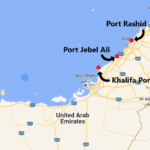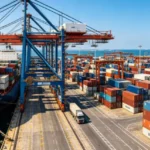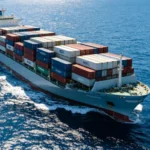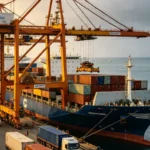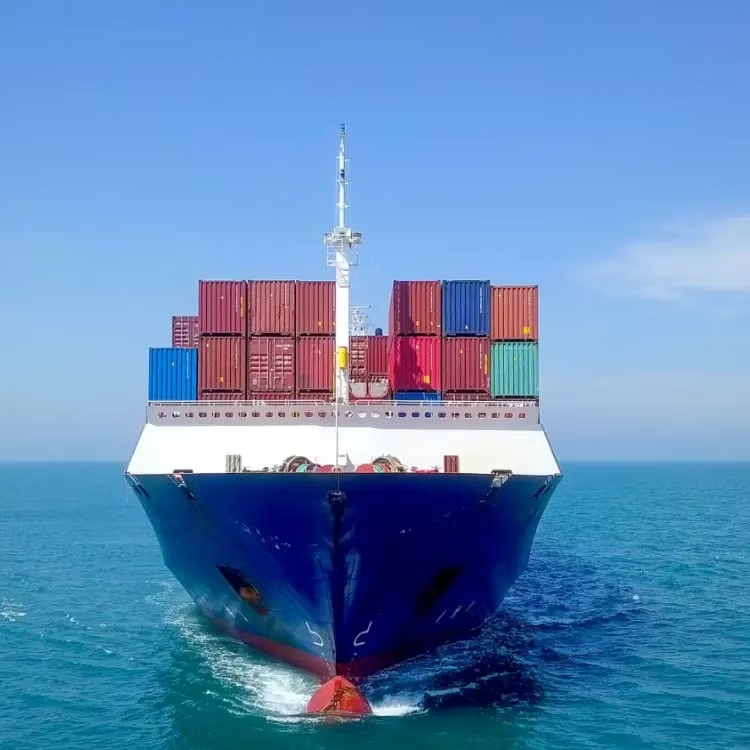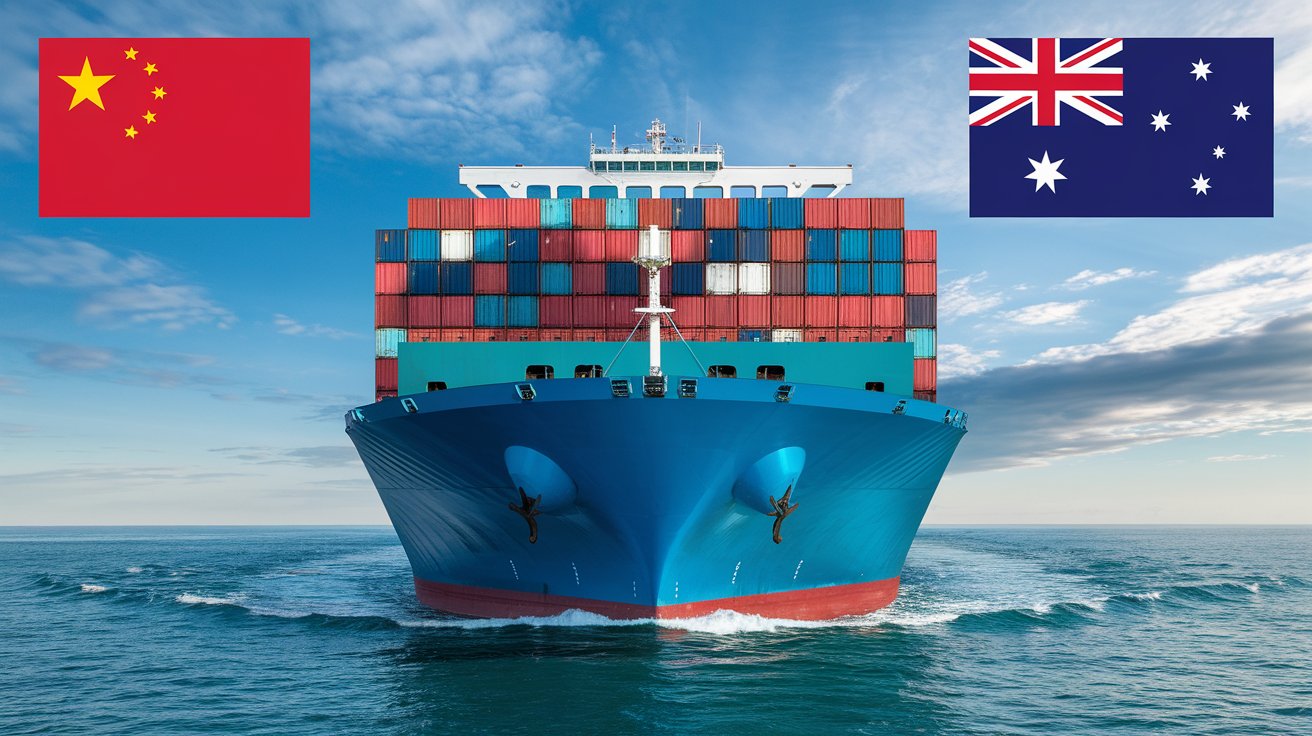
Understanding the costs associated with shipping a container from China to the UAE is crucial for any business involved in international trade. Every week, hundreds of containers leave Chinese ports for Jebel Ali, Khalifa Port, and Sharjah, and the freight market on this lane stays dynamic year-round — influenced by seasonal demand, fuel prices, carrier capacity, and, at times, Middle East routing risks.
As a Shenzhen-based freight forwarder that books FCL space on the China–UAE lane daily, our best advice is simple: stop thinking about “the price of a container” as a single number. A useful quote is broken down into ocean freight, origin local charges, destination charges, and optional services. That structure is what lets you compare quotes apples-to-apples, avoid surprise fees, plan inventory with confidence, and pick the right Incoterms for your supply chain.
All rates in this guide are indicative port-to-port benchmarks for 2026. Freight rates are volatile and typically hold for only 2–3 weeks, so treat them as a budgeting baseline — then confirm a live, itemized quote before booking.
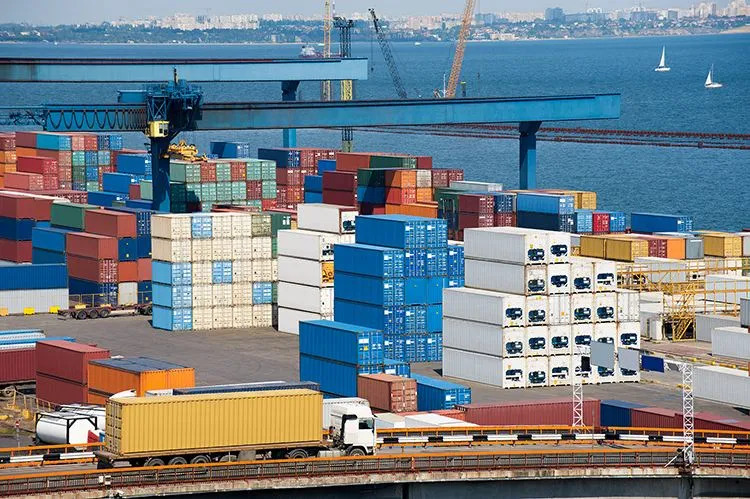
Overview of China to UAE Trade Relations
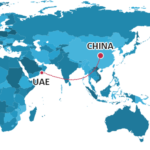
China has been the UAE’s largest trading partner for years, and that relationship keeps getting deeper. In 2025, bilateral trade between the two countries exceeded US$105 billion, with the UAE importing tens of billions of dollars of Chinese electronics, machinery, textiles, furniture, and building materials (source: China’s General Administration of Customs).
The UAE is more than a destination — it is the gateway to the wider GCC, Middle East, and Africa. Goods landed at Jebel Ali can be re-exported across the Gulf by road or feeder vessel, which is why so many Chinese exporters and global brands route regional distribution through Dubai.
For shippers, the practical result is a good one: high cargo volumes sustain frequent weekly sailings from every major Chinese port, which keeps FCL rates competitive and gives you more scheduling flexibility. For a full picture of the lane, start with our regional guide to shipping from China to the UAE.
What Is Actually Included in a Container Shipping Cost?
Before comparing 20ft and 40ft prices, you need to know what the number does — and does not — include. A port-to-port container cost is made up of several layers:
| Cost Component | What It Covers | Typical Range (USD) |
|---|---|---|
| Ocean freight (base rate) | The sea leg from a Chinese port to Jebel Ali / Khalifa | 20ft: $1,200–$1,800; 40ft: $1,800–$2,800 |
| BAF / CAF and other carrier surcharges | Bunker adjustment and currency adjustment factors charged by the line | Often included in the all-in ocean rate; otherwise $100–$400 |
| Origin local charges | Export customs declaration, THC (terminal handling), documentation / bill of lading fee, container seal, VGM filing | $200–$450 per container |
| Destination charges | Import handling at the UAE port, delivery order fee, customs clearance at destination (if arranged) | $250–$600 |
| UAE import duty & VAT | 5% customs duty on CIF value (most goods) + 5% VAT; not part of a standard freight quote unless you ship DDP | Depends on cargo value and HS code |
| Optional services | Door pickup in China, packing/loading, cargo insurance, warehousing, last-mile delivery, DDP tax handling | Varies by service |
Key rule for comparing quotes: ask every forwarder for the same scope — port-to-port vs. door-to-door, and whether duties and VAT are included. Comparing a bare ocean line from one company against an all-in DDP price from another is the most common budgeting mistake importers make.
If your shipment includes pickup in China, clearance, tax payment, and delivery to your door in Dubai or Abu Dhabi, you are looking at a door-to-door (DDP) move. For most SMEs without a dedicated logistics team, that all-in approach is the easiest way to control total cost — we explain how it works in our guide to DDP shipping. For a cargo-level estimate that accounts for your specific weight, volume, and preferred mode — including air and express options for smaller shipments — our guide to how much it costs to ship from China to the UAE walks through the full calculation.
Factors Affecting Container Shipping Costs from China to UAE
The final price you pay for a container is the result of several interacting factors. Understanding them helps you time your shipments and negotiate better.
- Origin port and route. Shanghai, Shenzhen, Ningbo, Guangzhou, and Qingdao all have direct services to the Gulf, but rates and transit times differ by a few days and a few hundred dollars. North China ports (Qingdao, Tianjin) often require a transshipment via Singapore or Malaysia, which adds cost and 2–5 days.
- Container type and equipment. 20ft, 40ft, and 40HC price differently, and equipment shortages during peak season push rates up. Special equipment (reefer, open-top, flat rack) costs significantly more.
- Fuel prices (BAF). Fluctuations in global oil prices directly affect bunker adjustment factors that carriers pass through to shippers.
- Seasonality and demand. Rates climb ahead of Chinese New Year, during Q3–Q4 retail build-up, and around Ramadan when UAE port and trucking capacity tightens. The Dubai Shopping Festival and Gitex also spike demand for consumer electronics imports.
- Carrier GRI and blank sailings. Lines issue General Rate Increases and sometimes cancel sailings (blank sailings) to support rates, especially on the Asia–Middle East trade. This is why a quote given in Week 1 can be obsolete by Week 4.
- Geopolitical and routing risk. Events in the Red Sea and the Strait of Hormuz periodically add a risk premium to Gulf-bound cargo and force rerouting around the Cape of Good Hope, extending transit times by up to two weeks and lifting rates.
- Incoterms 2020. Whether you buy EXW, FOB, CIF, DAP, or DDP determines which leg of the logistics chain you pay for — and who bears the risk if something goes wrong.
- Port congestion and detention. Delays at origin ports (Shanghai, Ningbo in bad weather) or at Jebel Ali during peak weeks can trigger demurrage and detention charges that have nothing to do with the ocean rate.
Cost of 20ft Container Shipping from China to UAE
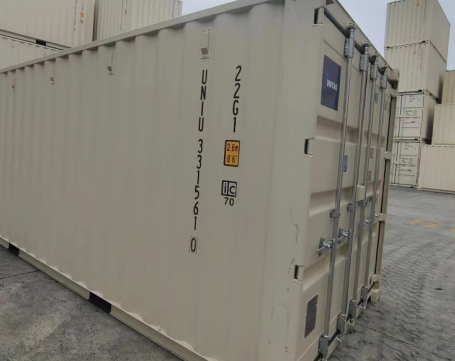
A 20ft container provides roughly 28 CBM of usable space with a payload of about 21–28 metric tons. It is the right choice when your cargo is heavy and dense — think machinery, ceramic tiles, steel products, or building materials — because you will hit the weight limit before you fill the box.
The typical port-to-port ocean rate for a 20ft container from China to the UAE is $1,200–$1,800 USD, depending on your origin port, carrier, and season. As a rule, South and East China gateways quote at the lower end; Qingdao and other northern ports sit at the higher end.
| Departure Port | 20ft FCL Rate (USD) | Notes |
|---|---|---|
| Shanghai | $1,050–$1,650 | High-frequency direct services |
| Ningbo | $1,100–$1,700 | Major China–UAE lane, stable pricing |
| Shenzhen (Shekou/Yantian) | $1,120–$1,730 | Electronics and general cargo hub |
| Guangzhou (Nansha) | $1,080–$1,690 | Strong LCL and FCL volume |
| Qingdao | $1,180–$1,800 | May transship via Singapore |
| Hong Kong | $1,040–$1,630 | Fast connections, premium terminal |
These are indicative 2026 benchmarks for port-to-port moves to Dubai / Jebel Ali or Abu Dhabi. During market spikes — such as post-holiday rushes or geopolitical disruptions — spot 20GP quotes can exceed $3,000. Budget with the range, and lock a live quote 2–3 weeks before your planned sailing.
Cost of 40ft Container Shipping from China to UAE
A 40ft container (about 60–65 CBM usable) and its taller sibling the 40ft high cube (40HC, about 76 CBM total / 68 CBM usable) cost only 30–50% more than a 20ft — while giving you more than double the space. For voluminous but lighter cargo, that makes 40ft the value champion.
The typical port-to-port rate for a 40ft container from China to the UAE is $1,800–$2,800 USD. In practice, carriers usually quote the same rate for a 40GP and a 40HC on this lane.
| Departure Port | 40ft / 40HC FCL Rate (USD) | Notes |
|---|---|---|
| Shanghai | $1,650–$2,500 | Most frequent direct sailings |
| Ningbo | $1,750–$2,600 | Stable pricing on this lane |
| Shenzhen (Shekou/Yantian) | $1,780–$2,650 | Strong carrier competition |
| Guangzhou (Nansha) | $1,670–$2,580 | Frequent weekly departures |
| Qingdao | $1,870–$2,760 | Longer transit, slightly higher rate |
| Hong Kong | $1,630–$2,400 | Efficient, competitive option |
Best for: furniture, electronics, clothing, home appliances, toys, and multi-product shipments where volume — not weight — is the constraint.
Comparison: 20ft vs 40ft Container Costs
The economics are simple: a 40ft container holds more than twice the volume of a 20ft, yet the shipping cost is usually only 30–50% higher. As your volume grows, the cost per cubic meter drops sharply.
| Container Type | Usable Volume | Typical Rate (USD) | Cost per CBM |
|---|---|---|---|
| 20ft FCL | ~28 CBM | $1,200–$1,800 | ~$50–$65 |
| 40ft FCL | ~60–65 CBM | $1,800–$2,800 | ~$32–$42 |
Worked example: at the mid-point of each range, a 20ft costs about $1,500 (~$54/CBM), while a 40ft costs about $2,300 (~$37/CBM) — a saving of roughly 30% per cubic meter. If your shipment fills 28 CBM today and you expect to keep growing, going straight to a 40ft can cut your unit shipping cost immediately, even before the box is full.
The decision rule for most importers:
- Heavy, dense cargo (machinery, tiles, hardware, liquids in drums): use a 20ft — you will be weight-limited anyway.
- Voluminous, light cargo (furniture, apparel, electronics, plastic goods): use a 40ft or 40HC to minimize cost per unit.
- Smaller volumes (under ~15 CBM): FCL may not make sense at all — compare with LCL shipping from China to the UAE and our explainer on what LCL and FCL mean in shipping before you commit to a full container.
Door-to-Door vs. Port-to-Port: Which Scope Should You Quote?
Two shippers moving the same goods can receive wildly different “container prices” simply because they asked for different service scopes:
- Port-to-port (e.g., FOB or CIF): you pay ocean freight, and your consignee in the UAE arranges clearance, pays duty and VAT, and handles inland delivery. This usually looks cheapest on paper.
- Door-to-door (DAP or DDP): Dantful picks up from your supplier in China, clears export, ships the container, clears import at Jebel Ali, pays duty and VAT (under DDP), and delivers to your warehouse. One fixed price, no hidden work for you.
For first-time importers and SMEs without a UAE-registered import entity, DDP removes the two hardest problems: UAE customs registration and tax filing. Most of our UAE-bound FCL customers choose door-to-door precisely because the delivered cost per unit is fully known before they commit inventory.
As a rough budgeting heuristic, an all-in door-to-door DDP move (including duty and VAT on general cargo) typically lands at roughly 1.6–2.0× the ocean freight line. The exact multiple depends on your cargo value and HS code.
One honest caveat: DDP is not automatically the best scope for every importer. If you already hold a UAE trade license and work with your own customs broker or freight agent in Dubai, a port-to-port FOB or DAP booking can give you tighter control over destination costs. Tell your forwarder how your import entity is set up — the right partner will quote the scope that genuinely fits your operation, not simply the one with the highest service margin.
UAE Import Duty, VAT, and Free Zone Considerations
UAE customs is comparatively simple, but the taxes are real and they are not part of a standard freight quote. Plan for them:
- Customs duty: a flat 5% on the CIF value applies to most goods under the GCC Common External Tariff. Some categories — such as most electronics and food staples — are 0%, while alcohol, tobacco, and certain luxury goods attract much higher rates.
- VAT: the UAE charges 5% VAT on the duty-inclusive value of imported goods.
- Free zones: if your consignee is a free zone company (Jebel Ali Free Zone / JAFZA, DMCC, KIZAD), goods can be cleared into the zone with duty and VAT deferred or avoided until they enter the UAE mainland — an important advantage if you plan to re-export to Saudi Arabia, Qatar, Oman, or Africa.
Example for a $30,000 CIF container of general cargo at 5% duty:
| Item | Calculation | Amount |
|---|---|---|
| Customs duty (5% of CIF) | $30,000 × 5% | $1,500 |
| VAT base (CIF + duty) | $30,000 + $1,500 | $31,500 |
| VAT (5%) | $31,500 × 5% | $1,575 |
| Total import taxes | $3,075 |
Your actual figure depends on the product’s HS code — which is why your forwarder should review your commodity list before quoting a DDP price. If your cargo needs product-specific approvals (ESMA for electronics and building materials, MOHAP for cosmetics and food, TRA for telecom devices), factor in lead time for certification before your container sails.
How Long Is Container Shipping from China to UAE?
Transit time matters almost as much as price when you are planning stock. Port-to-port sailing times from China to the UAE’s main gateways are typically:
| Destination | Typical Transit (Days) | Notes |
|---|---|---|
| Jebel Ali (Dubai) | 15–22 | Direct services from Shanghai, Ningbo, Shenzhen, Guangzhou |
| Khalifa Port (Abu Dhabi) | 18–25 | Some services call Jebel Ali first |
| Sharjah | 20–28 | Often transshipped via Jebel Ali or Singapore |
From South China (Shenzhen, Guangzhou), direct sailings to Jebel Ali can arrive in as little as 13–16 days; from Qingdao or Tianjin, expect 22–27 days when a Singapore transshipment is involved.
Remember that port-to-port transit is only the sailing leg. Add roughly 1–3 days for import clearance at Jebel Ali and 1–2 days for trucking to your warehouse in Dubai or the Northern Emirates. And if you ship during Ramadan, when customs offices operate reduced hours and trucking capacity tightens, add a 3–5 day buffer.
When to Book: Seasonality and Timing Tips
Because FCL rates on this lane swing with the calendar, timing is a real cost lever:
- Plan around Ramadan and Eid. Government offices and customs run reduced hours; truck availability drops. Book ocean freight 3–4 weeks before Ramadan and expect clearance to slow during Eid breaks.
- Avoid the post-Chinese-New-Year rush. Factories in China close for 1–2 weeks around late January to mid-February; when they reopen, vessel space is scarce and rates rise. Book the moment your goods are ready.
- Expect Q3–Q4 firmness. Retail build-up for the Dubai Shopping Festival and global year-end demand tightens capacity from roughly September onward.
- Lock rates with validity. Always ask for a quote with a stated validity window (2–3 weeks). It protects you if the market moves before your cargo is ready.
An insider note from our daily booking desk: on this lane, a single blank-sailing announcement or GRI has moved spot quotes by several hundred dollars within a week. When your cargo is ready, the cheapest rate is the one you lock down with a validity date — waiting for a “better” number usually costs more than booking early.
Step-by-Step Shipping Process
Here is how an FCL move from China to the UAE actually runs, and where each cost is incurred:
- Booking. Confirm vessel space with your forwarder 1–2 weeks in advance. Provide cargo details (HS code, weight, volume, port pair) so the quote matches the shipment. The ocean freight and surcharges are locked at this stage.
- Pickup & loading. Your forwarder arranges an empty container at the factory or loads your consolidated cargo at a warehouse (origin handling and trucking charges apply if you are not shipping from the factory’s local port).
- Export customs. The container is cleared at the Chinese port of departure using the commercial invoice, packing list, and customs declaration. Origin local charges apply here.
- Ocean transit. The main sea leg — typically 15–25 days depending on origin port and whether the service is direct.
- Import clearance. The consignee (or your forwarder, under DDP) files the import declaration with Dubai Customs or Abu Dhabi Customs, pays duty and 5% VAT, and takes delivery of the container. Destination charges and taxes apply here.
- Final delivery. The container is trucked to your warehouse in Dubai, Abu Dhabi, Sharjah, or another emirate — or stripped at a free zone warehouse if you use JAFZA storage.
Throughout the move, a good forwarder gives you daily position updates so you know exactly when the vessel sails, when it arrives, and when your goods will clear.
How to Get an Accurate Quote
Use this checklist every time you request a price for a container from China to the UAE:
- Specify Incoterms (FOB, CIF, DAP, or DDP) so everyone quotes the same scope.
- Give accurate weight and volume — underestimating volume triggers heavy adjustment fees.
- Confirm the quote is all-in or ask for every line itemized: ocean rate, BAF, origin THC, documentation, destination handling.
- Ask what is excluded — typically UAE duty and VAT unless you ship DDP.
- Check free time at destination and the daily demurrage/detention rate at Jebel Ali, so a clearance delay does not become a surprise bill.
- Request the quote’s validity period and re-confirm before sailing.
- Compare like-for-like: three port-to-port quotes, or three door-to-door quotes — never a mix.
Why Ship with Dantful International Logistics
Partnering with a professional forwarder turns a chaotic cost exercise into a managed process. As a Class-A licensed freight forwarder (China Ministry of Commerce), an NVOCC-certified operator (China Ministry of Transport), and a member of the FMC and Jctrans, Dantful has moved thousands of containers on the China–UAE lane since 2008. Because we contract directly with the major shipping lines, we see carrier GRI announcements and capacity changes in real time — and we pass that visibility to you through ocean freight quotes that are itemized and current.
One accountable team manages your entire move:
- Customs Clearance in both China and the UAE — including free zone entries into JAFZA, DMCC, or KIZAD.
- Warehouse Services for consolidation, stripping, and short-term storage at destination.
- Cargo Insurance to protect your investment against loss or damage at sea.
- DDP delivery that bundles ocean freight, clearance, duty, VAT, and last-mile trucking into one fixed landed price.
- Daily tracking updates with photos, and a 24/7 support team covering a network that spans 200 countries — so whether your container is held by a typhoon in Ningbo or a trucking delay in Dubai, you hear it from us first.
For the complete service overview, see our dedicated freight forwarder from China to the UAE page.
FAQs
1. How much does it cost to ship a 20ft container from China to the UAE?
Port-to-port, a 20ft container typically costs $1,200–$1,800 USD depending on the origin Chinese port, carrier, and season. Add roughly $200–$450 of origin local charges and $250–$600 of destination charges — plus UAE import duty and 5% VAT — unless you book a door-to-door DDP service that bundles everything.
2. How much does it cost to ship a 40ft container from China to the UAE?
Port-to-port rates for a 40ft or 40HC container run $1,800–$2,800 USD. Carriers usually price a 40GP and 40HC the same on the Gulf lane.
3. Which is cheaper: 20ft or 40ft containers from China to UAE?
Per cubic meter, the 40ft is roughly 30% cheaper than the 20ft (about $37/CBM vs. $54/CBM at typical mid-range rates). Use a 20ft only when your cargo is heavy enough to hit the weight limit before filling the volume.
4. How long does container shipping from China to the UAE take?
Direct sailings from Shanghai, Shenzhen, Ningbo, or Guangzhou reach Jebel Ali in about 15–22 days; Abu Dhabi’s Khalifa Port takes roughly 18–25 days, and Sharjah 20–28 days. Add 1–3 days for import clearance and 1–2 days for inland delivery.
5. What documents do I need to import a container into the UAE?
You will need a commercial invoice, packing list, bill of lading, and certificate of origin. Regulated products (electronics, cosmetics, food, telecom devices) may additionally require an import license plus ESMA, MOHAP, or TRA approvals.
6. Do I pay customs duty and VAT on containers shipped from China to the UAE?
Yes, unless your cargo clears into a free zone. Most goods attract 5% customs duty on the CIF value, plus 5% VAT on the duty-inclusive value. A DDP service such as Dantful’s handles both for you and gives you one fixed delivered price.
7. Should I ship FCL or LCL from China to the UAE?
If your cargo exceeds roughly 15 CBM, an FCL container is usually cheaper and safer than LCL. Below that, LCL lets you pay only for the space you use — the comparison section above shows the break-even math.

Young Chiu is a seasoned logistics expert with over 15 years of experience in international freight forwarding and supply chain management. As CEO of Dantful International Logistics, Young is dedicated to providing valuable insights and practical advice to businesses navigating the complexities of global shipping.