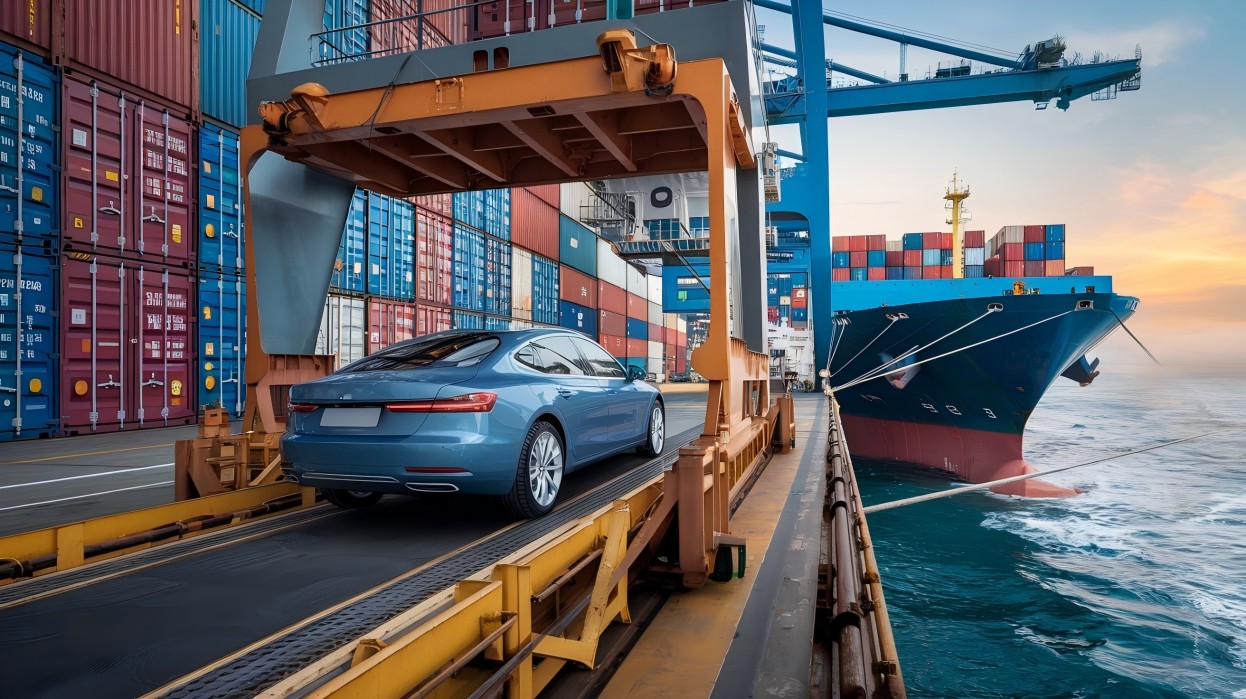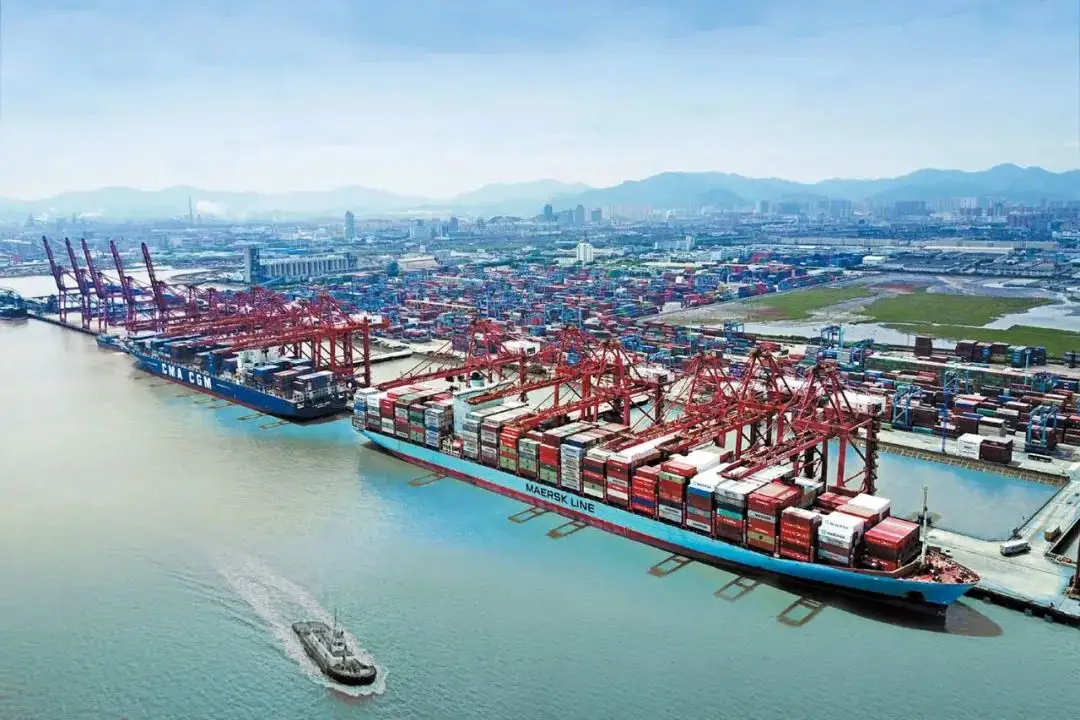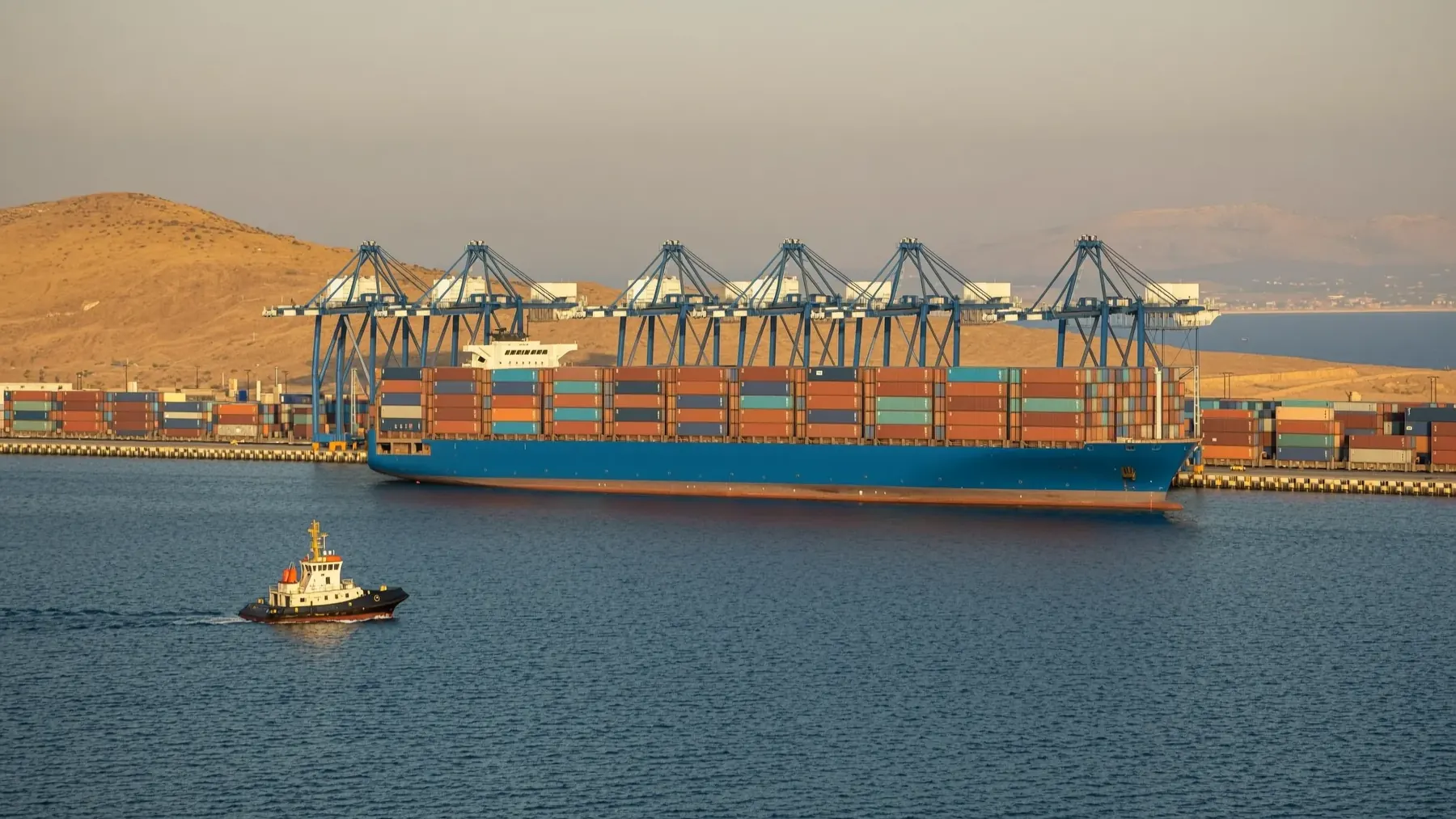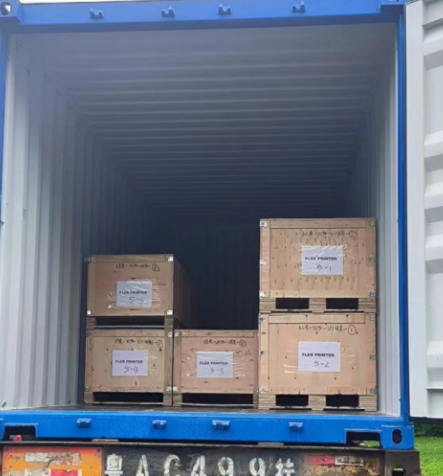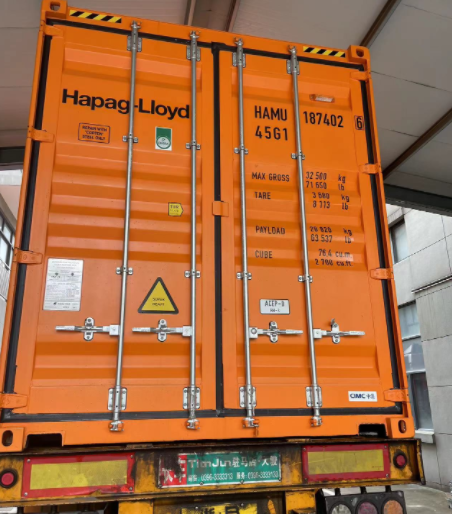
FOB (Free On Board) is an Incoterms® 2020 rule for sea and inland-waterway freight under which a Chinese seller delivers the goods as soon as they are loaded on board the vessel you nominate at the named port of loading — at that moment the goods become your risk and your cost. It suits importers who already use a freight forwarder, because you take control of the ocean leg and the insurance yourself. This guide — published by Dantful International Logistics, a Class-A forwarder in Shenzhen that has arranged FOB shipments from China since 2008 — explains what an FOB price really includes, how FOB compares with EXW, CIF and DDP, and how to negotiate it so there are no loose ends when the vessel sails.
The split is clean: your supplier is responsible up to the moment the goods are loaded on board the vessel, and you are responsible from that moment on. That is why FOB is one of the most requested terms in China export trade — and why every “extra” in a quote comes down to one question: was it itemized in writing before you signed? This guide gives you the checklist.

What Is FOB (Free On Board)?
Free On Board (FOB) is one of the 11 Incoterms® 2020 rules published by the International Chamber of Commerce (ICC). It belongs to the four rules written for sea and inland waterway transport only (FAS, FOB, CFR, CIF). Under FOB, the seller fulfils its delivery obligation when the goods are placed on board the vessel nominated by the buyer at the named port of shipment. From that point, risk and cost pass to the buyer.
Two details matter when you import from China, because most published guides still get them wrong:
- Risk transfers when the goods are on board the vessel — the definition that has applied since Incoterms 2010 and continues in Incoterms 2020. A supplier that quotes the older pre-2010 benchmark wording is working from an outdated handbook.
- Always name the port — and the rule year. The correct term is “FOB Shanghai, Incoterms 2020” or “FOB Ningbo-Zhoushan, Incoterms 2020” — never just “FOB China.” Without a named port, you have not defined where the seller’s responsibility ends or where your ocean freight begins.
Seller vs Buyer Responsibilities Under FOB
| Responsibility | Chinese Supplier (Seller) | Buyer (You) |
|---|---|---|
| Manufacture and pack the goods | ✅ | |
| Inland trucking from the factory to the port of loading | ✅ | |
| Export customs clearance in China | ✅ | |
| Loading the cargo onto the vessel at the named port | ✅ | |
| Ocean freight from the Chinese port to the destination | ✅ | |
| Cargo insurance (optional under FOB, strongly recommended) | ✅ | |
| Discharge and terminal handling at destination (THC) | ✅ | |
| Import customs clearance, duty and VAT in your country | ✅ | |
| Delivery from the destination port to your warehouse | ✅ |
Because the supplier only carries the cargo as far as the vessel, the FOB price you negotiate in China is structurally lower than a door-to-door price — and that is why it is popular with experienced importers, who then pay the ocean leg, insurance and destination costs themselves with control over each line.
What Does an FOB Price from China Actually Include?
A common misunderstanding is that the FOB price covers “getting the goods to you.” It does not. The FOB price a Chinese supplier quotes includes production cost plus everything needed to place the goods on board the vessel at the named Chinese port; everything after that is your cost.
What Is (and Is Not) Inside an FOB Price from China
| The FOB price typically covers | Not included — you arrange and pay for these |
|---|---|
| Product cost and factory packing | Ocean freight and bunker surcharges |
| Inland trucking from the factory to the port | Cargo insurance (FOB never includes insurance) |
| Export customs clearance and export charges in China | Destination THC, port and handling charges |
| Loading the goods on board the vessel | Import customs clearance, duty and VAT in your country |
| Port local charges at origin up to loading | Inland delivery from the destination port |
The clearest way to read a Chinese FOB quote is to ask the supplier to split the price into these components: product + inland trucking to port + export customs + origin port/loading charges. Most suppliers can produce this breakdown on request — and seeing it written down is the fastest way to compare two factories on equal terms.
A Worked Example: $10,000 FOB Shanghai to Landed Cost
To show what FOB really costs you, here is a representative arithmetic for a consignment quoted $10,000 FOB Shanghai (illustrative ocean leg to a European or North American gateway):
| Line item | Who pays | Example amount |
|---|---|---|
| FOB value (product + inland to Shanghai + export customs + loading) | Paid to supplier | $10,000 |
| Ocean freight (you book through your forwarder) | Buyer | ~$2,000 |
| Cargo insurance, ICC-A clauses | Buyer | ~$50–150 |
| Subtotal to the destination port | ~$12,050–12,150 | |
| Destination THC, import clearance and inland trucking | Buyer | ~$500–1,200 (varies by country) |
| Import duty and VAT | Buyer | Depends on HS code and country |
The takeaway: a $10,000 FOB quote is not a $10,000 total. Budget roughly 1.2–1.4× the FOB value once you add the ocean leg, insurance and destination charges, plus duty and VAT on top — and keep your own itemized list so every line is accounted for. The ocean leg is where you have the most leverage, so compare rates through your ocean freight forwarder rather than letting anyone book it unseen.
Shipping FOB to the United States? The mechanics are identical to the example above, but the filing and costing details differ — see how the whole US lane runs in our guide to FOB shipping from China to US, and how the US-lane price is built in what is FOB price from China to USA.
FOB vs EXW vs CIF vs DDP: Which Should You Use from China?
Most importers first meet Incoterms through the three-way comparison of EXW, FOB and CIF — and most guides stop there. DDP belongs in the same decision because it answers the opposite question: “I want the freight forwarder to handle everything.” Here is the full set on one table.
| Term | Seller handles | You handle | Risk transfers to you | Where extra charges can land |
|---|---|---|---|---|
| EXW | Goods made available at the factory gate | Pickup, export, ocean, insurance, import, delivery | At the factory | Highest — you even arrange Chinese export clearance |
| FOB | Inland to port, export clearance, loading on board | Ocean, insurance, import clearance, delivery | When goods are on board the vessel | Low — you control each cost line |
| CIF | Inland, export, ocean freight and minimum insurance to destination port | Import clearance, delivery, top-up insurance | On board the vessel | Medium — freight and insurance are bundled into the seller’s price |
| DDP | Everything through to your door, duty and VAT included | Little or nothing | Only at your door | Lowest — one all-in price, but you pay for that convenience |
Quick Selector: Which Term Fits Your Situation?
| Your situation | Recommended term | Why |
|---|---|---|
| First order, small value, no in-house logistics team | DDP | One price, one point of contact, no customs admin |
| You have a forwarder and want cost control on every line | FOB | You book the ocean freight and insurance yourself |
| The factory only quotes “factory gate” prices | EXW — use with care | You take on Chinese export clearance, which is rarely a good deal for a first-time buyer |
| Amazon FBA or e-commerce seller shipping full pallets | DDP | Predictable all-in landed cost before you list the product |
| A supplier pushes CIF because “it’s easier for you” | FOB (or CIF, consciously) | If you choose CIF, know the freight and insurance are inside the price |
If you want a forwarder to run the whole chain on DDP terms, Dantful’s Door to Door Shipping service is built for exactly that. For the educational difference between DDP and the other terms, our guide to ddp walks through when delivered-duty-paid beats FOB — and when it does not.
Why Most Importers Choose FOB Over CIF from China
CIF (Cost, Insurance and Freight) is the traditional alternative: the supplier arranges the ocean carriage and a minimum level of insurance to the named destination port, and builds both into the price. It sounds convenient, and for a small first order it can be. But three practical reasons explain why importers who ship from China regularly move to FOB:
- Control of the ocean leg. Under CIF the supplier’s freight agent books the vessel. You pay a freight component you cannot see itemized, and you cannot shop that leg against other carriers. Under FOB you choose the forwarder, compare rates and know exactly what the ocean freight costs.
- Insurance is genuinely yours to set. CIF requires the seller to insure only to the ICC minimum (approximately Institute Cargo Clauses C), which covers limited perils. Most cargo needs at least ICC-A (all-risk-type) cover. Under FOB, you buy the insurance yourself, set the insured value, and are not relying on a policy taken out by someone else.
- Destination handling is your line item. Under FOB you book the forwarder who also handles the destination leg, so THC, clearance and inland delivery appear on one transparent invoice you control.
None of this means CIF is a bad term. It is a reasonable choice for a low-value first shipment, a single LCL carton, or a buyer who has no forwarder yet. The balanced rule we give every client: use FOB when you want to manage the cost lines yourself, CIF when you prefer a bundled price, and DDP when you want the whole process outsourced. The wrong choice is not CIF — it is picking a term without knowing which costs it puts on you.
Your Responsibilities Under FOB, Step by Step
Once the cargo is on board, the shipment is yours to manage. Here is the sequence a forwarder walks an FOB importer through, and where each document belongs.
The Buyer’s Seven Steps Under FOB
- Book your ocean freight through a forwarder before the factory finishes production, and send the supplier the vessel name, cut-off and port. This is the single most important FOB step — many first shipments slip because booking happens after the cargo is ready.
- Confirm export documents with the supplier — commercial invoice, packing list and, where applicable, the certificate of origin and any China export-required documents.
- Buy cargo insurance once you know the value and vessel (ICC-A clauses recommended).
- Confirm loading and receive the on-board status. Your forwarder confirms the cargo is on board and issues/arranges the bill of lading.
- Arrange import customs clearance at destination with your broker or forwarder — this is your obligation under FOB, so confirm who files and who pays duty/VAT in your country.
- Track the vessel during transit using the bill of lading number.
- Clear the container and truck it inland, returning the empty container within the free-time window to avoid demurrage and detention.
Documents You Need for an FOB Shipment from China
| Document | Provided by | Why you need it |
|---|---|---|
| Commercial invoice | Supplier | Customs value and product description |
| Packing list | Supplier | Weight, carton count and marks for customs and the carrier |
| Bill of Lading (B/L) | Carrier via your forwarder | Evidence of shipment; needed to take delivery at destination |
| Certificate of Origin (where applicable) | Supplier / Chamber of Commerce | Claiming preferential duty rates in some countries |
| Export customs declaration (proof of export) | Supplier / forwarder | Confirms the cargo legally left China; useful for duty reclaims |
| Import declaration and HS code | You / your broker | Determines duty and VAT at destination |
| ISF / advance cargo filing (USA) | Your forwarder | US importers must file before the vessel loads |
Import clearance is your side of the deal under FOB, so route it through an experienced Customs Clearance desk rather than treating it as an afterthought — and pick your how to choose the right freight forwarder by asking how they handle both the export and import ends of the same shipment.
Negotiating FOB with Chinese Suppliers: Practical Tips
This is where an actual freight forwarder’s experience differs from a generic Incoterms explainer. Here is what to put on the table when you negotiate FOB in China.
1. Name the port, not the country. Ask for “FOB Ningbo-Zhoushan” or “FOB Shenzhen (Yantian), Incoterms 2020” — not “FOB China.” An inland factory may add a different inland trucking cost to each port, and naming the port fixes that line before you compare quotes.
2. Book your forwarder before you sign the sales contract. The vessel, cut-off and port need to be known before the supplier commits to a loading date. When you book through your own forwarder first, the FOB contract simply states “delivery on board [vessel] at [port], Incoterms 2020” and both sides know the schedule.
3. Ask for the FOB price broken into components. Request a line that separates product cost, inland trucking to port, export customs and port/loading charges. A supplier that itemizes is straightforward to work with; a supplier that quotes one opaque lump sum leaves you unable to verify the inland and port portion. Get the breakdown in writing and attach it to the contract.
4. Most Chinese suppliers will accept FOB. In our daily sourcing and forwarding work — and consistent with what multiple forwarder guides report — the majority of Chinese suppliers quote EXW or FOB and will agree to FOB when asked, because export clearance is routine for them. If a supplier insists the only option is for you to arrange everything from the factory, that is a signal to compare their price carefully rather than a signal to accept EXW.
5. Confirm free time and demurrage/detention in writing. Your FOB contract and forwarder booking should state how many free days you get at the destination (typically 5–7 for the container and chassis), and what per-day demurrage/detention costs after that. These are normal, predictable charges — the way to keep them at zero is to know the window and book the inland leg before the vessel arrives.
6. Keep the proof of export. Ask the supplier or their customs broker to provide the export customs declaration once the cargo is cleared out of China. It confirms the shipment legally left the country and is useful if you need to evidence export for VAT or duty purposes later.
FOB, FCA and Incoterms 2020: Two Corrections Buyers Get Wrong
Two corrections separate an up-to-date FOB guide from a recycled one — both relate to Incoterms 2020 and both affect buyers who import from China.
Correction 1 — For containerised cargo, FCA often transfers risk earlier and more cleanly. FCA (Free Carrier) transfers risk when the seller hands the goods to the carrier nominated by the buyer at a named place — for a container, usually when handed over at the terminal, not when lifted onto the ship. Because the ICC itself notes that FCA can be more practical for containerised goods, some buyers use FCA for full-container shipments. In real China export practice, however, FOB remains the common request, and forwarders handle it smoothly. The practical advice is not to over-think this: if your supplier and forwarder both run FOB day-to-day, FOB works — just make sure the risk definition in your contract follows the Incoterms 2020 on-board wording rather than an older benchmark.
Correction 2 — Air freight does not use FOB. FOB is valid only for sea and inland waterway transport. If you are shipping by air, the correct rules are FCA, CPT or CIP. If a freight quote for an air shipment says “FOB,” the term has been misused and you should ask for the correct air rule.
One more point worth stating plainly: Incoterms govern delivery, risk and cost — not ownership, payment terms or force majeure. Transfer of title, the payment schedule and what happens in an unforeseeable event belong in your sales contract, not the Incoterms rule. Importers who lose money on a “FOB deal” usually lost it on contract terms they assumed FOB covered.
How Dantful Helps You Ship FOB from China
As a licensed freight forwarder in shenzhen china and Class-A NVOCC, Dantful has operated from Shenzhen since 2008, is registered with the FMC and certified by Jctrans, and works through reliable agency partners in over 200 countries. Because we sit on the Chinese side of every FOB shipment we handle, we can do what a destination-country guide cannot: coordinate the export clearance, confirm the on-board loading, and hand you a clean handover at the Chinese port — then carry the ocean leg, insurance, import clearance and inland delivery on the other end.
Practically, that means one team manages the whole FOB chain for you:
- Direct carrier contracts, so your ocean leg is booked at contracted rates rather than a spot markup.
- A dedicated account manager who coordinates with your Chinese supplier on port, cut-off and loading.
- 24/7 customer support from our operations and customer-service teams, plus a tracking system with updates and photos at each milestone so you always know where the cargo is.
- Import-side services — customs clearance, cargo insurance, warehousing and final delivery — through our forwarder network, so the shipment does not stop being managed the moment it leaves China.
If you are arranging an FOB shipment and want a forwarder on the Chinese side who can also carry the destination leg, contact Dantful for a free quote — tell us the port (Shanghai, Shenzhen, Ningbo, Qingdao, Guangzhou or any other), the cargo details and your delivery address, and we will send you an itemized plan.
FAQs
What is the difference between FOB and CIF?
Under FOB the buyer arranges and pays the ocean freight and insurance; under CIF the supplier arranges freight and minimum insurance to the destination port and builds them into the price. FOB gives you control over the ocean leg; CIF gives you a bundled price but less visibility into the freight line.
Does FOB price include insurance?
No. FOB never includes cargo insurance. Insurance is the buyer’s responsibility, and we recommend ICC-A (all-risk-type) cover rather than the minimum clauses used under CIF.
What is the difference between EXW and FOB?
Under EXW the goods are made available at the factory and you arrange everything, including pickup and Chinese export clearance. Under FOB the supplier delivers the goods on board the vessel at the named Chinese port. FOB removes the most difficult task for a foreign buyer — export clearance in China.
Does FOB include destination port charges?
No. Destination THC, import clearance, duty/VAT and inland delivery are all the buyer’s responsibility under FOB. Once you add the ocean leg, insurance and destination charges, budget roughly 1.2–1.4× the FOB value, with duty and VAT on top — the worked example above shows the arithmetic.
Can FOB be used for air freight?
No. FOB applies only to sea and inland-waterway transport. For air freight, use FCA, CPT or CIP.
How do I negotiate FOB with a Chinese factory?
Name the port (for example “FOB Ningbo-Zhoushan, Incoterms 2020”), book your forwarder before signing the contract, ask the supplier to itemize the FOB price into product, inland trucking, export clearance and port charges, and confirm the free-time/demurrage window in writing.
Is DDP more convenient than FOB for importing from China?
Yes, for buyers without an in-house logistics or customs team: DDP gives you one all-in price through to your door, with duty and VAT handled. FOB is the better fit when you already use a forwarder and want to control the cost lines. See our DDP guide for the full comparison.
Who clears customs under FOB?
Your supplier handles export customs clearance in China; import customs clearance, duty and VAT in your country are your responsibility — or your forwarder’s, if you appoint one for the destination leg.
When does risk transfer under FOB in Incoterms 2020?
Risk transfers from the seller to the buyer when the goods are loaded on board the vessel at the named port of shipment — the on-board definition that has applied since Incoterms 2010 and continues in Incoterms 2020.
Will a Chinese supplier agree to FOB terms?
In most cases yes — export clearance is routine for Chinese suppliers, and the majority will quote FOB when asked. Ask for the price itemized and in writing so there are no loose ends after loading.