Shipping goods from Vietnam to the United States is one of the busiest trade lanes in the world, and in 2026 the cost has become harder to predict than ever. Between ocean rates that swing by season, tiered air freight pricing, and new US import duties, importers need current numbers — not last year’s estimates — before they commit to a purchase order.
Quick answer: In 2026, ocean freight from Vietnam to the USA costs roughly $1,400–$2,900 for a 20ft container and $2,300–$4,500 for a 40ft container (West Coast to East Coast). LCL runs about $120–$250 per CBM. Air freight costs $3.80–$11 per kg depending on weight tier, and express couriers charge $15–$35 per kg. The fastest option is air express at 3–7 days; the cheapest for volume is FCL sea freight.
This guide breaks down exactly what drives the cost of shipping from Vietnam to the USA, with 2026 rate tables, transit times, the full list of surcharges, US customs duties, and practical ways to lower your total landed cost.
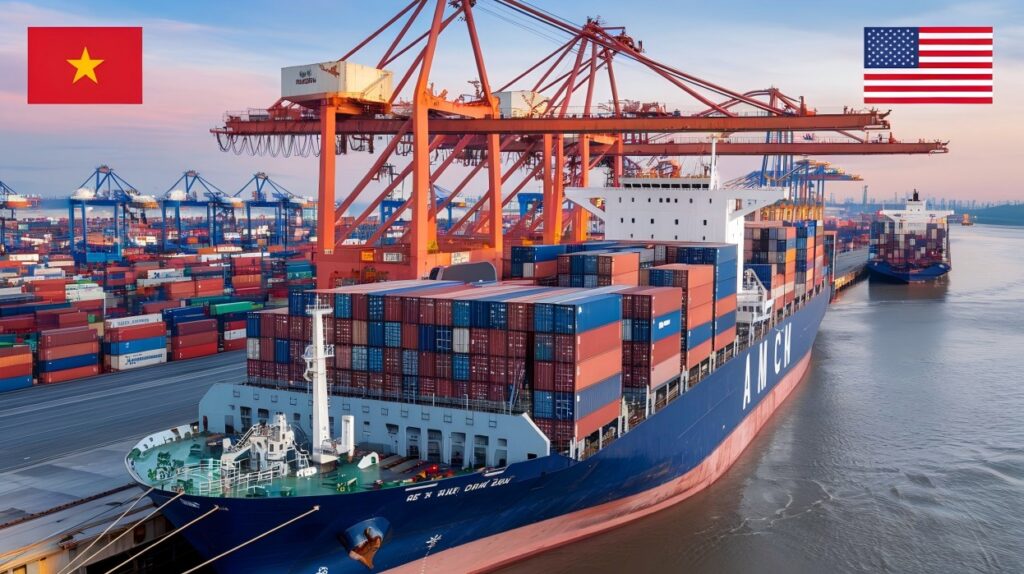
How Much Does It Cost to Ship from Vietnam to the USA in 2026?
The total you pay is not just the ocean or air rate. It is the sum of four layers:
- Freight — the base ocean, air, or courier rate.
- Origin charges — pickup, export customs, terminal handling at the Vietnamese port.
- Destination charges — US terminal handling, customs brokerage, ISF, drayage, and delivery.
- Duties and taxes — US import duty plus any applicable trade measures.
The table below shows a realistic 2026 range for the all-in freight cost (freight plus origin and destination charges, excluding duty) by shipping method. Use it as a budgeting baseline, then request a firm quote for your specific cargo.
| Shipping Method | Typical Cargo | Cost Range (2026) | Transit Time (Door-to-Door) |
|---|---|---|---|
| FCL sea freight (20ft) | 15–28 CBM | $2,000–$4,000 per container | 25–40 days |
| FCL sea freight (40ft) | 30–67 CBM | $3,000–$6,000 per container | 25–40 days |
| LCL sea freight | 1–13 CBM | $150–$300 per CBM | 28–45 days |
| Air freight | 45–500+ kg | $3.80–$11 per kg | 5–10 days |
| Express courier | 0.5–100 kg | $15–$35 per kg | 3–7 days |
If you only want a fast ballpark before getting quotes, this breakdown of how much it costs to ship from Vietnam to the US walks through the same figures by shipment size.
Sea Freight Cost from Vietnam to USA: FCL vs LCL Rates
Ocean freight is how the overwhelming majority of Vietnam–US cargo moves. In 2026, Vietnamese exports to the United States are running above $136 billion a year, so capacity on the trans-Pacific lane is deep — but rates still shift with peak season, fuel, and carrier capacity adjustments.
FCL Rates from Vietnam to Major US Ports
The rates below are port-to-port ocean base rates for Full Container Load (FCL) shipments departing from Ho Chi Minh City (Cat Lai / Cai Mep) or Hai Phong. They exclude origin and destination charges, which are itemized further down.
| US Destination Port | 20ft Container | 40ft Container | Ocean Transit Time |
|---|---|---|---|
| Los Angeles / Long Beach | $1,400–$2,000 | $2,300–$3,200 | 14–18 days |
| Seattle / Tacoma | $1,550–$2,200 | $2,600–$3,500 | 17–22 days |
| Houston | $1,900–$2,700 | $3,000–$4,200 | 26–32 days |
| Savannah | $2,000–$2,800 | $3,200–$4,400 | 28–34 days |
| New York / New Jersey | $2,100–$2,900 | $3,300–$4,500 | 28–35 days |
A few practical notes on reading these numbers:
- West Coast is always cheaper and faster than East Coast or Gulf. Routing through Los Angeles or Seattle shaves roughly 10–17 days off transit compared to New York.
- 40ft high-cube holds about 76 CBM versus 67 CBM for a standard 40ft, and often costs only $50–$150 more — the cheapest way to add volume.
- Rates above are base ocean freight. Add the surcharges in the section below for a realistic all-in figure.
For a deeper dive into container-only pricing, see our guide to container shipping cost from Vietnam to the US.
LCL Rates from Vietnam to the USA
For shipments under roughly 13 CBM, Less than Container Load (LCL) is the practical choice. You pay for the space you use, measured in cubic meters (CBM).
| LCL Cost Component | Typical 2026 Range |
|---|---|
| Ocean freight per CBM | $120–$250 |
| Minimum charge (1 CBM) | ~$130 |
| Origin consolidation / CFS fee | $150–$250 per shipment |
| Destination CFS / handling | $150–$250 per shipment |
| Documentation fee | $50–$100 |
LCL pricing is quoted per CBM at the greater of weight or measure, so dense cargo (machinery parts, tiles) can be charged by weight at a W/M ratio. Expect to add roughly $300–$500 per shipment in fixed origin and destination fees regardless of size.
FCL or LCL? The Break-Even Point
The rule of thumb for Vietnam–USA shipments is simple: once your cargo passes about 13–15 CBM, FCL becomes cheaper than LCL — and it is also faster and less prone to handling damage, because your goods never get consolidated with other shippers’ cargo. Below that, LCL avoids paying for empty container space.
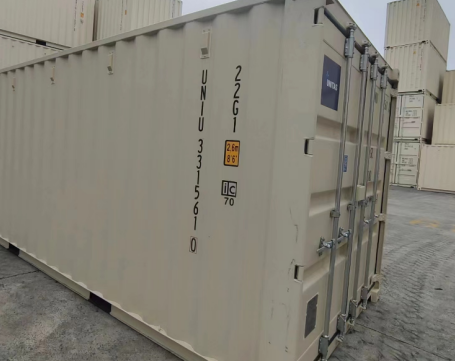
To convert between the two, standard container capacities are:
| Container | Usable Volume | Payload Capacity |
|---|---|---|
| 20ft GP | ~33 CBM | ~28 tons |
| 40ft GP | ~67 CBM | ~26.5 tons |
| 40ft High-Cube | ~76 CBM | ~26.5 tons |
| 45ft High-Cube | ~86 CBM | ~27 tons |
Note the payload limits: a 20ft container takes more weight than a 40ft, so heavy cargo (over ~26 tons) may need two 20ft containers even if it would fit in one 40ft. If you are shipping dense goods, ask a forwarder to check the weight-to-volume ratio before you book. Our sea freight from Vietnam to USA service page covers container selection in more detail.
Air Freight Cost from Vietnam to USA: Per-Kilogram Rates in 2026
Air freight is priced on chargeable weight — the greater of actual weight or volumetric weight. Volumetric weight for air is calculated as (length × width × height in cm) ÷ 6000, so bulky-but-light cargo can cost far more than its scale weight suggests.
Rates are tiered: the more you ship, the lower your per-kg rate. The table below reflects 2026 rates from Ho Chi Minh City (SGN) to Los Angeles (LAX), the most common Vietnam–US air lane.
| Chargeable Weight | Rate per kg | Notes |
|---|---|---|
| Under 45 kg | $7.50–$11.00 | Minimum-rate tier, highest unit cost |
| 45–100 kg | $5.50–$8.50 | Most common SME shipment size |
| 100–300 kg | $4.50–$7.00 | Good balance of cost and speed |
| 300–500 kg | $4.20–$6.50 | Approaching consolidated rates |
| Over 500 kg | $3.80–$5.80 | Best air rate for regular shippers |
Air transit is typically 2–4 days airport-to-airport, or 5–10 days door-to-door once pickup, export clearance, US customs, and final delivery are included. Air freight makes sense when your goods are high-value, perishable, or tied to a hard deadline — the premium over ocean is usually worth it only when inventory carrying cost or lost sales exceed the air premium. For a cost comparison by shipment size, this overview of the shipping price from Vietnam to the US is a useful cross-check.
What Is the Fastest Way to Ship from Vietnam to the USA?
When speed matters more than cost, express couriers (DHL, FedEx, UPS and their consolidated partners) are the fastest option:
| Service | Transit Time | Cost |
|---|---|---|
| Express courier | 3–7 days | $15–$35 per kg |
| Air freight | 5–10 days door-to-door | $3.80–$11 per kg |
| LCL sea freight | 28–45 days | $150–$300 per CBM |
| FCL sea freight | 25–40 days | $2,000–$6,000 per container |
Express is the right call for samples, spare parts, e-commerce restocks, documents, and any parcel under about 100 kg where a few days’ difference changes the outcome. For anything heavier, air freight cut-off times and consolidation save significant money at a modest speed penalty. Note that even express shipments now require full customs entry into the US — see the duty section below.
Full Breakdown of Shipping Costs: What You Actually Pay For
The single biggest reason importers miss their budget is comparing an ocean base rate against a landed cost. Here is the complete list of charges on a typical Vietnam–USA shipment.
Origin Charges in Vietnam
| Charge | Typical Cost |
|---|---|
| Origin terminal handling (THC) | $120–$180 (20ft) / $180–$250 (40ft) |
| Export customs declaration & docs | $80–$150 per shipment |
| Inland drayage, Binh Duong → Cat Lai (40ft) | $80–$140 |
| Inland drayage, Bac Ninh → Hai Phong (40ft) | $120–$200 |
Destination Charges in the USA
| Charge | Typical Cost |
|---|---|
| Destination terminal handling (THC) | $250–$450 per container |
| Importer Security Filing (ISF) | $30–$60 per filing |
| Customs brokerage fee | $100–$200 per entry |
| Port / terminal fees | $100–$250 per container |
| Local drayage to first delivery point | $200–$600 depending on distance |
| Merchant Processing Fee (MPF) | 0.3464% of value (min/max apply) |
| Harbor Maintenance Fee (HMF) | 0.125% of value (ocean only) |
As a planning rule, budget $700–$1,500 per container for US destination charges on top of ocean freight, plus $150–$400 per LCL shipment. If a quote looks suspiciously low, confirm which of these line items it includes — a complete, itemized quote is the only way to compare forwarders fairly.
How Freight Charges Are Structured
- Base rate — ocean or air rate based on container, CBM, or chargeable weight.
- Fuel surcharge (BAF/FAF) — adjusts with fuel prices.
- Security surcharge — covers screening and security compliance.
- Peak Season Surcharge (PSS) — applied during August–October peak season.
- Terminal handling and documentation — fixed fees at both ends.
Dantful provides fully itemized quotes with every charge listed, so you can see each component before you book. For a tailored Vietnam–US costing, talk to our team.
US Import Duties and Taxes on Vietnamese Goods in 2026
Import duty is often the largest single cost after freight, and the 2026 rules are very different from a few years ago. Three changes matter most:
- The $800 de minimis exemption is suspended. Previously, shipments valued under $800 entered duty-free. That exemption is no longer available, so even small e-commerce parcels and samples now require a formal or informal customs entry and duty payment.
- A 10% additional tariff applied under Section 122. Following the 2026 Supreme Court ruling on IEEPA-based tariffs, the administration shifted to a Section 122 balance-of-payments surcharge of 10%, layered on top of standard MFN duty rates. Section 122 measures are temporary by statute and subject to renewal, so confirm the current status and rate before you ship.
- Section 232 duties apply to specific goods. Steel, aluminum, and copper products (and certain derivative goods) carry additional duties regardless of country of origin.
Your final duty rate is calculated as:
MFN base rate (by HTS code, 0%–37.5%) + applicable Section 122 / Section 232 measure
To estimate duty accurately, you need the correct HTS classification for each product. Textiles and apparel typically sit at the higher end of the MFN range, while many electronics and machinery components are lower or duty-free at the base rate.
Do not forget a customs bond: shipments valued over $2,500 require one. A continuous bond runs roughly $400–$600 per year, or single-entry bonds are available per shipment. Your customs broker arranges this as part of the entry.
Landed cost rule of thumb: On most Vietnam–USA shipments, the total delivered cost lands at 125%–180% of the FOB value — meaning freight, insurance, duty, and destination charges add 25%–80% on top of what you paid your supplier. Always budget landed cost, never FOB price, when evaluating a purchase.
Customs Clearance and Documentation for Vietnam to USA Shipping
Accurate paperwork is what separates a smooth clearance from a costly delay. The following documents are required for a typical Vietnam–USA ocean shipment:
| Document | Purpose |
|---|---|
| Bill of Lading | Contract between shipper and carrier, and the title document |
| Commercial Invoice | Declares product descriptions, values, and payment terms |
| Packing List | Confirms carton counts, dimensions, and weights |
| Customs Declaration (Entry) | Filed with CBP to declare the goods |
| Importer Security Filing (ISF) | Must be filed 24 hours before vessel loading |
| Certificate of Origin | May affect duty treatment and trade measures |
| HTS Classification Record | Determines the applicable duty rate |
The ISF 24-hour rule is the most common source of penalties. If the ISF is filed late or contains errors, CBP can issue fines starting at $5,000 per violation. Because filing happens before the cargo loads in Vietnam, your forwarder and broker must be working from confirmed data early. Professional customs clearance support keeps filings accurate and on time, and warehouse services can hold and deconsolidate cargo before final delivery.
How to Reduce Shipping Costs from Vietnam to the USA
You can lower your landed cost without cutting corners. These are the levers that matter most.
Optimize Packaging and Load Efficiency
- Eliminate void space. LCL and air are priced by volume, so reducing unused air in each carton directly lowers your bill. Right-sized packaging often cuts 10–20% off LCL charges.
- Maximize container fill. If you are near the FCL break-even point, consolidating one more supplier’s goods can push you into a cheaper full container. Consolidated freight shipping lets smaller importers pool cargo to reach FCL economics.
- Manage weight-to-volume. For air freight, dense, tightly packed cargo reduces volumetric weight. For ocean, watch the 40ft payload cap so you are not forced into a second container.
Time Your Shipments Around Peak Season
Ocean rates on the trans-Pacific lane spike every August–October as retailers stock for the holidays. Booking in the shoulder months (March–June, November) often saves 10–20% on the same routing. If your inventory plan allows flexibility, the calendar is one of the most effective cost levers you have.
Leverage Volume and Negotiation
- Negotiate volume rates. Frequent shippers get lower per-container rates than spot bookings.
- Build a long-term partnership. Consistent volume with one forwarder earns better pricing and priority space during peak season.
- Request itemized quotes. Comparing line-by-line makes it obvious which forwarder is genuinely cheaper, and lets you challenge unnecessary surcharges.
Choose the Right Mode and Port
Routing to a West Coast port instead of the East Coast trims both transit time and freight cost. Splitting a shipment between air (for the urgent portion) and sea (for the bulk) can also beat sending everything by one mode. For full door-to-door coverage including pickup, export clearance, US customs, and final delivery, see our door-to-door shipping service.
Dantful offers a range of options to fit your budget — from air freight express lanes to economy ocean freight and DDP Shipping Services.
How to Choose a Freight Forwarder for Vietnam–USA Shipping
The forwarder you choose affects your cost, your timeline, and how much of your team’s time customs consumes. When comparing quotes, look at these five factors:
- Mode coverage. Confirm the provider handles the modes you need — ocean freight, Air Freight, and door-to-door delivery — under one contract.
- Service scope. Check whether the quote includes Customs Clearance, insurance, and warehouse services, or whether those are billed separately.
- Transit-time reliability. A cheaper rate means little if the container sits at the terminal for a week.
- Fee transparency. Ask for a full itemized breakdown before booking.
- Vietnam–US experience. This lane has its own documentation quirks; a forwarder who ships it weekly will clear customs faster than a generalist.
A specialist shipping agent from Vietnam to US with direct carrier contracts can secure better rates and resolve issues at the origin end more quickly.
Dantful International Logistics is a Class-A licensed freight forwarder, NVOCC, and FMC-registered company (Jctrans member) headquartered in Shenzhen, China, with a trusted agent network covering 200 countries. Since 2008, we have moved cargo across the Vietnam–USA and China–USA lanes with direct carrier contracts, itemized pricing, daily shipment updates with photos, and 24/7 customer support. For Amazon sellers, our AMAZON FBA – Dantful team handles labeling and warehouse appointments end-to-end.
Is Shipping Insurance Worth the Cost?
Ocean and air carriers limit their liability by weight, not by value — so if your cargo is lost or damaged, the carrier’s payout will rarely cover the true cost of the goods. That gap is what cargo insurance fills.
Evaluating the Risks and Benefits of Shipping Insurance
- Risk assessment. Consider the value of the goods and their exposure to loss, damage, or theft. High-value electronics, fragile items, and shipments requiring multiple handoffs carry the most risk.
- Cost-benefit analysis. Cargo insurance typically costs a small fraction of the shipment value (often around 0.1%–0.5%, depending on the goods and route), while a total loss without insurance means absorbing 100% of the value. For high-value freight, the protection almost always outweighs the premium.
- What it actually covers. Standard all-risk cargo insurance covers physical loss or damage from external causes during transit, from origin warehouse to final destination. Confirm whether your policy includes general average, which can be levied even when your own cargo is undamaged.
- What it does not cover. Inherent vice (spoilage, natural deterioration), poor packing, and delay-related losses are usually excluded. Insuring fragile or perishable goods may require additional coverage.
For most importers, insuring shipments above a few thousand dollars is straightforward risk management. Our Insurance Services team can recommend coverage matched to your cargo value and route, and bundle it with your freight booking so nothing falls through the cracks.
Frequently Asked Questions
How much does it cost to ship a 40ft container from Vietnam to the USA?
A 40ft container from Vietnam to the US costs roughly $2,300–$3,200 to the West Coast and $3,300–$4,500 to the East Coast in ocean base freight in 2026. Add origin and destination charges of about $1,000–$2,000 per container for a realistic all-in figure. Rates vary by season, port pair, and carrier.
How long does shipping from Vietnam to the USA take?
Ocean transit takes 14–18 days to the US West Coast and 26–35 days to the East Coast and Gulf, plus time for booking, customs, and final delivery — typically 25–40 days door-to-door. Air freight takes 5–10 days door-to-door, and express courier 3–7 days.
What is the cheapest way to ship from Vietnam to the USA?
For large volume, FCL ocean freight is the cheapest per unit — a full container spreads the freight cost across all your cargo. For small shipments under about 13 CBM, LCL is more economical because you only pay for the space you use. Air and express are the fastest but most expensive per kilogram.
Do I have to pay customs duty on goods imported from Vietnam?
Yes. In 2026, all commercial shipments into the US are subject to duty — the previous $800 de minimis exemption is suspended. Your rate equals the MFN rate for your product’s HTS code (0%–37.5%) plus any applicable Section 122 (currently 10%) or Section 232 measure. Accurate HTS classification is essential.
How many CBM fit in a 20ft or 40ft container?
A 20ft container holds about 33 CBM (payload ~28 tons). A 40ft standard holds about 67 CBM, a 40ft high-cube about 76 CBM (payload ~26.5 tons), and a 45ft high-cube about 86 CBM. Use these figures to decide between LCL and FCL.
Is door-to-door shipping from Vietnam to the US available?
Yes. Door-to-door service covers pickup at your supplier, export clearance in Vietnam, ocean or air transport, US customs clearance, duty payment, and final delivery to your address or Amazon warehouse. Dantful coordinates the entire chain under one contract — see our door-to-door shipping from Vietnam to US option.
Get a 2026 Vietnam to USA Shipping Quote
Shipping costs from Vietnam to the US come down to three decisions: mode (sea, air, or express), volume (FCL or LCL), and timing (peak or shoulder season). Get those right, budget duty at the landed-cost level rather than the FOB price, and your margin stays predictable.
Need exact numbers for your cargo? Send us your product details, dimensions, and destination ZIP code, and the Dantful team will return an itemized Vietnam–USA quote covering freight, origin and destination charges, and estimated duty.

Young Chiu is a seasoned logistics expert with over 15 years of experience in international freight forwarding and supply chain management. As CEO of Dantful International Logistics, Young is dedicated to providing valuable insights and practical advice to businesses navigating the complexities of global shipping.