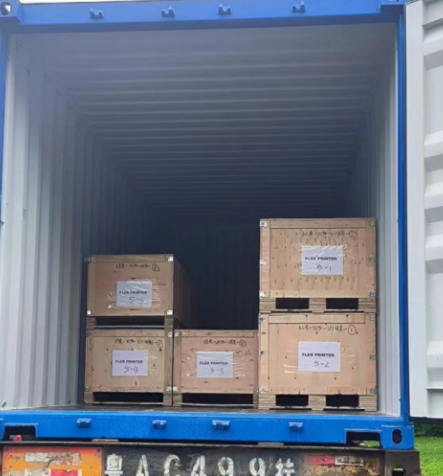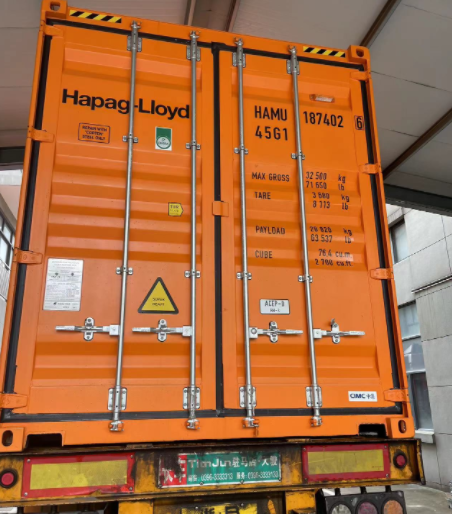
If you’re sourcing products from China and wondering how much is shipping from China to Benin, you’re not alone. Benin has become an increasingly important West African import hub — with Cotonou Port serving not only the domestic market but also landlocked neighbors like Niger and Burkina Faso. Yet the single biggest variable in any importer’s budget is the total shipping cost: a 20ft container can range anywhere from $2,300 to $4,500, and that’s before you factor in customs duties, VAT, and a dozen surcharges that most quotes conveniently leave out.
Drawing on 15+ years of hands-on experience on the China–West Africa trade lane, this guide walks you through every cost component — from ocean freight and air cargo rates to Benin’s WAEMU customs duties, the mandatory BESC/ECTN certificate, and the dozen smaller surcharges that catch first-time importers off guard. By the end, you’ll have a clear, line-by-line understanding of sea freight (FCL & LCL), air freight, express courier, DDP door-to-door shipping, and Benin import taxes — plus eight actionable strategies to lower your total logistics spend.
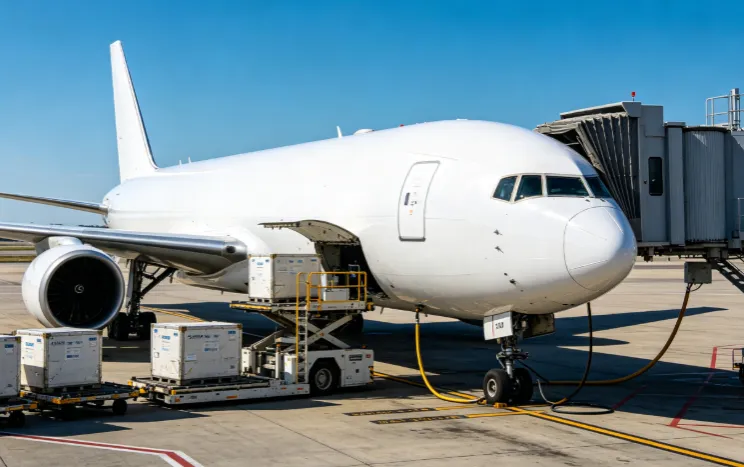
What Determines Your China to Benin Shipping Costs?
Before diving into specific rates, it’s essential to understand the key variables that drive your total shipping cost. These factors explain why two identical-looking shipments can arrive at vastly different final invoices.
Cargo Characteristics: Weight, Volume & Type
Shipping costs are fundamentally determined by how much space and weight your cargo occupies. For sea freight, the billing unit is cubic meters (CBM) — if you’re shipping lightweight but bulky goods like furniture or insulation materials, you’re paying more per kilogram than a dense shipment like steel bars. For air freight, carriers use chargeable weight, which is the greater of actual weight and volumetric weight (calculated as Length × Width × Height in cm ÷ 6,000). A shipment of pillows might weigh only 50 kg but occupy 2 CBM — making its chargeable weight 333 kg.
Additionally, cargo classified as dangerous goods (DG), OOG freight (Out of Gauge — oversized cargo), or requiring temperature control (reefer containers) attracts premium surcharges. Always communicate your cargo specifications accurately when requesting a freight quote.
Shipping Mode Choice: Sea vs Air vs Express
The most significant cost lever is your choice of shipping mode. Here’s a quick-reference comparison before we explore each in detail:
| Shipping Mode | Cost Range | Transit Time | Best For |
|---|---|---|---|
| Sea Freight FCL (20ft) | $2,300 – $4,500/container | 30–45 days | Large-volume shipments (15+ CBM) |
| Sea Freight LCL | $50 – $200/CBM | 40–55 days | Small-volume shipments (< 15 CBM) |
| Air Freight | $3.00 – $9.00/kg | 5–10 days | Urgent, high-value, or perishable cargo |
| Express Courier | $10 – $20/kg | 2–7 days | Samples, documents, urgent small parcels |
Seasonality & Market Fluctuations
Ocean freight rates on the China–West Africa corridor follow predictable seasonal patterns. Rates spike sharply during two windows: the pre-Chinese New Year rush (January to early February), when factories race to ship orders before the nationwide holiday shutdown, and the Q4 peak season (September through November), when retailers stock up for year-end sales. Carriers also impose Peak Season Surcharges (PSS) during these windows. As of July 2026, CMA CGM’s PSS from China to West Africa’s Central Range (which includes Benin) ranges from approximately $125 to $200 per TEU, though surcharges can climb significantly higher during Q4.
If you’re also importing to other parts of West Africa, check our guides for Shipping from China to Nigeria and Shipping from China to Togo — Benin’s coastal neighbors served through the same regional shipping corridors.
The best months to book are typically March–April and August, when demand softens and carriers are more willing to negotiate.
Incoterms 2020: Who Pays for What?
One of the most overlooked cost drivers — and a topic no competitor guide covers properly — is your choice of Incoterms (International Commercial Terms). The trade term you negotiate with your Chinese supplier determines exactly which party pays for each segment of the journey. Here’s how the four most common terms allocate costs for a China to Benin shipment:
| Cost Component | EXW (Ex Works) | FOB (Free On Board) | CIF (Cost, Insurance, Freight) | DDP (Delivered Duty Paid) |
|---|---|---|---|---|
| Factory-to-port trucking in China | ❌ Buyer | ❌ Buyer | ✅ Supplier | ✅ Supplier |
| China export customs clearance | ❌ Buyer | ❌ Buyer | ✅ Supplier | ✅ Supplier |
| Ocean freight to Cotonou | ❌ Buyer | ❌ Buyer | ✅ Supplier | ✅ Supplier |
| Marine cargo insurance | ❌ Buyer | ❌ Buyer | ✅ Supplier (minimum) | ✅ Supplier |
| Benin import customs clearance | ❌ Buyer | ❌ Buyer | ❌ Buyer | ✅ Supplier |
| Benin import duties & VAT | ❌ Buyer | ❌ Buyer | ❌ Buyer | ✅ Supplier |
| Cotonou Port to final delivery | ❌ Buyer | ❌ Buyer | ❌ Buyer | ✅ Supplier |
Key insight: FOB may appear cheaper on your supplier’s invoice, but you’re on the hook for ocean freight booking, insurance, Benin customs clearance, duties, and inland delivery — costs that can easily exceed the product value. By contrast, DDP from a reputable freight forwarder like Dantful gives you a single, transparent price that covers everything from the supplier’s door to your warehouse in Benin. For importers without an established customs broker in Benin, DDP is almost always the safer and more predictable choice.
Route & Transshipment
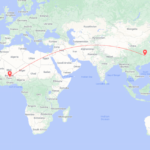
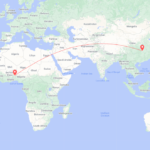
There are few direct sailings from China to Cotonou. Most containers transit through major hub ports — typically Lomé (Togo), Tangier (Morocco), or Port Klang (Malaysia) — before being feeder-vesseled to Cotonou. For a broader perspective on the region, see our Shipping from China to Africa overview. Each transshipment adds 3–7 days to your transit time and marginally increases the risk of delays or cargo misrouting. When comparing freight quotes, ask whether the routing is direct or transshipped — a slightly higher rate for a more direct routing can save you weeks and reduce handling risks.
Sea Freight from China to Benin: FCL & LCL Costs Explained
Sea freight is the backbone of Shipping from China to Benin trade, handling the vast majority of imported goods. For a deeper dive into ocean freight specifics on this route, see our dedicated Sea Freight From China to Benin guide. Your two options are FCL (Full Container Load) — where you book an entire container — and LCL (Less than Container Load), where your cargo shares container space with other shippers’ goods.
FCL Container Pricing: Port-by-Port Breakdown
The table below shows current market rates (July 2026) for FCL shipments from six major Chinese ports to Cotonou Port. These are port-to-port ocean freight base rates — surcharges, customs, and inland delivery are additional.
| Origin Port (China) | 20ft Container (USD) | 40ft Container (USD) | 40ft HQ Container (USD) | Notes |
|---|---|---|---|---|
| Shenzhen (Yantian/Shekou) | $2,300 – $3,500 | $2,950 – $4,500 | $3,200 – $5,000 | Most competitive rates; high vessel frequency to West Africa |
| Guangzhou (Nansha) | $2,450 – $3,600 | $3,100 – $4,800 | $3,400 – $5,200 | Strong for Pearl River Delta cargo; slightly higher than Shenzhen |
| Shanghai | $2,450 – $3,950 | $3,000 – $4,800 | $3,300 – $5,300 | World’s busiest port; reliable schedules |
| Ningbo | $2,450 – $3,800 | $2,850 – $4,600 | $3,150 – $5,100 | Competitive rates; good West Africa connections |
| Qingdao | $2,450 – $3,700 | $3,050 – $4,500 | $3,350 – $4,900 | Strong for northern China cargo |
| Tianjin (Xingang) | $2,600 – $3,800 | $3,500 – $5,000 | $3,800 – $5,500 | Higher rates due to longer sailing distance to West Africa |
Pro Tip: Shenzhen and Ningbo consistently offer the most competitive rates for the China to Benin corridor due to high vessel frequency and strong carrier competition on West Africa routes. If your supplier is inland, the savings on ocean freight may be partially offset by higher domestic trucking costs to the port — always calculate the total door-to-port cost, not just the ocean leg.
When to choose 20ft vs 40ft vs 40ft HQ: A standard 20ft container holds approximately 28–30 CBM of cargo and is the most economical choice for shipments up to that volume. A 40ft container (~58–60 CBM) is roughly 1.6× the cost of a 20ft but offers 2× the capacity — making it significantly cheaper per CBM. The 40ft HQ (High Cube) adds an extra 12 inches of height (~68 CBM), ideal for voluminous but relatively light cargo like furniture, textiles, or insulation materials.
LCL (Less than Container Load) Per-CBM Pricing
If your shipment is under 12–15 CBM, LCL (Less than Container Load) lets you pay only for the space you use. Current LCL rates from China to Cotonou range from $50 to $200 per CBM, depending on the cargo type, volume, and freight forwarder’s consolidation network.
However, there’s a critical decision point most importers miss: the LCL-to-FCL crossover threshold. If your shipment reaches approximately 12–15 CBM, booking a 20ft FCL container often becomes cheaper than paying LCL rates. Here’s the math:
- LCL at 15 CBM: 15 × $150/CBM (mid-range) = $2,250
- 20ft FCL from Shenzhen: $2,300 – $2,800 (including basic surcharges)
Once you cross that ~15 CBM mark, FCL not only costs roughly the same but also gives you exclusive container use, faster transit (no waiting for consolidation), and lower handling risk. For shipments below 5 CBM, LCL is clearly the way to go.
Sea Freight Transit Times
| Mode | Transit Time | Why the Difference? |
|---|---|---|
| FCL | 30–45 days | Container moves directly vessel-to-vessel at transshipment hubs |
| LCL | 40–55 days | Additional time for consolidation at origin + deconsolidation at Cotonou |
The actual sailing time from China to Cotonou is approximately 28–32 days. The remaining time covers port waiting, loading/unloading, and transshipment at hub ports.
Sea DDP Door-to-Door
If you prefer an all-inclusive approach, Sea DDP (Delivered Duty Paid) door-to-door from China to Benin typically ranges from $100 to $300 per CBM for LCL shipments, or the equivalent of the FCL rate plus a flat door-to-door surcharge for full containers. This covers: China-side pickup, export clearance, ocean freight, Benin import customs clearance, duty & tax payment, Cotonou Port handling, and final trucking delivery to your specified address in Benin.
Air Freight & Express Courier from China to Benin
When your shipment is urgent, high-value, or perishable, air freight and express courier services bridge the speed gap — at a premium.
Air Freight Rates & Chargeable Weight
Air freight from China to Cadjehoun Airport (COO) in Cotonou currently ranges from $3.00 to $9.00 per kg for shipments between 100 kg and 1,000 kg. Heavier consolidated shipments (1,000+ kg) can negotiate rates as low as $2.50/kg.
The critical concept to understand is chargeable weight — the weight you’re actually billed for. Airlines calculate both actual weight and volumetric weight using the formula:
Volumetric Weight (kg) = (Length × Width × Height in cm) ÷ 6,000
You pay whichever is higher. For example, a shipment of 100 kg of clothing packed into 1.5 CBM has a volumetric weight of (1.5 × 1,000,000) ÷ 6,000 = 250 kg — so you’re billed for 250 kg, not 100 kg. Always work with your freight forwarder to minimize packaging volume for air shipments.
| Weight Band | Rate (USD/kg) | Typical Transit |
|---|---|---|
| 45–100 kg | $5.00 – $9.00 | 7–10 days |
| 100–500 kg | $4.00 – $7.00 | 5–8 days |
| 500–1,000 kg | $3.00 – $5.50 | 5–7 days |
| 1,000+ kg | $2.50 – $4.50 | 5–7 days |
Note: There are no direct cargo flights from China to Cotonou. All air freight transits through major hubs — most commonly Addis Ababa (Ethiopian Airlines), Casablanca (Royal Air Maroc), Istanbul (Turkish Airlines), or Paris (Air France). Transit time depends heavily on connection schedules at these hubs.
Air DDP Door-to-Door
Air DDP from China to Benin — where the freight forwarder handles everything including customs clearance and duty payment — ranges from $4.50 to $9.00 per kg, with 5–10 day transit. This is ideal for time-sensitive commercial shipments where customs complexity at COO Airport would otherwise cause delays.
Express Courier (DHL, FedEx, UPS)
For documents, samples, and urgent small parcels, express courier services deliver door-to-door in 2–7 days at rates of $10 to $20 per kg (often with a minimum charge of $38–$60 for very small shipments). Express couriers handle customs clearance as part of their service, making this the simplest option for shipments under 30 kg. However, for anything heavier, air freight + a local customs broker is significantly more cost-effective.
Air Freight vs Sea Freight: Decision Framework
| If Your Priority Is… | Choose | Typical Scenario |
|---|---|---|
| Lowest possible cost | Sea Freight FCL | Bulk orders, non-urgent restocking |
| Moderate cost, moderate speed | Sea Freight LCL / Air Freight (consolidated) | Small-volume regular orders |
| Speed & predictability | Air Freight | Seasonal goods, spare parts, urgent orders |
| Maximum convenience | Express Courier / DDP Air | Samples, documents, door-to-door urgency |
A useful rule of thumb: if your cargo’s value exceeds $15–$20 per kg, the inventory carrying cost of a 40-day sea voyage often justifies paying the air freight premium. For lower-value bulk goods, sea freight’s cost advantage is decisive.
Benin Import Duties, Taxes & Hidden Surcharges
This is where the real cost of shipping to Benin often diverges from your initial freight quote. Benin is a member of both WAEMU (West African Economic and Monetary Union) and ECOWAS (Economic Community of West African States), and applies the harmonized Common External Tariff (CET) to goods imported from outside the region — including China. Understanding this system is essential to calculating your true landed cost.
WAEMU CET Duty Rate Structure
The CET classifies all imported goods into five bands based on their nature and degree of processing:
| Category | CET Duty Rate | Description | Common Examples from China |
|---|---|---|---|
| Category 1 | 0% | Essential social goods | Basic medicines, books, fertilizers, humanitarian supplies |
| Category 2 | 5% | Raw materials & capital goods | Industrial machinery, raw chemicals, agricultural equipment |
| Category 3 | 10% | Intermediate goods & inputs | Auto parts, semi-finished metals, electronic components, industrial inputs |
| Category 4 | 20% | Finished consumer goods | Electronics, home appliances, furniture, clothing, footwear, general merchandise |
| Category 5 | 35% | Strategic protection goods | Certain textiles, steel products, plastics, and goods competing with local industries |
Practical note: The vast majority of consumer goods imported from China fall under Category 4 (20%). If you’re importing electronics, furniture, clothing, or general household goods, budget for 20% CET duty on the CIF value as your baseline.
Additional Levies & Benin VAT
Beyond the CET duty, Benin applies several mandatory levies and taxes that compound on the CIF (Cost, Insurance, Freight) value:
| Levy / Tax | Rate | Applied On |
|---|---|---|
| Statistical Tax (RS) | 1% | CIF value |
| ECOWAS Community Levy (PC) | 0.5% | CIF value |
| Community Solidarity Levy (PCS) | 0.8% | CIF value |
| African Union Levy (PS) | 0.2% | CIF value |
| Total Additional Levies | 2.5% | CIF value |
| VAT (Taxe sur la Valeur Ajoutée) | 18% | CIF value + CET duty + all levies |
Step-by-Step Duty & Tax Calculation Example
Let’s walk through a real calculation. Suppose you’re importing a shipment of electronics (Category 4, 20% duty) from China with a CIF value of $10,000:
| Step | Calculation | Amount (USD) |
|---|---|---|
| 1. CIF Value | (given) | $10,000.00 |
| 2. CET Duty (20%) | $10,000 × 20% | $2,000.00 |
| 3. Statistical Tax (1%) | $10,000 × 1% | $100.00 |
| 4. ECOWAS Levy (0.5%) | $10,000 × 0.5% | $50.00 |
| 5. PCS Levy (0.8%) | $10,000 × 0.8% | $80.00 |
| 6. AU Levy (0.2%) | $10,000 × 0.2% | $20.00 |
| 7. Subtotal (CIF + Duty + Levies) | $10,000 + $2,000 + $250 | $12,250.00 |
| 8. VAT (18%) | $12,250 × 18% | $2,205.00 |
| Total Duty & Tax Payable | (Duty $2,000 + Levies $250 + VAT $2,205) | $4,455.00 |
Reality check: On a $10,000 CIF shipment of consumer electronics, you’ll pay approximately $4,455 in duties and taxes — an effective tax rate of 44.6% on your CIF value. This is not a hidden cost per se, but it is routinely underestimated by first-time importers who only look at the freight quote.
Contrast with lower-duty goods: If you were importing industrial machinery (Category 2, 5% duty) with the same $10,000 CIF value, your total duty and tax would be approximately $2,424 — nearly half. This illustrates why product classification (HS code) is one of the most financially consequential decisions in international shipping.
The BESC/ECTN Certificate: Benin’s Mandatory Cargo Tracking Document
Every ocean freight shipment to Cotonou requires a validated BESC (Bordereau Électronique de Suivi des Cargaisons) — also known as ECTN (Electronic Cargo Tracking Note). This is not optional; without it, your cargo cannot clear customs in Benin and will incur detention fines. Since June 2025, cargo hold rates due to missing ECTN certificates have risen 12.7%, with Benin accounting for 28% of regional violations.
What you need to know:
- When to apply: Before the vessel departs from China. Late applications incur penalty fees and risk cargo holds at Cotonou.
- Processing time: 24–48 business hours (draft certificate within 2–4 hours of document submission)
- Required documents: Draft Bill of Lading, Commercial Invoice, Packing List, Freight Invoice, Export Customs Declaration
- Cost: Variable based on cargo type, value, and container size. Request a specific quote from your freight forwarder.
- One BESC per Bill of Lading: Each BL requires its own unique certificate number, which must appear on the cargo manifest.
- Transit cargo rule: If your shipment discharges at Cotonou and transits to a landlocked country (Niger, Burkina Faso, Mali), you additionally need the destination country’s tracking certificate.
Pro Tip: The single most common BESC rejection reason is document inconsistency. If the shipper name, cargo description, or value on your Commercial Invoice doesn’t exactly match your Bill of Lading, your BESC will be rejected — and you’ll be scrambling to reapply while your container accrues demurrage at Cotonou. Always have your freight forwarder cross-check all documents before BESC submission.
Ocean Freight Surcharges Decoded
Your “ocean freight rate” is rarely the total you pay for the sea leg. Standard surcharges include:
| Surcharge | Typical Range | What It Covers |
|---|---|---|
| BAF (Bunker Adjustment Factor) | $150 – $400/TEU | Fuel price fluctuation; adjusted quarterly |
| PSS (Peak Season Surcharge) | $125 – $800/TEU | Capacity demand during peak shipping windows; currently ~$125–$200 for Benin (July 2026, CMA CGM) |
| THC (Terminal Handling Charge) | $150 – $300 per container | Loading/unloading at origin and destination ports |
| Documentation Fee | $50 – $100 per BL | Bill of Lading issuance and processing |
| CAF (Currency Adjustment Factor) | 1% – 5% of freight | Exchange rate fluctuation between USD and carrier’s base currency |
| ISPS (Security Surcharge) | $10 – $25 per container | Port security compliance under SOLAS convention |
Always ask for an all-in rate (freight + all surcharges) when comparing quotes, rather than comparing base ocean freight rates alone.
Destination Charges at Cotonou Port
Charges at the destination are often the least transparent part of the shipping cost. At Cotonou Port, expect:
- Destination THC: $150–$300 per container
- Port handling & administrative fees: $50–$150
- Customs broker fee: $100–$300 (unless included in your DDP service)
- Inland trucking: $200–$600 depending on final destination distance from Cotonou (e.g., delivery to Parakou or Natitingou costs significantly more than Cotonou city delivery)
- Demurrage & detention: Free time is typically 7–14 days at Cotonou; beyond that, charges accumulate daily ($20–$80/day for a 20ft, $40–$150/day for a 40ft)
Cargo Insurance: Don’t Skip This
Marine cargo insurance typically costs 0.3%–0.5% of the insured value (recommended at CIF value × 110%). On a $10,000 CIF shipment, that’s just $33–$55 — a fraction of a percent. Yet it protects you against total loss from container overboard, fire, theft, and general average declarations. Every year, we see at least a few West Africa-bound containers lost to piracy, severe weather, or handling accidents. For comprehensive protection, consider cargo insurance as a non-negotiable part of your shipping plan — it’s risk management that protects your working capital.
8 Proven Ways to Reduce Your China to Benin Shipping Costs
Reducing your shipping costs doesn’t require cutting corners — it requires smarter logistics decisions. Here are eight strategies refined from 15 years of shipping on this corridor.
1. Consolidate Multiple Supplier Shipments
If you’re buying from 2–3 suppliers in Yiwu, Guangzhou, and Shenzhen, shipping each order separately as small LCL parcels adds up fast. Instead, use a freight forwarder with a consolidation warehouse in China to collect all your goods, combine them into a single shipment, and dispatch as one FCL or larger LCL consignment. The consolidation savings often range from 20%–40% compared to shipping separately.
2. Book Off-Peak
The China–West Africa freight market has two distinct peak windows: pre-Chinese New Year (January–February) and Q4 holiday season (September–November). During these periods, base ocean freight can spike 30%–60%, and carriers enforce maximum PSS levels. If your inventory cycle allows, ship in March–April or August to lock in off-peak rates and avoid equipment shortages at Chinese ports.
3. Optimize Packaging & Palletization
Every cubic meter of wasted space costs you money. Have your supplier or freight forwarder:
- Use compression packaging for textiles and soft goods
- Palletize and stack cartons to minimize dead space at the top of the container
- Switch from single-wall to double-wall corrugated boxes (stronger, stackable higher) to use vertical container space more efficiently
- For LCL, request palletized LCL rather than floor-loaded — it costs marginally more but drastically reduces damage and pilferage risk
4. Choose the Right Incoterm
FOB may look cheapest on your supplier’s invoice, but when you add the cost of booking your own ocean freight (where a large-volume forwarder gets better rates than you can), insurance, and customs brokerage, DDP through a China-based forwarder often comes out 10%–15% cheaper on a total-landed-cost basis — while eliminating coordination headaches.
5. Work with a Direct-Contract Freight Forwarder
Freight forwarders with direct carrier contracts — like Dantful, holding NVOCC and Class-A certifications — access rates that spot-market buyers and smaller agents cannot match. In a tight market, direct contracts also mean guaranteed space when the spot market is sold out.
6. Right-Size Your Container Strategy
If your shipment crosses the ~15 CBM threshold, stop booking LCL and switch to a 20ft FCL. At 25+ CBM, compare a 40ft against two 20ft containers. At 55+ CBM, a 40ft HQ almost always wins on per-unit cost. This single decision can swing your freight cost by 20%–30%.
7. Insure Strategically, Not Minimally
Opting out of cargo insurance saves $30–$100 but exposes you to total loss of your cargo value. Instead, reduce your insurance rate by:
- Bundling multiple shipments under an open cargo policy
- Choosing a higher deductible in exchange for a lower premium rate
- Demonstrating good claims history to negotiate preferred rates
8. Partner with a Benin-Savvy Freight Forwarder
A forwarder who knows the Cotonou Port procedures, BESC process, and Benin Customs requirements inside out saves you far more in avoided delays, demurrage, and fines than any minor freight rate difference. One 5-day demurrage incident can erase six months of freight savings.
Step-by-Step China to Benin Shipping Process & Required Documentation
Understanding the end-to-end journey helps you plan timelines, anticipate costs, and communicate effectively with all parties.
The 8-Step China to Benin Shipping Journey
| Step | What Happens | Typical Duration |
|---|---|---|
| 1. Supplier Pickup & Cargo Preparation | Freight forwarder collects goods from your supplier(s) in China, conducts quality inspection if requested, and transports to the consolidation warehouse | 1–3 days |
| 2. China Export Customs Clearance | HS code classification, export declaration filing, customs inspection (if selected). Requires: Commercial Invoice, Packing List, Export Declaration Form | 1–2 days |
| 3. Port Loading & Vessel Departure | Container transported to port terminal, loaded onto vessel. Cut-off is typically 2–4 days before sailing date | 2–4 days |
| 4. Ocean Transit | Vessel sails from China to transshipment hub to Cotonou. Real-time vessel tracking available via your forwarder’s platform | 30–45 days |
| 5. Arrival at Cotonou Port | Vessel berths. Container discharged. Consignee/forwarder receives Arrival Notice | 1 day |
| 6. Benin Import Customs Clearance | BESC verification, HS code classification under WAEMU CET, CIF value assessment, duty & tax calculation, payment, and customs release. The most process-intensive step — errors here are the #1 cause of delays | 3–7 days |
| 7. Port Release & Inland Trucking | Container released from port, loaded onto truck for delivery to final destination in Benin (Cotonou, Porto-Novo, Parakou, or transit to Niger/Burkina Faso) | 1–3 days |
| 8. Final Delivery | Cargo arrives at consignee’s door. Delivery note signed. Shipment complete | 1 day |
Total estimated timeline: 40–60 days from supplier pickup to door delivery for sea freight; 6–12 days for air freight door-to-door.
Complete Documentation Checklist
| Document | Required For | Issued By |
|---|---|---|
| Bill of Lading (B/L) or Airway Bill (AWB) | All shipments | Shipping line / Airline |
| Commercial Invoice | Customs clearance (both China export and Benin import) | Supplier / Shipper |
| Packing List | Customs clearance, cargo verification | Supplier / Shipper |
| Certificate of Origin | Benin import — may qualify for preferential rates under trade agreements | China Council for the Promotion of International Trade (CCPIT) |
| BESC / ECTN Certificate | Mandatory — Benin import customs clearance | Authorized ECTN service provider |
| Fumigation Certificate | Required if cargo contains solid wood packaging (pallets, crates) | Certified fumigation company |
| Insurance Certificate | Insurance claims in case of loss or damage | Insurance provider / Freight forwarder |
| Benin Customs Import Declaration | Benin customs clearance | Customs broker / Freight forwarder |
Common Benin Customs Pitfalls to Avoid
- HS code misclassification: The difference between Category 2 (5%) and Category 4 (20%) can be thousands of dollars. Work with a forwarder who understands WAEMU HS code classification and has proven expertise in customs clearance for West African destinations — don’t let your supplier choose the code.
- CIF undervaluation: Benin Customs actively cross-checks declared values against market benchmarks. Undervaluation triggers audits, penalties, and cargo holds.
- BESC data mismatch: As noted earlier, inconsistency between BESC and shipping documents is the most frequent cause of clearance delays.
- Missing fumigation certificate: Any solid wood packaging (including pallets) without a fumigation certificate will be held at port — an entirely avoidable delay.
Why Choose Dantful for Your China to Benin Freight Forwarding
After 15+ years of managing shipments on the China–West Africa trade lane, we understand that what you really need isn’t just a shipping quote — it’s a logistics partner who eliminates surprises.
Deep Africa Expertise: We don’t just ship globally; we know this corridor intimately. Benin’s customs procedures, WAEMU tariff classification, BESC/ECTN processing, and Cotonou Port operations are not exceptions to us — they’re daily business.
Direct Carrier Contracts: As a Class-A licensed freight forwarder and NVOCC (Non-Vessel Operating Common Carrier), we hold direct service contracts with CMA CGM, Maersk, MSC, and COSCO on the Far East–West Africa route. This means competitive rates and — critically — guaranteed space allocations during peak season when the spot market tightens up.
True Door-to-Door DDP Service: From supplier pickup across China (Shenzhen, Guangzhou, Yiwu, Shanghai, Ningbo, Qingdao — anywhere) to final delivery at your doorstep in Cotonou, Porto-Novo, Parakou, or beyond — one contact, one invoice, zero coordination burden. We handle everything including BESC, customs clearance, duty and tax payment, and last-mile trucking.
Certified & Compliant: Our operations are backed by FMC (Federal Maritime Commission) and Jctrans certifications, in addition to our Chinese Ministry of Commerce Class-A freight forwarding license. Your cargo moves through a fully compliant, auditable supply chain.
Dedicated Account Management: You get a single point of contact — not a call center queue. Our 50+ operations specialists and 50+ customer service team members ensure you receive proactive shipment updates, document pre-checks, and real-time answers to your questions, 24/7.
Ready to ship? Contact Dantful International Logistics today for a free, no-obligation China to Benin shipping quote tailored to your cargo type, volume, and timeline.
FAQs
How much does it cost to ship a 20ft container from China to Benin?
A 20ft container from China to Cotonou Port currently costs between $2,300 and $4,500 for the ocean freight component, depending on the departure port (Shenzhen is typically cheapest, Tianjin most expensive) and seasonal conditions. Door-to-door, including all surcharges, customs clearance, Benin duties (assuming Category 4, 20% CET), VAT (18%), and inland delivery, the total landed cost for a 20ft container typically ranges from $6,000 to $12,000 depending on cargo value and classification.
How long does shipping from China to Benin take?
Sea freight (FCL) takes 30–45 days port-to-port. Sea freight (LCL) takes 40–55 days due to consolidation time. Air freight takes 5–10 days to COO Airport. Express courier (DHL, FedEx, UPS) delivers in 2–7 days door-to-door. Door-to-door sea freight (FCL DDP) with all clearance and delivery typically completes in 40–55 days total.
What is the cheapest way to ship from China to Benin?
For small shipments under 5 CBM, LCL sea freight ($50–$150/CBM) is cheapest. For medium shipments (5–15 CBM), compare LCL vs a 20ft FCL — the crossover point is around 12–15 CBM. For large shipments (15+ CBM), FCL sea freight is the most economical per-unit. For very small, high-value items under 30 kg, the cheapest door-to-door option is often express courier, as it avoids separate customs brokerage fees.
Do I need a BESC/ECTN certificate to import into Benin?
Yes. The BESC/ECTN is mandatory for all ocean freight shipments to Cotonou. It must be obtained before the vessel departs China and validated by an authorized service provider. Shipments arriving without a valid BESC face customs holds, fines, and demurrage charges. The certificate costs vary based on cargo type and volume — contact your freight forwarder for a specific quote.
How much import duty and tax will I pay in Benin?
Duty rates range from 0% to 35% under the WAEMU Common External Tariff (CET), with most consumer goods from China falling under Category 4 (20%). Additional levies add approximately 2.5%, and VAT at 18% is applied on the combined CIF + duty + levies total. For a $10,000 CIF shipment of consumer electronics (20% duty), expect to pay approximately $4,455 in total duties and taxes. See Section 5 above for the full calculation breakdown.
Can I get door-to-door shipping from China to Benin?
Yes. DDP (Delivered Duty Paid) door-to-door service covers everything from supplier pickup in China through to final delivery at your address in Benin — including export clearance, ocean or air freight, BESC, Benin import customs clearance, duty and tax payment, and last-mile trucking. For sea freight LCL, DDP costs approximately $100–$300 per CBM. For air freight, DDP costs approximately $4.50–$9.00 per kg. This is the most convenient option for importers who want a single, predictable cost.
What documents are required to ship from China to Benin?
The essential documents are: Bill of Lading (B/L) or Airway Bill (AWB), Commercial Invoice, Packing List, BESC/ECTN Certificate (mandatory for ocean freight), Certificate of Origin, Fumigation Certificate (if solid wood packaging is used), Insurance Certificate, and the Benin Customs Import Declaration. Having all documents consistent and pre-verified by your freight forwarder is the single best way to avoid customs delays at Cotonou.

Young Chiu is a seasoned logistics expert with over 15 years of experience in international freight forwarding and supply chain management. As CEO of Dantful International Logistics, Young is dedicated to providing valuable insights and practical advice to businesses navigating the complexities of global shipping.