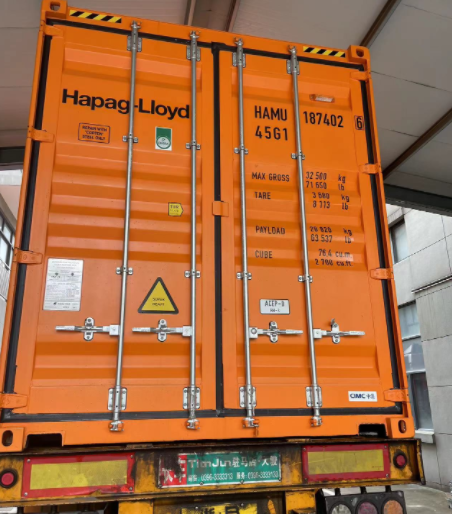
If you’ve spent any time Googling container shipping costs from China to Morocco, you’ve noticed the problem: one site says $1,700 for a 20ft container, another quotes $5,700. Transit times range from 25 to 55 days. And almost nobody mentions the fees that appear on your final invoice but were absent from the original quote.
We’ve been handling shipping from China to Morocco for over 15 years. This guide gives you the real numbers — rates we actually book for clients in mid-2026, broken down by port, container type, and service level. You’ll also get the hidden costs most guides skip, the DDP trap nobody warns about, and seven practical ways to reduce your total landed cost.
Container Shipping Costs from China to Morocco: 2026 Rate Breakdown
Let’s start with what you came for — the actual numbers. These are port-to-port base ocean freight rates as of July–August 2026, before surcharges, customs, or inland transport. For context on how Morocco fits into the broader region, see our overview of container shipping costs from China to Africa and our dedicated sea freight from China to Morocco route page.
FCL Rates by Port Pair & Container Type
| Origin Port (China) | Destination | 20GP | 40GP | 40HQ |
|---|---|---|---|---|
| Shenzhen (Yantian/Shekou) | Casablanca | $2,100–$2,500 | $3,800–$4,300 | $3,900–$4,400 |
| Shenzhen (Yantian/Shekou) | Tanger Med | $1,900–$2,300 | $3,500–$4,000 | $3,600–$4,100 |
| Guangzhou (Nansha) | Casablanca | $2,200–$2,600 | $3,900–$4,400 | $4,000–$4,500 |
| Guangzhou (Nansha) | Tanger Med | $2,000–$2,400 | $3,600–$4,100 | $3,700–$4,200 |
| Shanghai | Casablanca | $2,300–$2,700 | $4,000–$4,500 | $4,100–$4,600 |
| Shanghai | Tanger Med | $2,100–$2,500 | $3,700–$4,200 | $3,800–$4,300 |
| Ningbo | Casablanca | $2,200–$2,600 | $3,900–$4,400 | $4,000–$4,500 |
| Ningbo | Tanger Med | $2,000–$2,400 | $3,600–$4,100 | $3,700–$4,200 |
| Qingdao | Tanger Med | $2,300–$2,800 | $4,100–$4,700 | $4,200–$4,800 |
| Tianjin | Tanger Med | $2,400–$2,900 | $4,200–$4,800 | $4,300–$4,900 |
| Xiamen | Tanger Med | $2,200–$2,600 | $3,800–$4,400 | $3,900–$4,500 |
Note on Casablanca for northern ports: Qingdao, Tianjin, and Xiamen typically transship through Shanghai, Ningbo, or Tanger Med for Casablanca-bound cargo. The rate would add approximately $300–$500 to the Tanger Med figures above, so Tanger Med is almost always the more cost-effective gateway from these origins.
A few things worth pointing out:
Tanger Med is consistently $200–$400 cheaper per container than Casablanca. Tanger Med sits on the Strait of Gibraltar — a main trunk route where every major carrier calls. Casablanca, further south, is served mostly by feeder vessels from Tanger Med or Algeciras. If your final destination is in northern Morocco or you need regional distribution, Tanger Med wins on both price and transit time.
Shenzhen and Guangzhou are the cheapest departure ports. The Pearl River Delta generates enormous export volume, so carriers deploy their largest vessels here with lower per-unit slot costs. If you’re sourcing from Guangdong or Fujian, you’re well-positioned for competitive rates. See our dedicated guide on shipping from Shenzhen to Morocco for route-specific scheduling and service options.
Northern ports (Qingdao, Tianjin) cost 10–20% more. Fewer direct sailings to Morocco means more transshipment and higher rates. If your supplier is in Shandong or Hebei, trucking the cargo to Shanghai can sometimes be cheaper — but calculate inland freight before committing.
40ft High Cube (40HQ): The Overlooked Money-Saver
Here’s something every competitor guide misses: the 40ft High Cube container. A 40HQ gives you 76.3 CBM of internal volume vs. 67.7 CBM for a standard 40GP — 12.7% more space for roughly the same ocean freight (typically just $100–$200 more on this lane). For low-density cargo — furniture, textiles, plastic goods, toys, home décor — the math is compelling:
| Route | 40GP Rate | 40HQ Rate | Cost per CBM (40GP) | Cost per CBM (40HQ) | Savings per CBM |
|---|---|---|---|---|---|
| Shenzhen → Tanger Med | $3,800 | $3,900 | $56.1/CBM | $51.1/CBM | $5.0/CBM (8.9%) |
| Shanghai → Casablanca | $4,300 | $4,400 | $63.5/CBM | $57.7/CBM | $5.8/CBM (9.1%) |
We recently worked with a furniture importer in Rabat shipping sofas from Foshan. They used 40GP containers and hit the volume ceiling at ~67 CBM per load. Switching to 40HQ gained them 8 extra CBM per shipment — reducing their per-sofa freight cost by 10.5%. Over 12 containers a year, that’s a five-figure saving with zero change to their product.
LCL (Less than Container Load) Rates
If you’re not ready for a full container, LCL rates currently run $90–$150 per CBM, depending on volume and port pair.
The billing uses chargeable weight: the carrier takes whichever is higher between your actual CBM and weight-ton (1 CBM = 500 kg). If your cargo is dense — hardware or machinery parts — ask for the weight-ton rate specifically, because your volumetric CBM could seriously underestimate what you’ll pay.
One piece of hard-won advice: the CFS (Container Freight Station) unpacking fee at the destination port is the most common “surprise” on LCL invoices. At Casablanca, expect $25–$50 per CBM in CFS charges that may not appear in the initial quote. Ask your forwarder to itemize destination charges before booking.
The LCL-to-FCL Break-Even Point
Rough rule: once your shipment exceeds 12–15 CBM, a 20GP becomes cost-competitive — and at 15+ CBM it’s almost always cheaper. Shenzhen → Casablanca example: 15 CBM LCL at $120/CBM = $1,800 vs. a 20GP at $2,300 flat. At these volumes FCL already makes sense when you factor in sealed-container security and zero CFS unpacking fees. By 18 CBM, LCL hits $2,160 — FCL is the clear mathematical winner.
Tanger Med vs Casablanca: Choosing the Right Port for Cost & Transit
Most importers default to Casablanca because it’s Morocco’s commercial capital. But that default can cost you.
Tanger Med is Africa and the Mediterranean’s largest container port, handling 10.24 million TEU in 2024 across four terminals. It sits on the Gibraltar Strait — 15 km from Europe — right on the main East-West trunk route. Every major carrier (MSC, Maersk, CMA CGM, COSCO, Hapag-Lloyd) calls here with direct services. More sailings, better rates, faster transit.
Casablanca is Morocco’s commercial heart — operated by Marsa Maroc and positioned in the country’s largest consumer market with the shortest trucking distance to Casablanca-Rabat warehouses. The tradeoff: it’s a secondary call, not a mainline hub. Feeder connections, fewer sailings, and real congestion risk during peak season. We’ve seen containers sit at Casablanca an extra 5–7 days during Ramadan and pre-Eid import surges.
The Cost Math Nobody Shows You
Tanger Med’s lower ocean freight is partially offset by inland trucking if your warehouse is in Casablanca:
| Scenario | Ocean Freight (40GP) | Inland Trucking | Total |
|---|---|---|---|
| Shenzhen → Tanger Med → truck to Casablanca | $3,800 | $450–$600 | $4,250–$4,400 |
| Shenzhen → Casablanca (direct) | $4,100 | $150–$250 | $4,250–$4,350 |
They’re close, but the tiebreaker is transit time and reliability. Tanger Med’s direct-sail frequency means fewer delays. For time-sensitive cargo or peak-season shipping, that reliability premium outweighs the inland trucking cost.
Recommendation: Casablanca/Rabat/Marrakech warehouses → Casablanca port wins on total cost by a small margin. Northern Morocco, regional distribution, or schedule-sensitive cargo → Tanger Med.
Choosing the Right Container Size: 20ft vs 40ft vs 40ft High Cube
Picking the wrong container size is an expensive mistake. Here’s the definitive comparison:
| Specification | 20GP | 40GP | 40HQ |
|---|---|---|---|
| Internal Length | 5.90 m | 12.03 m | 12.03 m |
| Internal Width | 2.35 m | 2.35 m | 2.35 m |
| Internal Height | 2.39 m | 2.39 m | 2.69 m |
| Internal Volume | 33.2 CBM | 67.7 CBM | 76.3 CBM |
| Max Payload (Cargo Weight) | 28,100 kg | 26,100 kg | 26,100 kg |
| Door Opening (W×H) | 2.34 × 2.28 m | 2.34 × 2.28 m | 2.34 × 2.58 m |
How to Match Container Size to Your Cargo
The decision comes down to cargo density — weight ÷ volume:
- Density > 500 kg/CBM (tiles, stone, metal parts, machinery) → 20GP. You’ll hit the 28-ton payload limit long before filling 33 CBM.
- Density 250–500 kg/CBM (electronics, auto parts, consumer goods) → 40GP. Volume and weight fill at roughly the same pace.
- Density < 250 kg/CBM (furniture, textiles, toys, plastics) → 40HQ. You’ll max out volume before weight, so every extra CBM directly reduces per-unit shipping cost.
The LCL Reality Check
LCL is ideal under 6 CBM — flexible, low commitment, pay only for the space you use. At 6–15 CBM, run the math both ways. Above 15 CBM, FCL wins on price almost every time.
Beyond the numbers: LCL means shared container space, handling at both ends, consolidation delays (add 7–10 days vs. FCL), and a higher risk of cargo damage during CFS unpacking. For fragile or high-value products, the FCL premium buys real peace of mind.
Hidden Costs: BAF, PSS, THC, Demurrage & What You Actually Pay
The single biggest mistake we see from first-time importers? Budgeting only the ocean freight. The base rate is typically only 55–65% of your total landed cost. Here’s everything else.
Origin Charges (China Side)
| Fee | Typical Range | Notes |
|---|---|---|
| ORC/THC (Terminal Handling) | $150–$250/container | Paid at departure port |
| BAF (Bunker Adjustment Factor) | $150–$350/container | Fuel surcharge, changes monthly |
| LSS (Low Sulfur Surcharge) | $25–$50/container | IMO 2020 compliance |
| Documentation Fee | $50–$80/shipment | Bill of Lading issuance |
| VGM Weighing | $15–$30/container | Mandatory SOLAS requirement |
| Export Customs Clearance | $80–$150/shipment | Broker fee |
| Factory-to-Port Trucking | $300–$800/container | Distance-dependent |
| IPPC Fumigation | $50–$150/pallet | Required for wooden packaging |
Destination Charges (Morocco Side)
| Fee | Typical Range | Notes |
|---|---|---|
| DTHC (Destination Terminal Handling) | $250–$400/container | Mandatory at Casablanca or Tanger Med |
| Delivery Order Fee | $50–$100/shipment | Required to release cargo |
| PortNet Electronic Declaration | $30–$60/shipment | Morocco’s customs single-window system |
| Customs Brokerage Fee | $150–$350/shipment | Licensed broker required by law |
| Demurrage (Port Storage) | $50–$100+/day | Free time: 7–14 days; after that, daily charges compound fast |
| Detention (Container Late Return) | $50–$150+/day | Free time: 7–10 days outside port |
| Inland Trucking | $200–$800/container | Casablanca → Marrakech costs significantly more than port-local delivery |
| CoC/CMIM Testing & Certification | $300–$2,000/shipment | Product-dependent; see Section 7 |
Real example from last month: A client shipping 40GP of electronics from Shenzhen to Casablanca received a base freight quote of $3,900. Their actual door-to-port landed cost? $5,350 — 37% higher. The difference was entirely in the fees above, all disclosed upfront in our itemized quotation. A forwarder who only quotes base freight isn’t being transparent — they’re just saving the bad news for later.
Cargo Insurance
Marine cargo insurance costs 0.3–0.5% of declared cargo value. On a $50,000 shipment, that’s $150–$250. Skip it, and one mishandled container during transshipment — a real risk on the Tanger Med feeder leg — could wipe out your entire order margin. The cheapest peace of mind in logistics.
How Long Does Sea Freight Take from China to Morocco? Container Shipping Time Explained
If you’ve compared multiple sources and found transit times ranging from 25 to 55 days, here’s why. The variance comes down to three factors: direct vs. transshipment routing, destination port choice, and — since 2024 — Suez Canal vs. Cape of Good Hope routing.
Transit Times by Actual Route
| Origin Port | Destination | Routing | Typical Transit | Peak Season |
|---|---|---|---|---|
| Shenzhen / Guangzhou | Tanger Med | Direct | 25–30 days | 28–33 days |
| Shenzhen / Guangzhou | Casablanca | Via Tanger Med | 30–38 days | 35–42 days |
| Shanghai / Ningbo | Tanger Med | Direct | 28–32 days | 30–35 days |
| Shanghai / Ningbo | Casablanca | Via Tanger Med | 32–40 days | 36–44 days |
| Qingdao / Tianjin | Tanger Med | Via Shanghai/Ningbo | 33–40 days | 36–44 days |
| Xiamen | Tanger Med | Via Shenzhen/Hong Kong | 30–36 days | 33–39 days |
The 50–55 day figure you’ll see online typically reflects Cape of Good Hope routing — adopted by some carriers in 2024–2025 during Red Sea security disruptions. As of August 2026, most major carriers (MSC, Maersk, CMA CGM) have resumed Suez Canal transits on the Asia–Med lane, though routing may change during elevated risk periods. Always confirm current routing at booking time — it affects both transit time and your BAF surcharge.
LCL shipments add another 7–10 days total: 3–5 days for consolidation at origin, 3–5 days for deconsolidation at destination.
Morocco Customs Clearance: Import Duties, VAT, VoC & Required Documents
Morocco’s customs clearance regime is unforgiving of mistakes. Wrong paperwork means your container sits at port while demurrage compounds daily.
Import Duty & Tax Structure
Duties and taxes are calculated on the CIF (Cost + Insurance + Freight) value of your goods:
| Tax Component | Rate | Applied On |
|---|---|---|
| Import Duty (Droit d’Importation) | 2.5%–40% | CIF Value (varies by HS Code) |
| Parafiscal Import Tax (TPI) | 0.25% | CIF Value |
| VAT (TVA) | 20% | CIF Value + Import Duty + TPI |
Typical duty rates by product category:
| Product Category | Approximate Duty | Effective Total Tax Burden* |
|---|---|---|
| Industrial machinery & equipment | 2.5% | ~23.3% |
| Electronics & electrical goods | 10–17.5% | ~32–41% |
| Furniture & home goods | 25% | ~50% |
| Textiles & garments | 25–30% | ~50–56% |
| Toys & sporting goods | 17.5–25% | ~41–50% |
| Auto parts | 10–17.5% | ~32–41% |
*Estimated: CIF × (1 + Duty% + 0.25%) × 1.20. Actual depends on precise HS classification and any applicable trade preferences.
VoC (Verification of Conformity) — Don’t Ship Without Checking
Since February 2020, Morocco has enforced VoC (Verification of Conformity) for regulated categories: electronics, toys, building materials, and certain automotive parts. You need a Certificate of Conformity (CoC) from SGS, Bureau Veritas, or TÜV Rheinland before your goods leave China.
What happens if you skip this: your container arrives. Customs flags it. No CoC. Cargo cannot clear. Your options: re-export (expensive), destroy (worse), or retroactive certification at the port (slow, uncertain, and demurrage accrues at $50–$100/day).
The fix: before booking, send your product’s HS code to your forwarder. They can check against the VoC regulated product list. If your product is in scope, budget $300–$2,000 for certification and allow 2–4 extra weeks in your timeline.
Required Import Documentation
- Commercial Invoice — in French (or bilingual), showing HS codes, unit values, total value, buyer’s Moroccan Tax ID (NIF), and European date format (dd/mm/yyyy)
- Packing List — weights and dimensions per package
- Bill of Lading (B/L) — consignee must be a Morocco-registered entity with valid NIF
- Certificate of Origin — FORM A can qualify for preferential duty rates under certain trade agreements
- Certificate of Conformity (CoC) — if product falls under VoC scope
- Engagement d’Importation — import commitment filed by the buyer through their bank on the PortNet platform. This is mandatory for any commercial B2B import into Morocco
- Import Permit — required only for restricted goods
Incoterms for Morocco Imports: DDP vs DAP vs FOB — What Actually Works
This is where most online guides get it wrong — and the mistake can create real compliance risk.
Quick Reference
| Incoterm | Seller Responsibility Ends At | Best For Morocco B2B? |
|---|---|---|
| EXW (Ex Works) | Factory gate | ❌ Only if you have a full logistics team in China |
| FOB (Free on Board) | Loaded onto vessel at Chinese port | ✅ Good, if you have a Moroccan customs broker |
| CIF (Cost, Insurance, Freight) | Arrival at Moroccan port | ✅ Most common for supplier quotes |
| DAP (Delivered at Place) | Your warehouse door, duties unpaid | ✅ Best option for B2B Morocco imports |
| DDP (Delivered Duty Paid) | Your door, all taxes paid | ⚠️ Not legally viable for B2B in Morocco |
The DDP Problem in Morocco
Multiple competitor guides recommend DDP (Delivered Duty Paid) for Morocco. Here’s why that’s misleading.
Morocco operates strict foreign exchange controls. Import duties and VAT (TVA) must be paid by a Morocco-registered entity with a valid Tax ID (NIF) . A foreign exporter or forwarder cannot legally pay these taxes for a Moroccan business. Additionally, the Engagement d’Importation must be filed by the buyer through their Moroccan bank on the PortNet system.
This means true DDP is not legally feasible for B2B commercial imports into Morocco. DDP only works for B2C small parcels via express couriers (DHL, FedEx, UPS).
Use DAP (Delivered at Place) instead. Under DAP, your forwarder handles everything from factory pickup through ocean freight to final delivery at your warehouse. The one thing you handle: paying import duties and VAT through your Moroccan entity. This is the legally compliant, practical door-to-door shipping solution. For a complete walkthrough of the process on this specific lane, see our guide on door to door shipping from China to Morocco.
At Dantful, we recommend DAP for every B2B client — not because we can’t manage customs (we do, through our network of licensed Moroccan brokers), but because we won’t sell you a service structure that creates regulatory exposure. Our operations team ensures every document your customs broker needs is prepared before the vessel sails, so clearance goes through without delays.
CIF vs FOB: Which Gives You More Control?
CIF looks simpler — the supplier’s forwarder handles everything to the destination port. The catch: that forwarder works for the supplier, not you. We’ve seen CIF shipments to Casablanca arrive with inflated destination THC ($500+ per container vs. the standard $250–$400) because the supplier’s forwarder had no incentive to negotiate on the importer’s behalf.
FOB gives you control. You choose the forwarder. You get the itemized quote. You know exactly what you’re paying at both ends. For regular importers, FOB with your own forwarder is the smarter play.
7 Expert Strategies to Reduce Container Shipping Costs from China to Morocco
1. Choose Your Port Strategically
If your warehouse is in Tangier, Tetouan, or northern Morocco, Tanger Med saves $200–$400 on ocean freight and 5–8 days transit vs. Casablanca. Even for Casablanca-based importers, run the total cost comparison in Section 3 before defaulting.
2. Consolidate Suppliers into One FCL
A Marrakech furniture brand was sourcing from three Foshan factories — metal frames, upholstery fabric, and foam — shipping three LCL loads at $130/CBM totaling $2,340 for ~18 CBM. We consolidated all three pickups at our Shenzhen warehouse into one 20GP at $2,300, cutting freight cost by 22% while eliminating CFS unpacking fees and the risk of split arrivals.
3. Time Shipments Around Peak Seasons
Three windows to avoid: Chinese New Year (late Jan–Feb, rates spike 20–40%), Q4 holiday season (Sep–Nov), and pre-Ramadan (3–4 weeks before, Moroccan import demand surges). Best booking windows: March–May and mid-August to mid-September. Book 3–4 weeks ahead to lock rates before the spot market climbs.
4. Nail Your HS Code Classification
An incorrect HS code triggers the most expensive chain reaction in logistics: reclassification → back duties and penalties → higher inspection rate → demurrage while your container is held. Verify the 6-digit HS code with your supplier and have your forwarder’s compliance team review it. Thirty minutes of checking can save thousands.
5. Optimize Your Packaging
For volume-limited cargo (furniture, textiles, plastics), wasted space is money paid to ship air. Use KD (Knock-Down) packaging — disassembled flat-pack occupies 40–60% less volume. Nest smaller items inside larger ones. Use right-sized cartons, not one-size-fits-all boxes.
6. Build a Relationship with One Forwarder
Jumping between forwarders to save $50 per container costs you long-term. A single forwarder who knows your product line and clearance pattern pre-empts problems a new provider won’t see. For more on vetting logistics partners, read our guide on how to choose the right freight forwarder. Regular volume earns rate agreements that hold through peak season — while spot-market shippers pay premiums and scramble for space. At Dantful, our direct contracts with MSC, Maersk, CMA CGM, and COSCO guarantee our regular clients space and stable rates when the market tightens.
7. Budget the Total Landed Cost, Not the Ocean Freight
Base freight is roughly 60% of what you’ll pay to get a container from factory to warehouse. Always add 20–25% for surcharges, customs brokerage, PortNet fees, and inland delivery. If a forwarder’s quote is suspiciously cheap, ask for the itemized breakdown. If they can’t provide it — that’s your answer.
Frequently Asked Questions
Q: How much does a 20ft container cost from China to Morocco in 2026?
Port-to-port base freight ranges from $1,900 (Shenzhen → Tanger Med) to $2,900 (Tianjin → Tanger Med). All-inclusive DAP door-to-door typically runs $2,800–$5,500 depending on origin, destination, and cargo type. Request an itemized quote for your specific route — generic estimates miss your real costs.
Q: How much does a 40ft container cost from China to Morocco?
Port-to-port: $3,500–$4,800 for a 40GP, or $3,600–$4,900 for a 40HQ (12.7% more volume for roughly the same price). Shanghai → Casablanca is a common benchmark at $4,000–$4,500 for a 40GP.
Q: How long does container shipping take from China to Morocco?
Shenzhen/Guangzhou to Tanger Med (direct): 25–30 days. To Casablanca (transshipment): 30–38 days. Shanghai/Ningbo to Tanger Med: 28–32 days. Add 7–10 days for LCL. Add 10–14 days if routing via Cape of Good Hope.
Q: What’s the cheapest way to ship a container from China to Morocco?
Ship to Tanger Med, book FCL over LCL (if 15+ CBM), avoid peak windows (CNY, Q4, pre-Ramadan), and book 3–4 weeks ahead. But factor in inland trucking and reliability — “cheapest” isn’t always best.
Q: Can I get door-to-door DDP shipping to Morocco?
For commercial B2B: no. Moroccan law requires a locally registered entity (NIF) to pay import duties and VAT via PortNet. DAP (Delivered at Place) is the correct door-to-door Incoterm for B2B Morocco. DDP only works for B2C small parcels via express courier.
Q: What documents do I need to import into Morocco?
Commercial invoice (French, with HS codes and buyer’s NIF), packing list, bill of lading, certificate of origin, CoC (if VoC-applicable), and Engagement d’Importation filed via PortNet. Your forwarder can guide you through each one.

Young Chiu is a seasoned logistics expert with over 15 years of experience in international freight forwarding and supply chain management. As CEO of Dantful International Logistics, Young is dedicated to providing valuable insights and practical advice to businesses navigating the complexities of global shipping.