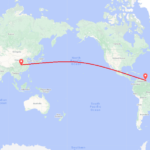
Sea freight from China to Trinidad and Tobago is the backbone of the import trade between the world’s largest manufacturing economy and the southern Caribbean’s most industrialized island nation. It is also the cheapest way to move volume across that distance — but the port-to-port rate you are quoted is only about half of what your shipment will actually cost you.
This guide walks through the entire process the way we run it every week: which ports and routes are involved, what a 20ft or 40ft container really costs in 2026, how Trinidad and Tobago Customs stacks duty and VAT on your CIF value, which documents must be ready before the vessel sails, and where first-time importers quietly lose money after the ship docks. Whether you are moving appliances into Port of Spain, project cargo into Point Lisas, or stocking an Amazon FBA-style distribution channel, the sequence is the same.

Quick Answer: Sea Freight from China to Trinidad and Tobago at a Glance
| What You Need to Know | Typical Answer |
|---|---|
| Main destination port | Port of Spain, Trinidad (the island’s largest container gateway) |
| Other gateways | Point Lisas, Chaguaramas, and Crown Point on Tobago |
| Common transshipment hubs | Miami, Balboa / Cristobal (Panama), Kingston, Caucedo, Bridgetown |
| FCL transit time (port to port) | 30 – 45 days |
| LCL transit time (port to port) | 33 – 48 days |
| Air freight transit time | 6 – 12 days |
| 20ft FCL ocean freight | $4,200 – $6,800 |
| 40ft FCL ocean freight | $5,800 – $8,500 |
| LCL ocean freight | $120 – $320 per CBM |
| Duty basis | CIF value — Cost + Insurance + Freight |
| VAT | 12.5% applied on the duty-inclusive value |
| Online Purchase Tax (OPT) | 7% — applies to B2C online purchases, not standard sea freight entries |
| Customs clearance time | 3 – 7 working days after vessel arrival |
| The one number most importers forget | Duty + VAT often adds 20% – 40% on top of your CIF value |
If you only remember one thing from this page: your landed cost is CIF plus the government’s cut plus the port’s charges — never just the freight rate. An importer who budgets only the ocean leg is planning to lose money.
Understanding Sea Freight Shipping From China to Trinidad and Tobago
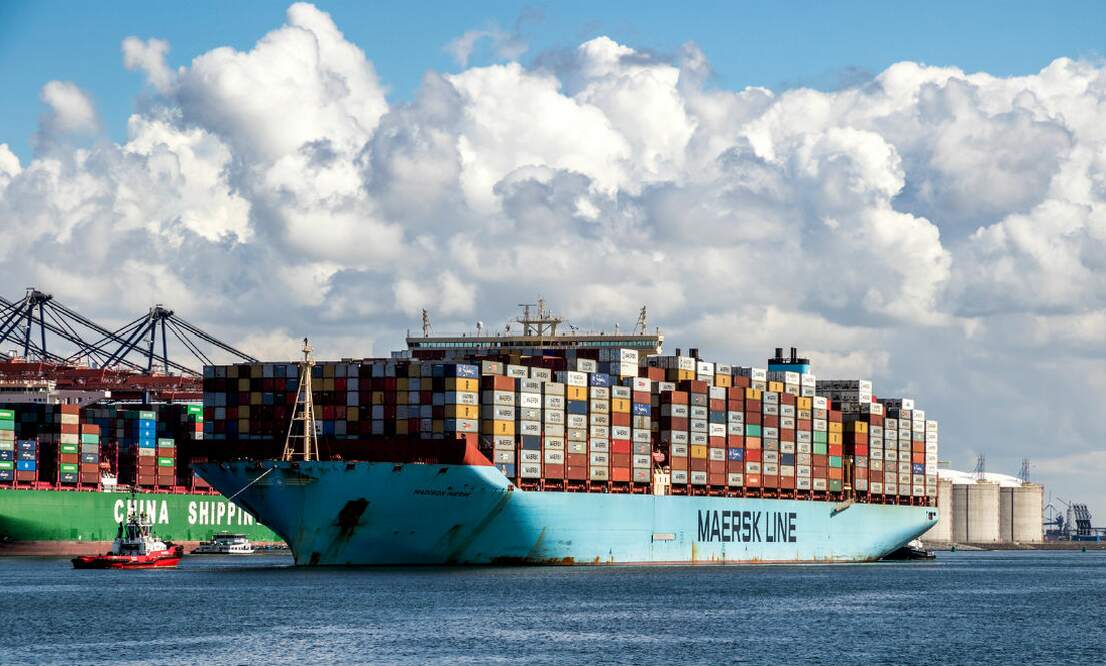
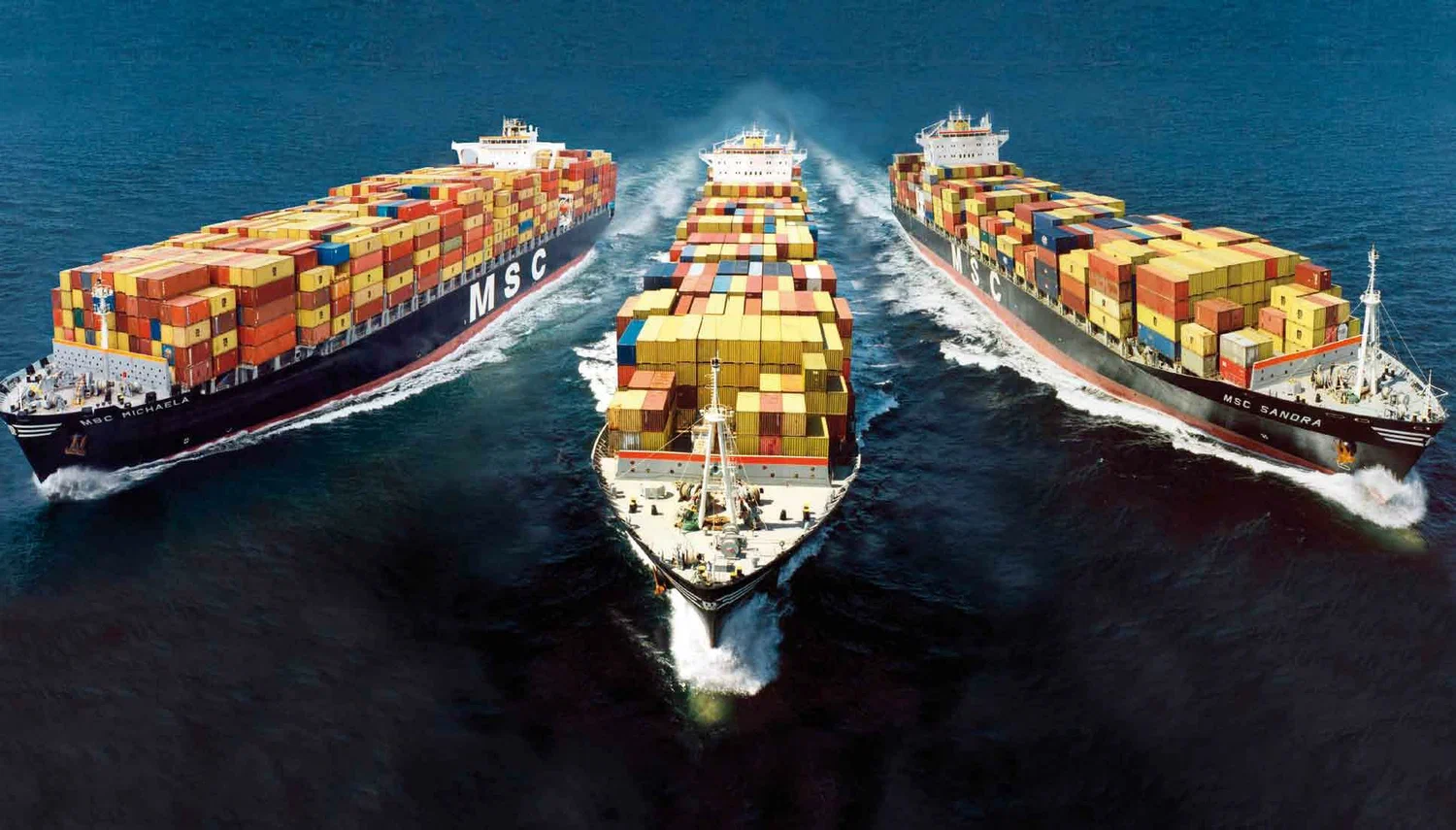
Sea freight is the transportation of cargo by ocean-going vessel from one port to another. On a lane like South China to Port of Spain there is no direct, high-frequency service, so the journey is almost always built in two or three legs: a mother vessel from China to a Caribbean or US transshipment hub, then a feeder vessel into Trinidad. That structure is exactly why schedules on this route behave differently from a straightforward China–US or China–Europe sailing.
For businesses shipping from China to Trinidad and Tobago, sea freight is the default choice for anything that is not urgent or extremely high in value. The island’s import profile makes this especially true: Trinidad and Tobago is a net food and manufactured-goods importer, and the overwhelming majority of that volume arrives by container.
Why Importers Choose Sea Freight Over Air
| Factor | Sea Freight | Air Freight |
|---|---|---|
| Cost per kg | Fractions of a dollar per kilogram on FCL | Roughly $6 – $12 per kilogram |
| Transit time | 30 – 48 days door to door | 6 – 12 days door to door |
| Best cargo | Furniture, appliances, machinery, building materials, bulk retail stock | Samples, electronics, fashion restocks, spare parts, urgent spares |
| Volume ceiling | Effectively unlimited — up to 40ft high-cube and beyond | Limited by aircraft ULD and weight |
| Carbon intensity | Lowest per ton-kilometer of any freight mode | Highest of the mainstream modes |
| Damage exposure | Lower when properly packed and containerized | Higher handling frequency |
The practical rule: if a stock-out would cost you more than the air premium, fly it. If not, ship it. For everything in between — electronics, cosmetic restocks, seasonal apparel — Air Freight into Piarco International Airport (POS) functions as a pressure valve rather than a primary channel.
The Sea Freight Services That Actually Serve This Lane
Full Container Load (FCL). One shipper, one sealed container. Cargo is loaded at the factory or a consolidation warehouse in China, sealed, and opened only at destination. Fewer handling touches, lower damage risk, and typically the fastest ocean transit because the box does not wait for other cargo.
Less Than Container Load (LCL). Your cargo shares a container with other shippers’ goods. You pay per cubic meter (or per weight ton, whichever is greater), which makes LCL the right answer for shipments under roughly 12 – 15 CBM. The trade-off is time: an LCL box only departs once it is full, and it is deconsolidated at destination before release.
Breakbulk. For cargo that physically cannot fit inside a container — generators, oversized industrial plant, long steel, turbines — Breakbulk Freight Shipping lifts the goods on their own dimensions onto the vessel. This matters more on the Trinidad lane than on almost any other Caribbean route, because Point Lisas serves a dense industrial and petrochemical cluster.
Consolidation services. If you buy from several suppliers in different Chinese cities, consolidated freight shipping collects everything into one export container or one LCL lot, so you receive a single bill of lading instead of five. This is where most first-time importers save the most money with the least effort.
Reefer. Temperature-controlled containers for perishables, pharmaceuticals, and heat-sensitive goods. Space on Caribbean feeder services is limited, so reefers must be booked early.
Costs and Transit Times: What Sea Freight from China to Trinidad and Tobago Really Costs
Ocean rates on this lane are quoted as a base ocean freight plus a stack of surcharges, and they move with fuel prices, vessel space, and peak-season demand. Treat the figures below as realistic planning benchmarks, not fixed prices.
Container Freight Rates from China to Trinidad and Tobago
| Service | Indicative Ocean Freight (USD) | Notes |
|---|---|---|
| 20ft FCL (20GP) | $4,200 – $6,800 | Ideal for dense cargo such as tiles, machinery, and bagged goods |
| 40ft FCL (40GP) | $5,800 – $8,500 | Better value per CBM for volumetric cargo |
| 40ft High Cube (40HQ) | $6,000 – $8,800 | Extra 9.5ft internal height; the default for bulky retail goods |
| LCL | $120 – $320 per CBM | Rate falls as volume rises; 1 – 3 CBM sits at the top of the band |
| Air freight | $6 – $12 per kg | Chargeable weight, volumetric rules apply |
| Express courier | $12 – $20 per kg | Door to door, 4 – 8 days |
Rates differ by origin port. Yantian, Shekou, Nansha, Shanghai, Ningbo, and Qingdao all quote differently, and inland pickup from cities such as Yiwu or Foshan adds a trucking line that is easy to overlook. For a wider view of how carriers construct these numbers, see our breakdown of International Container Shipping Prices.
Transit Times by Service
| Service | Port-to-Port Transit | Realistic Door-to-Door |
|---|---|---|
| FCL, direct-ish routing | 30 – 45 days | 38 – 55 days |
| LCL | 33 – 48 days | 45 – 60 days |
| Breakbulk | 35 – 55 days | Varies with project scope |
| Air freight | 6 – 12 days | 8 – 15 days |
| Express courier | 4 – 8 days | 4 – 8 days |
Two things drive the spread. First, transshipment: whether your box connects cleanly at the hub or waits for the next feeder sailing can add a week or more. Second, destination-side dwell: your container only becomes “yours” after the entry is processed and duties are paid, so clearance speed is effectively part of your transit time.
What Else Sits on Your Invoice
| Charge | Where It Applies | Typical Range |
|---|---|---|
| Origin handling / THC | Chinese port | $150 – $350 per container |
| Documentation / bill of lading fee | Origin | $50 – $150 |
| Export customs declaration | China | $50 – $120 |
| Destination THC | Port of Spain | $250 – $500 per container |
| Customs broker fee | Trinidad and Tobago | $150 – $450 per entry |
| Port storage | After free days expire | Charged daily from day 4 onward |
| Inland delivery | Port to your premises | $200 – $900 depending on distance and size |
| Duty + VAT | Customs assessment | 20% – 40%+ of CIF |
That last line is the one that changes budgets. Our quick check on how much is ocean freight from China is a useful sanity check on the freight portion, but the tax portion has to be calculated separately for every shipment.
The Ports and Routes Behind This Lane
Ports in Trinidad and Tobago
Port of Spain. The country’s principal commercial port and the gateway for the large majority of containerized imports. Its berths handle container, breakbulk, and passenger traffic, and its position on the Gulf of Paria puts it within easy trucking distance of the capital’s commercial districts and the main industrial estates.
Point Lisas. The industrial port on the west coast, purpose-built to serve the petrochemical and heavy-manufacturing cluster. It handles bulk, breakbulk, and project cargo, and it is the natural discharge point for machinery and plant equipment.
Chaguaramas. The secondary general cargo port, used for a mix of cargo types including vehicles and project consignments.
Crown Point (Scarborough), Tobago. The island’s link to Tobago; smaller volumes and fewer sailings, so Tobago-bound cargo usually clears in Trinidad and moves onward by domestic ferry or barge.
Routes and Transshipment Hubs
There is no meaningful direct weekly service from Chinese ports to Port of Spain. Sailings are built on relay structures, and the hub your cargo connects through determines both your transit time and your exposure to delay. The hubs that appear most often on this lane:
| Hub | Why It Matters |
|---|---|
| Miami / Port Everglades | High-frequency Caribbean feeder network; strong for LCL consolidations |
| Balboa / Cristobal (Panama) | The main Pacific-to-Caribbean relay after the Canal transit |
| Kingston, Jamaica | Major Caribbean transshipment hub with frequent regional feeders |
| Caucedo, Dominican Republic | Growing relay point for Central and South Caribbean services |
| Bridgetown, Barbados | Common final relay for southern Caribbean destinations |
Because these feeder legs are shared across several islands, your cargo may co-load with shipments bound for Jamaica, Barbados, or Guyana before yours is discharged. That is normal — but it is precisely why a forwarder who knows the feeder schedule is worth more on this lane than on a direct one.
Preparing for Your Sea Freight Shipment
Calculating Cargo Volume and Weight
Two numbers decide your cost: chargeable volume and gross weight. Every carrier compares them and bills whichever is greater under the applicable tariff rules.
- Volume is measured in cubic meters (CBM) using the outer carton dimensions, not the product dimensions.
- Gross weight includes the product, inner packaging, outer cartons, pallets, and any crating.
- Volumetric weight matters for air and courier — a large light carton can be billed on its dimensions rather than its actual weight.
Measure every carton in centimeters, multiply L × W × H, divide by 1,000,000 for CBM, then total. Add 5% – 10% for pallets, dunnage, and stacking gaps. If you are within 20% of filling a 20ft container, get both an FCL and an LCL quote — the crossover point surprises people more often than they expect.
Choosing Between FCL and LCL
| Factor | FCL | LCL |
|---|---|---|
| Best for | Roughly 15 CBM and above | Under roughly 15 CBM, or multi-supplier small lots |
| Pricing basis | Per container, regardless of fill | Per CBM or per weight ton, whichever is greater |
| Transit time | Faster — departs on booking | Slower — waits for consolidation and is deconsolidated on arrival |
| Handling risk | Low; sealed door to door | Higher; cargo is co-loaded and sorted |
| Destination charges | Higher fixed charges, spread over more cargo | Higher per-unit destination charges |
| Flexibility | No sharing, no schedule compromise | Excellent for testing a new product line |
The detailed mechanics of the trade-off are covered in our guide to what is LCL and FCL in shipping. The short version: LCL is a volume decision, but it is also a time decision.
Selecting the Right Container Size
| Container Type | Internal Dimensions (approx.) | Usable Capacity | Typical Use |
|---|---|---|---|
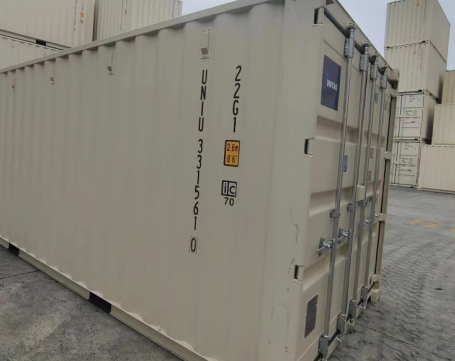
| 20ft Standard | 5.9m × 2.35m × 2.39m | ~33 CBM | Dense cargo, tiles, machinery, bagged goods |
| 40ft Standard | 12.03m × 2.35m × 2.39m | ~67 CBM | General retail and mixed cargo |
| 40ft High Cube | 12.03m × 2.35m × 2.69m | ~76 CBM | Bulky, light goods — furniture, foam, packaging |
| 45ft High Cube | 13.55m × 2.35m × 2.69m | ~86 CBM | Maximum volume where the lane permits |
| 20ft / 40ft Reefer | Similar footprint, reduced internal height | ~28 / ~59 CBM | Perishables and temperature-sensitive goods |
| Flat rack / open top | No fixed roof or sides | Variable | Out-of-gauge and over-height cargo |
Weight limits matter as much as volume. Road regulations in Trinidad and Tobago, plus the practical limits of feeder vessels, make overloading a false economy — a container that cannot legally move inland is more expensive than a second container.
If you buy from multiple suppliers, Warehouse Services in China let you receive, inspect, label, and consolidate cargo before it is stuffed, which is the single most effective way to avoid paying for air.
Essential Documents for Sea Freight From China to Trinidad and Tobago
Documentation is where shipments are won or lost on this lane. Every document below must exist in a consistent, matching form — one discrepancy between the invoice, the packing list, and the bill of lading can stop an entry.
Commercial Invoice
The commercial invoice is the seller’s statement of the transaction and the primary basis for customs valuation. It must show:
- Seller and buyer names, addresses, and contact details
- A precise, itemized description of the goods — “plastic household storage box, 40L” is acceptable; “household goods” is not
- Quantity, unit price, total value, and currency
- Incoterms (for example FOB Shenzhen or CIF Port of Spain)
- Country of origin for each line item
Customs valuation starts here. An undervalued invoice is not a cost-saving measure — it is the fastest route to a re-assessment, a penalty, and a detained shipment.
Packing List
The packing list tells customs and the terminal exactly what is inside each package:
- Number of packages, cartons, or pallets
- Contents of each package, with weights and dimensions
- Packing method (cartons, pallets, crates, drums)
- Shipping marks and handling instructions
The packing list total must reconcile with the invoice and with the bill of lading. When it does not, the shipment sits.
Bill of Lading
The bill of lading (B/L) is simultaneously a receipt, a contract of carriage, and a document of title. Whoever holds the original — or the telex release — can claim the cargo. It records the shipper, consignee, notify party, vessel and voyage, port of loading and discharge, container and seal numbers, and the description of goods.
On a transshipment lane, check that the B/L shows the correct final port of discharge and that the notify party is accurate. A B/L naming the wrong notify party is a common and entirely avoidable delay.
Certificate of Origin
The certificate of origin certifies where the goods were produced. It is issued in China by the relevant authority or chamber of commerce. Trinidad and Tobago is a CARICOM member and applies the CARICOM Common External Tariff, so origin documentation matters for tariff treatment and for demonstrating compliance with trade rules.
Customs Declaration and Electronic Entry
Import entries into Trinidad and Tobago are filed electronically through the country’s ASYCUDA World-based Customs Broker and Cargo System. Your broker files a self-assessed entry, and supporting documents are transmitted through the TTBizLink single electronic window. Practically, this means your documentation has to be digitized, legible, and complete before the vessel arrives — not after.
Trinidad and Tobago Customs: Duties, Taxes and Clearance
How Trinidad and Tobago Calculates Duty
Trinidad and Tobago Customs assesses everything on the CIF value — the cost of the goods plus international insurance plus freight to the port of discharge. Duty itself is then only the first layer. Charges are applied in a fixed order and each layer builds on the one before, which is why the total is always larger than the headline rate suggests:
- Import duty on the CIF value, at the rate for the specific HS code — typically 10% – 20% on general consumer goods, lower on many inputs and machinery, and higher on vehicles and certain protected categories.
- Online Purchase Tax (OPT) at 7% — this applies to goods purchased online and imported for personal, non-commercial use, and is generally not applied to standard commercial sea freight entries.
- Value Added Tax (VAT) at 12.5%, applied to the duty-inclusive value — that is, CIF plus duty plus any applicable OPT. A handful of categories, such as certain computer equipment and educational materials, are treated as VAT-free.
- Customs service charge and other statutory levies, calculated as a small percentage of CIF, together with fixed per-entry administrative fees.
Because VAT is charged on the duty-inclusive total, a 20% duty line does not produce a 32.5% tax bill — it produces a compounding one. That compounding is the reason landed costs on this lane surprise importers who only looked at the freight quote.
Illustrative Landed-Cost Example
A shipment of household appliances and small electronics with a CIF value of $20,000, assessed at a blended duty rate of 20%:
| Charge | Rate Used | Amount (USD) |
|---|---|---|
| CIF value (cost + insurance + freight) | — | $20,000 |
| Import duty | 20% of CIF | $4,000 |
| Subtotal after duty | $24,000 | |
| VAT | 12.5% of $24,000 | $3,000 |
| Customs service charge and statutory levies | ~0.5% of CIF plus fixed fees | ~$130 |
| Total government charges | ~$7,130 (≈36% of CIF) |
Add the destination THC, broker fee, storage if any, and inland delivery, and the true delivered cost of that $20,000 shipment of goods is closer to $27,500 – $28,500 before you have sold a single unit. Swap the blended duty rate for a lower one on machinery or a higher one on certain consumer categories, and that number moves accordingly.
Rates are set by tariff schedule and change. Always confirm the classification and current rate for your specific goods with your broker before you commit to a supplier price — the HS code, not the description you use commercially, determines what you pay.
Import Licensing, Restricted and Prohibited Goods
Not everything that can be legally sold in Trinidad and Tobago can be freely imported. Three categories deserve attention before you place a purchase order:
Goods requiring prior import permission. Certain items are controlled under the import negative list administered by the Trade Licence Unit and require an import licence issued before the goods arrive. Arriving without one is not a delay — it is a refusal.
Goods requiring standards or health endorsement. Food, drugs, cosmetics, and many consumer products need endorsement from the relevant standards, food and drug, or plant and animal health authorities before the entry can be released.
Prohibited and heavily restricted items. Arms and ammunition, imitation firearms and toy guns, camouflage-pattern clothing, counterfeit or infringing goods, and obscene material are prohibited or tightly controlled. Vehicles are subject to specific import rules of their own and should always be checked case by case.
The Clearance Process Step by Step
| Stage | What Happens | Who Acts |
|---|---|---|
| 1. Pre-arrival entry | Entry data is lodged before the vessel berths — ideally at least 48 hours ahead | Your broker |
| 2. Electronic assessment | The system calculates duty, VAT, and levies on the declared CIF value | Customs system |
| 3. Duty payment | Charges are settled against the entry | Importer or broker |
| 4. Selectivity channel | The entry is routed — red for physical inspection, yellow for documentary check, blue for post-audit, green for immediate release | Customs |
| 5. Agency endorsement | Where required, other government agencies endorse through the electronic single window | Standards, health, trade authorities |
| 6. Release and delivery | Container is released, picked up, and moved inland | Haulier, terminal |
Handled cleanly, an entry clears in roughly 3 – 7 working days. Handled with missing endorsements or a mis-declared value, it can run into weeks. Working with a broker who understands the process is what Customs Clearance expertise actually means in practice.
The Sea Freight Shipping Process Step-by-Step
1. Get a Quote and Book the Space
Share the product type, HS code if known, carton count, total CBM, gross weight, supplier location, and required delivery date. A quote built on “about 10 pallets” is a guess. Confirm the routing, the free time at destination, and which charges are included and excluded before you commit.
2. Pick Up from the Supplier and Move to Origin
Cargo is collected from your supplier, delivered to the port or a consolidation warehouse, and prepared for loading. This is the stage where marking, labeling, and repacking decisions determine whether the rest of the journey goes smoothly.
3. Export Customs Clearance in China
The export declaration is filed in China against the commercial invoice and packing list. China does not generally impose export duty on ordinary goods, but the declaration must be accurate — it is the document set that destination customs will compare against.
4. Loading and Ocean Transit
The container is stuffed, sealed, weighed, and loaded. It then moves on the mother vessel, transships at a hub, and proceeds on a feeder into Trinidad. During this leg you should be receiving tracking updates rather than chasing them.
5. Import Clearance in Trinidad and Tobago
Your broker files the entry, duty and VAT are paid, the selectivity channel is assigned, and any required agency endorsements are obtained. Cargo is only released once this is complete — which is why documentation prepared before arrival is worth more than any negotiation on the freight rate.
6. Unload and Deliver
The container is released to a haulier and moved to your warehouse, store, or project site. For importers who would rather not manage the handoffs, a Door to Door Shipping structure — or a dedicated programme such as door to door shipping from China to Trinidad and Tobago — puts the pickup, export clearance, ocean leg, import clearance, duty payment, and final delivery under a single party.
Common Challenges on the China to Trinidad and Tobago Lane
Transshipment Delay
Because there is no direct high-frequency service, missed feeder connections are the single most common source of delay. Building a one-week buffer into your planning is not pessimism — it is accuracy.
Port Congestion and Storage Charges
Port of Spain terminal capacity is finite, and peak import periods tighten it further. Free time at destination is short, and storage accrues daily once it expires. Clear your entry fast, or pay for the privilege of waiting.
Cargo Damage in Transit
Multiple handlings across a transshipment leg increase exposure to rough handling and condensation. Proper export packing, correct use of desiccants, and adequate securing inside the container are what prevent claims. Where the cargo value justifies it, Insurance Services convert a potential total loss into a recoverable claim — marine cargo cover is inexpensive relative to the value it protects.
Customs Valuation Disputes
Under-declaration invites re-assessment. So does a vague description. A precisely written invoice with an accurate HS code is the cheapest form of protection available to an importer.
Restricted Goods Discovered at the Port
A purchase order placed without checking import controls can end in a consignment that cannot be cleared at all. Check licensing and standards requirements before you pay your supplier, not after.
Tips for a Smooth Sea Freight Experience
Choose the Right Forwarder, Not Just the Cheapest Rate
Look for demonstrated experience on Caribbean lanes specifically, clear documentation on what is included, a named contact, and a willingness to show you the duty calculation. Our guide to how to choose the right freight forwarder sets out the questions worth asking.
Pack and Label for a Two-Stage Voyage
Use export-grade cartons, reinforce heavy items, keep cartons within pallet footprint limits, and mark every package with the shipping marks shown on your packing list. Label the outer carton — customs does not open inner packaging to find a label.
Reconcile Your Documents Before the Vessel Sails
Invoice, packing list, and bill of lading must agree on quantity, description, value, weights, and consignee details. Fixing a discrepancy at origin costs an email. Fixing it at Port of Spain costs days.
Know Your HS Codes Before You Order
Classification determines duty rate, licensing requirements, and standards endorsement. Getting it right at the purchase-order stage avoids discovering a problem after the goods are on the water.
Track Actively and Plan for Buffer
Ask for milestone updates — gate-in, loaded, departed, transshipped, arrived, cleared, delivered — and plan promotions or launches around the realistic end of that range, not the optimistic one.
If You Sell Through Amazon or a Marketplace
Sellers replenishing FBA inventory face the same lane constraints as any other importer. AMAZON FBA – Dantful support handles the labeling, packing, and delivery requirements that marketplace shipments impose on top of ordinary customs clearance.
Frequently Asked Questions
How long does sea freight from China to Trinidad and Tobago take?
Port-to-port transit is typically 30 – 45 days for FCL and 33 – 48 days for LCL. Door to door, plan on 38 – 60 days depending on routing, transshipment connections, and how quickly your entry clears.
How much does it cost to ship a 20ft or 40ft container from China to Trinidad and Tobago?
Indicative 2026 ocean freight is $4,200 – $6,800 for a 20ft and $5,800 – $8,500 for a 40ft, before origin charges and destination charges. Duty and VAT are separate and are calculated on CIF.
Is FCL or LCL better for my shipment?
Below roughly 12 – 15 CBM, LCL is usually cheaper. Above that, FCL generally wins on both cost per CBM and transit time. Because LCL adds consolidation time, urgent cargo may justify FCL even at lower volumes.
Which port in Trinidad and Tobago will my container arrive at?
Most containerized imports discharge at Port of Spain. Point Lisas handles industrial and bulk cargo, Chaguaramas handles secondary general cargo, and Tobago-bound cargo normally clears in Trinidad and moves onward.
What documents do I need?
A commercial invoice, packing list, bill of lading, certificate of origin where applicable, and an electronic customs entry filed in Trinidad and Tobago. Certain goods also need import licences or agency endorsements.
How much duty and VAT will I pay?
Duty depends on the HS code and is assessed on CIF, then VAT is charged at 12.5% on the duty-inclusive value. As a planning figure, expect government charges to add roughly 20% – 40% of CIF for general consumer goods — less for duty-free or reduced-rate categories, more for higher-tariff goods.
Why Importers Work With Dantful
Managing this lane means managing three things simultaneously: booking space on a transshipment route with limited capacity, preparing documentation that stands up to scrutiny at Port of Spain, and budgeting duty and VAT accurately before the goods are ordered. Getting any one of those wrong is expensive.
Dantful is a Class-A licensed freight forwarder in shenzhen china, operating since 2008 with NVOCC, FMC, and Jctrans credentials and a network of agents covering more than 200 countries. From our Shenzhen base we handle sea freight, air freight, consolidation, warehousing, customs clearance, cargo insurance, and door-to-door delivery on the China–Trinidad and Tobago lane — with direct carrier contracts on the ocean leg and daily status updates so you know where your cargo is at every stage.
Send us your carton list, supplier locations, and target delivery date, and we will return a full landed-cost breakdown: ocean freight, origin and destination charges, the duty and VAT assumption, and a realistic delivery window.

Young Chiu is a seasoned logistics expert with over 15 years of experience in international freight forwarding and supply chain management. As CEO of Dantful International Logistics, Young is dedicated to providing valuable insights and practical advice to businesses navigating the complexities of global shipping.