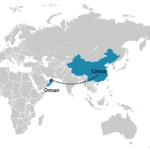
Want to know the latest shipping rates from China to Oman in 2026? Or maybe you’re stuck comparing quotes that never seem to line up — one includes everything but the kitchen sink, another looks cheap until you realize it only covers ocean freight.
This article breaks down the real costs — by sea, air, and door-to-door — so you know what a fair price actually looks like. We’ll also walk through Oman’s customs duties and VAT, look at a couple real-world examples, and cover some practical ways to cut unnecessary costs without sacrificing delivery reliability.
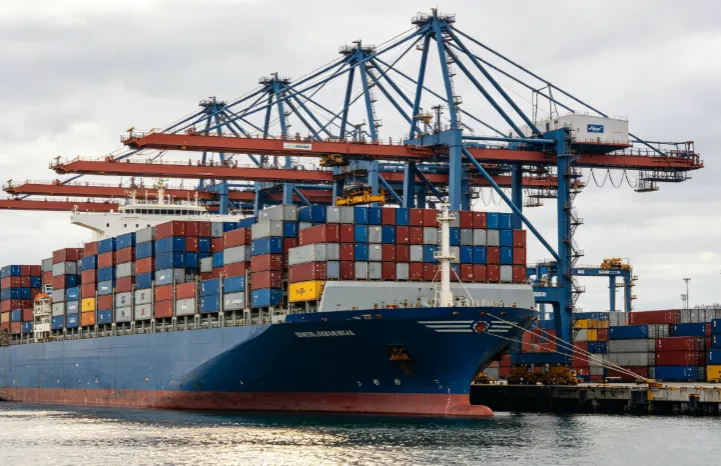
Shipping Methods at a Glance: Sea vs Air vs Express
Before diving into specific prices, it’s important to understand the three shipping methods available from China to Oman — because choosing the wrong one can cost you thousands.
The table below gives you a quick side-by-side comparison. Use it as your starting point before drilling into the detailed pricing sections that follow.
| Method | Cost Range | Transit Time | Best For | Volume / Weight Sweet Spot |
|---|---|---|---|---|
| Sea Freight FCL (Full Container) | $1,800–$5,500 per container | 18–30 days | Bulk goods, heavy cargo, non-urgent shipments | >15 CBM |
| Sea Freight LCL (Less than Container) | $90–$195 per CBM | 22–35 days | Smaller shipments, 2–15 CBM | 2–15 CBM |
| Air Freight | $2.50–$8.00 per kg | 3–7 days | High-value goods, urgent shipments, perishables | 45–1,000+ kg |
| Express Courier (DHL/FedEx/UPS) | $7–$14 per kg | 2–5 days | Samples, documents, small e-commerce parcels | <50 kg |
Here’s a simple three-question framework to narrow down your choice:
- How much volume are you shipping? If it’s over 15 CBM, sea freight FCL is almost certainly your best bet. Under 2 CBM and urgent? Express or air freight.
- What’s your deadline? Sea freight takes 3–5 weeks door-to-door. Air freight takes 5–10 days. If your inventory can handle the lead time, sea freight saves you 60–80%.
- Do you need door-to-door service? If you don’t have a customs broker in Oman, DDP (Delivered Duty Paid) sea or air freight is the most hassle-free option — the freight forwarder handles everything from factory pickup to final delivery.
Pro Tip: “Cheapest” doesn’t always mean “best value.” A $200 savings on ocean freight evaporates quickly if your goods miss a sales window or rack up five days of port storage fees because your customs documentation wasn’t ready. Always weigh total landed cost — not just the freight quote.
Sea Freight Costs from China to Oman
Sea freight is the backbone of China-Oman trade, handling the vast majority of commercial cargo between the two countries. The cost you pay depends primarily on three factors: your origin port in China, your destination port in Oman, and whether you’re booking a full container (FCL) or sharing space (LCL).
FCL (Full Container Load): 20ft, 40ft & 40HQ Rates
When you book FCL, you’re renting the entire container — which means you control the loading process and your goods travel sealed from origin to destination. Below are the 2026 Q3 market reference rates for FCL shipments from major Chinese ports to Oman’s two primary container terminals: Sohar Port (the main gateway for northern Oman, located near the industrial heartland) and Salalah Port (a major transshipment hub in the south).
Shenzhen (Yantian / Shekou) → Sohar
| Container Type | Ocean Freight (Port-to-Port) |
|---|---|
| 20ft GP | $1,850–$2,350 |
| 40ft GP | $2,250–$3,450 |
| 40ft HQ (High Cube) | $2,350–$3,550 |
Shanghai → Sohar
| Container Type | Ocean Freight (Port-to-Port) |
|---|---|
| 20ft GP | $2,050–$2,550 |
| 40ft GP | $2,200–$3,650 |
| 40ft HQ (High Cube) | $2,350–$3,750 |
Ningbo → Sohar
| Container Type | Ocean Freight (Port-to-Port) |
|---|---|
| 20ft GP | $1,950–$2,550 |
| 40ft GP | $2,200–$3,700 |
| 40ft HQ (High Cube) | $2,350–$3,800 |
Guangzhou (Nansha) → Sohar
| Container Type | Ocean Freight (Port-to-Port) |
|---|---|
| 20ft GP | $1,750–$2,250 |
| 40ft GP | $2,100–$3,350 |
| 40ft HQ (High Cube) | $2,250–$3,500 |
Data note: Rates above are port-to-port ocean freight only, sourced from spot market data as of July 2026. They fluctuate weekly based on carrier capacity, fuel prices, and seasonal demand.
Surcharge Breakdown — What’s Beyond the Base Freight
The ocean freight line item is only part of the picture. Here’s what gets added to a typical 20ft FCL shipment:
| Surcharge / Fee | Estimated Range (20ft) | Notes |
|---|---|---|
| BAF (Bunker Adjustment Factor) | $80–$180 | Fuel surcharge, adjusted quarterly |
| THC (Terminal Handling Charge — Origin) | $120–$250 | Paid at China departure port |
| THC (Terminal Handling Charge — Destination) | $100–$160 | Paid at Oman arrival port (approx. OMR 40–60) |
| Documentation Fee | $50–$100 | Bill of Lading issuance |
| Seal Fee | $10–$25 | Container seal |
| VGM (Verified Gross Mass) | $15–$40 | Mandatory weight verification |
| Customs Declaration (China Export) | $50–$110 | Export customs filing |
| Total Surcharges (Estimate) | $425–$865 | On top of base ocean freight |
When does FCL become more cost-effective than LCL?
A good rule of thumb: if your shipment exceeds 12–15 CBM, FCL typically delivers a lower cost per cubic meter than LCL. For example, at $100/CBM for LCL, 15 CBM costs $1,500 — which is already approaching a 20ft FCL base rate of $1,850. But with FCL you get 28–33 CBM of usable space, meaning your effective cost per CBM drops dramatically as you fill the container.
LCL (Less than Container Load): Per CBM Pricing
For smaller shipments, LCL lets you pay only for the space you use. Your cargo is consolidated with other shippers’ goods at a Container Freight Station (CFS) in China and de-consolidated upon arrival in Oman.
| Volume Tier | Cost per CBM (Shenzhen → Sohar) | Cost per CBM (Shanghai/Ningbo → Sohar) |
|---|---|---|
| 0–3 CBM | $140–$195 | $150–$210 |
| 3–5 CBM | $110–$155 | $120–$170 |
| 5–10 CBM | $95–$135 | $100–$150 |
| 10–15 CBM | $85–$120 | $90–$135 |
LCL hidden costs to watch out for: Unlike FCL where you control the container, LCL shipments incur additional destination charges that first-time importers often overlook — CFS deconsolidation fees ($35–$80 per CBM at Sohar/Salalah), destination documentation fees ($50–$100), and higher customs examination probability. LCL also takes 3–7 days longer than FCL due to consolidation and deconsolidation time at both ends.
Sea Freight Transit Times by Route
Transit time varies by port pair and whether your shipment is on a direct service or transships through a regional hub like Jebel Ali (Dubai). Direct sailings are faster but less frequent; transshipment adds 3–7 days but offers more departure date flexibility.
| Origin Port | Destination Port | Direct / Transshipment | Transit Time |
|---|---|---|---|
| Shenzhen | Sohar | Direct available | 18–22 days |
| Shenzhen | Salalah | Mostly transshipment | 22–28 days |
| Shanghai | Sohar | Direct available | 22–28 days |
| Ningbo | Sohar | Direct available | 20–26 days |
| Guangzhou (Nansha) | Sohar | Mostly transshipment | 22–30 days |
| Any China port | Salalah | Mostly via Jebel Ali | 24–32 days |
Factors that can extend transit times: port congestion at Jebel Ali (a common bottleneck for Middle East routes), bad weather in the Strait of Hormuz, and reduced schedule reliability during peak seasons — especially in the weeks leading up to Chinese New Year and the Q4 holiday rush.
Air Freight & Express Shipping Costs Per Kg
When speed matters more than cost, air freight and express courier services step in. The price gap between sea and air is significant — but for high-value, time-sensitive, or lightweight cargo, the math often works out.
Air Freight: Airport-to-Airport Cost by Weight Tier
Air freight from China to Oman is priced on chargeable weight — the higher of actual gross weight or volumetric weight. Most cargo flies from Shenzhen (SZX), Guangzhou (CAN), or Shanghai (PVG) to Muscat International Airport (MCT), typically transiting through Dubai (DXB), Doha (DOH), or Abu Dhabi (AUH).
| Weight Tier | Cost per Kg (Airport-to-Airport) |
|---|---|
| +45 kg | $2.80–$4.10 |
| +100 kg | $2.50–$3.80 |
| +300 kg | $2.20–$3.40 |
| +500 kg | $2.00–$3.20 |
| +1,000 kg | $1.80–$2.90 |
Transit time for air freight is 3–7 days from departure, including transshipment time at the Middle East hub. Customs clearance at MCT typically adds 1–2 business days.
Understanding volumetric weight: Airlines charge based on space, not just weight. The formula is (Length × Width × Height in cm) ÷ 6,000. A box measuring 100×80×60 cm has a volumetric weight of (100×80×60) ÷ 6,000 = 80 kg — even if its actual weight is only 45 kg. This is the single most common surprise for first-time air freight shippers, especially when shipping lightweight, bulky items like furniture, packaging materials, or foam products.
Express Courier (DHL / FedEx / UPS)
For small, urgent shipments under 50 kg, international express couriers offer true door-to-door delivery with built-in customs clearance — the fastest and most convenient option, but at a premium price.
| Weight Tier | Cost per Kg (Door-to-Door) |
|---|---|
| 1–10 kg | $10–$14 |
| 10–30 kg | $8–$12 |
| 30–50 kg | $7–$10 |
Express transit times from China to Oman typically range from 2–5 days. Best used for samples, replacement parts, documents, and small e-commerce orders where the shipping cost is small relative to the product value or urgency.
Air Freight vs Express: Which Should You Choose?
| Criteria | Air Freight | Express Courier |
|---|---|---|
| Shipment size | 45 kg+ | Under 50 kg |
| Service scope | Airport-to-airport | Door-to-door |
| Customs clearance | Arranged by consignee or broker | Included in service |
| Cost efficiency at scale | Excellent for 100 kg+ | Declines rapidly above 30 kg |
| Best use case | Commercial restocking, machinery, electronics | Samples, urgent documents, e-commerce |
Pro Tip: “For shipments between 50 and 100 kg, always compare both air freight and express courier quotes side by side. The price gap is often smaller than you’d expect — and express includes door-to-door delivery and customs brokerage, which can tip the value equation.”
Understanding the Full Cost: Oman Customs Duties, VAT & Hidden Fees
The ocean or air freight charge is just the beginning. To understand the true landed cost of importing into Oman, you need to account for customs duties, VAT, clearance fees, and several often-overlooked destination charges.
Oman’s Import Duty System
Oman applies customs duties based on the Harmonized System (HS) Code classification of your goods. Duty rates are calculated on the CIF value (Cost of the goods + International freight + Insurance).
| Product Category | Typical Duty Rate |
|---|---|
| Electronics & consumer appliances | 0%–5% |
| Machinery & industrial equipment | 0%–5% |
| Textiles, clothing & footwear | 5% |
| Furniture & home goods | 5% |
| Construction materials & hardware | 5% |
| Toys & sporting goods | 5% |
| Food products (non-perishable) | 0%–5% |
| Pharmaceuticals & medical devices | 0%–5% (permit required) |
| Vehicles & auto parts | 5% |
VAT: Since April 2021, Oman has levied a 5% Value Added Tax (VAT) on most imported goods, calculated on top of the CIF value plus any applicable customs duty. Unlike some GCC neighbors, Oman’s VAT applies even to low-value B2C shipments — there’s no blanket de minimis threshold for VAT exemption. For B2C parcels with a CIF value below OMR 100 (approximately $260 USD), customs duty may be waived, but the 5% VAT still applies.
Step-by-Step Duty & VAT Calculation
Here’s exactly how Omani customs calculates what you owe. Let’s use a real example: a shipment of consumer electronics with a product value of $10,000, shipped via 20ft FCL from Shenzhen to Sohar.
Step 1 — Calculate CIF Value:
| Component | Amount |
|---|---|
| Product value (invoice) | $10,000 |
| Ocean freight (20ft, Shenzhen → Sohar) | $2,100 |
| Cargo insurance (0.2% of product value) | $20 |
| CIF Value | $12,120 |
Step 2 — Calculate Customs Duty: Assuming the electronics fall under a 5% duty rate:
- Customs Duty = CIF Value × Duty Rate
- Customs Duty = $12,120 × 5% = $606
Step 3 — Calculate VAT:
- VAT = (CIF Value + Customs Duty) × 5%
- VAT = ($12,120 + $606) × 5% = $636.30
Step 4 — Add Clearance Fees:
| Fee | Amount |
|---|---|
| Customs broker fee | $80–$180 |
| Destination THC (Sohar port) | $120–$160 |
| Documentation / admin | $50–$100 |
| Estimated clearance fees | $250–$440 |
Total Import Cost for This Shipment:
| Cost Category | Amount |
|---|---|
| CIF Value | $12,120 |
| Customs Duty (5%) | $606 |
| VAT (5%) | $636 |
| Clearance fees | ~$350 |
| Total Landed Cost (Port-to-Port) | ~$13,712 |
This means the true cost of importing, just to the port gate, is roughly 37% above the product invoice value — and that’s before any inland transportation to your warehouse.
Hidden Fees That Catch First-Time Importers Off Guard
Beyond the standard duty and VAT, these charges can inflate your budget if you aren’t prepared:
- Demurrage (port storage): Containers typically get 3–7 free days at Sohar or Salalah port. After that, expect $50–$150 per day. A customs clearance delay of even 4–5 extra days can add $500+ to your costs.
- Detention (container rental): If you hold the container beyond the carrier’s free time (usually 7–10 days outside the port), daily charges apply — often $30–$100/day.
- Customs inspection / X-ray fees: Random physical inspections are not uncommon. If selected, expect a $100–$300 fee plus the cost of any delay.
- CFS stripping charges (LCL only): If you ship LCL, the destination CFS charges for unloading and sorting — typically $35–$80 per CBM, often not quoted in the origin LCL rate.
Pro Tip: “Always confirm the free storage and free detention periods for your specific carrier and port before booking. Sohar typically offers 5 free days for containers; Salalah can vary from 3–7 days depending on the terminal and the shipping line.”
Required Customs Clearance Documents
To clear goods through Oman Customs, you’ll need:
- Commercial Invoice — showing product description, value, HS codes, and seller/buyer details
- Packing List — detailing quantities, weights, dimensions per package
- Bill of Lading (B/L) — the carrier’s receipt and contract of carriage for sea freight
- Certificate of Origin — proving the goods are manufactured in China (may qualify for preferential duty treatment under trade agreements)
- Import License — required for certain regulated product categories (pharmaceuticals, food, chemicals)
- GCC Conformity Mark — required for certain consumer products like electronics and toys sold in Gulf markets
- Arabic labeling — some consumer goods (food, cosmetics, health products) require Arabic-language labels or instructions
Incoterms & DDP: What You’re Really Paying For
One of the biggest reasons two importers pay wildly different prices for “the same shipment” comes down to Incoterms — the international commercial terms that define who pays for what and who bears risk at each stage of the journey. Understanding them isn’t just a legal formality; it’s one of the most powerful levers for controlling your total shipping cost.
Incoterms Comparison: Who Pays for What?
| Responsibility | EXW (Ex Works) | FOB (Free On Board) | CIF (Cost, Insurance, Freight) | DDU (Delivered Duty Unpaid) | DDP (Delivered Duty Paid) |
|---|---|---|---|---|---|
| Factory loading | Buyer | Seller | Seller | Seller | Seller |
| Export customs (China) | Buyer | Seller | Seller | Seller | Seller |
| Origin port charges | Buyer | Seller | Seller | Seller | Seller |
| Ocean/Air freight | Buyer | Buyer | Seller | Seller | Seller |
| Insurance | Buyer | Buyer | Seller | Seller | Seller |
| Destination port charges | Buyer | Buyer | Buyer | Seller | Seller |
| Import customs (Oman) | Buyer | Buyer | Buyer | Buyer | Seller |
| Customs duty & VAT | Buyer | Buyer | Buyer | Buyer | Seller |
| Last-mile delivery | Buyer | Buyer | Buyer | Seller | Seller |
How to choose:
- If you’re importing for the first time and don’t have a customs broker in Oman → choose DDP. The freight forwarder handles everything, and you get a single all-in quote with no surprises.
- If you have a trusted customs broker in Oman and want to optimize costs → FOB or CIF gives you more control over the destination-side process.
- If you’re picking up goods directly from a supplier’s factory and managing the entire logistics chain yourself → EXW gives maximum control but also maximum responsibility.
How DDP Door-to-Door Shipping Works (Step by Step)
DDP (Delivered Duty Paid) is the gold standard for hassle-free importing — especially popular among Amazon FBA sellers, e-commerce brands, and SMEs without dedicated logistics teams. Here’s what happens from start to finish:
- Factory Pickup: The freight forwarder collects your goods from the supplier’s factory in China — whether it’s in Shenzhen, Guangzhou, Yiwu, or Foshan.
- China Export Customs Clearance: Your forwarder files the export declaration with China Customs, handling all documentation including the commercial invoice, packing list, and any required export permits.
- International Transport: Cargo is loaded and shipped — either by sea to Sohar/Salalah or by air to Muscat (MCT).
- Oman Import Customs Clearance: Upon arrival, a licensed customs broker (working on your forwarder’s behalf) submits import documentation to Oman Customs via the electronic single-window system.
- Duty & VAT Payment: The forwarder pays all assessed customs duties and VAT directly to Omani authorities — you don’t need to set up an account or deal with tax authorities yourself.
- Port/Airport Cargo Release: Once cleared, the cargo is released from the port or airport and transferred to a local truck.
- Last-Mile Delivery: The shipment is delivered to your specified address in Oman — whether that’s a commercial warehouse in Muscat, a retail store in Sohar, or an Amazon fulfillment center.
What DDP includes vs. what it typically excludes:
| Included in DDP | Typically NOT Included |
|---|---|
| Factory-to-door freight | Product certification / testing fees |
| Export & import customs clearance | Anti-dumping or countervailing duties (rare) |
| All port/terminal handling charges | Storage beyond free period (if clearance delayed by consignee) |
| Customs duty & VAT payment | Product modification or repackaging requests |
| Inland trucking at both ends | Import permit application fees (for restricted goods) |
| Cargo insurance (if specified) | Bank charges, letter of credit fees |
At Dantful International Logistics, our DDP service to Oman is backed by 15 years of hands-on experience, a 50-person operations team, and a well-established network of licensed customs brokers in Sohar and Muscat. We handle hundreds of DDP shipments to Oman annually — which means we’ve already solved the compliance, documentation, and routing challenges that first-timers typically stumble on.
10 Proven Ways to Reduce Your Shipping Costs from China to Oman
Every importer wants to pay less for freight. But generic advice like “negotiate more” doesn’t actually help. Here are ten specific, actionable strategies — each one tested across hundreds of China-to-Oman shipments.
1. Pick the Right Departure Port
Your choice of Chinese port matters more than most importers realize. Shenzhen (Yantian) and Guangzhou (Nansha) consistently offer lower rates to Oman than Shanghai or Ningbo — typically 10–15% less for the same container type and destination. If your suppliers are in southern China (Guangdong, Fujian), avoid the default assumption that all ports cost the same. Always ask your freight forwarder to quote multiple origin ports.
2. Book 3–4 Weeks in Advance
Last-minute bookings — especially less than 10 days before the vessel’s estimated departure — almost always carry a premium of $200–$500 per container. Carriers prioritize early bookings and release cheaper rate tiers first. This is especially important during the weeks leading up to Ramadan, when Middle East demand surges and space fills quickly.
3. Know Your FCL vs LCL Break-Even Point
If your cargo exceeds 12–15 CBM, FCL is almost always cheaper than LCL on a per-unit basis — and it eliminates LCL destination CFS charges ($35–$80/CBM at the Oman end). For example: 14 CBM at $120/CBM LCL = $1,680, plus ~$500 in destination CFS fees = $2,180. A 20ft FCL at $2,100 all-in is already cheaper, and you get 28+ CBM of usable space.
4. Optimize Your Packaging to Reduce Volumetric Weight
If you’re shipping by air, every cubic centimeter matters. Switch from individual retail boxes to flat-packed bulk packaging where possible. Use palletization to consolidate loose cartons — it reduces per-unit handling charges and speeds up loading/unloading. For sea freight, properly palletized cargo reduces the risk of damage during container stuffing and unstuffing, which means fewer insurance claims and smoother customs inspections.
5. Consolidate Multiple LCL Shipments into One FCL
If you’re sourcing from multiple suppliers in the same region, talk to your freight forwarder about consolidating your LCL shipments into a single FCL container at their warehouse before export. The consolidation step adds 1–2 days but typically reduces your total freight cost by 20–35% once you cross the 12 CBM threshold. This is one of the highest-ROI moves available to growing importers.
6. Avoid Peak Season Surcharges
Freight rates follow a predictable seasonal pattern. The three most expensive times to ship from China to Oman:
- Chinese New Year (late January–February): Factories close, carriers cut capacity, rates spike 20–50%
- Ramadan (dates vary annually): Middle East import demand surges 4–6 weeks before the holy month
- Q4 Holiday Season (September–November): Global peak, carriers apply Peak Season Surcharges of $200–$800 per container
If possible, ship 4–6 weeks before these windows, not during them.
7. Match Your Incoterm to Your Capability
If you have a reliable, experienced customs broker in Oman, CIF will likely save you 8–15% compared to DDP. But — and this is a big “but” — only if your broker actually performs. A single demurrage incident from delayed clearance can wipe out years of Incoterm savings. Be honest about your local capability, and choose accordingly. For most SMEs, DDP’s certainty is worth the premium.
8. Build a Long-Term Relationship with One Freight Forwarder
Spot-market shopping might save you $100 on one shipment, but consistent volume with a single freight forwarder unlocks far bigger savings: 10–20% contract rates below spot market, priority space allocation during peak season, and (most importantly) proactive problem-solving when something goes wrong. Forwarders invest their best people in their steady accounts — not the one-off quote-shoppers.
9. Use DDP to Eliminate Surprise Destination Charges
It sounds counterintuitive that “paying for everything upfront” saves money, but DDP’s all-in pricing eliminates the risk of unbudgeted destination charges — demurrage, storage, inspection delays, customs broker surcharges, etc. When you know your exact landed cost before the container leaves China, you can price your products with confidence. For businesses operating on thin margins, this predictability is often worth more than the 5–10% theoretical savings of managing the destination side yourself.
10. Don’t Skip Cargo Insurance
Cargo insurance costs just 0.1–0.3% of your shipment’s value — that’s $15–$45 on a $15,000 shipment. Yet it’s the single most commonly skipped line item among cost-cutting importers. Consider this: a single container lost overboard in rough weather, a forklift accident at the port, or a reefer malfunction that spoils temperature-sensitive goods — any one of these events can destroy your entire profit margin on that shipment, and possibly your relationship with the customer waiting for it. Insurance isn’t a cost; it’s the cheapest risk management tool in your arsenal.
FAQs
1. How much does it cost to ship a 20ft container from China to Oman?
A 20ft container from China to Oman currently costs $1,750–$2,550 for port-to-port ocean freight, depending on the origin port (Shenzhen and Guangzhou are typically cheaper than Shanghai or Ningbo). With all surcharges, customs clearance, duty, and VAT included under a DDP arrangement, expect a total of $3,800–$5,500 for a standard commercial shipment. The final figure depends on your product’s HS code classification, invoice value, and delivery address in Oman.
2. How much is air freight from China to Oman per kg?
Air freight from China to Oman (airport-to-airport to MCT) ranges from $2.80–$4.10/kg for shipments over 45 kg, dropping to $1.80–$2.90/kg for shipments over 1,000 kg. Door-to-door DDP air freight adds approximately $1.50–$3.00/kg for customs clearance, duty/VAT, and final delivery in Oman.
3. What is the cheapest way to ship from China to Oman?
Sea freight LCL (Less than Container Load) is the cheapest option for shipments under 12 CBM, at $85–$195 per CBM. For volumes over 12–15 CBM, sea freight FCL (Full Container Load) offers the lowest cost per unit — a 20ft container costs $1,750–$2,550 and provides 28–33 CBM of usable space. For very large or heavy industrial shipments, breakbulk or OOG (Out of Gauge) services may also be cost-effective alternatives.
4. How long does sea freight take from China to Oman?
Sea freight transit time ranges from 18–30 days port-to-port. The fastest routes are Shenzhen → Sohar (18–22 days, direct sailing available) and Ningbo → Sohar (20–26 days). LCL shipments add 3–7 extra days for consolidation and deconsolidation. Door-to-door DDP sea freight typically takes 25–40 days total when you include inland trucking at both ends and customs clearance.
5. How much is DDP shipping from China to Oman?
DDP sea freight for a 20ft container typically ranges from $3,800–$5,500 all-in, covering factory pickup, export clearance, ocean freight, destination port handling, Oman customs duty and VAT, and last-mile delivery to your door. For air freight DDP, expect $4.50–$7.00/kg all-in depending on weight and product type. The exact DDP price varies by cargo value (which determines duty/VAT), product category (HS code duty rate), and final delivery location.
6. What are the customs duties and VAT for importing into Oman?
Customs duty in Oman ranges from 0% to 5% for most goods, calculated on the CIF value (product cost + freight + insurance). A 5% VAT applies to nearly all imports, calculated on (CIF Value + Customs Duty). Some product categories — like alcohol, tobacco, and pork products — face significantly higher duty rates. Always confirm your specific HS code with your freight forwarder or customs broker before shipping.
7. Which port in Oman is best for container shipping from China?
Sohar Port is the primary gateway for containerized imports from China, handling the majority of commercial cargo destined for northern Oman and the Muscat metropolitan area. Salalah Port, in the south, is a major transshipment hub and serves the Dhofar region. For most importers serving the Muscat-Sohar industrial corridor, Sohar is the faster and more cost-effective destination port.
8. What documents do I need to import goods from China to Oman?
The essential documents are: Commercial Invoice (with HS codes and declared value), Packing List (with weights and dimensions), Bill of Lading (sea freight) or Airway Bill (air freight), and Certificate of Origin. Certain regulated goods — including pharmaceuticals, food products, cosmetics, and chemicals — may also require an Import License or GCC Conformity Mark. A licensed customs broker can confirm the exact requirements for your specific product category.

Young Chiu is a seasoned logistics expert with over 15 years of experience in international freight forwarding and supply chain management. As CEO of Dantful International Logistics, Young is dedicated to providing valuable insights and practical advice to businesses navigating the complexities of global shipping.