If you are sourcing goods from China to Uganda, the first question you will ask is: how long is freight from China to Uganda? The short answer — sea freight takes 30–45 days door-to-door, air freight takes 5–10 days, and express courier takes 3–7 days. But the real answer depends on routes, seasons, documents, and choices you make before your cargo even leaves the factory.
Too many Uganda-based importers budget for 30 days and then watch their shipment stretch past 50. The extra three weeks are rarely caused by ocean delays — they come from inland bottlenecks nobody warned you about: a missing PVOC certificate at the border, a congested Malaba crossing during peak season, or a Transit Bond that was not pre-arranged. This guide breaks down exactly where the time goes — every leg, every border, every document — and shows you how to shave days, or even weeks, off your total transit time. For importers seeking dependable shipping from China to Uganda, understanding how long does it take to ship from China is the first step toward building a predictable supply chain.
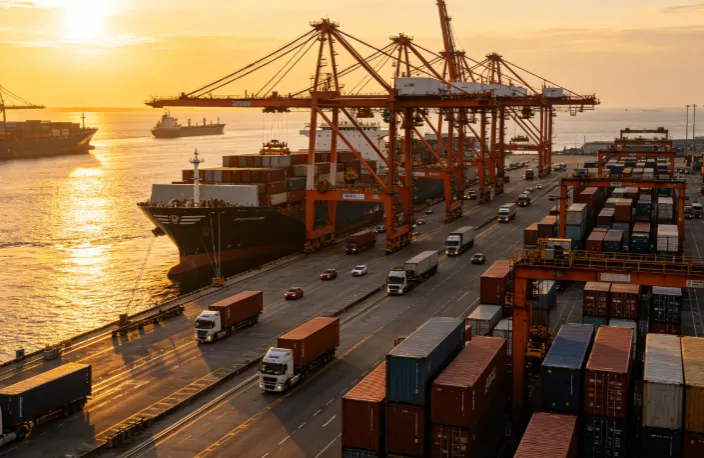
How Many Days Does Shipping from China to Uganda Take?
Before diving into the details, here is the big-picture answer. The table below gives you a clear, at-a-glance comparison of every shipping method available for the China-to-Uganda corridor.
| Shipping Method | Door-to-Door Transit Time | Best For | Cost Level |
|---|---|---|---|
| Express Courier (DHL, FedEx, UPS) | 3–7 days | Samples, small parcels, urgent documents | $$$$$ |
| Air Freight (Standard) | 5–10 days | Time-sensitive cargo, high-value goods, shipments under 200 kg | $$$$ |
| Rail + Truck (via Mombasa / Nairobi) | 20–30 days | Medium-volume shipments, cost-time balance | $$$ |
| Sea Freight FCL (Full Container Load) | 30–45 days | Bulk cargo over 15 CBM | $$ |
| Sea Freight LCL (Less than Container Load) | 35–50 days | Smaller shipments under 15 CBM | $$ |
No single number is the “correct” answer. Your transit time is a function of four variables: shipping method, departure port, season, and — most critically — paperwork readiness. Each variable is unpacked in detail below.
Why Sea Freight from China to Uganda Goes Through the Port of Mombasa
Uganda is a landlocked country, sitting over 1,000 kilometers from the nearest coastline. No container ship can sail directly to Kampala. Every shipment — regardless of whether you choose sea or air — must complete an inland leg across at least one international border. This single geographic fact is why Uganda freight timelines look nothing like those for coastal African nations such as Kenya or Tanzania.
The Two Sea Freight Corridors
Your cargo has two possible entry points, and the route you choose directly shapes your total transit time:
Northern Corridor — Port of Mombasa to Kampala
This is the dominant route, handling roughly 80% of Uganda’s seaborne imports. Ocean freight from Chinese ports lands at the Port of Mombasa in Kenya — the primary gateway for shipping from China to Africa via the East African coastline — making it East Africa’s largest and busiest deep-water port. From there, containers are loaded onto trucks (or, increasingly, the Standard Gauge Railway to Nairobi — a rail freight option gaining traction on this corridor) and transported approximately 1,150 kilometers inland to Kampala. The Northern Corridor is the faster, more established option — but its Achilles’ heel is the Malaba and Busia border crossings, where truck queues can stretch for days during peak periods.
Central Corridor — Dar es Salaam Port to Uganda
The alternative route enters through the Port of Dar es Salaam in Tanzania, then follows a roughly 1,500-kilometer inland corridor to Kampala. For importers whose supply chains span the region, Dantful also offers dedicated shipping from China to Kenya and shipping from China to Tanzania as standalone services. This route adds approximately 5–7 days compared to the Mombasa option, but it can serve as a valuable congestion bypass when Mombasa is overloaded — which happens regularly during Q4.
Ocean transit is only half the story. The inland leg — port clearance, cross-border trucking, and customs at the Kenya-Uganda frontier — often accounts for 40–50% of your total door-to-door time. Understanding each segment is the key to accurate planning.
How Long Does Sea Freight Take from China to Uganda?
No competitor article breaks down the inland journey leg by leg. This section does — because until you see where the days actually go, you cannot control them.
The Complete Sea Freight Journey: 8 Legs from Factory to Kampala
| Leg | Segment | Typical Duration | Fastest Possible | Slowest (Peak / Congestion) | Delay Risk |
|---|---|---|---|---|---|
| 1 | Factory → Chinese Port (trucking) | 1–2 days | 0.5 days | 3 days | 🟢 Low |
| 2 | Chinese Port: Export Customs & Loading | 2–4 days | 1 day | 5 days | 🟡 Medium |
| 3 | Ocean Transit: China → Mombasa | 18–25 days | 16 days (Shenzhen) | 28 days (northern ports) | 🟡 Medium |
| 4 | Mombasa Port: Unloading & Clearance | 2–4 days | 1 day | 7 days (congestion) | 🔴 High |
| 5 | Mombasa: Transit Bond Processing | 1–2 days | 0.5 days | 3 days | 🟡 Medium |
| 6 | Mombasa → Malaba Border (truck, 940 km) | 2–3 days | 1.5 days | 5 days | 🟡 Medium |
| 7 | Malaba / Busia Border: Cross-Border Clearance | 1–3 days | 0.5 days | 7 days (peak) | 🔴 High |
| 8 | Malaba → Kampala (truck, 220 km) | 1–2 days | 0.5 days | 3 days | 🟢 Low |
| Total Door-to-Door (FCL) | 30–45 days | 22 days | 61 days |
The two segments marked 🔴 — Mombasa port clearance and the Malaba/Busia border crossing — are where most “unexpected” delays happen. Legs 4 through 7 combined can swing from as little as 6 days to over 22 days depending on congestion, season, and paperwork readiness.
FCL vs. LCL Shipping Time from China to Uganda
For a deeper dive into route selection and cost optimization across the continent, see our dedicated guide on sea freight from China to Africa.
If your cargo does not fill an entire container, you will likely use LCL (Less than Container Load) shipping, where your goods share a container with other shippers’ cargo. This adds time at both ends:
- Origin CFS consolidation (China): Your cargo must be delivered to a Container Freight Station, where it waits to be grouped with compatible shipments bound for the same destination. This adds 2–4 days before your goods even reach the port.
- Destination CFS deconsolidation (Mombasa): Upon arrival, the shared container must be unstuffed and each consignment separated at a CFS before individual customs clearance can begin. This adds another 3–5 days.
Decision rule: If your shipment exceeds 15 CBM, FCL (Full Container Load) is almost always faster and cheaper per cubic meter. You pay a flat container rate rather than per-CBM LCL pricing, and your container remains sealed from origin to destination — reducing handling damage risk and eliminating consolidation delays. If you are unsure which option fits your cargo, our guide on LCL vs FCL shipping — how to choose the right option for small cargo walks through the decision step by step.
Fastest Sea Freight Route from China to Uganda: Mombasa vs. Dar es Salaam
| Route | Ocean Transit | Inland Distance | Total Inland Time | Best When |
|---|---|---|---|---|
| Northern Corridor (Mombasa) | 16–25 days | ~1,150 km | 5–10 days | Default choice for speed |
| Central Corridor (Dar es Salaam) | 18–28 days | ~1,500 km | 7–14 days | Mombasa congested; cargo from southern Tanzania suppliers |
For 80% of China-Uganda shipments, the Mombasa route is faster. Reserve the Dar es Salaam corridor as a contingency plan for when Mombasa is experiencing severe congestion — a scenario your freight forwarder should proactively monitor and advise on.
Air Freight Transit Time from China to Uganda
One of the most common questions from first-time Uganda importers is: “Why does air freight take 5–10 days when the flight is only 8–12 hours?” It is a fair question — and the answer reveals why air freight is still far faster than sea, even if it is not “next-day delivery.”
| Stage | Duration | What Is Happening |
|---|---|---|
| Cargo handover & export documentation at origin airport | 1–2 days | Booking confirmation, security screening, China customs export filing |
| Flight time (China → transit hub → Entebbe) | 8–12 hrs flying + 6–24 hrs layover | No direct flights operate China–Entebbe; cargo transits via Addis Ababa (Ethiopian Airlines), Dubai (Emirates), or Nairobi (Kenya Airways) |
| Arrival, unloading & import customs at Entebbe | 1–3 days | Uganda Revenue Authority (URA) clearance, UNBS inspection if applicable |
| Last-mile delivery within Uganda | 1–2 days | Trucking from Entebbe International Airport to Kampala (40 km) or other cities |
| Total Door-to-Door (Standard Air Freight) | 5–10 days | |
| Express Courier (DHL, FedEx, UPS) | 3–7 days | Pre-cleared, priority handling, dedicated last-mile network |
When air freight makes sense: Urgent inventory restocking, high-value electronics, medical supplies, perishable goods, and shipments under 150–200 kg where the speed premium is justified by the product margin or urgency.
When it does not: Bulky machinery, low-value bulk commodities, or regular shipments where predictable 35-day sea freight beats a marginally faster but far more expensive air option.
Shipping Duration from Shenzhen to Uganda vs. Other Chinese Ports
Not all Chinese departure ports are created equal when it comes to transit time to East Africa. Your choice of loading port can save — or cost you — up to 8 days of ocean transit.
| Departure Port | Ocean Transit to Mombasa | Sailing Frequency | Ideal For |
|---|---|---|---|
| Shenzhen (Yantian / Shekou) | 16–20 days | Weekly (multiple carriers) | Fastest departure; Pearl River Delta factories |
| Guangzhou (Nansha) | 18–22 days | Weekly | Guangdong province suppliers |
| Shanghai | 20–25 days | Weekly | Yangtze River Delta manufacturing |
| Ningbo | 20–25 days | Weekly | Zhejiang province exporters |
| Qingdao / Tianjin | 25–28 days | Bi-weekly | Northern China suppliers; longest transit |
Practical takeaway: If your suppliers are in southern China — Shenzhen, Guangzhou, Dongguan, or the broader Pearl River Delta — ship from Shenzhen or Guangzhou. You will save 5–8 days of ocean transit compared to routing through Qingdao or Tianjin. For suppliers in the Shanghai/Ningbo region, the 4–5 day difference versus Shenzhen is usually acceptable given the convenience of local port loading.
READ MORE:
- Shipping From China To Algeria
- Shipping From China To Angola
- Shipping From China To Morocco
- Shipping From China To Nigeria
- Shipping From China To Kenya
- Shipping From China To Tanzania
- Shipping From China To South Africa
China to Uganda Shipping Time Including Customs Clearance
The single biggest cause of unexpected delays on the China–Uganda route is not weather, not port congestion, and not carrier schedule changes. It is incomplete or incorrect paperwork — which is why professional customs clearance support often pays for itself many times over in avoided demurrage and storage fees. A single missing document can add 7–15 days to your timeline — often at the worst possible moment, when your cargo is already sitting at a border crossing.
Mandatory Documents and the Cost of Getting Them Wrong
| Document | Status | Delay if Missing or Incorrect |
|---|---|---|
| Commercial Invoice | Mandatory | 2–5 days (customs hold) |
| Packing List | Mandatory | 2–3 days (verification delay) |
| Bill of Lading (B/L) or Airway Bill (AWB) | Mandatory | 3–7 days (cannot clear without it) |
| PVOC / Certificate of Conformity (CoC) | Mandatory for regulated goods | 7–15 days + 15% penalty on CIF value |
| Certificate of Origin | Recommended | 1–3 days (preferential tariff verification delay) |
| Import Declaration (URA Form) | Mandatory | Cannot clear customs without it |
| HS Code Classification | Mandatory | 3–5 days if misclassified (re-inspection) |
The Malaba and Busia Bottleneck
The Malaba and Busia border crossings between Kenya and Uganda are the most unpredictable segments of the entire China–Uganda shipping timeline. On a good day, a truck clears the border in under 12 hours. During peak periods, queues can stretch for 3–7 days.
Three factors determine your wait time at the border:
- Transit Bond readiness: Every Uganda-bound container entering through Kenya requires a Transit Bond — a customs guarantee that your goods will not be illegally sold in Kenya before reaching Uganda. If this bond is not pre-arranged before your container arrives at Mombasa, expect 2–3 extra days of processing at the border. An experienced freight forwarder with an East Africa desk handles this before your vessel docks.
- PVOC pre-approval: The Uganda National Bureau of Standards (UNBS) requires a Pre-Export Verification of Conformity (PVOC) certificate for all regulated goods — including electronics, machinery, textiles, toys, and food products. This certificate must be obtained before your goods leave China. If you arrive at the border without one, the consequences are severe: 7–15 days of inspection delay plus a mandatory penalty of 15% of the CIF value. The solution is straightforward: work with a freight forwarder who includes PVOC coordination as part of their standard China–Uganda service.
- Border staffing patterns: Malaba operates 24/7, but staffing drops during holidays and Ramadan. If your timeline overlaps with a major holiday period, factor in an extra 1–3 days of buffer.
Peak Season Shipping from China to Africa
Shipping timelines are not constant across the calendar year. Four seasonal factors consistently impact China–Uganda transit times:
| Period | What Happens | Delay Added | How to Mitigate |
|---|---|---|---|
| Chinese New Year (late Jan – mid Feb) | Factory closures for 2–4 weeks; port labor shortages; carriers blank sailings | +7–14 days | Ship 3–4 weeks before CNY; book container space 4–6 weeks ahead |
| Q4 Peak Season (Sep – Dec) | Global freight demand surge; Mombasa port congestion peaks; container shortages | +5–10 days | Book 4–6 weeks ahead; consider air freight for critical shipments; use rail from Mombasa to Nairobi to bypass truck congestion |
| East Africa Long Rains (Mar – May) | Road conditions on the Mombasa–Kampala highway deteriorate; trucking slows | +2–5 days (inland leg only) | Allow buffer days for trucking; monitor road conditions through your forwarder |
| Ramadan / Eid periods | Reduced customs staffing at Malaba and Busia border posts | +1–3 days | Plan clearance dates around holiday calendars |
Proactive planning rule of thumb: For sea freight, start the shipping process 6–8 weeks before you need goods in Kampala. For air freight, 2–3 weeks. During Q4 or the weeks surrounding Chinese New Year, add an additional 2–4 weeks to both timelines.
Door to Door Shipping Time from China to Uganda: Cost vs. Speed Decision Guide
By now, you have a clear picture of how long each method takes. The remaining question is: which one is right for your shipment?
Sea vs. Air Freight Time and Cost from China to Uganda: The Decision Matrix
| Your Priority | Best Method | Door-to-Door Time | Approximate Cost |
|---|---|---|---|
| Fastest possible delivery | Express Courier (DHL, FedEx) | 3–7 days | $10–25 / kg |
| Fast but cost-conscious | Air Freight (Standard) | 5–10 days | $5–10 / kg |
| Balanced speed and cost | Rail + Truck | 20–30 days | Medium |
| Lowest cost, large volume | Sea Freight FCL | 30–45 days | $3,000–5,500 / 20ft container |
| Lowest cost, small volume | Sea Freight LCL | 35–50 days | $150–300 / CBM |
| Hassle-free, predictable | DDP Door-to-Door | Varies by mode | All-inclusive per-shipment quote |
DDP Shipping Lead Time from China to Uganda: The Predictable Option
DDP (Delivered Duty Paid) is an Incoterms 2020 trade term under which the seller — or your freight forwarder — assumes full responsibility for the entire journey: export customs in China, international freight, import duties and taxes in Uganda, and final delivery to your door in Kampala. For importers who prefer an all-inclusive solution, door to door shipping eliminates the need to coordinate multiple service providers across different countries.
For Uganda importers, DDP eliminates the two biggest sources of timeline uncertainty: unexpected customs fees at the border and clearance delays caused by missing documentation. Because the forwarder bears the risk of non-compliance, they have every incentive to get your PVOC, Transit Bond, and import declaration right the first time. A well-managed DDP shipment typically arrives within the standard transit window for the chosen mode — without the +7-to-15-day surprises that plague self-managed customs clearance.
Real-World Door-to-Door Shipping Scenarios
| Importer Profile | Cargo | Recommended Method | Expected Timeline | Rationale |
|---|---|---|---|---|
| Kampala electronics retailer restocking smartphones | 50 kg, high-value | Air Freight Standard | 7–9 days door-to-door | Speed protects cash flow; air freight cost is negligible relative to smartphone margins |
| Construction firm importing steel rebar | 25 tons, bulky | Sea Freight FCL (Mombasa route) | 35–40 days | Lowest cost per ton; building materials are not time-sensitive |
| First-time SME importer — mixed household goods | 5 CBM, varied items | LCL Sea Freight + DDP | 40–50 days | No in-house customs expertise; DDP removes compliance risk entirely |
How to Reduce Shipping Time from China to Uganda: 6 Practical Tips
- Consolidate shipments to reach FCL volume. Combining orders to fill a 20ft container eliminates LCL consolidation and deconsolidation delays at both ends — saving 5–10 days.
- Ship from southern Chinese ports. Shenzhen and Guangzhou are 5–8 days faster to Mombasa than Qingdao or Tianjin.
- Pre-arrange your PVOC certificate before cargo reaches the port — do not wait until the border to realize you need one.
- Use a freight forwarder with a dedicated East Africa desk. They pre-clear Transit Bonds and monitor Mombasa port conditions in real time, keeping your container moving while others wait.
- Avoid the 2 weeks immediately before Chinese New Year. Factory backlogs, container shortages, and carrier blank sailings compound during this window.
- Default to the Mombasa Northern Corridor. It is shorter, faster, and more carrier-dense than Dar es Salaam for the vast majority of shipments.
FAQs
How long does cargo take from China to Kampala specifically?
Sea freight door-to-door to Kampala takes 30–45 days with FCL or 35–50 days with LCL. Air freight to Entebbe International Airport — then trucked approximately 40 km to Kampala — takes 5–10 days. Express courier (DHL, FedEx, UPS) delivers to Kampala addresses in 3–7 days.
What is the fastest way to ship from China to Uganda?
Express courier services (DHL, FedEx, UPS) deliver door-to-door in 3–7 days. For cargo exceeding 50 kg, standard air freight at 5–10 days offers the best balance of speed and cost.
What is the cheapest shipping method from China to Uganda?
Sea freight FCL provides the lowest cost per unit for shipments over 15 CBM. For smaller volumes, LCL sea freight offers the lowest minimum cost to ship — though the per-CBM rate is higher than FCL and transit is 5–10 days longer.
Which Chinese port is fastest for shipping to Uganda?
Shenzhen (Yantian and Shekou terminals) offers the shortest ocean transit to Mombasa at 16–20 days. It is the fastest sea freight departure point for Uganda-bound cargo, particularly for goods manufactured in southern China.

Young Chiu is a seasoned logistics expert with over 15 years of experience in international freight forwarding and supply chain management. As CEO of Dantful International Logistics, Young is dedicated to providing valuable insights and practical advice to businesses navigating the complexities of global shipping.