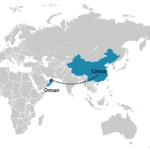
Ask five freight forwarders for a shipping from Shenzhen to Oman quote and you can get five different numbers for the same box — a 20-foot container priced anywhere from about USD 1,850 port-to-port at Sohar to USD 5,700 or more on a DDP booking, with a “16-day” transit quoted next to a “26-day” one. None is necessarily wrong. “Shenzhen to Oman” is at once a port-to-port ocean rate, a DDP door-to-door price, a direct sailing and a transshipment routing with surcharges stacked on top — and most rate pages never say which one you are reading.
This guide walks the whole lane, from the yard gate at Yantian to a warehouse in Muscat or Sohar: which Shenzhen terminal loads your box, what the lane costs in 2026, how long it takes to reach Sohar, Salalah, Muscat and Duqm, where the FCL/LCL break-even sits, how DDP works, and how Oman’s Bayan clearance, 5% duty and 5% VAT change what you must prepare before the vessel sails. Every figure below is an indicative Q4 2026 market range — not a quotation.

Why Shipping from Shenzhen to Oman Is a Different Lane in 2026
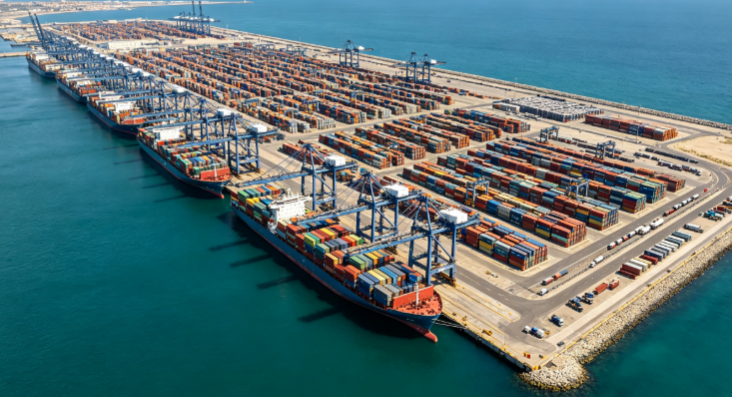
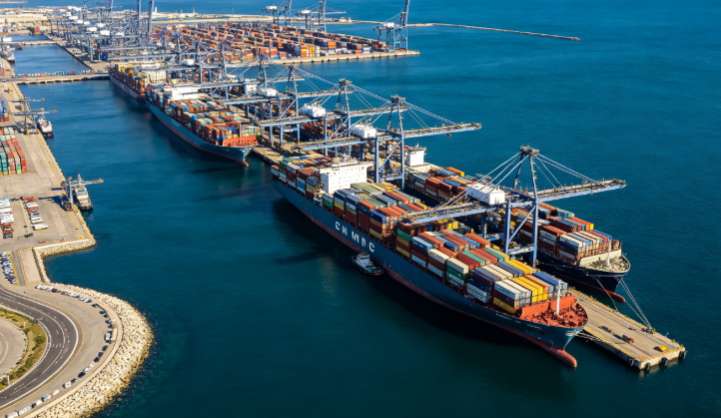
Shenzhen is not one port; it is a port group, and which terminal your booking lands on decides your cut-off, your sailing and sometimes your rate. Oman’s main gateways, meanwhile, sit on the Arabian Sea, outside the Strait of Hormuz and close to the main Asia–Europe lane. Origin discipline and gateway choice move the calendar more than the headline ocean rate. For a port-by-port view of the whole corridor, see our Shipping from China to Oman hub.
The Shenzhen terminal cluster that decides your cut-off
Four terminals carry almost all Shenzhen export volume, and each publishes its own gate-in window, SI cut-off and VGM (Verified Gross Mass) deadline. A booking assigned purely on rate is how containers get rolled to the next sailing.
| Terminal | Operators | Strength on the Oman lane | Cut-off watch-out |
|---|---|---|---|
| Yantian (YICT) | Hutchison / COSCO | Deepest water, widest Arabian Sea coverage | Longest gate-in queue in peak season |
| Shekou (SCT / CCT) | China Merchants | West-bank PRD cargo, strong ESL/OOCL calls | Earlier SI cut-off than Yantian |
| Chiwan | CCT | Feeder and regional services | Fewer direct Oman strings |
| Dachan Bay | — | Newer overflow capacity | Limited direct services |
The Pearl River Delta sourcing map
Where your supplier sits should help decide your terminal. The Pearl River Delta (PRD) is one manufacturing belt, but trucking time to Yantian versus Shekou can differ by hours — and the nearest terminal is not always the cheapest once cut-offs and sailing frequency are priced in.
| Supplier region | Typical products | Trucking to Yantian | Trucking to Shekou |
|---|---|---|---|
| Shenzhen (Huaqiangbei) | Electronics, gadgets | 1–2 hrs | 0.5–1 hr |
| Dongguan | Electronics, furniture hardware | 1.5–2.5 hrs | 1–1.5 hrs |
| Guangzhou / Foshan | Furniture, ceramics, building materials | 2.5–3.5 hrs | 2–3 hrs |
| Zhongshan | Lighting | 2.5–3.5 hrs | 1.5–2.5 hrs |
| Huizhou | Consumer electronics | 1.5–2.5 hrs | 2.5–3.5 hrs |
Why Oman’s Arabian-Sea ports change the math
Salalah (OMSLL) sits on the main east–west lane, so vessels from South China can call there days before they reach the Gulf. Sohar (OMSOH) is the commercial gateway for Muscat, the Batinah coast and the adjacent free zone; Sultan Qaboos (Mutrah) has repositioned toward cruise and niche cargo; Duqm (OMDQM) anchors the Al Wusta special economic zone and project cargo. Choose the gateway by inland trucking arithmetic, not by whichever port looks faster at sea.
Our industry insight. We see more money lost to origin cut-off discipline and destination gateway choice than to ocean freight itself. A container that misses an SI cut-off waits up to a full sailing cycle — often 7–10 days — and a shipment routed to Salalah because it “arrives first” can still reach a Muscat warehouse later than one discharged at Sohar, because the road leg from Dhofar is long. So we fix the terminal, the cut-off and the gateway together, before we quote a rate.
Golden Week (Oct 1–7) and Chinese New Year tighten Shenzhen yard density, while Ramadan and Eid cut-offs slow the destination side. Booking two to three weeks ahead is not optional on this lane.
Shipping from Shenzhen to Oman: FCL, LCL, Air and Express Compared
Four channels move cargo from Shenzhen to Oman, and the right one depends on volume, urgency and value.
| Channel | Cost basis | Door-to-door transit | Best fit | Main limitation |
|---|---|---|---|---|
| Sea freight — FCL | Per container | 25–40 days | 15+ CBM, heavy or bulky | Slowest; needs a full container |
| Sea freight — LCL | Per CBM | 28–45 days | 1–15 CBM, mixed suppliers | Destination CFS handling adds cost |
| Air freight | Per chargeable kg | 5–9 days | High-value, urgent | Expensive beyond ~300 kg |
| Express courier | Per kg, all-in | 2–5 days | Samples, small parcels | Highest cost per kg |
The fastest way to ship from Shenzhen to Oman is courier (2–5 days), then air freight (5–9 days). The cheapest way is sea FCL once cargo passes roughly 15 CBM; below that, LCL is usually more economical. Air is billed on chargeable weight — the greater of actual and volumetric weight at the industry 1:167 ratio (1 CBM = 167 kg) — which is why light, bulky cartons are punished by air rates. For furniture, building materials and machinery, sea freight stays far cheaper; air pays only for genuine urgency or high-value, low-volume goods.
Cost of Shipping from Shenzhen to Oman in 2026: FCL, LCL and Air Rate Benchmarks
All figures here are indicative Q4 2026 port-to-port market ranges. They move with fuel, peak season and space — confirm with a live quote.
| Equipment | Shenzhen → Sohar | Shenzhen → Salalah | Internal volume / payload |
|---|---|---|---|
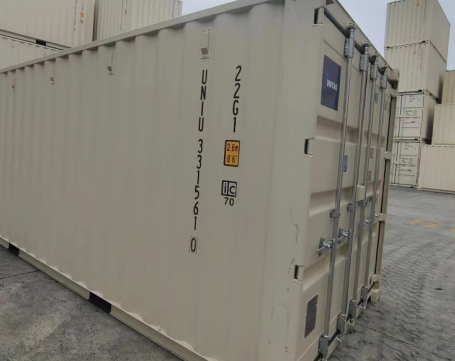
| 20GP | USD 1,850 – 2,600 | USD 1,950 – 2,700 | ~33 CBM / ~28 t |
| 40GP | USD 2,900 – 3,700 | USD 3,000 – 3,850 | ~67 CBM / ~26.5 t |
| 40HQ | USD 3,000 – 3,800 | USD 3,100 – 3,950 | ~76 CBM / ~26.3 t |
Sohar is usually the most economical gateway for large FCL, while Muscat-area deliveries can be faster once inland time is counted. The 40HQ adds roughly 13% more volume than a 40GP for nearly the same rate on this lane — the easiest upgrade for bulky cargo. For a wider range of benchmarks by equipment type, see our container shipping costs from china to Oman breakdown.
| Service | Volume / weight tier | Indicative rate |
|---|---|---|
| LCL | 1–5 CBM | USD 110 – 195 / CBM |
| LCL | 6–10 CBM | USD 85 – 140 / CBM |
| LCL | 11–15 CBM | USD 70 – 115 / CBM |
| Air freight | 100 kg+ | USD 3.50 – 6.50 / kg |
| Air freight | 300 kg+ (high-density) | USD 2.80 – 5.00 / kg |
| Express courier | Small parcels | USD 7.00 – 14.00 / kg |
LCL is quoted on a W/M basis (weight or measure, whichever is greater), so light, bulky cargo pays more per CBM. Air freight is billed per kilogram from Shenzhen Bao’an (SZX) to Muscat (MCT).
The complete landed-cost breakdown
The ocean rate is rarely the biggest number. Five blocks build the true landed cost: origin (PRD haulage, export declaration, documentation, origin THC, booking fee); international (ocean freight, BAF/LSS, PSS, GRI); destination (Oman THC/DTHC, Delivery Order, drayage, demurrage & detention, inland delivery); duties and taxes (5% GCC CET on CIF, plus 5% VAT on CIF + duty); and insurance and brokerage.
| Line item | Basis | Amount (USD) |
|---|---|---|
| Goods value | FOB Shenzhen invoice | 15,000 |
| Origin charges | Export clearance, haulage, THC, docs | 520 |
| Ocean freight | 40HQ Shenzhen → Sohar | 3,200 |
| Marine insurance | ~0.4% of goods value | 60 |
| CIF value (duty basis) | Goods + freight + insurance | 18,260 |
| Import duty | 5% of CIF | 913 |
| VAT | 5% of (CIF + duty) | 959 |
| Destination charges | DTHC, D/O, drayage to Muscat | 700 |
| Total landed cost | 21,352 |
Two lessons jump out. Ocean freight is only about 15% of the total landed cost, and duty plus VAT are roughly 9% — so chasing the last USD 100 off an ocean rate while ignoring HS classification or destination free time optimizes the wrong line.
Why published Shenzhen → Oman rates disagree by up to 3×
The same shipment can legitimately be quoted at USD 1,900 and USD 5,700. The gap is scope, not deception: port-to-port versus DDP all-in, direct versus transshipment, carrier and sailing choice, which surcharges are included, and the month of the quote. Before comparing two quotes, line them up item by item — scope, BAF/LSS, PSS, GRI, origin THC, destination THC, D/O fee, free-time days, CFS handling, drayage and brokerage.
How Long Does Shipping from Shenzhen to Oman Take? Transit Times by Port
In short: sea freight from Shenzhen takes 16–22 days port-to-port to Sohar, 18–24 days to Salalah, and 20–30 days to Muscat. Add 5–12 days for origin consolidation, clearance and inland delivery for a realistic door-to-door range of 25–40 days. Air runs 5–9 days; express 2–5 days. For routing detail, see our Sea Freight From China to Oman lane guide.
| Omani gateway | Direct sailing | Via transshipment | Best for |
|---|---|---|---|
| Sohar (OMSOH) | 16–22 days | 20–26 days | Muscat, Batinah coast, northern industry |
| Salalah (OMSLL) | 18–24 days | 22–28 days | Dhofar, Yemen / East Africa re-export |
| Sultan Qaboos, Muscat (OMMCT) | 20–30 days | — | Muscat metro (usually via Sohar + truck) |
| Duqm (OMDQM) | 22–30 days | 24–32 days | Al Wusta SEZ, project cargo |
Published figures differ by up to 12 days for one reason: some are port-to-port (the sailing only) and some are door-to-door. A “16-day” arrival at Sohar can still become a 21–25 day delivery if your consignee sits in Nizwa, Ibri or Buraimi. A direct sailing shows one vessel and one voyage number on the Bill of Lading; a transshipped booking shows a relay or feeder vessel after the hub — Singapore, Port Klang or Jebel Ali — and each connection adds 3–7 days. Urgent or high-value cargo should take the direct sailing; heavy, non-urgent cargo can accept one connection for a better rate.
Two operational realities move the calendar more than buyers expect. Sailing frequency runs roughly every 7–10 days, so a missed cut-off means waiting a full cycle, not a day. And port congestion swings the last few days: recent lane data shows Shekou dwell around 9 days and Sohar around 8 days, which is why negotiating destination free time at booking is worth real money.
FCL vs LCL Shipping from Shenzhen to Oman: The Real Break-Even
FCL (Full Container Load) means one shipper fills a whole container; LCL (Less than Container Load) means your cargo shares a container and is consolidated at origin and deconsolidated at the Omani CFS.
| Equipment | Internal volume | Typical payload | Best fit |
|---|---|---|---|
| 20GP | ~33 CBM | ~28 t | Dense cargo, machinery |
| 40GP | ~67 CBM | ~26.5 t | General mixed cargo |
| 40HQ | ~76 CBM | ~26.3 t | Bulky, light cargo (furniture) |
Industry sources quote a break-even of 12–15 CBM, and the spread is worth understanding. That range reflects pure ocean-freight break-even; once you add destination CFS handling, deconsolidation, DTHC and the extra 2–7 transit days LCL carries, the true landed-cost break-even sits closer to 13–15 CBM. Below it, LCL wins; above it, FCL wins on both cost and speed.
Three points are rarely mentioned: LCL minimum charges apply at both origin and destination, so a 2-CBM shipment can cost more per CBM than a 6-CBM one; destination CFS handling is charged per shipment, not per container; and LCL adds handling risk through co-loading. For fragile or high-value cargo, the sealed container of FCL removes those touchpoints entirely.
Door to Door Shipping from Shenzhen to Oman
Door-to-door service here means supplier pickup, export clearance, ocean or air freight, Bayan clearance, duty and VAT settlement, and inland delivery to a warehouse or free-zone facility. The real question is not whether it is door-to-door but which Incoterm defines who pays what. Our door to door shipping from China to Oman service puts that whole chain under one all-in price.
| Incoterm | Who pays freight | Who clears & pays duty | Best use |
|---|---|---|---|
| EXW | Buyer | Buyer | Rarely the best deal from Shenzhen |
| FOB Yantian / Shekou | Buyer | Buyer | Importers with their own Omani broker |
| CIF Sohar | Seller | Buyer | Seller arranges the ocean leg |
| DAP / DDU | Forwarder | Buyer | Buyer has a broker but wants delivery |
| DDP | Forwarder | Forwarder | SMEs with no Omani customs setup |
DDP (Delivered Duty Paid) is the smart choice for SMEs without a customs broker, foreign sellers without an Omani Commercial Registration and customs number, first shipments to Oman, and GCC e-commerce sellers delivering to a 3PL. It is not automatically best for importers who already have a broker, are VAT-registered and can recover input tax, or are moving high-value cargo where cost transparency matters more than convenience.
Real-life scenario. An Omani home-goods importer buying from three Guangdong suppliers started with a 12 CBM LCL mix and a “16-day” ocean quote that never held. Consolidating the three suppliers into one shared 40HQ and pre-negotiating destination free time cut their landed cost per unit and, more importantly, fixed the delivery date. On this lane the number that matters is the door-to-door date, not the sailing time.
Watch for DDP traps that cost Omani importers real money: fake DDP that quietly reverts to DAP; freight folded into the commercial invoice so duty is charged on logistics as well as goods; undisclosed battery or dangerous-goods surcharges billed after arrival; volumetric-weight arbitrage on per-kg quotes; and underestimated duty from unverified HS codes. Before you book, ask four questions: who is the importer of record against whose Commercial Registration; are all surcharges in writing; is the commercial invoice kept separate from freight; and can the provider supply the Bayan-compliant documentation for your records.
Importing from Shenzhen to Oman: Bayan, Duty, VAT and Compliance
Bayan is Oman’s electronic customs single window, operated under the Royal Oman Police (ROP) – Directorate General of Customs. Declarations are filed by a licensed broker against the importer’s Commercial Registration (CR) and customs number. Document completeness and consistency determine release speed far more than the system itself.
| Charge | Rate | Base | Notes |
|---|---|---|---|
| Import duty | 5% | CIF value | GCC Common External Tariff; 0% on basics, higher on some lines |
| VAT | 5% | CIF + duty | In force since April 2021 |
| De minimis | 0% | Shipments up to ~USD 270 | Duty-free threshold for parcels |
| Selective tax | 50–100% | — | Tobacco, alcohol, energy drinks |
There is no China–Oman free trade agreement, so Chinese-origin goods pay the full GCC Common External Tariff. A Certificate of Origin is required by customs guidance for goods valued at USD 2,500 or more; a Certificate of Conformity or test report may be needed for regulated categories, and the Gulf G-Mark is mandatory for harmonised goods such as toys and low-voltage electrical appliances. Every item must bear a non-removable country-of-origin mark (“Made in China”), and regulated categories need labels with origin, specification and usage instructions, with Arabic content where required.
Most clearance delays are documentary, not operational, and the common failure modes are consistent: invoice versus packing-list inconsistency, an inaccurate HS code, incomplete importer credentials, and undervaluation that triggers a valuation review. For a compliant declaration, expect 1–3 days to release. One structural advantage for regional distributors: under the GCC single point of entry, duty is collected at first entry into the customs union, after which goods move between member states under simpler procedures — making Omani ports a genuine option for GCC distribution, provided the cross-border trucking math works.
Shenzhen to Oman for Your Cargo Type: Furniture, Electronics, Project Cargo and E-Commerce
| Cargo type | Recommended mode | Gateway | Watch-outs |
|---|---|---|---|
| Furniture & building materials | 40HQ FCL | Sohar | Stackability, moisture protection, marking |
| Electronics & consumer tech | Air or FCL | Sohar / air via SZX | Lithium batteries, UN38.3, DG surcharges, G-Mark |
| Project cargo / OOG | Breakbulk / flat-rack | Duqm | Prior approval, port coordination, heavy-lift plan |
| GCC e-commerce | Air or sea DDP | Sohar or air | Fulfilment slots, DDP for sellers with no local entity |
Furniture from Foshan, Guangzhou and Dongguan typically moves as 40HQ FCL to Sohar or Muscat, with DDP door-to-door popular for fit-out projects. Electronics from Shenzhen’s own Huaqiangbei cluster are high-value and often lithium-battery-bearing, so dangerous-goods handling and UN38.3 test documentation apply. For battery-bearing cargo, route it through a hazmat freight forwarder from china to Oman rather than a general consolidation. Project cargo and Out-of-Gauge (OOG) freight into Duqm needs prior approval and port coordination. For GCC e-commerce into noon.com, Amazon.ae or Shopify fulfilment, DDP door-to-door is often the simplest path for sellers without a local entity — and combining multiple PRD suppliers into one container at origin is the standard cost lever.
Best Freight Forwarder for Shenzhen to Oman Shipments: How to Choose and Compare Quotes
Choosing the partner matters more than shaving the rate. Our guide to how to choose the right freight forwarder turns the checks below into a repeatable process. Ask any forwarder on this lane seven questions: Do you hold direct carrier contracts on the Shenzhen–Oman lane? Which Shenzhen terminal and cut-off applies? Is the quote port-to-port or door-to-door? What free time is included at Sohar or Salalah? Who files the Bayan declaration? Is the rate direct or transshipment? And what happens if the vessel is rolled or rerouted?
Red flags are equally consistent: an LCL rate with no destination CFS or DTHC shown; a “DDP all-in” with no duty/VAT scope defined; a transit time with no routing assumption or scope label; free time that turns out to be zero; and a provider offering to clear goods under a business number that is not yours.
Dantful International Logistics is built for exactly this lane. Established in 2008 and headquartered in Shenzhen, we are a Class-A licensed forwarder holding NVOCC, FMC and Jctrans credentials, with a network covering 200 countries. On Shenzhen–Oman shipments that means direct contracts with shipping lines and airlines for competitive rates and secured space; Shenzhen-native origin coverage — Yantian, Shekou and Chiwan — with PRD supplier pickup, export clearance, consolidation and warehousing handled in-house; full-service coverage of sea freight, air freight, door-to-door, Amazon FBA forwarding, customs clearance, cargo insurance and warehousing; real-time tracking with daily milestone updates and shipment photos, plus a 50-person operations team and 50+ customer-service team on 24/7 support; and honest, itemized quotes with no hidden fees.
If you are weighing options, send your cargo details — volume, weight, HS code, supplier location and delivery address — and we will return a quote that separates port-to-port and door-to-door, names the terminal and cut-off, and states the included free time. Rates move with the market, fuel surcharges and peak season, so a live quote is always the accurate one.
FAQs
What is the cheapest way to ship from Shenzhen to Oman?
Sea FCL once cargo passes roughly 15 CBM; below that, LCL per CBM is usually cheaper. Air and express win on speed, not cost.
How long does shipping from Shenzhen to Oman take door to door?
Plan 25–40 days by sea — 16–22 days port-to-port to Sohar plus 5–12 days for origin handling, clearance and inland delivery. Air runs 5–9 days; express 2–5 days.
How much does it cost to ship a 20ft or 40ft container from Shenzhen to Oman?
Indicatively (Q4 2026, port-to-port): 20GP USD 1,850–2,600, 40GP USD 2,900–3,700, 40HQ USD 3,000–3,800 to Sohar. Request a live quote for your cargo.
How much is Oman duty and VAT on goods from China?
5% import duty on CIF value plus 5% VAT on CIF + duty — about 5.25% combined. There is no China–Oman FTA, so the full GCC tariff applies.
What documents do I need to import from Shenzhen into Oman?
Commercial invoice, packing list, Bill of Lading, Certificate of Origin, your Commercial Registration, and any approval or conformity certificate your commodity requires.
Ready to price your shipment properly? Share your cargo details with the Dantful team and get a live Shenzhen → Oman quote that shows exactly what each stage costs — port-to-port or door-to-door.

Young Chiu is a seasoned logistics expert with over 15 years of experience in international freight forwarding and supply chain management. As CEO of Dantful International Logistics, Young is dedicated to providing valuable insights and practical advice to businesses navigating the complexities of global shipping.