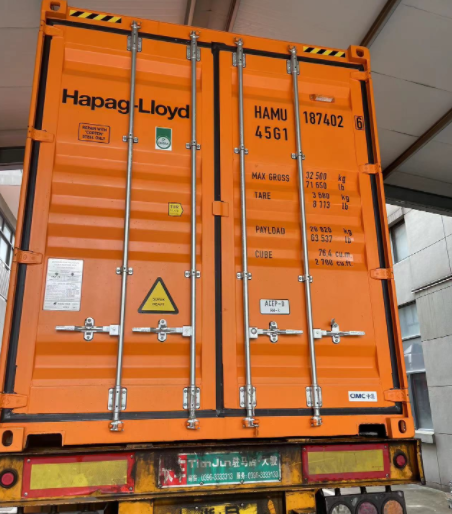
Asia-Europe container rates are falling into the winter peak, and this time the reason is structural rather than seasonal. Drewry assessed Shanghai–Rotterdam at $3,615 per 40ft on 5 November 2026, down 2% on the week, with 60% of Asia–Europe capacity now sailing through the Suez Canal instead of around the Cape of Good Hope. The complication is the calendar: Chinese New Year falls on 6 February 2027, eleven days earlier than this year, so a falling market meets the shortest booking window in years.
Table of Contents
Why Are Asia-Europe Container Rates Falling Now?
The pressure comes from capacity, not demand. Drewry’s composite index eased 1% to $4,389 per 40ft in the week to 5 November, but it is still 124% higher than a year ago — a reminder of how far the Hormuz and Red Sea disruption of 2026 pushed prices. On the two European legs the picture is softer: Rotterdam lost 2% while Genoa held flat at $4,166.
Carriers tried to reverse that on 1 November, pushing rates toward $4,500 per 40ft to North Europe and around $5,000 to the Mediterranean. The attempt did not hold: forwarders quoted by The Loadstar describe discounted Asia–North Europe space at $2,700–3,400 per 40ft. A second push is scheduled for 15 November, against a market that keeps adding capacity.
| Lane (loading Shanghai) | Rate per 40ft | Week on week | What it tells you |
|---|---|---|---|
| Shanghai → Rotterdam | $3,615 | −2% | The 1 November FAK push did not hold on North Europe |
| Shanghai → Genoa | $4,166 | flat | The Mediterranean premium survives; MSC surcharges widen on 15 November |
| WCI composite, eight lanes | $4,389 | −1% | Still 124% higher than a year ago |
One China-side detail matters here: the congestion that propped up rates through October is easing, with average vessel waiting time at Shanghai down to 35 hours last week. Shorter queues mean more effective capacity, and more capacity means rates drift lower into the contract season.
What Does the Suez Return Change for China-to-Europe Transit?
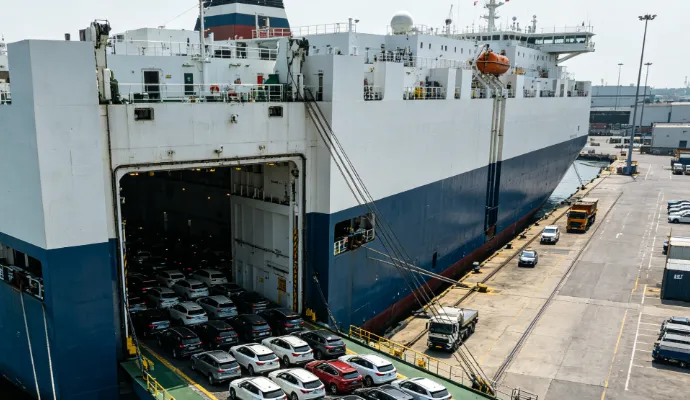
Evergreen began its first own-vessel Suez transits on the Ocean Alliance’s NEU7/CES loop, with crossings on 7 and 11 November. The Premier Alliance’s MD1 service returns to the canal next month, turning in 84 days with 12 ships of 11,700–14,000 TEU instead of the 16 vessels the Cape rotation needed. Linerlytica expects all three alliances plus MSC to be fully back through Suez by the first quarter of 2027, leaving Zim as the only major carrier on the Cape route; 53 vessels transited the canal in the week to 5 November.
For a booking, that is worth roughly 10 to 14 days of sailing time compared with the Cape of Good Hope — which is why our Sea Freight from China to Europe: Best Routes, Costs, and How to Avoid Delays guide now treats Suez as the default assumption.
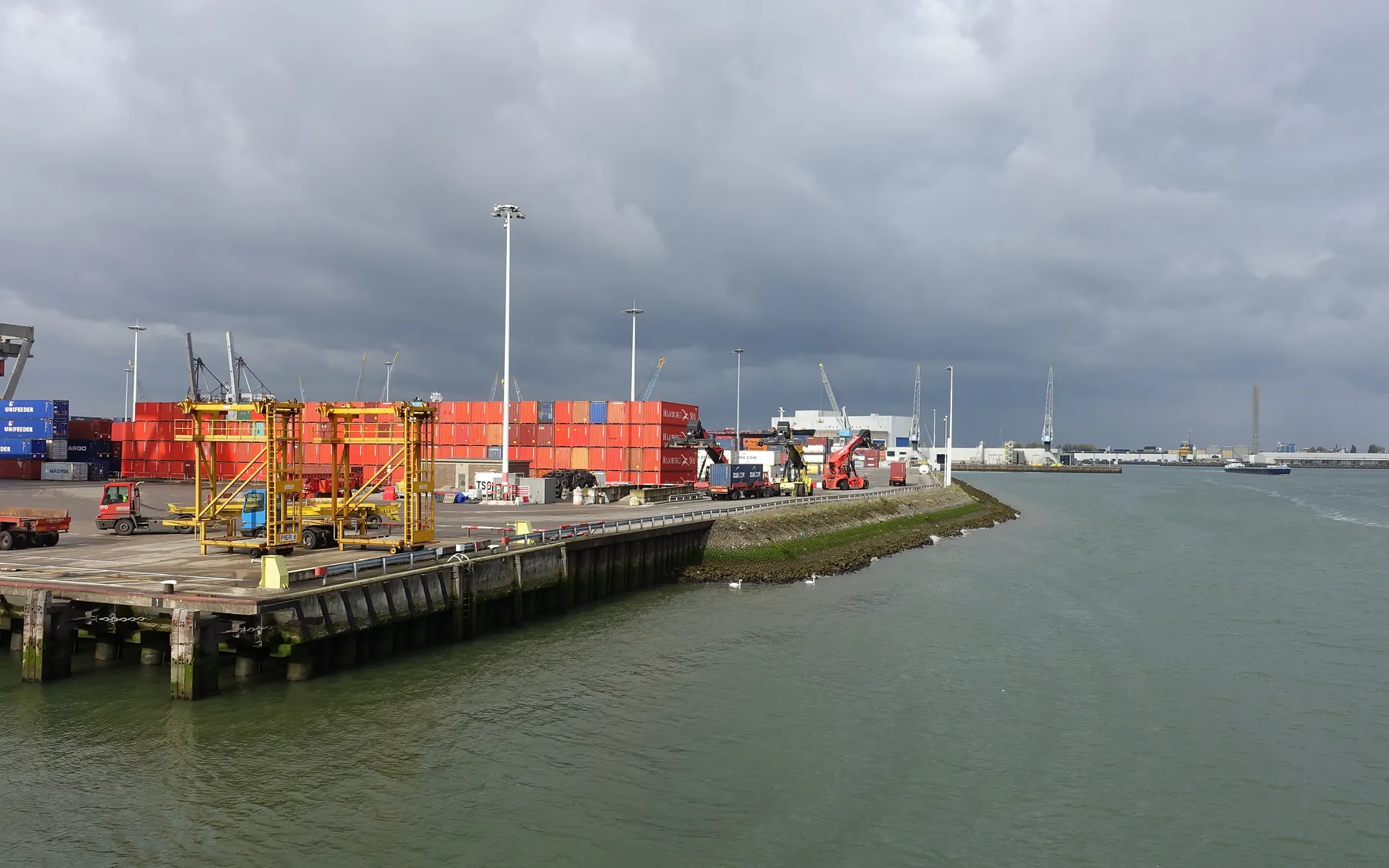
The reverse of the coin is port bunching. Drewry flags that an accelerated return to Suez can produce overlapping arrivals from both routings in the same week, raising the risk of vessel bunching and cargo congestion at European gateways. Two dated constraints sit on top: Maersk has confirmed reduced rail capacity at APM Terminals Maasvlakte II in Rotterdam until the end of June 2027, pushed back from January; and MSC is extending its Piracy Risk and Suez Canal surcharges to all remaining Mediterranean and Black Sea ports from 15 November 2026 on cargo from Asia. If your cargo discharges at Rotterdam, how long is freight from China to Netherlands is no longer a single sailing figure — berth and rail availability now set the last week.
How Much Lower Could Asia-Europe Container Rates Go in 2027?
Xeneta put numbers on it at its Munich summit on 5 November: global average spot rates are forecast to fall 30% across 2027 against a Q3 2026 baseline, while long-term contract rates fall a more modest 5%. The fleet grows 6.8% next year, with 2.9 million TEU delivered against 0.5 million scrapped, demand growth slows to 2.5–4% from 4.7% in the first eight months of 2026, and the Suez return has already released about 599,000 TEU that Cape diversions were absorbing.
What the forecast does not promise is punctuality: global on-time arrivals were 27% in the third quarter of 2026, and Far East to Europe fell to 4% in September. A cheaper slot on a ship that arrives in the wrong week is not cheaper for a distributor with a retail window.
Two reversal risks sit under the forecast. A deterioration in Red Sea security would send carriers back around the Cape within weeks, and the Strait of Hormuz remains unsettled, with further US strikes on Iran. Xeneta’s own framing is that 2027 rates could fall hard or spike, which argues for flexible contracts rather than a bet on direction.
Why Is Chinese New Year on 6 February 2027 the Booking Deadline?
Chinese New Year 2027 falls on Saturday 6 February, eleven days earlier than 17 February in 2026. Forwarders quoted by JOC expect that to pull the pre-holiday rush forward: exporters lock bookings sooner, and December Asia–Europe demand rises.
The operational squeeze is where the two meet. Factories in Guangdong and Zhejiang typically wind down for one to two weeks around the holiday, so cargo not loaded by the second half of January waits until the second half of February — and those late-January sailings arrive in Europe just as bunching peaks and your own Q1 restock lands.
| Shipper type | What changes before 6 February 2027 | What to do now |
|---|---|---|
| B2B importer / wholesaler | 2027 contract talks open with spot forecast 30% lower | Keep contracts short or index-linked; secure December space before negotiating price |
| Amazon FBA / e-commerce seller | Factory closure collides with Q1 restocking | Ship by mid-December, and add 7–10 days for European port and rail delays |
| SME without a logistics team | Cheaper headline rates, but 4% on-time on Far East–Europe in September | Use one partner that owns booking, clearance and final delivery |
What Should Importers Book Before February 2027?
Three moves cover most of the risk.
Book December sailings now, and book space rather than a price. Rates are drifting down 1–2% a week, so waiting looks rational until the pre-holiday sailings fill — but a rate assessed on 5 November is not the one you will be offered on 20 November. A slot held at today’s number beats a cheaper quote you cannot load.
Do not sign a twelve-month fixed rate at Q3 2026 levels. With spot forecast down 30% and contract rates down 5%, a short or index-linked agreement is the better shape for 2027. Lock service frequency and equipment, leave the number loose.
Price the landside, not just the ocean leg. Rotterdam rail capacity is constrained into mid-2027 and arrivals are bunching. Check free time and demurrage terms before you accept a cheap all-in, and see what container shipping costs from China to Netherlands actually includes at destination.
Dantful has moved cargo from China to Europe since 2008, as a Class-A licensed forwarder with NVOCC, FMC and Jctrans membership and direct carrier contracts. Ocean, destination charges and inland delivery are quoted in one place, with daily photo updates, so a bunching delay at Rotterdam is visible before it costs you the inland leg. See how door to door shipping from China to Netherlands is priced, start with our Shipping From China To Netherlands overview, or ask the freight forwarder in shenzhen china team about December space.

Young Chiu is a seasoned logistics expert with over 15 years of experience in international freight forwarding and supply chain management. As CEO of Dantful International Logistics, Young is dedicated to providing valuable insights and practical advice to businesses navigating the complexities of global shipping.