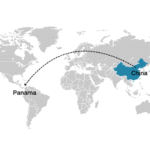
If you’re sourcing products from China, one of the first questions you’ll face is simple but critical: how much is shipping from China to Panama — and more importantly, what’s the real landed cost after freight, customs duties, and local charges? As China’s role as Panama’s largest trading partner and the top supplier to the Colon Free Trade Zone continues to grow, more importers, distributors, and e-commerce sellers are moving goods through this route every month. Yet the answer you’ll get from different freight forwarders can vary by thousands of dollars — and the lowest quote often hides the most expensive surprises.
In this guide, we break down every shipping channel from China to Panama with transparent, real-world 2026 pricing: sea freight (FCL and LCL) from every major Chinese port to Balboa, Colón, and Manzanillo; air freight costs per kilogram from Shanghai, Guangzhou, Shenzhen, and Beijing; and door-to-door DDP all-inclusive rates that cover duties, taxes (ITBMS), and last-mile delivery. You’ll also find a practical duty estimation table by product category, a detailed breakdown of how the Panama Canal affects your transit time and cost, and seven actionable strategies the most cost-conscious importers use to keep their landed costs under control.
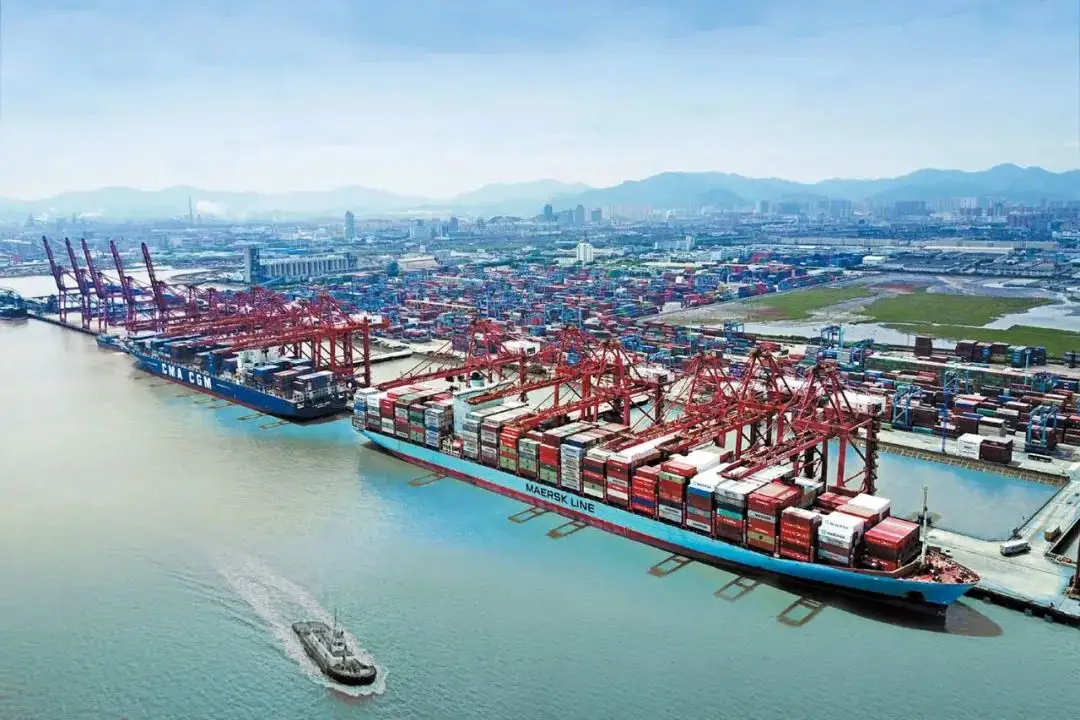
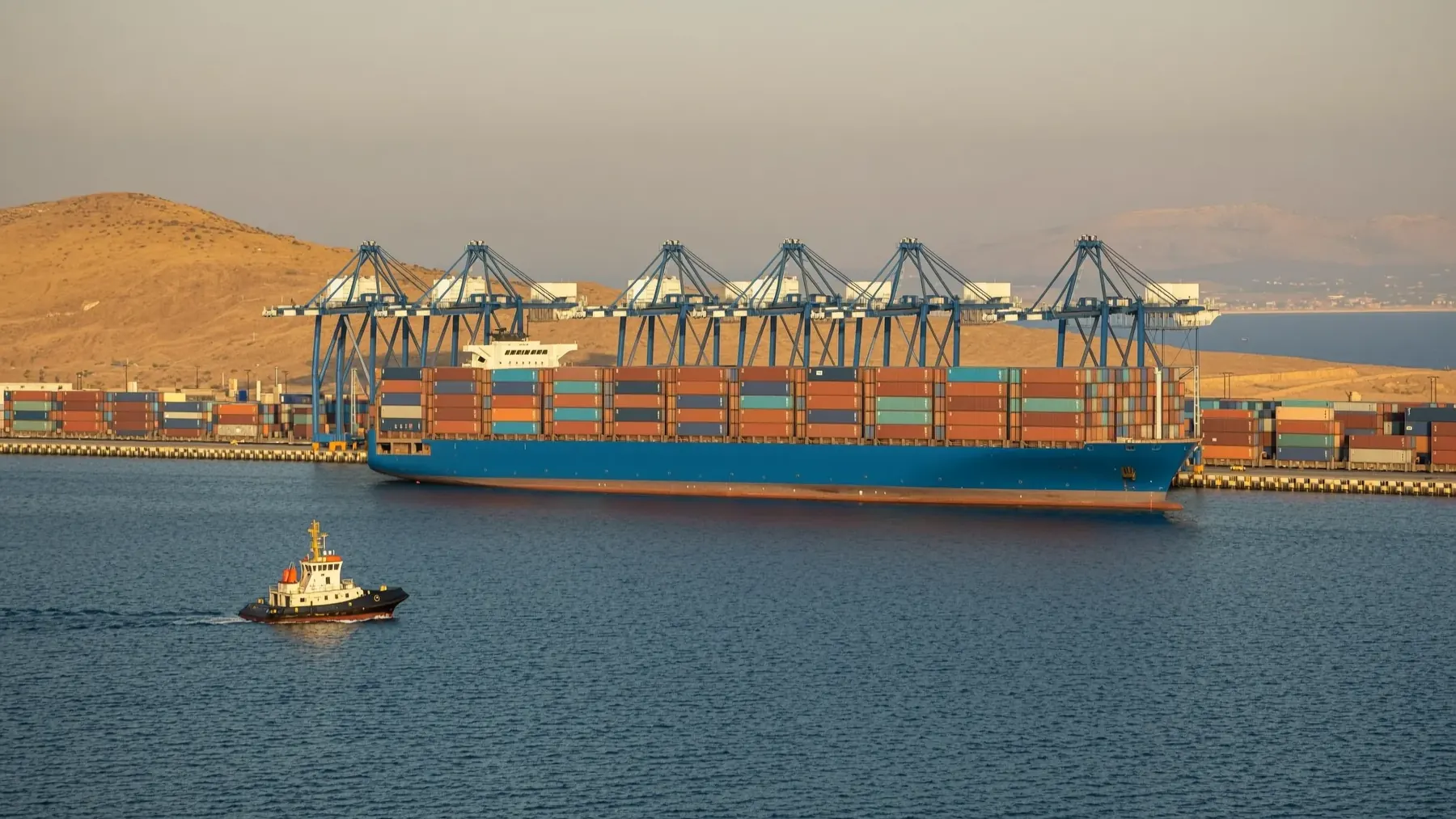
How Much Does It Cost to Ship a 20ft & 40ft Container from China to Panama?
Before diving into the details, here is the quick-reference overview most importers need. The table below covers all five major shipping methods from China to Panama with their typical cost ranges, transit times, and ideal use cases.
| Shipping Method | Cost Range (2026) | Transit Time | Best For |
|---|---|---|---|
| Sea Freight — FCL 20ft | $2,000–$4,500 per container | 25–40 days | Bulk cargo, wholesale importers, shipments above 10 CBM |
| Sea Freight — FCL 40ft / 40HQ | $2,500–$5,200 per container | 25–40 days | Large-volume importers, furniture, machinery, full-container loads |
| Sea Freight — LCL | $80–$150 per CBM | 30–45 days | Small businesses, test orders, shipments under 10 CBM |
| Air Freight | $4.50–$10.00 per kg | 3–7 days | Urgent shipments, high-value electronics, samples, cargo under 500 kg |
| Express Courier (DHL/FedEx/UPS) | $8.00–$12.00 per kg | 2–5 days door-to-door | Small parcels under 100 kg, e-commerce samples, urgent documents |
| DDP Door-to-Door (Sea) | $10.00–$15.00 per kg (all-in) | 35–45 days | First-time importers, businesses wanting hassle-free delivery with duties paid |
| DDP Door-to-Door (Air) | $12.00–$18.00 per kg (all-in) | 5–10 days | Urgent DDP shipments, e-commerce sellers |
Important: Shipping rates are not static. These numbers reflect Q3 2026 market conditions. Maersk has announced a Peak Season Surcharge (PSS) increase of $1,000 per 20ft container and $2,000 per 40ft container effective August 22, 2026 on the Far East-to-Central America trade lane. Always request a fresh quote within 48 hours of booking — rates can and do shift with fuel prices, vessel space availability, and seasonal demand.
If you’re shipping bulk cargo, continue to the next section for a full container rate breakdown by port. Need something faster? Jump to Section 4 for air freight. Want an all-in, no-surprises price? Section 5 covers DDP door-to-door.
LCL Shipping Rates from China to Panama: When Less Than Container Load Makes Sense
For many small and mid-sized importers, the decision between booking a full container and sharing space in a Less than Container Load (LCL) consolidation is the single biggest cost lever. Get it right and you save hundreds or even thousands of dollars; get it wrong and you pay for empty container space you don’t need.
FCL Container Shipping Costs by Chinese Port & Panama Destination
Full Container Load (FCL) means you book an entire 20ft, 40ft, or 40ft High Cube container exclusively for your cargo. This is the most cost-effective option when you have enough volume to fill — or nearly fill — the container. Here is the latest port-by-port pricing from major Chinese export hubs to Panama’s three main container terminals:
| Origin Port (China) | Destination Port (Panama) | 20GP (20ft) | 40GP (40ft) | 40HQ (40ft High Cube) |
|---|---|---|---|---|
| Shanghai | Balboa / Colón / MIT | $2,650–$3,250 | $3,250–$4,000 | $3,500–$4,200 |
| Shenzhen (Shekou/Yantian) | Balboa / Colón / MIT | $2,550–$3,150 | $3,150–$3,800 | $3,300–$4,000 |
| Ningbo-Zhoushan | Balboa / Colón / MIT | $2,750–$3,450 | $3,450–$4,100 | $3,600–$4,300 |
| Guangzhou (Nansha) | Balboa / Colón / MIT | $2,650–$3,250 | $3,250–$3,900 | $3,400–$4,100 |
| Qingdao | Balboa / Colón / MIT | $2,650–$3,450 | $3,450–$4,000 | $3,550–$4,200 |
| Xiamen | Balboa / Colón / MIT | $2,650–$3,450 | $3,450–$4,000 | $3,550–$4,200 |
Rates are port-to-port and exclude origin local charges, destination terminal handling, customs clearance, duties, and inland delivery. Actual quotes vary with carrier, season, and booking lead time.
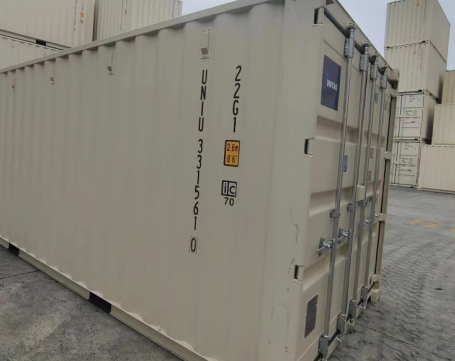
For reference, a standard 20ft container holds approximately 33 cubic meters (CBM) — about the volume of a one-bedroom apartment. A 40ft container holds roughly 67 CBM, and a 40ft High Cube (40HQ) offers around 76 CBM with extra height for bulky items like furniture or machinery.
Which Panama port should you choose? Your destination port significantly impacts both cost and transit time. Balboa, on Panama’s Pacific coast, is the closest arrival point for cargo from China — it avoids the additional transit through the Panama Canal. Colón and Manzanillo International Terminal (MIT), on the Atlantic/Caribbean side, require the vessel to pass through the Canal (adding 2–4 days and the associated toll, which is built into your freight rate). However, if your final delivery address is in Colón, the Colon Free Zone, or the Caribbean coast, the inland trucking savings from discharging at Colón almost always outweigh the slightly higher ocean freight.
LCL Shipping Rates per CBM & the FCL vs LCL Breakeven Point
LCL (Less than Container Load) allows you to ship smaller volumes — typically 1 to 15 CBM — without paying for an entire container. Your goods share container space with other importers’ cargo, and you pay only for the volume you occupy. Current LCL rates from China to Panama are approximately $80 to $150 per CBM, depending on the forwarder, the specific origin-destination pair, and current consolidation availability.
Here is the decision most articles skip: at what volume does FCL become cheaper than LCL?
| Scenario | Volume | Estimated Cost | Cost per CBM | Notes |
|---|---|---|---|---|
| LCL (small shipment) | 5 CBM | $625 ($125/CBM) | $125 | Good for test orders or small restocks |
| LCL (medium shipment) | 10 CBM | $1,250 ($125/CBM) | $125 | Approaching the breakeven zone |
| FCL 20ft (Shenzhen → Balboa) | 33 CBM capacity | ~$2,850 | ~$86 | Cheaper per CBM even if only 15 CBM used |
| FCL 40HQ (Shenzhen → Balboa) | 76 CBM capacity | ~$3,650 | ~$48 | Best per-unit cost for large volumes |
The breakeven point is around 10–12 CBM — below this threshold, LCL is typically cheaper; above it, booking a 20ft FCL container delivers a lower cost per cubic meter. For a deeper dive into this decision, see our guide on LCL vs FCL Shipping: How to Choose the Right Option for Small Cargo., even if the container isn’t completely full. For example, if you’re shipping 12 CBM via LCL at $125/CBM, you’ll pay approximately $1,500. A 20ft FCL from Shenzhen to Balboa at roughly $2,850 costs more in total but gives you 33 CBM of space — better per-unit economics if your purchase volume is growing.
There is also a hidden time cost with LCL: consolidation and deconsolidation at both origin and destination adds roughly 5 to 10 extra days compared to FCL. If your inventory planning is tight, this matters.
Shipping Heavy Machinery, Cars & Oversized Cargo from China to Panama
Not everything fits neatly into a standard container. For vehicles, heavy equipment, and Out of Gauge (OOG) cargo, specialized shipping methods are available:
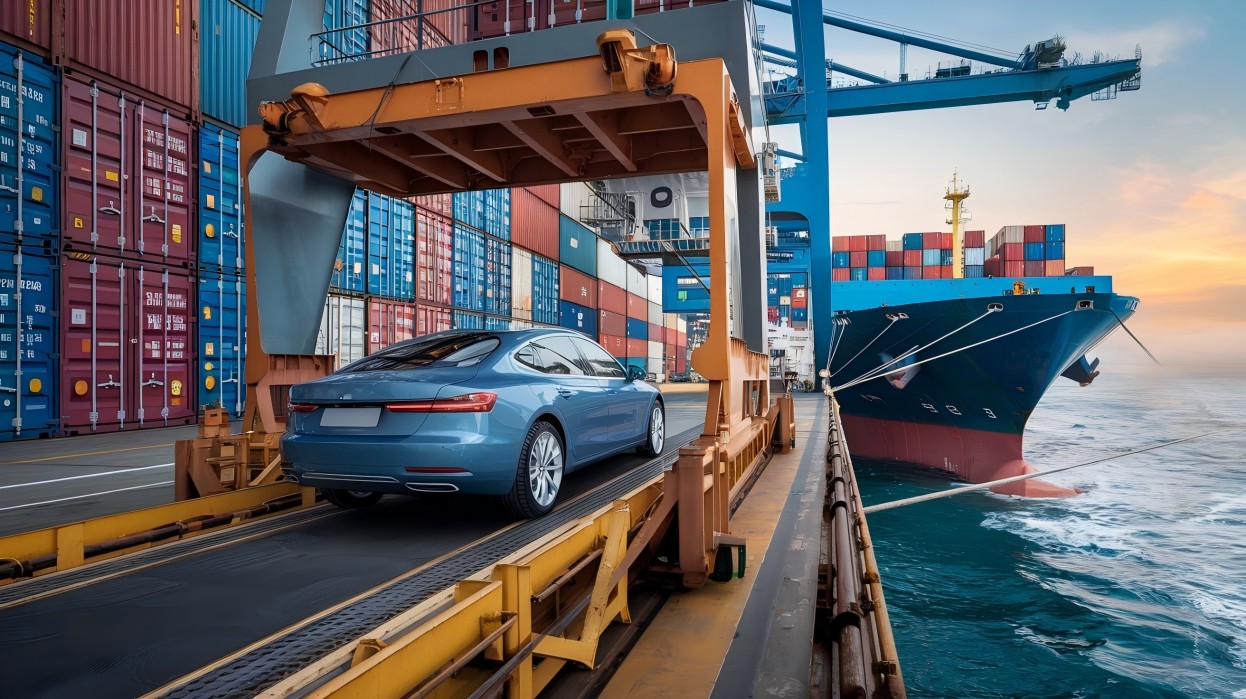
- RoRo (Roll-on/Roll-off): The most efficient method for shipping cars, trucks, buses, and wheeled construction machinery from China to Panama. Vehicles are driven directly onto the vessel and secured on dedicated decks — no container needed. Costs are calculated per vehicle based on dimensions (length × width × height in meters), not by container rate. Transit times are comparable to standard sea freight at 28–35 days.
- Breakbulk & OOG Freight: For cargo that exceeds standard container dimensions — think industrial boilers, wind turbine components, or steel structures — breakbulk shipping loads items directly onto the vessel. If the cargo fits in a container but exceeds the standard 2.35 m width or 2.39 m height, Flat Rack or Open Top containers provide the necessary clearance. These are specialized services that require advance booking and precise cargo dimensions for quoting — work with a forwarder that has proven OOG experience on the China-to-Panama route.
Air Freight Cost per Kg from China to Panama & Fastest Express Shipping
When speed matters more than cost — for a seasonal restock, a high-value electronics shipment, or time-sensitive samples — air freight is the answer. But the pricing logic is different from sea freight, and understanding how chargeable weight is calculated can save you from a nasty invoice surprise.
Air Freight Rates from Major Chinese Airports to Panama PTY
Air freight costs are based on chargeable weight, which is the greater of your shipment’s actual gross weight and its volumetric weight (calculated as Length × Width × Height in centimeters ÷ 6000). This is the single most misunderstood concept in air freight — and it catches first-time shippers off guard.
Example: You ship a box weighing 50 kg that measures 100 cm × 80 cm × 60 cm. The volumetric weight is (100 × 80 × 60) ÷ 6000 = 80 kg. Even though the box only weighs 50 kg on the scale, you’ll be charged for 80 kg because it takes up more space than its actual weight justifies.
Here are the current per-kilogram air freight rates from China’s four major international airports to Tocumen International Airport (PTY) in Panama City:
| Departure Airport (China) | Code | Rate per kg (2026 Q3) | Transit Time | Notes |
|---|---|---|---|---|
| Shanghai Pudong | PVG | $5.00–$9.00 | 3–5 days | Most frequent service, best carrier options |
| Guangzhou Baiyun | CAN | $5.00–$8.50 | 4–6 days | Strong availability for South China exports |
| Shenzhen Bao’an | SZX | $5.00–$8.00 | 5–7 days | Competitive for electronics and high-tech goods |
| Beijing Capital | PEK | $5.50–$9.50 | 4–6 days | Slightly higher due to northern routing |
Important route note: There are no direct cargo flights from mainland China to Panama. All air freight transits through a hub — most commonly the United States (Miami, Los Angeles) or European airports (Amsterdam, Paris CDG). The transit point affects both cost and speed: U.S. transits are typically faster but may involve additional security screening; European transits add a day or two but sometimes offer lower rates.
Express Courier vs Traditional Air Freight: Which Is Worth It?
For shipments under 100 kg that need to arrive fast, express courier services (DHL, FedEx, UPS) offer true door-to-door delivery in 2–5 days at $8–$12 per kg. The advantages over traditional air freight include: built-in customs clearance, real-time tracking, and no separate origin/destination handling fees. For sample shipments, replacement parts, or urgent small-batch e-commerce orders, express couriers are usually the best choice despite the higher per-kg rate.
Consolidated air freight is a middle-ground option: multiple shippers’ cargo is combined onto one air waybill, lowering the per-kilogram cost for each. The trade-off is slightly longer handling time at both ends — typically 5–8 days total.
When to choose air freight over sea freight: your cargo value exceeds ~$30 per kg, your shipment is under 500 kg, or the cost of a stockout outweighs the freight premium. In our experience, many electronics and fashion accessory importers use air freight for their initial inventory launch, then switch to sea freight for replenishment orders once they have a steady demand forecast.
Door to Door Shipping Cost from China to Panama: DDP with Duties & Taxes Included
For many importers, especially those new to the Panama market, door-to-door DDP (Delivered Duty Paid) shipping is the most attractive option — and for good reason. One price, one point of contact, and none of the customs headaches.
What DDP Door-to-Door Shipping Actually Includes
A proper DDP service covers five distinct stages, each with its own cost component:
- Supplier pickup in China (factory or warehouse → port)
- Export customs clearance (China-side documentation and declarations)
- International transportation (sea or air freight to Panama)
- Panama import customs clearance (broker fees, duty payment, ITBMS tax)
- Last-mile delivery (port/airport → your warehouse or final address)
Here is the reality most first-time importers don’t realize: the ocean freight portion typically represents only 40–50% of the total DDP cost. The rest covers origin handling charges, Panama customs brokerage, import duties (~12% on average), the 7% ITBMS (Panama’s VAT), destination terminal handling, and inland trucking. This is why a “cheap” port-to-port sea freight quote of $2,500 can easily become a $6,000+ landed cost at your door.
DDP quotes are generally valid for only 24 to 48 hours due to real-time fluctuations in fuel surcharges, carrier space availability, and exchange rates. A reputable forwarder will itemize what is and isn’t included — and won’t pressure you to book before you’ve had time to review the breakdown.
DDP vs DAP vs FOB: Which Incoterm Is Best for Panama Importers?
Choosing the right Incoterms 2020 term determines who pays for what — and who bears the risk at each stage:
| Incoterm | Freight | Insurance | Panama Customs | Duties & ITBMS | Last-Mile Delivery | Best For |
|---|---|---|---|---|---|---|
| DDP | Seller/Forwarder | Seller/Forwarder | Seller/Forwarder | Seller/Forwarder | Seller/Forwarder | First-time importers, e-commerce sellers, SMEs without a Panama customs broker |
| DAP | Seller/Forwarder | Seller/Forwarder | Buyer | Buyer | Buyer | Importers with their own customs broker but no freight contract |
| FOB | Buyer | Buyer | Buyer | Buyer | Buyer | Experienced importers with established logistics and broker relationships |
Quick decision guide: If you don’t have a licensed customs broker in Panama — and remember, Panama requires a licensed broker for all commercial imports — DDP is almost always the safer, more predictable choice. If you’ve already built a relationship with a Panama-based broker and have predictable shipment volumes, FOB can give you more cost control, especially on the destination side.
Hidden Fees to Watch for in Non-DDP Quotes
If you’re comparing port-to-port or FOB quotes, here are the destination charges that lower-priced forwarders sometimes “forget” to mention:
- Destination Terminal Handling Charge (THC) — $150–$350 per container
- Bill of Lading Release Fee — $50–$100
- Customs Brokerage Fee — $150–$400 (depending on commodity complexity)
- Customs Inspection Fee — $200–$600 (if your container is flagged for physical examination)
- Demurrage & Detention — $50–$150 per day (if you can’t pick up or return the container within the free time allowance, typically 5–7 days)
- Inland Trucking — $300–$800 (depending on distance from port to final address)
Always request an all-in, line-by-line destination breakdown before comparing quotes. A $2,500 FOB quote that omits $1,500 in destination charges is not actually cheaper than a $3,800 all-in rate.
Panama Import Duties, Customs Clearance & Required Shipping Documents
Understanding Panama’s import tax structure is essential for accurate landed cost calculation. Panama applies a relatively straightforward two-tier system, but the specific rate you pay depends entirely on your product’s HS code classification.
Panama Import Tax: Duties + ITBMS Calculation with Real Examples
Panama levies ad valorem import duties on the CIF value (Cost + Insurance + Freight) of imported goods. The average duty rate is approximately 12%, but it varies significantly by product category. On top of duties, a 7% ITBMS (Impuesto de Transferencia de Bienes Corporales Muebles y Servicios) — Panama’s value-added tax — is applied to the CIF value plus the duty amount.
| Product Category | HS Chapter | Typical Duty Rate | Effective Total (Duty + ITBMS) |
|---|---|---|---|
| Electronics & Electrical Equipment | Ch. 85 | 5–10% | 12.4–17.7% |
| Industrial Machinery & Parts | Ch. 84 | 0–5% | 7.0–12.4% |
| Furniture & Home Goods | Ch. 94 | 10–15% | 17.7–23.1% |
| Textiles, Apparel & Footwear | Ch. 61–62, 64 | 10–15% | 17.7–23.1% |
| Toys & Sporting Goods | Ch. 95 | 10–15% | 17.7–23.1% |
| Auto Parts & Accessories | Ch. 87 | 5–10% | 12.4–17.7% |
| Plastic Products & Packaging | Ch. 39 | 5–10% | 12.4–17.7% |
These are general reference ranges. Your actual duty rate depends on the specific 12-digit Panamanian customs tariff code assigned to your product. Always confirm your HS code with your customs broker before shipment.
Calculation example — Electronics shipment:
- CIF value: $10,000
- Duty at 8%: $800
- ITBMS at 7% on ($10,000 + $800): $756
- Total import tax: $1,556 (15.6% of CIF)
Calculation example — Furniture shipment:
- CIF value: $10,000
- Duty at 12%: $1,200
- ITBMS at 7% on ($10,000 + $1,200): $784
- Total import tax: $1,984 (19.8% of CIF)
This ~4 percentage point difference between electronics and furniture is why accurate HS code classification matters — it directly impacts your profit margin.
Required Documents for Sea & Air Shipments to Panama
Panama Customs (Autoridad Nacional de Aduanas) requires the following documentation for all commercial imports:
Sea freight (mandatory):
- Commercial Invoice — detailed description, unit value, total value, currency, and Incoterm
- Packing List — itemized breakdown of cartons, weights, dimensions, and contents
- Bill of Lading (B/L) — issued by the ocean carrier; the key document for cargo release
- Import Declaration (Declaración de Mercancías) — prepared and filed by your licensed customs broker
Air freight (mandatory):
- All of the above, with the Air Waybill (AWB) replacing the Bill of Lading
Additional documents (product-dependent):
- Certificate of Origin — may reduce or eliminate duties under specific trade agreements
- Phyto-Zoosanitary Certificate — required for food products, agricultural goods, and edible items
- Certificate of Free Sale — required for certain consumer products, cosmetics, and medical devices
⚠ Panama requires a licensed customs broker for ALL commercial imports. You cannot self-declare at Panamanian customs as an importer — you must engage a registered Agente de Aduanas.
Colon Free Trade Zone: The Duty-Free Import Strategy
The Colon Free Trade Zone (Zona Libre de Colón) — the largest free trade zone in the Western Hemisphere and second-largest globally after Hong Kong — offers a powerful strategic option. Goods entering the Zone are exempt from import duties and ITBMS. You can warehouse inventory duty-free, then either re-export to other Latin American markets (Costa Rica, Colombia, Venezuela, the Caribbean) or release goods into Panama’s domestic market in smaller batches, paying duties only on what actually enters the local economy.
This is the preferred strategy for brands and distributors using Panama as their regional distribution hub. Combined with Panama’s USD-based economy and stable banking system, it’s one of the most capital-efficient ways to serve the broader Latin American market from a single inventory point.
Shipping Time from China to Panama: Sea Freight Transit, Air Speed & the Panama Canal Factor
Transit time is the other half of the logistics equation — and for many importers, a two-week delay costs more than the freight itself in lost sales or production downtime.
Transit Times by Route, Method & Destination Port
| Route | Method | Typical Transit | Frequency |
|---|---|---|---|
| Shanghai → Balboa | Sea (FCL/LCL) | 25–30 days | Weekly |
| Shenzhen → Colón | Sea (FCL/LCL) | 28–35 days | Weekly |
| Ningbo → MIT (Manzanillo) | Sea (FCL/LCL) | 27–32 days | Weekly |
| Guangzhou → Balboa | Sea (FCL/LCL) | 25–32 days | Weekly |
| Any major China airport → PTY | Air Freight | 3–7 days | Daily (via transit hubs) |
| China pickup → Panama door | DDP Sea | 35–45 days | Weekly |
| China pickup → Panama door | DDP Air | 5–10 days | Daily |
| China pickup → Panama door | Express (DHL/FedEx) | 2–5 days | Daily |
DDP sea freight door-to-door adds roughly 7–10 days to the port-to-port transit for customs clearance, duty payment processing, and last-mile trucking within Panama. For time-sensitive shipments, DDP air freight cuts the total timeline to just over a week.
How the Panama Canal Affects Your Shipping Cost & Transit Time
Here is something no competitor article covers: the Panama Canal isn’t just a landmark — it directly shapes your shipping cost and transit time depending on which Panamanian port you use.
Standard China-to-Panama container routes cross the Pacific Ocean and approach Panama from the west. If your destination is Balboa (Pacific side), the vessel discharges there — no Canal transit needed. If your destination is Colón or MIT (Atlantic/Caribbean side), the vessel must transit the Panama Canal, which adds 2–4 days to the schedule. The Canal toll, which can exceed $100,000 for a large container vessel, is already factored into the ocean freight rate quoted by the carrier.
The strategic implication: Balboa is generally faster and marginally cheaper for ocean freight from China, but if your warehouse or customers are on the Caribbean coast or in the Colon Free Zone, the inland trucking savings from discharging at Colón typically outweigh the Canal premium. Always calculate the total port-to-warehouse cost — not just the port-to-port freight.
Panama’s role as a transshipment hub also opens up an efficient regional distribution model: import a full container to the Colon Free Zone, deconsolidate there, and re-ship smaller batches to Costa Rica, Colombia, the Dominican Republic, or other nearby markets — all without triggering Panamanian import duties.
Common Causes of Shipping Delays & How to Avoid Them
- Port congestion: Both Balboa and Colón can experience bottlenecks during peak season (September–December). Book 3–4 weeks in advance.
- Canal transit queues: While rare for container vessels (which have reserved transit slots), unexpected delays can occur during maintenance periods or extreme weather.
- Panama rainy season (May–November): Heavy rainfall can temporarily slow port operations — plan for an extra 2–3 days of buffer.
- Chinese New Year (January/February): Factory closures and pre-holiday rush create a 2–3 week shipping crunch. Book space by early January or wait until late February.
- Customs inspections: Random physical inspections add 2–5 days. Accurate documentation and correct HS codes minimize your inspection risk.
The Cheapest Way to Ship from China to Panama
Every importer wants to know the cheapest way to ship from China to Panama. The honest answer: there’s no single cheapest method — the lowest-cost approach depends on your cargo volume, product type, and urgency. But these seven strategies consistently deliver savings across all shipping modes.
1. Match Cargo Volume to the Right Method. If your shipment is under 10–12 CBM, LCL is usually cheaper than FCL. Above 12 CBM, book a 20ft FCL — you’ll get a lower cost per cubic meter even if the container isn’t completely full. And if your shipment isn’t urgent, sea freight costs roughly one-fifth to one-tenth of air freight.
2. Book Before Peak Season Hits. Ocean freight rates on the China-to-Panama route typically rise 20–40% between September and December as retailers stock up for the holiday season. Chinese New Year (January/February) adds another 15–25% premium as factories rush to ship before closing. Booking 3–4 weeks ahead locks in pre-peak rates and guarantees vessel space.
3. Optimize Packaging to Reduce Chargeable Weight. For LCL and air freight, every cubic meter matters. Switch to palletized, stackable packaging where possible. For air freight specifically, work with your supplier to minimize unnecessary packaging volume — an oversized box with 30% empty space directly increases your volumetric weight charge.
4. Choose the Right Panama Port for Your Delivery Address. If your warehouse is in Panama City, use Balboa (Pacific side, no Canal transit). If you’re in Colón or the Free Zone, use Colón/MIT (the inland trucking savings from a shorter port-to-door distance outweigh the Canal toll built into the ocean freight). Don’t default to the cheapest port-to-port rate — calculate the full port-to-warehouse cost.
5. Leverage the Colon Free Zone for Duty Deferral. Instead of paying 12–20% import duties on your entire shipment upfront, warehouse inventory in the Colon Free Zone and release goods into Panama in smaller batches as needed. This preserves working capital and defers duty payments.
6. Consolidate Multiple Suppliers into One Container. If you source from 3–5 different factories across Guangdong and Zhejiang, shipping each supplier’s goods separately via LCL means paying the LCL rate multiple times. Instead, use a freight forwarder with a consolidation warehouse in Shenzhen or Guangzhou — all suppliers deliver there, the forwarder combines everything into one FCL container, and you save 20–40% on total freight costs compared to individual LCL shipments.
7. Partner with a Class-A Freight Forwarder for Direct Carrier Rates. Class-A licensed and NVOCC-certified freight forwarders negotiate directly with ocean carriers at volume-contract rates — typically 10–15% below the spot market price a small importer would pay. More importantly, an experienced forwarder’s customs expertise on the Panama route prevents the expensive mistakes (wrong HS codes, missing documents, unexpected demurrage) that erode whatever you “saved” on a cheap quote.
How to Choose a Reliable Freight Forwarder for China-to-Panama Shipping
When evaluating freight forwarders, look for five non-negotiable credentials. Choosing a freight forwarder from China to Panama with proven experience on this specific route makes all the difference:
- NVOCC and/or FMC licensing — proves the forwarder is legally authorized to issue bills of lading and operate as an ocean transport intermediary
- Panama-specific experience — general China-to-Latin America experience is not the same as knowing the Colon Free Zone clearance process or the documentation quirks of Panamanian customs
- A local agent partnership in Panama — your forwarder should have a vetted, long-term relationship with a licensed Panamanian customs broker and a local logistics partner for last-mile delivery
- Transparent, line-by-line pricing — if a quote only shows one number with no breakdown, expect surprises later
- Real-time shipment tracking — in 2026, daily updates with photos at key milestones (loading, departure, arrival, customs release, delivery) should be standard
A forwarder with Class-A freight forwarding certification, NVOCC accreditation, and FMC membership — such as Dantful International Logistics, based in Shenzhen with over 17 years of experience on China-to-Latin America routes — brings direct carrier contracts, an established Panama agent network, and a 50-person operations team dedicated to keeping your shipment on schedule. For a full overview of services, visit our shipping from China to Panama page. Whether you need FCL, LCL, air freight, DDP door-to-door, or specialized OOG transport, the right partner turns logistics from a stress point into a competitive advantage.
Frequently Asked Questions
Q1: How much does it cost to ship a 20ft or 40ft container from China to Panama?
A 20ft container currently costs $2,550–$3,450 port-to-port, and a 40ft container costs $3,150–$4,300, depending on the origin port in China and the destination port in Panama. These are base ocean freight rates only and exclude local charges at both ends, customs clearance, duties, ITBMS, and inland delivery.
Q2: Is sea freight or air freight cheaper? When should I choose air?
Sea freight is dramatically cheaper — roughly $85–$130 per CBM for FCL versus $5–$9 per kg for air freight. Choose air freight when your shipment is under 500 kg, the cargo value exceeds ~$30 per kg, or the cost of a stockout exceeds the air freight premium. For everything else, sea freight is the economical choice.
Q3: What does DDP door-to-door shipping to Panama actually include? Are there hidden costs?
A legitimate DDP service includes: factory pickup in China, export clearance, international freight (sea or air), Panama import customs clearance, payment of all import duties and ITBMS (7%), and last-mile delivery to your door. What’s typically excluded: storage fees incurred due to customs delays, special product inspection fees, and return/refusal costs. Always confirm exclusions in writing before booking.
Q4: How much does it cost to ship a car from China to Panama?
Shipping a standard passenger vehicle from China to Panama via RoRo (roll-on/roll-off) typically costs $1,500–$3,000, depending on the departure port and vehicle dimensions. Containerized shipping (where the car is secured inside a 20ft or 40ft container) costs $2,500–$4,000 but offers more protection. Import duties on vehicles range from 5% to 15% plus 7% ITBMS.
Q5: How long does customs clearance take in Panama?
Standard customs clearance in Panama takes 2–5 business days after cargo arrival, provided all documentation is complete and accurate. Physical inspections, if triggered, add 2–5 extra days. Working with an experienced customs broker significantly reduces the likelihood of inspection flags and clearance delays.
Q6: Can I ship Amazon FBA inventory from China to Panama?
Yes. Amazon FBA forwarding to Panama follows a similar process to FBA shipping to other markets, with the added requirement that your shipment must clear Panamanian customs (duties + ITBMS paid) before being delivered to the Amazon fulfillment center. Work with a forwarder that has specific Amazon FBA experience — labeling, palletizing, and delivery appointment requirements differ from standard B2B freight.
Q7: How do I ship heavy machinery or OOG cargo from China to Panama?
OOG (Out of Gauge) cargo that exceeds standard container dimensions is shipped via Flat Rack containers, Open Top containers, or breakbulk vessel loading, depending on the dimensions and weight. This requires advance planning (4–6 weeks minimum), precise cargo measurements, and a forwarder with specialized heavy-lift experience on the China-to-Panama route. Request a route survey from your forwarder to confirm feasibility and pricing.
Q8: How do I find a reliable freight forwarder for China to Panama?
Look for NVOCC/FMC licensing, verified Panama-specific experience (especially with Colon Free Zone procedures), a local agent partnership in Panama, transparent line-by-line pricing, and real-time shipment tracking. Dantful International Logistics, a Class-A licensed forwarder based in Shenzhen with 17+ years of experience on Latin American routes, offers all of the above — direct carrier contracts, an established Panama agent network, and a 50+ person customer support team providing 24/7 cargo visibility.
Q9: When is the cheapest time to ship from China to Panama?
The most affordable shipping windows are March through August — after Chinese New Year and before the September–December peak season. Rates are typically 20–40% lower than peak-season pricing, and vessel space is more readily available. If you have flexibility in your procurement schedule, plan your larger shipments during this period.

Young Chiu is a seasoned logistics expert with over 15 years of experience in international freight forwarding and supply chain management. As CEO of Dantful International Logistics, Young is dedicated to providing valuable insights and practical advice to businesses navigating the complexities of global shipping.