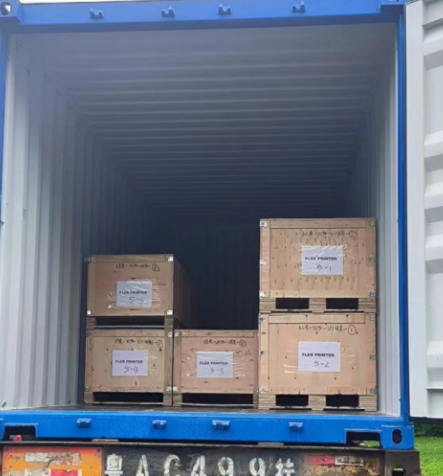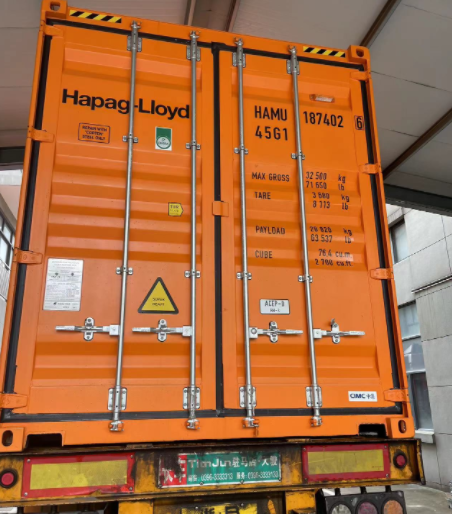
China produces over 80% of the world’s solar panels — but sourcing quality panels is only half the battle. How to ship solar panels from China safely, cost-effectively, and without customs nightmares is where most importers stumble. Broken panels, surprise duties, hidden freight charges, and weeks of project delays are all common when logistics aren’t handled properly.
This guide draws on 15+ years of firsthand freight forwarding from our Shenzhen headquarters — we handle solar exports daily for importers across 200 countries. You’ll learn shipping methods, real costs, packaging techniques, required documents, and exactly what duties you’ll face in the US, Europe, Australia, and beyond. Every recommendation comes from shipments we’ve actually executed.
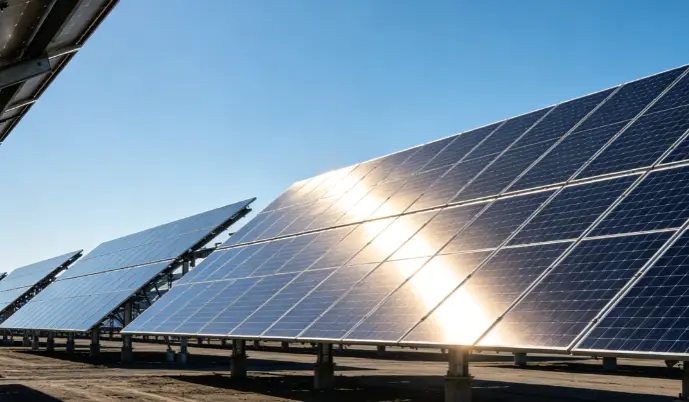
Sourcing Solar Panels from China: Top Brands, Quality & Pricing
China’s solar manufacturing is anchored in Jiangsu, Zhejiang, and Guangdong provinces, where Tier 1 manufacturers — LONGi, JinkoSolar, Trina Solar, JA Solar, and Canadian Solar — produce the vast majority of globally shipped panels. These brands pass independent bankability assessments and meet international certification standards.
When sourcing, the panel type matters for logistics. Monocrystalline panels offer higher efficiency (21–24%) in a lighter, more compact form factor — meaning more wattage per container. Polycrystalline panels are heavier per watt, which increases shipping costs slightly. For utility-scale projects, bifacial solar panels with glass-on-glass construction add weight and require extra packaging care.
Every panel should carry IEC 61215 and IEC 61730 certifications (both mandated by the International Electrotechnical Commission) plus destination marks like UL 1703 (US) and CE (EU, per Regulation 765/2008). In our experience, missing certifications are the #1 cause of customs rejection at destination.
MOQs vary, but expect 100–300 panels for direct factory orders. Verify suppliers through Alibaba Trade Assurance or third-party factory audits before committing.
Solar Panel Dimensions, Weight & Container Loading Guide
Understanding your cargo’s physical specs is step one of logistics planning. Here’s what you’re dealing with:
| Panel Type | Dimensions (per panel) | Weight (per panel) | Panels per Pallet | Pallet Weight |
|---|---|---|---|---|
| Residential (400–450W) | ~1.72 × 1.13 × 0.035 m | 19–22 kg | 30–36 | 650–800 kg |
| Residential (500–550W) | ~1.96 × 1.13 × 0.035 m | 22–25 kg | 26–30 | 675–850 kg |
| Commercial/Utility (600W+) | ~2.28 × 1.13 × 0.035 m | 28–33 kg | 20–26 | 680–900 kg |
| Bifacial (Glass-Glass) | ~2.10 × 1.13 × 0.035 m | 30–38 kg | 22–28 | 800–1,050 kg |
How many panels fit in a container? Here’s the quick math:
| Container Type | Internal Dimensions (L×W×H) | Residential Panels | Commercial Panels |
|---|---|---|---|
| 20ft GP | 5.90 × 2.35 × 2.39 m | 180–220 | 140–180 |
| 40ft GP | 12.03 × 2.35 × 2.39 m | 380–500 | 320–400 |
| 40ft HC | 12.03 × 2.35 × 2.69 m | 430–550 | 360–450 |
Solar panels are fragile cargo — tempered glass surfaces and thin silicon cells are vulnerable to impact, vibration, and improper stacking. Micro-cracks — invisible hairline fractures in the cells — are the silent profit killer. They won’t be obvious on delivery but degrade panel performance over months, often voiding warranties.
Planning Your Solar Panel Import: Incoterms, Order Size & DDP Shipping
Order Size & When LCL Beats FCL (or Doesn’t)
For small orders under 15 CBM, LCL (Less than Container Load) lets you pay only for the space you use. But there’s a break-even point — typically around 12–15 CBM or 6–10 pallets — where FCL becomes cheaper per unit. Your freight forwarder can run this comparison for your specific order.
EXW, FOB, CIF, or DDP — Which Incoterm?
The Incoterm you choose determines who pays for what and, critically, where risk transfers from seller to buyer:
| Incoterm | Best For | You Pay For | Risk Transfers At |
|---|---|---|---|
| EXW | Experienced importers with a China logistics team | Everything from factory gate onward | Factory gate |
| FOB | Most importers (recommended) | Ocean freight + destination charges | Vessel loading at port |
| CIF | Quick cost comparisons | All destination-side costs | Destination port (limited insurance) |
| DDP | First-time importers, hassle-free delivery | Nothing — forwarder handles all | Final delivery address |
For most importers, FOB is the sweet spot — you control ocean freight and destination logistics while the supplier handles factory-to-port. If you have a customs broker at destination, FOB plus your own brokerage offers the best cost control. DDP shipping from China gives you a single price with the least coordination — ideal for first-timers — but forwarders build margin into DDP quotes to cover uncertain destination duties. We’re upfront about this trade-off.
If your supplier quotes EXW from Jiangsu, you’ll need inland trucking to Shanghai or Ningbo port (300–500 km, $200–$600). FOB Shanghai bundles that on the supplier side.
Pre-Shipment Inspection
Before panels leave the factory, insist on a pre-shipment inspection. At minimum, check: panel wattage output (flash testing), visual condition, and EL (electroluminescence) imaging to detect micro-cracks invisible to the naked eye. A $300 inspection can prevent a $40,000 damaged shipment.
Sea Freight, Air Freight & Door-to-Door: Solar Panel Shipping Methods Compared
FCL Sea Freight — The Workhorse for Bulk Solar Shipments
FCL (Full Container Load) is the most economical sea freight method for solar panels — and the safest. Your panels occupy a dedicated container, handled only at origin and destination, minimizing damage risk.
Transit times from major Chinese ports:
| From | To Los Angeles | To Rotterdam | To Sydney | To Jebel Ali |
|---|---|---|---|---|
| Shanghai | 14–18 days | 28–32 days | 14–18 days | 18–22 days |
| Ningbo | 15–19 days | 28–33 days | 14–18 days | 19–23 days |
| Shenzhen | 14–18 days | 27–31 days | 13–17 days | 16–20 days |
| Tianjin | 16–20 days | 30–35 days | 16–20 days | 20–24 days |
LCL Sea Freight — For Smaller Orders
LCL consolidates your pallets with other cargo. It’s practical for 1–10 pallets or trial orders. The downside: panels are handled at consolidation and deconsolidation warehouses, increasing damage risk and adding 3–7 extra days. Cost per CBM is higher than FCL.
Air Freight — When Speed Trumps Cost
Air Freight delivers in 3–7 days at 5–10× the ocean cost. It suits urgent projects, high-value panels, or samples. Chargeable weight uses volumetric calculation (L×W×H cm ÷ 6000) — a 700 kg pallet often charges at 800–900 kg. Airlines cap individual piece weight at 150–300 kg.
China-Europe Rail Freight
The China-Europe Railway Express offers a middle ground: 18–22 days at roughly half the cost of air freight. Major hubs include Chengdu, Chongqing, Xi’an, and Zhengzhou, connecting to Duisburg, Hamburg, and Warsaw.
Door-to-Door Service
A door-to-door freight forwarder handles everything: factory pickup, export customs, ocean or air freight, import clearance, duty payment, and last-mile delivery. For first-time importers and project developers without logistics infrastructure, this eliminates coordination headaches entirely.
Shipping Method Decision Matrix
| Mode | Relative Cost | Transit | Min Volume | Damage Risk | Best For |
|---|---|---|---|---|---|
| FCL Sea | $ (lowest per panel) | 14–35 days | 1×20ft | Low | Bulk orders 200+ panels |
| LCL Sea | $$ | 20–45 days | 1 CBM | Medium | Small orders, samples |
| Air | $$$$$ | 3–7 days | 50 kg | Low | Urgent, high-value |
| Rail | $$$ | 18–22 days | 1 CBM | Low-Medium | EU, medium urgency |
| Door-to-Door | $$–$$$$ | Varies | Flexible | Low | Full-service, first-time importers |
Solar Panel Shipping Costs from China: Full Price Breakdown (2026)
Here’s what you’ll actually pay — every cost component from factory to final delivery. We believe in full transparency: no hidden fees, no surprise charges at destination.
Complete Cost Breakdown
| Cost Component | Typical Range (USD) | Notes |
|---|---|---|
| Inland Trucking (factory → port) | $200–600 | Depends on distance; Jiangsu → Shanghai ≈ $250 |
| Export Customs Clearance | $120–300 | Documentation + declaration fees |
| Ocean Freight 40ft: Shanghai → LA | $1,200–2,800 | Spot rate, fluctuates seasonally |
| Ocean Freight 40ft: Shanghai → Rotterdam | $2,000–4,000 | Longer route, higher fuel |
| Ocean Freight 40ft: Shenzhen → Sydney | $1,500–3,000 | Moderate route |
| Marine Cargo Insurance | 0.3–0.5% of cargo value | All Risk coverage recommended |
| Destination Port Charges (THC + docs) | $300–700 | Terminal handling, documentation |
| Import Customs Brokerage | $200–500 | Broker fees for clearance |
| Import Duties & Taxes | 0–40% of CIF value | Varies dramatically by country |
| Last-Mile Delivery | $400–2,500+ | Depends on distance from port |
Worked Example: 400 Panels, Shenzhen → Los Angeles (DDP)
Let’s put real numbers on a typical shipment:
| Item | Calculation | Amount (USD) |
|---|---|---|
| 400 panels × 400W × $0.11/watt (EXW) | — | $17,600 |
| Factory → Shenzhen port trucking | — | $350 |
| Export clearance & docs | — | $200 |
| Ocean freight (40ft, Shenzhen → LA) | — | $1,800 |
| Marine insurance (0.4% × $18,000) | — | $72 |
| US destination port charges | — | $500 |
| US customs brokerage | — | $300 |
| Section 201 duty (14.75% × $20,022) | — | $2,950 |
| Last-mile delivery (LA → Phoenix, 600 km) | — | $900 |
| Total landed cost | — | $24,672 |
| Landed cost per panel | $24,672 ÷ 400 | $61.68 |
| Landed cost per watt | $24,672 ÷ 160,000W | $0.154 |
That’s competitive: the same 400W panel retails for $0.30–0.45/watt through US distributors. For a broader look at pricing trends, see our breakdown of container shipping costs from China to USA. Even after shipping and duties, importing directly saves 40–50%.
How to Reduce Solar Panel Shipping Costs
- Book off-peak: Avoid Aug–Oct (pre-Christmas + pre-CNY rush) and the weeks before Chinese New Year. Off-peak rates drop 30–40%.
- Consolidate orders: Combine multiple purchases into one FCL. Savings vs multiple LCL shipments are significant.
- Optimize port choice: A Ningbo supplier saves $150–300 in trucking vs routing through Shanghai.
- Negotiate annual contracts: If you import 4+ containers/year, lock in annual rates rather than booking spot.
- Flexible sailing: A 7–10 day sailing window lets your forwarder find the best rate.
Hidden Costs to Watch For
- Detention & Demurrage: If you don’t return the container or clear customs promptly, daily charges accumulate fast — $80–150/day.
- Customs examination fees: If CBP or another customs authority flags your container for physical inspection, expect $400–1,000 in exam fees.
- Port congestion surcharges: Major ports like LA/Long Beach and Rotterdam occasionally levy congestion surcharges during peak periods.
How to Pack Solar Panels for Shipping: Crating, Pallets & ISPM 15
Packaging determines whether your panels arrive intact or as glass scrap. In our 15+ years, poorly packaged solar shipments see 3–5% breakage; properly crated loads stay under 0.5%. Three enemies cause the damage: micro-cracks from vibration, corner impacts during handling, and moisture damage on ocean voyages.
The 6-Step Packaging Protocol
- Individual wrapping: Each panel gets EPE foam wrap (5–10mm thickness) plus heavy-duty cardboard corner protectors on all four corners.
- Stack orientation: Stack panels glass-to-glass or back-to-back with 3mm separator sheets (foam board or corrugated plastic) between each panel. Never allow glass-to-frame contact.
- Pallet assembly: Use high-quality plywood pallets rated for 1,000+ kg. Strap the stack with steel or PET straps (4–6 bands per pallet) and wrap in heavy-gauge stretch film.
- Crate construction: The palletized stack goes inside a custom-built plywood crate. All wooden packaging must be ISPM 15 certified (heat-treated and stamped) to pass international customs. Reinforce crate corners with steel brackets.
- Moisture protection: Line the crate interior with a vapor-barrier bag and include silica gel desiccant packs (500g–1kg per pallet) for ocean freight.
- Container loading: Distribute pallet weight evenly across the container floor. Fill all voids with inflatable dunnage airbags. Lash each pallet to container lashing rings with rated straps.
Tilt Indicators & Shock Sensors
Attach Tip-N-Tell or ShockWatch indicators to at least two sides of each pallet. These inexpensive devices (roughly $3–10 each) permanently change color if the pallet was tilted beyond 80° or experienced impact forces above a set threshold. Before signing the delivery receipt, check every indicator — a triggered indicator is your evidence for an insurance claim.
Don’t Void the Warranty
Many manufacturers require palletized, upright, climate-protected shipping. Stacking panels flat, using non-ISPM 15 wood, or omitting moisture protection can void a 25-year performance warranty before panels even reach your warehouse.
HS Code 8541.43, Export Documentation & China Customs Clearance
The Correct HS Code
Solar panels fall under HS Code 8541.43 — “Photosensitive semiconductor devices, including photovoltaic cells whether or not assembled in modules or made up into panels.” Misclassifying panels under a general electrical goods code is one of the most common — and costly — customs mistakes, triggering 2–4 week clearance delays and potential fines.
China Export Documentation Checklist
| Document | Purpose | Key Fields to Verify |
|---|---|---|
| Commercial Invoice | Declares transaction value | Panel model, quantity, unit price, total value, Incoterm |
| Packing List | Details cargo weight & dimensions | Per-pallet weight, dimensions, stack count |
| Bill of Lading (B/L) | Ocean contract of carriage | Shipper, consignee, notify party, container number |
| Certificate of Origin | Qualifies for preferential duty rates | Form A (general), Form F (China-Chile, etc.) |
| IEC Test Reports | Proves panel certification | IEC 61215, IEC 61730 test certificates |
| Fumigation Certificate | Proves ISPM 15 compliance | Required if wooden packaging used |
| China Customs Declaration | Required for export | HS code, declared value, exporter registration |
China Export Customs: Day-by-Day
The export clearance timeline in China is surprisingly fast — when documentation is correct. Based on our daily work with the General Administration of Customs of the People’s Republic of China (GACC):
- Day 1: Our team submits the customs declaration electronically via GACC’s integrated Single Window platform.
- Day 1–2: System risk assessment — low-risk shipments clear automatically; medium/high-risk flagged for review.
- Day 2–3: Physical inspection if flagged. GACC inspectors verify HS code, panel count, and packaging marks against the declaration.
- Day 3–4: Customs releases the shipment; container moves to port terminal for loading.
- Day 4–5: Vessel departs.
The most common rejection triggers: incorrect HS code, declared value mismatch, and missing fumigation certificate. A competent China-based freight forwarder catches these issues before submission — and for importers needing Customs Clearance support at both origin and destination, a full-service forwarder handles the entire documentation chain.
Ocean & Air Transit: Cargo Insurance, Tracking & Transit Times
Marine Cargo Insurance
Standard carrier liability under Hague-Visby Rules (governed by the International Maritime Organization) covers only ~$500 per container. All Risk marine cargo insurance (Institute Cargo Clauses A) is non-negotiable for solar panels — it covers damage, theft, and loss for ~0.3–0.5% of declared value. We advise clients to declare full CIF value plus 10%.
If panels arrive damaged, document everything immediately: photograph the container exterior before opening, photograph each damaged pallet with indicators visible, and file a claim with your insurer within 72 hours. Your freight forwarder should guide this process.
Tracking & Visibility
Modern freight forwarders provide real-time tracking with daily status updates. At Dantful, for example, clients receive photos at every milestone: pallets loaded at factory, container sealed at port, vessel departure, arrival at destination port, and final delivery. This transparency eliminates the “where is my shipment” anxiety common in international logistics.
Import Duties & Customs Clearance: USA, EU, UK, Australia & More
United States
Shipping from China to the United States involves navigating three layers of duties for solar panels:
- Section 201 Safeguard Tariff: Currently 14.75% on crystalline silicon photovoltaic cells and modules (phased down annually, expires February 2026 — check current rate).
- Anti-dumping (AD) and Countervailing (CVD) duties: Apply to panels using Chinese-origin cells. Rates vary by manufacturer, with some exceeding 20–50% combined.
- Customs Bond: Required for shipments valued over $2,500. Single-entry bonds cost 0.5–1% of the bond amount; continuous bonds are more economical for regular importers.
Required filings per U.S. Customs and Border Protection (CBP) regulations: CBP Form 7501 (entry summary) and ISF 10+2 (Importer Security Filing), due 24 hours before vessel loading at origin. As an FMC-licensed freight forwarder, we pre-file and validate these documents to eliminate clearance delays.
European Union
Solar panels from China currently face no anti-dumping duties in the EU (the previous measures expired in 2018 and were not renewed). However, importers must comply with:
- WEEE Directive (EU Directive 2012/19/EU): Register as a producer in each EU country where panels are sold, arrange take-back and recycling programs.
- CE marking: Panels must carry CE marking per EU Regulation 765/2008.
- VAT: At import, pay destination-country VAT — for example 19% when shipping from China to Germany, 21% to the Netherlands, 21% to Spain, 20% to France, and 22% to Italy.
United Kingdom (Post-Brexit)
For shipping from China to the United Kingdom, most solar panels enter duty-free under the UK Global Tariff. The UK now requires UKCA marking instead of CE (with a transitional period). All imports are processed through the Customs Declaration Service (CDS). VAT at 20% applies at import.
Australia
For shipping from China to Australia, import duties range 0–5% on solar panels. The key requirement from the Clean Energy Council (CEC) is approval of your specific panel models — only CEC-listed panels qualify for STCs (Small-scale Technology Certificates), essential for the Australian residential solar market. Panels must comply with AS/NZS 5033. GST of 10% applies.
Solar Panel Import Duties: 12-Country Quick Reference
| Country | Import Duty | Key Certification | Critical Requirement | Transit (from Shanghai) |
|---|---|---|---|---|
| USA | 14.75% (Sec 201) + AD/CVD | UL 1703 | Customs Bond, ISF 10+2 | 14–18 days |
| Germany | 0% | CE, WEEE | Producer registration, 19% VAT | 28–32 days |
| UK | 0–2% | UKCA | CDS declaration, 20% VAT | 28–32 days |
| Australia | 0–5% | CEC listing | STC eligibility, 10% GST | 14–18 days |
| UAE | 0–5% | Gulf Conformity Mark | SABER platform | 18–22 days |
| Saudi Arabia | 0–5% | SASO | SABER certificate | 18–22 days |
| South Africa | 0–10% | SABS | Local content rules may apply | 20–25 days |
| Pakistan | 0–5% | Bureau Veritas PSI | Pre-shipment inspection mandatory | 18–22 days |
| India | 20–40% | BIS | BCD on modules, ALMM list | 18–22 days |
| Brazil | 0–14% | INMETRO | Complex state taxes (ICMS) | 30–35 days |
| Vietnam | 0–3% | — | Avoid panels with Chinese-origin cells (AD risk) | 10–14 days |
| Kenya | 0–10% | KEBS | Pre-export verification of conformity | 22–28 days |
Last-Mile Delivery & Warehousing for Solar Panel Imports
Once your container clears customs, the final leg involves de-stuffing the container at a warehouse or delivering directly to the jobsite. Key considerations:
- Inspect before signing: Check all tilt indicators and shock sensors before the driver leaves. If any are triggered, photograph them and note it on the delivery receipt — this preserves your insurance claim rights.
- Warehousing: If panels won’t be installed immediately, store them in a dry, climate-controlled warehouse. Panels stored outdoors or in humid conditions can develop snail trails and corrosion.
- Multi-jobsite delivery: For installers serving multiple sites from one import, coordinate with a destination freight forwarder to de-stuff pallets and deliver partial loads.
Shipping Solar Batteries, Inverters & Complete Solar Panel Systems
Most solar projects need more than just panels. Here’s how to handle the full system.
Lithium Solar Batteries — Dangerous Goods Class 9
Lithium-ion and LiFePO4 solar batteries are classified as Dangerous Goods (DG) Class 9 under both the IMDG Code (ocean, per International Maritime Organization) and IATA Dangerous Goods Regulations (air, per International Air Transport Association). This means:
- UN 38.3 certification is mandatory before shipping — your battery supplier must provide test reports proving the batteries pass altitude simulation, thermal, vibration, shock, and short-circuit tests.
- Batteries require UN-approved DG packaging with specific labeling and markings.
- A Dangerous Goods Declaration (DGD) and Material Safety Data Sheet (MSDS) must accompany the shipment.
- Solar batteries almost always ship in a separate container from panels — DG cargo has stowage restrictions, fire suppression requirements, and often higher insurance premiums.
- Air freight of large lithium batteries is heavily restricted and prohibitively expensive. Plan on ocean freight for battery shipments.
Inverters, Mounting & BOS Components
Solar inverters are standard electrical equipment (no DG classification) but need shock-resistant packaging. Mounting structures — steel or aluminum racking — are heavy and bulky but non-fragile; ship them in a separate container to avoid damaging panels and to optimize container weight limits. Balance-of-system components (cables, connectors, combiner boxes) consolidate easily via LCL.
For complete projects, the most efficient approach is supplier consolidation: all components ship to your forwarder’s warehouse in Shenzhen or Shanghai, are inspected and re-packed, then dispatched in coordinated containers that arrive within the same week at the destination.
Seasonal Shipping Strategy & Solar Panel Supply Chain Planning
The Chinese holiday calendar dictates your shipping timeline more than most importers realize:
- Chinese New Year (January/February): Factories close for 2–3 weeks; port operations slow for 4–6 weeks as millions of workers travel. Shipping rates spike 30–50% in the month before. Plan to ship 6+ weeks before CNY or 2+ weeks after.
- National Day Golden Week (October 1–7): Peak port congestion, reduced customs staffing. Combined with the pre-Christmas retail rush, August–October is the most expensive and congested shipping window of the year.
- Dragon Boat Festival (June) and Mid-Autumn Festival (September/October): Minor disruptions, but factor in 1–2 extra days.
Off-peak advantages (November–December, March–May): lower freight rates, more container availability, faster customs processing, and better attention from your freight forwarder’s operations team.
For supply chain resilience, diversify across multiple ports and carriers. If you always ship Shenzhen → Los Angeles, add a Ningbo → Long Beach backup option. Green logistics programs — carbon-offset shipping — are increasingly available through major carriers and resonate with solar buyers motivated by environmental impact.
Real Case Studies: How Dantful Ships Solar Panels from China
Case 1: 450 Panels, Shenzhen → Los Angeles (FCL + DDP)
A US solar installer’s first direct import: 450 residential 400W panels from Shenzhen. Challenges: tight deadlines, first-time navigation of US Section 201 and AD/CVD.
Our team coordinated FOB pickup, specified double-layer crating with tilt indicators, and arranged pre-shipment EL testing. US customs docs were pre-filed. The client received daily photo updates at every milestone.
Result: 16 days port-to-port, 22 days factory-to-jobsite, zero damage, on budget.
Case 2: Multi-Supplier Consolidation — Panels + Inverters + Batteries → Rotterdam
A European project developer sourced panels from Jiangsu, inverters from Guangdong, and LiFePO4 batteries from Shenzhen. Coordinating three suppliers with different lead times — and handling DG batteries — exceeded their in-house logistics capacity.
All shipments were consolidated at Dantful’s Shenzhen warehouse. Batteries shipped in a separate DG-compliant container; panels and inverters shared a standard 40ft container. Both sailed synchronized to Rotterdam.
Result: All components arrived within three days. Project started on schedule. Total logistics cost was 22% lower than their previous multi-vendor approach.
Common Solar Panel Shipping Mistakes & How to Avoid Them
After 15+ years of handling solar panel exports, here are the mistakes we see repeatedly — and how to avoid every one of them.
Mistake 1: Accepting “standard export packaging” from the factory. Standard packaging is for domestic Chinese trucking, not a 30-day ocean voyage. Result: 3–5% breakage vs under 0.5% with proper crating. Fix: Specify ISPM 15 crates, foam separation, corner protection, and moisture barriers in your purchase order.
Mistake 2: Using the wrong HS code. HS 8541.43 is specific to PV panels. A generic electrical code triggers customs holds, penalties, and re-classification. Fix: Confirm HS 8541.43 with your forwarder before the export declaration is filed.
Mistake 3: Underestimating US duties. A 0% MFN tariff looks duty-free — then you get hit with 14.75% Section 201 plus 20–50% AD/CVD. Fix: Check current rates and your manufacturer’s AD/CVD status before ordering. Build duties into your landed cost model upfront.
Mistake 4: Skipping cargo insurance. One damaged container = $40,000+ unrecoverable. Carrier liability caps at ~$500. Fix: Purchase All Risk insurance for full CIF value + 10%. At 0.3–0.5% of cargo value, it’s the cheapest peace of mind in logistics.
Mistake 5: Shipping during Chinese New Year. Factories close, ports backlog, rates spike 30–50%. Late January shipments routinely arrive 4–6 weeks late. Fix: Ship 6+ weeks before CNY, or wait until late February.
Mistake 6: Not inspecting upon delivery. Accepting delivery without checking tilt and shock indicators forfeits insurance claim rights. Fix: Inspect all indicators before signing. Photograph everything. Note triggers on the delivery receipt.
How to Choose the Right Freight Forwarder for Solar Panel Shipping from China
Not All Forwarders Are Equal
| Forwarder Type | China-Side Capability | Solar Experience | Best For |
|---|---|---|---|
| China-Based Specialist (like Dantful) | Full: factory coordination, export customs, port operations | Deep — daily solar shipments | All solar importers |
| Digital Platform (Freightos, iContainers) | None — online booking only | None — generic service | Price comparison only |
| Local Destination Forwarder | Limited — relies on Chinese agents | Varies | Existing importers with China operations |
Why Importers Partner with Dantful
Founded in 2008 and headquartered in Shenzhen, Dantful International Logistics is a Class-A licensed freight forwarder (China Ministry of Commerce), NVOCC certified (Ministry of Transport), and a member of FMC and Jctrans — recognized by the International Federation of Freight Forwarders Associations (FIATA). With 50 logistics operators, 50+ customer service professionals, and a 200-country agent network, solar panel shipping is our core competency — not a side hustle.
Our direct contracts with major carriers ensure competitive rates and guaranteed container space even during peak season. Clients receive daily photo updates at every milestone, from factory loading to final delivery. For solar importers needing the full package — panels, batteries, inverters, and mounting — we provide integrated logistics that keeps your entire project synchronized.
FAQs
What is the HS code for solar panels from China?
HS Code 8541.43 — “Photosensitive semiconductor devices, including photovoltaic cells.” Always verify with your freight forwarder before filing.
How much does it cost to ship solar panels from China?
Ocean freight for a 40ft container ranges $1,200–4,000 by destination. Total landed cost (all fees, duties, delivery) adds $0.04–0.07/watt for US, $0.03–0.05/watt for EU imports.
What is the cheapest way to ship solar panels from China?
FCL ocean freight — the lowest cost per panel for orders of 200+ panels. LCL works for very small orders but costs more per unit.
How long does it take to ship solar panels from China?
Ocean: 14–18 days to US West Coast, 28–32 days to Europe, 14–18 days to Australia. Air: 3–7 days. Add 5–7 days for factory-to-port and customs.
How do I protect solar panels from damage during international shipping?
Use ISPM 15 certified plywood crates, EPE foam wrapping, separator sheets between panels, tilt indicators on every pallet, moisture barriers, and container securing with airbags and lashing straps.
Can I ship solar batteries together with solar panels?
No — lithium solar batteries are Dangerous Goods Class 9 and must ship in a separate DG-compliant container with UN-certified packaging. Panels and inverters can share a container.
What are the import duties for solar panels shipped from China to the USA?
Three layers: Section 201 safeguard tariff (currently 14.75%), anti-dumping duties (vary by manufacturer, can exceed 20%), and countervailing duties (vary). Check your specific manufacturer’s AD/CVD rates before ordering.

Young Chiu is a seasoned logistics expert with over 15 years of experience in international freight forwarding and supply chain management. As CEO of Dantful International Logistics, Young is dedicated to providing valuable insights and practical advice to businesses navigating the complexities of global shipping.