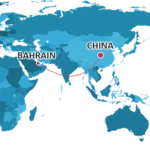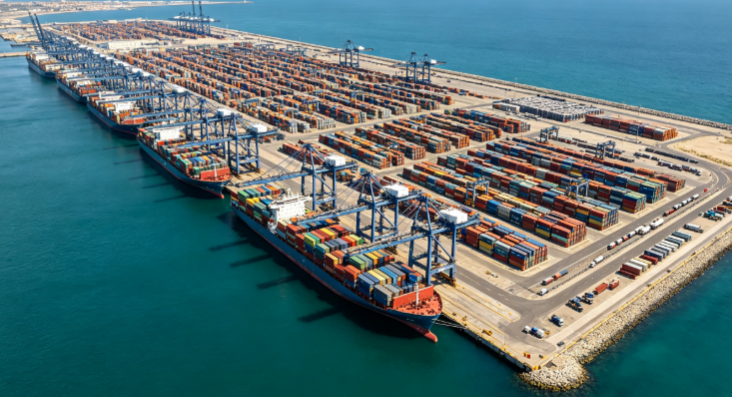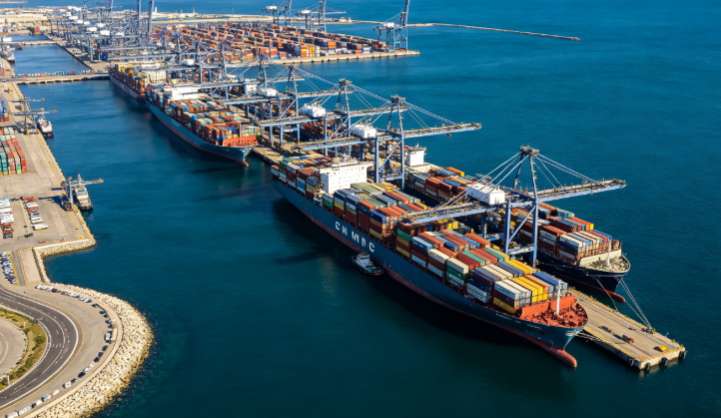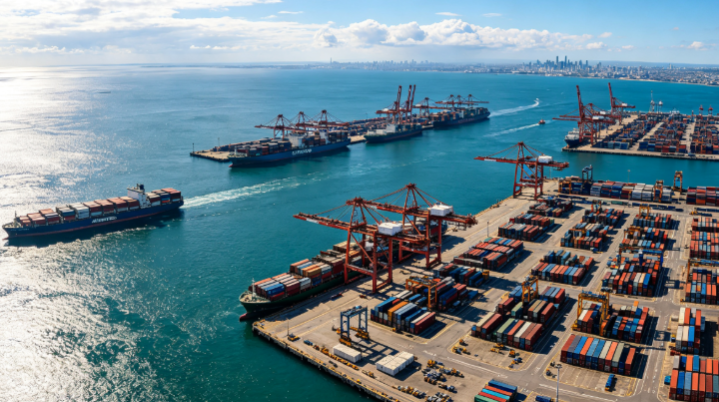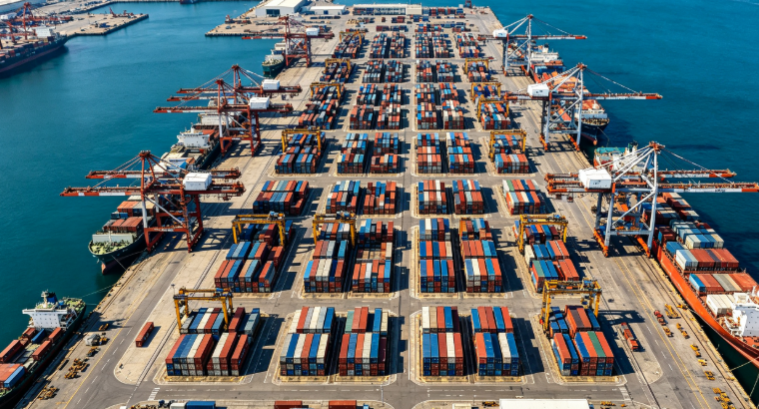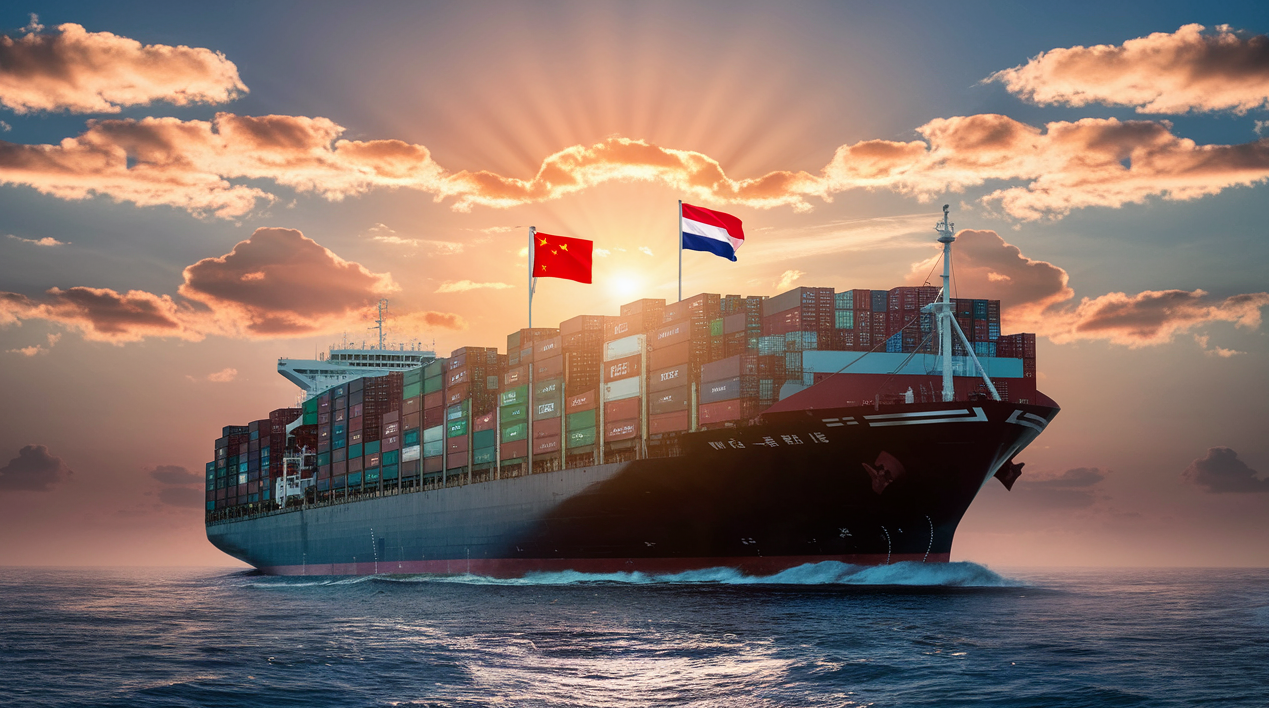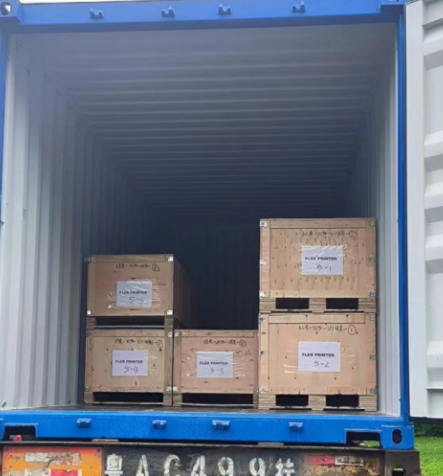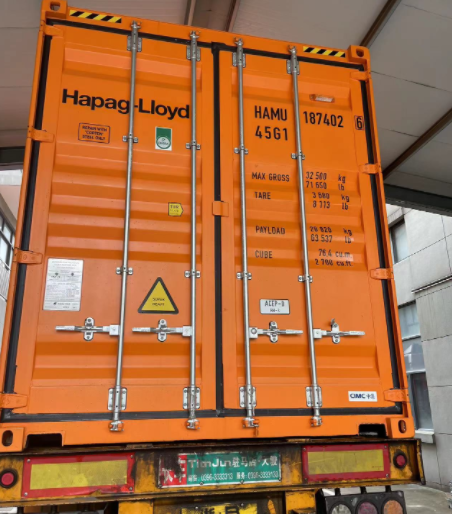
If you’re sourcing goods from Chinese manufacturers, understanding exactly what container shipping costs from China to Bahrain will set you back can mean the difference between a healthy profit margin and an unprofitable shipment. Between fluctuating sea freight rates, carrier-imposed surcharges that don’t appear on initial quotes, confusing Incoterms that shift cost responsibility, and Bahrain’s own import duty and VAT structure, building an accurate shipping budget can feel like aiming at a moving target — especially for first-time importers and SMEs without an in-house logistics team.
In this guide, we draw on over 15 years of operational experience on the China–Middle East trade lane to give you a complete, transparent breakdown of container shipping costs from every major Chinese port to Bahrain. You’ll find current FCL rates for 20ft, 40ft, and 40ft HQ containers, LCL per-CBM pricing, a full surcharge and hidden-cost audit, an Incoterms cost-responsibility comparison, Bahrain-specific customs and import duty guidance, a seasonal rate calendar to time your bookings, and ten actionable strategies to drive down your total landed cost. Whether you’re a B2B importer, an e-commerce seller, or sourcing for a construction or industrial project, this is the cost guide the competitors aren’t giving you. For a deeper look at the full range of logistics options on this lane, explore our dedicated guide to Sea Freight From China to Bahrain.
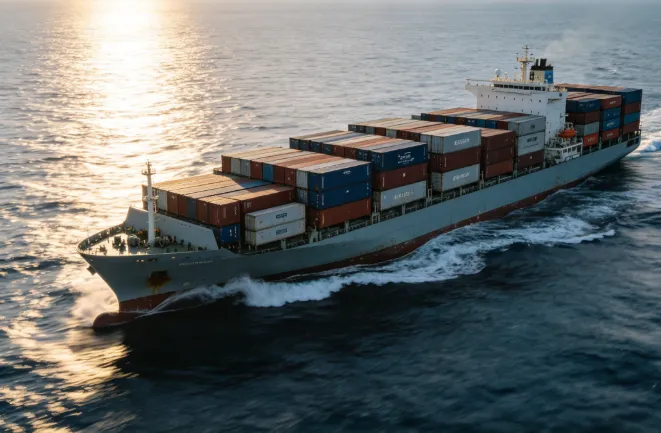
Container Shipping Costs at a Glance: China to Bahrain
Before diving into the port-by-port detail, here is the executive summary. The table below consolidates current FCL shipping rates from China to Bahrain across the three most common container types, plus LCL pricing, based on Dantful International Logistics‘ real-time carrier contract data and market intelligence as of June 2026.
| Shipping Mode | Container / Unit | Cost Range (USD) | Typical Transit Time |
|---|---|---|---|
| FCL — 20ft GP | 20-foot General Purpose (~33 CBM) | $850 – $1,750 | 12–25 days |
| FCL — 40ft GP | 40-foot General Purpose (~67 CBM) | $1,200 – $2,550 | 12–25 days |
| FCL — 40ft HQ | 40-foot High Cube (~76 CBM) | $1,350 – $2,750 | 12–25 days |
| LCL | Per cubic meter (CBM) | $50 – $230 / CBM | 25–35 days |
Key takeaway: FCL (Full Container Load) becomes more cost-effective than LCL (Less than Container Load) once your shipment exceeds approximately 15 CBM. Below that threshold, LCL’s per-CBM model avoids paying for unused container space.
These ranges reflect real-world variability. The spread between the low and high ends is driven by origin port, carrier selection, seasonal demand, and the surcharge environment — all of which we dissect in the sections that follow.
Port-by-Port Cost Breakdown: 20ft, 40ft, 40HQ & LCL Rates from Every Major Chinese Port
The port your cargo departs from has a direct impact on your freight rate. Factors like proximity to major shipping lanes, carrier service frequency, terminal efficiency, and local trucking costs all feed into the final number. Below is the most detailed publicly available cost table for Shipping from China to Bahrain, covering six Chinese origin ports and three container sizes — including 40ft HQ container shipping rates that most competitor guides omit.
FCL Container Rates by Origin Port
All rates are to Khalifa Bin Salman Port (Manama), Bahrain’s primary commercial seaport. Transit times are approximate and assume direct or single-transshipment routings.
| Origin Port (China) | 20ft GP (USD) | 40ft GP (USD) | 40ft HQ (USD) | Transit Time |
|---|---|---|---|---|
| Shanghai | $950 – $1,550 | $1,400 – $2,150 | $1,550 – $2,400 | 14–20 days |
| Shenzhen (Yantian/Shekou) | $800 – $1,500 | $1,350 – $2,450 | $1,500 – $2,750 | 12–19 days |
| Ningbo | $1,000 – $1,550 | $1,450 – $2,350 | $1,600 – $2,600 | 13–18 days |
| Guangzhou (Nansha) | $850 – $1,500 | $1,350 – $2,400 | $1,500 – $2,650 | 10–17 days |
| Qingdao | $1,000 – $1,600 | $1,500 – $2,250 | $1,650 – $2,500 | 16–22 days |
| Tianjin | $1,200 – $1,750 | $1,700 – $2,550 | $1,850 – $2,750 | 18–25 days |
What the table tells you: Shenzhen and Guangzhou consistently offer the most competitive rates thanks to their proximity to the South China Sea trunk routes and high carrier competition. Shanghai and Ningbo are close behind. Qingdao and Tianjin carry a northern-port premium of roughly $150–$350 per container due to additional sailing distance and fewer weekly sailings on the Middle East lane.
However, the cheapest port rate isn’t always the optimal choice. If your supplier is based in Qingdao or Tianjin, the inland trucking cost to ship from Shenzhen could easily erode — or reverse — the ocean freight savings. Always calculate the door-to-port total, not just the ocean leg.
LCL (Less than Container Load) Rates
For shipments that don’t fill a full container, LCL shipping from China to Bahrain is priced per cubic meter:
| Cargo Volume | Estimated Cost (USD) | Notes |
|---|---|---|
| 1–5 CBM | $80 – $230 / CBM | Higher per-unit rate for very small volumes |
| 5–10 CBM | $60 – $150 / CBM | Mid-range volume, moderate per-CBM rate |
| 10–15 CBM | $50 – $100 / CBM | Approaching FCL break-even; compare carefully |
LCL shipments take longer — typically 25 to 35 days door-to-door — because the container must be consolidated at a CFS (Container Freight Station) in China and deconsolidated upon arrival in Bahrain. This adds 5–10 business days versus FCL. For time-sensitive cargo, the transit time penalty alone can justify upgrading to a 20ft container.
The Hidden Costs Behind Your Container Shipping Quote
A freight quote that only shows the base ocean rate is telling you less than half the story. Below are the additional charges that turn a “$1,200 container” into a $2,000+ all-in cost — and that none of the competitor guides explain in full.
Ocean Freight Surcharges
These are charged by the shipping line on top of the base freight rate and apply to virtually every sailing:
| Surcharge | Abbreviation | Typical Range (per container) | What It Covers |
|---|---|---|---|
| Bunker Adjustment Factor | BAF | $150 – $400 | Fuel price volatility compensation |
| Peak Season Surcharge | PSS | $300 – $800 | Capacity premium during high-demand periods |
| Emergency Risk Surcharge | ERS | $50 – $150 | Geopolitical risk (e.g., Red Sea route disruptions) |
| Documentation Fee | DOC | $50 – $100 | Bill of Lading issuance and processing |
The Peak Season Surcharge deserves special attention. Based on actual Maersk announcements tracked through 2025–2026, PSS on the Far East Asia to Middle East lane has ranged from $300 to $800 per container depending on the month. A September sailing that carries a $700 PSS could cost $400 more than the same shipment booked in March — purely from surcharge timing. We break down the seasonal pattern in Section 7.
Origin-Side Charges
Before your container even touches the water, these costs accrue at origin:
- Export customs clearance: $80 – $200 per shipment, depending on cargo complexity and HS code classification
- Origin THC (Terminal Handling Charge): $100 – $250 per container at the Chinese port of loading
- Inland trucking: $150 – $500 depending on distance from supplier factory/warehouse to the port
- Container loading & sealing: Usually bundled into the trucking or warehouse service
Destination-Side Charges
Upon arrival at Khalifa Bin Salman Port, the following destination costs apply:
- Destination THC: $100 – $200 per container at Khalifa Bin Salman Port
- Customs clearance brokerage: $150 – $350, depending on whether you engage a local broker or your freight forwarder handles it
- Customs examination: $50 – $200 if Bahrain Customs selects your container for physical inspection
- Last-mile trucking: $200 – $600 for delivery from the port to your final destination within Bahrain
Container Detention & Demurrage
Demurrage is charged when an import container sits at the port beyond the allowed free time (typically 5–7 days at Khalifa Bin Salman Port). Detention is charged when the container is held outside the port beyond the free period. Daily charges escalate quickly — starting at roughly $20–$40 per day and rising to $80+ per day after the first week. A customs documentation delay that takes 10 days to resolve can easily add $300–$600 in unplanned detention and demurrage charges. The single best defense is submitting accurate, complete paperwork before the vessel arrives.
Cargo Insurance: Cost vs. Risk
Cargo insurance for the China to Bahrain lane typically costs 0.3% to 0.5% of the declared cargo value. For a $50,000 shipment, that’s $150 to $250 — a fraction of a percent for full coverage against loss, damage, theft, and general average scenarios (where all cargo owners share the cost of saving a vessel in distress).
| Cargo Value (USD) | Estimated Insurance Premium (USD) |
|---|---|
| $10,000 | $30 – $50 |
| $25,000 | $75 – $125 |
| $50,000 | $150 – $250 |
| $100,000 | $300 – $500 |
While cargo insurance is not legally required to import into Bahrain, it is strongly recommended for high-value goods, fragile cargo, and shipments booked during peak season when container handling volumes strain port operations.
How Incoterms Shape Your Total Container Shipping Costs
Two importers shipping identical 40ft containers from Shanghai to Manama can receive “quotes” that differ by $2,000 or more — not because one is overpaying, but because the quotes are calculated under different Incoterms 2020 terms. Understanding who pays for what at each stage of the journey is essential to comparing quotes accurately and avoiding budget blowouts.
The Cost Responsibility Map
The table below maps which party — seller or buyer — bears each cost component under the four most common Incoterms for China to Bahrain container shipping:
| Cost Component | EXW | FOB | CIF | DDP |
|---|---|---|---|---|
| Factory to Port (China inland trucking) | Buyer | Seller | Seller | Seller |
| China export customs clearance | Buyer | Seller | Seller | Seller |
| Origin THC (Chinese port) | Buyer | Seller | Seller | Seller |
| Ocean freight (base rate + surcharges) | Buyer | Buyer | Seller | Seller |
| Cargo insurance (minimum coverage) | Buyer | Buyer | Seller | Seller |
| Bahrain import customs clearance | Buyer | Buyer | Buyer | Seller |
| Bahrain import duties (5%) & VAT (10%) | Buyer | Buyer | Buyer | Seller |
| Destination THC (Khalifa Bin Salman Port) | Buyer | Buyer | Buyer | Seller |
| Last-mile delivery in Bahrain | Buyer | Buyer | Buyer | Seller |
FOB (Free on Board)
Under FOB shipping from China to Bahrain, the seller is responsible for all costs up to and including loading the container onto the vessel at the Chinese port. As the buyer, you take over from there — ocean freight, insurance, Bahrain import clearance, duties, VAT, and delivery. FOB works well if you already have a trusted freight forwarder who can manage the destination-side logistics, but it requires you to coordinate (and pay for) everything after the container leaves China.
CIF (Cost, Insurance & Freight)
CIF extends FOB coverage to include ocean freight and minimum cargo insurance paid by the seller. You’re still responsible for Bahrain customs clearance, import duties and VAT, and last-mile delivery. CIF simplifies the ocean leg — one fewer transaction to manage — but leaves the most complex portion (the destination side) in your hands. It is a practical middle ground when your supplier or their forwarder can secure competitive ocean rates but lacks Bahrain clearance capability.
DDP (Delivered Duty Paid)
DDP Shipping Services from China to Bahrain covers everything: factory pickup, China export customs, ocean freight, Bahrain import customs clearance, import duties, 10% VAT, and final delivery to your door. This is the only Incoterms option where a single party — typically your freight forwarder — takes end-to-end accountability. The DDP premium over FOB is typically 25% to 40%, reflecting the cost of Bahrain-side customs brokerage, duty/VAT prepayment, and last-mile delivery. For first-time importers, Amazon FBA sellers shipping promotional goods, and any business that values a predictable, single-invoice supply chain, DDP is the most efficient way to import from China to Bahrain. If you need a full-service solution, our door to door shipping from China to Bahrain service handles every step from factory to final address.
EXW (Ex Works)
EXW may appear cheapest on paper because the seller only provides the goods at their factory gate. In practice, EXW often results in the highest total cost for the buyer: you pay for everything from factory pickup onward, you assume all export documentation responsibility (including Chinese export customs where your freight forwarder may need a local agent), and any mistakes in coordinating origin-side logistics cascade into port storage fees, missed sailings, and detention charges. We generally advise importers to avoid EXW unless they have a freight forwarder with a strong origin-side operation in China that explicitly handles EXW pickups.
Bahrain Customs, Import Duties & Clearance Requirements
Understanding Bahrain’s import regime is critical to calculating your true container shipping costs from China to Bahrain, because duties and VAT are assessed on the CIF value (cost of goods + insurance + freight) — not just the product invoice price.
Bahrain Import Duty Structure
Bahrain applies the GCC Common Customs Law, which sets a general import duty rate of 5% on the CIF value for most goods. However, notable exceptions apply:
| Product Category | Import Duty Rate |
|---|---|
| Most consumer and industrial goods | 5% |
| Tobacco and tobacco products | 100% |
| Alcoholic beverages | 225% |
| Select protected food commodities | 0% – 25% |
On top of the duty, Bahrain applies a 10% VAT (Value Added Tax), which is calculated on the CIF value plus the duty paid. Here is a step-by-step calculation for a representative $20,000 shipment:
| Step | Calculation | Amount (USD) |
|---|---|---|
| 1. CIF Value | Product cost + insurance + freight | $20,000 |
| 2. Import Duty (5%) | $20,000 × 5% | $1,000 |
| 3. VAT (10%) | ($20,000 + $1,000) × 10% | $2,100 |
| Total Duties & VAT Due | $1,000 + $2,100 | $3,100 |
That $3,100 in duties and VAT represents 15.5% of the CIF value — a significant line item that must be factored into your landed cost calculation from the start.
HS Code Classification
Your product’s HS Code (Harmonized System Code) determines its import duty rate. Incorrect HS code classification is one of the most common causes of customs delays and unexpected charges. Common HS code categories for goods shipped from China to Bahrain include:
- Electronics & electrical machinery: Chapters 84–85
- Furniture & home goods: Chapters 94
- Textiles & apparel: Chapters 61–63
- Plastics & rubber products: Chapters 39–40
- Iron & steel products: Chapters 72–73
Misclassification — even if unintentional — can trigger penalties, back-duty assessments, and multi-week customs holds that accumulate demurrage charges. Work with a freight forwarder who can verify your HS codes against Bahrain Customs tariff schedules before the shipment sails.
Required Import Documentation Checklist
Submitting complete and accurate documentation is the single most effective way to avoid customs delays. For every China to Bahrain container shipment, ensure you have the following five core documents:
- Commercial Invoice — Must include seller and buyer details, a precise goods description, unit and total values, currency, and Incoterms
- Packing List — Itemized breakdown of package contents, dimensions, weights, and container number
- Bill of Lading (B/L) — The contract of carriage issued by the shipping line; telex release or original B/L depending on payment terms
- Certificate of Origin (CO) — Issued by China’s CCPIT or a local chamber of commerce; required to claim preferential duty rates under applicable trade agreements
- Import Declaration Form — Filed electronically with Bahrain Customs (OFOQ system) by your customs broker
Depending on your product category, additional permits or certificates may be required (e.g., SASO conformity certificates for regulated consumer goods, health certificates for food products, or radiation certificates for electronics). Verify the requirements for your specific HS code category before booking.
Khalifa Bin Salman Port: Bahrain’s Commercial Gateway
Khalifa Bin Salman Port (KBSP) in Manama is Bahrain’s primary container port, equipped with modern gantry cranes capable of handling vessels up to 8,000 TEU. Customs clearance at KBSP typically takes 2 to 5 business days with complete and accurate documentation. The port’s strategic position — connected to Saudi Arabia’s Eastern Province via the 25-kilometer King Fahd Causeway — makes Bahrain an effective GCC distribution hub. Importers serving the broader Gulf market often clear goods through Bahrain and truck them into Saudi Arabia, Qatar, and Kuwait, leveraging Bahrain’s efficient customs processing and lower port congestion relative to Jebel Ali in the UAE.
Seasonal Pricing Trends & When to Ship from China to Bahrain
Ocean freight rates on the China to Bahrain lane are not flat across the year. Understanding the seasonal rhythm can save you 20% to 40% on your container shipping costs — simply by timing your bookings.
The 2026 Seasonal Rate Calendar
| Period | Rate Trend | What’s Happening |
|---|---|---|
| Jan – Feb | 🔴 High (20–40% above normal) | Chinese New Year (CNY): factory closures for 2–4 weeks, pre-holiday container rush, capacity tightens sharply |
| Mar – Apr | 🟢 Low (best booking window) | Post-CNY normalization: factories resume, carrier capacity is ample, rates settle to annual floor |
| May – Jun | 🟡 Moderate | Stable period: pre-peak demand begins to edge rates upward; still a reasonable booking window |
| Jul – Aug | 🟡 Moderate–High | Summer peak: PSS announcements from Maersk, MSC, COSCO; Middle East construction and A/C import season |
| Sep – Oct | 🔴 High | China’s Golden Week (Oct 1–7): pre-holiday rush mirrors CNY pattern in miniature; Ramadan preparation for the Middle East begins building demand |
| Nov – Dec | 🔴 High | Year-end volume crunch: Christmas/NY demand from Western markets pulls capacity; carriers push through the year’s highest PSS (up to $800/container on this lane) |
Middle East-Specific Demand Patterns
Beyond the global cycle, the Shipping from China to Middle East lane has its own demand rhythms. Import activity into Bahrain typically spikes 4–6 weeks before Ramadan (which shifts approximately 10–11 days earlier each Gregorian year) as retailers and wholesalers stock up for the month-long consumption surge. The summer months (June–August) see elevated imports of air-conditioning units, construction materials, and cooling equipment — all of which flow predominantly from Chinese manufacturers. These Middle East-specific demand waves layer on top of the global peak season, amplifying rate increases.
Strategic Booking Advice
- Best months to book: March–April and August–September consistently offer the most favorable rates and greatest carrier capacity availability
- Advance booking: Secure your container space 3–4 weeks before your intended sailing date; last-minute bookings (within 7 days of sailing) routinely carry a $150–$300 premium
- Rate stability: Freight forwarders with direct carrier contracts — rather than those buying purely on the spot market — can lock in rate agreements that insulate importers from the worst of the seasonal swings. This is one of the most under-appreciated advantages of working with an established, contract-carrying forwarder on the China–Bahrain route
10 Proven Strategies to Reduce Container Shipping Costs from China to Bahrain
No single tactic cuts your shipping bill in half. But layering several of these strategies together can take 15% to 30% off your total landed cost — and stack the difference into your margin.
- Choose FCL over LCL above ~15 CBM. When your shipment volume crosses the 15 CBM threshold, the math flips: a 20ft container (~33 CBM capacity) costs roughly the same as 15 CBM of LCL, and you gain 18 CBM of unused space you can grow into. At 20+ CBM, FCL is unequivocally cheaper per unit.
- Optimize your container loading. Maximize CBM utilization. Palletize cargo efficiently, nest hollow goods, and use the full internal height — especially if you’re paying for a 40ft HQ (~76 CBM). Every cubic meter of wasted space in an under-filled container is freight cost you paid for and received zero value from.
- Book during off-peak windows. Shifting a shipment from late January (CNY peak) to early March can save $300–$600 per container on the ocean freight alone — and you’ll have far more carrier options available.
- Compare multiple Chinese ports. Shenzhen or Guangzhou often offer the sharpest rates, but if your supplier is in Qingdao, calculate the full door-to-port total. The cheapest port isn’t the one with the lowest ocean rate — it’s the one with the lowest combined inland-plus-ocean cost.
- Consolidate shipments from multiple suppliers. If you source from 3–4 different factories across Guangdong and Zhejiang, shipping individual LCL consignments from each origin wastes money. Use a freight forwarder’s consolidation warehouse near the port of departure to aggregate everything into a single FCL container — you pay one ocean freight bill instead of multiple LCL invoices.
- Negotiate annual volume contracts instead of relying on spot rates. If you ship four or more containers per year on the China–Bahrain lane, an annual contract with a carrier (negotiated through your forwarder) typically yields 10–20% savings versus spot-market pricing — and guarantees space when capacity tightens.
- Use the right Incoterms for your situation. CIF or DDP often provides better total cost control than FOB for importers without an in-house logistics team, because experienced freight forwarders achieve more competitive ocean rates and customs brokerage fees than what an individual importer can negotiate on their own.
- Leverage Bahrain’s GCC hub position. Importing directly to Khalifa Bin Salman Port and distributing regionally via the King Fahd Causeway to Saudi Arabia or by short-sea feeder to Qatar and Kuwait is often cheaper than splitting shipments across multiple GCC ports — and it simplifies your documentation to a single customs entry. For comparison, see our guide on container shipping costs from china to Saudi Arabia to understand regional rate differences.
- Prepare documentation meticulously. Incomplete or inaccurate paperwork is the number-one cause of customs delays, and customs delays are the number-one cause of demurrage and storage charges. Invest the extra 30 minutes to verify every field on your Commercial Invoice, Packing List, and Certificate of Origin before the vessel sails.
- Partner with a direct-contract freight forwarder. Every intermediary between you and the shipping line adds a margin. Freight forwarders with direct carrier contracts — particularly those with dedicated China–Middle East trade lane agreements — eliminate intermediary markups and pass through better base rates. This is where a forwarder like Dantful, with 15+ years of carrier relationships on this route, can deliver savings that a spot-market-only agent simply cannot match.
How to Choose a Reliable Freight Forwarder for China to Bahrain Container Shipping
Your freight forwarder is arguably the most consequential partner in your import supply chain. A competent forwarder saves you money, prevents delays, and proactively solves problems. The wrong one costs you far more than the rate difference on the quote. Here is how to tell them apart.
Credentials That Actually Matter
When evaluating a freight forwarder for China to Bahrain shipping, start with their regulatory credentials. For importers sourcing from South China, working with a freight forwarder in shenzhen china — the country’s largest export hub — provides proximity advantages in supplier coordination, consolidation, and port access. Beyond location, these are the four credentials that signal a legitimate, compliant operation:
- Class-A Freight Forwarder License (issued by China’s Ministry of Commerce): This is the highest tier of freight forwarding license in China. It requires minimum registered capital, audited financials, and ongoing regulatory compliance. Operators without this license are acting as unlicensed brokers, not forwarders.
- NVOCC Certification (issued by China’s Ministry of Transport): A Non-Vessel Operating Common Carrier has the legal authority to issue its own house Bill of Lading and contract directly with shipping lines. This is what separates a genuine freight forwarder from a reseller.
- FMC Registration (US Federal Maritime Commission): If any portion of your supply chain touches the United States — including goods ultimately destined for the US market — FMC registration is a non-negotiable compliance requirement.
- Jctrans Membership: Jctrans is one of the world’s largest logistics network platforms. Membership indicates that the forwarder is connected to a global community of vetted agents, which directly benefits importers through stronger destination-side agent networks.
Operational Capabilities to Evaluate
Beyond credentials, assess what the forwarder can actually execute on the ground:
- Origin-side capability in China: Can they pick up from your supplier, handle export customs clearance, provide warehousing and consolidation, and manage the entire China-side workflow — or do they outsource everything to third parties?
- Bahrain-side capability: Do they have a direct customs brokerage relationship at Khalifa Bin Salman Port? Can they handle last-mile delivery to Manama, Riffa, Muharraq, or onward to Saudi Arabia via the King Fahd Causeway?
- Carrier relationships: Do they hold direct contracts with the major shipping lines serving the Middle East lane (Maersk, MSC, COSCO, CMA CGM, Hapag-Lloyd, ONE), or are they dependent on the spot market?
- Tracking and visibility: Do they provide real-time container tracking with milestone notifications, or is the shipment a black box between departure and arrival?
Red Flags to Watch For
- Quotes that are “too good to be true” — they almost certainly exclude essential surcharges
- No verifiable physical office or operational presence in China
- Unwillingness to share license or credential documentation
- No references or case studies for the China–Middle East trade lane specifically
- Vague answers about who handles Bahrain customs clearance and how duties/VAT are managed
Why Dantful for China to Bahrain Container Shipping
Dantful International Logistics, headquartered in Shenzhen and operating since 2008, brings a combination of credentials, carrier relationships, and on-the-ground operational infrastructure that directly translates into lower costs and fewer headaches for importers on the China–Bahrain lane.
We hold all four key credentials — Class-A Freight Forwarder, NVOCC-certified, FMC-registered, and Jctrans member — so you are working with a fully licensed, compliant partner from day one. Our 50-person operations team manages direct contracts with Maersk, MSC, COSCO, CMA CGM, Hapag-Lloyd, ONE, and other major carriers on the Far East–Middle East route, securing competitive base rates and guaranteed space allocation that spot-market-dependent forwarders simply cannot offer.
For China to Bahrain specifically, we provide end-to-end service coverage: supplier pickup anywhere in mainland China to China export customs clearance to FCL/LCL ocean freight to Khalifa Bin Salman Port to Bahrain import customs brokerage including duty and VAT processing to last-mile delivery to your warehouse, shop, or project site in Bahrain. One partner. One point of contact. Transparent, all-in pricing with every surcharge disclosed upfront — no surprises when the container lands.
Our 50+ customer service professionals provide 24/7 support with daily shipment updates and milestone photos, so you always know exactly where your cargo is. Whether you’re shipping your first container or your fiftieth, we treat every consignment with the same operational rigor.
Ready to get a precise, all-in quote for your next China to Bahrain container shipment? Contact our team today for a free, no-obligation freight consultation tailored to your cargo, timeline, and budget.
FAQs
How much does it cost to ship a 20ft container from China to Bahrain?
A 20ft container from China to Bahrain currently costs between $850 and $1,750 USD (June 2026 estimate), depending on the origin port, carrier, and season. Shenzhen and Guangzhou typically sit at the lower end of this range, while Tianjin and Qingdao trend toward the higher end due to additional sailing distance.
How much does it cost to ship a 40ft container from China to Bahrain?
A standard 40ft container from China to Bahrain costs between $1,200 and $2,550 USD. A 40ft HQ (High Cube) container — offering approximately 9 additional CBM of internal volume — ranges from $1,350 to $2,750 USD.
How long does sea freight from China to Bahrain take?
FCL sea freight from China to Bahrain takes 12 to 25 days, depending on the origin port and whether the routing is direct or involves a transshipment (typically via Jebel Ali, UAE, or Dammam, Saudi Arabia). LCL shipments take longer — 25 to 35 days — due to consolidation and deconsolidation at both ends.
What is the cheapest way to ship a container from China to Bahrain?
The most cost-effective approach is to ship FCL from Shenzhen or Guangzhou during the off-peak booking windows of March–April or August–September, when carrier capacity is ample and surcharge levels are at their annual lows. Consolidating cargo from multiple suppliers into a single container further reduces per-unit shipping cost.
What is the main port in Bahrain for container shipping?
Khalifa Bin Salman Port (KBSP) in Manama is Bahrain’s primary commercial container port. A secondary port, Mina Salman, handles smaller volumes and certain breakbulk cargoes. Virtually all containerized imports from China discharge at KBSP.
What documents do I need to import goods from China to Bahrain?
The five essential documents are: (1) Commercial Invoice, (2) Packing List, (3) Bill of Lading (B/L), (4) Certificate of Origin (CO), and (5) Import Declaration Form. Additional product-specific certificates (SASO, health, radiation) may be required depending on your HS code category.
What are the import duties and taxes in Bahrain for goods from China?
Bahrain applies a general import duty of 5% on the CIF value under GCC Common Customs Law, plus 10% VAT assessed on the CIF + duty total. For a $20,000 CIF shipment, expect approximately $1,000 in duty and $2,100 in VAT, for a combined import tax liability of $3,100 (15.5% of CIF value).

Young Chiu is a seasoned logistics expert with over 15 years of experience in international freight forwarding and supply chain management. As CEO of Dantful International Logistics, Young is dedicated to providing valuable insights and practical advice to businesses navigating the complexities of global shipping.