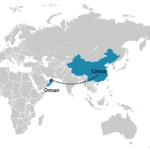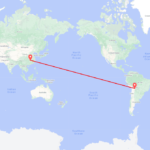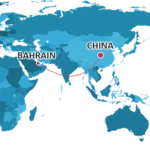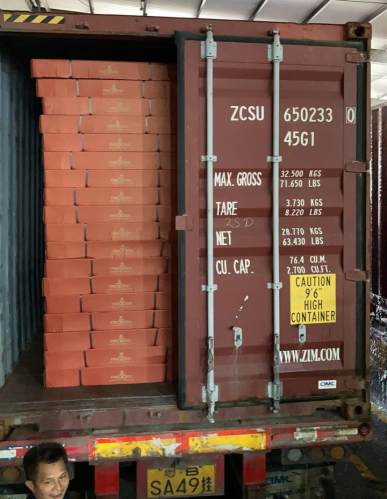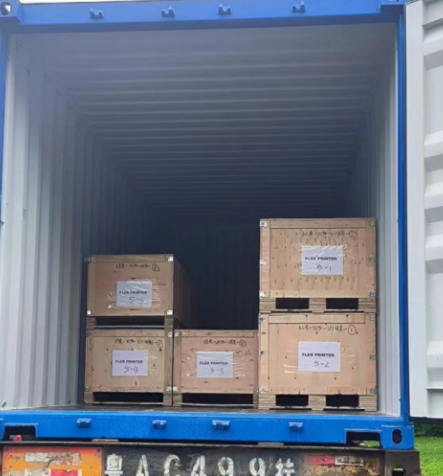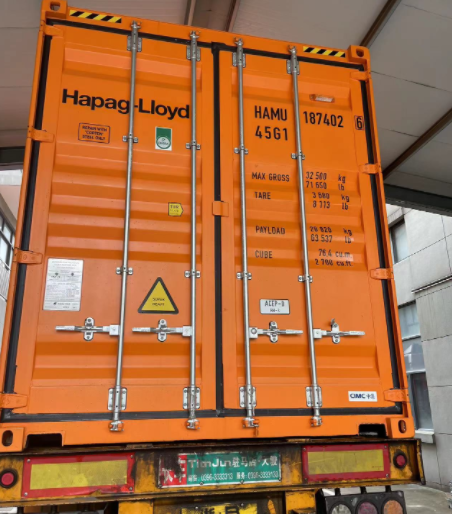
If you’re sourcing goods from China and need them delivered to Bolivia, the first question on your mind is almost certainly: how much is shipping from China to Bolivia? The short answer is that depending on your cargo size and urgency, you’re looking at roughly $120–$180 per cubic meter for LCL (Less than Container Load) sea freight, $2,500–$3,800 for a 20-foot container and $3,500–$4,900 for a 40-foot container via FCL (Full Container Load) ocean freight, or approximately $7–$10 per kilogram for air freight. A door-to-door DDP (Delivered Duty Paid) service bundles all these costs — freight, customs brokerage, import duties, and final delivery — into one predictable quote, which is why it’s the option we recommend for most importers.
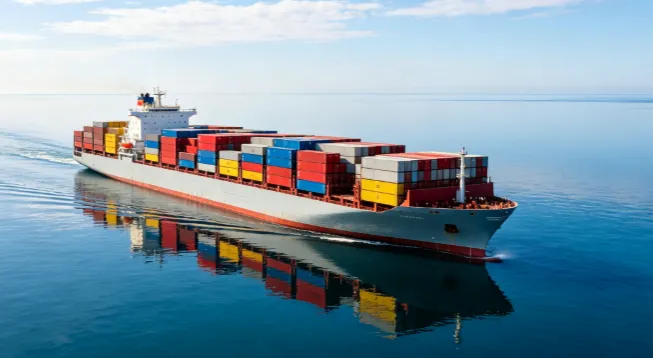
But those are just the headline numbers. Bolivia is one of only two landlocked countries in South America (the other being Paraguay), which means every ocean shipment from China must transit through a Chilean, Peruvian, or Brazilian port before crossing an international border into Bolivian territory. For a complete overview of all shipping options to the country, see our dedicated shipping from China to Bolivia service page. That extra leg adds cost, complexity, and time that you simply don’t face when shipping to coastal neighbors like Peru or Chile. This guide breaks down exactly what each shipping method costs, why Bolivia commands a premium, how to calculate your total landed cost including import duties and VAT, and — most importantly — seven proven ways to cut those costs without cutting corners. Every price figure in this article reflects August 2026 market data, so you’re working with numbers you can actually budget against.
Shipping from China to Bolivia: Quick Cost Reference
If you want the numbers without reading the full guide, here’s your cheat sheet. The table below covers all six practical shipping options from China to Bolivia, ranked from cheapest to most expensive on a per-unit basis:
| Shipping Method | Unit | Estimated Cost (USD) | Door-to-Door Transit | Best For |
|---|---|---|---|---|
| LCL Sea Freight | Per CBM | $120 – $180 | 34 – 48 days | Shipments under 15 CBM, trial orders, e-commerce stock |
| FCL Sea Freight (20ft) | Per container | $2,500 – $3,800 | 35 – 42 days | Bulk orders, machinery, furniture, full container loads |
| FCL Sea Freight (40ft/40HQ) | Per container | $3,500 – $4,900 | 35 – 42 days | High-volume, lightweight goods, maximum economies of scale |
| Air Freight | Per kg (100kg+) | $7.00 – $10.00 | 5 – 12 days | High-value electronics, medical supplies, urgent inventory |
| Express Courier | Per kg (<50kg) | $35 – $70 | 3 – 7 days | Samples, documents, small parcels under 50 kg |
| Door-to-Door DDP | Per shipment (all-in) | Custom quote | Varies by mode | Importers who want a single point of contact and zero surprises |
A note on accuracy: Ocean freight rates change weekly — sometimes daily — based on fuel surcharges, peak season demand, and carrier capacity. The ranges above are August 2026 market estimates for the China-to-Bolivia corridor. Use them to set a budget; contact a freight forwarder for a binding quote against your specific cargo.
Why Is Shipping to Bolivia So Expensive? The Landlocked Reality
Bolivia has no direct access to the sea. That one geographic fact explains roughly 30–40% of the premium you pay compared to shipping the same container to Lima, Peru or Valparaíso, Chile. Every single ocean shipment from China to Bolivia is, in practice, a multimodal operation: an ocean voyage followed by a cross-border land leg through a neighboring country.
The Three Transit Routes (and What They Cost You)
When your cargo leaves a Chinese port bound for Bolivia, it never sails to a Bolivian dock. It sails to one of three foreign gateways, each with its own cost and time profile:
| Route | Gateway Port | Ocean Transit | Land Leg | Total Door-to-Door | Best Cities Served |
|---|---|---|---|---|---|
| Route A: Arica, Chile | Arica | 28–35 days | ~3 days | 34–48 days | La Paz, Oruro, Cochabamba |
| Route B: Matarani, Peru | Matarani | 30–35 days | ~2 days | 32–38 days | La Paz (backup when Arica is congested) |
| Route C: Santos, Brazil | Santos | 35–40 days | ~5 days | 38–45 days | Santa Cruz, eastern Bolivia |
Route A via Arica is the default choice — and for good reason. It’s the shortest combined sea-and-land distance, and Arica handles over 70% of Bolivia’s maritime imports. But it’s not without risk: the Chungará-Tambo Quemado border crossing sits at 4,600 meters above sea level, and winter snowstorms (June–August) can shut down trucking for 2–4 days at a time.
The Hidden Costs of Being Landlocked
Beyond the extra distance, four structural costs make Bolivia-bound freight inherently more expensive:
- In-bond transit fees: Your cargo travels under customs seal through Chile or Peru before clearing Bolivian customs. The MIC/DTA (Manifiesto Internacional de Carga / Declaración de Tránsito Aduanero) documentation is mandatory — and there’s no way around it.
- Container guarantee deposits: Shipping lines typically demand $1,000–$2,000 per container as a refundable deposit before releasing boxes at Arica or Iquique. This ties up working capital. Experienced forwarders like Dantful International Logistics can arrange container insurance through direct carrier contracts to eliminate this upfront cash outlay.
- Andean weight restrictions: A 40-foot container physically holds 28–29 tons, but Bolivian road regulations and steep Andean inclines cap truck payloads at roughly 21–22 tons. Exceed that limit at the Chilean port, and you’re facing a forced transload — two trucks instead of one — at significant cost.
- Port handling surcharges: Transshipment ports charge for container handling, storage, and ASP-B (transit document processing). These fees stack on top of standard ocean freight THC (Terminal Handling Charges).
Air freight sidesteps all of this. Cargo flies directly into Viru Viru International Airport (VVI) in Santa Cruz or El Alto International Airport (LPB) in La Paz — no border crossings, no in-bond transit, no Andean weight limits. The trade-off? Air freight costs roughly 15 to 25 times what sea freight costs per kilogram, which is why it’s generally reserved for high-value, time-sensitive cargo.
Sea Freight from China to Bolivia: FCL & LCL Container Rates
Sea freight is the workhorse of China–Bolivia trade. It handles the overwhelming majority of commercial cargo because, on a per-unit basis, nothing else comes close on cost. The choice boils down to one question: do you have enough cargo to fill a container?
FCL (Full Container Load) Pricing
If you’re shipping 15 cubic meters or more, FCL is almost always the right answer. Your cargo stays sealed inside the same container from the Chinese port to the Bolivian customs warehouse — no consolidation delays, no mixed-cargo contamination risk, and the lowest cost per unit of any option:
| Container Type | Capacity | Estimated Ocean Freight (Aug 2026) | Notes |
|---|---|---|---|
| 20ft (20GP) | ~28 CBM / ~22 tons | $2,500 – $3,800 | Best balance of cost and volume for most importers |
| 40ft (40GP) | ~58 CBM / ~27 tons | $3,500 – $4,900 | Lower per-CBM cost; watch the 21–22 ton Andean weight cap |
| 40ft High Cube (40HQ) | ~68 CBM / ~27 tons | $3,800 – $5,200 | Extra height for voluminous lightweight goods; may not fit standard truck chassis at some border crossings |
One nuance worth knowing: 40HQ containers face restrictions on certain Bolivia-bound routes. The standard truck chassis used at some Chilean border crossings cannot safely accommodate the extra height of a high-cube container, particularly on winding Andean roads. Always confirm with your forwarder that your container type is compatible with the land leg before booking.
LCL (Less than Container Load) Pricing
For shipments between 1 and 15 CBM — think trial orders, early-stage e-commerce inventory, or a single pallet of samples — LCL lets you share container space with other importers and pay only for the volume you use:
| Volume | Estimated LCL Cost (Ocean Segment) | Total Door-to-Door Estimate |
|---|---|---|
| 1 CBM | $120 – $180 | ~$300 – $450 |
| 5 CBM | $600 – $900 | ~$1,200 – $1,800 |
| 10 CBM | $1,200 – $1,800 | ~$2,200 – $3,000 |
| 15 CBM | $1,800 – $2,700 | ~$3,000 – $4,200 |
The LCL trade-off: you pay 30–50% more per CBM than FCL, and the consolidation/deconsolidation process adds 3–7 extra transit days. But for small volumes, the absolute cost is still far lower than air freight. Once you hit the 15 CBM threshold, upgrading to a 20ft FCL container nearly always yields a lower per-unit landed cost. For a deeper comparison of the two modes, see our guide on LCL vs FCL Shipping: How to Choose the Right Option for Small Cargo. If you’re working with a tighter budget, check out our analysis of the cheapest mode of transport from China to understand where sea freight fits in the broader cost landscape.
Cost Differences by Chinese Port
Not all Chinese ports are equal when shipping to South America’s west coast. For a broader perspective on ocean freight pricing dynamics, see our overview of how much ocean freight costs from China. Shenzhen and Guangzhou — both in southern China, closer to the Pacific shipping lanes — consistently offer the most competitive rates to Arica and Iquique:
| Origin Port | 20ft to Arica/Iquique (Est.) | 20ft to Santos (Est.) | Total Transit (Arica Route) |
|---|---|---|---|
| Shenzhen | $2,500 – $3,200 | $2,800 – $3,500 | 35–42 days |
| Guangzhou | $2,500 – $3,000 | $2,800 – $3,400 | 38–45 days |
| Shanghai | $2,800 – $3,500 | $3,000 – $3,800 | 40–48 days |
| Ningbo | $3,000 – $3,500 | $3,200 – $4,000 | 42–50 days |
| Qingdao | $3,200 – $3,800 | $3,300 – $4,200 | 45–55 days |
Southern Chinese ports enjoy a 10–20% pricing advantage over northern alternatives, driven by shorter sailing distances, higher sailing frequency, and fiercer competition among carriers. If your supplier is in the Pearl River Delta, shipping from Shenzhen or Guangzhou is a no-brainer.
Air Freight & Express Courier Costs to Bolivia
When speed matters more than cost — or when you’re shipping goods where the value density makes air freight’s premium irrelevant — two options exist: commercial air freight for larger shipments, and express courier services for small parcels.
Commercial Air Freight (100 kg and Above)
Commercial air freight from China to Bolivia costs $7.00 to $10.00 per kilogram for shipments above 100 kg. Transit time runs 5 to 12 days door-to-door, including Chinese export clearance, air transit (typically connecting through Miami, São Paulo, or Lima), Bolivian import clearance at VVI or LPB, and final delivery.
This is the sweet spot for:
- High-value electronics where freight cost is negligible relative to cargo value
- Medical supplies and pharmaceuticals requiring temperature-controlled air transit
- Seasonal inventory that missed the sea freight window and must hit shelves fast
- Samples and prototypes that need to arrive in days, not months
Express Courier (Under 50 kg)
For small parcels, DHL, FedEx, UPS, and EMS all serve Bolivia. Rates range from $35 to $70 per kilogram, with 3–7 day delivery:
| Courier | Typical Rate (China → Bolivia) | Transit | Insurance (per $100 value) |
|---|---|---|---|
| DHL | $40 – $65/kg | 3–5 days | 2.5% premium, $100 included |
| FedEx | $38 – $60/kg | 3–5 days | 2.8% premium, $100 included |
| UPS | $40 – $68/kg | 4–7 days | 2.7% premium, $100 included |
| EMS | $35 – $55/kg | 3–7 days | Limited (SDR-based) |
The Dimensional Weight Trap
Here’s something most first-time shippers learn the hard way: couriers don’t charge by actual weight alone. They charge by whichever is greater — actual weight or dimensional weight (also called volumetric weight):
| Service Type | Dimensional Weight Formula | Example: 50 × 40 × 30 cm box |
|---|---|---|
| Commercial Air Freight | L × W × H ÷ 6,000 | 10 kg chargeable weight |
| Express (DHL/UPS/FedEx) | L × W × H ÷ 5,000 | 12 kg chargeable weight |
That same physical box — weighing perhaps 5 kg on the scale — gets billed at 10 kg (air freight) or 12 kg (express). If your product is bulky but light (clothing, pillows, packaging materials), dimensional weight can easily double or triple your effective shipping cost. Always calculate both weights before choosing a method.
Decision shortcut: Above 100 kg, go with commercial air freight. Below 50 kg, pick an express courier. Between 50–100 kg, compare both — the crossover point varies by destination city and season.
Door-to-Door DDP Shipping: What’s Included and What It Costs
For the majority of importers — especially those without an established Bolivian customs broker or NIT (Tax Identification Number) — DDP (Delivered Duty Paid) is the most practical, stress-free option. For a detailed walkthrough of the complete door-to-door process, refer to our dedicated guide on door to door shipping from China to Bolivia. Under DDP terms, your freight forwarder owns every step of the journey across three separate jurisdictions (China, Chile/Peru, and Bolivia), and you receive your goods at your door with all duties and taxes already paid.
What a DDP Quote Covers
A properly structured DDP service to Bolivia bundles the following 10 cost items into a single transparent quote. There are no hidden fees — if it’s not on this list, ask why:
- Factory-to-port trucking in China (supplier pickup from any major manufacturing city)
- Chinese export customs clearance (declaration, documentation, inspection coordination)
- Ocean freight or air freight (China → transit port or Bolivian airport)
- Destination port THC and handling (unloading, terminal fees at Arica, Iquique, or Santos)
- In-bond transit documentation and transport (MIC/DTA filing, sealed transit trucking to the Bolivian border)
- Bolivia customs brokerage (DUI filing via the SUMA electronic system, HS code classification, valuation)
- Import duty — GA (Gravamen Arancelario) charged at 0–40% of CIF value depending on product category
- Value-added tax — IVA (Impuesto al Valor Agregado) calculated at 13% of (CIF value + GA)
- Specific consumption tax — ICE (if applicable — alcohol, tobacco, vehicles, luxury cosmetics only)
- Final inland delivery to your warehouse in La Paz, Santa Cruz, Cochabamba, or any major Bolivian city
DDP vs. DDU vs. CIF: Which One Should You Choose?
| Term | What You Get | What You Handle Yourself | Recommended For |
|---|---|---|---|
| DDP | Everything from Chinese factory to your Bolivian door, duties and taxes included | Nothing — the forwarder does it all | First-time importers, SMEs without a local broker, anyone who wants a single predictable price |
| DDU | Freight + customs brokerage, but duties and taxes billed separately | Paying GA, IVA, and ICE directly to ANB upon arrival | Importers who already hold a Bolivian NIT and have a relationship with a local customs broker |
| CIF | Freight from China to Arica/Iquique/Santos + marine insurance | Everything after the transit port: in-bond transit, Bolivia customs clearance, duties, taxes, and final delivery | Large enterprises with an in-house logistics team and established Chile/Bolivia land transport arrangements |
For Bolivia specifically, DDP is the right answer for roughly 90% of China-based imports. The complexity of coordinating three-country logistics, the risk of in-bond transit errors, and the SENAVEX pre-inspection requirements (see Section 7) make the all-inclusive approach worth the premium. Dantful’s DDP service is backed by direct carrier contracts — no intermediary agent markups — and a team of 50 operations specialists who manage China–South America routes daily.
Bolivia Import Duties, Taxes & Customs Clearance
Understanding Bolivia’s import tax structure is essential to calculating your true landed cost. The country uses a CIF (Cost, Insurance, Freight) valuation method managed by ANB (Aduana Nacional de Bolivia) through the SUMA electronic declaration system. For a broader overview of how this fits into the import process, see our complete customs clearance service guide.
The Three-Tier Tax Formula
Every commercial import into Bolivia faces two mandatory charges, plus a third that applies only to specific goods:
GA (Gravamen Arancelario — Customs Duty)
- Formula: GA = CIF Value × GA Rate
- Rate range: 0% to 40%, determined by the product’s HS code
- Capital goods and machinery enjoy preferential rates (often 0–5%)
IVA (Impuesto al Valor Agregado — Value Added Tax)
- Formula: IVA = (CIF Value + GA) × 13%
- Applies to virtually all imports; no de minimis exemption for commercial shipments
ICE (Impuesto al Consumo Específico) — Conditional
- Applies only to: alcoholic beverages, tobacco products, motor vehicles, luxury cosmetics
- Rates vary by product subcategory
Import Duty by Product Category
| Product Category | HS Code Range | Typical GA Rate | Notes |
|---|---|---|---|
| Electronics | HS 85 | 0 – 10% | Smartphones 5%, laptops 5%, TVs 10%. Many electronics qualify for 0% under CAN agreements |
| Machinery & Equipment | HS 84 | 0 – 5% | Agricultural machinery often 0% |
| Industrial Goods | Various | 5 – 15% | General manufactured products |
| Textiles & Apparel | HS 61 – 62 | 15 – 30% | Clothing can reach 35% for certain categories; used clothing is restricted |
| Footwear | HS 64 | 20 – 35% | Similar range to apparel |
| Automobiles & Parts | HS 87 | 0 – 40% | Wide range depending on vehicle type and engine size |
| Chemicals | HS 28 – 38 | 5 – 10% | Industrial chemicals at the lower end |
| Cosmetics | HS 33 | 10 – 20% | Fragrances and skincare at the higher end |
| Toys & Games | HS 95 | 10 – 20% | Children’s products may require additional safety certification |
| Food Products | HS 01 – 24 | 5 – 40% | Agricultural goods vary widely; may require SENASAG certification |
| Books & Printed Materials | HS 49 | 0% | Duty-free in most cases |
Customs Clearance Document Checklist
Missing a single document can mean days of delay — and demurrage fees at Chilean ports run $50–$150 per day. Here’s exactly what you need:
| Document | Requirement | Key Detail |
|---|---|---|
| Commercial Invoice (Factura Comercial) | Mandatory | Must be in Spanish. English-only invoices are the #1 preventable cause of clearance delays |
| Packing List (Lista de Empaque) | Mandatory | Must match the commercial invoice exactly in item count, weight, and description |
| Certificate of Origin | Mandatory | FORM A (GSP — Generalised System of Preferences) or FORM F (China–Chile FTA). Can reduce or eliminate import duties |
| Bill of Lading (B/L) or Airway Bill (AWB) | Mandatory | Original required for cargo release |
| SENAVEX Pre-Inspection Certificate | Conditional | Must be obtained in China before shipment. Cannot be done retroactively. Required for specific product categories |
| DUI (Declaración Única de Importación) | Mandatory | Filed electronically by your customs broker via SUMA |
| Cargo Insurance Certificate | Recommended | Not legally required but strongly advised |
| NIT (Número de Identificación Tributaria) | Mandatory | Bolivian Tax ID; your forwarder provides this under DDP |
Common Customs Pitfalls to Avoid
- Document language: ANB requires commercial documents in Spanish. Chinese or English-only paperwork will stall your shipment.
- Undervaluation: Declaring a lower-than-actual CIF value to reduce duties is flagged by the SUMA system and can trigger re-assessment at a higher value, heavy fines, and cargo seizure.
- Missing SENAVEX pre-inspection: Certain goods require a pre-inspection by SENAVEX (Servicio Nacional de Verificación de Exportaciones) in China before departure. If you skip this step, your cargo may be rejected at the Bolivian border — and there is no workaround.
- HS code misclassification: Using the wrong HS code — even unintentionally — can result in underpaid duties, penalties, and reclassification delays.
Bolivia is a full member of CAN (Andean Community), which means certain goods originating from member countries enjoy preferential tariff treatment. If your product qualifies, a properly prepared FORM A Certificate of Origin can materially reduce your GA liability.
7 Proven Ways to Reduce Your Shipping Costs to Bolivia
None of these strategies require cutting corners on quality or compliance. They’re about timing, routing, and working with the right partners.
1. Ship Off-Peak — Timing Is Everything
Ocean freight rates spike 30–50% during two windows every year: the pre-Chinese New Year rush (January–February) and the pre-Christmas peak (September–November). The best rates consistently appear during March through May and June through August. As of August 2026, a Maersk Peak Season Surcharge (PSS) of $1,000 per 20-foot container and $2,000 per 40-foot container is scheduled to take effect on August 22 for Far East Asia to West Coast South America routes — if your cargo is ready now, booking before that date saves you a four-figure sum per container.
2. Route Through Arica, Not Santos
For any delivery west of Santa Cruz, the Arica route (Route A) offers the shortest combined sea-and-land distance and the lowest total cost. The Santos route (Route C) adds 5–7 extra days and higher inland trucking fees. Only use Santos if your goods are destined for eastern Bolivia and the cargo is heavy enough that the shorter land leg from Santos offsets the longer ocean voyage.
3. Consolidate Past 15 CBM — FCL Beats LCL
At 15 CBM, the crossover math is straightforward: the per-CBM cost of FCL drops below LCL, and you skip 3–7 days of consolidation waiting time. If you’re sourcing from multiple suppliers, use a warehouse consolidation service in China to aggregate LCL purchases into a single FCL load before departure. Forwarders like Dantful offer this as a standard service.
4. Leverage Iquique’s ZOFRI Free Trade Zone
The ZOFRI (Zona Franca de Iquique) is a tax-free commercial zone in northern Chile. LCL shipments can be deconsolidated at Iquique, and goods from different origins consolidated into one FCL truck crossing into Bolivia — all without triggering Chilean import duties. This consolidated freight shipping strategy can reduce total logistics costs by 20–40% for multi-supplier shipments, though it adds 2–3 days to the overall transit timeline.
5. Get Your Documents Right Before Sailing
Demurrage (port storage fees) and detention (delayed container return fees) at Chilean ports run $50–$150 daily. The single most common cause? Missing or incorrect paperwork. Prepare your Spanish-language commercial invoice, packing list, Certificate of Origin, and SENAVEX pre-inspection certificate (if required) before the vessel departs China. Once the container sits at Arica waiting for documents, the meter is running.
6. Respect the 21–22 Ton Andean Weight Limit
If you’re loading a 40-foot container, resist the temptation to max it out at 28 tons. Bolivian road regulations and Andean highway inclines enforce a practical payload limit of 21–22 tons per truck. Exceed it, and the Chilean port will force a transload onto two trucks — doubling your land-side freight cost. Weigh your cargo before containerization and plan accordingly.
7. Partner with a Direct-Contract Freight Forwarder
Every intermediary in the logistics chain takes a margin. Freight forwarders with direct carrier contracts — like Dantful, which holds Class-A, NVOCC, FMC, and Jctrans certifications — bypass agent layers and secure rates closer to the carrier’s base price. Combined with 15+ years of China–South America route experience and a team of 50 operations specialists, that translates to both lower costs and fewer mistakes. For guidance on evaluating potential partners, read our advice on how to choose the right freight forwarder.
Packaging & Insurance Essentials for Bolivia
Bolivia’s altitude is not just a travel curiosity — it’s a logistics variable. La Paz sits at 3,640 meters and El Alto International Airport at 4,061 meters, making it the highest international airport in the world. Sealed containers and packages moving from sea level (Arica) to the Altiplano experience significant pressure differentials:
- Liquid products: Use vented caps. Sealed bottles can bulge, leak, or rupture.
- Electronics and sensitive goods: Pack with desiccant packs. Pressure-driven condensation (“container rain”) can damage circuit boards and screens.
- All cargo: Palletize everything. The truck-to-truck transfer at the Chile–Bolivia border is a minimum four-handling event — loose cartons get damaged.
For insurance, we recommend All Risks coverage (Institute Cargo Clauses A) at 110% of CIF value. Learn more about protecting your shipment in our cargo insurance services overview. This covers not just loss and physical damage, but also risks specific to the Bolivia corridor: Andean weather events, border crossing delays, and political disruption.
FAQs
How much does it cost to ship a container from China to Bolivia?
A 20-foot container costs approximately $2,500–$3,800 (ocean freight segment), while a 40-foot container runs $3,500–$4,900. These are August 2026 estimates for the China-to-Arica/Iquique corridor. Inland trucking from the Chilean port to your Bolivian destination adds a variable amount depending on distance.
How long does sea freight take from China to Bolivia?
Plan for 35–42 days door-to-door from Shenzhen to La Paz via Arica, 40–50 days from Shanghai to Santa Cruz, and 38–45 days from Ningbo to Cochabamba. These estimates include ocean transit, port handling, in-bond transit, Bolivian customs clearance, and final delivery. Add 3–5 days during peak season or if documents aren’t perfect.
Why is shipping to Bolivia so much more expensive than to Chile or Peru?
Bolivia is landlocked. Every ocean shipment must transit through a Chilean, Peruvian, or Brazilian port, adding a cross-border land leg, in-bond transit fees, container guarantee deposits, and 3–7 extra days versus coastal delivery. These structural costs affect every shipment regardless of carrier.
What documents do I need to import goods from China to Bolivia?
A Spanish-language commercial invoice, packing list, Certificate of Origin (FORM A or FORM F), Bill of Lading or Airway Bill, and DUI import declaration are mandatory. Certain product categories additionally require a SENAVEX pre-inspection certificate, SENASAG certification (agricultural goods), or AGEMED approval (pharmaceuticals).
How do I calculate import tax and VAT for Bolivia?
Use the formula: GA = CIF value × GA rate (0–40%, product-dependent) and IVA = (CIF value + GA) × 13%. Electronics (HS 85) often benefit from 0–5% GA rates, while textiles and apparel (HS 61–62) can face 20–35%. Products like alcohol, tobacco, and vehicles may also attract ICE (specific consumption tax).
Can I ship from Shenzhen to Bolivia, and how much does it cost?
Absolutely. Shenzhen is one of the most cost-effective Chinese ports for Bolivia-bound cargo. A 20-foot container from Shenzhen to Arica costs an estimated $2,500–$3,200, with total door-to-door transit to La Paz taking 35–42 days.
How much is air freight from China to Bolivia per kilogram?
Expect $7.00–$10.00 per kilogram for commercial air freight shipments over 100 kg, and $35–$70 per kilogram for express courier parcels under 50 kg via DHL, FedEx, or UPS. Remember that couriers calculate dimensional weight using the L×W×H÷5000 formula — your chargeable weight may be higher than your actual weight.

Young Chiu is a seasoned logistics expert with over 15 years of experience in international freight forwarding and supply chain management. As CEO of Dantful International Logistics, Young is dedicated to providing valuable insights and practical advice to businesses navigating the complexities of global shipping.