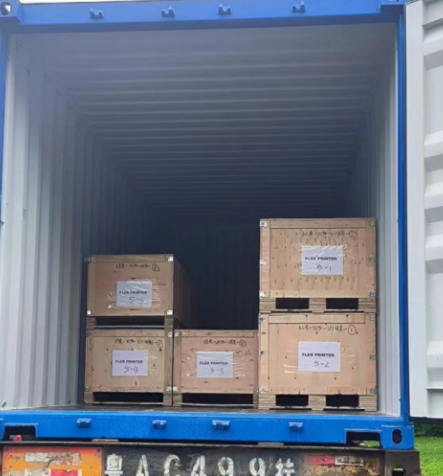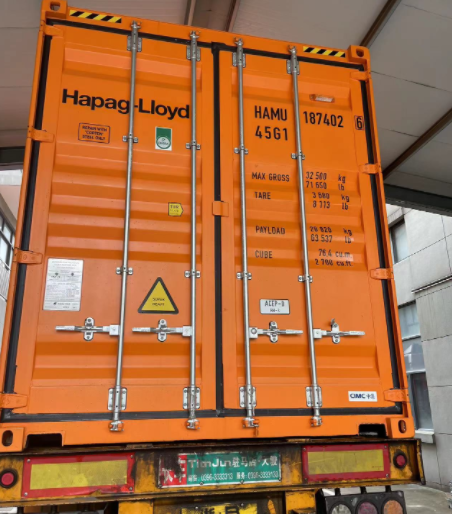
Air freight from China to Dubai sits in the sweet spot between slow ocean freight and expensive express couriers. But how much does it actually cost per kilogram? How long does it take door-to-door? And what does the process look like from your supplier’s factory to your doorstep in Dubai? This guide answers all three questions — with real 2026 numbers, not vague estimates.
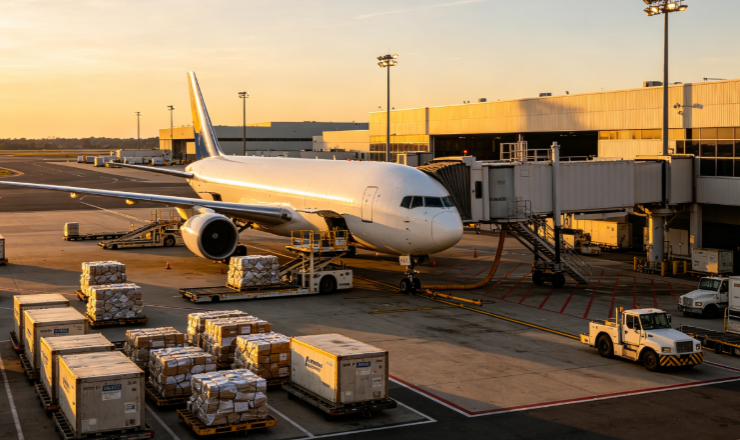
Air Freight Costs from China to Dubai
Before diving into the numbers, here are three terms you will see throughout this guide. An Air Waybill (AWB) is your cargo’s contract of carriage and tracking document. Chargeable weight is the greater of your shipment’s actual gross weight or its volumetric weight — (Length × Width × Height in cm) ÷ 6,000. And consolidated air freight means sharing aircraft space with other shipments to reduce your per-kilogram cost.
The single most common question we receive is: “How much does Air Freight from China to Dubai cost per kilogram?” The honest answer is that it depends — on weight, dimensions, urgency, season, and origin airport. Let me break it down as transparently as possible.
Weight-Bracket Pricing
The heavier your shipment, the lower your per-kilogram rate. Airlines and freight forwarders price in tiers, and crossing into the next bracket can meaningfully reduce your unit cost:
| Weight Bracket | Standard Air Freight (USD/kg) | Express Courier (USD/kg) | Typical Door-to-Door |
|---|---|---|---|
| 1–45 kg | $5.00–$10.00 | $8.00–$15.00 | 3–7 days |
| 45–100 kg | $4.50–$8.00 | $6.00–$10.00 | 3–5 days |
| 100–300 kg | $4.00–$6.50 | N/A (use standard air) | 3–5 days |
| 300–500 kg | $3.50–$5.00 | N/A (use standard air) | 3–5 days |
| 500+ kg | $3.00–$4.50 | N/A (use standard air) | 3–7 days |
Key takeaway: Crossing the 100 kg threshold typically lowers your per-kg rate by 15–25%. If your shipment is at 85 kg, consolidating with another order to break 100 kg often saves you money in absolute terms while getting more cargo delivered.
Chargeable Weight: The Hidden Cost Factor
The single biggest surprise for first-time air freight shippers is volumetric weight. Airlines charge for space, not just mass. Here is a real example:
You ship a carton measuring 60 × 50 × 40 cm. The actual weight on the scale is 8 kg. But the volumetric weight is (60 × 50 × 40) ÷ 6,000 = 20 kg. The airline bills 20 kg — 2.5 times the actual weight — because the carton is light but bulky.
This is why packaging optimization is the single most effective cost lever you control. Switching from oversized cartons to right-sized packaging, or vacuum-compressing soft goods like apparel and bedding, can reduce volumetric weight by 15–30% and save hundreds of dollars per shipment.
| Scenario | Actual Weight | Volumetric Weight | Chargeable Weight | Rate (per kg) | Total Cost |
|---|---|---|---|---|---|
| Oversized carton (60×50×40 cm) | 8 kg | 20 kg | 20 kg | $5.50 | $110.00 |
| Optimized carton (45×35×30 cm) | 8 kg | 7.88 kg | 8 kg | $5.50 | $44.00 |
| Savings | — | — | — | — | $66.00 (60%) |
All-In Cost: What You Actually Pay
The base freight rate is never the full picture. A typical 200 kg shipment of electronics from Shenzhen to Dubai door-to-door might look like this:
| Cost Component | Estimated Amount | Notes |
|---|---|---|
| Base air freight (200 kg × $4.80/kg) | $960.00 | Rate for 100–300 kg tier |
| Fuel surcharge (FSC) | $150.00 | Fluctuates; ~15–20% of base freight |
| Security surcharge | $40.00 | ~$0.20/kg |
| China export customs clearance | $80.00 | Brokerage fee |
| Dubai import customs clearance | $120.00 | Including documentation handling |
| Dubai customs duty (5% of CIF) | $65.00 | Based on CIF value of ~$1,300 |
| UAE VAT (5%) | $68.25 | Applied on CIF + duty |
| Last-mile delivery (Dubai metro) | $60.00 | Warehouse to doorstep |
| Total door-to-door | ~$1,543.25 | Approximately $7.72/kg all-in |
What Moves the Price
- Seasonality. Air freight rates spike 20–30% during Chinese New Year (January–February), Ramadan (dates shift annually), and the Q4 holiday retail rush (October–December). May–June and September are typically the most cost-effective windows.
- Direct vs. transit flights. Direct flights from SZX or CAN to DXB take 7–9 hours and offer the fastest transit. Transit flights (via Bangkok, Doha, or Hong Kong) can be 10–20% cheaper but add 1–3 days.
- Origin airport. Shenzhen and Guangzhou tend to offer more competitive rates than Beijing or inland airports due to higher cargo volume and more frequent departures. Hong Kong often has the lowest rates for very large shipments (1,000+ kg) due to its status as the world’s busiest cargo airport.
- Cargo type. General cargo (textiles, accessories, household goods) is standard rate. Electronics with lithium batteries require IATA-compliant packaging, UN38.3 test reports, and MSDS documentation, adding $50–$150 in handling surcharges. Dangerous goods (DG) incur mandatory inspection fees.
How Long Does Air Freight from China to Dubai Take? Transit Times by Airport
Many importers are surprised to learn that while the actual flight from China to Dubai takes only 7–9 hours, the door-to-door journey spans 3–7 days. Here is how transit time breaks down by origin airport and service level:
| Origin Airport | Destination | Standard Air | Express Air | Direct Flights (per week) |
|---|---|---|---|---|
| Shenzhen (SZX) | DXB / DWC | 3–5 days | 1–2 days | 15+ (Emirates, China Southern) |
| Guangzhou (CAN) | DXB / DWC | 3–5 days | 2–3 days | 20+ (Emirates, China Southern) |
| Hong Kong (HKG) | DXB | 2–4 days | 1–2 days | 25+ (Cathay Pacific, Emirates) |
| Shanghai (PVG) | DXB | 3–6 days | 2–3 days | 14+ (Emirates, Air China) |
| Beijing (PEK) | DXB | 4–7 days | 2–3 days | 7+ (Air China, Emirates) |
Shenzhen and Guangzhou offer the best combination of speed, cost, and flight frequency for most importers — particularly convenient for Dantful clients whose suppliers are concentrated in the Pearl River Delta manufacturing hub.
Where the Time Goes
Understanding the full timeline helps you set realistic expectations and identify where delays happen:
| Stage | Duration | What Happens |
|---|---|---|
| Supplier pickup & consolidation | 1–2 days | Cargo collected, inspected, palletized at origin warehouse |
| China export customs | 4–24 hours | Electronic declaration → document review → release |
| Flight time (direct) | 7–9 hours | In the air from SZX/CAN/PVG/HKG to DXB/DWC |
| Dubai import customs | 24–48 hours | Mirsal 2 electronic clearance, duty/VAT assessment |
| Last-mile delivery | 1–2 days | Trucked from airport to your warehouse or FBA prep center |
Realistic Delay Factors
Unexpected delays happen. The most common causes we see: incomplete or inaccurate Commercial Invoice data triggering manual customs review; lithium battery shipments without pre-submitted MSDS; peak-season cargo backlogs (add 1–3 days during Ramadan and Q4); and Dubai Customs random physical inspections (roughly 8% of shipments, adding 1–3 days). Working with a freight forwarder who pre-verifies documentation before cargo reaches the airport reduces these risks substantially.
The Step-by-Step Air Freight Process: From Supplier to Doorstep
Most online guides only cover the Dubai side — but if you are importing from China, half the process happens before your cargo ever takes off. Here is the full journey, explained from both ends.
Stage 1: Supplier Pickup & Consolidation in China
If you trade on EXW (Ex Works) terms — which is common for Shenzhen and Guangzhou suppliers — your freight forwarder collects the goods directly from the factory. At this stage, the warehouse team verifies outer carton integrity, checks that shipping marks and labels are correct, and flags any red flags: are there loose batteries inside? Liquids? Magnets? Identifying cargo characteristics early prevents costly surprises at the airport security checkpoint.
For importers sourcing from multiple suppliers, consolidation warehousing is a powerful cost lever. Our consolidated freight shipping service combines orders from different factories into one optimized air shipment, pushing you into higher weight brackets with lower per-kilogram rates. Your forwarder receives goods from Supplier A, B, and C, stores them (free periods of 7–30 days are typical), then combines everything into one consolidated air shipment. This moves you into a higher weight bracket with a lower per-kg rate. One critical tip: insist that each supplier provides accurate carton dimensions and gross weights. Underestimated volumes lead to quote revisions and eroded trust.
Stage 2: Export Customs Clearance in China
This is the step nearly every competitor guide skips — and it is where first-time importers feel most in the dark. China export customs follows a predictable sequence: electronic declaration submission → document review → potential physical inspection → release. Required documents include a customs power of attorney, the commercial invoice, packing list, sales contract, and a detailed declaration of goods elements (HS code, material composition, usage, brand information).
The most common rejection reasons are mismatched HS codes versus product descriptions, declared values that appear abnormally low or high, and missing brand authorization letters for branded goods. A freight forwarder in shenzhen china with Class-A certified customs brokerage credentials — such as Dantful International Logistics, licensed by China’s Ministry of Commerce — can pre-audit your documents and achieve inspection rates below 0.5% through AEO (Authorized Economic Operator) priority channels.
Stage 3: Air Transport
Once cleared, your cargo is built into unit load devices (ULDs) — pallets or containers — and passes through airport security screening before boarding. Major carriers on the China–Dubai route include Emirates SkyCargo (the largest cargo operator on UAE routes), China Southern Cargo (strong from Guangzhou), Cathay Pacific Cargo (Hong Kong hub), Air China Cargo, Etihad Cargo, and Qatar Airways Cargo. Direct flights offer the fastest transit; transit routings via Bangkok or Doha can reduce costs by 10–20% for non-urgent cargo.
For temperature-sensitive pharmaceuticals or perishables, active temperature-controlled ULDs maintain ±2°C throughout the journey. Dangerous goods — lithium batteries, chemicals, flammable items — require IATA DGR-compliant packaging, labeling, and documentation; always declare these to your forwarder upfront.
Stage 4: Dubai Import Customs Clearance
Dubai Customs operates the Mirsal 2 electronic clearance system. Your forwarder submits an import declaration through the Dubai Trade Portal, including the AWB, commercial invoice, packing list, certificate of origin, and the 12-digit UAE HS code (upgraded from 8 digits per 2025 regulations — using the wrong digit length causes automatic system rejection).
Customs assesses duty and VAT as follows: 5% customs duty is applied to the CIF value (Cost + Insurance + Freight). Then 5% VAT is levied on the CIF value plus the duty. Here is a worked example:
| Step | Calculation | Amount |
|---|---|---|
| CIF value of goods | — | $20,000.00 |
| Customs duty (5%) | 5% × $20,000 | $1,000.00 |
| Subtotal (CIF + duty) | — | $21,000.00 |
| VAT (5%) | 5% × $21,000 | $1,050.00 |
| Total import charges | — | $2,050.00 |
A critical nuance many miss: if your business operates in a UAE free zone such as JAFZA or DAFZA, goods imported into the free zone may defer customs duty payments for up to 12 months. For importers managing cash flow, this is a significant advantage over mainland clearance.
Stage 5: Last-Mile Delivery
Once customs releases the cargo, it is trucked to your designated delivery address. Within Dubai city limits, same-day or next-day delivery is standard. Deliveries to other emirates — Abu Dhabi, Sharjah, Ajman, Ras Al Khaimah, Fujairah, Umm Al Quwain — typically take 1–3 days depending on distance. For comprehensive Shipping from China to UAE coverage across all seven emirates, Dantful provides unified door-to-door solutions. For palletized cargo, LTL (less-than-truckload) shared trucking offers the best value; for smaller parcels, local courier networks provide day-definite delivery.
Choosing the Right Incoterm for Air Freight: EXW, FOB, CIF, or DDP?
One of the most overlooked decisions in air freight — and one that no competitor guide addresses — is which Incoterms 2020 rule to use. Your choice determines who bears costs, risks, and responsibilities at each stage, and it directly impacts your total landed cost.
The Four Incoterms That Matter for Air Freight
- EXW (Ex Works): The supplier makes the goods available at their factory. You arrange and pay for everything else — pickup, both customs clearances, air freight, and delivery. Best if you have a trusted freight forwarder in China (like Dantful) who can handle the entire chain from factory floor to your Dubai doorstep.
- FOB (Free on Board): Despite its name originating in sea freight, FOB is often used for air by convention. The supplier handles delivery to the origin airport and export customs. You take over from the airline. A common middle ground.
- CIF (Cost, Insurance, Freight): The supplier pays for freight and minimum insurance to Dubai airport. You handle import clearance, duties, VAT, and delivery. Note: CIF insurance typically covers only basic per-kg liability — far below actual cargo value. Always verify coverage levels.
- DDP (Delivered Duty Paid): The most hassle-free option. Your freight forwarder handles everything — pickup, export clearance, air freight, import clearance, duty and VAT payment, and last-mile delivery — for a single all-inclusive price. No surprises, no separate customs broker, no last-minute duty bills. This is the service Dantful specializes in for clients who want their cargo to simply arrive at their door. Our door-to-door shipping services provide one all-inclusive price with zero surprise charges — the most hassle-free way to import from China to the UAE.
Which Incoterm Should You Choose?
| Your Situation | Recommended Incoterm | Why |
|---|---|---|
| First-time importer, unfamiliar with customs | DDP | All-inclusive, no hidden costs, no separate broker needed |
| You have a customs broker in Dubai | CIF or FOB | Control the import clearance yourself, save on forwarder brokerage fees |
| Supplier is in Shenzhen, you need pickup help | EXW + Freight Forwarder | Forwarder handles factory-to-door; you get one point of contact |
| Budget-conscious but want simplicity | DDP | Prepaid all-in price gives you full cost certainty before shipping |
A real scenario: a Dubai-based vape wholesaler handling middle east orders directly from china chose our DDP air freight service. Instead of registering for a Dubai Customs importer code, finding a local broker, calculating duty and VAT, and coordinating airport pickup themselves, they received their cargo at their Deira warehouse in four days — with one invoice and zero phone calls. For many small and medium importers, the time saved alone outweighs the modest DDP service premium.
Required Documents & Dubai Customs Clearance
Getting your paperwork right is the difference between cargo that clears in 24 hours and cargo that sits in a bonded warehouse accruing storage charges. Here is every document you need, why it matters, and the most common mistake importers make:
| Document | Why It Matters | Common Mistake |
|---|---|---|
| Air Waybill (AWB) | Contract of carriage; your tracking number | Incomplete consignee details prevent cargo release |
| Commercial Invoice | Basis for customs valuation and duty calculation | Declared value too low — Dubai Customs cross-checks against market prices |
| Packing List | Verifies piece count and weight against physical cargo | Gross weight or dimensions differ from actual → airline billing disputes |
| Certificate of Origin | Determines applicable tariff rates and trade preferences | Missing Chamber of Commerce stamp → document rejected |
| 12-Digit UAE HS Code | Determines the duty rate for your product category | Using China’s 10-digit codes instead of UAE’s 12-digit → system rejection, 500–2,000 AED fines |
| Trade License / Importer Code | Legal requirement for commercial import clearance | Attempting clearance under a personal name for commercial goods |
| Product Certificates (ECAS, ESMA, MOHAP, SASO) | Mandatory market准入 for regulated categories | Discovering missing certifications after cargo arrives → costly re-export or destruction |
Professional Customs Clearance support ensures your documentation is pre-verified before cargo lands — the difference between same-day release and costly bonded warehouse storage.
How to Speed Up Dubai Customs Clearance
The pro move is pre-clearance: submit your documents through the Dubai Trade Portal 24 hours before the flight lands. Pre-verified shipments often sail through the green channel on arrival. Pay duties and VAT electronically via the portal — no wire delays, no physical visits to the customs counter. And ensure your HS codes are validated against the UAE’s 12-digit harmonized system before submission; this single step prevents more clearance delays than any other.
Air Freight vs. Sea Freight from China to Dubai
Not every shipment should fly. Here is a decision framework to help you choose between air and sea freight:
| Decision Factor | Air Freight | Sea Freight (FCL/LCL) |
|---|---|---|
| Door-to-door transit | 3–7 days | 18–35 days |
| Cost per kg (200 kg shipment) | $5–$8/kg | $0.80–$2.00/kg |
| Cost per typical shipment | 200 kg: ~$1,200–$1,600 | 20ft FCL: ~$1,200–$1,800 |
| Damage/theft risk | Lower (minimal handling) | Moderate (multiple port transfers) |
| Schedule reliability | High (fixed flight schedules) | Variable (port congestion, weather) |
| Best cargo fit | High-value, small, urgent | Bulky, heavy, low-value, non-urgent |
A Practical Decision Framework
Ask yourself these questions in order:
- Cargo value density above $5,000 per CBM? → Air. The freight premium is small relative to the value of goods tied up in transit.
- Shipment under 300 kg? → Air. Sea LCL minimums and destination charges often make air competitive below this threshold.
- Must arrive in under 10 days? → Air. Sea freight cannot physically deliver this fast.
- Shipment over 2 CBM and timeline is flexible? → Sea. The cost advantage becomes compelling. For reference, see our detailed breakdown of container shipping costs from china to Dubai to compare door-to-door sea freight rates.
- Somewhere in between? → Consider consolidated air freight for lower air costs, or sea-air combined: your cargo sails to a Middle East hub then flies the final leg — roughly 30–40% cheaper than pure air and 10–15 days faster than pure sea.
A quick heuristic: electronics importers and fashion retailers almost always benefit from air. Furniture wholesalers and bulk commodity traders almost always benefit from sea. The middle ground — mid-value consumer goods, auto parts, industrial components — is where a conversation with your freight forwarder pays for itself.
12 Proven Strategies to Reduce Air Freight Costs to Dubai
Competitor guides list four or five generic tips. Here are twelve, each with an estimated savings range and exactly how to implement it:
| # | Strategy | Est. Savings | How to Execute |
|---|---|---|---|
| 1 | Optimize packaging to reduce volumetric weight | 10–20% | Use right-sized cartons; vacuum-compress soft goods (apparel, bedding); avoid nesting small items in oversized boxes |
| 2 | Consolidate multi-supplier orders | 15–25% | Warehouse goods at your forwarder’s Shenzhen/Guangzhou hub, ship as one consolidated consignment above 300 kg for bulk rate |
| 3 | Book 7–14 days in advance | 8–12% | Last-minute bookings pay a premium; plan ahead to lock spot rates before capacity tightens |
| 4 | Ship midweek (Tuesday–Wednesday) | 8–12% | Weekend departures carry higher demand; a Tuesday flight is often materially cheaper for the same transit |
| 5 | Use economy/consolidated air for non-urgent cargo | 20–30% | Accept 5–9 day transit for a significantly lower per-kg rate; ideal for regular restocking, not emergency orders |
| 6 | Compare rates across origin airports | 5–15% | SZX and CAN are typically cheaper than PEK or inland airports; HKG offers competitive rates for 1,000+ kg shipments |
| 7 | Negotiate a quarterly or annual contract | 10–15% | If you ship regularly, a committed volume agreement secures preferential rates and guaranteed space |
| 8 | Precisely classify HS codes | Avoids fines | Incorrect 12-digit UAE codes trigger 500–2,000 AED penalties; invest in accurate classification upfront |
| 9 | Leverage free zone duty deferral | Cash flow | If operating in JAFZA or DAFZA, defer duty payments up to 12 months — capital stays in your business |
| 10 | Avoid peak season when possible | 15–25% | Plan shipments around Chinese New Year, Ramadan, and Q4 holiday rush (see calendar below) |
| 11 | Insure high-value cargo | Risk protection | Premium of ~0.3% of cargo value buys full coverage — far cheaper than absorbing a total loss |
| 12 | Choose the right Incoterm | Systemic | DDP consolidates all costs into one predictable price, eliminating surprise destination charges and broker fees |
Seasonal Shipping Calendar
| Period | Risk Level | What to Expect | Action |
|---|---|---|---|
| Jan–Feb | 🔴 High | Chinese New Year — factory closures, rate spikes of 20–30% | Book 3 weeks ahead; ship before the shutdown |
| Mar–Apr | 🟡 Moderate | Ramadan — UAE port and customs operations slow down | Allow 1–2 extra transit days |
| May–Jun | 🟢 Low | Most favorable window of the year | Ship freely; negotiate favorable rates |
| Jul–Aug | 🟡 Moderate | Summer electronics export peak | Book 2 weeks ahead for electronics cargo |
| Sep | 🟢 Low | Post-summer lull, pre-Q4 buildup | Ideal window for Q4 inventory buildup |
| Oct–Dec | 🔴 High | Q4 holiday retail surge — tight capacity, premium rates | Book 3–4 weeks ahead; consider sea-air hybrid |
FAQs
How long does air freight take from China to Dubai?
Standard air freight takes 3–7 days door-to-door; express courier service delivers in 1–3 days; economy consolidated air takes 5–9 days. Shenzhen and Guangzhou departures tend to be fastest thanks to high flight frequency.
How much does air freight cost from China to Dubai per kg?
Market rates range from $3.00 to $10.00 per kg depending on weight tier. Shipments above 100 kg see significantly lower per-kg rates. The all-in door-to-door cost — including fuel surcharges, customs clearance, duties, VAT, and delivery — typically runs $6–$10/kg for smaller consignments and $4–$7/kg for 300+ kg shipments.
What is the cheapest way to ship from China to Dubai by air?
Consolidated air freight (also called economy air) offers the lowest rates at $3–$6/kg with a transit time of 5–9 days. For non-urgent replenishment orders, this is the most cost-effective air option.
How is air freight cost calculated? What is chargeable weight?
Airlines charge based on chargeable weight, which is the greater of actual gross weight and volumetric weight (L × W × H in cm ÷ 6,000). A lightweight but bulky carton may be billed at 2–3 times its actual weight. Optimizing packaging to reduce volume is the single most effective way to lower air freight costs.
What documents are required for air freight from China to Dubai?
Essential documents: Air Waybill (AWB), Commercial Invoice, Packing List, Certificate of Origin (Chamber of Commerce stamped), 12-digit UAE HS Code, and a valid Trade License/Importer Code. Special cargo requires additional documentation: MSDS for batteries/chemicals, UN38.3 test reports for lithium batteries, and ECAS/ESMA/MOHAP certificates for regulated products.
Can I ship electronics with lithium batteries by air from China to Dubai?
Yes, but lithium batteries require UN38.3 test reports, MSDS (Material Safety Data Sheet), and IATA DGR-compliant packaging and labeling. Always declare batteries to your freight forwarder before booking — undeclared batteries discovered during airport security screening cause shipment rejections and potential fines.
Which Chinese airport is best for air freight to Dubai?
For most shippers, Shenzhen (SZX) and Guangzhou (CAN) offer the best combination of competitive rates, high flight frequency (15–20+ direct flights per week), and proximity to China’s manufacturing heartland in the Pearl River Delta. Hong Kong (HKG) offers even more capacity and sometimes lower rates for very large shipments. Dantful’s Shenzhen headquarters location provides direct access to both SZX and HKG.
Ready to ship? Whether you need a door-to-door DDP quote for a single pallet or are planning regular air freight from Shenzhen to Dubai, our team are available 24/7 to build the right logistics solution for your business.

Young Chiu is a seasoned logistics expert with over 15 years of experience in international freight forwarding and supply chain management. As CEO of Dantful International Logistics, Young is dedicated to providing valuable insights and practical advice to businesses navigating the complexities of global shipping.