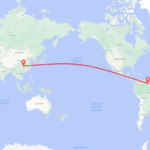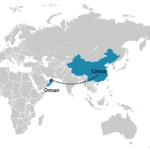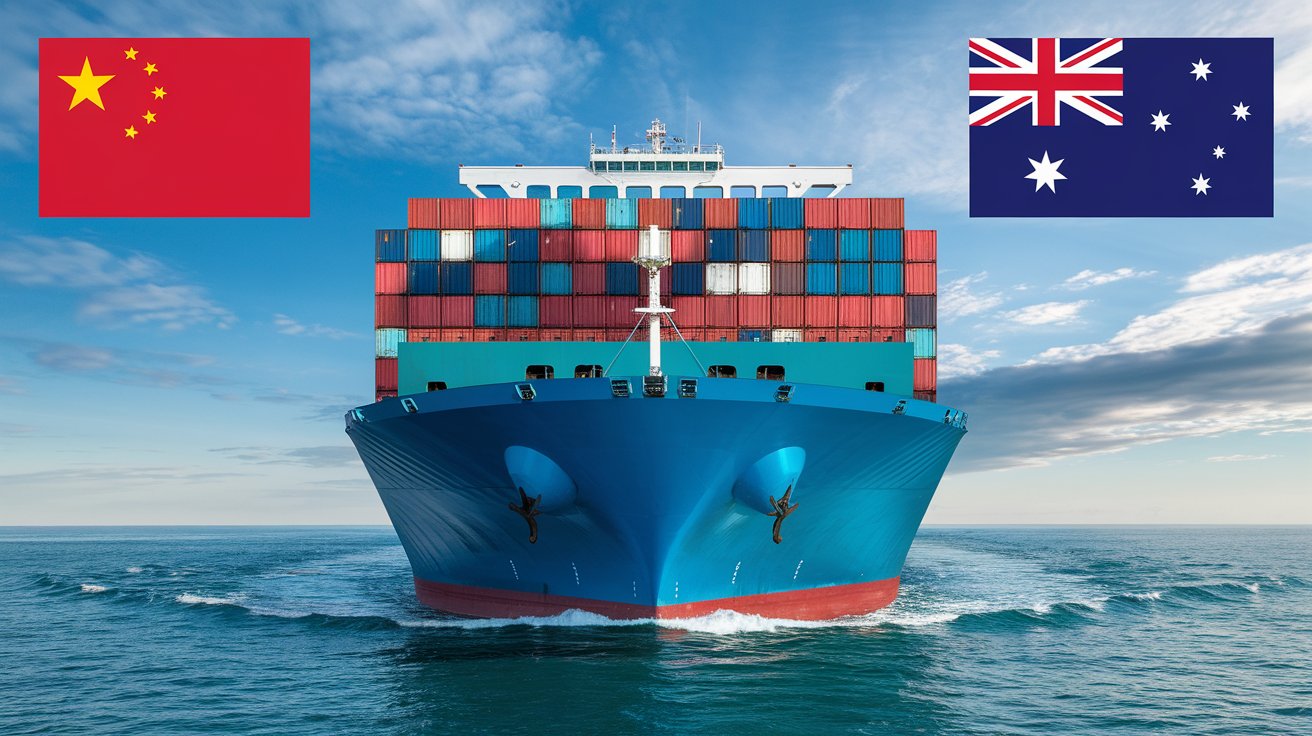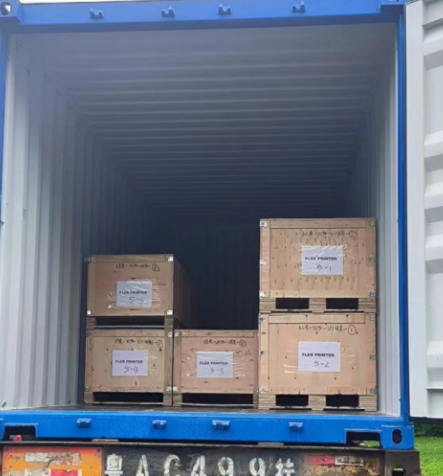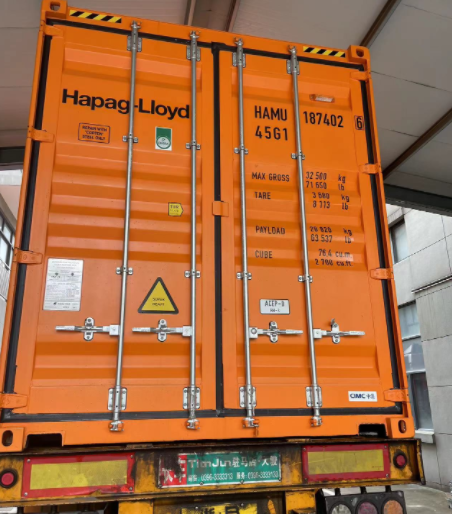
If you’re sourcing goods from China and wondering how much is shipping from China to Guyana, the short answer is: it varies, but here’s what to expect. A 20-foot container typically costs $2,500–$4,500 in ocean freight alone. Once you add import duties, 14% VAT, customs clearance, and inland delivery, your total landed cost lands between roughly $5,000 and $9,000. This guide breaks down realistic, up-to-date costs for every shipping method — sea FCL, sea LCL, air freight, express courier, and all-inclusive DDP door-to-door — so you can budget accurately and avoid surprise charges at the Port of Georgetown. For businesses seeking reliable Shipping From China to Guyana, working with an experienced freight forwarder who understands this specific trade lane makes all the difference in both cost and peace of mind.
Important note on pricing. Ocean freight rates on the China-to-Guyana route are quoted weekly and can shift by $200–$800 within a single month depending on carrier capacity, fuel prices, and seasonal demand. All figures in this guide reflect market data as of June 2026 and should be treated as reference ranges — not fixed prices. Always request a current quote from your freight forwarder before finalizing an import budget.
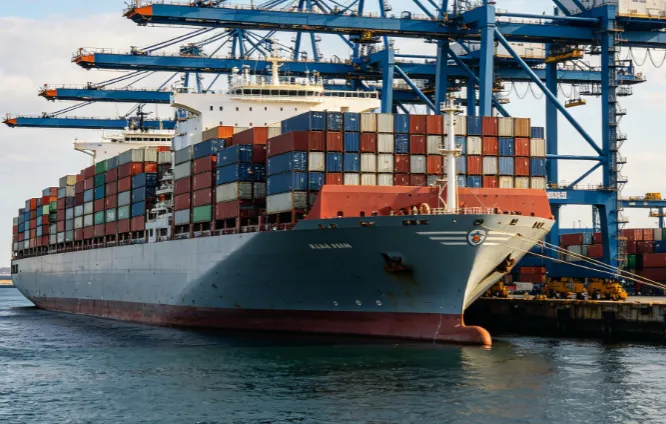
Key Factors That Affect Shipping Costs from China to Guyana
Six variables determine your import from China to Guyana shipping cost. Understanding them upfront can save you from a 30% cost swing.
Cargo & method. Weight and volume dictate everything. Sea freight charges per container (FCL) or per cubic meter (LCL); air freight and express courier use chargeable weight — the greater of actual weight or volumetric weight (L×W×H cm ÷ 6,000). Sea FCL gives the lowest per-unit cost for shipments over ~12 CBM; LCL fits smaller loads. Air Freight suits urgent mid-weight cargo; express courier (DHL, FedEx, UPS) wins for packages under 50 kg.
Incoterms. This is where first-time importers lose money. EXW means you pay everything from the factory gate. FOB covers freight to the vessel; CIF adds insurance. DDP bundles all costs through to your Guyana doorstep — freight, duties, VAT, clearance, and delivery — and often delivers the lowest true total cost because the forwarder’s volume discounts beat what you’d pay managing each step yourself.
Route & seasonality. There are no direct sailings from China to Guyana — all containers transship (transfer between vessels at an intermediate port) via Kingston, Colón, Miami, or Cartagena. Rates spike during peak season (August–October) and before Chinese New Year. Guyana’s rainy seasons (May–August, November–December) can trigger port delays and demurrage charges. The Bunker Adjustment Factor (BAF) — a fuel surcharge applied by all carriers — and Panama Canal transit fees also fluctuate with fuel prices and water levels.
Sea Freight Costs from China to Guyana
Sea freight is how the vast majority of commercial cargo reaches Guyana. It’s the most economical option per unit for anything over a few cubic meters, but the trade-off is time — expect 35 to 55 days from departure to arrival at Port of Georgetown.
FCL (Full Container Load) Container Shipping Rates
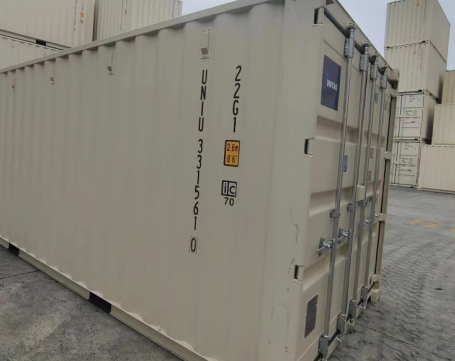
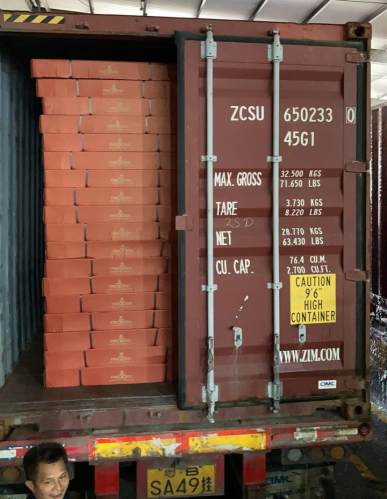
When you book a Full Container Load (FCL), you’re renting an entire container exclusively for your cargo. This is the most cost-efficient option for shipments over approximately 12–15 CBM.
The following table summarizes current market-rate ranges for China to Guyana container shipping rates in 2026, based on carrier data from Flexport, 56ok.com, and our own freight desk. For a broader perspective on ocean pricing, also see our breakdown of how much is ocean freight from china across major global routes. To understand why rates vary so much between carriers, check our analysis of International Container Shipping Prices and key market drivers.
| Container Type | Typical Capacity | Ocean Freight Range (USD) | Transit Time | Best For |
|---|---|---|---|---|
| 20ft GP (20GP) | ~28 CBM / 22 tons | $2,500 – $4,500 | 40–55 days | Small commercial loads, first-time importers |
| 40ft GP (40GP) | ~58 CBM / 26 tons | $3,500 – $6,000 | 38–50 days | Bulk cargo, medium-to-large importers |
| 40ft High Cube (40HC) | ~68 CBM / 26 tons | $4,000 – $8,000 | 38–45 days | High-volume lightweight cargo (furniture, textiles) |
Real-rate reference points. Flexport’s live rate engine shows Shenzhen (Yantian) → Georgetown 40HC at $7,351–$7,987 (valid June 2026), reflecting a market near peak-season pricing. Meanwhile, Chinese freight marketplace 56ok.com listed Dongguan → Georgetown 40HQ quotes in early 2026 from major carriers: ONE at $4,130–$4,280, MSC at $4,367–$4,922, and ZIM at $5,760–$5,960 — highlighting how carrier selection alone can create a spread of $1,500+ on the same route. This is why working with a freight forwarder that has multiple carrier relationships directly impacts your bottom line.
Why origin port matters. Shenzhen and Guangzhou consistently offer the most competitive rates to Guyana due to their proximity to Guangdong’s manufacturing clusters and the highest sailing frequency. Shanghai and Ningbo may offer slightly lower base rates on some carriers but typically require inland trucking from factories in South China, adding $200–$500 to your total. For factories in East or North China, Ningbo and Qingdao are the logical departure points.
GRA benchmark note. The Guyana Revenue Authority (GRA) maintains pre-pandemic freight benchmarks of approximately $2,800 for a 20ft and $3,400 for a 40ft container. Under a relief measure extended through December 31, 2026, importers can request duty assessment based on these lower benchmark rates even if their actual freight cost is higher — effectively reducing the dutiable value and thus the import duty payable. We’ll cover this in more detail in the customs section below.
LCL (Less than Container Load) Costs
If your shipment is too small to fill an entire container, Less than Container Load (LCL) allows you to share container space with other shippers and pay only for the volume you use. (Not sure whether FCL or LCL fits your shipment? See our guide on what is lcl and fcl in shipping for a detailed comparison.)
| Volume | Estimated Cost Range (USD) | Per-CBM Benchmark |
|---|---|---|
| 1–3 CBM | $80 – $450 | $80 – $150 / CBM |
| 4–8 CBM | $280 – $800 | $70 – $100 / CBM |
| 9–15 CBM | $540 – $1,500 | $60 – $100 / CBM |
These ranges reflect total port-to-port LCL costs from major Chinese ports to Georgetown. Transit time for LCL is typically longer than FCL — 50 to 60 days — due to the extra time needed for consolidation at origin and deconsolidation at destination.
The low-rate trap. Some forwarders advertise extremely low per-CBM LCL rates (as low as $8–$15/CBM base ocean freight) but then load the shipment with high destination charges — terminal handling, documentation, and “release fees” at the Guyana end. Always request an all-in LCL quote that includes both origin and destination charges before comparing prices.
Break-even analysis: LCL vs. FCL. As a rule of thumb, once your shipment exceeds 12–15 CBM, a 20ft FCL becomes more economical than LCL. At 15 CBM × $80/CBM, you’d pay roughly $1,200 for LCL — which is already approaching the low end of a 20ft container. Above that threshold, the per-unit cost of FCL drops below LCL, and you get the added benefit of faster transit and exclusive container use. For a deeper dive into this decision, see LCL vs FCL Shipping: How to Choose the Right Option for Small Cargo.
Air Freight & Express Courier Costs from China to Guyana
When speed matters more than per-unit shipping cost — for time-sensitive equipment, high-value electronics, or urgent samples — air freight and express courier services bridge the gap.
Air Freight (Commercial Air Cargo)
Air freight from China to Guyana operates on a per-kilogram pricing model, making it dramatically more expensive than sea freight but 5–10 times faster.
| Metric | Range |
|---|---|
| Rate (airport-to-airport) | $4 – $12 USD per kg |
| Transit time | 5–10 days |
| Chargeable weight rule | Greater of actual kg or (L×W×H cm ÷ 6,000), per IATA standard |
| Key origin airports | Guangzhou CAN, Shenzhen SZX, Shanghai PVG, Hong Kong HKG |
| Destination airport | Cheddi Jagan International Airport (GEO), Georgetown |
| Routing | All flights require transit via MIA, YYZ, or JFK — no direct flights exist |
Commercial air cargo is best suited for shipments between roughly 50 kg and 500 kg. Below that threshold, express courier services often provide better value when you account for airport handling fees at both ends. Above 500 kg, air freight becomes cost-prohibitive for most cargo types, and partial-charter or sea-air hybrid solutions may offer a better balance.
When air freight makes economic sense. Guyana’s booming oil & gas sector frequently uses air freight for urgent replacement parts, drilling components, and specialized tools where equipment downtime costs far exceed the shipping premium. Similarly, electronics importers with short product lifecycles may find that sea freight’s 50-day transit window misses the market entirely.
Express Courier (DHL, FedEx, UPS)
For small parcels, samples, and e-commerce orders, express courier services provide true door-to-door delivery in under a week — with full tracking and customs clearance included.
| Weight | FedEx International First | UPS Worldwide Express Saver | DHL Express (est.) |
|---|---|---|---|
| 0.5 kg | ~$90 | ~$89 | $85–$95 |
| 1 kg | ~$117 | ~$97 | $100–$120 |
| 5 kg | ~$295 | ~$207 | $200–$280 |
| 10 kg | ~$435 | ~$327 | $350–$420 |
| 20 kg | ~$710 | ~$488 | $550–$680 |
Transit time is 3–7 days door-to-door from most Chinese cities to Georgetown. UPS tends to offer the most competitive rates in the 5–20 kg range, while DHL often has stronger regional coverage in South America. FedEx International First delivers by the earliest possible flight for time-critical shipments.
Express vs. air freight: where’s the crossover? For shipments under roughly 50 kg, express courier is usually the better deal — the per-kg rate appears higher, but it includes pickup, door-to-door delivery, and customs clearance that adds $100–$300 in fees to an air freight shipment. Above 100 kg, commercial air cargo almost always wins on pure cost.
Door-to-Door DDP Shipping Costs from China to Guyana
For many Guyanese importers — especially those without an established customs broker in Georgetown — DDP (Delivered Duty Paid) is the most attractive shipping option. It transforms a complex, multi-party logistics chain into a single all-inclusive service with one point of contact and one predictable price.
What DDP Actually Covers
Under DDP shipping from China to Guyana, the freight forwarder assumes full responsibility — and cost — for every step from the supplier’s factory to your designated delivery address in Guyana:
- China-side: Factory/warehouse pickup + export customs clearance + export documentation (commercial invoice, packing list, certificate of origin, B/L or AWB)
- International transport: Ocean freight (FCL or LCL) or air freight, including all surcharges (BAF, THC, port security)
- Guyana-side: Import customs clearance + import duties (0–40%) + 14% VAT + destination terminal charges + customs broker fee + last-mile trucking delivery
In short: the price you’re quoted is the price you pay. There are no surprise bills at the port and no need to coordinate with a separate customs broker in Guyana.
Estimated DDP All-Inclusive Costs
| Service | All-Inclusive DDP Estimate (USD) | Notes |
|---|---|---|
| 20ft Container DDP (Sea) | $5,000 – $9,000 | Freight + duties + clearance + delivery; varies by cargo value and duty rate |
| 40ft / 40HC Container DDP (Sea) | $7,000 – $14,000 | Higher duties on higher-value cargo drive the range |
| LCL DDP (Sea) | $200 – $500 per CBM | All-in, door-to-door |
| Air Freight DDP | $8 – $18 per kg | All-in, door-to-door |
| Express Courier DDP | See courier table above | DDP by default — courier rates always include clearance |
DDP vs. FOB vs. CIF: What’s the Real Difference?
To illustrate how Incoterm choice affects your total landed cost, here’s a realistic comparison for the same shipment:
Scenario: One 20ft container of construction materials (ceramic tiles), cargo value $30,000, duty rate 10%, shipped from Guangzhou to Georgetown.
| Cost Component | FOB | CIF | DDP |
|---|---|---|---|
| Supplier invoice (EXW price) | $30,000 | $30,000 | $30,000 |
| China inland trucking + export clearance | You pay: ~$300 | Included | Included |
| Ocean freight (20ft, Guangzhou → Georgetown) | You pay: ~$3,200 | Included | Included |
| Cargo insurance (0.4% of value) | Optional: ~$120 | Included | Included |
| Guyana import duty (10% of CIF) | You pay: ~$3,352 | You pay: ~$3,352 | Included |
| Guyana VAT (14% on CIF + duty) | You pay: ~$5,163 | You pay: ~$5,163 | Included |
| Guyana customs broker + terminal fees | You pay: ~$400 | You pay: ~$400 | Included |
| Last-mile delivery in Georgetown | You pay: ~$250 | You pay: ~$250 | Included |
| Total beyond supplier invoice | ~$12,785 | ~$9,165 | Quoted upfront (est. ~$6,500–$8,500) |
| True total landed cost | ~$42,785 | ~$39,165 | ~$36,500–$38,500 |
The CIF total may look higher than DDP in the table above, but in practice, a freight forwarder offering DDP leverages volume discounts on freight, insurance, and brokerage that individual importers cannot access. This is why DDP often delivers a lower true total cost — and always delivers greater predictability.
Why DDP is popular for Guyana. Many Guyanese businesses lack a dedicated in-house logistics team or an established relationship with a customs broker. DDP transfers all customs complexity, compliance risk, and cost variability to a single freight forwarder with expertise on the China-to-Guyana route. For first-time importers, this peace of mind alone is worth the modest premium over FOB.
Complete Shipping Cost Breakdown: Where Your Money Goes
One of the biggest misconceptions in international shipping is that the “freight rate” equals the total cost. In reality, ocean freight is often only 40–60% of your total landed cost. The table below maps out every line item and shows which Incoterm covers it:
| Cost Component | Typical Range (USD) | FOB | CIF | DDP |
|---|---|---|---|---|
| Ocean Freight Base Rate (40ft) | $3,500 – $6,000 | ✅ | ✅ | ✅ |
| BAF (Bunker Adjustment Factor) | $200 – $600 | ✅ | ✅ | ✅ |
| THC — Origin (China port) | $100 – $250 | ✅ | ✅ | ✅ |
| THC — Destination (Georgetown) | $100 – $300 | ❌ | ❌ | ✅ |
| China Export Customs Clearance | $65 – $150 | ✅ | ✅ | ✅ |
| Documentation Fee (B/L, CO, etc.) | $50 – $150 | ✅ | ✅ | ✅ |
| Port Security / ISPS | $20 – $50 | ✅ | ✅ | ✅ |
| Cargo Insurance (0.3–0.5% cargo value) | $90 – $500 | ❌ | ✅ | ✅ |
| Guyana Import Duties (5–20% of CIF) | $300 – $6,000+ | ❌ | ❌ | ✅ |
| Guyana VAT (14%) | $200 – $1,500+ | ❌ | ❌ | ✅ |
| Guyana Customs Broker Fee | $100 – $300 | ❌ | ❌ | ✅ |
| Inland Trucking — China Pickup | $100 – $500 | ❌ | ❌ | ✅ |
| Inland Trucking — Guyana Delivery | $150 – $500 | ❌ | ❌ | ✅ |
Hidden costs to watch for. Beyond the standard line items above, several charges can blindside unprepared importers: demurrage (container storage fee at port beyond free days, typically $50–$150/day), detention (late return of container beyond free time), customs inspection fees if your shipment is flagged for physical examination, and rainy season inland surcharges when road conditions in Guyana deteriorate. A reputable freight forwarder will identify and explain every potential charge upfront — if a quote seems suspiciously low, ask what’s not included.
What catches first-time importers off guard. In practice, the single most common cost overrun we see on Guyana-bound shipments isn’t the freight itself — it’s demurrage from containers held at the Port of Georgetown beyond the free storage period (typically 5–7 days for standard containers). This happens most often during the rainy season months when inland road conditions slow final delivery. Budgeting for 2–3 extra days of port storage during May–August and November–December is a small precaution that avoids a $300–$600 surprise.
Guyana Import Duties, Taxes & Customs Clearance
Navigating Customs Clearance in Guyana is often the most intimidating part of importing for first-timers. Here’s exactly what you need to know.
Import Duty Rates by Product Category
Guyana applies import duties on the CIF value (Cost + Insurance + Freight) of imported goods. Rates vary by HS code classification:
| Product Category | Duty Rate | Example Goods |
|---|---|---|
| Essential goods | 0–5% | Food staples, basic medicines, educational materials |
| Construction materials & machinery | 5–15% | Cement, steel, tiles, excavators, generators |
| Electronics & consumer goods | 10–20% | Smartphones, appliances, computers, LED displays |
| Textiles, apparel & furniture | 10–20% | Clothing, fabrics, home furniture |
| Vehicles & auto parts | 15–30% | Passenger vehicles, commercial trucks, spare parts |
| Luxury items | 25–40% | High-end watches, jewelry, premium spirits |
VAT: 14% on Top of Everything
Guyana’s Value-Added Tax (VAT) of 14% is calculated on (CIF value + import duty), not just on the CIF value. For example, on a shipment with $10,000 CIF value and 10% duty:
- Import duty: $10,000 × 10% = $1,000
- VAT: ($10,000 + $1,000) × 14% = $1,540
- Total taxes: $2,540 (25.4% effective rate on CIF)
Certain raw materials and capital goods may qualify for VAT exemptions — check with your freight forwarder or the Guyana Revenue Authority (GRA) for the latest schedules.
GRA Freight Charge Relief: An Overlooked Cost-Saver
According to the Guyana Revenue Authority (GRA), a freight charge relief measure has been extended through December 31, 2026, allowing importers to use pre-pandemic benchmark freight rates for duty calculation purposes — even when actual freight costs are higher. This is a detail no existing competitor article on shipping to Guyana covers. If your actual container freight is $4,500 but the GRA benchmark for a 20ft is $2,800, you can request duty assessment based on the lower figure. On a 10% duty rate, that alone saves $170 in duty. Speak with your customs broker about applying for this relief on your eSAD (Electronic Single Administrative Document) filing in the ASYCUDA system.
Required Documentation Checklist
To clear customs in Guyana without delays, ensure your freight forwarder prepares the following documents. These align with the standard documentation set recommended by the International Federation of Freight Forwarders Associations (FIATA) for international ocean shipments:
- Commercial Invoice — in English, with detailed product descriptions, quantities, unit values, total value, and HS codes
- Packing List — weights and dimensions per package
- Bill of Lading (sea freight) or Air Waybill (air freight)
- Certificate of Origin — mandatory for tariff assessment; may qualify goods for preferential CARICOM rates
- Import License — required for regulated goods (electronics, chemicals, pharmaceuticals)
- Phytosanitary Certificate — for agricultural, food, or plant-based products
- GRA Tax Identification Number (TIN) — must be registered before import declaration
CARICOM note: Goods originating from other CARICOM member states may qualify for reduced or zero duties under regional trade agreements. This is relevant for importers who source from both China and regional suppliers — keep your supply chains documented separately to capture CARICOM benefits where applicable.
How to Estimate Your Total Shipping Cost to Guyana
Let’s put everything together with a practical estimation framework you can use right now.
Step-by-Step Cost Estimation Method
- Define your cargo: Measure weight (kg), volume (CBM), and determine product type → HS code → duty rate category from the table above.
- Choose shipping method: FCL for 12+ CBM, LCL for 2–12 CBM, air freight for 50–500 kg urgent cargo, express courier for under 50 kg.
- Select origin port: Shenzhen or Guangzhou for South China suppliers; Shanghai or Ningbo for East China; Qingdao for North China.
- Get updated freight quotes: Ocean freight rates change weekly. Contact 2–3 freight forwarders for current rates — never rely on a quote older than 30 days.
- Add mandatory surcharges: BAF (~5–10% of base freight), THC at both ends (~$100–$300 each), documentation (~$50–$150), port security (~$20–$50).
- Calculate Guyana duties & VAT:
(CIF value × duty rate %) + [(CIF value + duty) × 14%] - Add inland transport: China pickup ($100–$500) + Guyana delivery ($150–$500).
- Add insurance: 0.3–0.5% of cargo value — the cheapest line item on your invoice and the one you should never skip.
- Total Landed Cost = sum of steps 4 through 8.
Three Realistic Scenarios
Scenario A: Construction Company — 20ft FCL of Ceramic Tiles
| Step | Calculation | Amount (USD) |
|---|---|---|
| Cargo value (EXW, Foshan) | $15,000 | $15,000 |
| China pickup + export clearance | Flat fee | ~$300 |
| Ocean freight (Guangzhou → Georgetown, 20ft) | Market rate Q2 2026 | ~$3,200 |
| BAF + THC + documentation | Typical surcharge bundle | ~$500 |
| Insurance (0.4%) | $15,000 × 0.4% | $60 |
| Guyana import duty (10%) | ($15,000 + $3,200 + $500 + $60) × 10% | ~$1,876 |
| Guyana VAT (14%) | ($18,760 + $1,876) × 14% | ~$2,889 |
| Guyana customs broker + delivery | Flat fee | ~$500 |
| Total Landed Cost | ~$24,325 | |
| Effective per-CBM cost | ÷ 28 CBM | ~$869 / CBM |
Scenario B: Small Importer — 2 CBM LCL of Electronics Accessories
| Step | Calculation | Amount (USD) |
|---|---|---|
| Cargo value (EXW, Shenzhen) | $5,000 | $5,000 |
| LCL sea freight (2 CBM × $80/CBM) | All-in port-to-port | ~$160 |
| Insurance (0.4%) | $5,000 × 0.4% | $20 |
| Guyana import duty (15%) | ($5,000 + $160 + $20) × 15% | ~$777 |
| Guyana VAT (14%) | ($5,180 + $777) × 14% | ~$834 |
| Guyana customs broker + delivery | Flat fee | ~$350 |
| Total Landed Cost | ~$7,141 |
Scenario C: E-Commerce Seller — 50 kg Smartphone Samples via DHL Express
| Step | Calculation | Amount (USD) |
|---|---|---|
| Express courier rate (50 kg) | DHL ~$13/kg door-to-door | ~$650 |
| Customs clearance | Included in DHL | $0 |
| Guyana duties/VAT on samples* | Varies | ~$100–$300 |
| Total Delivered | ~$750–$950 |
*Sample shipments may qualify for simplified customs procedures — check current GRA thresholds.
Common estimation pitfalls. The two errors we encounter most often when reviewing self-calculated estimates from new importers: (1) using the wrong HS code — which changes the duty rate and can trigger customs holds if the declared code doesn’t match the actual goods; and (2) forgetting that VAT applies to CIF+duty, not just CIF, which understates the tax bill by roughly 1.4% of the duty amount. Running your HS classification past your freight forwarder before finalizing an import budget avoids both issues.
Tips to Reduce Your Shipping Costs from China to Guyana
Cheapest shipping from China to Guyana doesn’t mean cutting corners on reliability — it means making smarter logistics decisions. For a broader comparison across all transport modes, check our guide on the cheapest mode of transport from china for different cargo types and volumes:
1. Plan shipments around seasonal windows. Ocean freight rates peak in August–October (holiday season push) and in the 3–4 weeks before Chinese New Year (late January–early February). Book in March–April or November for the most competitive rates. For Guyana, factor in the rainy seasons (May–August and November–December) — even if freight rates are attractive, inland transport delays can erase the savings through demurrage.
2. Use consolidated freight shipping. If you source from multiple Guangdong suppliers, use a forwarder’s consolidated freight shipping service to combine purchases into one FCL container. Shipping 15 CBM as LCL at $80/CBM costs $1,200 — but upgrading to a 20ft FCL at $3,200 for 28 CBM drops your per-CBM cost to $114 while giving you nearly double the capacity.
3. Compare total landed cost — not supplier invoice. A Chinese supplier offering FOB at $30,000 may look cheaper than one offering DDP at $38,000 — until you add the $12,000 in destination costs you’ll pay on the FOB shipment. Always compare Incoterms apples-to-apples using the total landed cost formula in Section 8.
4. Know your break-even point. Below 12 CBM: LCL is usually cheaper. Above 12–15 CBM: FCL starts winning. Above 25 CBM: you definitely want your own container. If you’re consistently shipping 5–10 CBM, consider ordering larger quantities less frequently to reach the FCL threshold.
5. Build a relationship with a dedicated freight forwarder. Regular shippers get better rates, priority space allocation during peak season, and more flexible payment terms. Not sure where to start? Read our guide on how to choose the right freight forwarder for a step-by-step approach. A forwarder with direct carrier contracts — rather than one buying space on the spot market — passes on genuine volume discounts. NVOCC-licensed forwarders have direct access to shipping line allocation at contracted rates.
6. Always insure your cargo. Insurance Services for marine cargo cost roughly $30–$50 per $10,000 of cargo value. Not insuring to save $50 can result in the total loss of a $30,000 shipment if a container is lost overboard, damaged in a storm, or involved in a port accident. It is the single cheapest risk management tool in international trade.
7. Leverage the GRA freight benchmark relief. If your actual freight cost exceeds the GRA’s pre-pandemic benchmark ($2,800/20ft, $3,400/40ft), request duty assessment based on the lower benchmark. This is valid through December 31, 2026, and directly reduces your import duty liability.
Working with a Freight Forwarder for China-to-Guyana Shipments
Shipping from China to Guyana involves several coordination layers beyond booking a container: no direct sailings mean routing through regional transshipment hubs, seasonal rains can delay inland delivery, and CARICOM customs requirements add documentation complexity. A freight forwarder with experience on this trade lane handles these coordination points so importers are not managing each one individually.
Dantful International Logistics, headquartered in Shenzhen and operating since 2008, provides freight forwarding services on the China-to-Guyana route. The company holds a Class-A Freight Forwarder License from China’s Ministry of Commerce, NVOCC certification from the Ministry of Transport, and is a member of the FMC (Federal Maritime Commission) and Jctrans.
Services available for Guyana-bound shipments:
- ✅ Door-to-door DDP shipping — covering factory pickup, freight, duties, VAT, clearance, and final delivery
- ✅ Sea freight FCL & LCL from Shenzhen, Guangzhou, Shanghai, Ningbo, and Qingdao
- ✅ Air freight with consolidated routing via Miami and Toronto hubs
- ✅ Customs clearance on both the China export and Guyana import sides
- ✅ Cargo consolidation for shipments sourced from multiple Chinese suppliers
- ✅ Cargo insurance at standard marine premium rates (0.3–0.5% of cargo value)
- ✅ Online tracking with milestone updates throughout transit
- ✅ A dedicated account manager assigned to your shipments
The operations team includes 50 specialists and a 50+ member customer service group. The company holds direct contracts with carriers serving the Guyana trade lane — including Maersk, MSC, CMA CGM, COSCO, ONE, and ZIM.
Pricing. Quotes include a line-by-line cost breakdown covering freight, surcharges, duties, VAT, clearance, and delivery — without destination charges added after the fact.
To request a quote, provide your cargo details (product type, weight, volume, origin city in China, and delivery address in Guyana) for a landed cost estimate covering freight, duties, and delivery.
Shipping elsewhere in South America or the Caribbean? If your business also imports to neighboring markets, dedicated routes are available for Shipping From China to Brazil, Shipping From China to Suriname, Shipping From China to Jamaica, and Shipping From China to Panama — with door-to-door DDP options as covered in this guide.
FAQs
Q: How long does shipping from China to Guyana take?
Sea freight FCL/LCL typically takes 35–55 days from departure to arrival at Port of Georgetown, depending on the transshipment hub and carrier schedule. Add 3–7 days for customs clearance and inland delivery. Air freight takes 5–10 days airport-to-airport, with an additional 2–4 days for clearance and delivery. Express courier (DHL, FedEx, UPS) delivers door-to-door in 3–7 days from most Chinese cities.
Q: What is the cheapest way to ship from China to Guyana?
Sea freight LCL is the cheapest option for small volumes (under ~12 CBM), with per-CBM rates as low as $60–$80. For larger volumes, FCL becomes more economical on a per-unit basis. For shipments under 30 kg, express courier can actually be cheaper than air freight once handling fees and destination clearance costs are factored in.
Q: How much does it cost to ship a 20ft container from China to Guyana?
Ocean freight for a 20ft container ranges from approximately $2,500 to $4,500 USD, depending on the origin port, carrier, and season. The total landed cost — including duties, VAT, clearance, insurance, and delivery to Georgetown — typically falls between $5,000 and $9,000 for standard commercial cargo.
Q: How much does it cost to ship a 40ft container from China to Guyana?
Ocean freight for a 40ft GP container ranges from approximately $3,500 to $6,000 USD; a 40ft High Cube (40HC) ranges from $4,000 to $8,000 USD. Total landed cost — all-in including Guyana duties, 14% VAT, and delivery — typically ranges from $7,000 to $14,000, varying primarily with cargo value and applicable duty rates.
Q: Are there direct shipping routes from China to Guyana?
No. There are no direct container sailings from any Chinese port to Port of Georgetown. All cargo must transship through regional hubs — most commonly Kingston (Jamaica), Colón (Panama), Miami (USA), or Cartagena (Colombia). This transshipment adds approximately 5–10 days to total transit time compared to direct-call trade lanes.
Q: What documents do I need to import goods from China to Guyana?
You need: Commercial Invoice (in English, with HS codes and detailed product descriptions), Packing List (weights and dimensions per package), Bill of Lading (sea) or Air Waybill (air), Certificate of Origin (mandatory for tariff assessment), Import License (for regulated goods such as electronics, chemicals, and pharmaceuticals), Phytosanitary Certificate (for agricultural or food products), and a GRA Tax Identification Number (TIN).
Q: How much import duty and VAT will I pay in Guyana?
Import duties range from 0% (essential goods like basic food and medicine) to 40% (luxury items), with most commercial goods falling in the 5–20% range. VAT of 14% is applied on top of CIF value + duty. Example: a $10,000 CIF shipment at 10% duty pays $1,000 in duty plus $1,540 in VAT, for a total tax burden of $2,540 (25.4% effective rate).

Young Chiu is a seasoned logistics expert with over 15 years of experience in international freight forwarding and supply chain management. As CEO of Dantful International Logistics, Young is dedicated to providing valuable insights and practical advice to businesses navigating the complexities of global shipping.